
Choosing a mother memorial diamond can bring many questions. Families often want to know whether the diamond is genuine, what it may look like, how much material they need to provide, how much the process costs, how long production takes, and whether several family members can receive their own diamond.
Families also ask questions that deserve more attention. What happens if a growth run fails? Can you change your mind after sending ashes or hair? Does unused material come back? Who owns the diamond when several people contribute? What happens to the order if the person who placed it dies before completion?
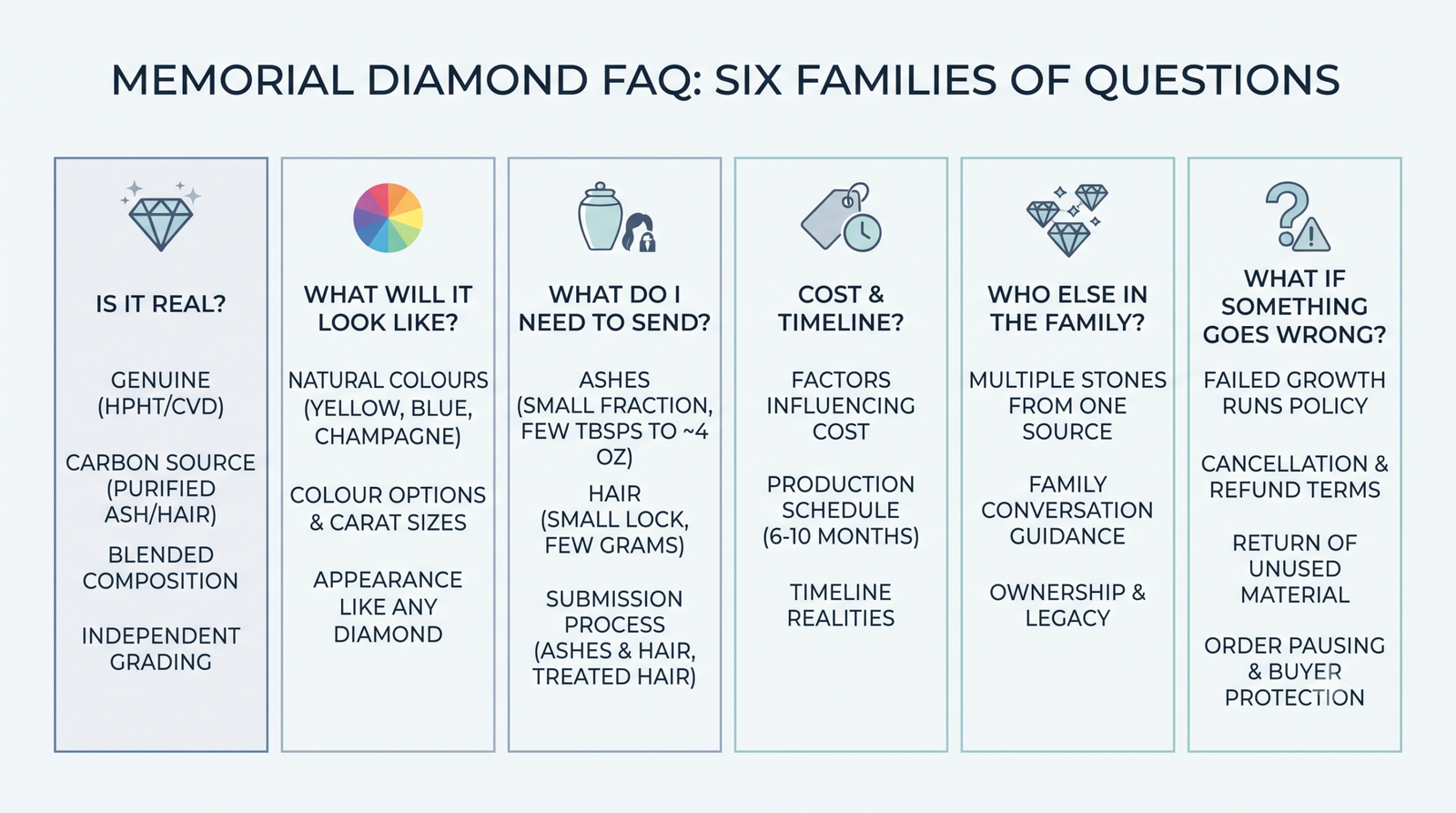
This guide groups the most common questions into six areas so you can find clear answers quickly.
The Six Main Question Groups
| Question group | Short answer |
|---|---|
| Is it real? | A mother memorial diamond uses the lab grown diamond process and can contain purified carbon from her ashes or hair. |
| What will it look like? | Many memorial diamonds develop yellow, blue, or champagne tones rather than appearing completely colorless. |
| What do I need to send? | Providers commonly request a small portion of ashes or a small lock of hair. |
| What does it cost and how long does it take? | Industry pricing varies greatly by carat and color, while production commonly takes several months. |
| Can several family members have one? | One source can often provide material for more than one diamond. |
| What happens if something goes wrong? | Providers set their own policies for failed growth runs, cancellation, unused material, and other situations. |
Is a Mother Memorial Diamond Really a Diamond?
Is it a real diamond or a look alike stone?
It is a real diamond. Memorial diamond providers use the same fundamental laboratory diamond methods that produce other lab grown diamonds. The industry uses HPHT, which stands for high pressure high temperature, and some providers use CVD, which stands for chemical vapor deposition.
The finished stone has the chemical and optical characteristics of diamond. Diamond reaches 10 on the Mohs hardness scale, and laboratories can evaluate it through the same four Cs used for other diamonds.
Is it really made from my mother’s ashes or hair?
Providers extract carbon from the submitted material, purify it, convert it into a suitable carbon form, and use it during diamond growth. The personal carbon becomes part of the crystal growth process.
The process does not mean that the finished diamond contains only carbon from your mother. Providers typically combine personal carbon with supplemental laboratory carbon because the growth process requires a workable quantity of material.
How much of the finished diamond comes from her?
The personal carbon represents a real portion of the finished stone. Industry information places the typical personal carbon contribution around 10 percent to 15 percent of the finished stone mass, although the figure can vary by provider, stone size, and the amount of submitted material.
This distinction matters when you evaluate memorial diamond claims. A provider should explain the role of personal carbon clearly rather than suggest that the entire stone consists only of carbon from your mother.
Is it legal to turn ashes into a diamond?
Families can generally choose different ways to handle cremated remains, but the exact requirements can depend on location and circumstances. Funeral homes, memorial diamond providers, shipping services, and border authorities may require specific documents when remains travel between countries.
Ask your provider about the paperwork and chain of custody before you send any material. For detailed legal considerations, read the legal question in more detail.
Will the diamond have a grading report?
Ask the provider which independent gemological laboratory will evaluate the finished diamond. Industry references commonly discuss laboratories such as GIA and IGI. A provider may also issue an internal certificate that connects the finished diamond with the submitted material.
An independent grading report and an internal certificate serve different purposes. Ask whether your order includes both and request the name of the grading laboratory before you commit.
What Will Her Diamond Actually Look Like?
What color will a mother memorial diamond have?
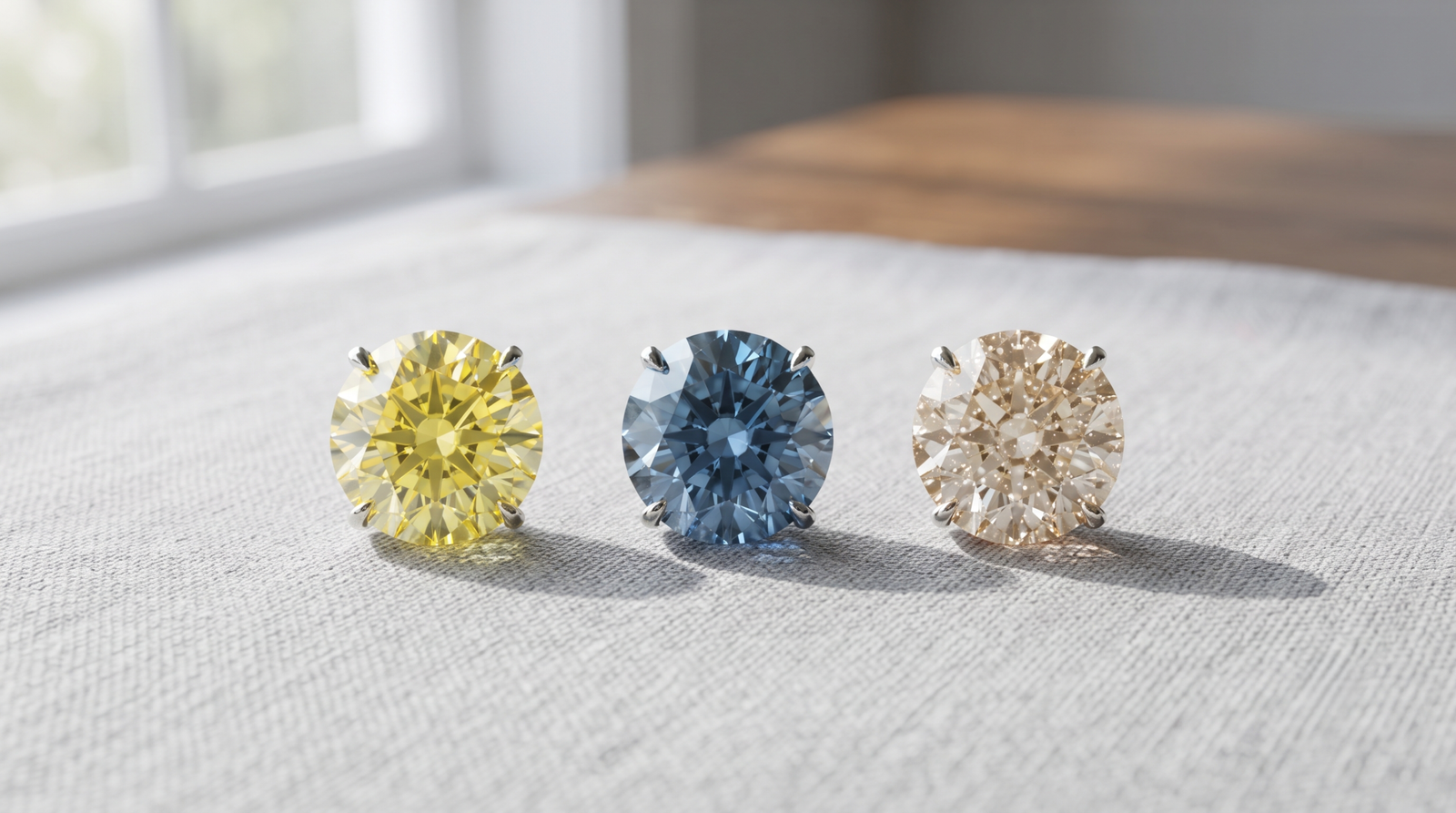
Many memorial diamonds do not appear completely colorless. Trace elements associated with organic carbon can influence the final color. Nitrogen can contribute to yellow tones, while boron can contribute to blue tones.
Some memorial diamonds develop champagne tones. The source material influences the result, so a provider cannot promise an exact naturally occurring shade before growth.
For a deeper explanation, read what color a diamond made from her ashes will be.
Can I choose the color?
You may have some color choices, depending on the provider and the available process. Colorless diamonds can cost more at the same carat size. Some providers also offer treatments that can create colors such as red, pink, green, or black after growth.
You cannot reliably request an exact natural shade because the source material influences the result. Read which colors are actually offered and what each costs before choosing.
What carat sizes can a memorial diamond reach?
Memorial diamond providers offer a wide range of sizes. Industry references place the range around 0.10 carats through 5 carats and beyond.
The amount of ashes does not directly determine the final carat size. Growth time plays a major role in determining the size of the finished crystal, which also makes carat one of the main factors that influences price and production time.
Read how to choose a carat size if you need help deciding what size suits your needs.
Can people tell that it is a memorial diamond?
A finished memorial diamond looks like a diamond with the same color and cut. Nothing on the stone itself announces its origin.
Families can make the meaning more visible through the jewelry setting, an engraving, or the story they choose to share. Explore settings and jewelry ideas and engraving options for ways to personalize the piece.
What Do I Need to Send?
How much of my mother’s ashes do I need?
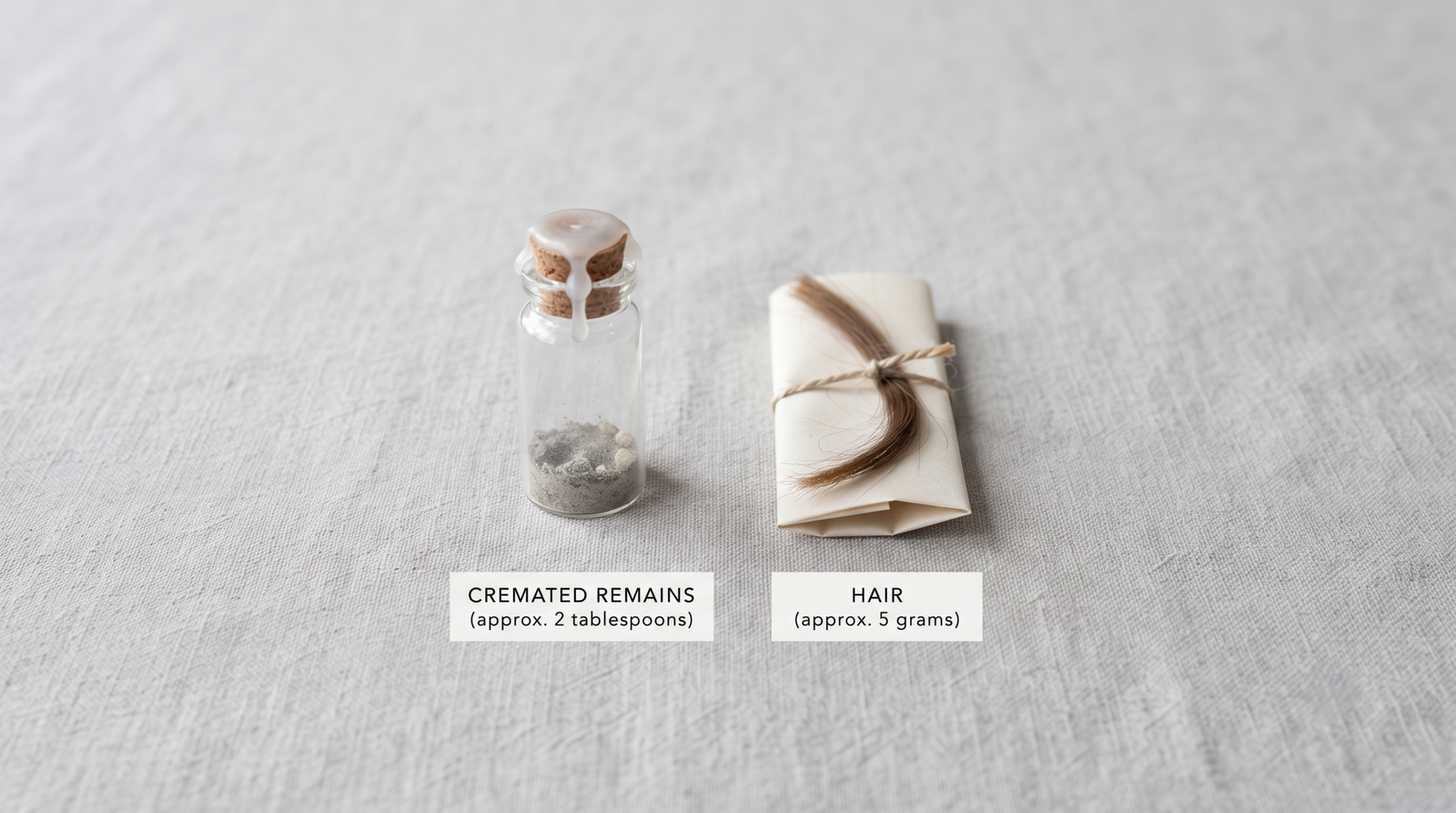
Industry typical requirements range from a few tablespoons to around 4 ounces of ashes, depending on the provider and the order. This amount represents only a small portion of a full cremation.
You do not need to surrender an entire urn for a memorial diamond. Families can often keep the remaining ashes for an urn, interment, scattering, or another memorial plan.
Read how much ash you actually need before preparing your material.
How much of her hair do I need?
Hair requires much less material than ashes. Hair contains a higher proportion of carbon by weight, while cremated remains contain a much smaller carbon percentage.
Providers commonly request a small lock or a few grams of hair. Weight matters more than length. Keep the hair whole and dry, and follow your provider’s packaging instructions before shipping it.
Learn how much hair you need for the process.
What if my mother was buried or we already scattered her ashes?
Hair may provide another option if you have a lock that you kept while she was alive. A small lock stored in a keepsake box, locket, baby book, or jewelry box may provide enough material for the process.
If you have no ashes and no preserved hair, you may not have a material route available for a memorial diamond. Read the hair route from start to finish to understand how this option works.
Can I send ashes and hair together?
Some providers may accept both ashes and hair, but you should confirm this before sending anything. The two materials require separate extraction steps before the provider combines the resulting carbon during the growth process.
Combining materials can also make the final color less predictable. Read the combined route explained before choosing this approach.
Can dyed, permed, or gray hair still work?
The extraction process reduces hair to carbon, so the original hair color does not remain in the finished diamond. Dye, bleach, perm treatments, and natural pigment do not determine the visible hair color of the finished stone.
Provider acceptance policies can differ, especially when hair has undergone heavy chemical treatment. Ask your provider before you send treated hair.
What Does It Cost and How Long Does It Take?
How much does a mother memorial diamond cost?
Industry pricing in 2026 varies significantly according to carat size and color. Smaller stones around 0.10 to 0.25 carats can fall around $1,500 to $3,500. Half carat to one carat stones can range around $5,000 to $15,000. Stones around 2 to 5 carats can reach $20,000 to $75,000 or more.
Color can also affect the price. Colorless diamonds can cost more at the same size. Jewelry settings, engraving, and grading may add separate costs.
These figures represent category ranges rather than BlueiceGems pricing. Read what a mother memorial diamond costs and explore the 2026 pricing picture across the category.
How long does the whole process take?
Production commonly takes around 6 to 10 months after a laboratory receives and logs the material. Large stones or specialty colors can require up to 12 months.
The complete journey can take longer because families need time to make decisions, prepare material, arrange shipping, complete production, receive the diamond, and choose the final jewelry setting. An overall period of around 8 to 14 months can provide a realistic planning window.
Read the timeline broken down for a closer look at the process.
Does sending more ashes make the diamond bigger?
No. The amount of submitted ashes does not directly determine the carat size. The growth process determines the size of the finished crystal.
Sending an entire urn does not automatically produce a larger diamond or shorten the production period. Providers typically need only a portion of the available material.
For the complete process, read the step by step version of this decision.
Can Several Family Members Have a Diamond?
Can several family members each have their own diamond?
Often, yes. One source can often provide enough material for more than one diamond because each stone uses only a portion of the available material.
Each diamond still requires its own growth process and pricing. If you decide to add another diamond later, the provider may need to begin another growth run, which can create another production period.
Read whether more than one family member can have one before placing an order.
Who should I tell before using my mother’s ashes?
Start with the people who hold the remains, the people your mother named in her wishes, and anyone who may have a legitimate role in decisions about the remaining ashes.
Explain how much material the process requires. A small portion may feel easier for family members to understand than the idea of using an entire urn.
If you expect disagreement, read how to have that conversation.
Who owns the diamond when several people pay for it?
Do not assume that everyone who contributes money automatically receives ownership rights. Ownership can depend on the jurisdiction and the way the order was placed.
When several family members contribute, write down the arrangement before ordering. Decide who owns the finished diamond, who holds it, and what should happen to it later.
Read how families can pass a memorial diamond down.
What Happens If Something Goes Wrong?
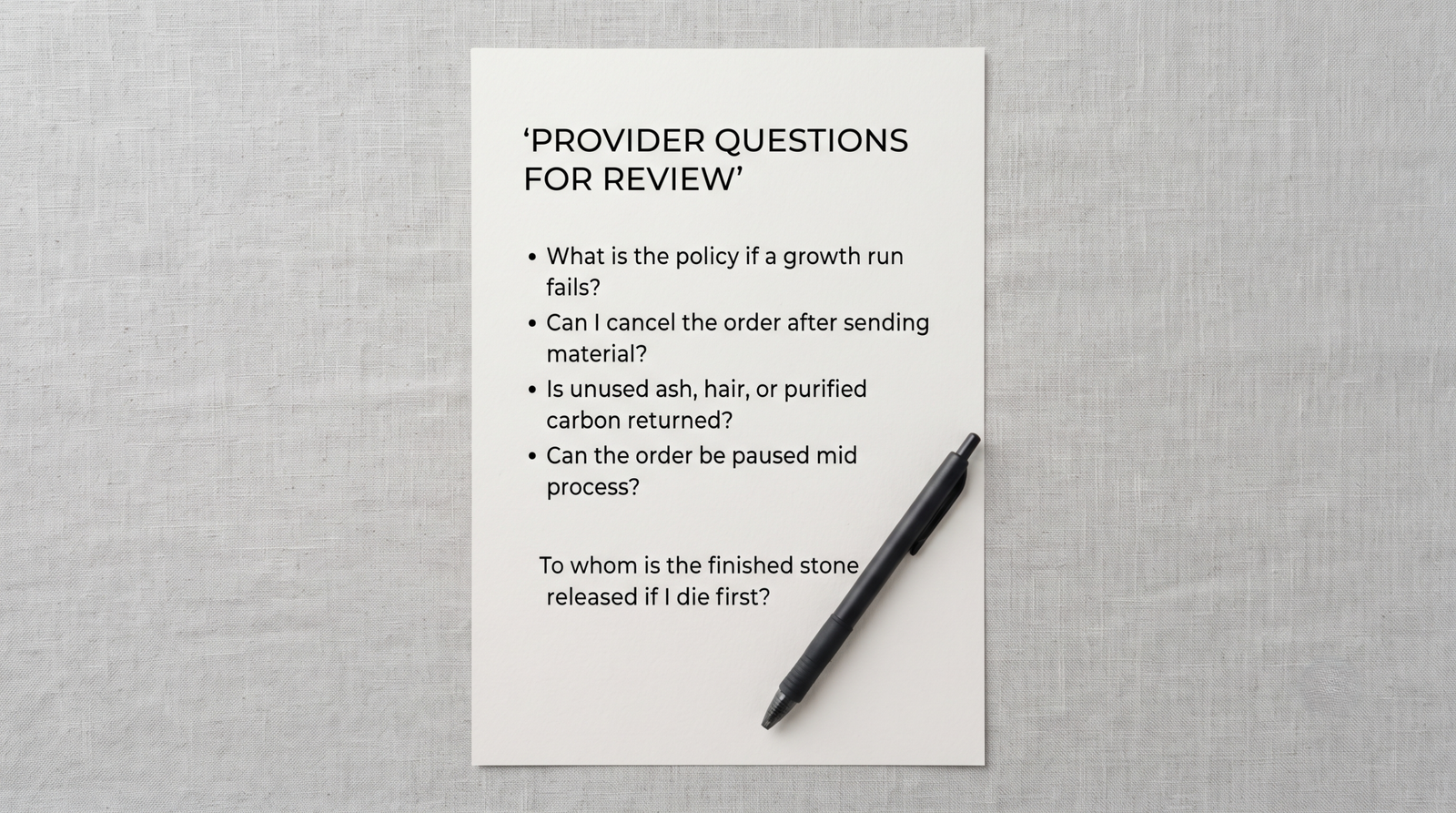
This section deserves special attention because providers do not share one universal policy for every situation. Ask your provider for written answers before you send ashes or hair.
| Question to ask | What you need to know |
|---|---|
| What happens if the growth run fails? | Ask whether the provider will run the material again, request additional material, offer another specification, or provide a refund. |
| Can I cancel after sending material? | Ask when cancellation becomes impossible and what material the provider can return before that point. |
| Do I receive unused material? | Ask separately about unused ashes or hair and unused purified carbon. |
| Can the order pause? | Ask whether the provider can pause production if your family needs time to resolve a disagreement. |
| Who receives the diamond if I die before completion? | Ask whether the provider can record another named contact and what documentation an estate would need. |
What happens if the growth run fails?
A growth run can fail or produce a diamond that does not meet the agreed specification. Providers can handle these situations differently.
Ask whether the provider will use remaining material for another growth run, request additional material, refund your payment, or offer another solution. Get the answer in writing before you send your material.
Read the return and guarantee policies to look for.
Can I change my mind after sending my mother’s ashes or hair?
Ask this question before you ship anything. The extraction process changes the original material, and a provider may reach a point where the material cannot return in its original form.
Ask exactly when cancellation stops being possible and what the provider can return before that stage.
Do I get unused material back?
Ask two separate questions. First, ask what happens to ashes or hair that the provider does not need. Second, ask what happens to purified carbon that the provider extracts but does not use.
These materials can follow different handling procedures. Request a written commitment and ask the provider to connect the material to its chain of custody documentation.
Learn how chain of custody works.
What if another family member objects after the order starts?
Ask whether the provider can pause an order rather than cancel it. Also ask whether the provider can return material during a dispute.
Discuss these possibilities before you place the order. A family conversation can become much harder after the provider begins processing the material.
Can I change the jewelry setting later?
Yes. A jeweler can often move a memorial diamond into another safe setting later. You may choose a pendant today and a ring years from now.
Recutting requires more care because the jeweler removes material from the diamond. Recutting can reduce the carat weight, so consider that decision carefully when the diamond carries irreplaceable personal meaning.
What happens if the person who placed the order dies before the diamond finishes?
Production can take many months, so discuss this possibility before placing the order. Ask the provider who can receive the finished diamond, what documents an estate must provide, and whether you can name another contact when you begin the order.
Frequently Asked Questions
How do I explain a memorial diamond to a young child?
Use simple and physical language. You can explain that a small part of Granny’s ashes helped create a diamond through a process that uses heat and pressure. A child can connect the explanation with the physical diamond more easily than with an abstract idea.
Can I arrange a memorial diamond before someone dies?
Yes. Hair can provide an option without cremation. A family can preserve a lock of hair while a loved one lives and keep it for future use.
Planning ahead can also prevent the ashes route from disappearing after scattering or interment.
Are lab grown memorial diamonds better for the environment than mined diamonds?
Memorial diamonds avoid the mining process, but diamond growth requires energy. The environmental impact therefore depends partly on the energy source that powers the growth equipment.
Ask your provider about its energy sources instead of relying only on general claims about lab grown diamonds.
What happens to the memorial diamond after I die?
You can decide what happens to it. A memorial diamond functions as personal property, so you can include clear instructions in your estate planning.
Because the diamond may carry unique personal meaning, name it specifically rather than placing it inside a general reference to jewelry.
I have not decided anything yet. Where should I start?
Start with the material rather than the diamond catalogue. Determine what you have available and whether any upcoming decision could close one of your options.
You can decide the color, cut, setting, and provider after you understand your material options. Read where to start when choosing a memorial diamond for your mother.
Ask the One Question That Is Holding You Back
You do not need to answer every question today. Most families have one or two concerns that matter more than everything else.
Maybe you want to know what color your mother’s diamond may have. Maybe you need to understand how much ash or hair you should provide. Perhaps your biggest concern involves cost, production time, family approval, unused material, or what happens if the growth run fails.
Write down that question in your own words and ask your provider for a direct answer. Ask for provider policies in writing when the answer depends on the company’s process rather than on diamond science.
A thoughtful memorial decision starts with clear information. When you understand the material requirements, expected appearance, cost factors, production timeline, family considerations, and provider policies, you can move forward at your own pace.
For a broader introduction, explore the complete guide to memorial diamonds.