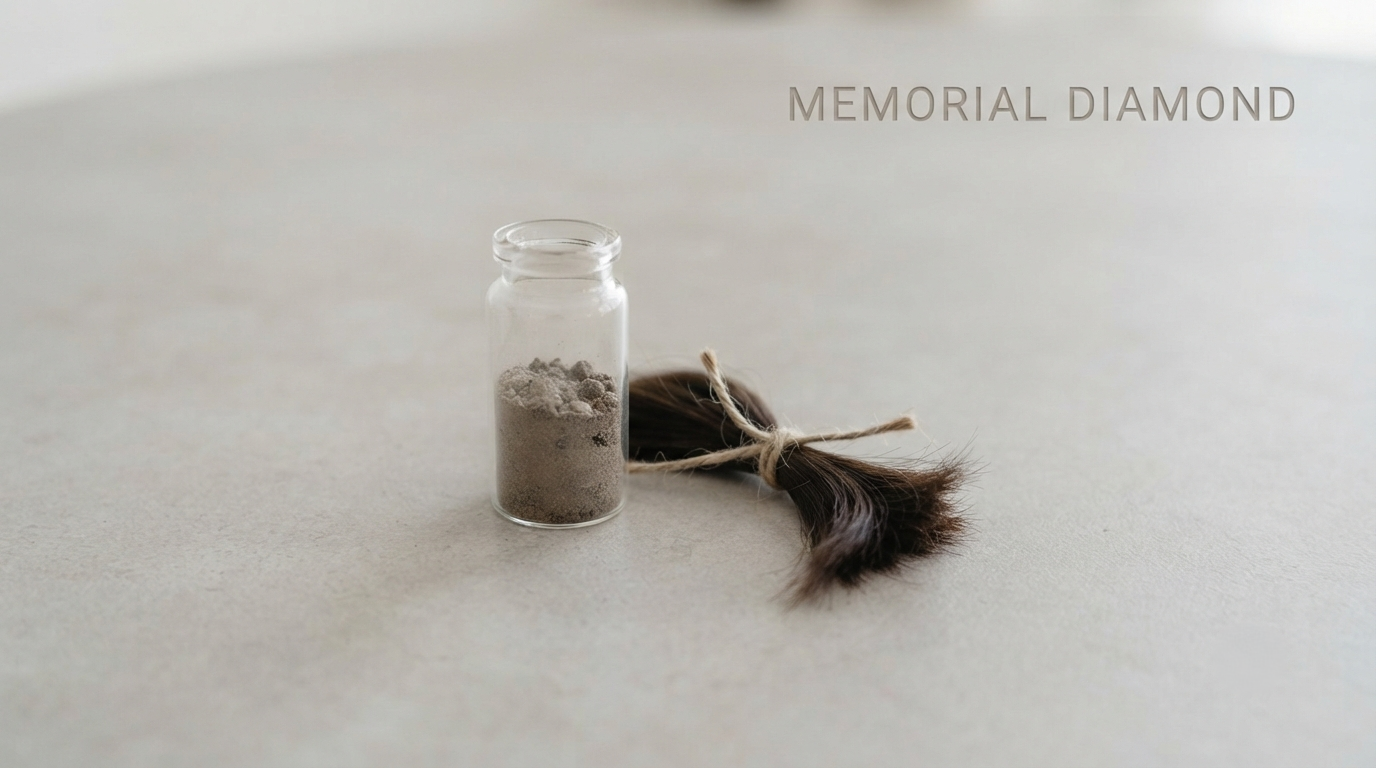
Families who kept a lock from before the cremation often want both to go, and then wonder whether that changes anything. It does not change the honest answer: a stone really made from son ashes and hair genuinely contains carbon extracted from both materials, purified and grown into a chemically real laboratory diamond, blended with supplemental laboratory carbon to reach a usable volume. Sending both does not make a diamond really made from son ashes and hair purer, it changes what the paperwork has to account for.
Table of Contents
What Does Submitting Both Materials Actually Mean?
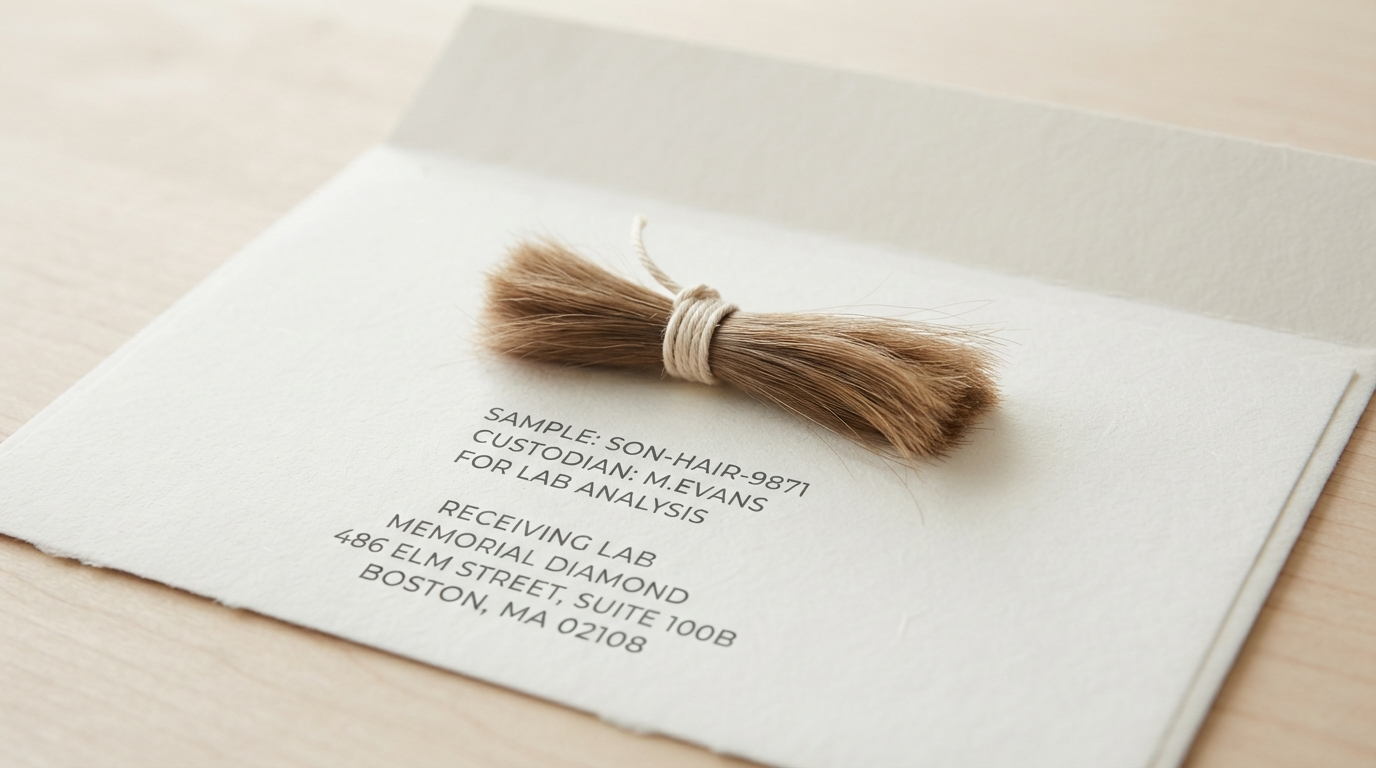
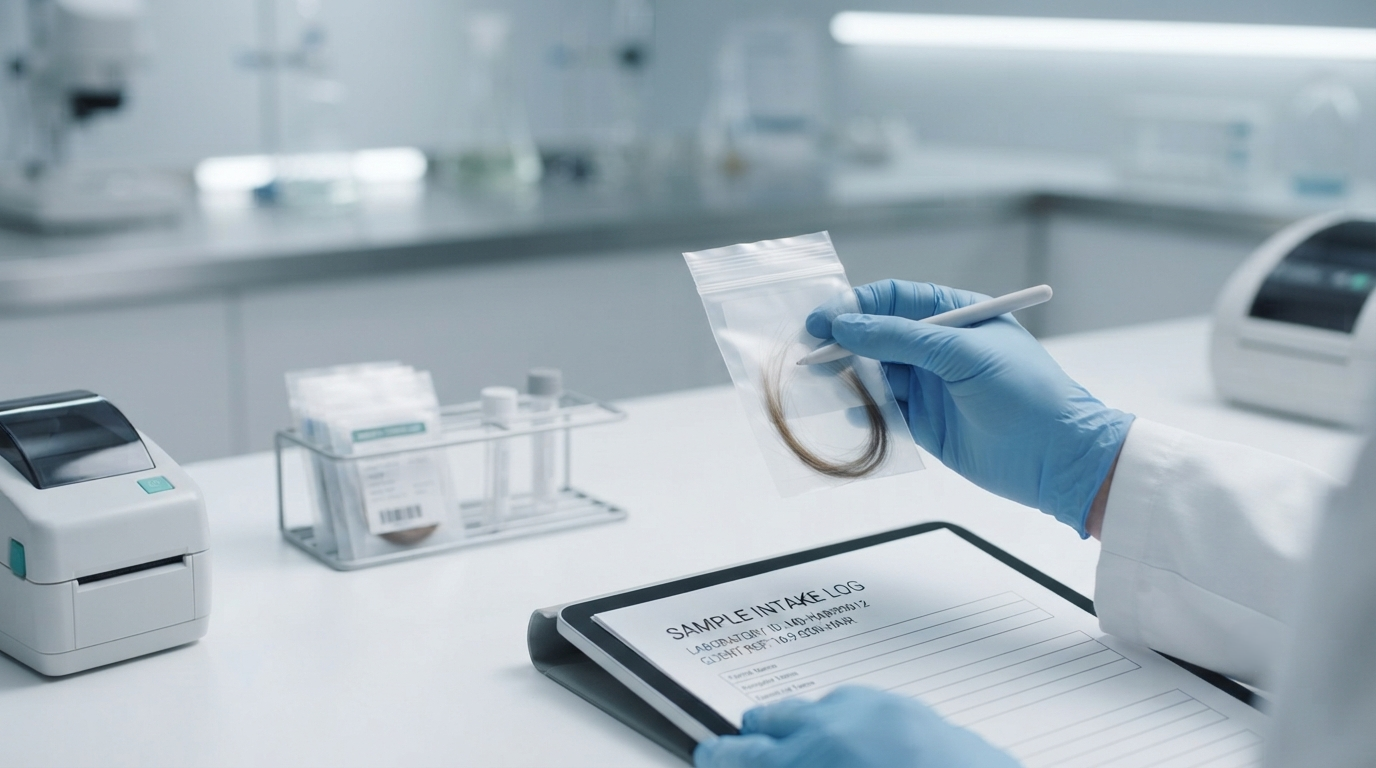
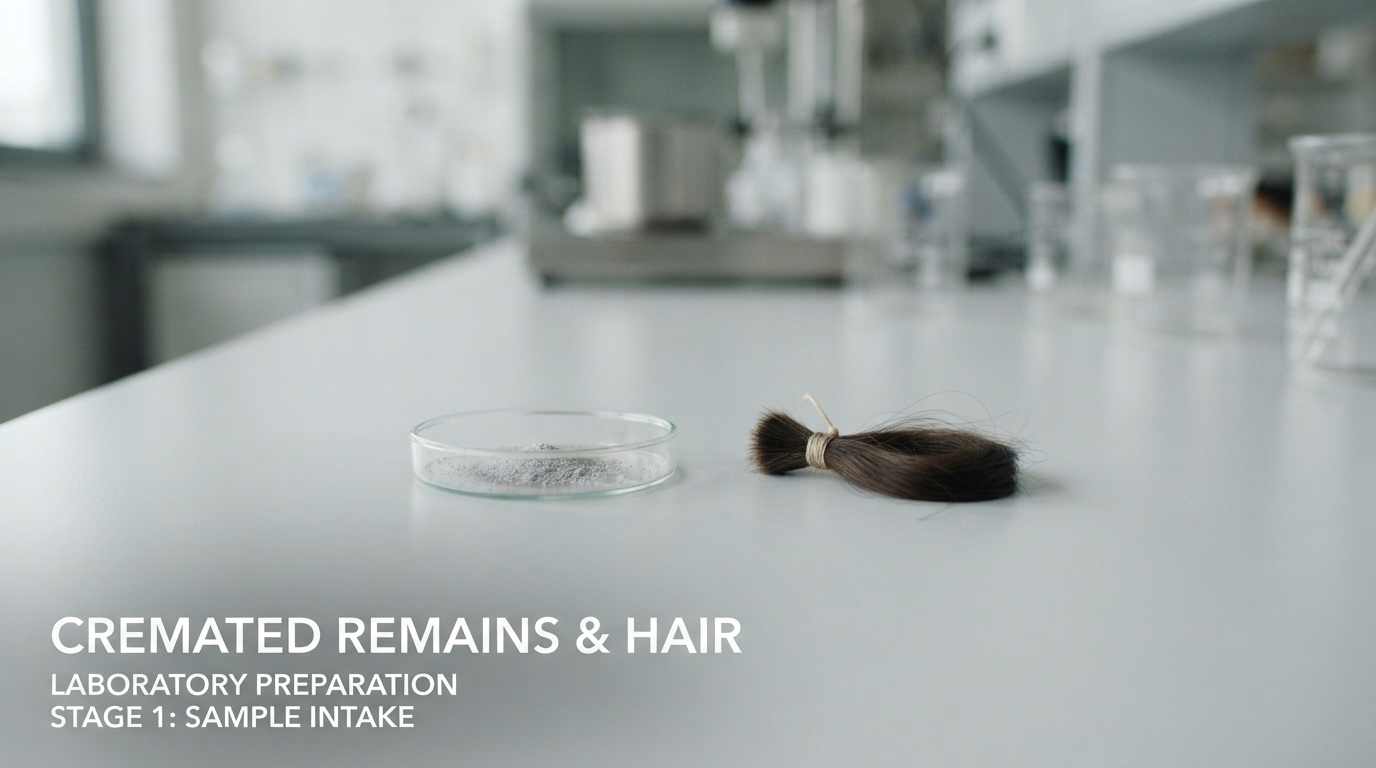
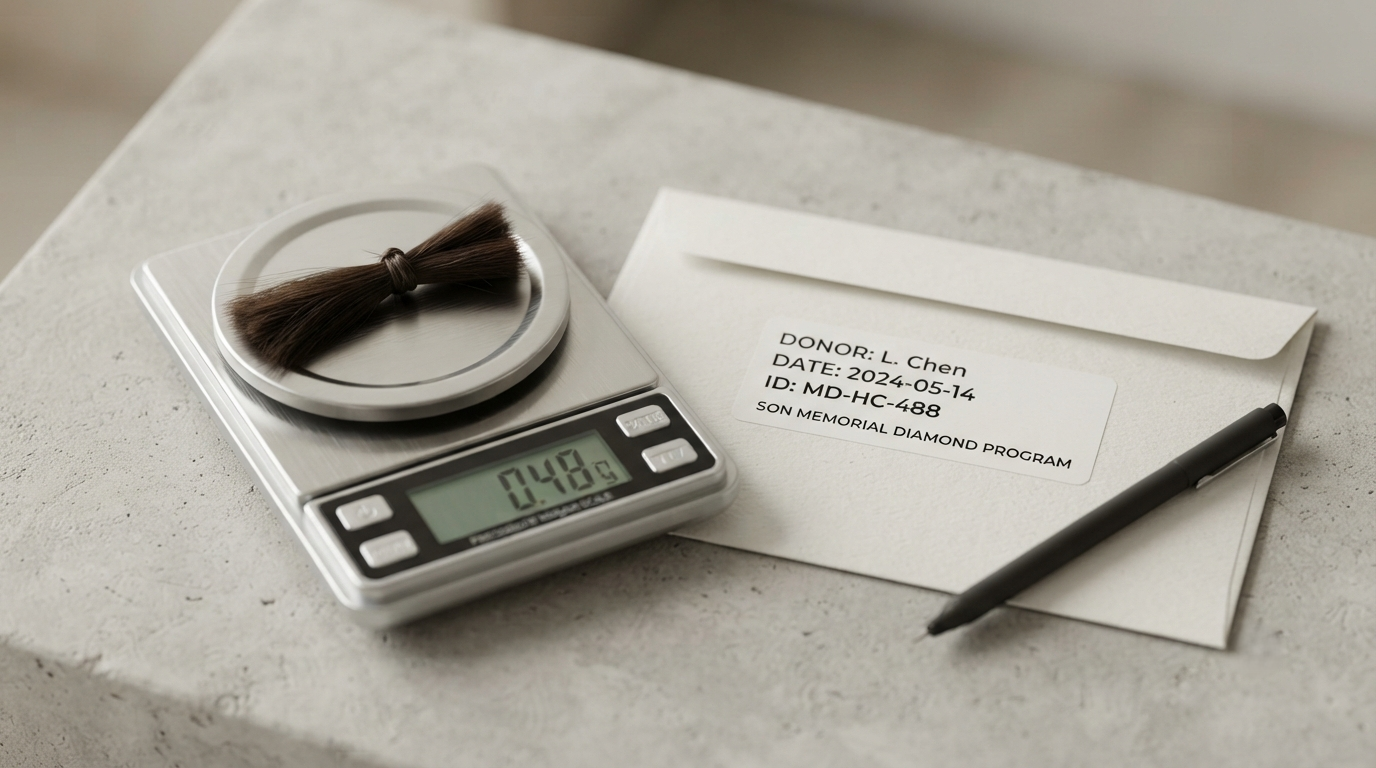
At the simplest level, a commission really made from son ashes and hair means two envelopes instead of one, logged separately at intake and tracked separately until the point where they meet.
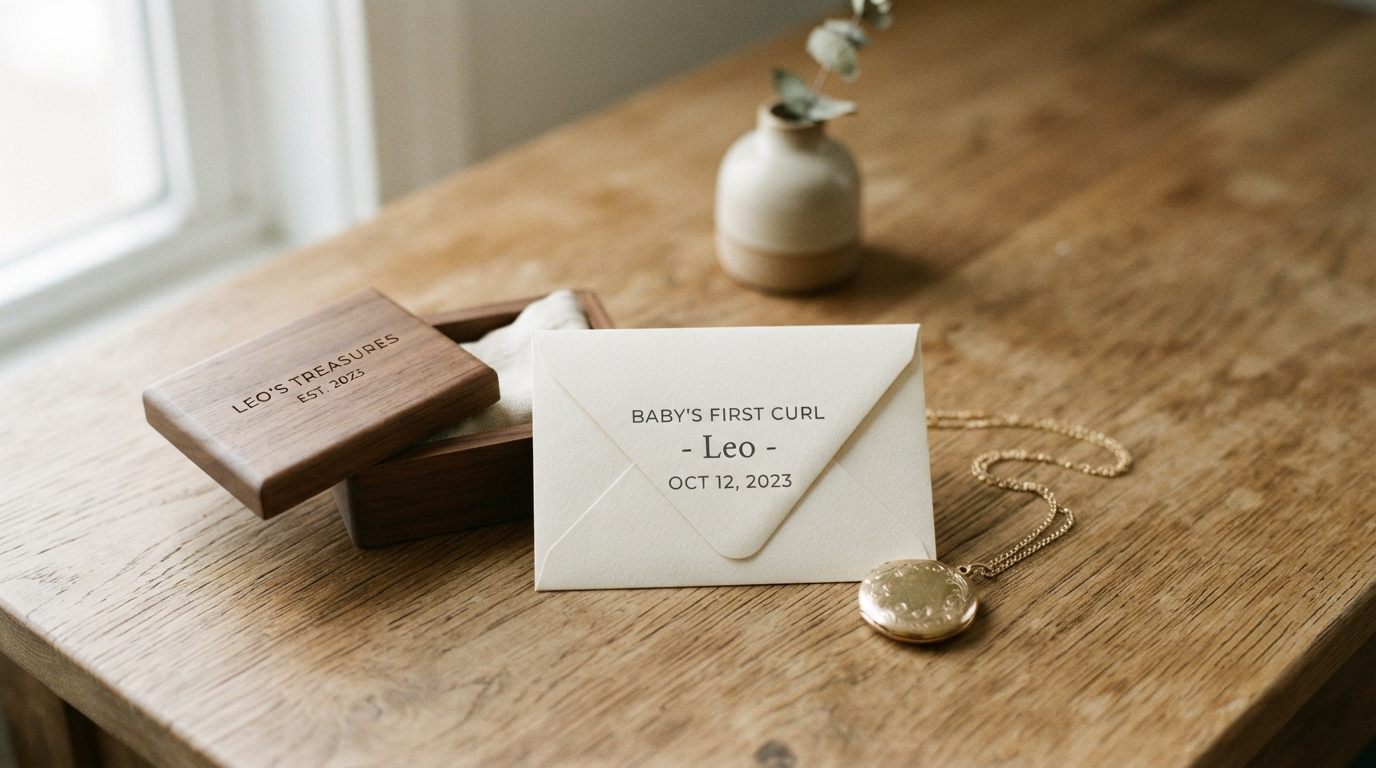
Most families reach this point for a reason rather than by accident. A lock cut at a hospital, a first haircut kept in a drawer since childhood, a few strands from a hairbrush nobody could bring themselves to clean, and then, later, cremated remains. Both feel like him, and choosing one over the other feels like ranking them.
You do not have to. Providers across this industry accept mixed submissions, and there is no chemical reason two carbon sources cannot feed one growth run.
What matters is that you understand what happens after they arrive, because a gem really made from son ashes and hair is not two stones fused together or a stone with layers. It is one crystal grown from a combined feedstock. The complete guide to a son ashes and hair diamond sets out the wider decision.
Are the Two Combined, or Grown Separately?
This is the question to put to a provider first, because the answer is not standardized and it changes what you are buying.
Two arrangements are common. In the first, carbon recovered from both samples is pooled into a single charge, and one crystal is grown from the mixture, a single diamond really made from son ashes and hair, with both materials present throughout. In the second, each sample is processed separately and each grows its own stone.
Ask which one a company does by default, and whether the alternative is available. Ask it in writing. A provider that has genuinely thought about work really made from son ashes and hair will have a settled answer and be able to describe how the two intake records stay linked through processing.
Neither arrangement is better for a stone really made from son ashes and hair, there is only the one that suits your family. A single pooled stone keeps everything in one object; separate stones let two people each hold something. How to turn his ashes and hair into a diamond walks through the practical choice.
Does the Hair Disappear Beside the Ash?
Parents preparing a gem really made from son ashes and hair worry about this specifically, and the underlying chemistry is worth knowing, because the two materials are nothing alike as starting points.
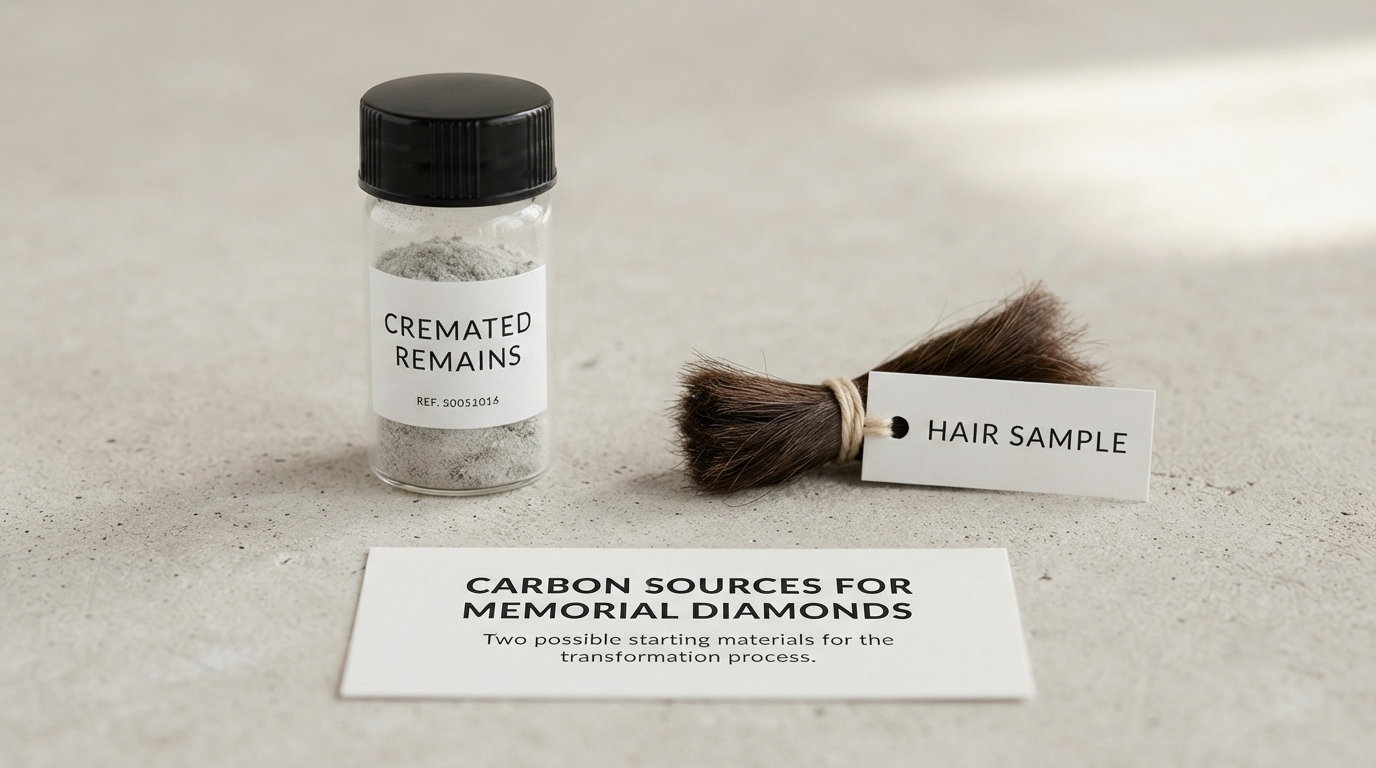
| Cremated remains | Hair | |
|---|---|---|
| Main composition | Calcium phosphate, bone mineral | Keratin, a carbon rich protein |
| Carbon as starting material | Roughly 0.5 to 4% of ash by weight | Roughly 50% carbon by weight |
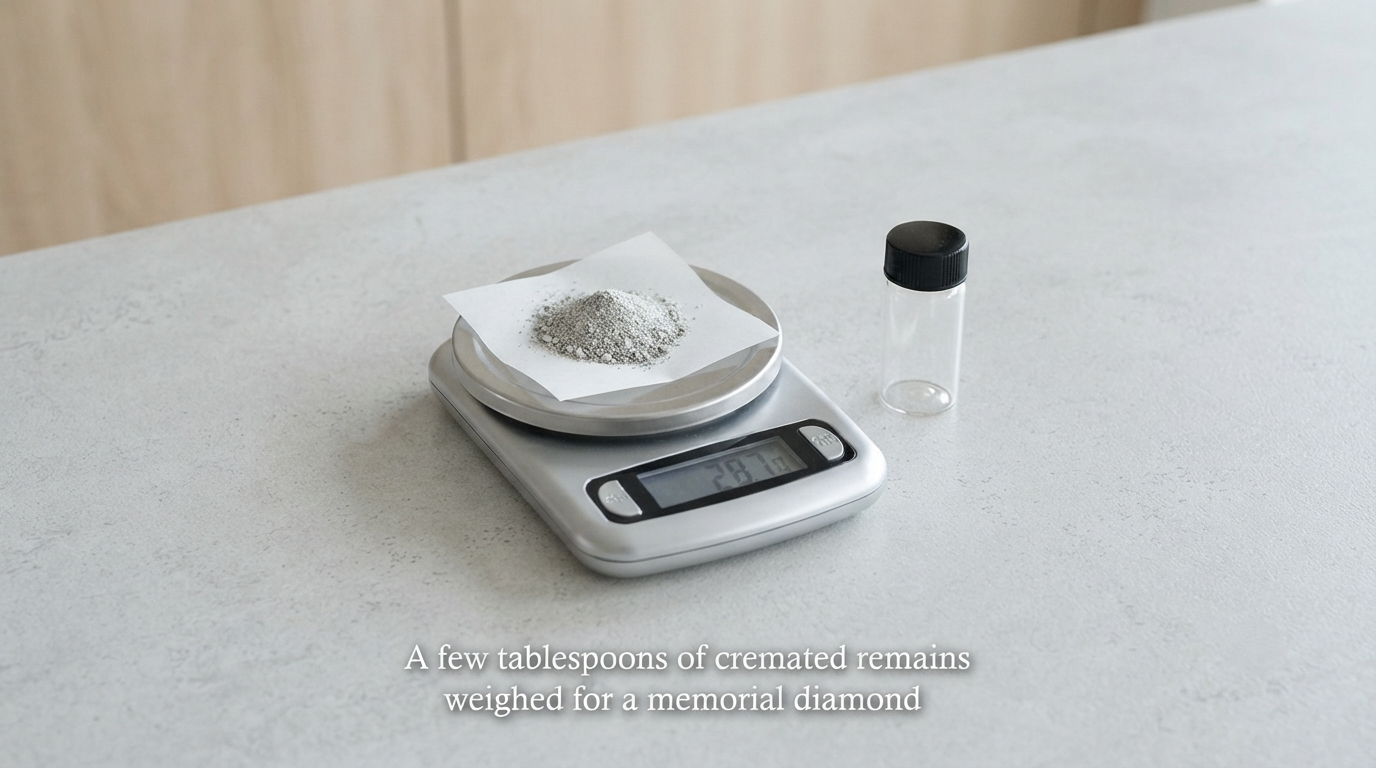
| Typical quantity requested | A few tablespoons up to about 4 oz | A small lock, or a few grams |
| Requires cremation? | Yes, by definition | No |
| Recovery after purification | A small fraction of what you send | A much higher proportion of what you send |
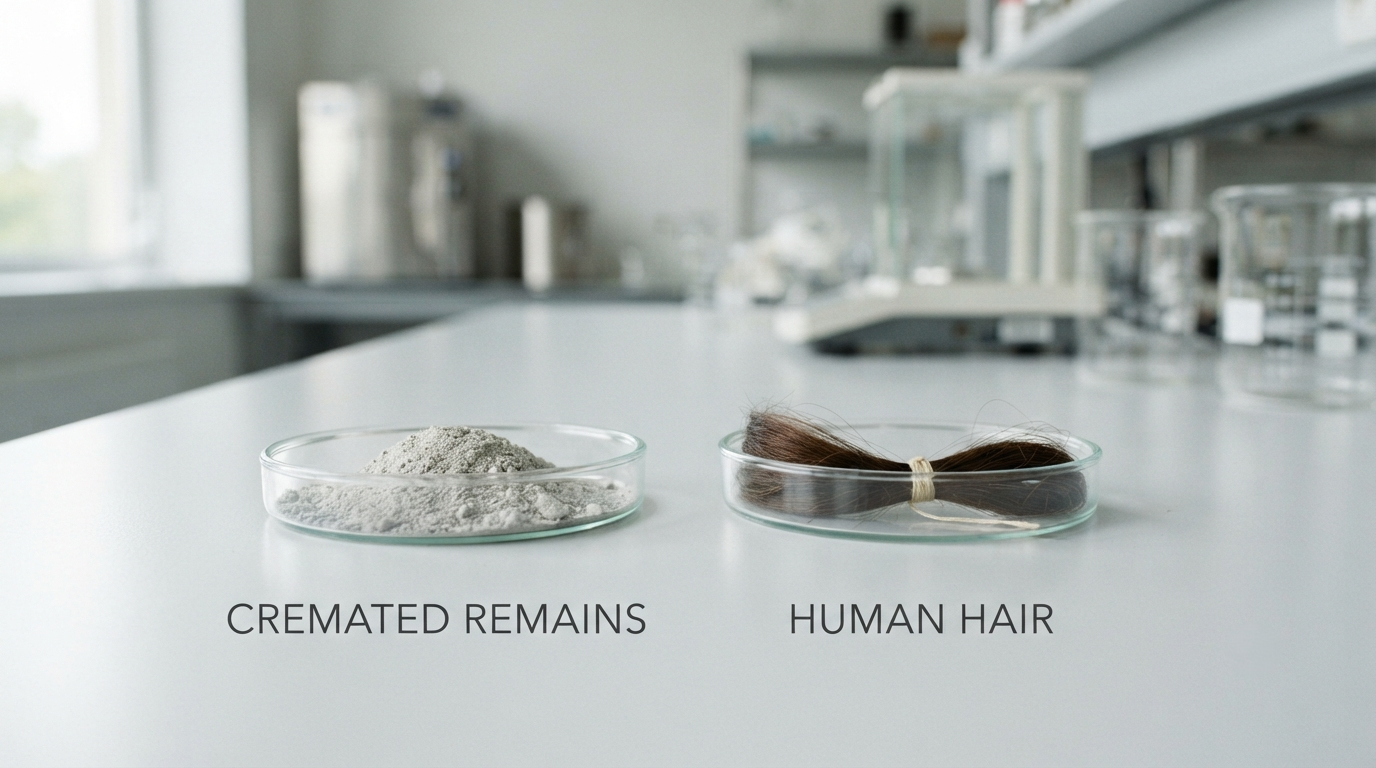
Read the second row carefully, because it explains the whole question. Gram for gram, hair is a far richer carbon source, so a modest lock can contribute a meaningful share of the personal carbon in something really made from son ashes and hair, it is not a token addition swamped by the ash.
What the table cannot tell you is the resulting ratio inside your specific stone, since that depends on quantities submitted and on how a particular laboratory runs its process. Anyone quoting you a precise split for a jewel really made from son ashes and hair without asking what you are sending is guessing.
What Share Is Really Made From Son Ashes and Hair?
Here the honest answer involves naming a gap rather than filling it. No published industry figure describes the personal carbon share of a blended ash and hair charge. A figure exists for the ash route on its own. Nothing equivalent has been published for hair alone, and nothing at all has been published for the two combined.
So be skeptical of any page that applies an ash route percentage to a stone really made from son ashes and hair as though the blend behaved identically. It may not, and nobody has published the work that would settle it.
What holds regardless of route is the structure of the answer. Personal carbon from both of your submissions is genuinely inside the crystal lattice, and supplemental laboratory carbon is added because the recovered quantity alone cannot fill a growth cell. Every diamond really made from son ashes and hair is a blend of personal and laboratory carbon, and a company telling you otherwise is overclaiming.
Turn that gap into a request before commissioning anything really made from son ashes and hair. Ask what percentage of the finished stone the provider expects to be his carbon at your chosen carat, ask how a mixed submission changes that estimate, and ask for both answers in writing. Keep the reply, it is the only figure that will ever apply specifically to your stone.
Is the Finished Stone a Real Diamond?
Yes, in the full technical sense. A piece really made from son ashes and hair is carbon in diamond structure, graded on the same terms as any other diamond, and it is neither a simulant nor ash suspended in something clear.
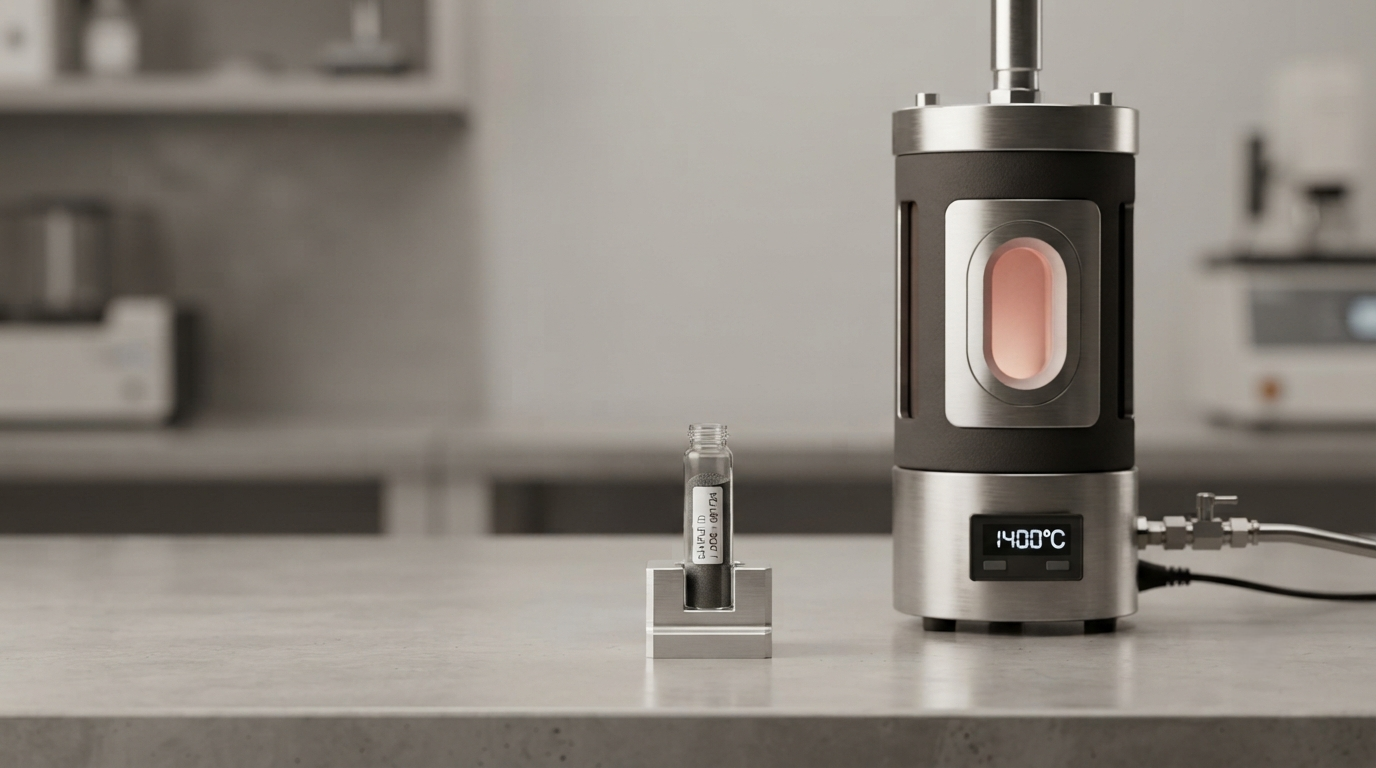
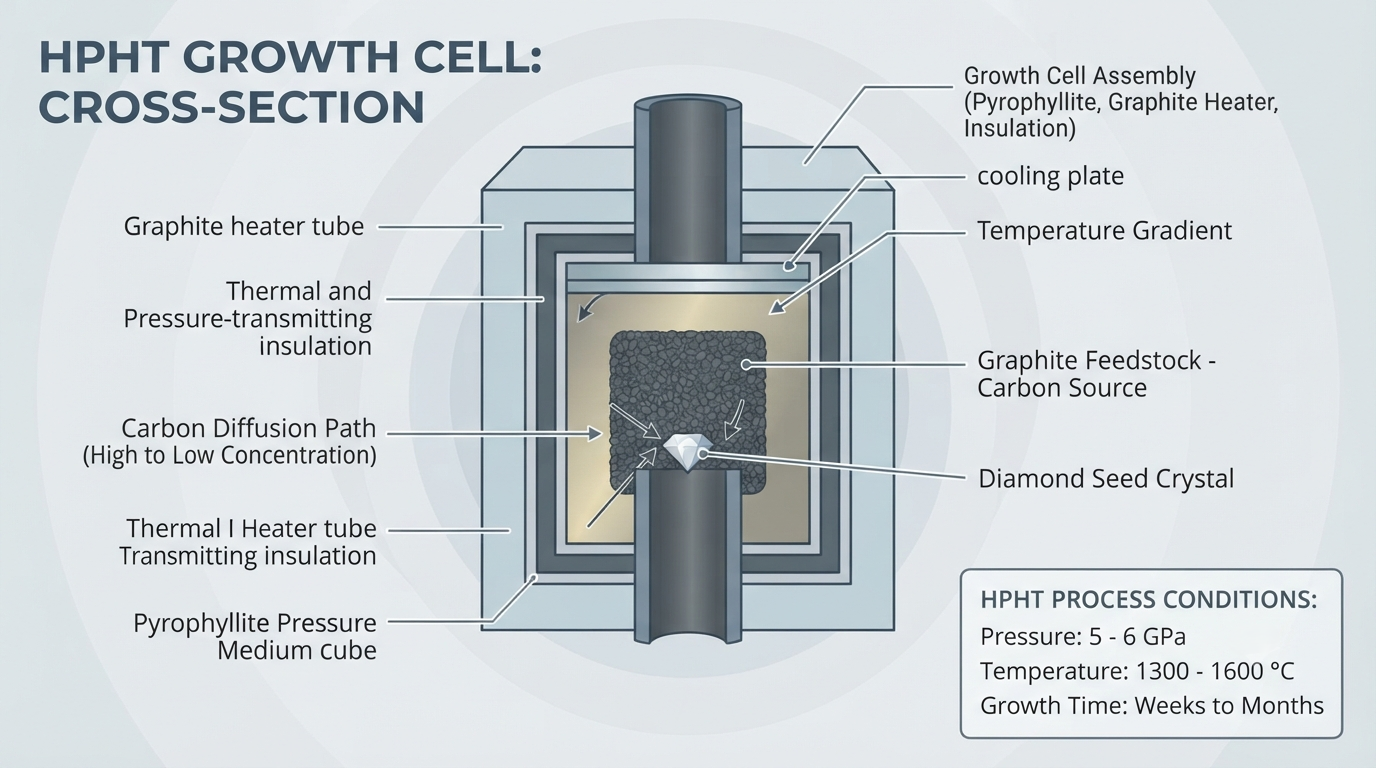
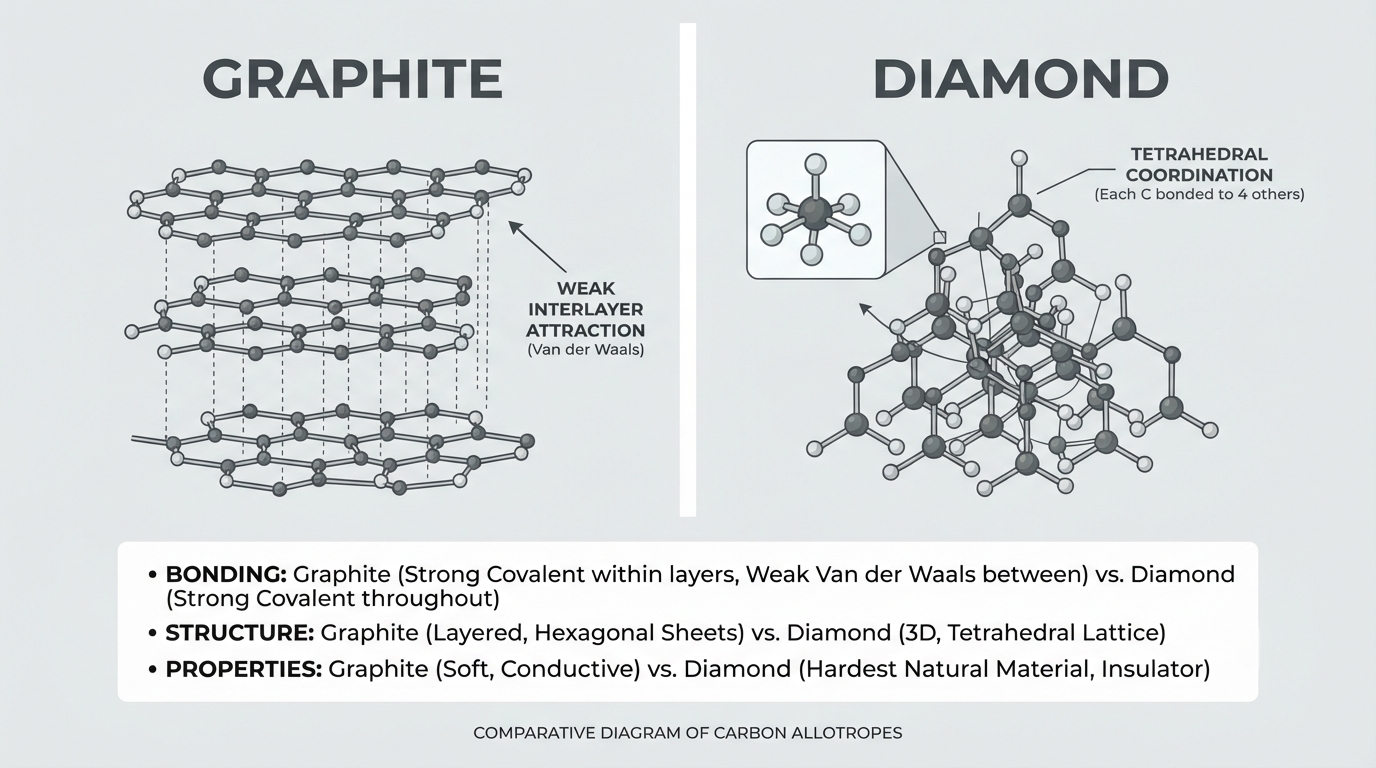
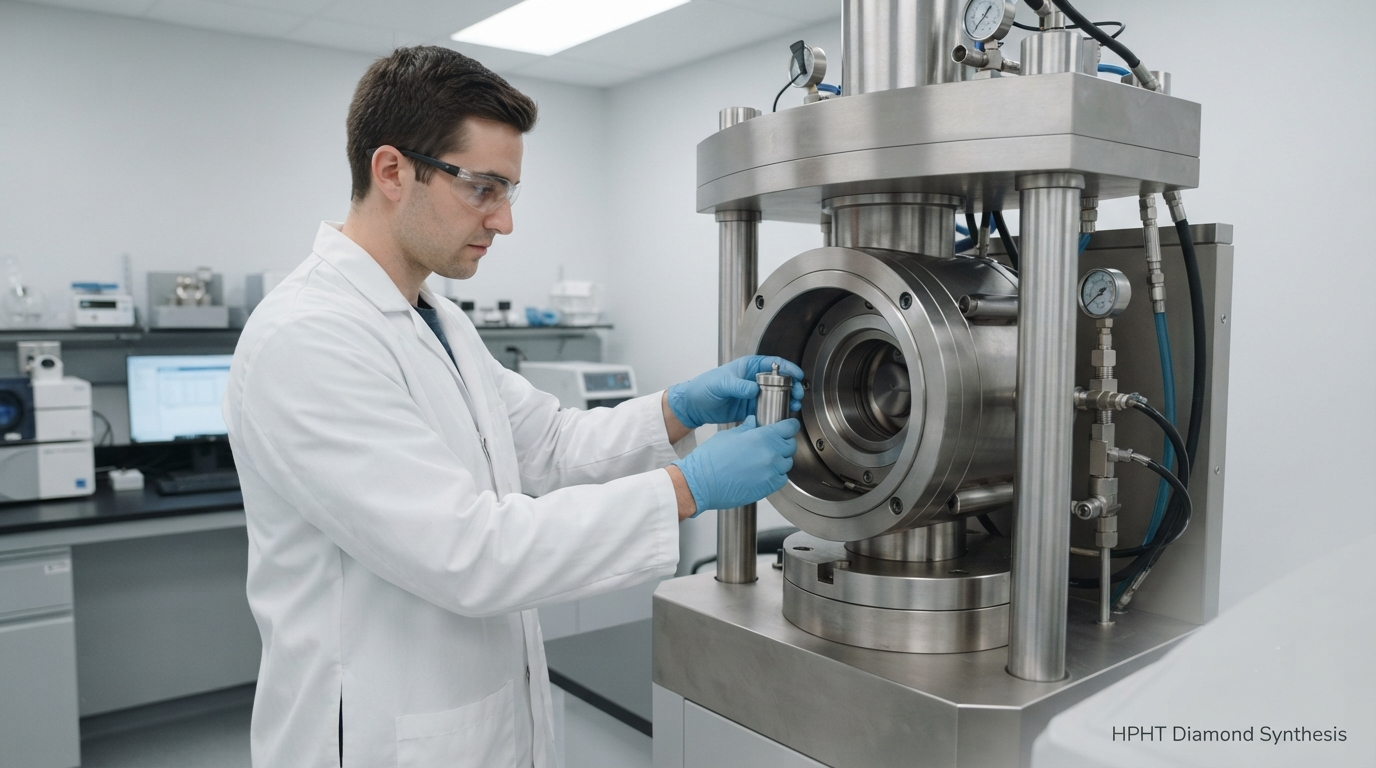
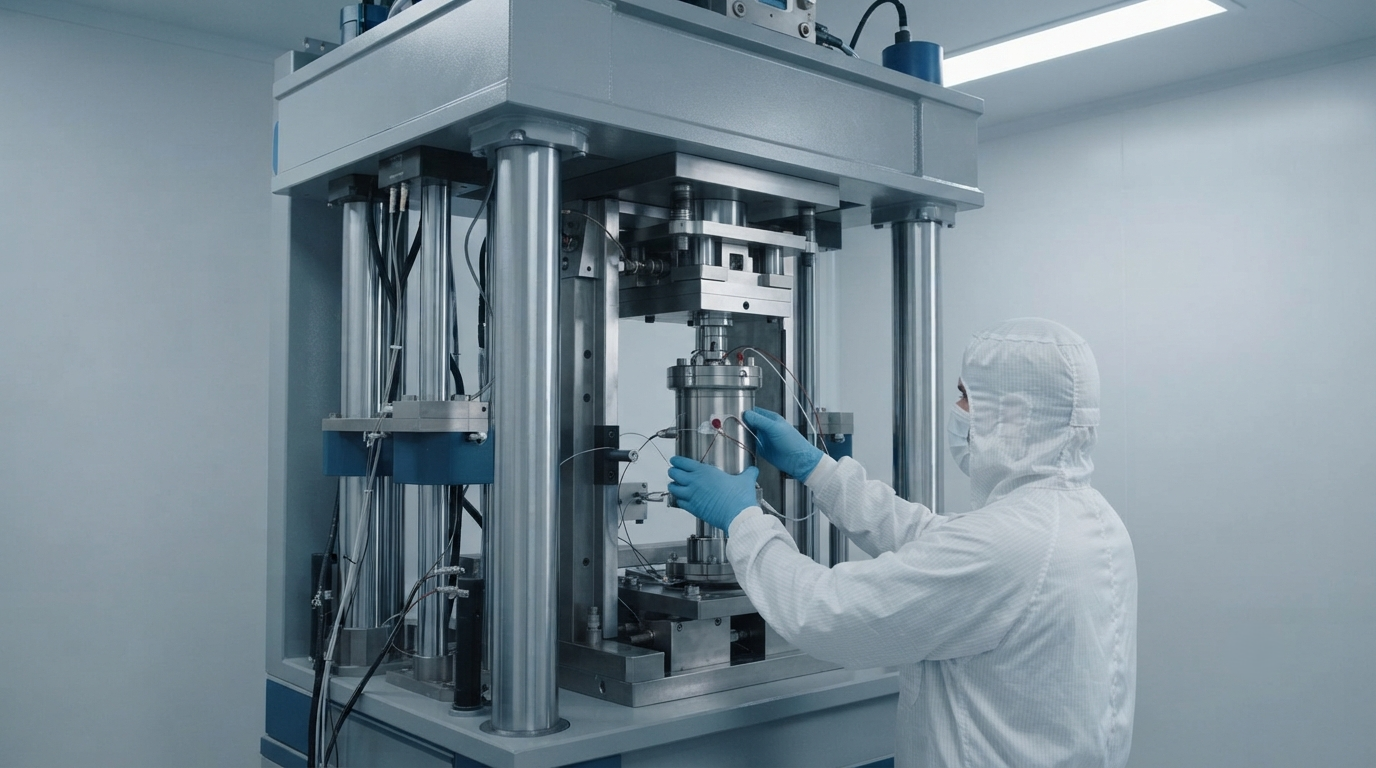
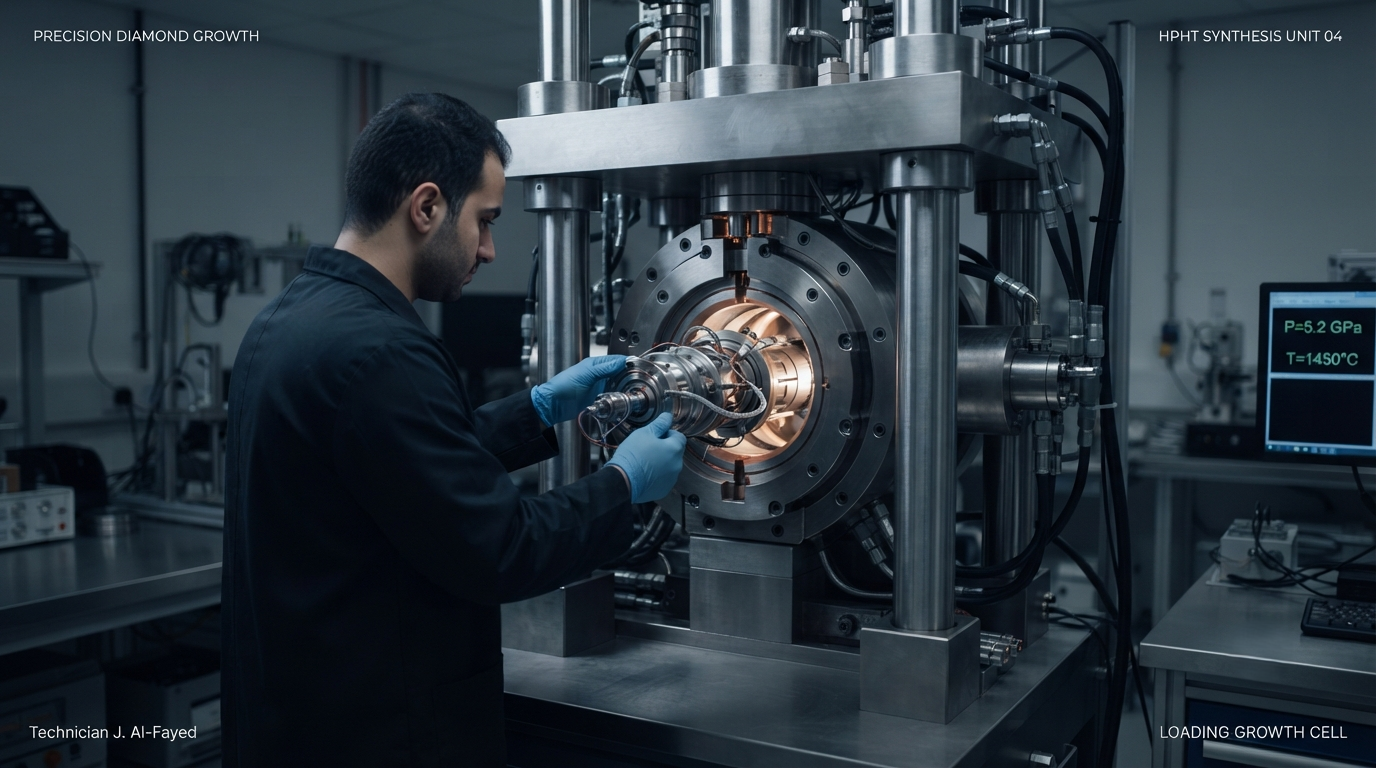
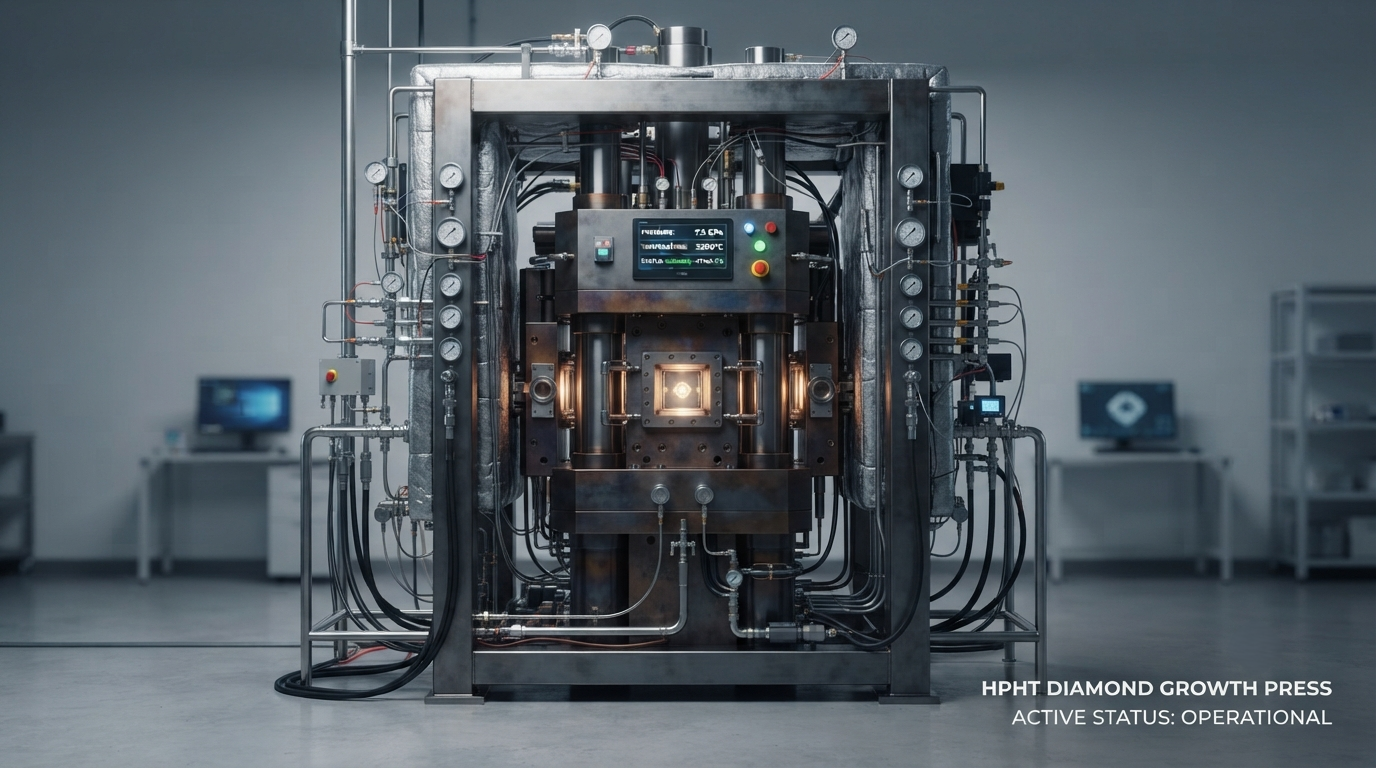
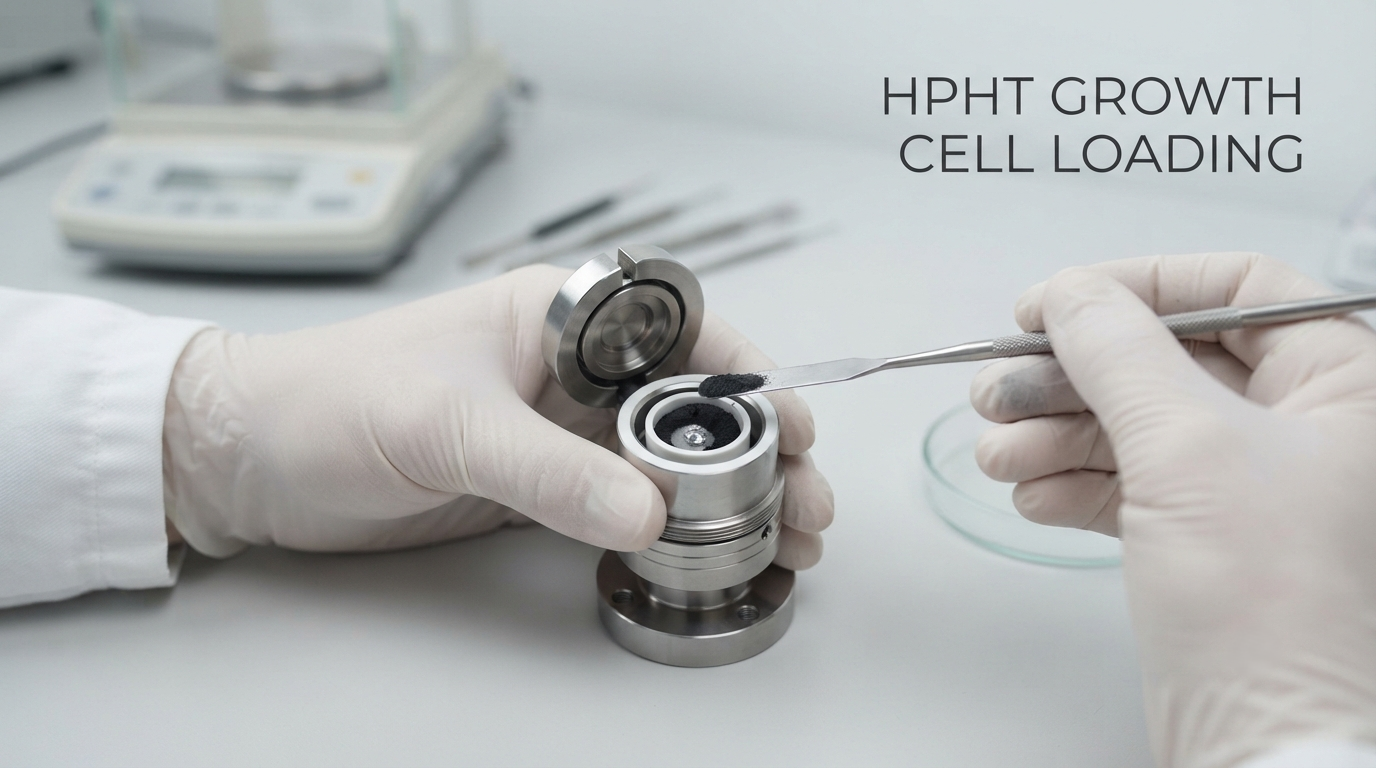
Growth uses the methods the whole lab grown memorial diamond category relies on. HPHT is the common route: a press squeezes the growth cell to roughly 6 to 8 gigapascals while the temperature is held between about 1,400 and 2,500 degrees Celsius. CVD, used by a minority of providers, deposits carbon from a gas onto a seed plate in a vacuum instead.
Hardness comes out at 10 on the standard mineral hardness scale, meaning a gem really made from son ashes and hair can be worn daily, set in a ring, and treated as ordinary jewelry rather than something fragile.
Laboratory testing will correctly report a stone really made from son ashes and hair as grown rather than mined. That is a statement about method, not about legitimacy, and it applies equally to every laboratory diamond on the market.
What Should the Paperwork Itemise for Two Materials?
More than a single material submission would, and this is where a mixed commission is genuinely different. Documentation for something really made from son ashes and hair has to account for two arrivals, not one.
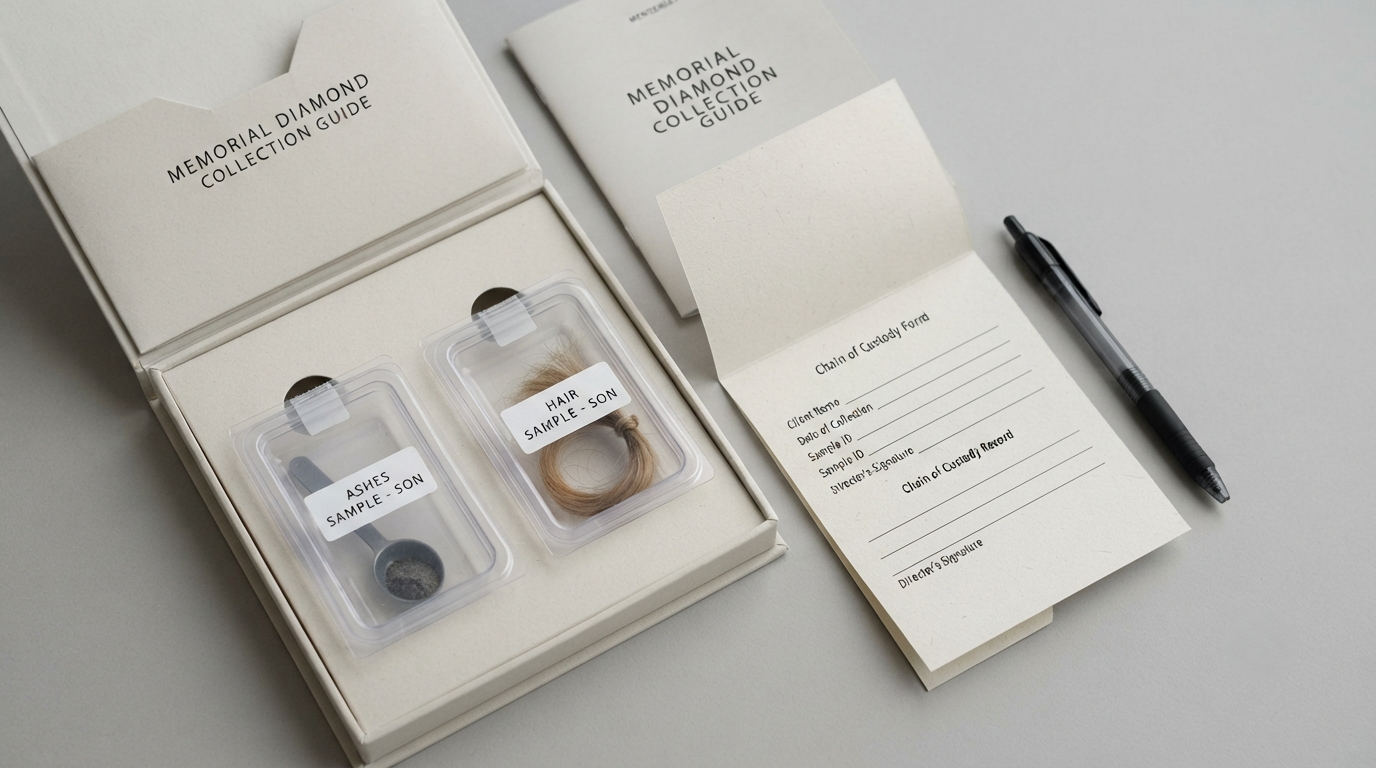
- Two intake records, each with its own unique identifier, dated and described separately.
- A custody trail for each, tracking both samples through processing up to the point they are pooled.
- A written statement of the pooling step, when the two were combined, or confirmation that they were not.
- The provider’s own percentage estimate, given in writing, since no published figure covers a blended charge.
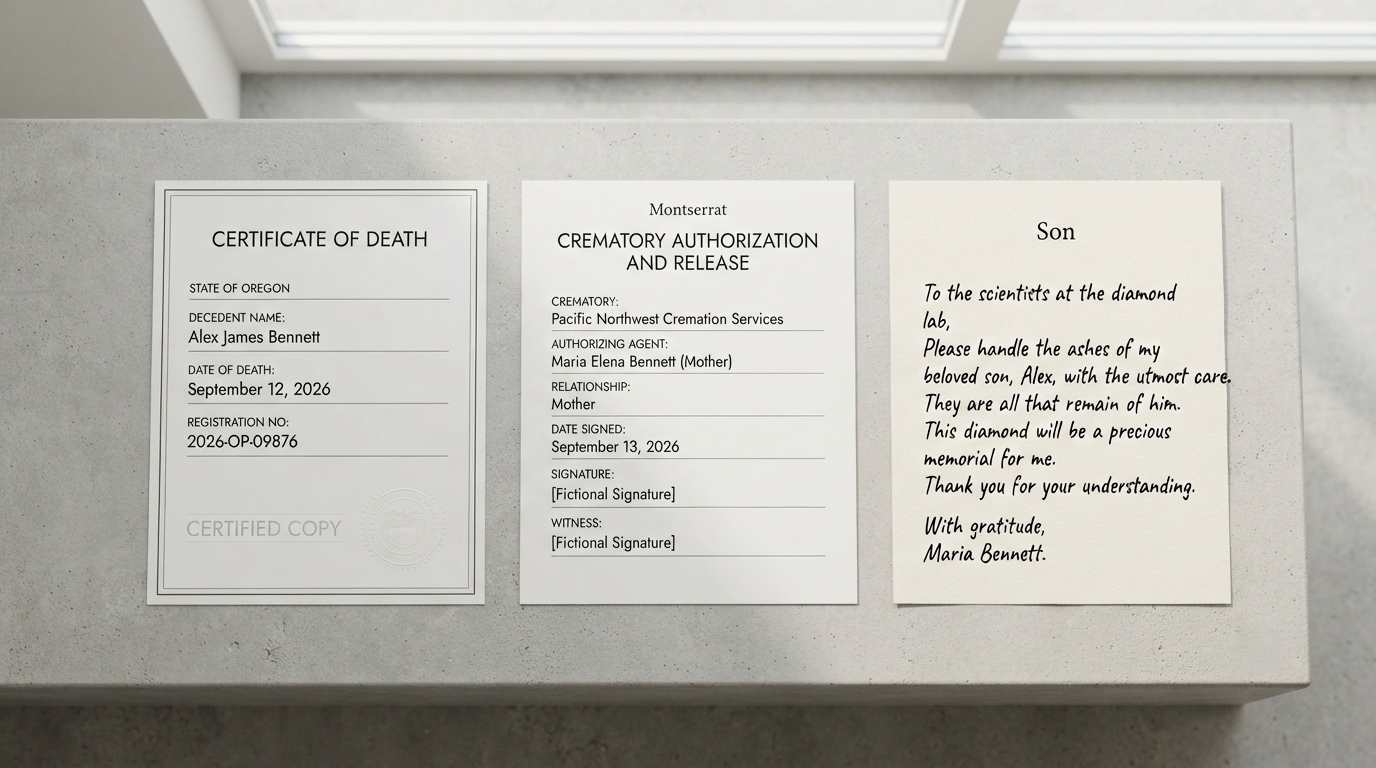
- An authenticity or origin certificate, normally an in house document naming both materials.
- An optional independent grading report, which assesses the stone itself rather than its origin.
- A stated policy on leftovers, covering unused ash and unused hair separately, since a submission really made from son ashes and hair generates two kinds of surplus.
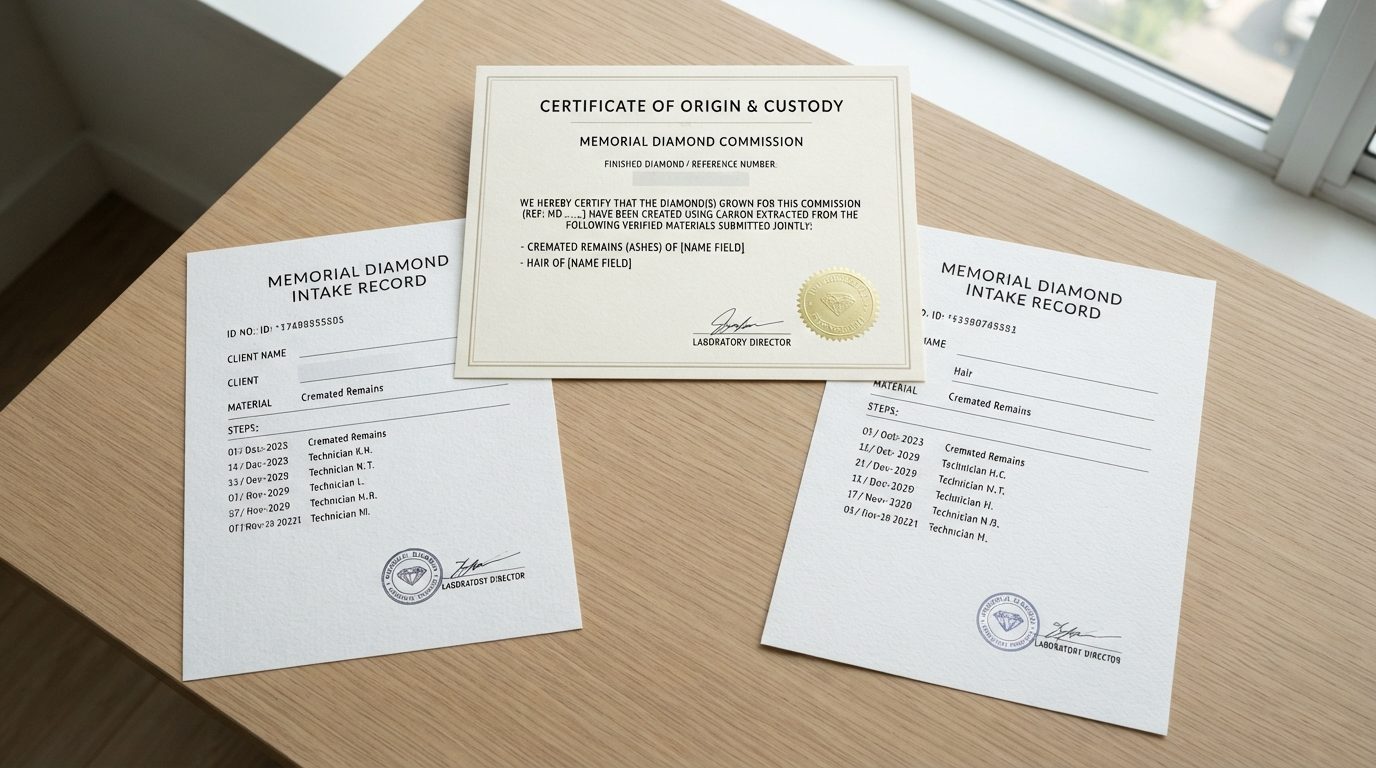
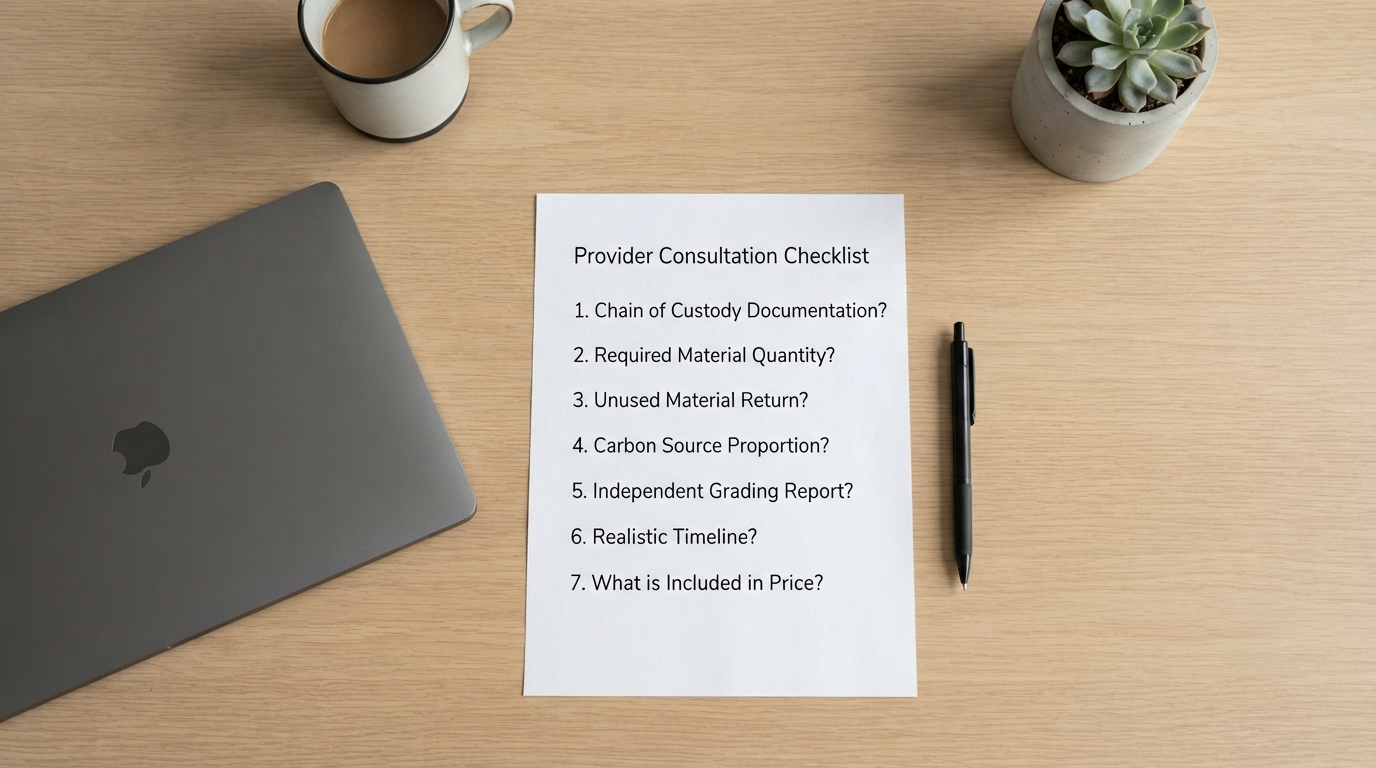
That sixth point is the one families most often misread. An independent grading report judges the stone’s cut, color, clarity and carat against the standards applied to any diamond, it cannot confirm that a stone is really made from son ashes and hair, because no third party laboratory witnessed the growth cell being loaded. Only the custody documentation speaks to origin. Questions to ask before you commit puts these on a single checklist.
Could You Have One Stone From Each Instead?
Often, yes. Splitting a commission really made from son ashes and hair resolves a disagreement that a single pooled stone would not.
Because only a portion of a cremation is ever used, and because hair needs so little to begin with, a submission of both materials can frequently support more than one diamond. That opens options a single commission really made from son ashes and hair does not: one stone for each parent, or a stone from the ash for one person and a stone from the hair for another.
It also matters when parents are separated, or when a family is quietly divided about the whole idea. Two smaller stones can be easier to agree on than one larger one that must eventually live in a single house.
Ask three things before deciding: whether your quantities support multiple stones, whether they would be grown in the same run or separate ones, and how each is documented. Growing two of anything really made from son ashes and hair costs more than growing one, so ask for pricing on both shapes of the plan. Whether siblings can each have a stone covers the family side of that question.
What If Only One of the Two Is Usable?
It happens, and it is better to know the policy in advance than to discover it mid process. A sample can arrive too small, too contaminated, or too degraded to yield workable carbon.
Hair is the more common casualty. A lock stored somewhere damp for years, or a few strands so fine they barely register on a scale, may not survive purification in a usable quantity. Ash is more forgiving, since remains are chemically stable in storage, though a very small portion submitted for a piece really made from son ashes and hair can still fall below what a growth run needs.
Ask three things before you post anything. What happens if one sample proves unusable, does the run continue on the other material alone, with your agreement? Are you told before that decision is made, or afterwards? And is any part of the fee adjusted?
The answers matter emotionally as well as practically. A parent who sent both materials because both mattered should not learn after the fact that only one made it into the crystal. Good providers stop and telephone; the arrangement for something really made from son ashes and hair should say so in writing.
Get that in the same email as the percentage estimate, so everything you were promised about a stone really made from son ashes and hair sits in one place you can find again.
Is Either Sample Identity Checked?
Parents reasonably assume somebody verifies that both samples came from the same person. In honesty, no public account of how this sector operates settles whether identity or genetic verification is performed on what families send, so treat a confident claim either way, a flat denial included, with care.
That makes it something to ask rather than something to look up. Ask whether any verification step exists in their process for a commission really made from son ashes and hair, at which stage it happens, and what record of it you receive.
With two materials there is a second, more practical version of the question. For anything really made from son ashes and hair, does the laboratory confirm that both envelopes belong to the same commission before pooling them? That is a workflow question a competent provider can answer immediately.
Who Signs Off, and Is It the Same Person for Both?
Not necessarily, and families arranging something really made from son ashes and hair are often surprised by it. The two materials can sit under different considerations.
For cremated remains, most states set a statutory order of priority over the disposition of a decedent’s remains. A surviving spouse or partner is commonly at or near the front of that order, and your son’s own adult children may rank ahead of his parents. Anything he put in writing can rearrange that order, and the rules differ from one state to another, so authority over the ash portion of anything really made from son ashes and hair is worth confirming rather than assuming.
Hair is a different conversation. Those statutory rules are aimed at the remains themselves, so a lock already in your possession is usually the simpler question in practice, though belongings can fall within an estate, the position varies by state, and a sample held by someone else is something to discuss with them rather than decide for them.
Where the two answers point to different people, that is worth knowing before anything ships rather than afterwards. A funeral director or a local attorney will settle it quickly. How a memorial diamond is made from both covers what happens once the material is on its way.
What Does a Diamond Really Made From Son Ashes and Hair Cost?
Submitting two materials rather than one does not itself change the price. What drives cost is carat weight, color and any extras, and using general 2026 industry ranges rather than a specific company’s rates, a stone of about 0.10 to 0.25 ct sits near $1,500 to $3,500, a half carat to one carat stone near $5,000 to $15,000, and anything from two carats upward from $20,000 to $75,000 or beyond.
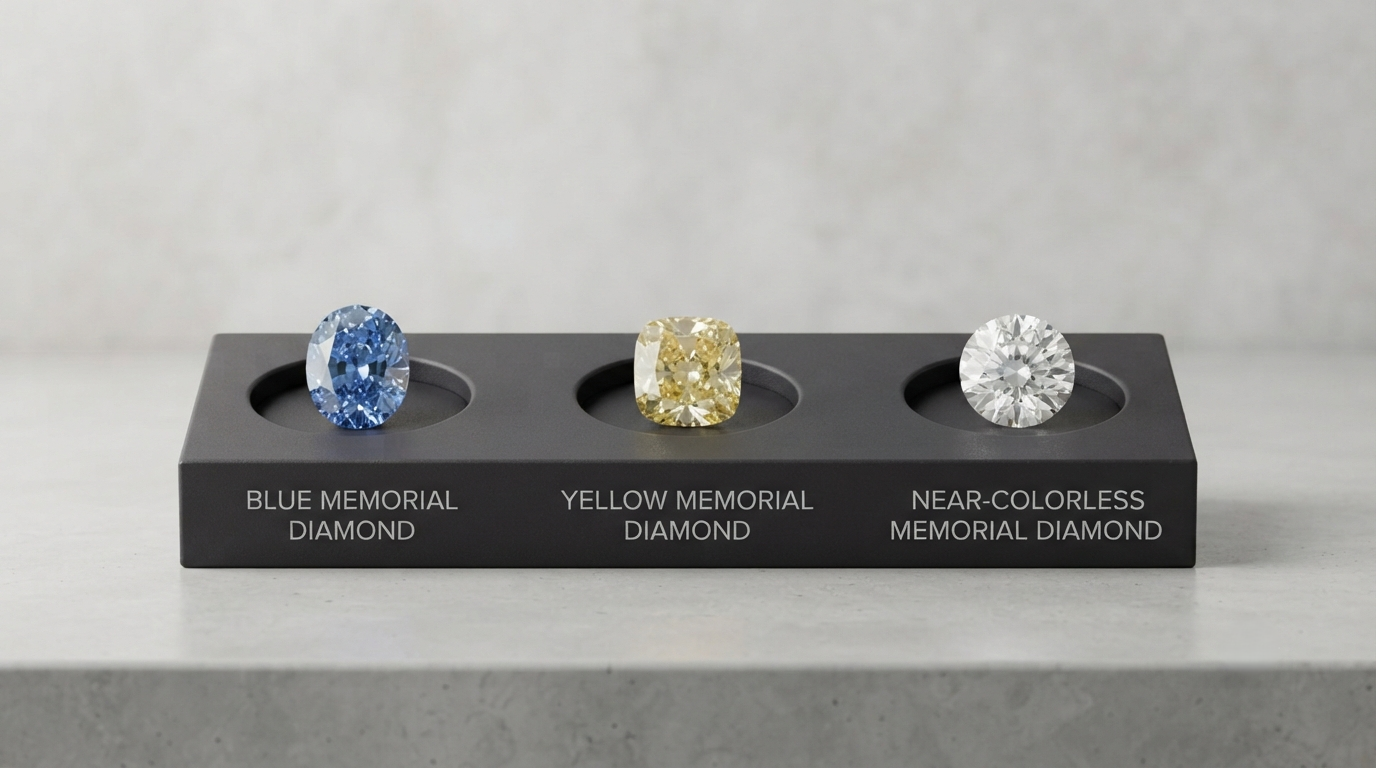
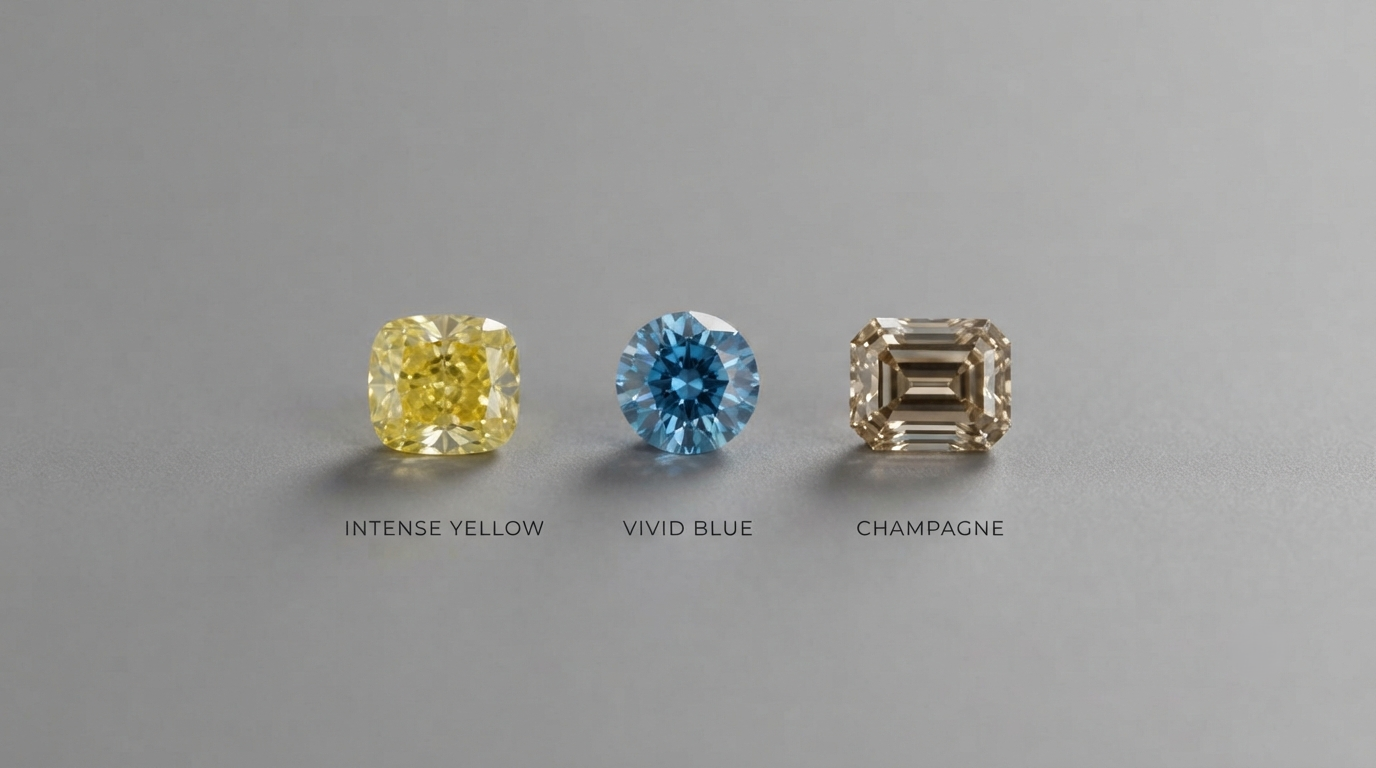
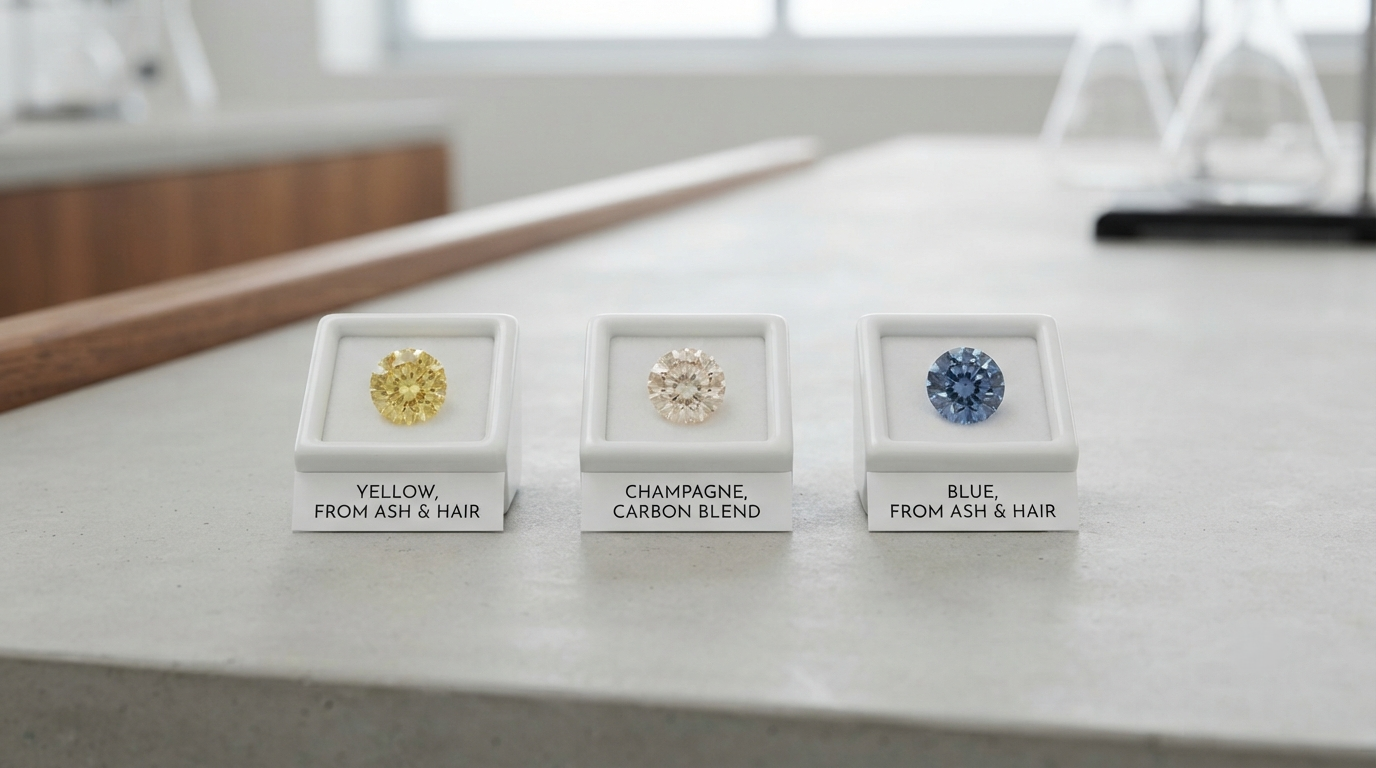
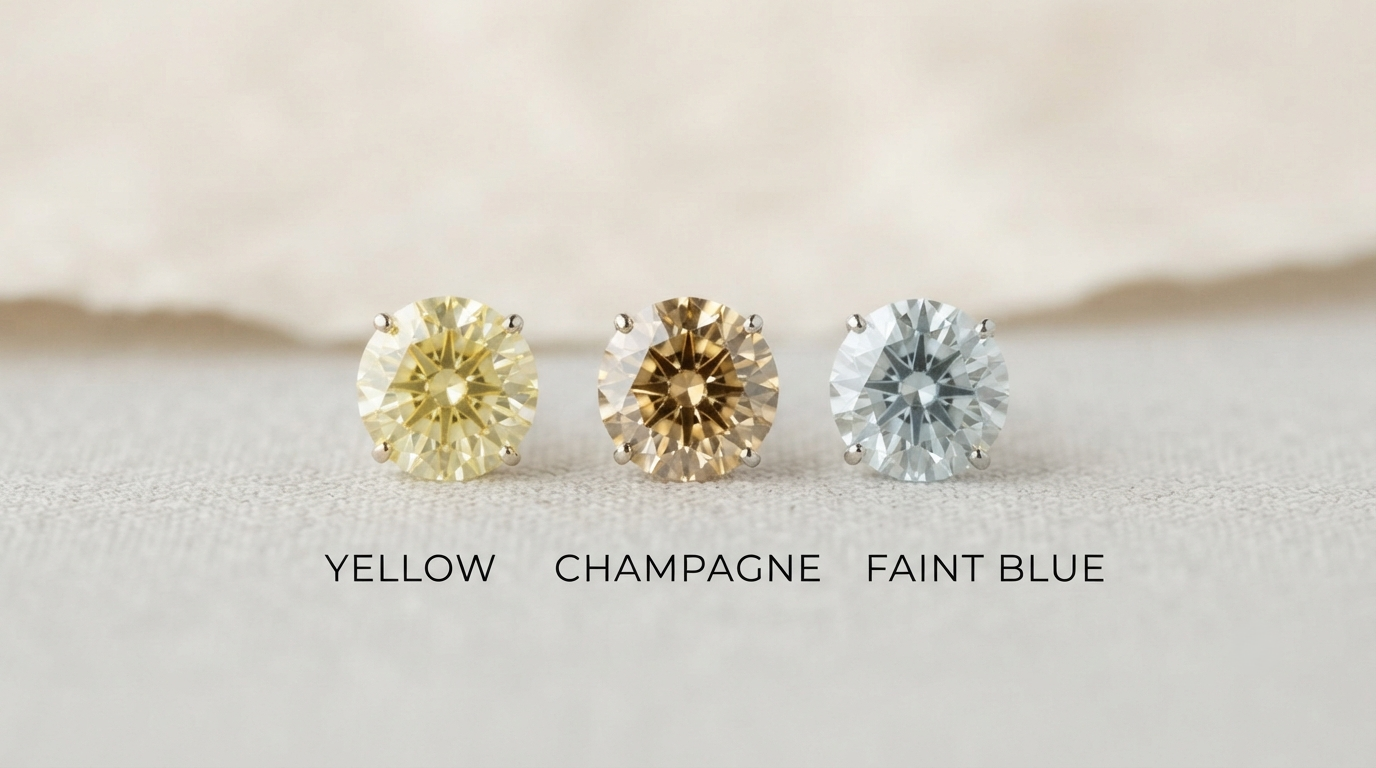
Colorless commands a premium over yellow, blue or champagne at the same weight, because keeping trace elements out takes more process control. Settings, engraving, fancy cuts and an independent grading report are normally quoted on top of the stone.
On timing, the usual industry span is six to ten months from receipt, reaching about twelve for large stones or specialty colors such as black. Growth time sets the size, so a commission really made from son ashes and hair takes no longer simply because two materials were submitted. What a son memorial diamond costs goes tier by tier.
Frequently Asked Questions
Do we have to send both at the same time?
Usually not, but ask first. Some providers prefer both samples in hand before processing begins so they can be logged against one commission; others accept a second material later. Confirm the sequence before you post anything, since it affects the documentation.
Does adding hair mean less ash is needed?
Possibly, and it is worth asking directly. Because hair carries a far higher proportion of carbon than cremated remains do, some laboratories may adjust the ash quantity requested when hair is included. Requirements vary between providers, so get your own answer confirmed.
Can the two materials be identified separately in the finished stone?
No. Once the carbon from both is purified and pooled, nothing distinguishes one source from the other inside the crystal, carbon atoms carry no origin marker. What identifies the submission is the paperwork trail, not anything visible or testable in the stone.
Will using two materials change the color?
No color can be predicted or promised for a stone really made from son ashes and hair. Trace elements decide the outcome, and a cleaner or mixed starting material does not make the result controllable. Discuss color preferences early and ask what the provider can genuinely influence.
What if we only have a very small amount of each?
Say so when you inquire rather than sending everything and hoping. A laboratory can tell you in advance whether your combined quantities support the stone size you want, or whether a smaller carat would be the realistic option instead.
Can the rest of his ashes still be buried or scattered?
Yes. Only a portion is used, so interment, scattering, keeping an urn at home, or dividing the remainder among relatives all stay open to you. Choosing a diamond does not close off or diminish any other plan the family has made.
Final Thoughts on Sending Both Ashes and Hair
Families who send both are usually trying to leave nothing of him behind, and that instinct deserves a truthful reply rather than a comforting one. Both materials genuinely contribute carbon to a stone really made from son ashes and hair. Both are genuinely inside it. Neither makes it pure, and no published figure yet describes what the combined share works out to be.
So the work in front of you is narrow: get the provider’s own percentage estimate in writing, find out whether they pool or grow separately, and check that the documentation accounts for two arrivals rather than one.
If you go ahead with a diamond really made from son ashes and hair, settle the authority question for the ash and the conversation about the lock before anything ships, and take as long over the decision as you need. Nothing in the material degrades while you think.
Learn More About Son Memorial Diamonds
- A full walkthrough of the ashes and hair route, the blended route explained
- How a memorial diamond is made from both, what happens after intake
- How to turn his ashes and hair into a diamond, weighing the decision itself
- Questions to ask before you commit, a list to take into a call
- What a son memorial diamond costs, what a finished stone runs to
Talk With Memorial Diamond
Two materials raise questions one material does not. Memorial Diamond is at memorialdiamond.us if you would like to hear how each of yours would be logged, processed and documented. The reply should describe your own submission, not a general case.
Word count: 2,915 words
Reading time: about 15 minutes