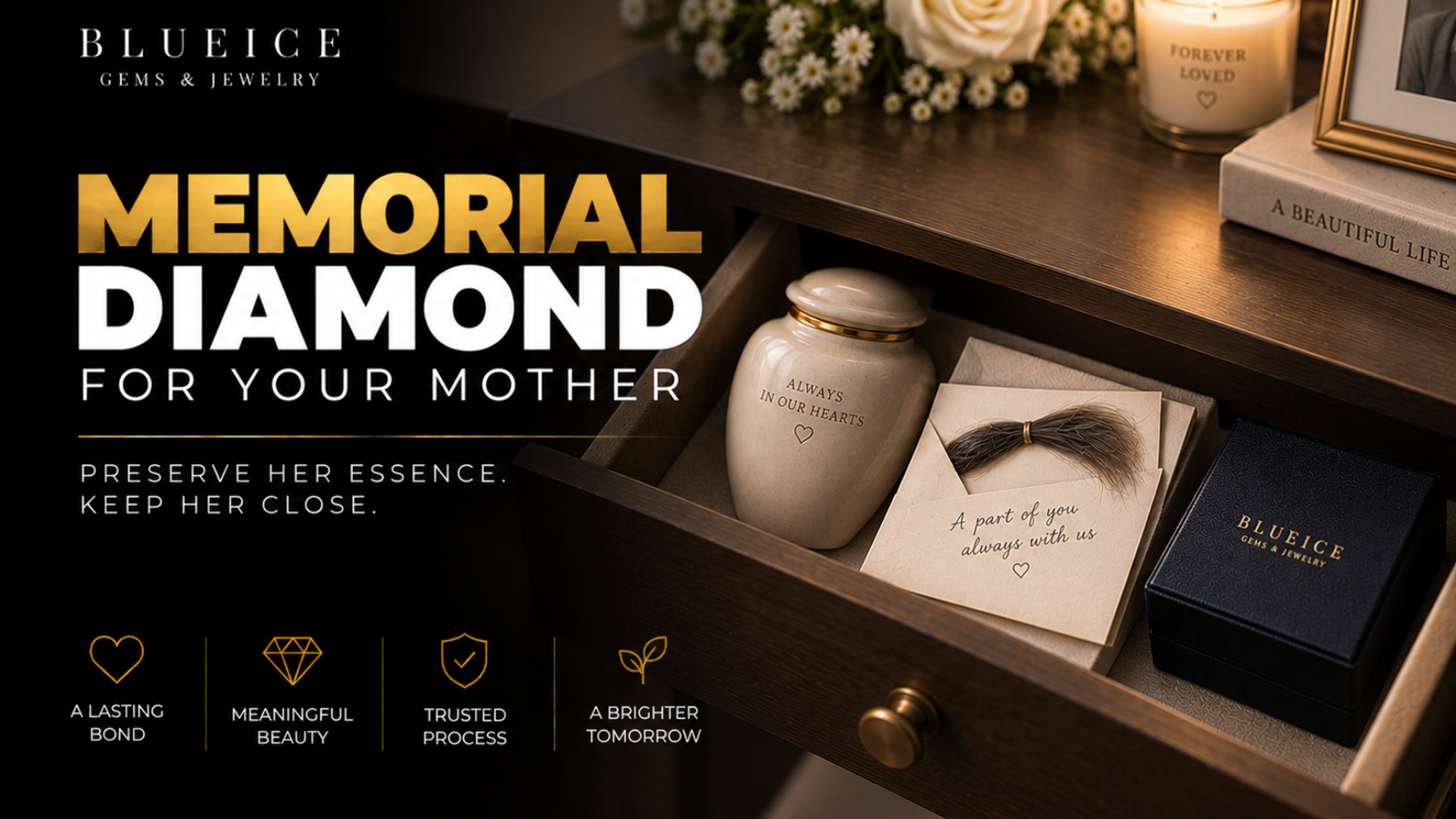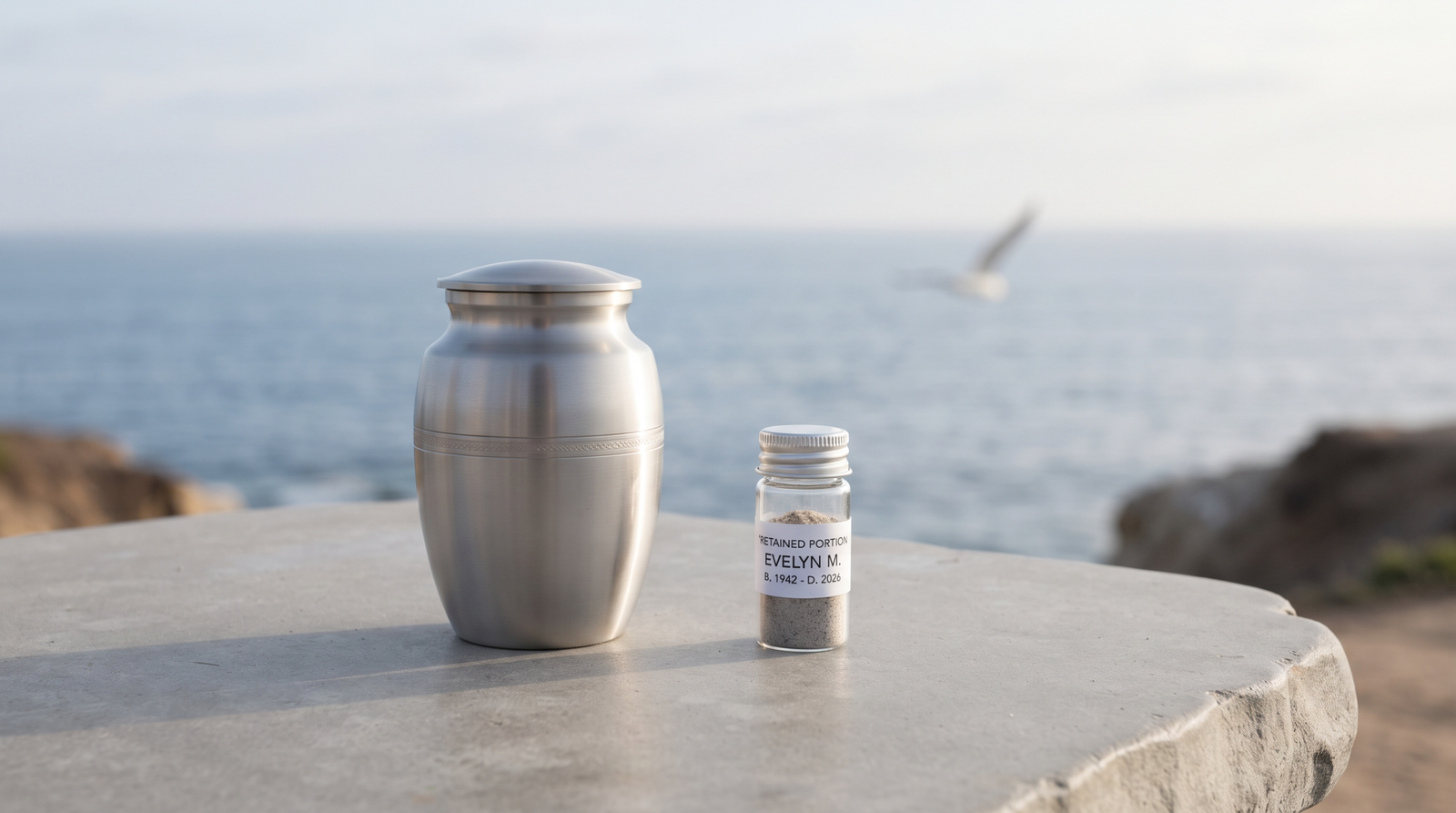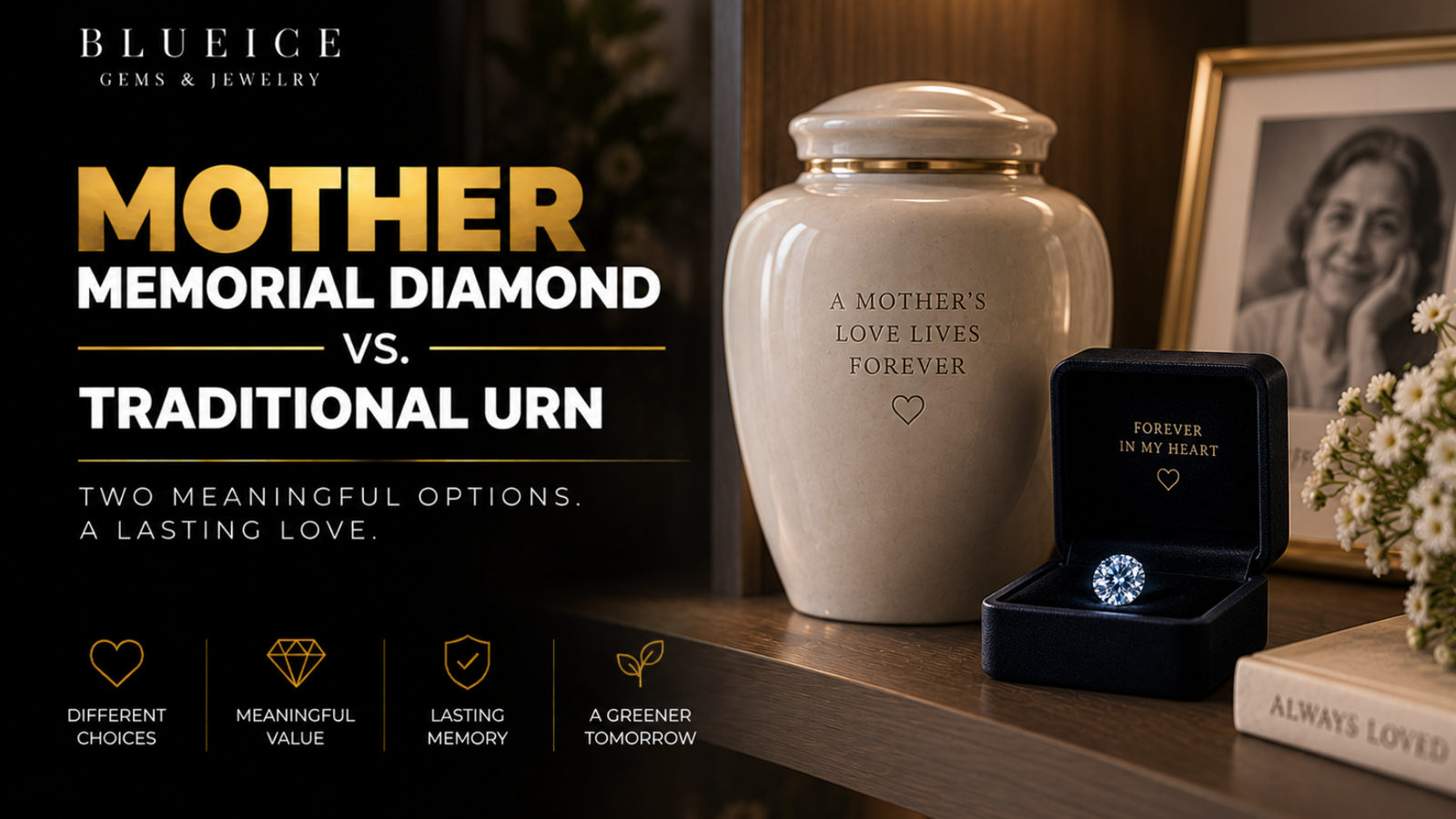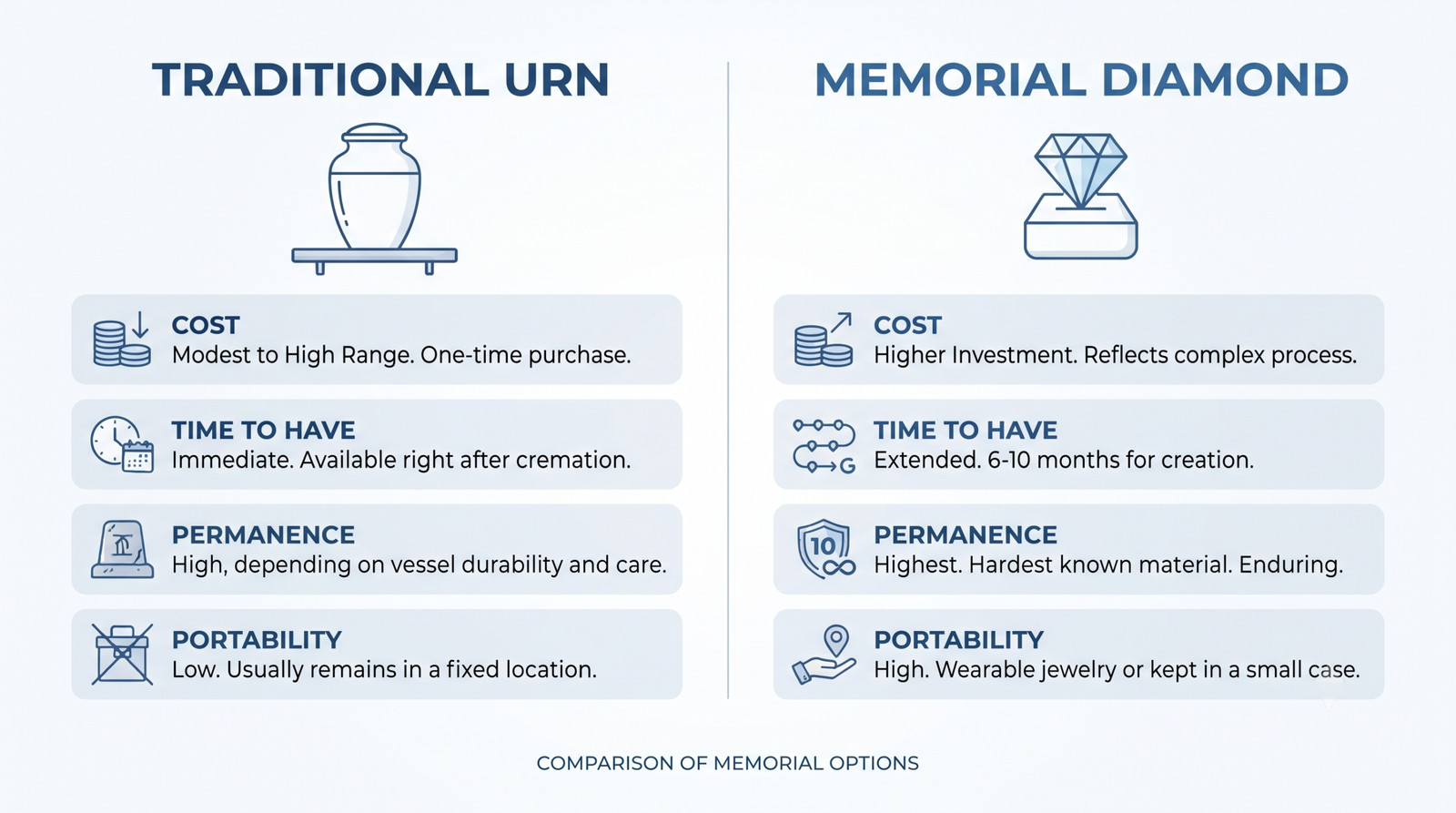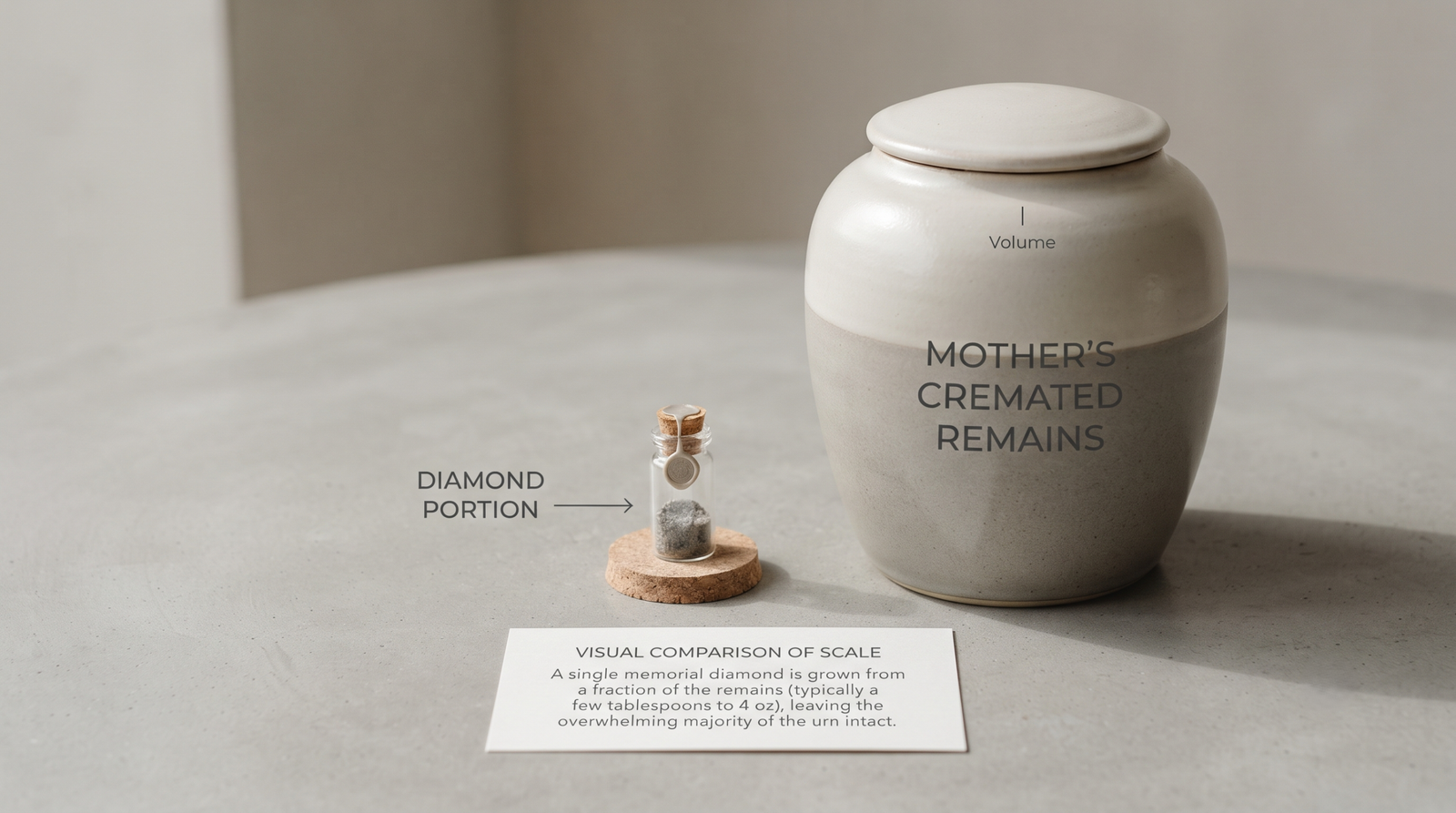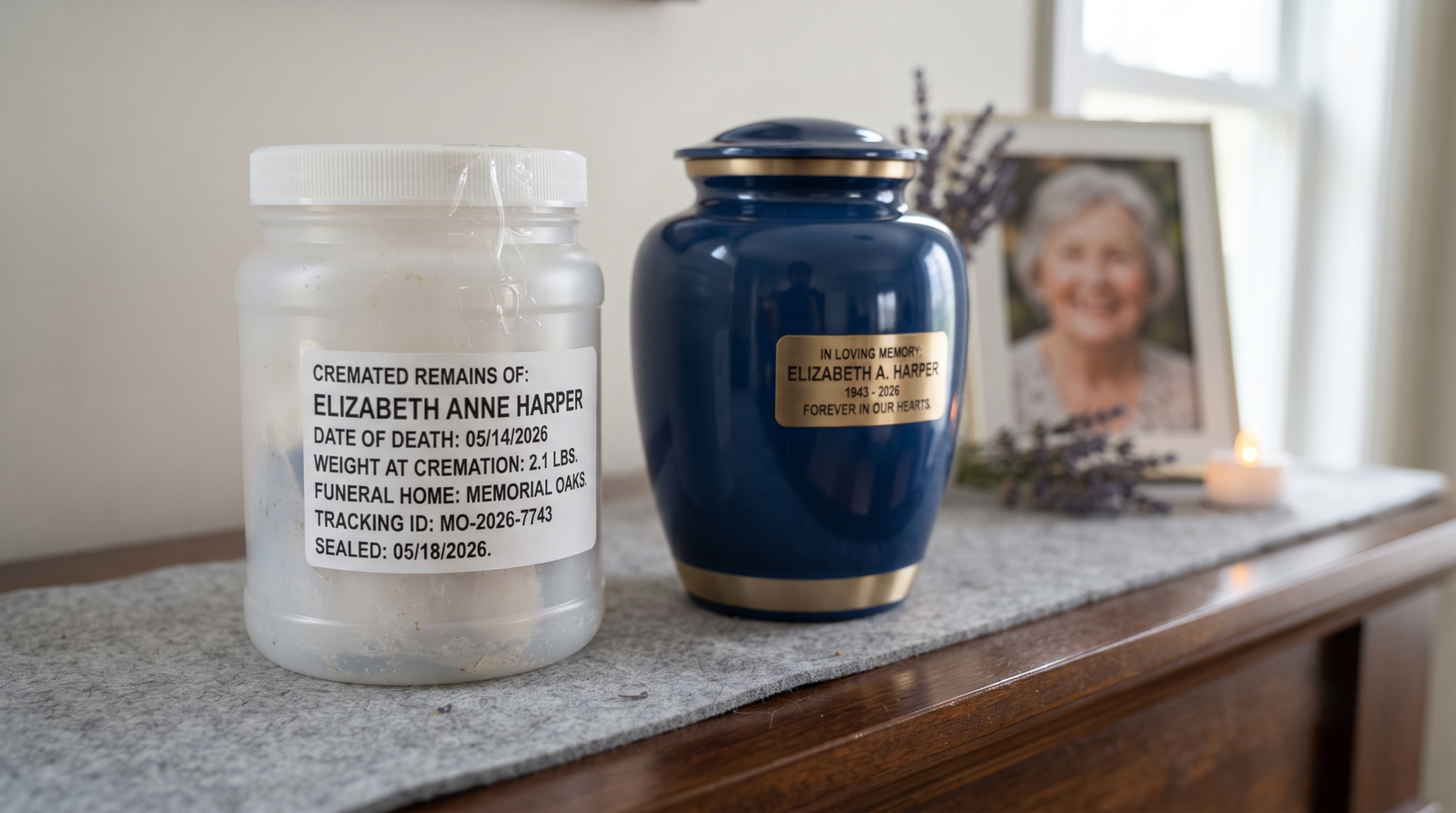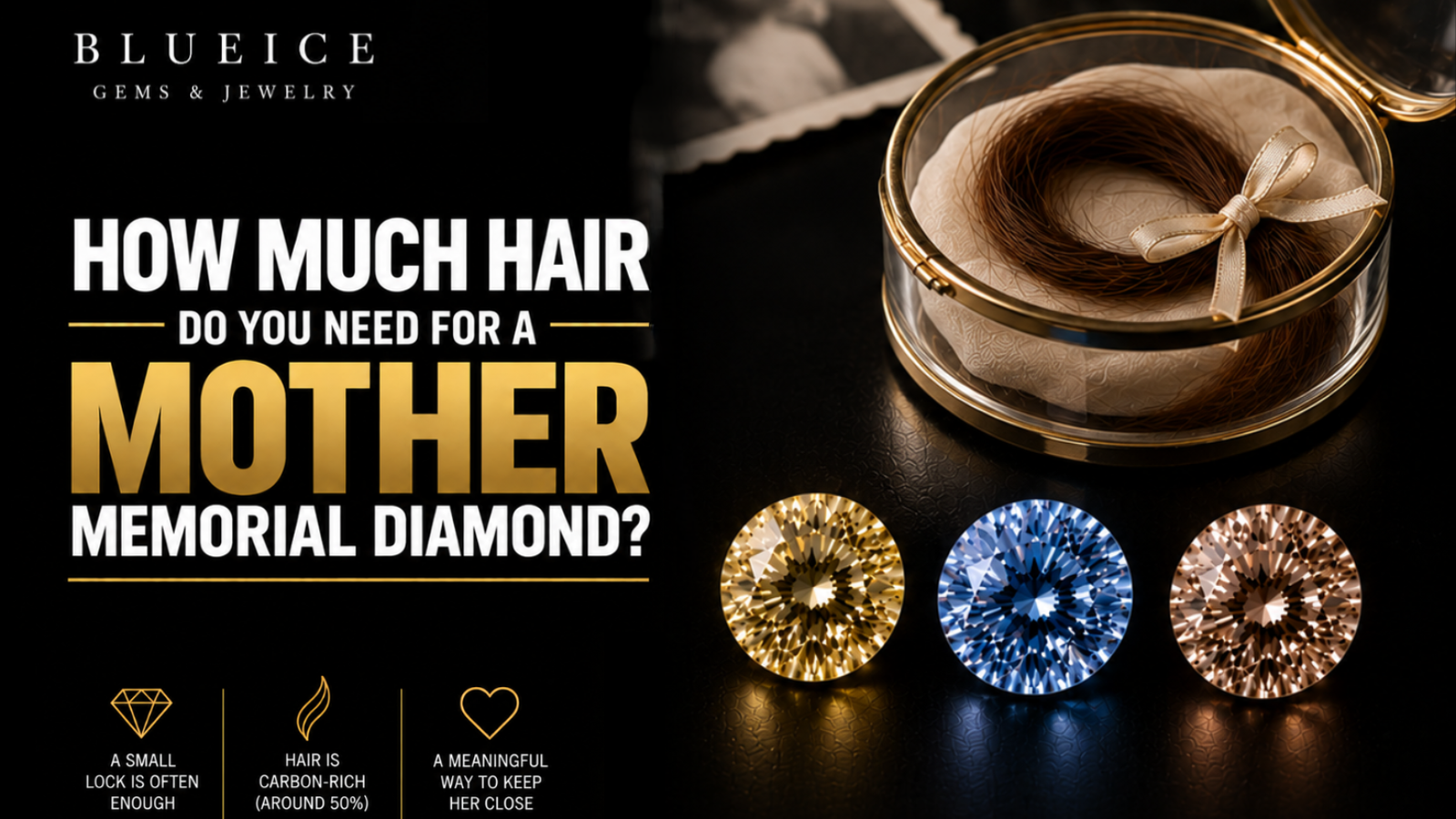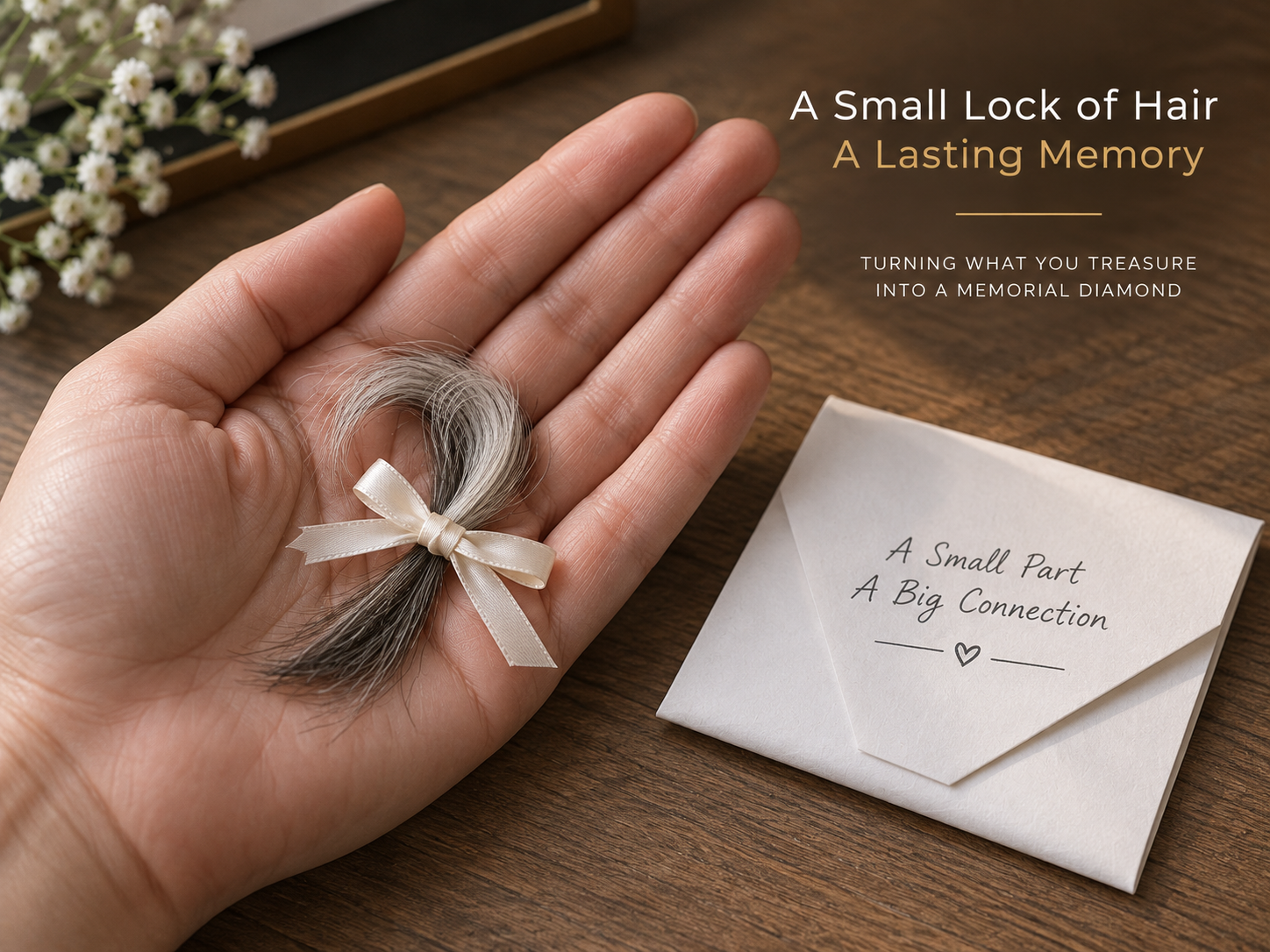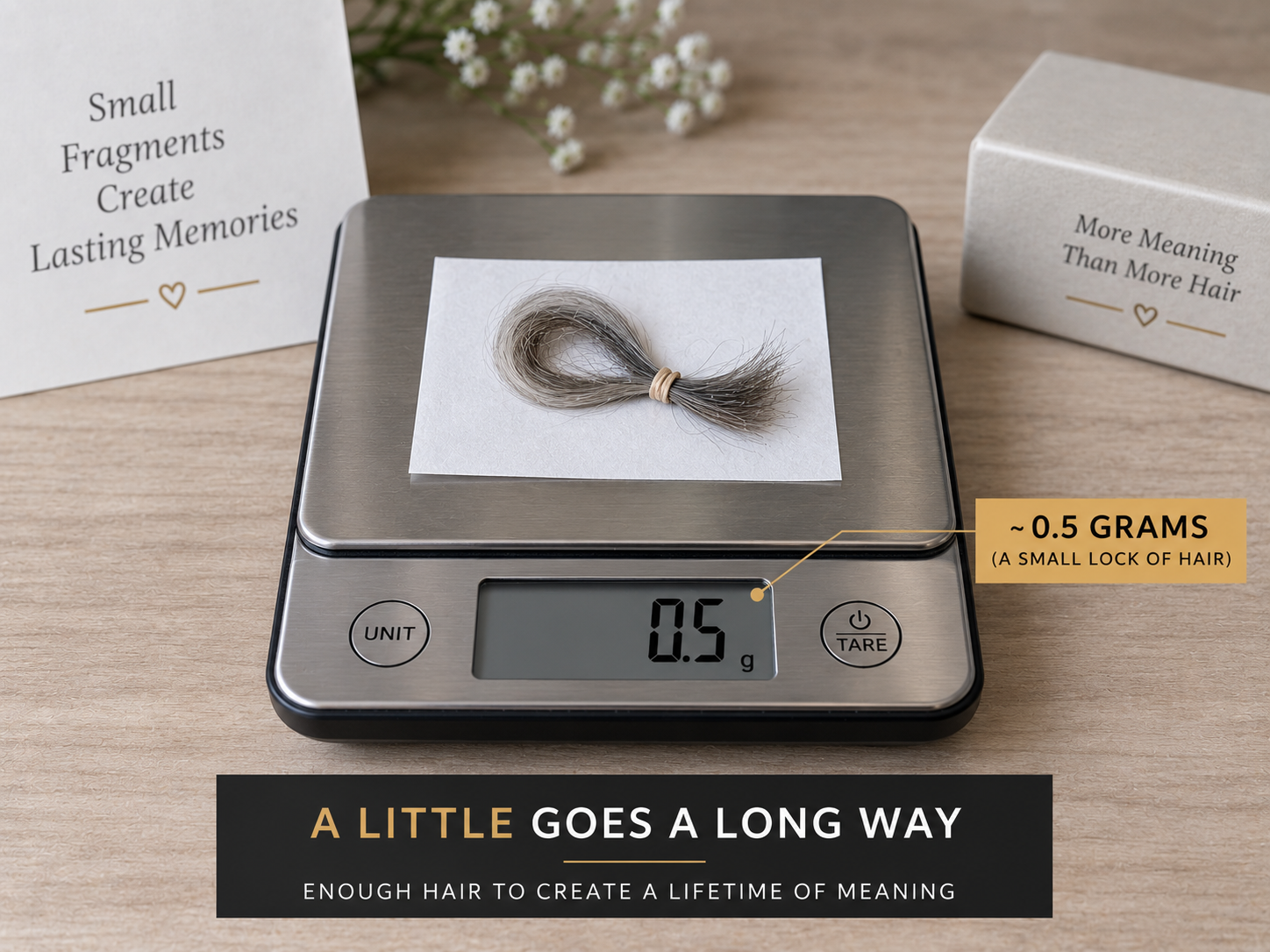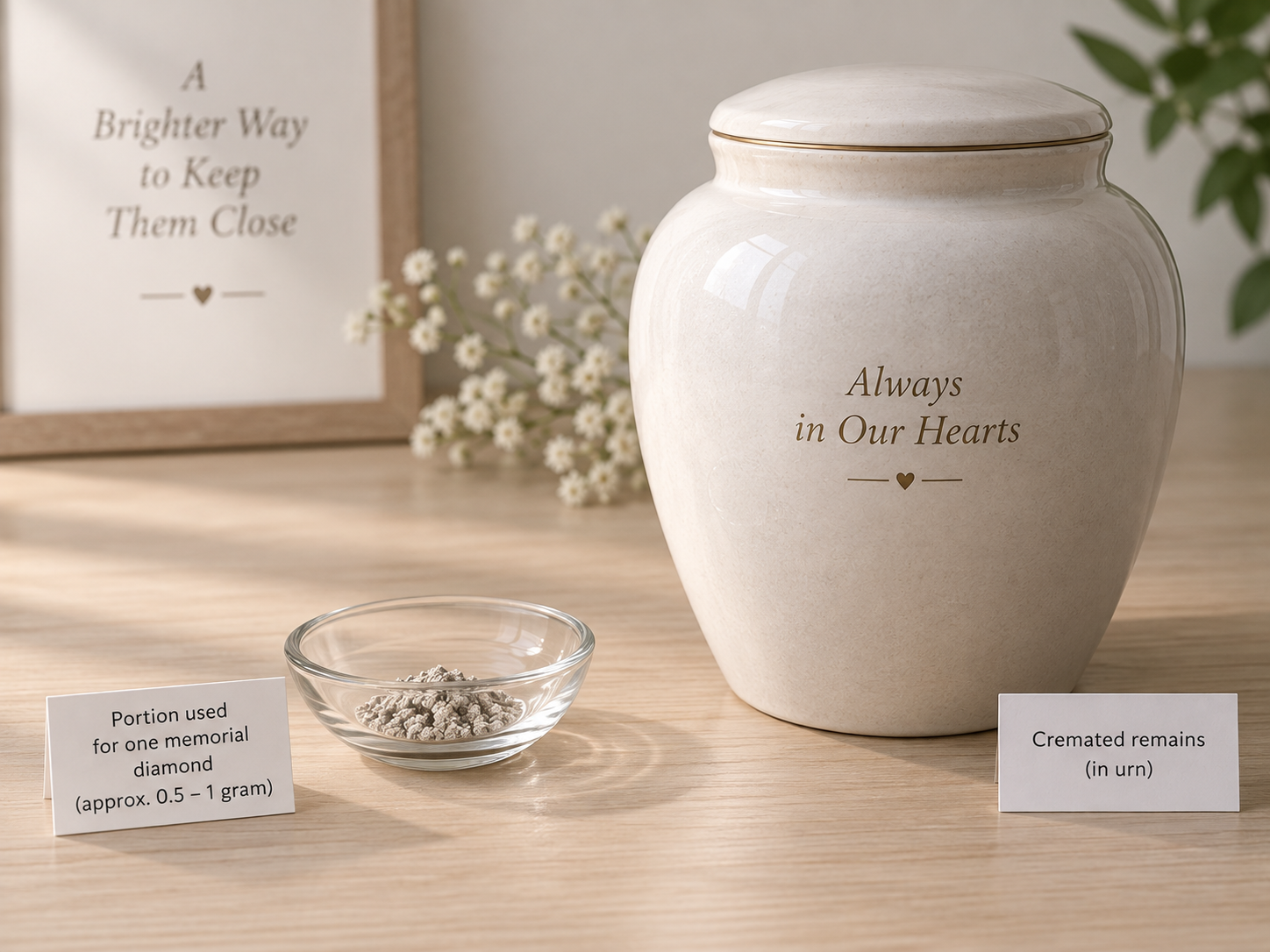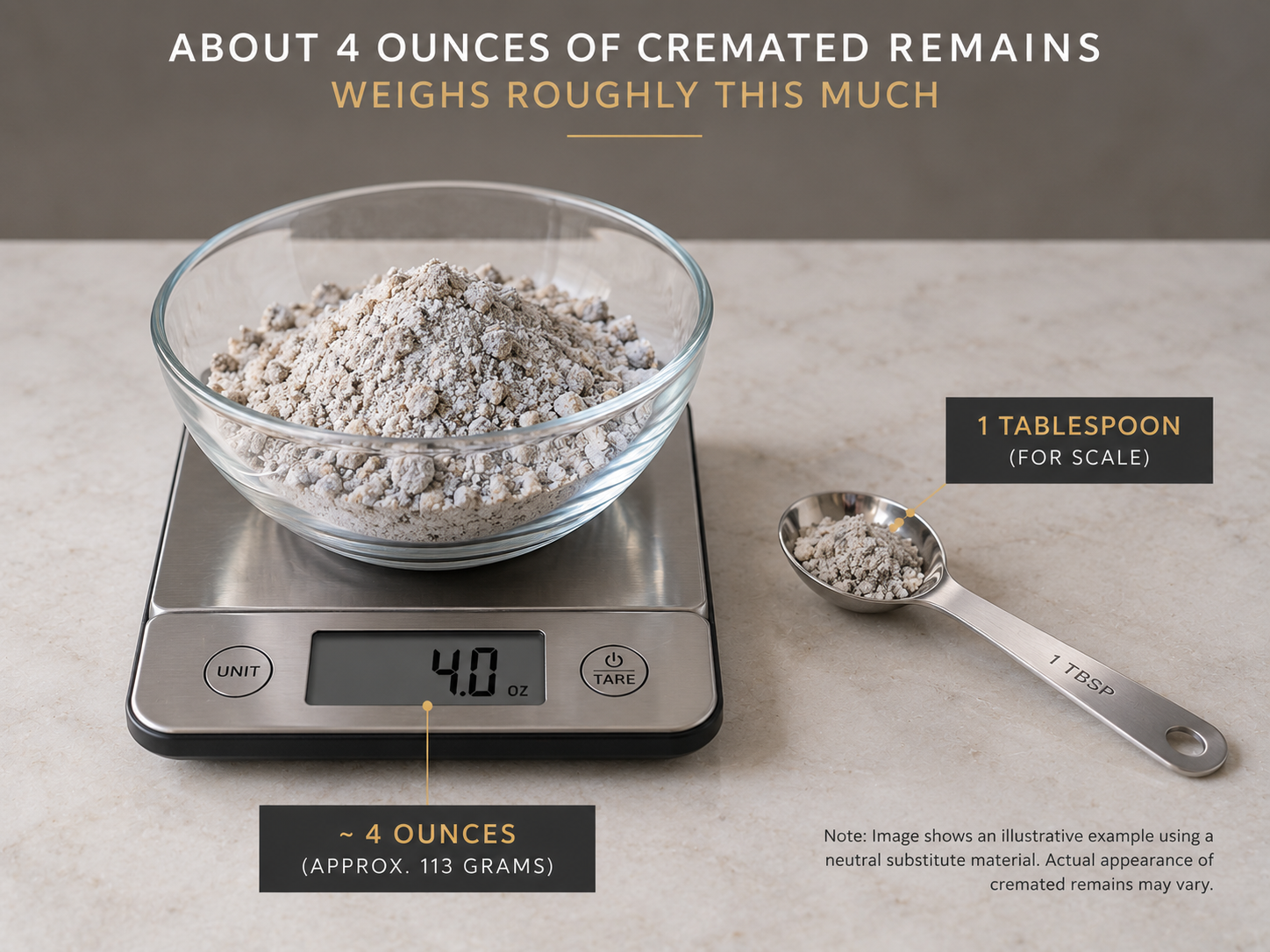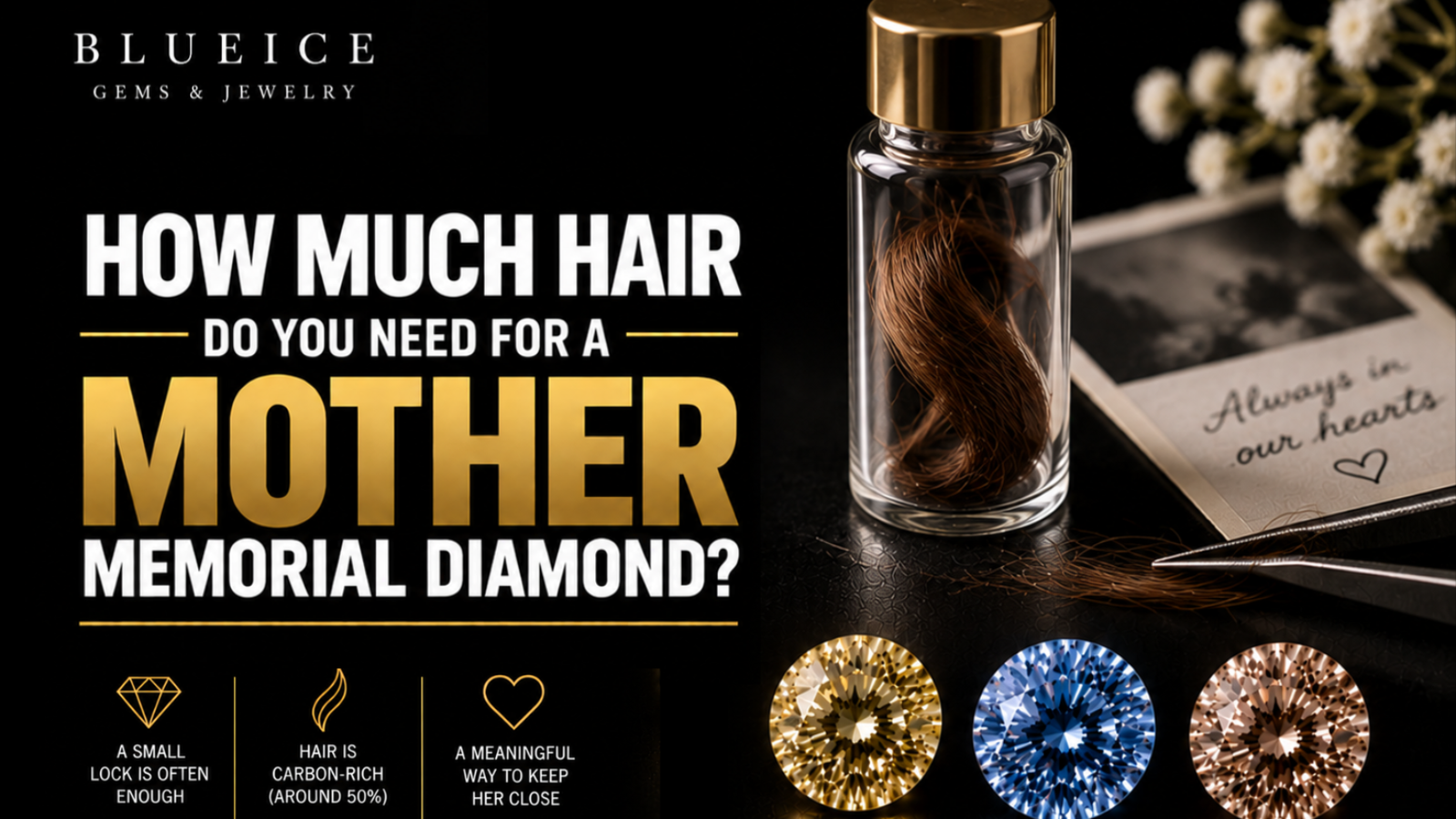
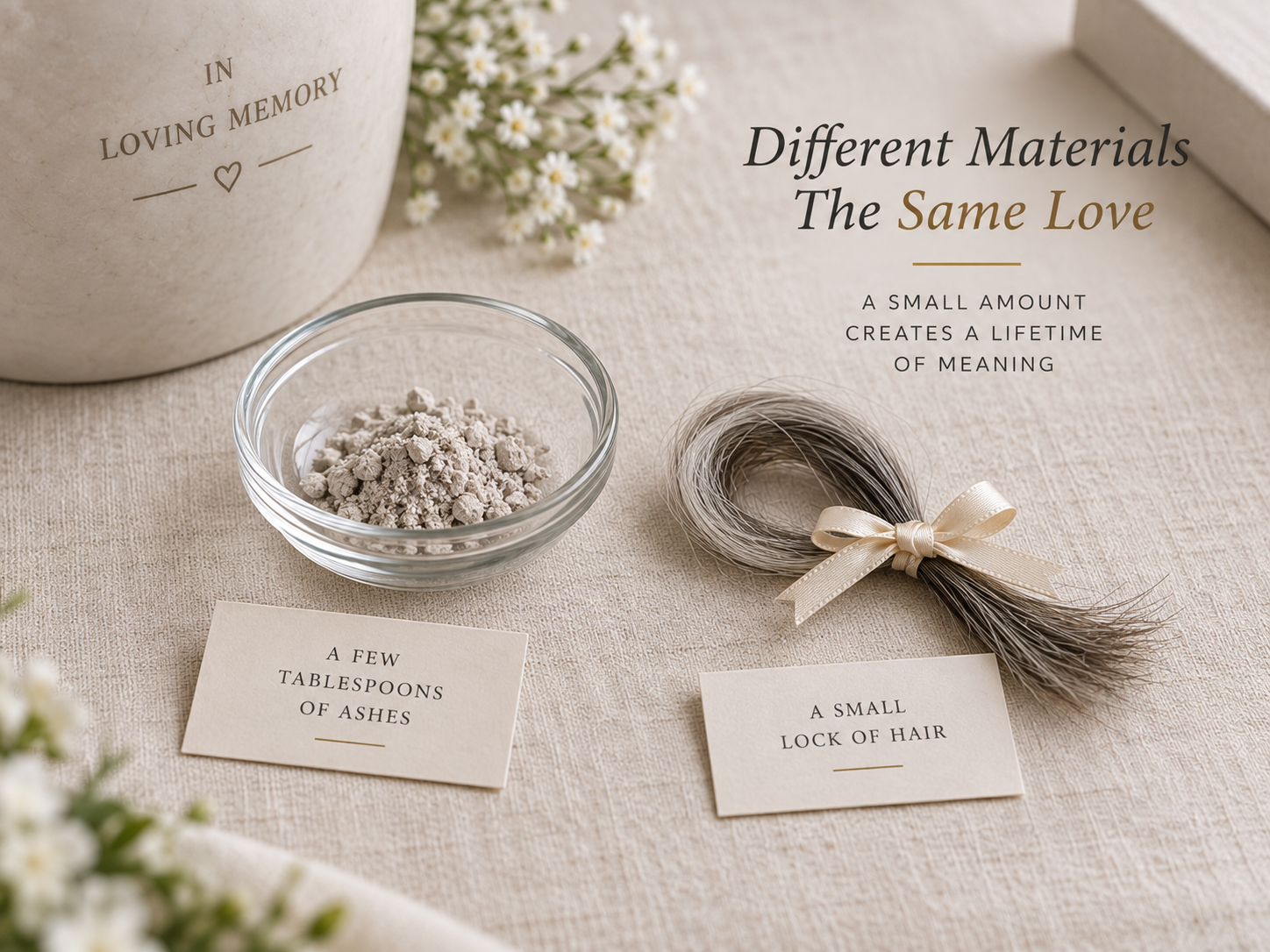
An urn on one shelf, an envelope in a drawer, and one stone to be grown from both. Start from this: each material still has to meet its own threshold industry-typically a few tablespoons up to roughly 4 oz of ash, and a small lock or a few grams of hair. No published figure discounts either quantity for the presence of the other.
Plan for both figures in full, ask your provider before you divide or cut anything, and treat any reduction as a bonus rather than a starting point.
On this page:
- Does Sending Both Mean You Need Less of Each?
- What Does Each Material Require on Its Own?
- Why Doesn’t One Material Reduce the Other?
- Does Sending Both Make a Bigger or Faster Diamond?
- What Should You Ask Before You Divide Anything?
- Frequently Asked Questions
- Before You Open the Urn or Cut the Lock
Does Sending Both Mean You Need Less of Each?
Don’t assume it. Two things are genuinely unsettled here, and a family planning around a guess can end up short.
The first is whether a given provider accepts a combined submission at all one stone grown from both an ash portion and a hair portion. The second is whether, if they do, either quantity drops because the other material is present. Neither has a published industry answer, and no number on this page or any other should be treated as one.
What is solid is the shape of the safe plan: assume each material has to arrive in the quantity it would need alone. If a provider then tells you a smaller ash portion works because hair is coming too, you have gained something. Plan it the other way and be wrong, and you have already opened an urn and cut a lock for nothing.
What Does Each Material Require on Its Own?
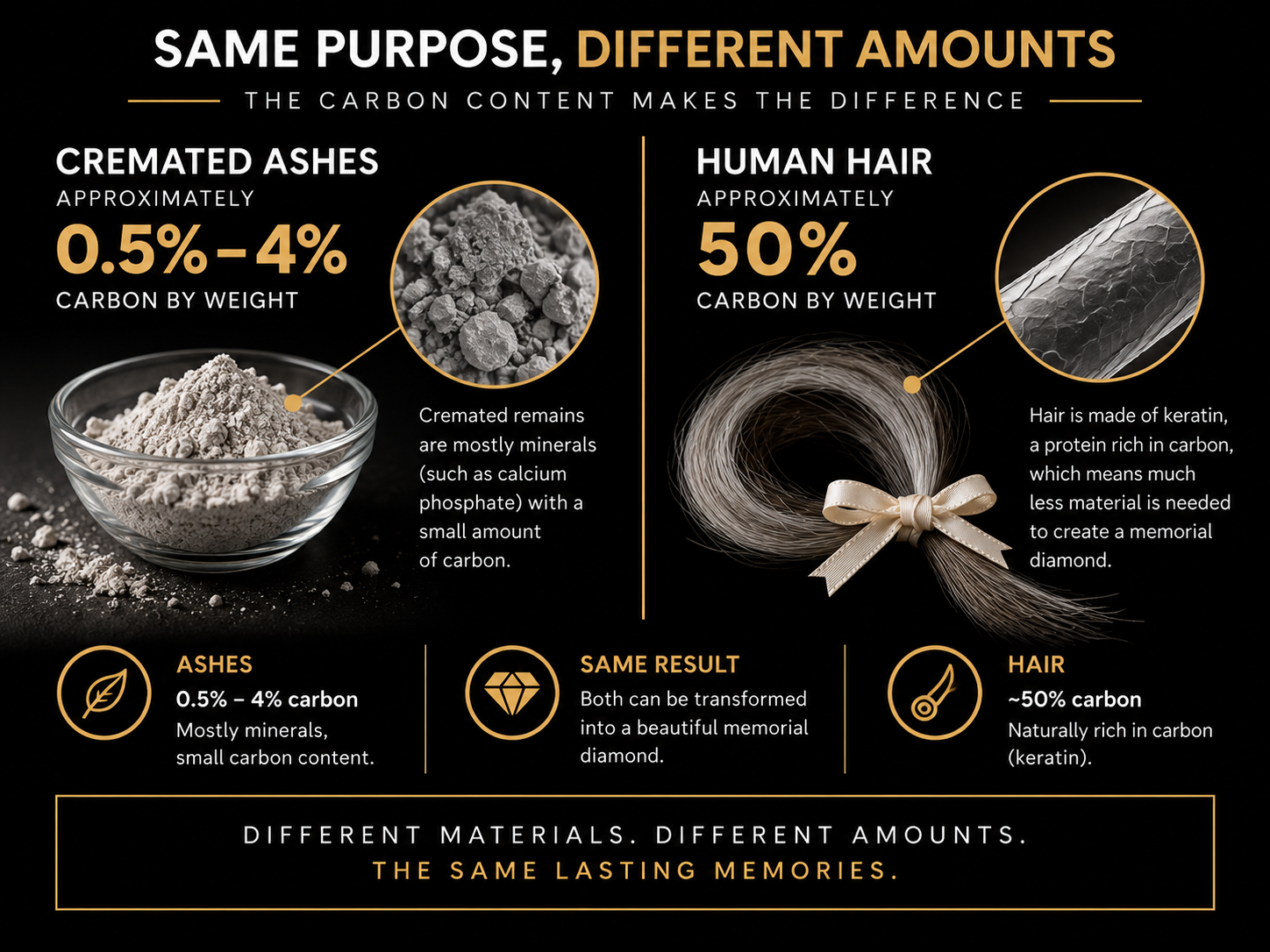
These are the figures each path uses independently industry-typical ranges rather than any one company’s policy, and the numbers to plan against until a provider tells you otherwise in writing.
| Attribute | Her ashes | Her hair |
|---|---|---|
| Typical quantity requested | A few tablespoons up to ~4 oz (~100g) | A small lock or a few grams, often described as palm-sized |
| Carbon content of the material | ~0.5–4% by weight | ~50% by weight |
| What extraction has to remove | Calcium phosphate and other bone minerals | The non-carbon components of keratin |
| Cremation required | Yes | No |
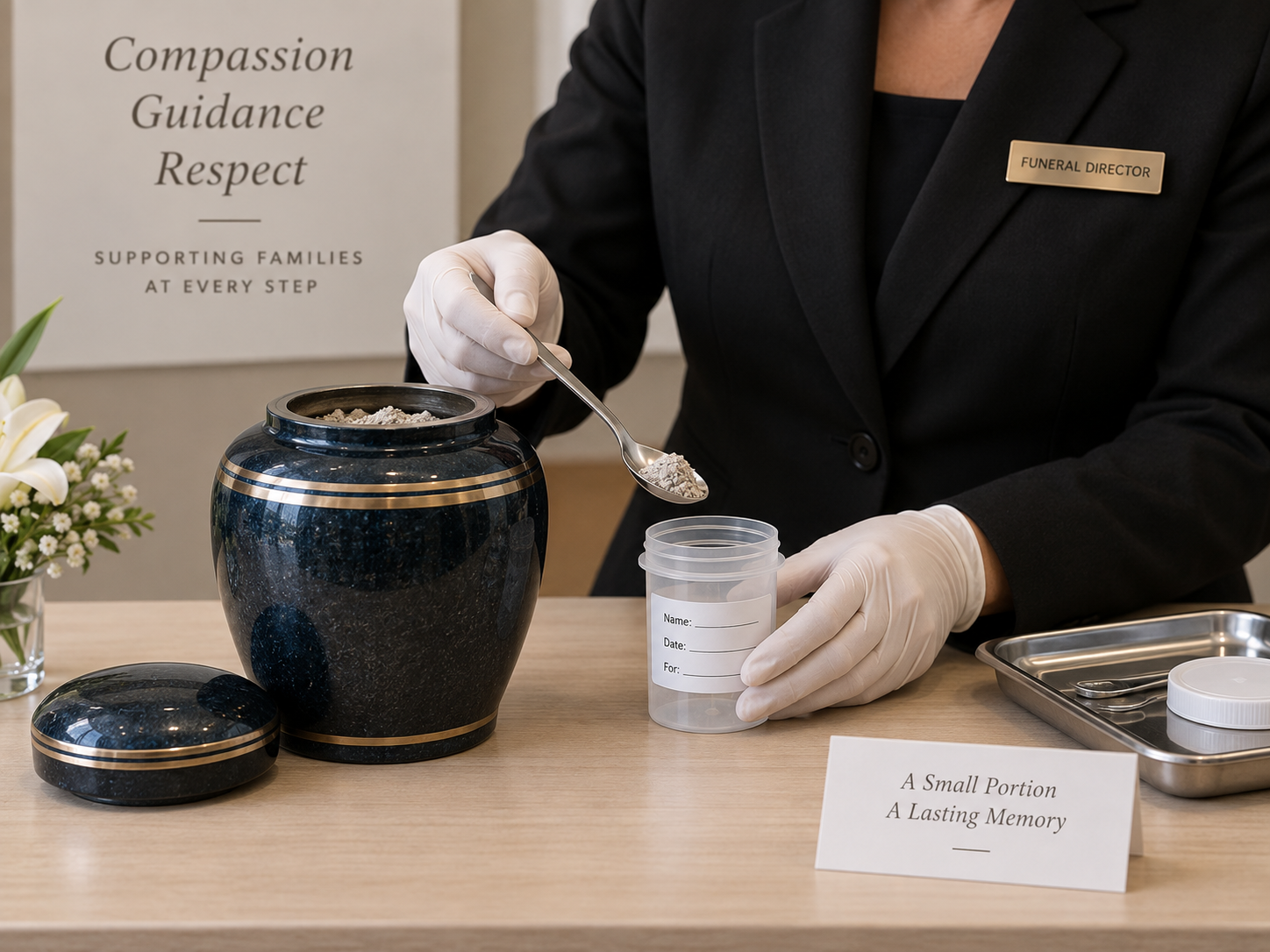
| Where it usually comes from | An urn, or a portion already set aside | A lock kept from a haircut, an illness, or childhood |
| Does supplying the other reduce it? | Not documented ask before you assume | Not documented ask before you assume |
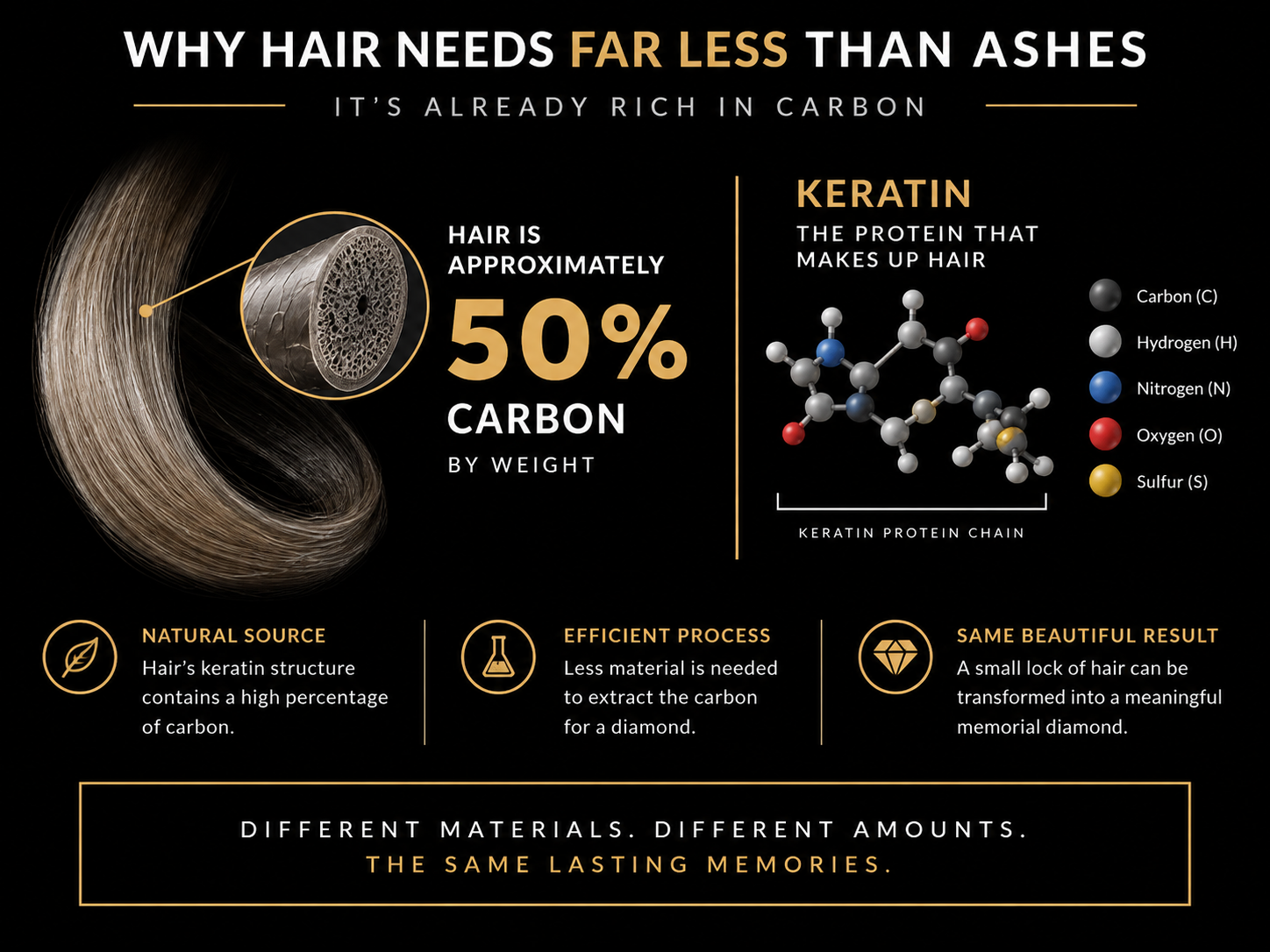
Ash gives up its carbon reluctantly because it is mostly bone mineral; hair gives it up readily because keratin is roughly half carbon by weight. How much ash a mother memorial diamond needs and how much hair it needs go deeper on each requirement.
Why Doesn’t One Material Reduce the Other?
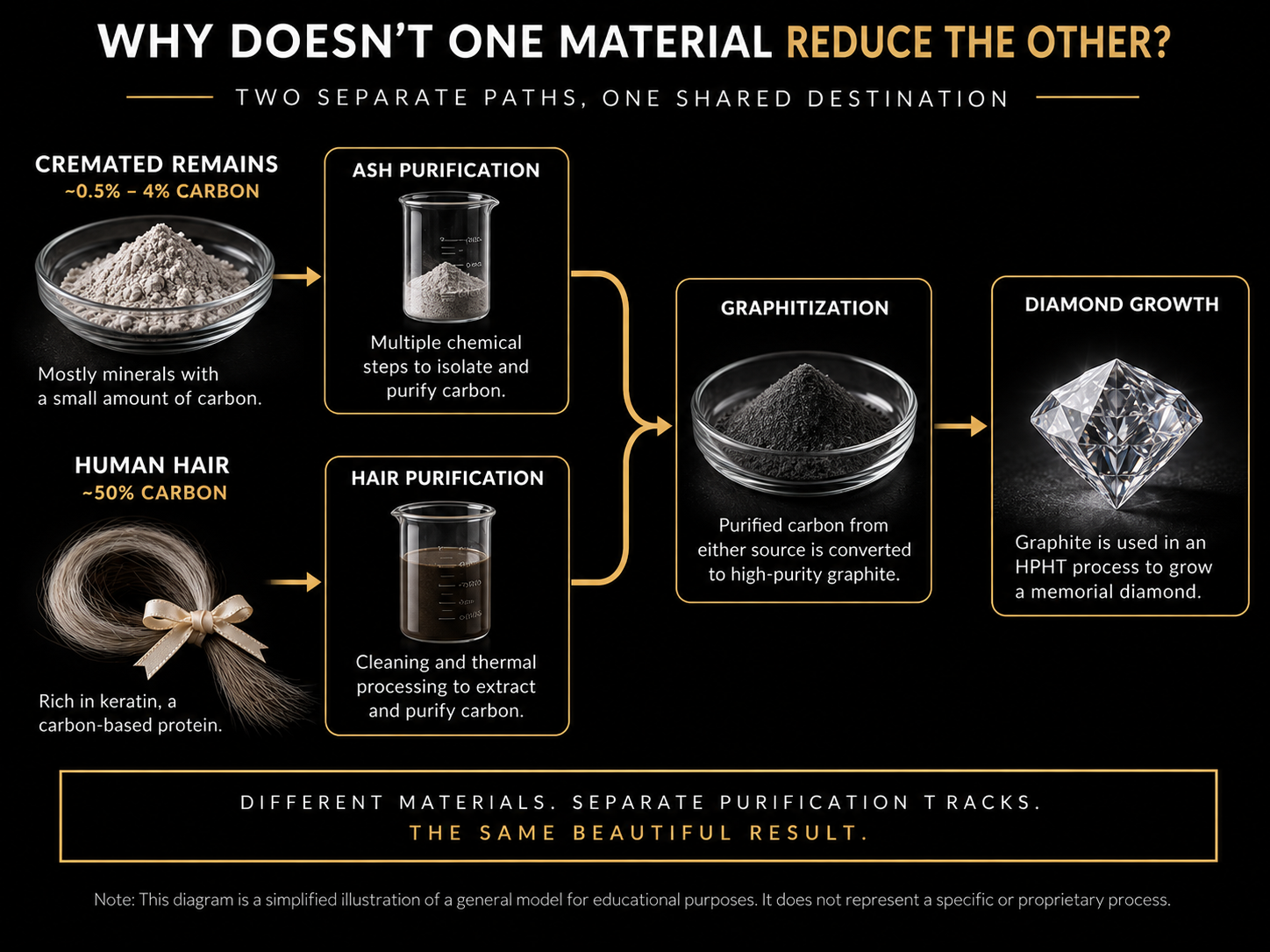
Because they are not interchangeable inputs arriving at the same door.
Purifying ash means stripping away a heavy mineral load calcium phosphate makes up almost all of cremated remains, and reaching roughly 99.9% carbon means removing all of it. Purifying hair means removing the non-carbon components of a protein. Different problems, different runs, and a batch of one does not cover a shortfall of the other.
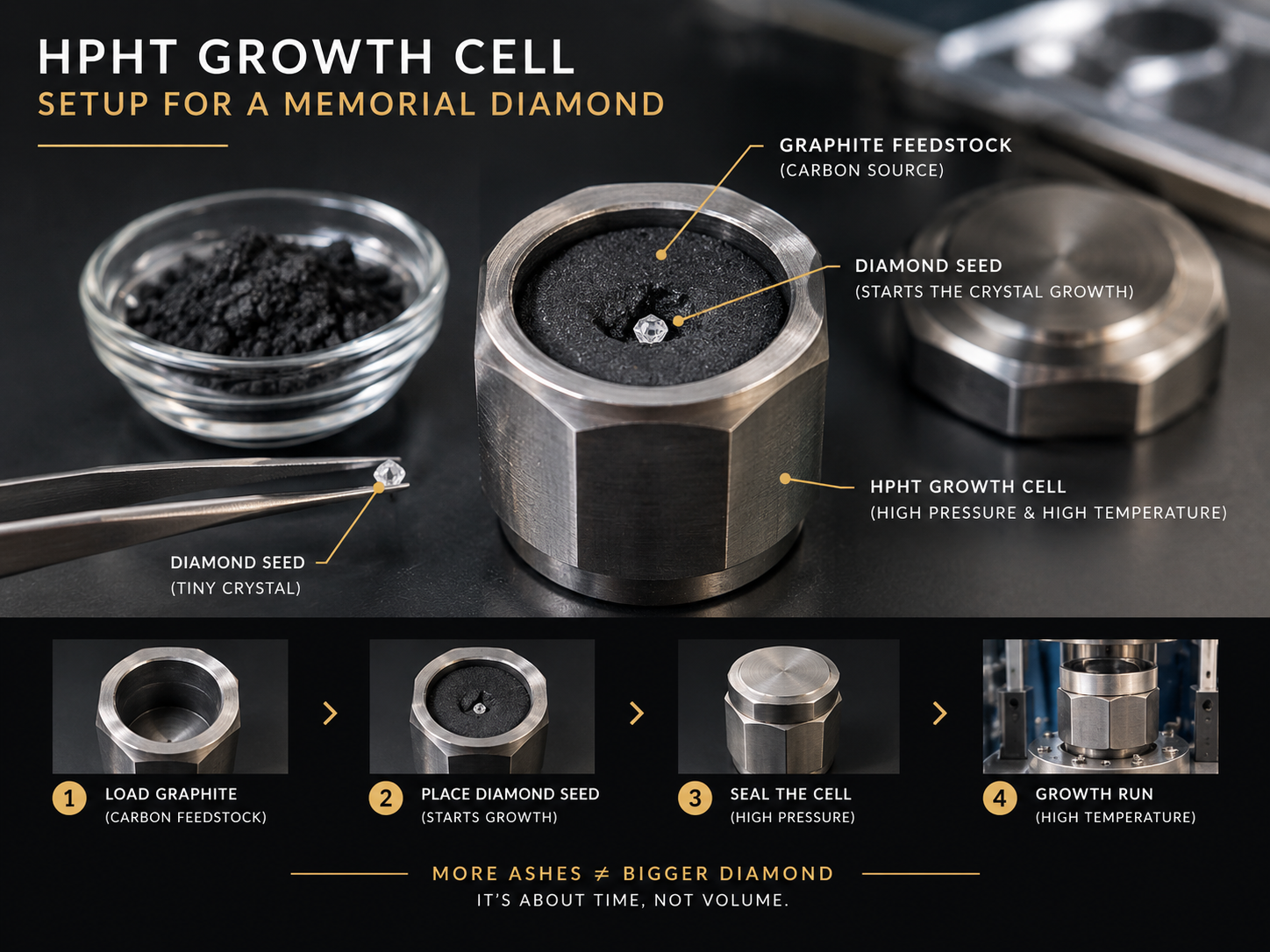
The most defensible mental model is two separate purification tracks meeting later, when the recovered carbon is graphitized and loaded into a growth cell. That model is a reasoned inference rather than a documented standard put it to a provider as a direct question rather than assuming it.
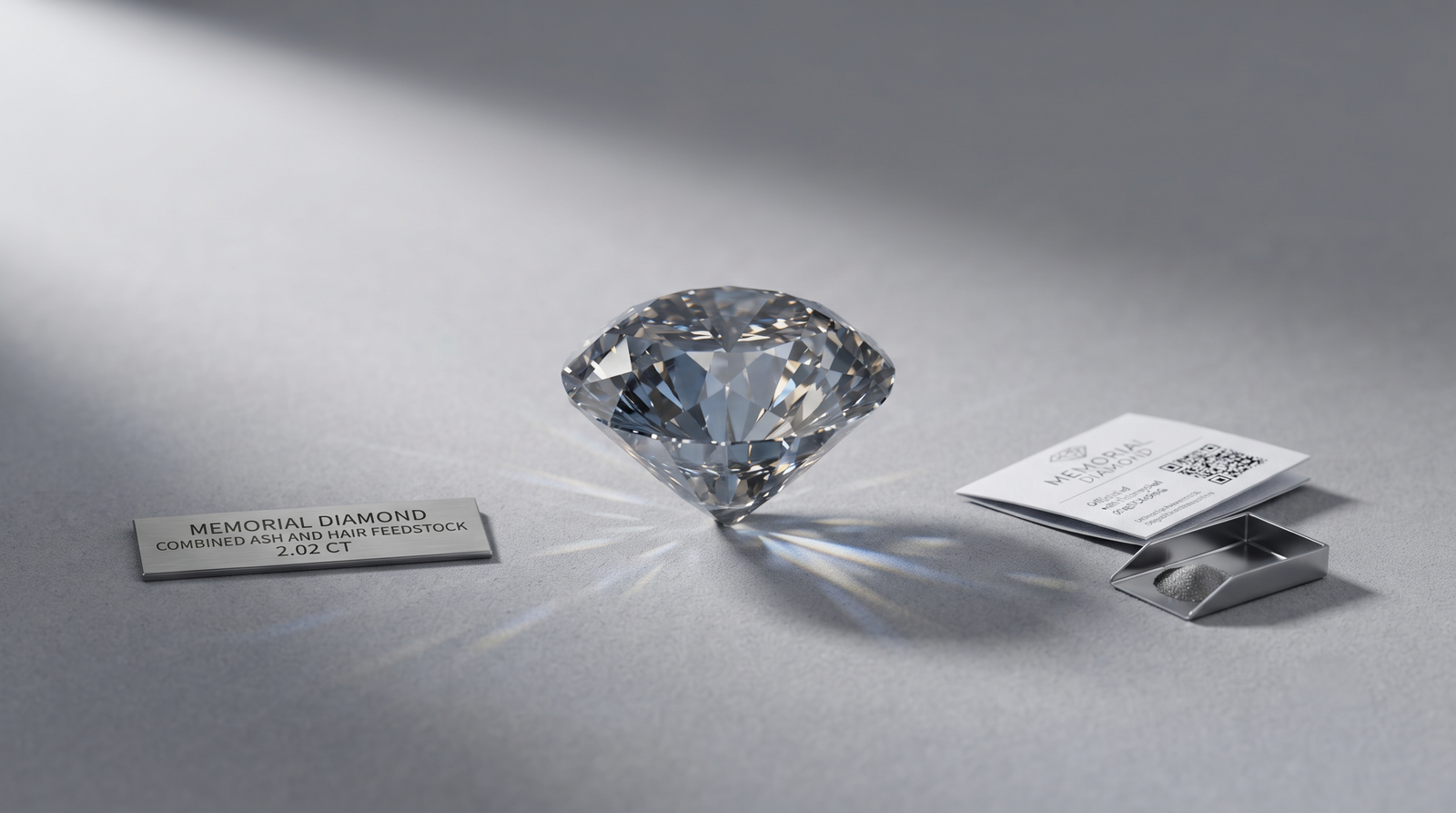
Certain either way: whatever is recovered from both is still blended with lab-sourced carbon to reach the volume a growth cell needs. No memorial diamond is 100% the person, from one material or two. Whether a diamond is really made from her ashes and hair covers that honestly.
Does Sending Both Make a Bigger or Faster Diamond?
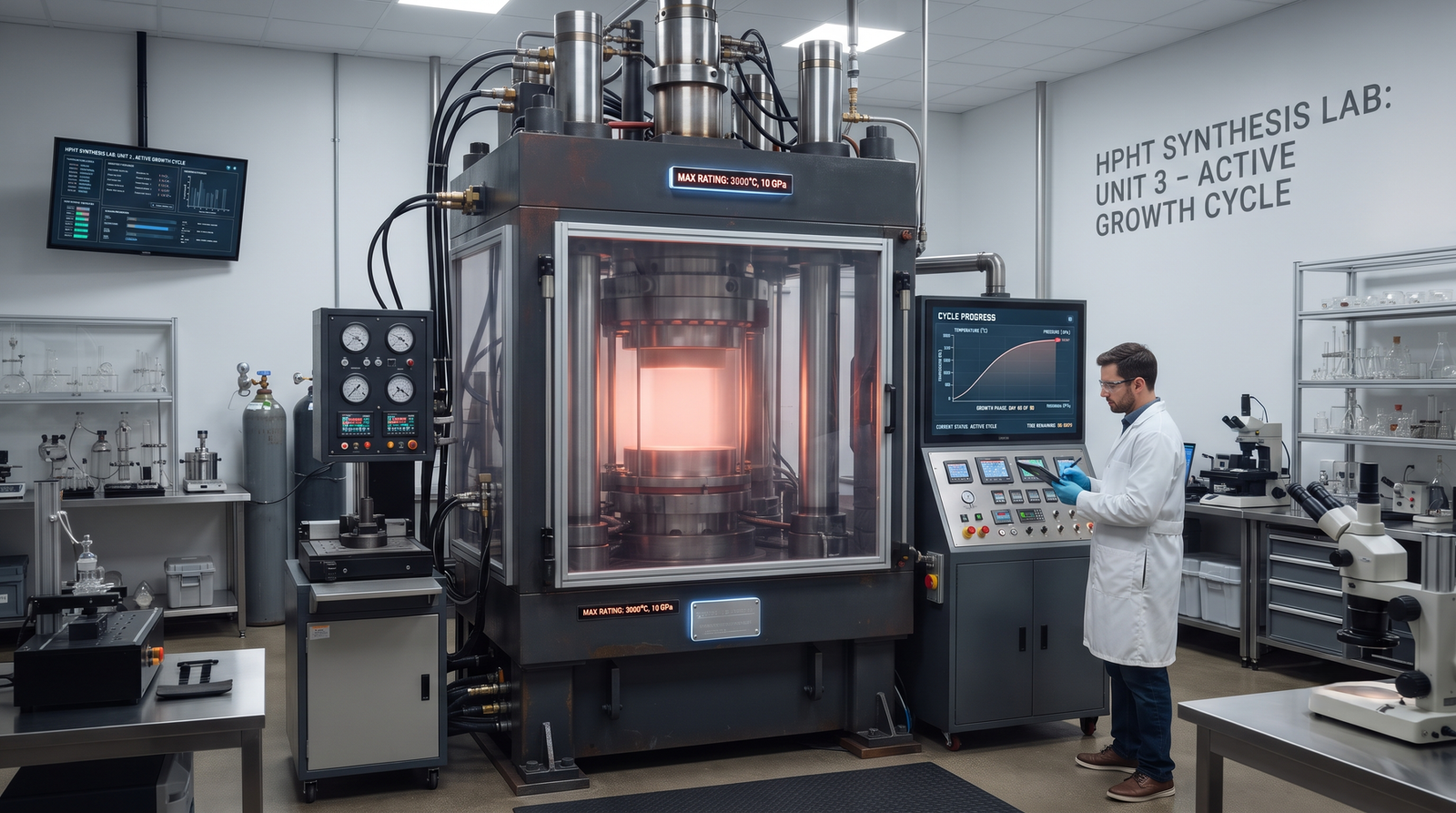
No. The press keeps its own schedule.
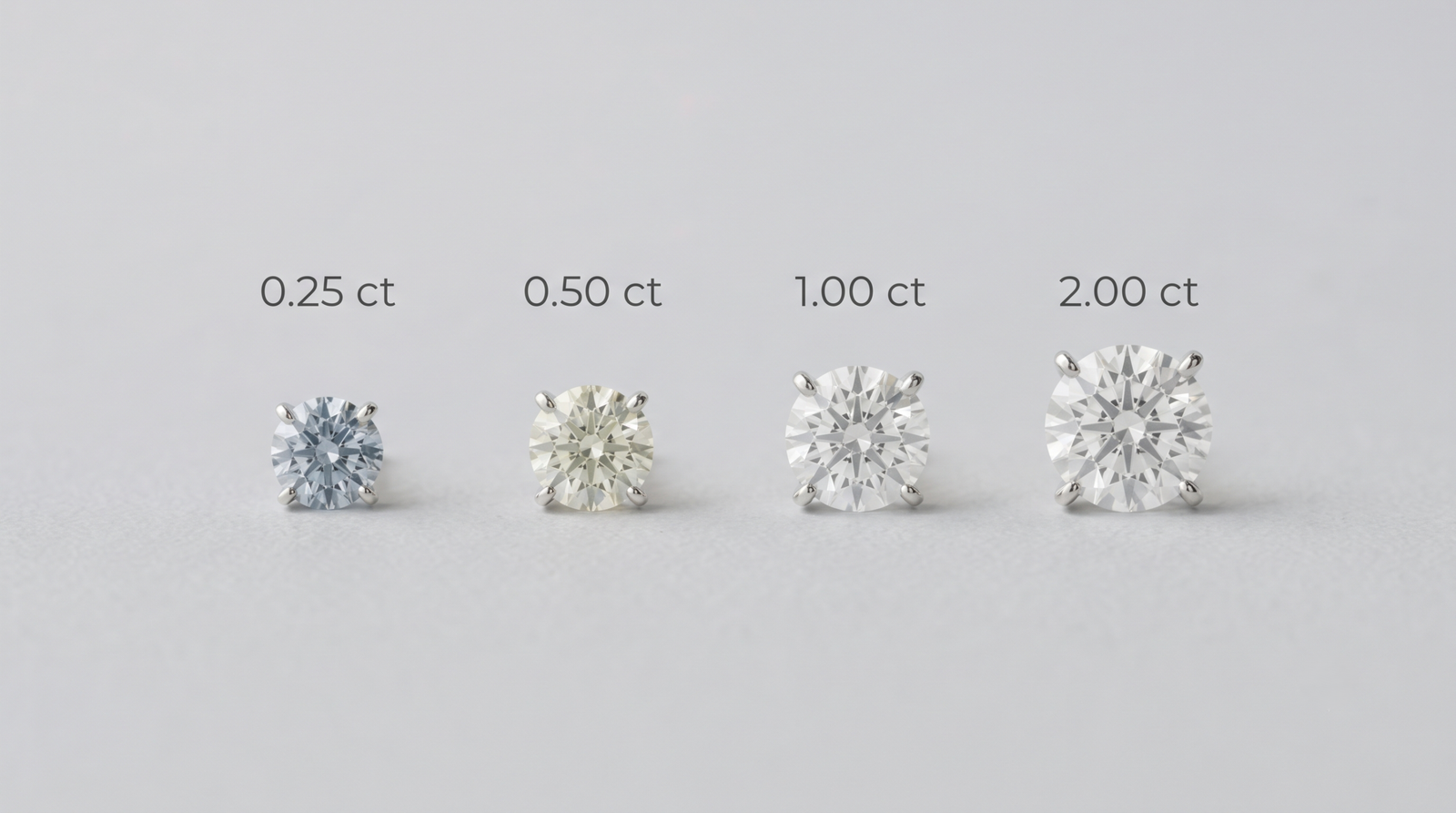
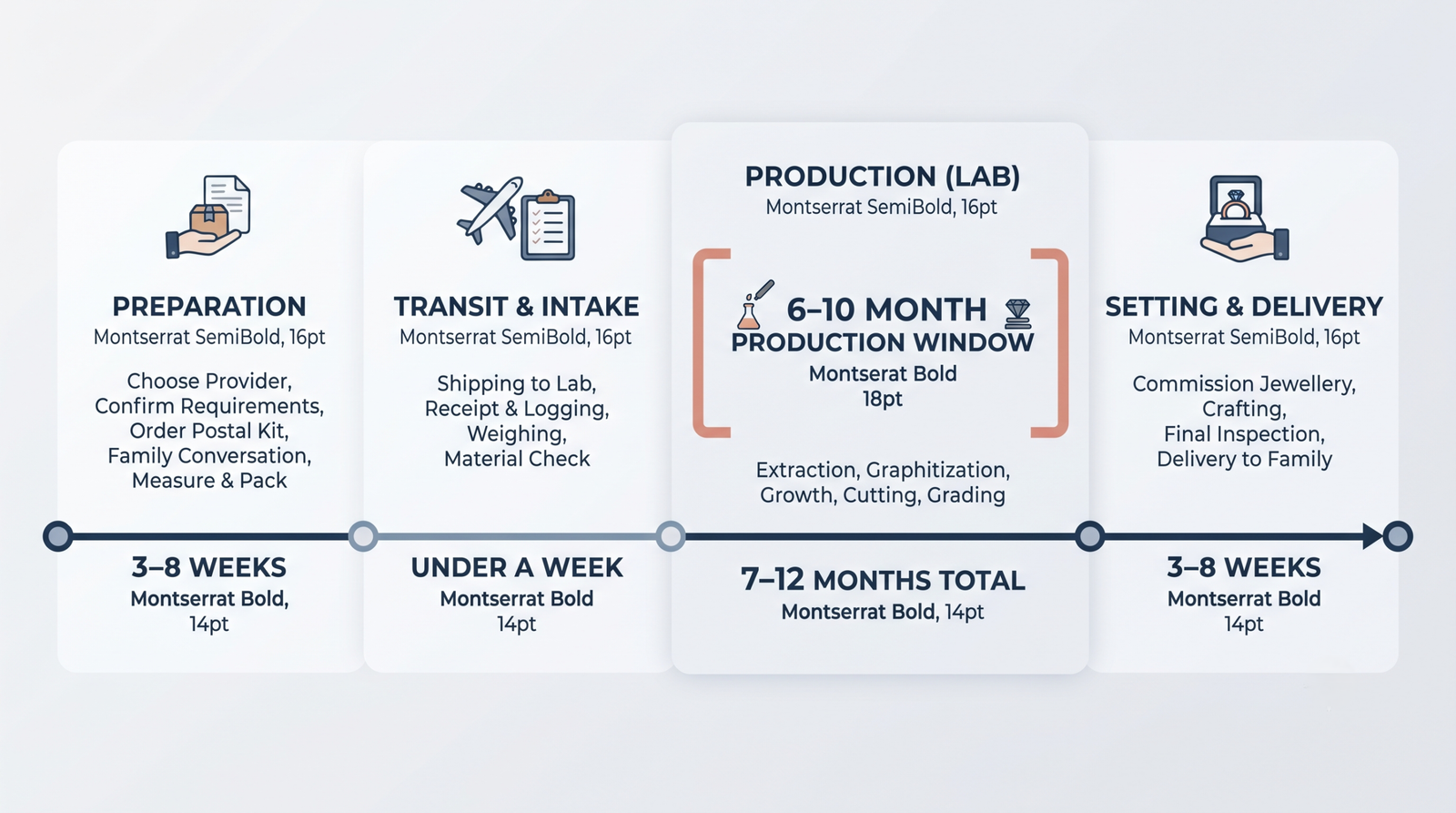
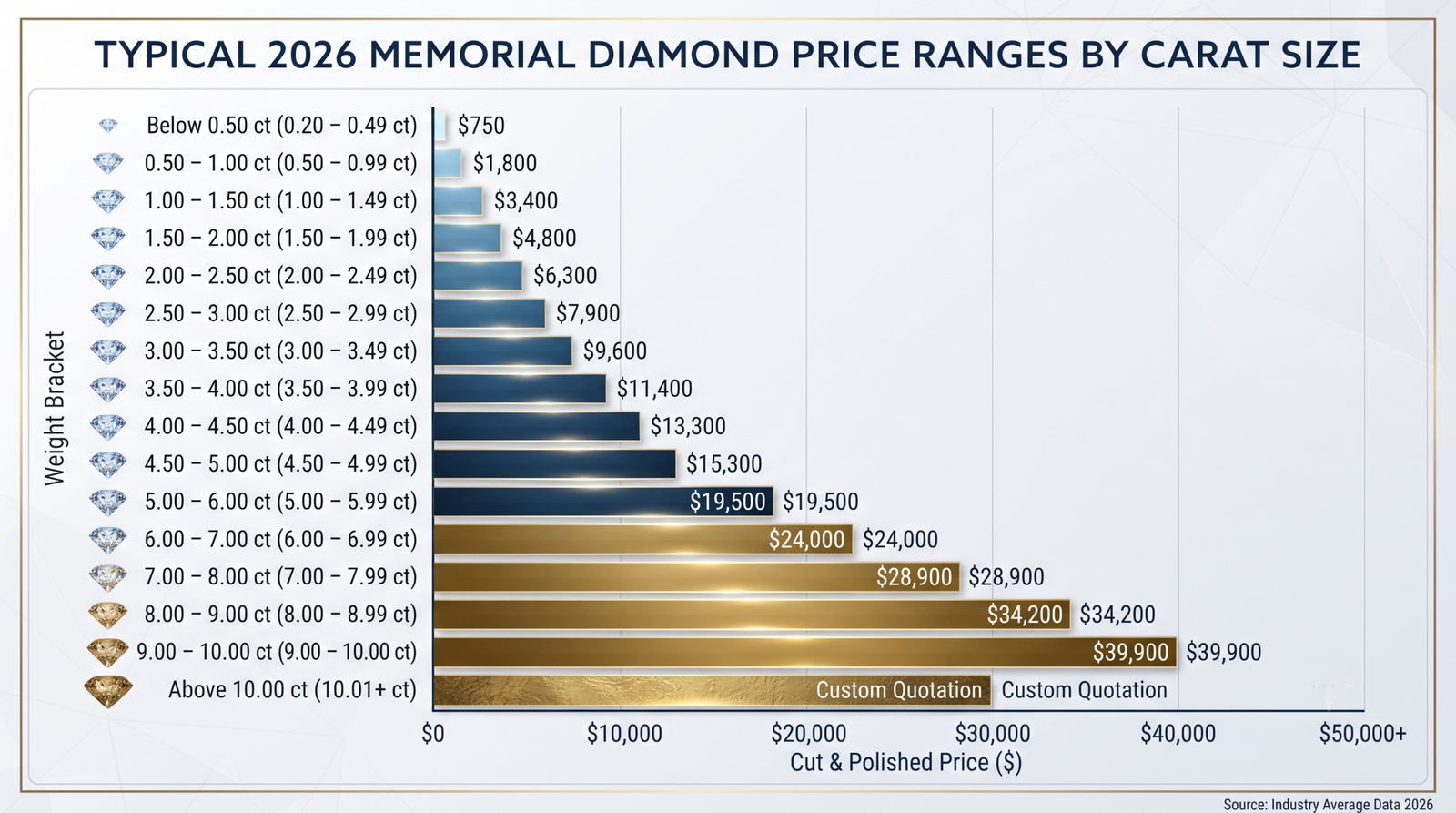
Carat size is set by how long a crystal grows under pressure industry-typically about 6 to 10 months for most stones, and up to roughly 12 for larger or specialty ones. Once the growth cell has enough feedstock to run, neither the quantity nor the variety of material shortens that clock or enlarges the result. Two materials do not double anything.
So the honest reason to send both is not size and not speed. Families do it because both things exist and both feel like her: ashes from the cremation, and a lock cut long before anyone was thinking about any of this. That needs no technical justification bolted on. Turning your mother’s ashes and hair into a diamond walks through what that order looks like.
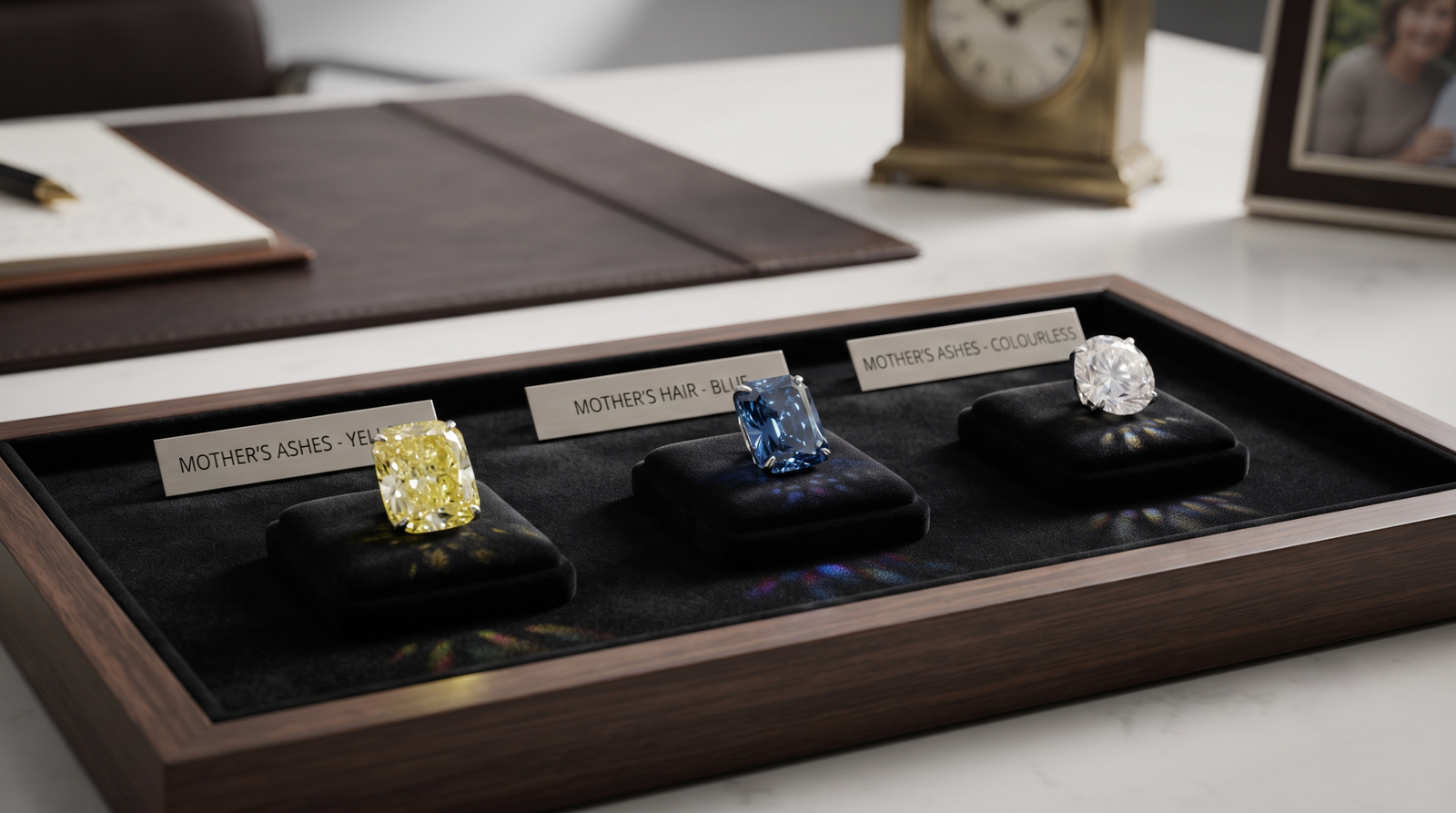
One practical consequence is worth knowing. Because carat doesn’t depend on volume, a family with both materials often has enough for more than one stone a sibling each, or an ash-based stone and a hair-based stone kept separate rather than combined. Ask about that before assuming a single combined diamond is the only shape this can take.
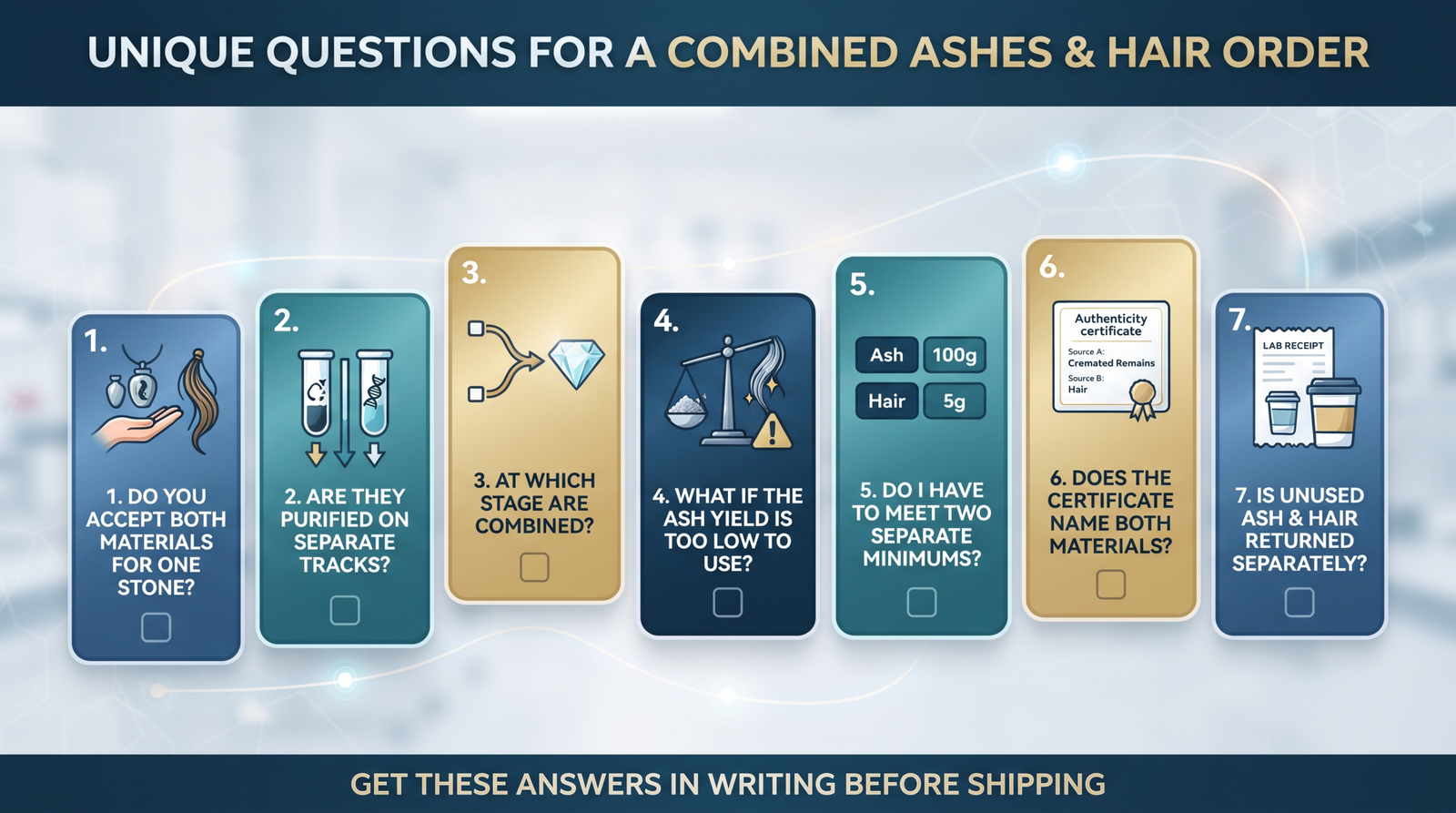
What Should You Ask Before You Divide Anything?
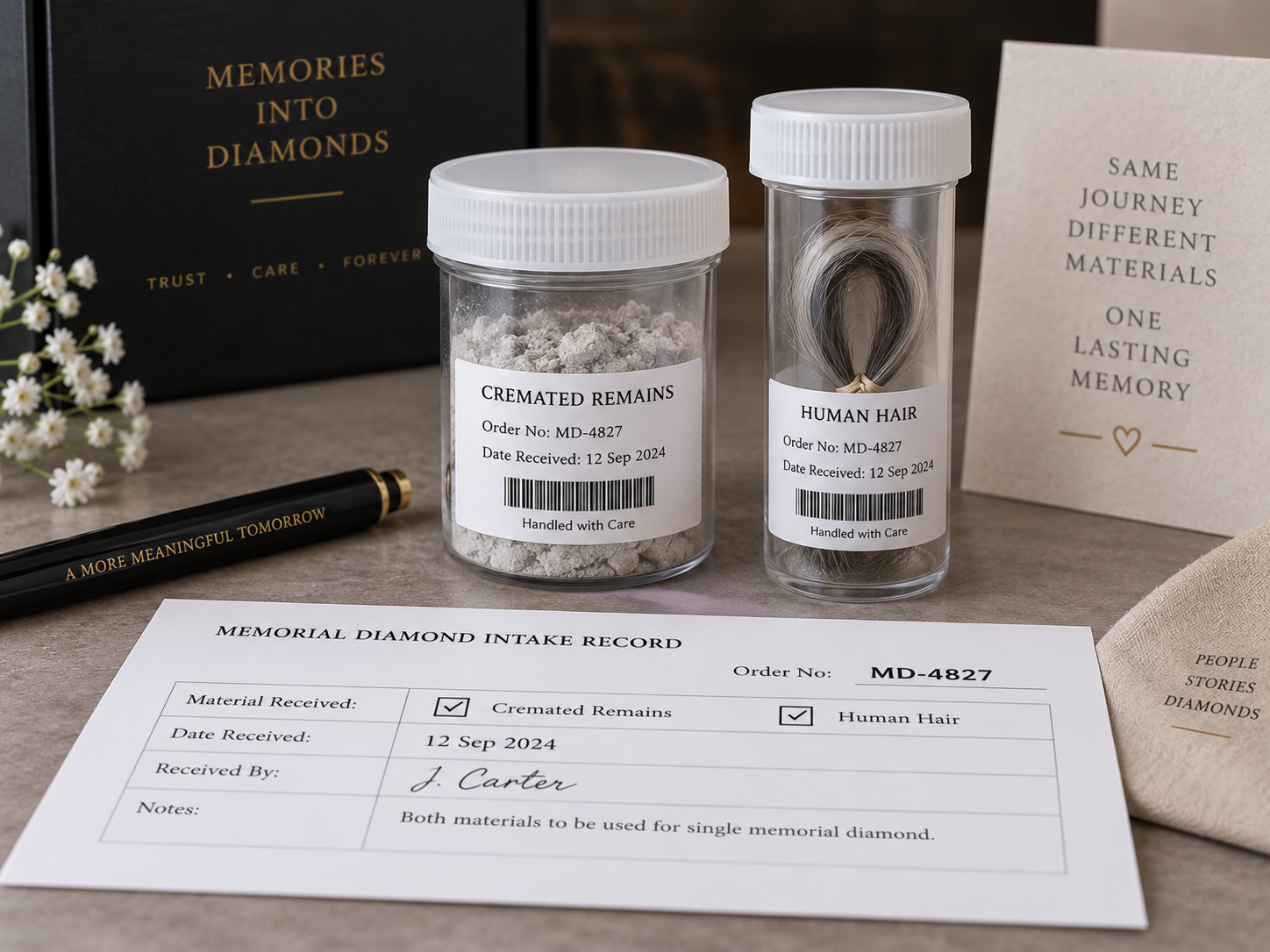
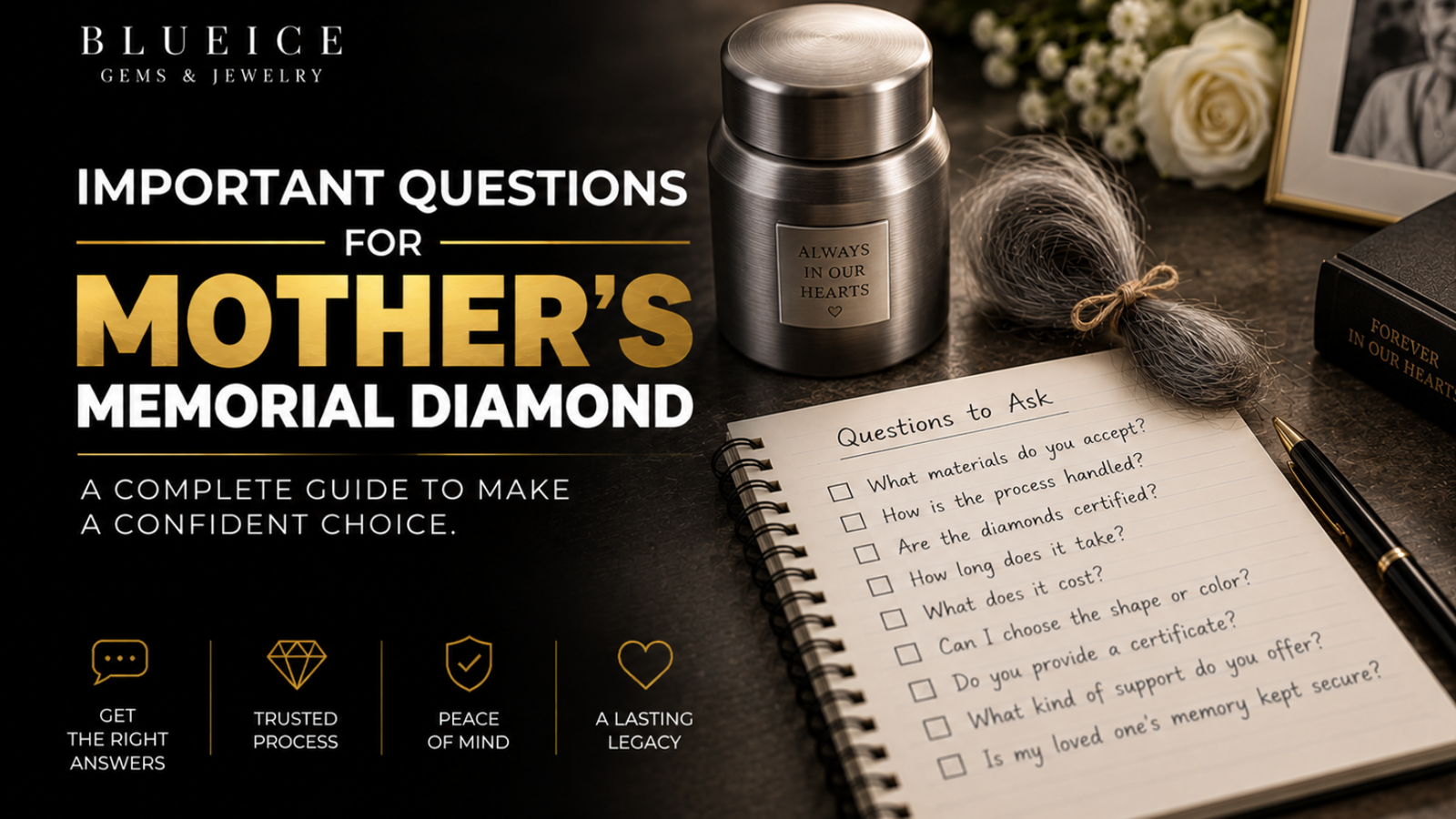
Every one of these is a question to answer before an urn is opened or a lock is cut.
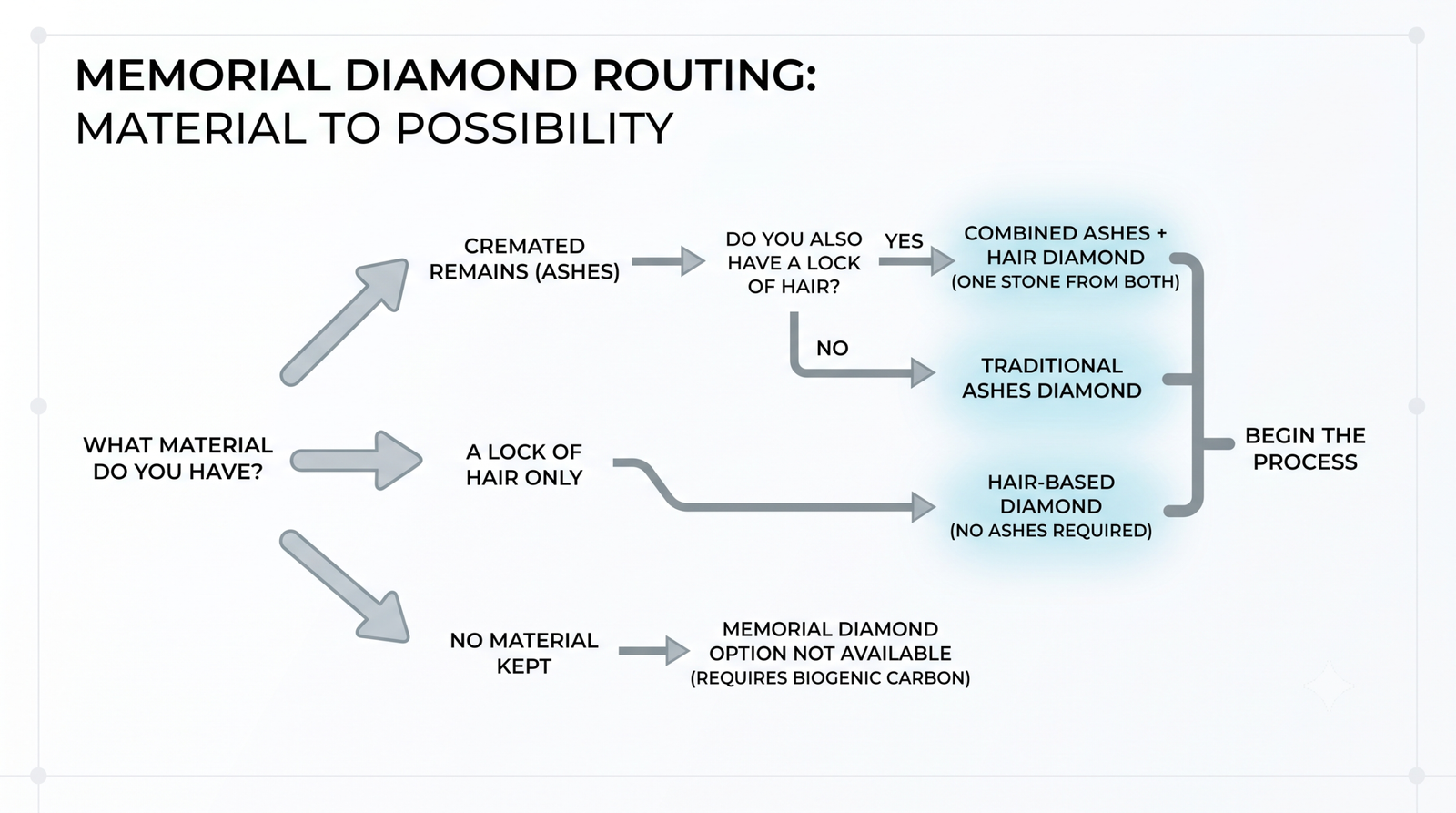
- Do you accept ashes and hair on the same order? Get a yes or no in writing before planning anything else. Some providers may treat these as separate products.
- If yes, does either quantity requirement change? Ask specifically whether the ash portion can be smaller because hair is included, and whether the hair requirement moves. Take “it depends” as a no until it is written down.
- Are they purified separately and then combined, or is one used as the primary source? This determines whether both materials genuinely end up in the stone or whether one is effectively a backup.
- If only one is ultimately used, which, and what happens to the other? Ask before, not after. The answer should be that unused material is returned by default.
- How is each material tracked? Two materials means two chains of custody meeting at one order number. Ask how they stay linked how companies track a loved one’s ashes sets out good practice.
- Could this be two stones instead of one? Worth asking even if it changes nothing, because it reframes the decision for a family with more than one person who wants something.
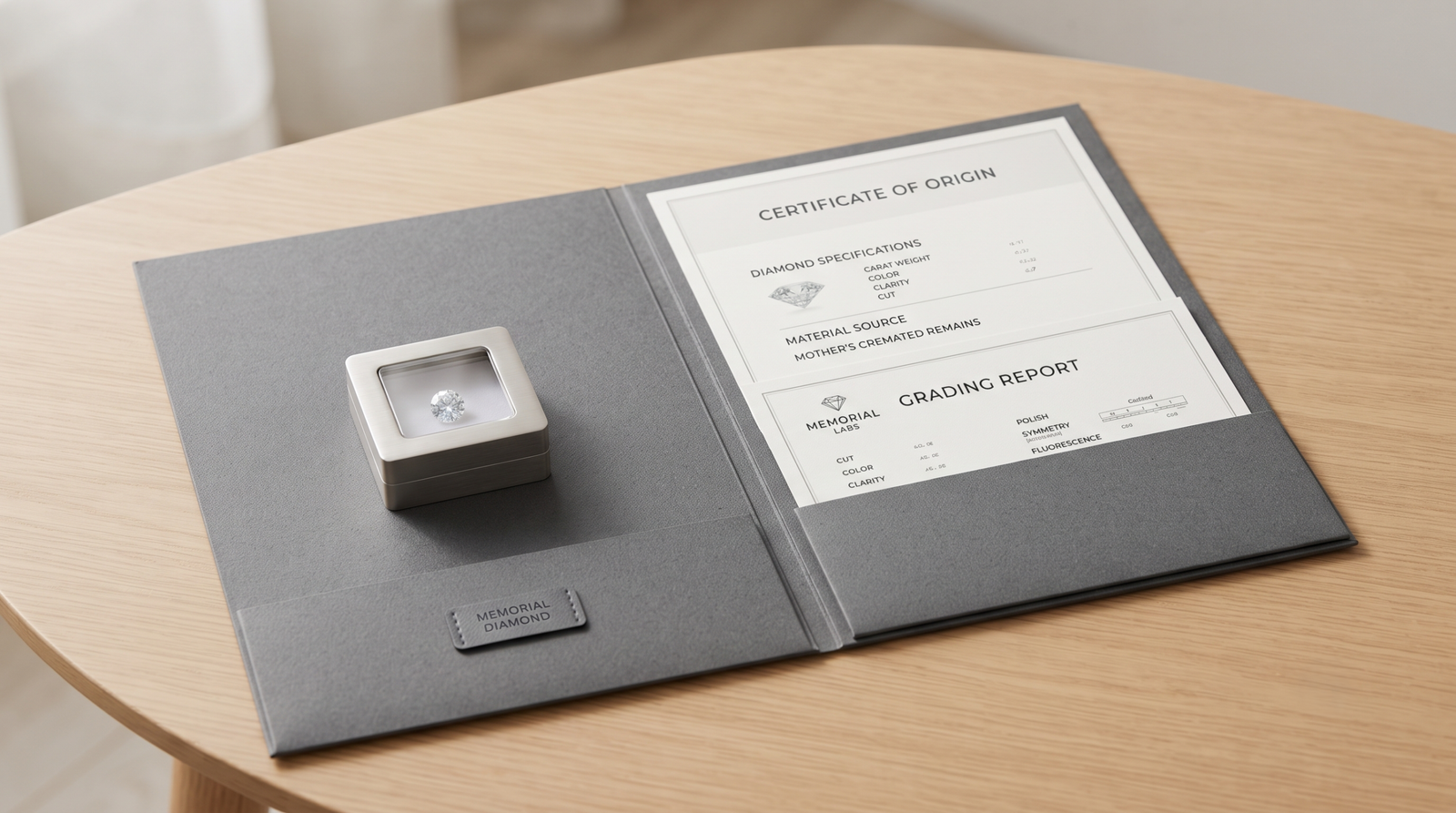
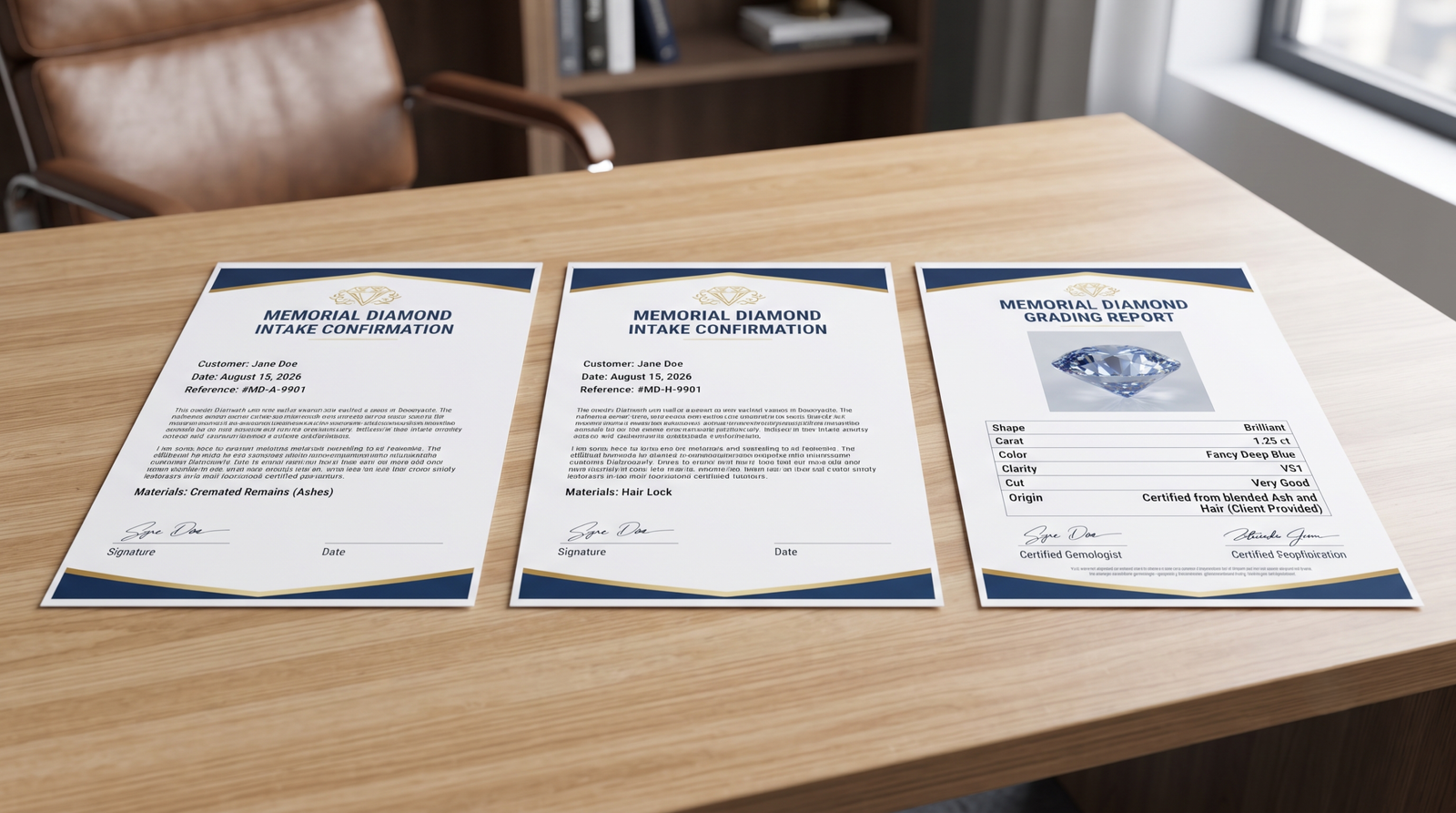
- What documentation arrives, and does it name both materials? An origin certificate mentioning only ashes, on a stone you supplied hair for, is a problem best discovered before ordering.
Ask all seven in one message. A provider who answers them plainly is telling you something useful; so is one who doesn’t.
Frequently Asked Questions
If I send hair too, can I send less of her ashes?
Possibly, but don’t plan on it. No published industry figure discounts one material for the presence of the other, so the safe plan is that each meets its own threshold. Ask your provider directly and get the answer in writing.
Will a diamond made from both be bigger than one made from ashes alone?
No. Two materials fill the same growth cell one would, and what happens next is measured in months rather than milligrams a combined stone reaches a given carat on exactly the schedule an ashes-only stone does.
Should I send both, or pick one?
Either is valid, and the decision is personal rather than technical. Some families combine them because both feel like her; others keep them separate so a sibling can have a hair-based stone. Ashes to diamond versus hair to diamond lays out the trade-offs.
Can I use hair if her ashes have already been scattered or interred?
Yes. Hair needs no cremation and no urn, so a kept lock works as a complete starting point on its own. That path stays open even when nothing else does including for a mother who was buried rather than cremated.
Do both materials show up on the certificate?
Ask before ordering. Documentation practice varies, and a certificate that records only one of two submitted materials is worth catching in advance. Request that both are named, and confirm what happens to anything unused.
Is it worth combining if a lock of hair is all I have?
There is no need to combine anything. A small lock of hair is a complete starting point by itself hair is roughly 50% carbon by weight, and no ash is required to make it work. Combining is an option, never a requirement.
Before You Open the Urn or Cut the Lock
Every question on this page can be answered before an urn is opened or a single strand is cut. That is the whole reason to ask them now rather than after the paperwork is reversible and the material is not.
Send them to Memorial Diamond at memorialdiamond.us before anything is divided, and ask what’s needed for each material, what comes back, and what the certificate will say. The complete guide to a mother ashes and hair diamond and what to ask before turning her ashes and hair into a diamond cover the rest.
An urn on one shelf, an envelope in a drawer, and one stone to be grown from both. Start from this: each material still has to meet its own threshold industry-typically a few tablespoons up to roughly 4 oz of ash, and a small lock or a few grams of hair. No published figure discounts either quantity for the presence of the other.
Plan for both figures in full, ask your provider before you divide or cut anything, and treat any reduction as a bonus rather than a starting point.
On this page:
- Does Sending Both Mean You Need Less of Each?
- What Does Each Material Require on Its Own?
- Why Doesn’t One Material Reduce the Other?
- Does Sending Both Make a Bigger or Faster Diamond?
- What Should You Ask Before You Divide Anything?
- Frequently Asked Questions
- Before You Open the Urn or Cut the Lock
Does Sending Both Mean You Need Less of Each?
Don’t assume it. Two things are genuinely unsettled here, and a family planning around a guess can end up short.
The first is whether a given provider accepts a combined submission at all one stone grown from both an ash portion and a hair portion. The second is whether, if they do, either quantity drops because the other material is present. Neither has a published industry answer, and no number on this page or any other should be treated as one.
What is solid is the shape of the safe plan: assume each material has to arrive in the quantity it would need alone. If a provider then tells you a smaller ash portion works because hair is coming too, you have gained something. Plan it the other way and be wrong, and you have already opened an urn and cut a lock for nothing.
What Does Each Material Require on Its Own?
These are the figures each path uses independently industry-typical ranges rather than any one company’s policy, and the numbers to plan against until a provider tells you otherwise in writing.
| Attribute | Her ashes | Her hair |
|---|---|---|
| Typical quantity requested | A few tablespoons up to ~4 oz (~100g) | A small lock or a few grams, often described as palm-sized |
| Carbon content of the material | ~0.5–4% by weight | ~50% by weight |
| What extraction has to remove | Calcium phosphate and other bone minerals | The non-carbon components of keratin |
| Cremation required | Yes | No |
| Where it usually comes from | An urn, or a portion already set aside | A lock kept from a haircut, an illness, or childhood |
| Does supplying the other reduce it? | Not documented — ask before you assume | Not documented — ask before you assume |
Ash gives up its carbon reluctantly because it is mostly bone mineral; hair gives it up readily because keratin is roughly half carbon by weight. How much ash a mother memorial diamond needs and how much hair it needs go deeper on each requirement.
Why Doesn’t One Material Reduce the Other?
Because they are not interchangeable inputs arriving at the same door.
Purifying ash means stripping away a heavy mineral load calcium phosphate makes up almost all of cremated remains, and reaching roughly 99.9% carbon means removing all of it. Purifying hair means removing the non-carbon components of a protein. Different problems, different runs, and a batch of one does not cover a shortfall of the other.
The most defensible mental model is two separate purification tracks meeting later, when the recovered carbon is graphitized and loaded into a growth cell. That model is a reasoned inference rather than a documented standard put it to a provider as a direct question rather than assuming it.
Certain either way: whatever is recovered from both is still blended with lab-sourced carbon to reach the volume a growth cell needs. No memorial diamond is 100% the person, from one material or two. Whether a diamond is really made from her ashes and hair covers that honestly.
Does Sending Both Make a Bigger or Faster Diamond?
No. The press keeps its own schedule.
Carat size is set by how long a crystal grows under pressure industry-typically about 6 to 10 months for most stones, and up to roughly 12 for larger or specialty ones. Once the growth cell has enough feedstock to run, neither the quantity nor the variety of material shortens that clock or enlarges the result. Two materials do not double anything.
So the honest reason to send both is not size and not speed. Families do it because both things exist and both feel like her: ashes from the cremation, and a lock cut long before anyone was thinking about any of this. That needs no technical justification bolted on. Turning your mother’s ashes and hair into a diamond walks through what that order looks like.
One practical consequence is worth knowing. Because carat doesn’t depend on volume, a family with both materials often has enough for more than one stone a sibling each, or an ash-based stone and a hair-based stone kept separate rather than combined. Ask about that before assuming a single combined diamond is the only shape this can take.
What Should You Ask Before You Divide Anything?
Every one of these is a question to answer before an urn is opened or a lock is cut.
- Do you accept ashes and hair on the same order? Get a yes or no in writing before planning anything else. Some providers may treat these as separate products.
- If yes, does either quantity requirement change? Ask specifically whether the ash portion can be smaller because hair is included, and whether the hair requirement moves. Take “it depends” as a no until it is written down.
- Are they purified separately and then combined, or is one used as the primary source? This determines whether both materials genuinely end up in the stone or whether one is effectively a backup.
- If only one is ultimately used, which, and what happens to the other? Ask before, not after. The answer should be that unused material is returned by default.
- How is each material tracked? Two materials means two chains of custody meeting at one order number. Ask how they stay linked how companies track a loved one’s ashes sets out good practice.
- Could this be two stones instead of one? Worth asking even if it changes nothing, because it reframes the decision for a family with more than one person who wants something.
- What documentation arrives, and does it name both materials? An origin certificate mentioning only ashes, on a stone you supplied hair for, is a problem best discovered before ordering.
Ask all seven in one message. A provider who answers them plainly is telling you something useful; so is one who doesn’t.
Frequently Asked Questions
If I send hair too, can I send less of her ashes?
Possibly, but don’t plan on it. No published industry figure discounts one material for the presence of the other, so the safe plan is that each meets its own threshold. Ask your provider directly and get the answer in writing.
Will a diamond made from both be bigger than one made from ashes alone?
No. Two materials fill the same growth cell one would, and what happens next is measured in months rather than milligrams a combined stone reaches a given carat on exactly the schedule an ashes-only stone does.
Should I send both, or pick one?
Either is valid, and the decision is personal rather than technical. Some families combine them because both feel like her; others keep them separate so a sibling can have a hair-based stone. Ashes to diamond versus hair to diamond lays out the trade-offs.
Can I use hair if her ashes have already been scattered or interred?
Yes. Hair needs no cremation and no urn, so a kept lock works as a complete starting point on its own. That path stays open even when nothing else does including for a mother who was buried rather than cremated.
Do both materials show up on the certificate?
Ask before ordering. Documentation practice varies, and a certificate that records only one of two submitted materials is worth catching in advance. Request that both are named, and confirm what happens to anything unused.
Is it worth combining if a lock of hair is all I have?
There is no need to combine anything. A small lock of hair is a complete starting point by itself hair is roughly 50% carbon by weight, and no ash is required to make it work. Combining is an option, never a requirement.
Before You Open the Urn or Cut the Lock
Every question on this page can be answered before an urn is opened or a single strand is cut. That is the whole reason to ask them now rather than after the paperwork is reversible and the material is not.
Send them to Memorial Diamond at memorialdiamond.us before anything is divided, and ask what’s needed for each material, what comes back, and what the certificate will say. The complete guide to a mother ashes and hair diamond and what to ask before turning her ashes and hair into a diamond cover the rest.