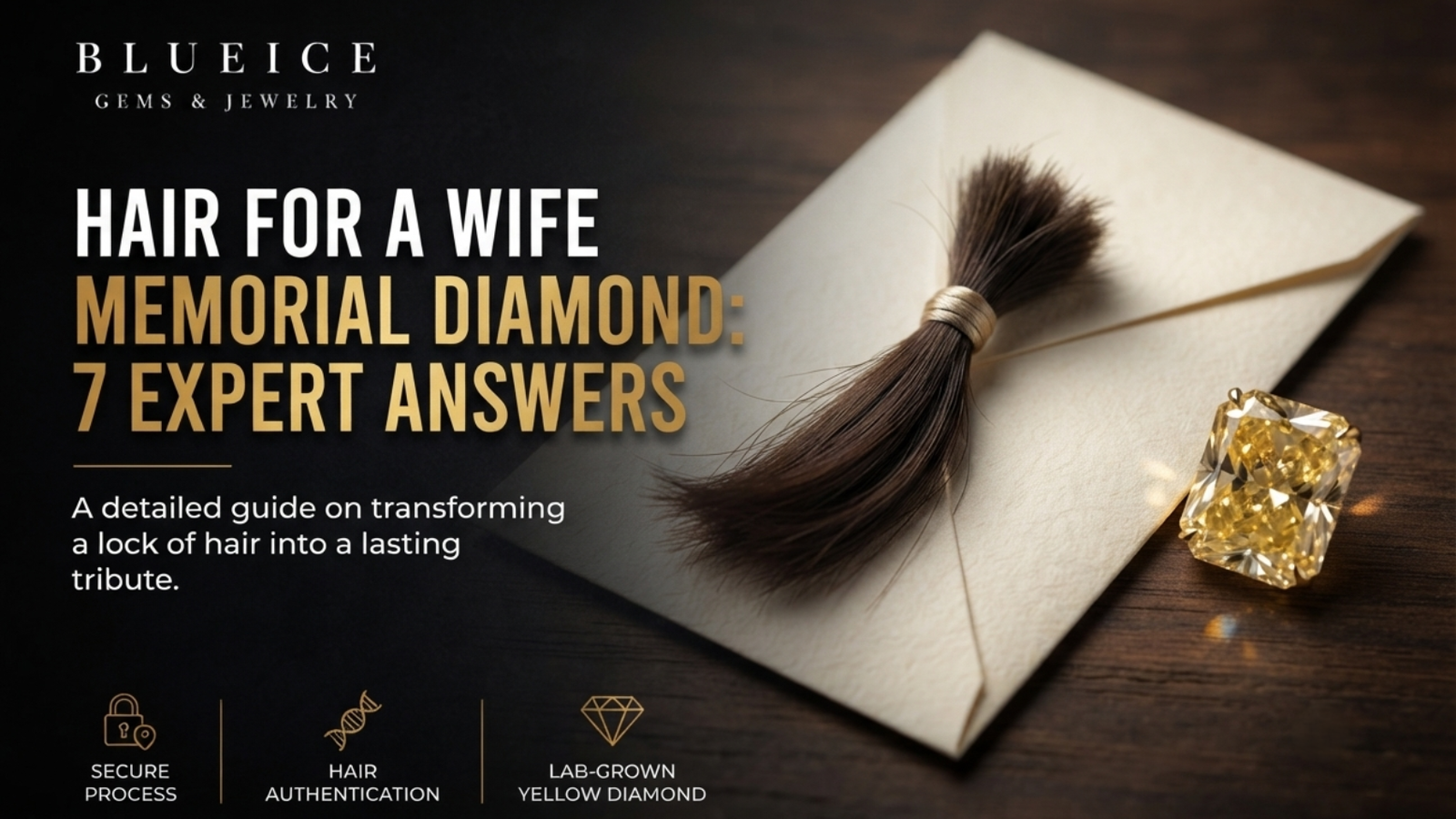
Hair for a wife memorial diamond: a small tied lock of hair on a paper envelope beside a loose yellow lab-grown diamond

How Much Hair Do You Need for a Wife Memorial Diamond?

Maybe it is a lock in an envelope from years ago, or what is still wound in the brush on her side of the dresser. The hair for a wife memorial diamond is a small lock, typically a few grams, often described as palm sized or about the thickness of a pencil, because hair is roughly 50% carbon by weight and needs no cremation to become a diamond. That small amount is enough for a genuine lab grown stone, and it is also less than most people hold, which is why the more important question is usually not “do I have enough” but “how much should I keep back.”

What Counts as Enough Hair for a Wife Memorial Diamond?

Providers describe the minimum hair for a wife memorial diamond in four different ways, and they all point at roughly the same amount:

  • By weight a few grams. A gram of hair is more than it sounds; a single long strand weighs a small fraction of a milligram, so a few grams is hundreds or thousands of strands.
  • By lock a small lock, the kind a stylist could cut from underneath at the nape without it showing.
  • By size in the hand palm sized, meaning a loose bundle that covers the center of an open palm.
  • By thickness about as thick as a pencil when gathered and tied.

The exact figure varies by provider, and the honest answer to how much hair for a wife memorial diamond a given company wants is whatever they put in writing. Ask before cutting or dividing anything. What does not vary: no reputable provider needs a ponytail, a braid’s full length, or anything close to a full head of hair. If someone asks for that much, ask why.

Wife Hair Diamond: The Complete Guide covers the whole decision, process, color, carat, cost, timeline, with the quantity question in its place among them.

Why Does Hair Need So Much Less Than Ashes?

Because of what hair is made of. Hair is keratin, a carbon rich protein, and it runs roughly 50% carbon by weight. Cremated remains are almost entirely calcium phosphate, with only about 0.5% to 4% usable carbon. Gram for gram, the hair for a wife memorial diamond carries something like ten to a hundred times the carbon that the same weight of ash does.

That single fact has three consequences:

  1. Far less material is needed. A few grams of hair yields a workable amount of carbon; the ash equivalent is a few tablespoons to roughly 4 oz. How much ash you need for a wife memorial diamond covers that side.
  2. No cremation is required. If she was buried, or if her ashes were scattered or interred in full, a lock of hair is the route that remains open. The hair for a wife memorial diamond can be decades old, as long as it was kept dry.
  3. Hair sits outside cremation specific objections. No tradition has an official position on memorial diamonds specifically; views vary by denomination and clergy. But where a family’s concern is with cremation or dividing ashes, hair for a wife memorial diamond does not raise it.

One honesty point holds for hair exactly as for ash. The carbon extracted from the hair for a wife memorial diamond is purified to 99.9%+ and blended with supplemental lab carbon to reach the volume a stone needs, personal carbon typically makes up around 10% to 15% of the finished diamond, sometimes less. The stone is not “100% her.” It is a real diamond with a real, verifiable portion of her in its lattice; hair’s richer carbon does not change that ratio, only how little you have to send. How a memorial diamond is made from your wife’s hair walks through the extraction stage by stage.

Which Sources of Her Hair Can Be Used?

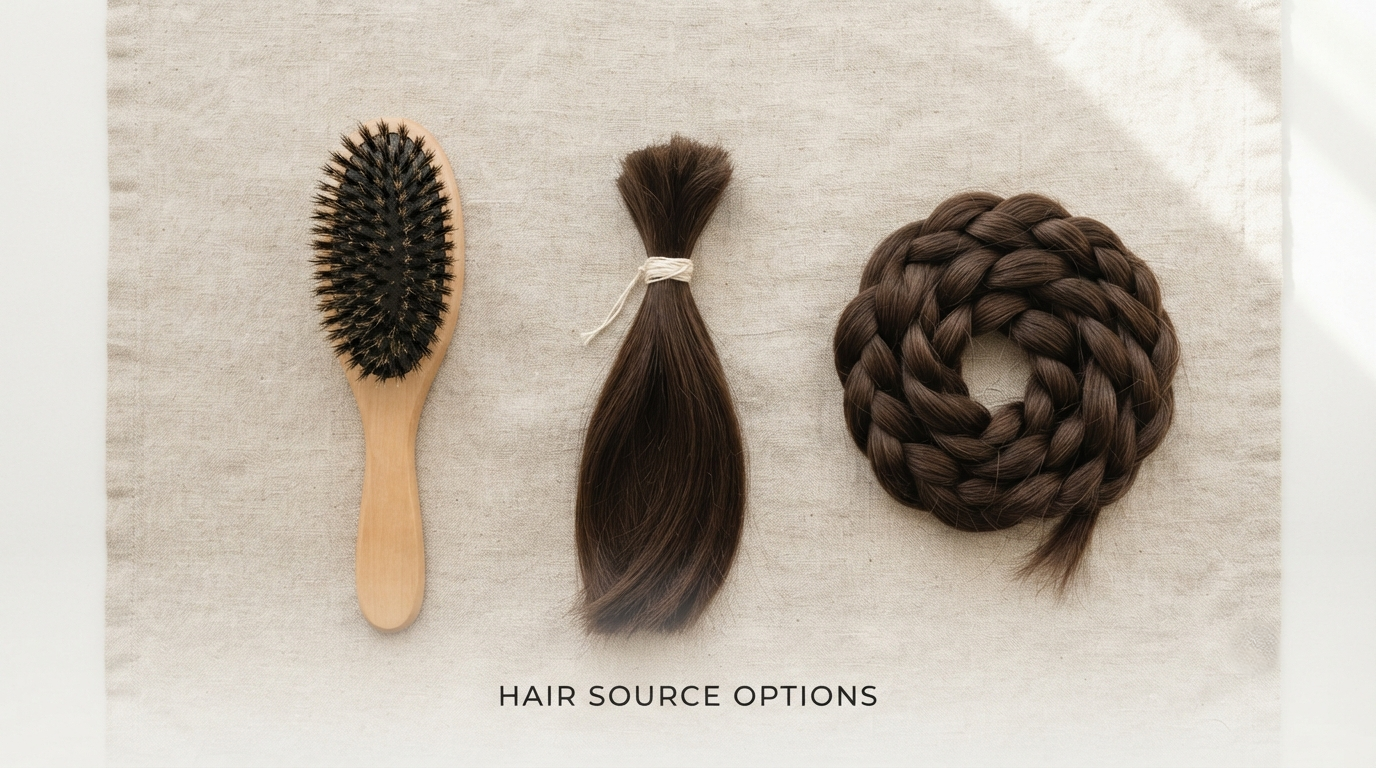
Almost anything that is actually her hair and has stayed dry. The table below is the one to check before you decide you have nothing.

SourceUsable as hair for a wife memorial diamond?What to know
A lock cut at the funeral home or hospitalYesThe cleanest source; usually already tied
A braid or ponytail saved from years agoYesFar more than needed; divide it and keep most
Hair from her brush or combYesLoose and short; may need more volume
Strands from a pillowcase, hat, or hairbandYes, if enoughGather all of it; combine with brush hair
A baby lock or childhood lock her parents keptYesAge does not matter if it stayed dry
Gray, white, or thinning hairYesPigment loss does not affect carbon content
Dyed, bleached, permed, or relaxed hairYesChemical treatments are removed during purification
Hair that went through chemotherapy loss and regrowthYesRegrowth is ordinary hair
Synthetic extensions or wigsNoNot keratin; no personal carbon
Hair that got wet and mildewedAskMold contamination can make a sample unusable; a provider will need to see it
A hairbrush, a tied cut lock, and a coiled braid laid side by side on linen

Dyed and gray hair come up constantly, and the answer is the same for both: what makes hair usable as hair for a wife memorial diamond is the keratin, and neither dye nor lost pigment changes that. Synthetic extensions are the one hard no, plastic fiber, with nothing of her in it. If her hair was mixed with extensions, tell the provider in advance; they can usually separate the two.

Why Should You Divide the Lock and Keep Some?

Because a lock cannot be topped up. This is the single point that distinguishes the hair question from the ashes question, and it is worth stating bluntly.

Once the hair for a wife memorial diamond is received and extraction begins, the material is consumed. If you sent everything, there is no second lock, no way to add more later, no second stone from her hair, and no small tangible thing left in the house that is simply hers. With ashes, families keep the majority by default. With hair, the whole amount may be small enough to send by accident.

So before anything leaves the house:

  • Divide the lock in two, at minimum. Send what the provider asked for; keep the rest in a labeled paper envelope somewhere dry.
  • If the amount you hold is barely enough for one stone, send it, but tell the provider that it is all there is, so they treat it accordingly.
  • If the amount is generous, set aside enough hair for a wife memorial diamond a second time, plus a portion that stays hair forever. A locket holding both the finished diamond and a few kept strands is a common way families do this; wife memorial diamond ideas for rings, pendants, and keepsakes covers it.

Sending more hair for a wife memorial diamond than asked for does not change the stone. Carat is set by growth time in the press, a stone grows around a tiny seed at roughly 6 to 8 GPa and 1,400 to 2,500°C for weeks to months, and the synthetic diamond process runs identically whether the carbon came from three grams or thirty. Extra hair is simply hair you no longer have.

How Many Stones Can One Lock Support?

Often more than one, and the answer depends on how much you hold rather than on how many stones you want.

A braid, a ponytail, or a thick tied section can usually supply enough hair for a wife memorial diamond several times over. A single small lock may be enough for one stone with a little left to keep. A brush’s worth is often enough for one stone and not much more. Since carat is set by growth time rather than material, a provider needs a set amount of purified carbon to start each growth run, and that amount does not scale steeply with size.
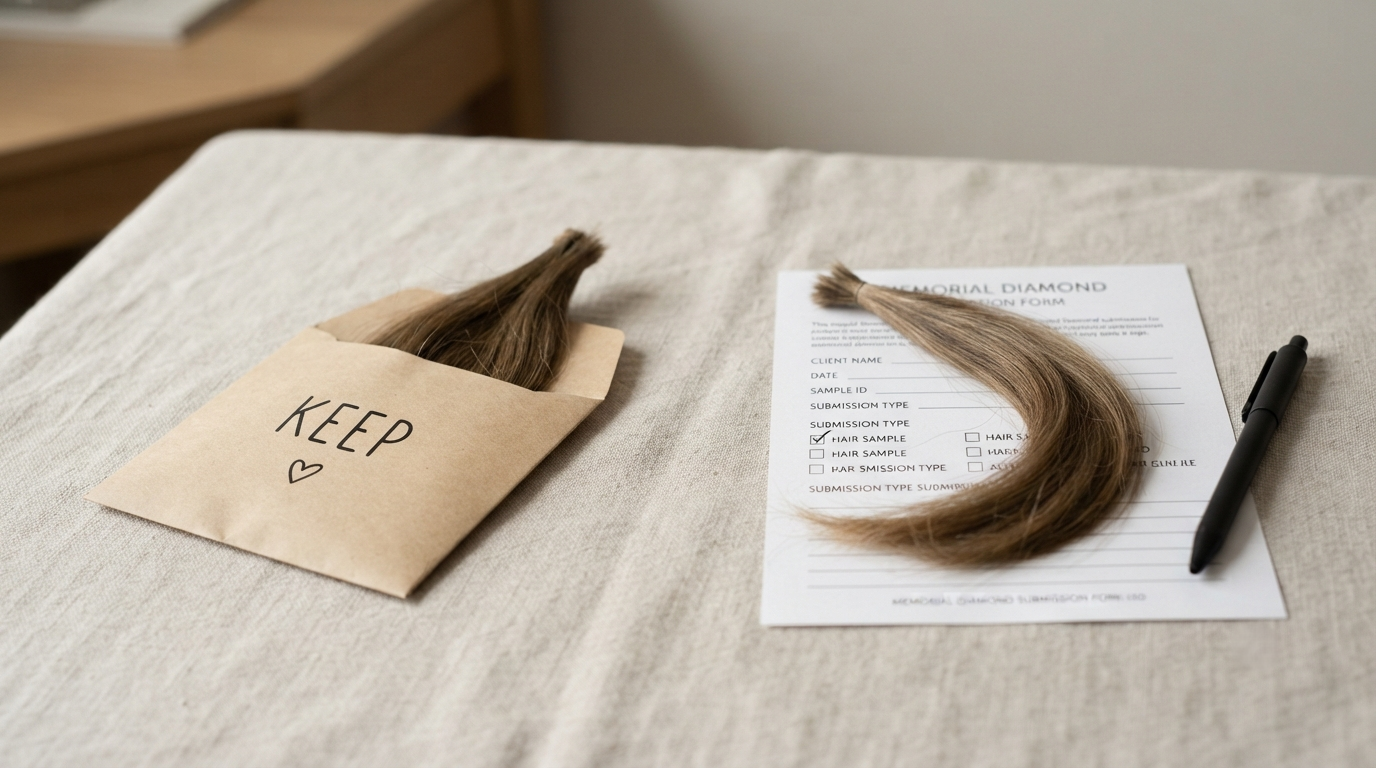
A lock of hair divided in two, one half in a labeled paper envelope marked "keep," the other beside a submission form
SituationWhat to do
A braid or long ponytailAsk the provider how much hair for a wife memorial diamond they need per stone; divide accordingly; keep a portion as hair
One small lock, two peopleAsk whether one submission can yield two small stones; if not, decide together who receives the stone and who keeps the remaining hair
Brush hair onlyUsually one stone; gather every strand you can find first
Stones wanted now and laterSend enough for now; store the rest dry and labeled for a future submission

Each stone is grown, cut, graded, and priced separately, typical 2026 figures across providers, none of them Memorial Diamond’s own published pricing, put 0.10 to 0.25 ct at roughly $1,500 to $3,500, $5,000 to $15,000 for 0.5 to 1 ct, and $20,000 to $75,000+ above 2 ct, and each carries its own origin certificate. The 6 to 10 month timeline applies to each, in parallel if commissioned together.

Does Hair From a Brush Need More Volume?

Usually a little more, and it is worth understanding why so that you do not undercount.

Brush hair is loose, short, and mixed with things that are not hair: lint, dust, skin cells, product residue, sometimes another person’s hair. Before extraction, a provider cleans the sample, and cleaning removes some mass. Short strands also pack less densely than a tied lock, so a full looking brush may weigh less than it appears. So the hair for a wife memorial diamond from a brush often needs to be a larger, looser bundle than a cut lock.
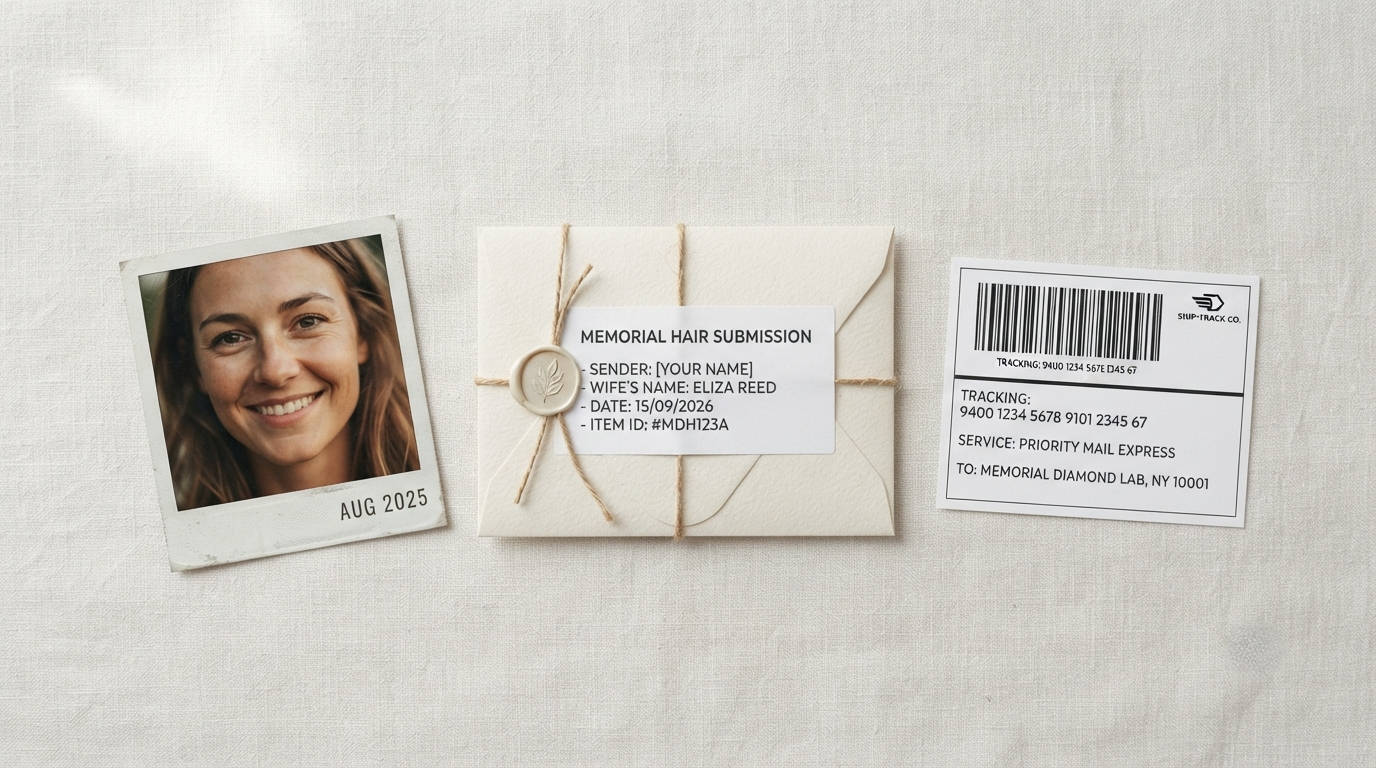
A labeled paper envelope tied with thread beside a dated photograph and a tracked shipping label

Practical steps:

  1. Gather from every brush, comb, hairband, and pillowcase you can find. Every strand of hair for a wife memorial diamond counts.
  2. Do not wash or comb it. Leave cleaning to the provider. Home washing loses strands and adds moisture.
  3. Pick out obvious non hair debris by hand if you can without losing strands, but do not spend hours on it.
  4. Weigh it if you have a kitchen scale that reads to a gram, and tell the provider the figure and the source.
  5. Ask directly whether the amount is enough hair for a wife memorial diamond from a brush, since the provider’s stated minimum usually assumes a cut lock.

If brush hair falls short, two options remain. A small amount of her ashes, if you hold any, can be combined with the hair, how much ash and hair you need for a wife memorial diamond covers the combined minimum. And a smaller carat needs slightly less carbon to start, so ask whether a 0.10 to 0.25 ct stone is possible where a 1 ct is not.

How Should You Store and Send the Hair?

Dry, in paper, tied, labeled, and photographed. Hair for a wife memorial diamond is durable, it survives decades in a drawer, but it has two enemies: moisture and being lost in transit.

  • Paper, not plastic. A paper envelope breathes; a sealed plastic bag traps moisture and invites mildew. If the hair is already in plastic and dry, it is fine, move it to paper for storage.
  • Tie it. A short length of thread or a soft band around a lock keeps it together and makes the amount visible. Loose brush hair can go in a folded paper packet.
  • Keep it dry and cool. A drawer, not a bathroom or a basement.
  • Label the envelope with her full name, the word “hair,” the source, cut lock or brush, and the provider’s submission reference once you have one.
  • Photograph it beside the completed submission form, with the date visible, your own record of what was sent.
  • Ship tracked and insured, keep the tracking number, and ask the provider to confirm receipt of the hair specifically.

The provider then logs the hair for a wife memorial diamond under a chain of custody record that follows it through cleaning, extraction, graphitization at roughly 2,500 to 2,700°C, growth, cutting, and grading, ideally by an independent lab using GIA’s cut, color, clarity, and carat standards. Questions to ask before turning your wife’s hair into a diamond lists the rest.

Is Unused Hair Returned?

Usually not, the same reason keeping part of the lock matters. Extraction is designed to recover carbon from the whole sample, so most providers consume all of the hair for a wife memorial diamond they receive. A few will return material they did not process if you sent more than they needed, but returned hair has been opened and handled, which is not what most families want.

Treat what you send as a one way portion. Send the amount the provider asked for; keep everything else at home where it never left your custody. If return matters to you, ask in writing and get the answer in writing back, before the envelope is sealed, not after.

Frequently Asked Questions

How much hair for a wife memorial diamond do providers usually ask for?

A small lock, typically a few grams, described as palm sized or about pencil thick when tied. The exact figure varies by provider, so ask in writing before cutting or dividing anything. No reputable provider needs a full braid or anything close to a full head of hair.

Why does hair need so much less than ashes?

Hair is keratin, roughly 50% carbon by weight; cremated remains are mostly calcium phosphate with only about 0.5% to 4% usable carbon. A few grams of hair yields a workable amount of carbon, where ash requires a few tablespoons to roughly 4 oz for the same purpose.

Can I use hair from her brush?

Yes. Brush hair is a common and usable source. It is loose and mixed with lint and dust, and cleaning removes some mass, so a brush sample often needs a little more volume than a cut lock. Gather from every brush, comb, and hairband you can find.

Does dyed or gray hair still work?

Yes. What makes hair usable as hair for a wife memorial diamond is its keratin, and neither dye, bleach, perms, nor pigment loss changes the carbon content. Chemical residues are removed during purification. The only hard no is synthetic extensions or wigs, which are plastic fiber and contain nothing of her.

Why should I keep part of the hair for a wife memorial diamond?

Because a lock cannot be topped up once extraction begins. Sending everything leaves no hair for a second stone, no way to add material later, and nothing tangible of hers left at home. Divide the lock before sending, and keep the rest in a labeled paper envelope somewhere dry.

Can one lock make more than one diamond?

Often, yes. A generous lock or braid can supply enough hair for a wife memorial diamond several times over; a small lock may support one stone with a little to keep. Each stone is grown, graded, and priced separately. Ask the provider how much they need per stone.

How should I store the hair until I send it?

In a paper envelope, not plastic, tied with thread and kept somewhere dry and cool. Label it with her name and the source, photograph it beside the submission form, and ship it tracked and insured. Hair kept dry stays usable for decades.

Final Thoughts on Hair for a Wife Memorial Diamond

A few grams is enough hair for a wife memorial diamond, and that is not the hard part. The hard part is that the lock in your hand may be all there is, and hair, unlike ashes, is easy to send entirely without meaning to. Ask the provider for the number, divide the lock, send only what they asked for, and keep the rest in paper somewhere dry. Whatever is left is still hers, and so is the small diamond that comes back months later, grown around carbon she was carrying while she was alive.

Learn More About Wife Memorial Diamonds

Talk With Memorial Diamond

If you are holding a lock, a brush, or an envelope and want to know whether it is enough hair for a wife memorial diamond, and how much to keep back, reach out to Memorial Diamond. How much hair for a wife memorial diamond you should send is answerable before anything is cut, divided, or shipped.
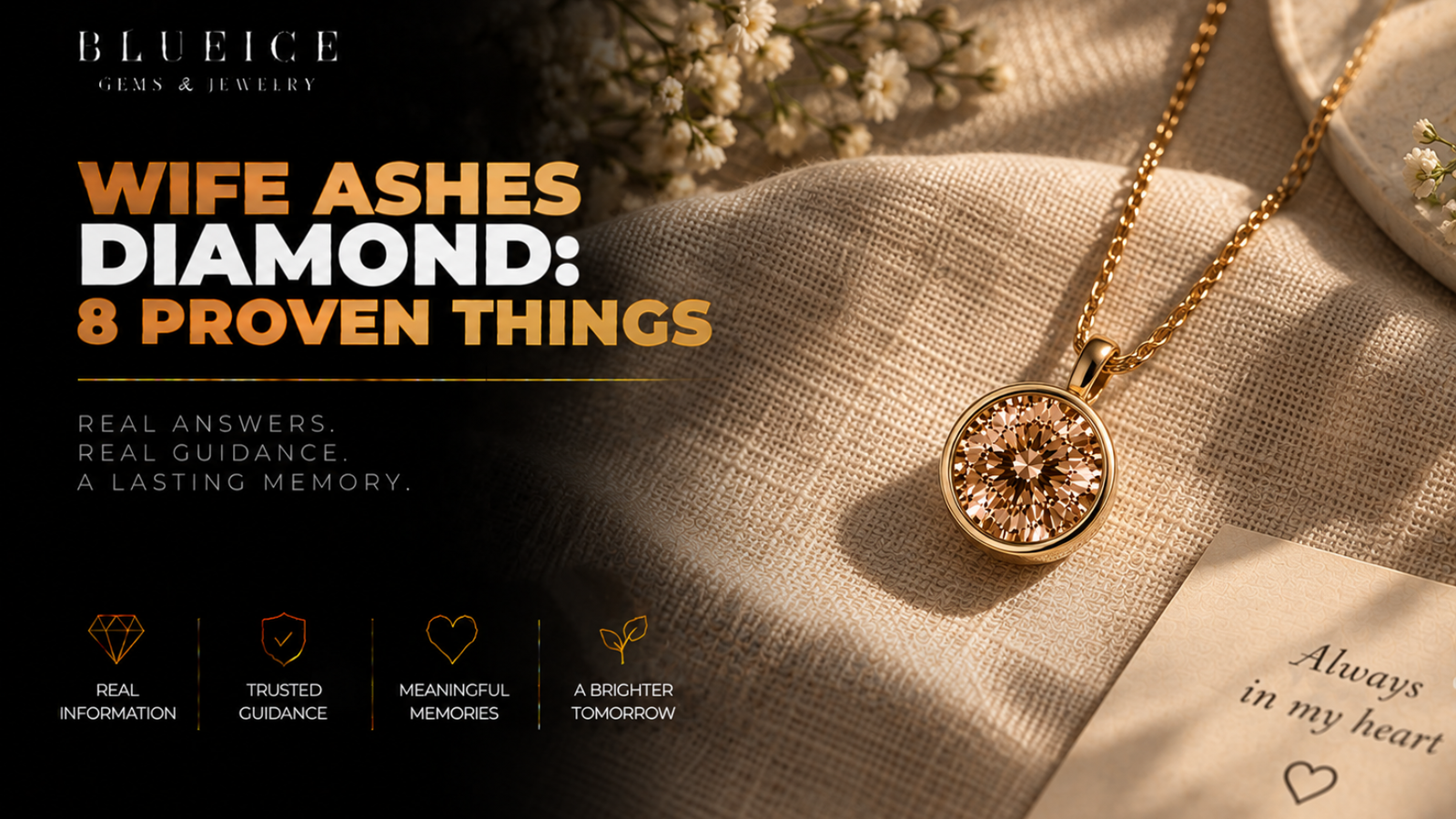

Wife ashes diamond: a champagne-toned lab-grown memorial diamond in a bezel pendant on a plain linen background

Wife Ashes Diamond: The Complete Guide

There is a version of your house that still expects her. Her side of the closet, the mug that was hers, the way you still buy two of something. A wife ashes diamond is a real, lab grown diamond containing a purified portion of your wife’s own carbon, extracted from a small amount of her cremated remains and grown over roughly 6 to 10 months into a stone that can be set in a ring, a pendant, or kept loose.

It is not all of her ashes, and it is not a symbol standing in for her. It is a diamond that physically exists because of her. This guide covers the eight things that decide whether it is right for you: what the stone contains, how much ash is used, the process, the colors, carat and cost, the timeline, what to ask before sending anything, and who else in the family the decision touches.

What a Wife Ashes Diamond Actually Contains

Start with the fact about a wife ashes diamond most people quietly doubt, because everything else rests on it.

Cremated remains are almost entirely calcium phosphate, the mineral structure of bone. Carbon, the element a diamond is made of, is a small fraction of ash by weight: industry figures put usable carbon at roughly 0.5% to 4%, depending on the person and on how the cremation was carried out. A laboratory extracts that carbon, purifies it to 99.9%+ purity, and then blends it with additional lab sourced carbon to reach the volume a diamond of meaningful size needs.

The result is that in a wife ashes diamond, the personal carbon recovered from her ashes typically makes up somewhere around 10% to 15% of the finished stone’s mass. Some providers cite figures as low as 3%, others higher, depending on the carat and how much ash was submitted. The rest is lab carbon that was never part of her.

That sentence is the one to hold onto. A wife ashes diamond is not “100% her,” and any provider who tells you otherwise is describing physics that does not exist. What it is: a genuine diamond in which a real, verifiable portion of the carbon that was in her body now sits inside a crystal lattice. Chemically, optically, and by hardness, 10 on the Mohs scale, it is indistinguishable from any other diamond.

How Much of Her Ashes Is Used?

Far less than most people fear. Requirements vary by provider, but across the industry a wife ashes diamond typically needs somewhere between a few tablespoons and roughly 4 oz, about 100 g, of cremated remains, a small fraction of the ashes a full cremation produces.

That has two consequences worth stating plainly:

  • Everything else you planned for her still happens. The scattering at the beach she loved, the interment beside her parents, the urn that stays on the shelf, none of it is cancelled. The diamond takes a portion; the plan takes the rest.
  • More than one stone is often possible. Because so little is used per wife ashes diamond, a second stone for a daughter, a son, or her sister can usually be grown from the same submission. How much ash is needed for a wife memorial diamond covers the quantities in detail, including what happens if the ashes were already divided at the crematorium.

Sending more ash does not produce a bigger wife ashes diamond. Size is a function of growth time in the press, not of how much material went in, so a family that sends a full urn does not get a larger stone, only an unnecessary loss of ashes they could have kept.

How Is a Wife Ashes Diamond Made?

The process is the same one the broader lab grown diamond industry uses, with a personal carbon source at the front of it. Seven stages, in order:

StageWhat happensTypical duration
1. CollectionHer ashes are received with chain of custody tracking, a labeled, logged, traceable record from arrival to finished stoneDays
2. Carbon extractionThe ash is heated in a controlled, oxygen free, multi stage process that strips away the calcium phosphate and other minerals, leaving carbon at 99.9%+ purityWeeks
3. GraphitizationThe purified carbon is heated to roughly 2,500 to 2,700°C and converted to graphite, the crystalline form presses use as feedstockDays to weeks
4. Diamond growthThe graphite, blended with supplemental lab carbon, goes into an HPHT press with a tiny diamond seed at roughly 6 to 8 GPa and 1,400 to 2,500°C, or, with some providers, is converted to gas for CVD growthWeeks to months, this stage sets the carat
5. Cutting and polishingA gemologist cuts the rough crystal into round, princess, cushion, or another shapeWeeks
6. Optional irradiationSome providers shift or intensify color post growth for red, pink, green, or blackDays
7. Grading and certificationThe stone is graded, ideally by an independent lab, and issued an origin certificateWeeks
Industrial HPHT press in a laboratory with a technician checking readouts

HPHT is the standard method for memorial stones; a minority of providers use CVD. Both produce a genuine diamond. The technical detail of both methods is on the synthetic diamond page, if you want to read past what a provider tells you.

The step in making a wife ashes diamond most families ask about is the second one, how anyone can be sure the carbon that comes out was hers. The honest answer is the chain of custody record: a reputable provider logs the sample at every stage, and the origin certificate at the end documents that this specific stone was grown from this specific submission. How a memorial diamond is made from your wife’s ashes goes through each stage in more detail, and whether it is really made from her ashes takes the skeptic’s question seriously.

What Color Will It Be?

Probably not colorless, and that is worth knowing before you picture it.

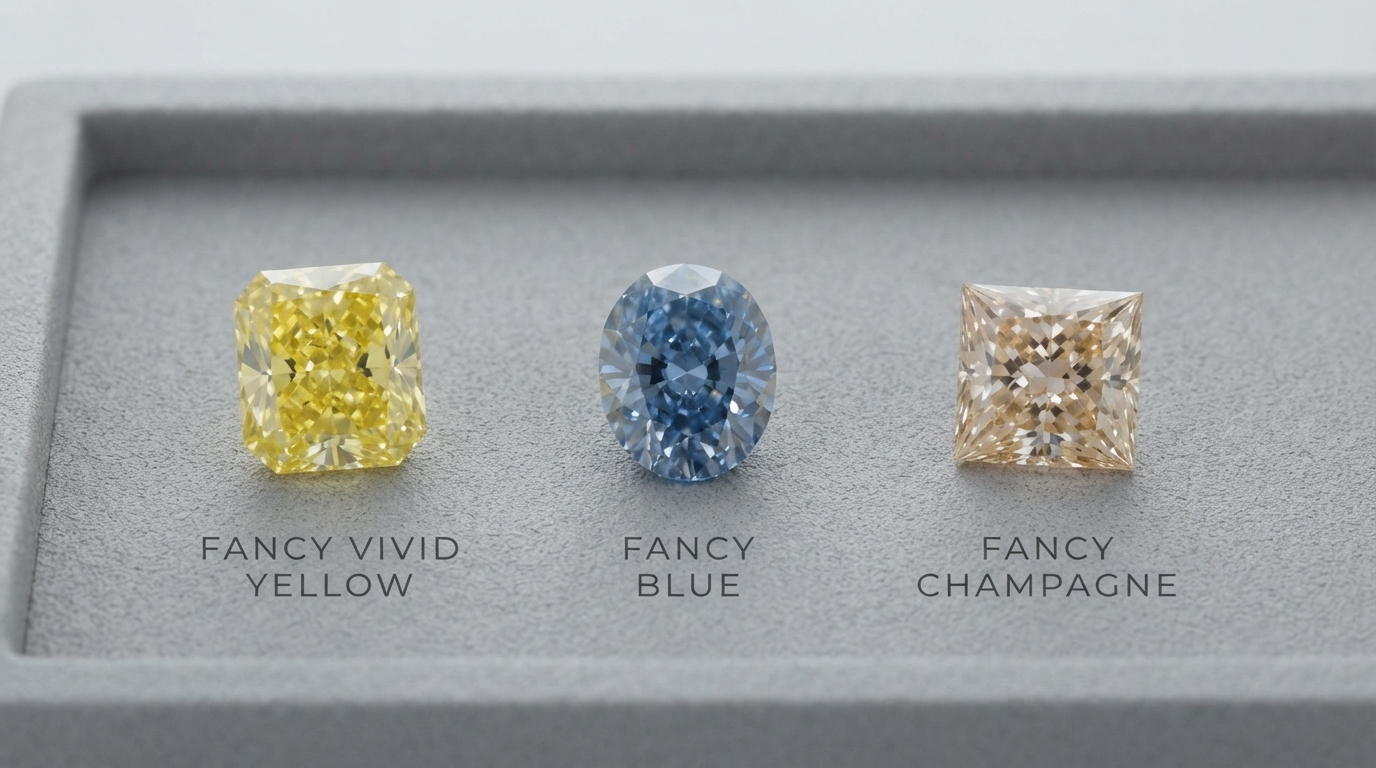
Diamond color comes from trace elements present during growth. Nitrogen produces yellow tones; boron produces blue. Because the carbon in a wife ashes diamond comes from an organic, personal source rather than a controlled synthetic feedstock, trace elements are common, which is why memorial diamonds naturally trend toward yellow, blue, and champagne or amber brown tones.

Three loose memorial diamonds yellow, blue, and champagne on a gray grading tray
ColorWhat produces itWhat it typically means for cost
Yellow to champagneTrace nitrogen, the most common natural outcomeThe baseline; usually the most accessible tier
BlueTrace boronSimilar to yellow; some providers price it higher
Colorless / whiteAdditional processing to exclude trace elementsMeaningfully more at the same carat
Red, pink, green, blackPost growth irradiationProvider specific; black often takes longer

The color of a wife ashes diamond is a feature of the individuality of the source, not a flaw. Two stones grown from the same ashes can differ slightly. If she had a favorite color, or if you already know the ring you want will be yellow gold or platinum, that is a reasonable thing to steer by, but the stone’s own tendency is the starting point, and colorless is a choice that costs more, not the default. What color a diamond made from your wife’s ashes will be covers the choice in full.

Carat, Cost, and What Drives the Price

A wife ashes diamond is generally offered from about 0.10 carats up to 5 carats or more, and cost scales steeply with size because larger stones need much longer in the press.

The ranges below are general industry figures for 2026, not Memorial Diamond’s published prices, and every provider prices differently. Final cost depends on carat, color, cut, and whether an independent grading report is included.

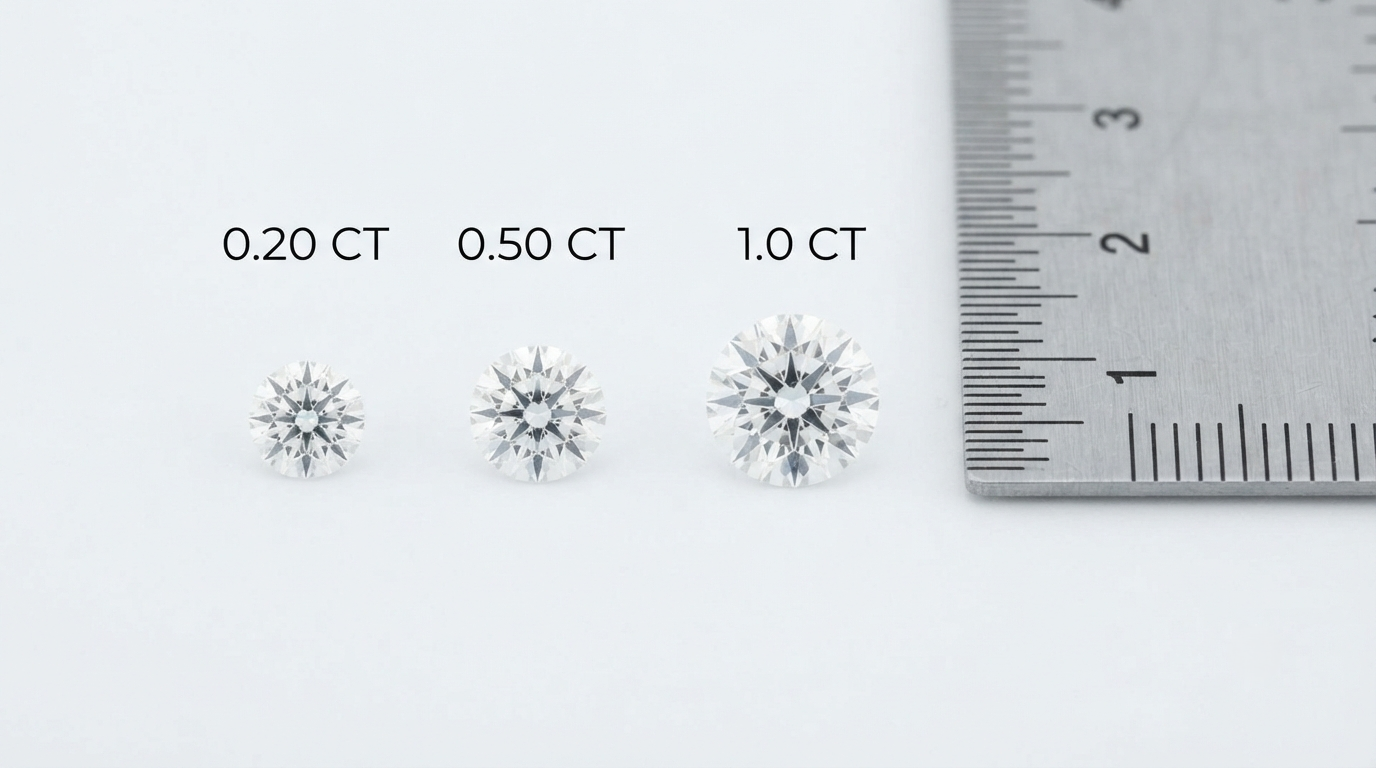
Loose diamonds at 0.20, 0.50, and 1.0 carat beside a ruler for scale
TierApproximate caratTypical industry rangeNotes
Entry0.10 to 0.25 ctRoughly $1,500 to $3,500Reads well in a bezel ring or a small pendant
Mid0.5 to 1 ctRoughly $5,000 to $15,000Colorless costs meaningfully more than yellow, blue, or champagne at the same size
Large / rare2 to 5+ ctRoughly $20,000 to $75,000+Growth time drives both price and timeline

Settings, a ring, pendant, or pair of earrings, are almost always priced separately from the loose stone, as are engraving, fancy cuts, and an independent grading report. A wife ashes diamond at the entry tier, set simply in gold, is the realistic floor for most families; the ceiling is wherever carat and platinum take it. How much a wife memorial diamond costs works through a full quote line by line.

One non financial note on carat: a small wife ashes diamond is not a small gesture. A 0.20 ct diamond in a bezel is worn every day by people who would never have worn a solitaire. Choose the size for the piece you will actually wear.

How Long Does It Take?

Across the industry, a wife ashes diamond typically takes 6 to 10 months from receipt of her ashes to a finished stone. Larger stones and some specialty colors, black in particular, or anything over roughly 2 carats, can take up to 12 months.

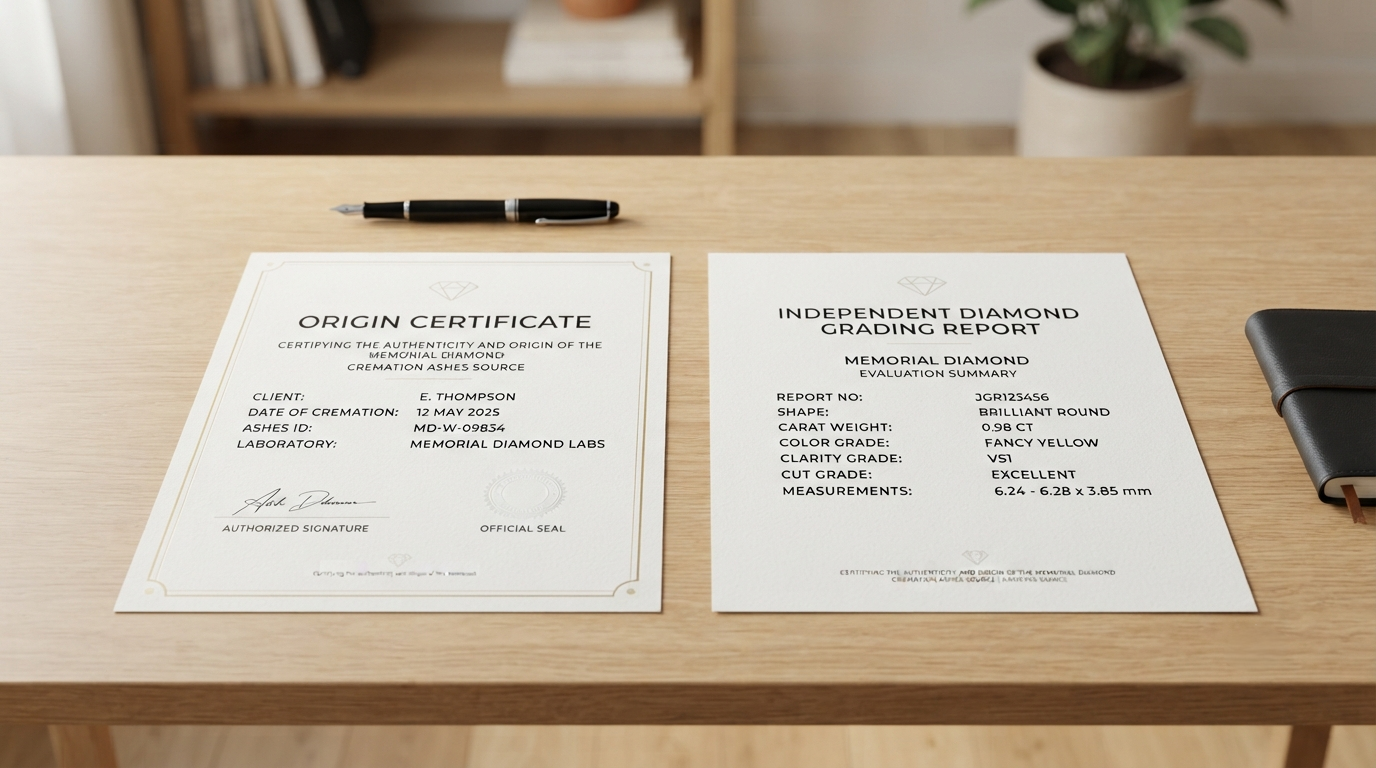
An origin certificate and an independent grading report side by side on a desk

The timeline for a wife ashes diamond is driven by growth time, which is driven by carat. It is not driven by how much ash you sent, and it is not something a provider can meaningfully rush. If there is a date you are hoping to have the stone by, an anniversary, a child’s wedding, count back from it and add a margin, and be honest with yourself about whether missing that date would be bearable. Ordering against a date you cannot bear to miss is the one piece of timing advice that matters. How long it takes to make a wife memorial diamond covers reverse planning against a calendar.

Questions to Settle Before Anything Is Sent

A wife ashes diamond is a decision you make once, with material you cannot get back. These are the questions worth answering before her ashes leave the house, most of them are for you, a few are for the provider.

  1. Do you control the ashes? If you are her spouse and she left no written instructions, prepaid plan, or will naming someone else, in most US states the answer is yes. If any of those documents exist, read them first.
  2. Have the ashes already been divided? If a portion went to her mother or her sister at the crematorium, that portion is theirs. You send from what you hold.
  3. How much does this provider need, and what happens to any excess? Ask whether unused material is returned.
  4. What chain of custody documentation do they provide? You want a logged, traceable record, not just a certificate at the end.
  5. Is grading independent or in house? An in house authenticity certificate documents origin; an independent grading report documents quality. They are different documents, and reputable providers offer both. How gemologists grade cut, color, clarity, and carat is the same standard for a memorial stone as for any other.
  6. What is the realistic timeline for a wife ashes diamond at the carat you want? Get it in writing.
  7. What is the full price, including the setting? Ask for the loose stone price and the set price separately.
  8. Who else expects a stone, and have you told them? The next section.

Questions to ask before turning your wife’s ashes into a diamond expands each of these into what a good provider answer sounds like.

Who Else This Decision Touches

A wife ashes diamond touches her parents, if they are living. Her siblings. Your children, whatever their age. In most cases none of them has a legal say, but all of them have a stake, and telling them before the material is sent goes far better than telling them after.

Three things families find useful to say early: only a small portion is used, everything else planned for her still happens, and there is often enough for more than one stone if someone wants their own. Whether more than one family member can get a diamond from the same wife’s ashes covers the cost and the mechanics before you offer.

If her family holds a religious view on cremation or on dividing ashes, note that no tradition has an official position on memorial diamonds specifically, only on cremation and ash handling in general, and that views vary by denomination and by individual clergy. The cremation has already happened; the live question is usually about dividing what remains, which is a narrower concern with a narrower answer.

Frequently Asked Questions

Is a wife ashes diamond a real diamond?

Yes. It is a lab grown diamond with the same chemical composition, optical properties, and hardness, 10 on the Mohs scale, as any other diamond, graded by the same cut, color, clarity, and carat standards. It differs only in where part of its carbon came from.

How much of the finished diamond is actually her?

Typically around 10% to 15% of the stone’s mass is carbon recovered from her ashes, with the rest supplemental lab carbon added to reach a workable size. Some providers cite lower or higher figures depending on carat. No memorial diamond is 100% personal carbon; any provider claiming that is overstating.

Can I still scatter or bury the rest of her ashes?

Yes. A wife ashes diamond needs only a small portion, typically a few tablespoons to around 4 oz, so the scattering, interment, or urn you already planned still happens with the rest. The diamond is an addition to that plan, not a replacement for it.

Will the diamond be colorless?

Usually not by default. Trace nitrogen from an organic carbon source tends to produce yellow or champagne tones, and boron produces blue. Colorless is achievable with additional processing and typically costs more at the same carat. Many families choose the natural color as a feature of the stone’s individuality.

How long does a wife ashes diamond take?

Typically 6 to 10 months from receipt of ashes to finished stone across the industry, with larger stones or specialty colors such as black sometimes taking up to 12 months. Growth time depends on carat, not on how much ash was sent, and cannot meaningfully be rushed.

Can our children each have a diamond from her ashes too?

Often, yes. Because only a small portion is used per stone, several diamonds can typically be grown from one submission. Each stone is priced and grown separately, and stones from the same ashes can differ slightly in color. Tell the family before the material is sent.

What documents should come with the finished stone?

Two: an origin or authenticity certificate documenting that this diamond was grown from her submitted carbon, and a grading report, ideally from an independent lab, documenting cut, color, clarity, and carat. Keep both with the receipt for any setting.

Final Thoughts on a Wife Ashes Diamond

Nothing on this page has to be decided this month. Her ashes do not change, the process does not change, and a provider will be there when you are ready. What a wife ashes diamond offers is narrow and real: a stone that exists because a portion of her carbon is inside it, that you can wear or keep or hand to a child, and that is a genuine diamond by every test a jeweler can run. Whether that is the right thing for you is not something a guide can settle. What it can do is make sure that if you choose it, you choose it knowing exactly what it is.

Learn More About Wife Memorial Diamonds

Talk With Memorial Diamond

If you are weighing a wife ashes diamond and want to know what is possible with the amount of ashes you hold, what carat is realistic for your budget, or how a second stone for a child would work, reach out to Memorial Diamond to talk it through. There is no deadline on any of it.