son-memorial-diamond-vs-urn

Son Memorial Diamond vs. Traditional Urn: What to Know

Most parents come to this question already holding an urn, which is why it feels like a decision about replacing something. It is not. Son memorial diamond vs urn is rarely an either/or, because a stone typically uses only a few tablespoons up to roughly 4 oz of ashes, and everything else stays exactly where you meant it to stay. An urn keeps all of him in one place for a fraction of the cost and no waiting; a diamond makes a small part of him wearable after months of work. Both are complete answers.

A disclosure, since this page compares formats rather than companies: Memorial Diamond grows stones, so we have a stake in one side of this. Every figure below is an industry wide band rather than our own published pricing.
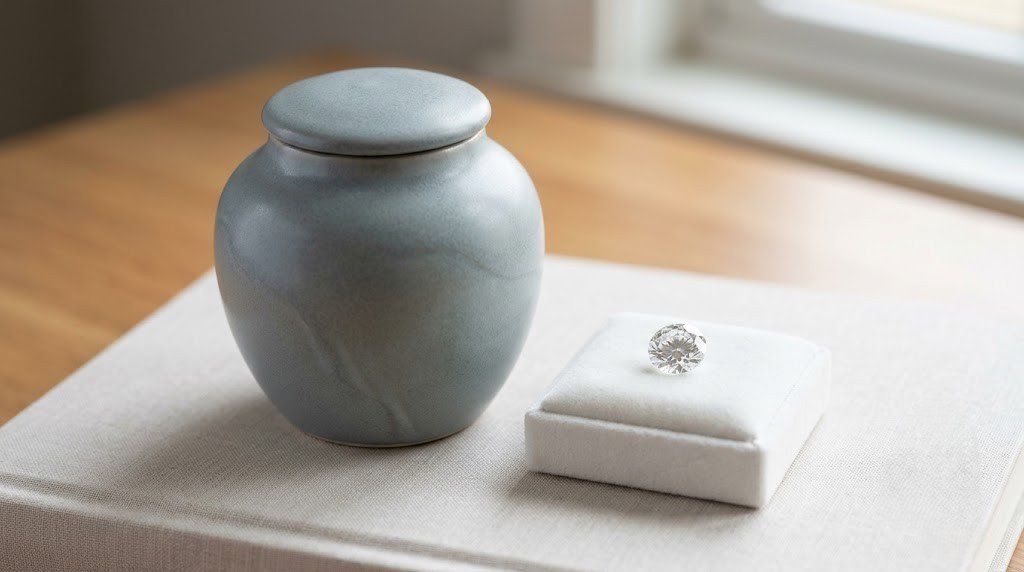
Son memorial diamond vs urn shown side by side: a closed ceramic urn beside a single polished memorial diamond on a pale surface

What Each One Actually Is

An urn is a container. It holds the whole of what a cremation produces, several pounds of it, in one place you choose, whether that is a shelf at home, a niche in a columbarium, or a grave. It needs no laboratory, no chain of custody, no processing, and nothing is altered. That simplicity is a genuine strength, and in any son memorial diamond vs urn comparison it is why an urn remains the most common thing families do.

A memorial diamond is a real, chemically genuine lab grown diamond that includes carbon recovered from a portion of those same ashes. The portion is heated in an oxygen free process until only carbon remains, purified to roughly 99.9%, converted to graphite, and grown under pressure and heat comparable to the deep mantle, on the order of 6–8 GPa at 1,400–2,500°C, into a crystal that is then cut and polished.

So the son memorial diamond vs urn comparison is not really two versions of the same thing. One preserves everything, untouched. The other transforms a fraction of it, permanently, into an object you can wear. Setting them beside each other is useful precisely because they are not alternatives in the ordinary sense.

Son Memorial Diamond vs Urn: The Seven Dimensions

Seven things separate them in practice. Everything else in the son memorial diamond vs urn decision tends to follow from one of these.

DimensionTraditional urnMemorial diamond
What happens to his remainsAll of them stay together, unchanged, in one containerA portion is consumed; the rest stays with you
CostTypically tens to a few hundred dollars for the urn itselfIndustry typical $1,500–$3,500 entry tier; $5,000–$15,000 at 0.5–1 ct
Time to receiveImmediate, usually the same week as the cremationIndustry typical 6–10 months, up to 12 for larger or specialty color stones
WearabilityNot worn; kept, displayed, or interredWorn daily if you want; diamond is 10 on the Mohs scale
Permanence and reversibilityFully reversible: ashes can later be buried, scattered, or dividedIrreversible once the portion is processed
Divisibility among familyRequires dividing the ashes themselvesSeveral stones can be grown from one urn, each bought separately
What it asks of the familyAlmost nothing beyond choosing and placing itAuthorization, paperwork, shipping material, a long wait, a real cost

Read the son memorial diamond vs urn table without a thumb on the scale. Nothing in the son memorial diamond vs urn comparison makes an urn a lesser choice. It wins outright on cost, on speed, on simplicity, and on keeping him whole.

What Happens to His Remains in Each Case?

This is the part most parents actually care about in son memorial diamond vs urn, and the numbers are reassuring in both directions.

An urn holds everything a cremation produces, which for an adult is typically several pounds. Nothing is removed, nothing is altered, and the decision stays open indefinitely. Ashes are chemically stable and keep for as long as you need them to.

A memorial diamond needs, industry wide, somewhere between a few tablespoons and roughly 4 oz, about 100 g. Against several pounds, that is a small fraction, which is the single most misunderstood point in the whole son memorial diamond vs urn conversation. How much ash a stone actually takes sets out the weights.

Be clear about what that portion becomes, though, since it is where son memorial diamond vs urn differs in kind rather than in degree. Cremated remains are mostly calcium phosphate, and usable carbon is only about 0.5% to 4% of ash by weight. That recovered carbon is blended with supplemental lab carbon to reach a workable volume, and on the ash route the personal carbon typically accounts for around 10–15% of the finished stone’s mass, with some providers publishing figures as low as 3%. For hair grown stones no equivalent published figure exists at all, so ask any provider for theirs in writing rather than assuming the ash number carries across.

What Does Each One Cost?

Here the son memorial diamond vs urn gap is wide, and pretending otherwise would be dishonest.

On the son memorial diamond vs urn ledger, an urn is ordinarily the least expensive part of a funeral. Simple containers cost very little; handsome wood, ceramic or metal urns run into the low hundreds. Many families spend nothing extra at all, keeping the ashes in the container the crematory provided.

A memorial diamond is priced like fine jewelry, because that is what it becomes. Industry typical bands run roughly $1,500–$3,500 for an entry tier stone of about 0.10–0.25 ct, $5,000–$15,000 in the 0.5–1 ct range, and $20,000–$75,000 or more for stones of 2–5+ ct. Colorless stones cost meaningfully more than yellow, blue or champagne tones at the same size, and settings, engraving and an independent grading report, which is optional rather than a standard stage, are usually quoted separately. What drives the price of a single stone works through each variable.

Two honest notes on the money side of son memorial diamond vs urn:

  • A diamond is an addition, not a substitute. You will still have an urn, because most of the ashes remain in it.
  • Carat is bought from growth time, not from ash. A larger stone costs more because it sat in the press longer, not because more of him was used.
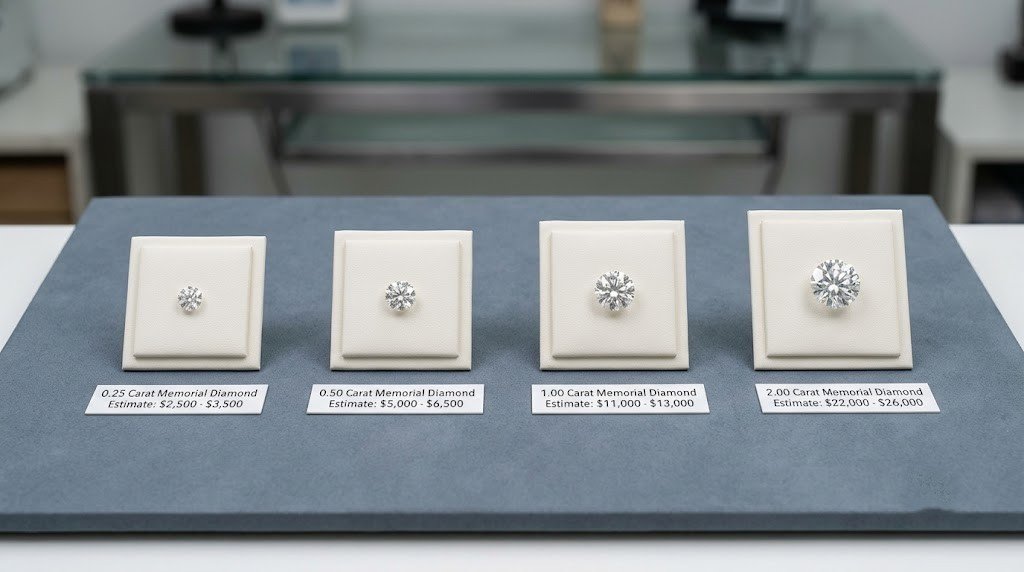
 Four loose memorial diamonds of increasing carat weight arranged in a row to illustrate how price scales with size

How Long Before You Have It?

An urn is immediate, and on this dimension son memorial diamond vs urn is not close. It is usually handed over within days of the cremation.

A memorial diamond takes, industry wide, 6 to 10 months from the laboratory receiving material to a finished stone, stretching toward 12 months for larger carats or specialty colors. That span covers extraction, purification, graphitization, growth, cutting and grading, and none of those stages can be usefully hurried. How the months break down stage by stage covers what happens when.

For some parents that wait is the deciding factor in son memorial diamond vs urn, and it is a fair one. The first year after losing a son is not a year most people want to spend tracking an order.

For others the wait is the opposite of a problem. A package arriving in the eighth or ninth month, long after the casseroles and the phone calls have stopped, lands in a quieter stretch of grief than anything else does. Neither reaction is the correct one, and neither settles son memorial diamond vs urn by itself.

Which One Can You Carry?

This is the dimension that sends most families looking at son memorial diamond vs urn in the first place, and it is where the two genuinely diverge.

An urn stays put. That is its purpose, a fixed place, deliberately chosen, that you visit rather than carry. Keepsake urns and small pendants holding a pinch of ash exist for families who want something portable without a laboratory involved, and they cost a fraction of a diamond.

In son memorial diamond vs urn, a diamond is built for daily wear in a way almost nothing else in this category is. Diamond sits at 10 on the Mohs scale, making it the hardest known natural mineral. It does not scratch, dull or wear away with handling. What needs occasional attention is the setting around it, not the stone. Rings, pendants and other pieces a stone can become covers the options, including keeping it unset.

Worth saying plainly: wearing something is not a truer form of remembrance than visiting a shelf. Some parents want him with them at work; some want a place to go and sit. The son memorial diamond vs urn answer often turns on which of those describes you.

Which Choice Can Be Undone?

One of them can, and that asymmetry deserves more weight in son memorial diamond vs urn than it usually gets.

Ashes in an urn keep every option open. They can be buried later, scattered later, divided later, moved from the house to a columbarium, or left alone for twenty years while nobody feels ready. Nothing degrades, and no decision made this year forecloses a different one.

A memorial diamond is final in a specific sense: once a portion has been processed, that portion does not come back as ashes. The stone itself can be reset, resized in its mounting, passed on or sold, but the material change is permanent. That is the strongest argument in son memorial diamond vs urn for waiting rather than deciding in the first raw months.

There is no deadline on son memorial diamond vs urn. Ashes do not expire, and a parent who is not ready to decide anything this year is not losing an option by waiting. Where to begin when the time does feel right sets out the order the decisions come in.

Can Several People Each Have Something?

Both sides of son memorial diamond vs urn handle this, differently.

Dividing ashes between an urn and several keepsake containers is straightforward, immediate and costs almost nothing. Many families do exactly that, a main urn plus small portions for siblings, grandparents, or a partner.

Growing several stones is also possible, since each needs only its small portion, but each one is an independent growth run with its own price and its own finish date. Three stones is three purchases, not one split three ways, and they will not match each other, because color in any diamond comes from trace elements present as the crystal forms, nitrogen toward yellow, boron toward blue, and neither present at all for colorless. Whether several relatives can each have a stone goes through the practicalities.

So on divisibility, son memorial diamond vs urn is less a contest than a question of budget and patience.

Does Son Memorial Diamond vs Urn Have to Be a Choice?

No, and that is the most useful sentence on this page about son memorial diamond vs urn.

Because a stone consumes only a small portion, the common arrangement is both: a portion goes to the laboratory, and the remainder stays in the urn on the shelf, or goes into the ground beside a grandparent, or is scattered at the lake exactly as planned. Nothing about commissioning a diamond obliges a family to abandon what it already decided.

Ways families actually combine them:

  • Urn kept whole, small portion drawn. The urn stays as it is; the diamond is grown from what would never have been noticed missing.
  • Burial or scattering proceeds as planned, with a portion set aside beforehand.
  • A lock of hair instead of ash. Hair is roughly 50% carbon by weight, so a stone can be grown without touching the urn at all, useful if he was buried rather than cremated, or if the ashes were already scattered.
  • Nothing now, a decision later. Ashes keep. So does a lock of hair kept in an envelope.

Framed that way, son memorial diamond vs urn stops being a fork in the road and becomes a question of whether you want one more thing in addition to what you already have.
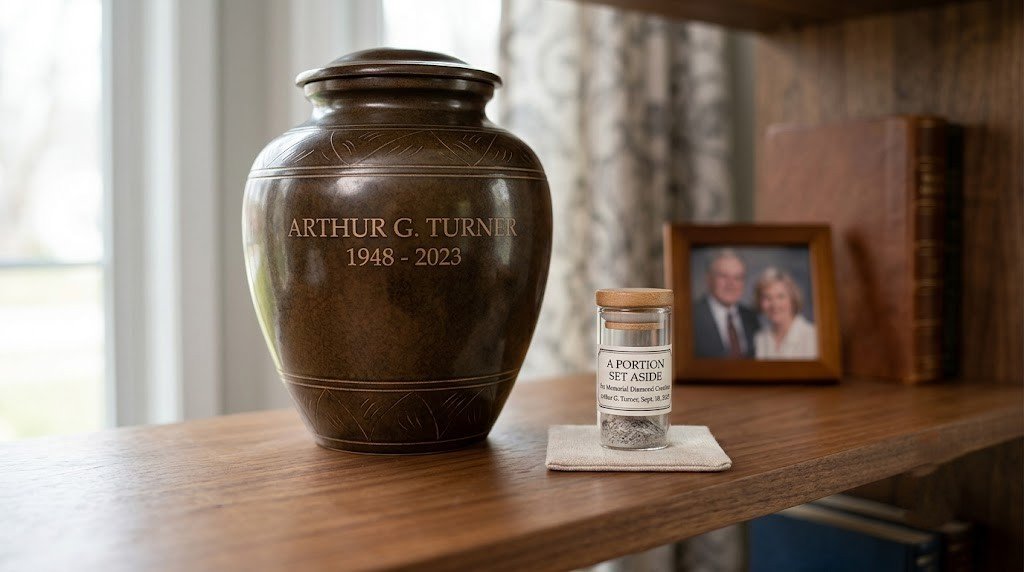
An urn returned to its shelf with a small labeled container beside it, illustrating a portion set aside while the rest stays in place

Who Has the Say Over His Ashes?

Worth settling before anything else in son memorial diamond vs urn, because families sometimes plan for months around a decision that was never theirs.

Whoever is recognized as having control of a person’s remains is set by state law, and parents are not automatically first in line for an adult son. If he was married, his spouse commonly holds that right; if he had adult children of his own, they may rank ahead of you too. Anything he put in writing, a will, a form signed at the funeral home, a disposition directive, can rearrange the default. A funeral director in the state where he died will usually tell you the order at no charge, and an attorney licensed there can confirm it.

An urn rarely brings this to a head, since it changes nothing. Commissioning a diamond does, because a portion is removed and altered. That difference is the quiet reason the son memorial diamond vs urn decision can turn into a family conversation when the urn alone never did.

What Most Families Actually Do

Context helps when son memorial diamond vs urn starts to feel like a decision that must be extraordinary.

Cremation is now the majority choice in the United States. The National Funeral Directors Association’s 2025 cremation and burial report puts the projected cremation rate at 63.4% against 31.6% for burial. Of those families, the overwhelming majority keep, inter or scatter the ashes, and do nothing else at all.

That is the honest backdrop to son memorial diamond vs urn: a memorial diamond is an uncommon choice, not a superior one, and choosing the ordinary thing is not a smaller act of love. The complete route for a son ashes diamond exists for families who want it, not as a standard anyone is failing to meet.

If you are somewhere in the middle, drawn to the idea but unwilling to alter anything yet, set aside a portion, keep it sealed and labeled, and decide nothing. That single step preserves both options for as long as you want them preserved.

Frequently Asked Questions

Can we have both a diamond and an urn?

Yes, and most families who commission a stone do exactly that. A diamond typically uses a few tablespoons up to roughly 4 oz, so the urn stays on the shelf with nearly all of its contents, or is buried or scattered as originally planned.

Will the urn look emptier afterward?

Almost never. Against the several pounds an adult cremation produces, the portion drawn for a stone is small enough that most families cannot tell by looking. If that matters to you, weigh or photograph the contents beforehand.

Is an urn cheaper than a memorial diamond?

Considerably. Urns commonly run from very little to a few hundred dollars, while industry typical diamond pricing starts around $1,500–$3,500 for an entry tier stone and climbs steeply with carat. Cost is the clearest difference in son memorial diamond vs urn.

Can a diamond be turned back into ashes?

No. Once a portion has been processed into carbon and grown into a crystal, that change is permanent. The finished stone can be reset, passed on or sold, but the material cannot be returned to its previous form.

He was buried, not cremated. Is this off the table?

Not necessarily. A lock of hair kept from a haircut, a hairbrush or the funeral home is a workable carbon source and requires no cremation, so a stone remains possible long after burial. Ask a provider what quantity they need.

Who decides if the family disagrees?

The person state law recognizes as controlling his remains, subject to anything he left in writing. For an adult son that is often a spouse or his own adult children rather than his parents. A funeral director can usually confirm the order locally.

Final Thoughts on Son Memorial Diamond vs Urn

If there is one thing to carry away from son memorial diamond vs urn, it is that the comparison is mostly a false frame. You are not choosing between honoring him well and honoring him badly. You are choosing whether to add one object to an arrangement that is already complete.

An urn asks nothing of you, and it answers son memorial diamond vs urn on its own. It costs little, arrives immediately, keeps all of him together in one place, and leaves every future decision open. For most families that is enough, and there is nothing thin about it.

A diamond asks for authorization, a portion, several thousand dollars and most of a year, and gives back something you can wear to work, to a wedding, to the ordinary Tuesdays that turn out to be the hard ones. Whether he was six or sixty, neither choice measures anything about him or about you.

Take the time. Nothing about ashes runs out, and the version of this decision you make in month eighteen will almost certainly sit better than the one made in week three.

Learn More About Son Memorial Diamonds

Talk With Memorial Diamond

If you are weighing son memorial diamond vs urn and want a straight answer about what a portion of what you hold could actually become, reach out to Memorial Diamond at memorialdiamond.us. Asking costs nothing and commits you to nothing, and keeping the urn exactly as it is remains a perfectly good ending to the conversation.
Husband ashes diamond complete guide showing a memorial diamond, ashes, urn, wedding ring, and framed couple photo

Husband Ashes Diamond: The Complete Guide

The first months after a death are almost entirely administrative. Certificates, account closures, a form that wants his date of birth in a box too small for it. A husband ashes diamond is the first decision in that pile that is not paperwork. It is a real, lab grown diamond grown in part from carbon extracted from his cremated remains, ashes are roughly 0.5% to 4% carbon by weight, with production running 6 to 10 months from the lab receiving the material.

It is also, probably, the first decision nobody else has to sign. Your situation is the inverse of the parent guides, where siblings negotiate, nobody to check the decision against, and a lot of advice you did not ask for. So this guide is organized around deciding alone well: what can be settled now, what is worth postponing, and the few things that carry a real clock.

Memorial Diamond makes memorial diamonds, so this page comes from a company that would be one of the options you weigh. Read it as informed rather than disinterested.

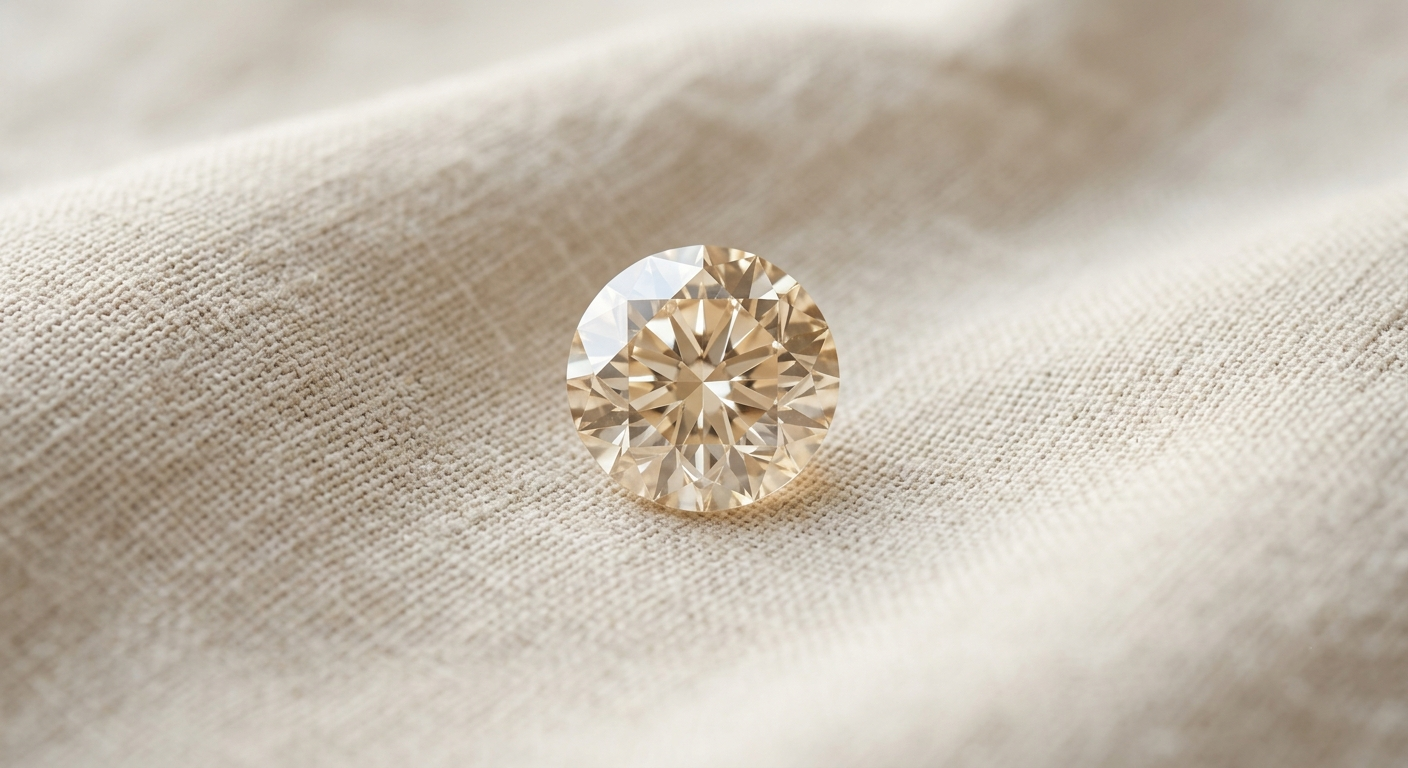
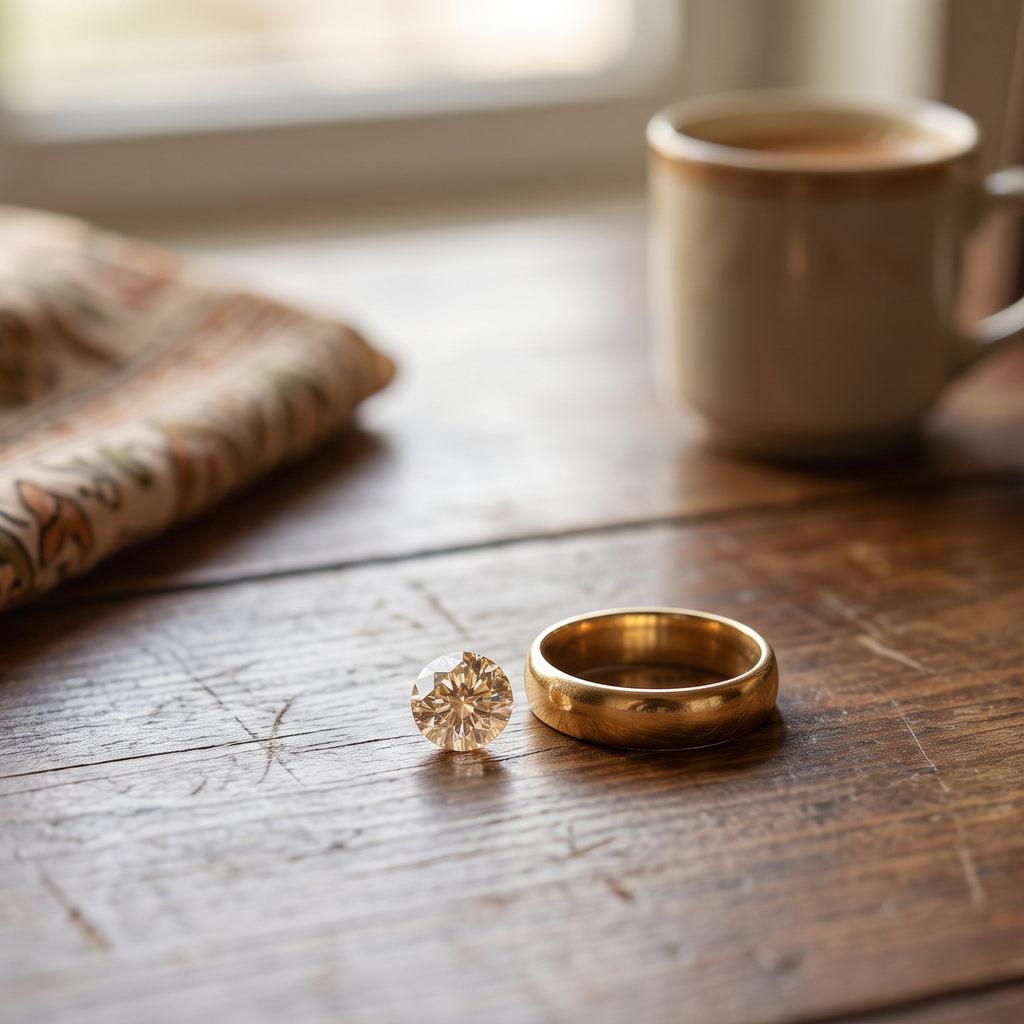
Husband ashes diamond: a small champagne-toned lab-grown memorial diamond beside a plain gold wedding band on a wooden table

Who Actually Decides What Happens to His Ashes?

In the United States a surviving spouse commonly holds the right to control disposition of a deceased person’s remains. Treat that as a general pattern rather than settled national law. It varies by state, and it can be displaced by what he left in writing, a will, a pre need contract, a designated agent form, an instruction lodged with the funeral home. Some states let a person name someone other than a spouse.

So the accurate version of “you decide” is: probably you, unless he wrote something down or your state arranges it differently. Two calls settle who may order a husband ashes diamond: the funeral director who released the remains, and whoever handles the estate. Ask each what is on file. Whether it is legal to turn ashes into a diamond covers the general position.

Authority does not settle the family part: having the right to order a husband ashes diamond and having told his children are different things.

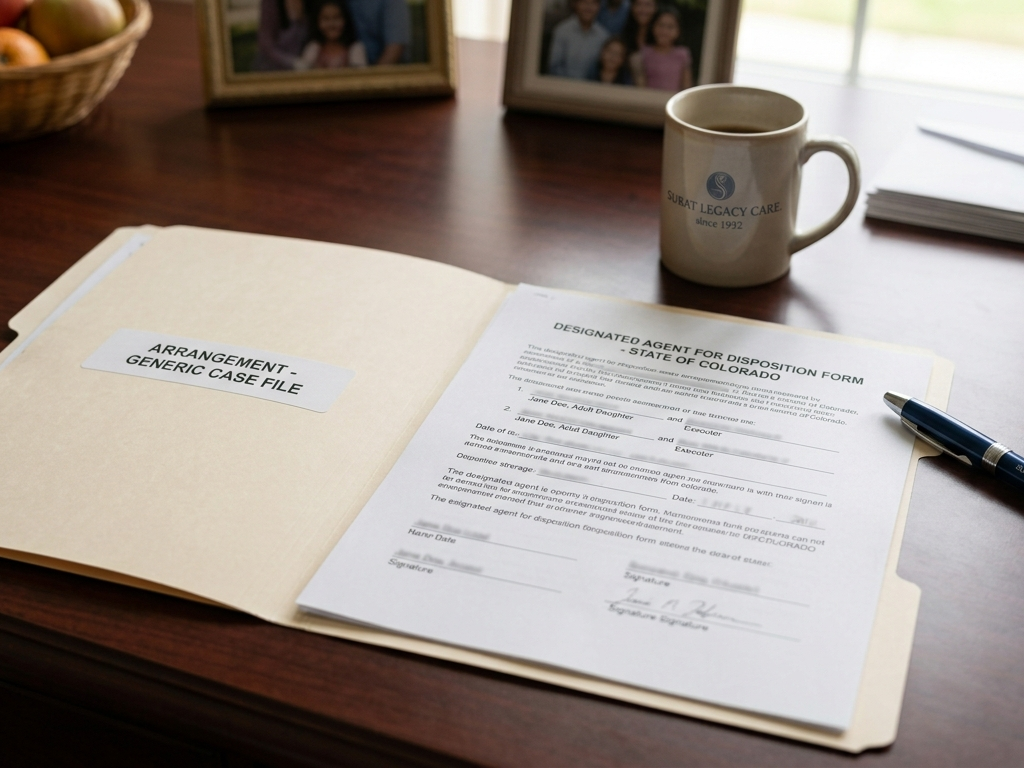
A funeral home file folder with a disposition form and a pen | Stock acceptable; no legible names

What Is a Husband Ashes Diamond, and How Much of It Is Him?

A husband ashes diamond is a chemically genuine diamond, 10 on the Mohs scale, graded on the same four Cs as any other stone, grown around a seed in a high pressure press from his carbon.

Cremated remains are mostly calcium phosphate, bone mineral, and only roughly 0.5% to 4% carbon by weight. What is recovered is purified to about 99.9% carbon, then blended with supplemental lab sourced carbon, because a crystal of wearable size needs more feedstock than his ashes can supply. Industry wide the personal share lands around 10% to 15% of the finished stone’s mass. Anyone offering a husband ashes diamond made entirely of him is describing something no growth run produces.

The accurate claim is smaller and firmer: a measured, documented portion of his own carbon sits inside the crystal lattice and stays there. Ask a provider to state that fraction for the carat you want, in writing.

Growth time in the press, not the quantity of ashes, sets the carat.

How Much of His Ashes Does a Husband Ashes Diamond Use?

Industry typical requirements run from a few tablespoons to roughly 4 oz, about 100g. A full adult cremation produces several pounds.

That arithmetic matters, because it means a husband ashes diamond is rarely an either or. A burial plot, a scattering he asked for, an urn on the shelf, all survive a submission this small, and none is a lesser choice. How much ash you need for a husband memorial diamond covers the measuring.

What Can Wait, and What Genuinely Cannot

Almost all of a husband ashes diamond decision is patient. A short list is not.

Carries a clock:

  • Ashes not yet released by the funeral home. Ask for a sealed, labeled portion to be set aside first.
  • A scheduled interment, scattering or committal, once ashes are placed, that route is closed.
  • Anything a cemetery or crematorium will only do while a file is open.

Does not carry a clock: whether to do this at all; carat, color, cut and shape; the setting; who eventually gets the piece; choosing a provider.

Rules for sending cremated remains vary by jurisdiction and by whoever carries them, so confirm the current requirements directly before anything is packed. Retained ashes keep indefinitely in a sealed container, so urgency elsewhere this year is not a reason to hurry a husband ashes diamond.

The Process, and What You Would Be Asked to Decide

Seven stages. Two of them ask nothing of you; the rest each carry a decision.

StageWhat happensWhat you would be asked to decide at this point
Collection and intakeThe portion you send is logged under a chain of custody referenceHow much to submit, and whether unused ash returns
Extraction and purificationNon carbon material stripped in an oxygen free furnace to roughly 99.9% carbon purityNothing, but past here the ash no longer exists as ash
GraphitizationPurified carbon converted to graphite at roughly 2,500 to 2,700°CNothing
Diamond growthGraphite blended with supplemental lab carbon, grown in an HPHT press at roughly 6 to 8 GPa and 1,400 to 2,500°C around a seedCarat and color, agreed before growth starts, since growth time sets size
Cutting and polishingA gemologist cuts the rough into a finished shapeShape
Grading and certificationGraded on cut, color, clarity and carat, ideally by an independent third party labWhether to buy an independent grading report, and separately to ask for an in house origin certificate, different documents, different jobs
SettingThe stone is mounted, if you have chosen a pieceThe setting, deferrable entirely, since a loose husband ashes diamond is a finished product

Three things the table cannot settle, because each provider sets them. Ask in writing:

  • HPHT or CVD? Which growth method your quote assumes, and what it implies for color.
  • In house growth, or placed with another laboratory? If placed, who holds his material at each handover.
  • A growth run that yields no usable stone. Whether a second attempt draws on more of his carbon, and how cost and timing are handled.

Step by step: turning your husband’s ashes into a diamond walks the same sequence from your side of the desk.

Advice You Did Not Ask For

People who love you will have opinions about a husband ashes diamond, and some will be right. The useful move is to work out what each remark is actually about.

What you may hearWhat is behind itWhere it is actually right
“Don’t make any big decisions this year”Standard caution about irreversible movesRight about what you cannot undo, dividing ashes, not asking questions or getting quotes
“He wouldn’t have wanted a fuss”His modesty, read forward into a decision he may never have addressedRight if he left instructions; check whether he did before treating it as his view
“That’s a lot of money for a rock”A judgment about money by someone not spending itRight that the sums are real, and worth pricing before committing
“You promised to scatter him”A promise you may well have madeRight, and largely compatible: a submission uses a small fraction, so the scattering happens
Technician loading a growth cell into a high-pressure diamond press

Telling His Children Rather Than Asking Them

If his children are yours too, a husband ashes diamond is a family conversation. If they are his from an earlier marriage, it is more delicate, and better had early than perfectly.

The distinction that keeps it clean is between a request and an announcement. Where the authority is yours, telling them what you have decided, before you order, not after the stone arrives, is honest and hands them no veto you do not owe. Asking, if you genuinely want their view, is also fine, provided you know which you are doing. How to talk to family about a husband memorial diamond works through the wording.

Setting His Stone Into the Band You Still Wear

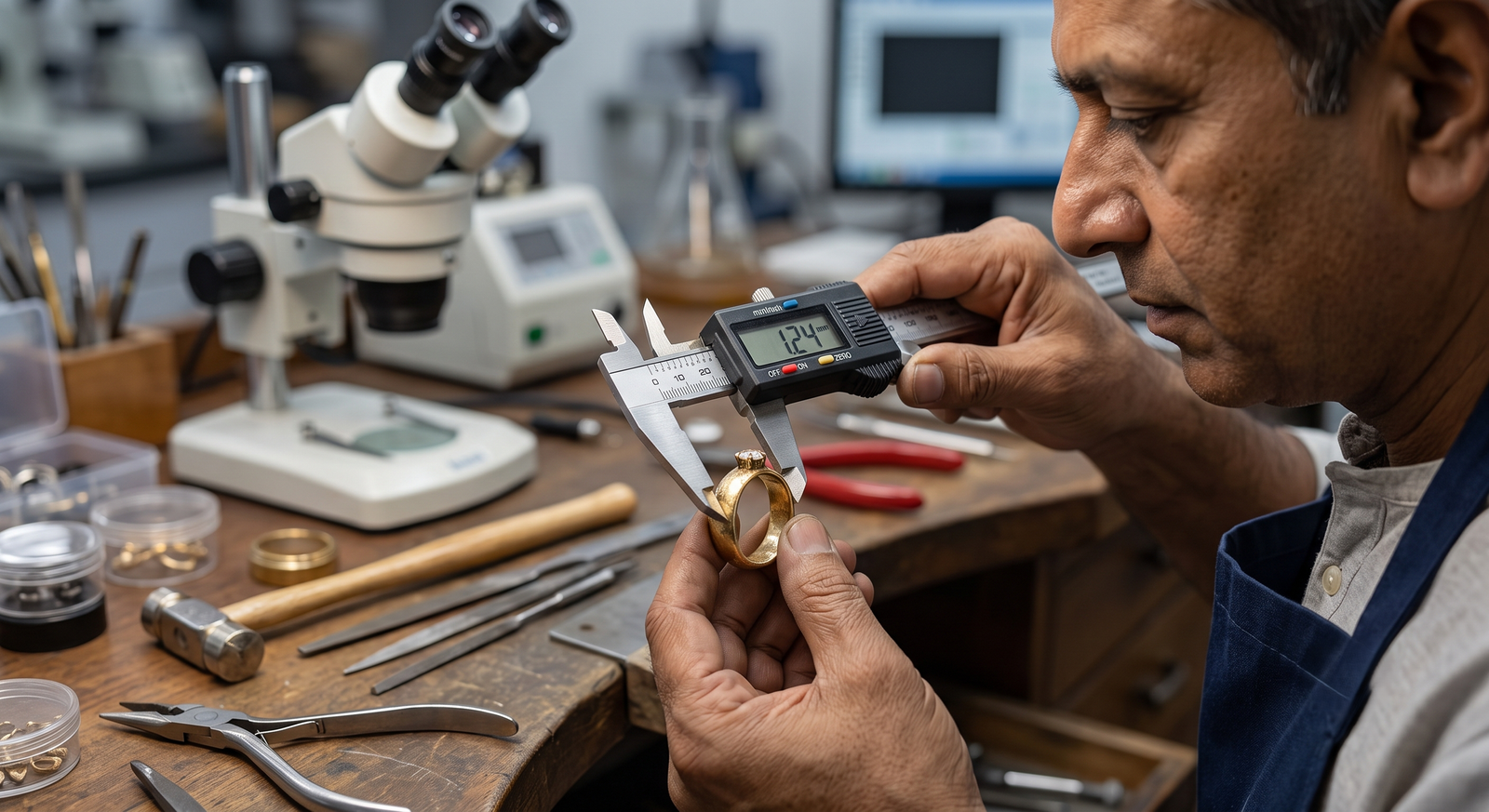
jeweler measuring the thinned shank of a worn gold band with calipers

This is a different question from setting a stone into a ring he wore: the ring is already on your hand.

A band worn daily for decades has a thinned shank, and a jeweler has to assess whether it can carry a husband ashes diamond before anyone commits. Adding a setting changes the profile of a ring you are used to, and the work takes it off your hand for a period.

Leaving the band as it is and putting the stone into something new is not the lesser answer. Settings and jewelry ideas for a husband memorial diamond covers the mechanics.

A Husband Ashes Diamond You Will Wear Every Day Is a Different Specification

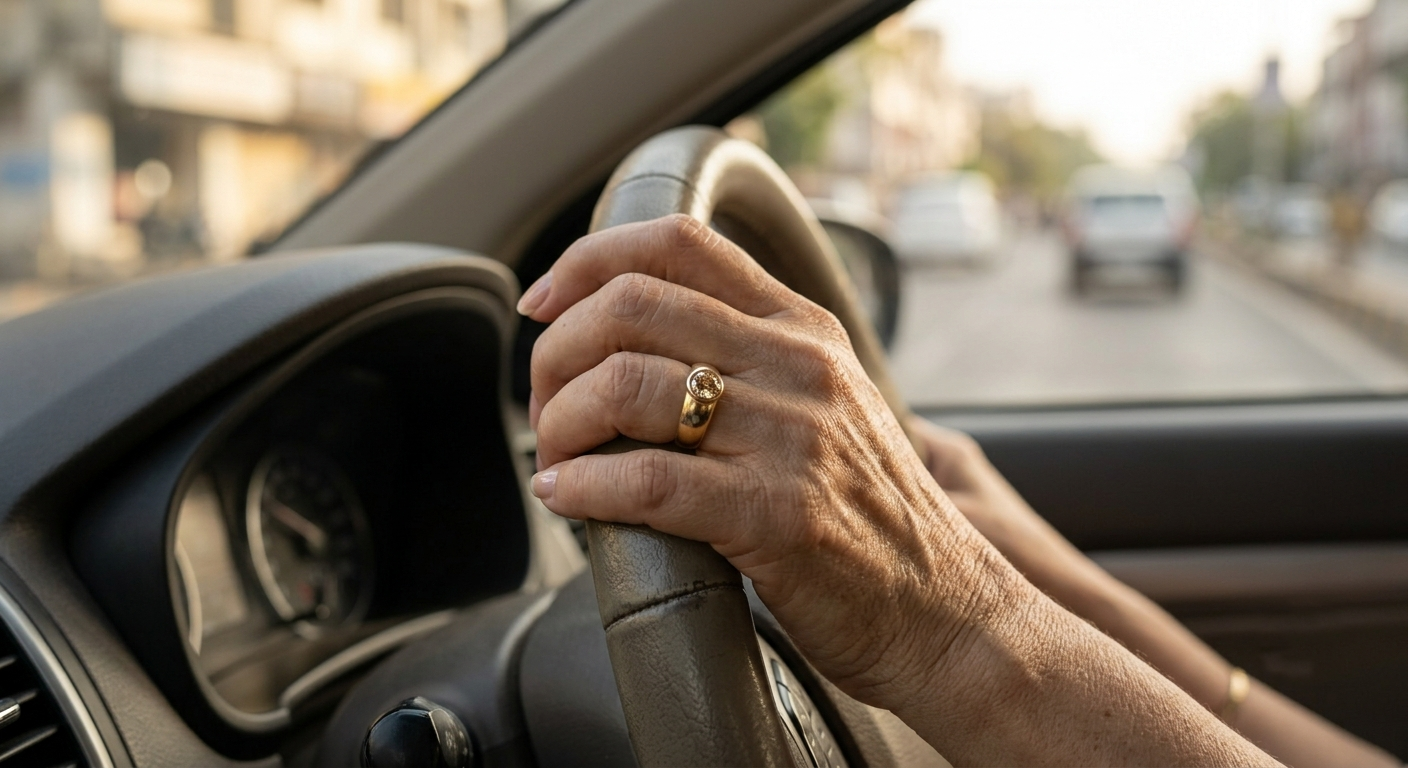
A husband ashes diamond kept in a box and one that goes to work want different things. Daily wear argues for a protective setting over an exposed one, for a size that clears a coat sleeve and a steering wheel, and for a color you are content to see in ordinary daylight. Diamond is hard; a mounting is not, so ask what checking a setting involves and how often.

A flush bezel-set diamond ring on a woman's hand holding a steering wheel

What Does a Husband Ashes Diamond Cost, and How Long Does It Take?

Color comes from trace elements present during growth: boron produces blue, nitrogen yellow, and a colorless stone needs the near total absence of both, which costs meaningfully more at the same carat. Memorial diamonds trend toward yellow, blue and champagne tones. What color a diamond made from your husband’s ashes will be covers prediction.

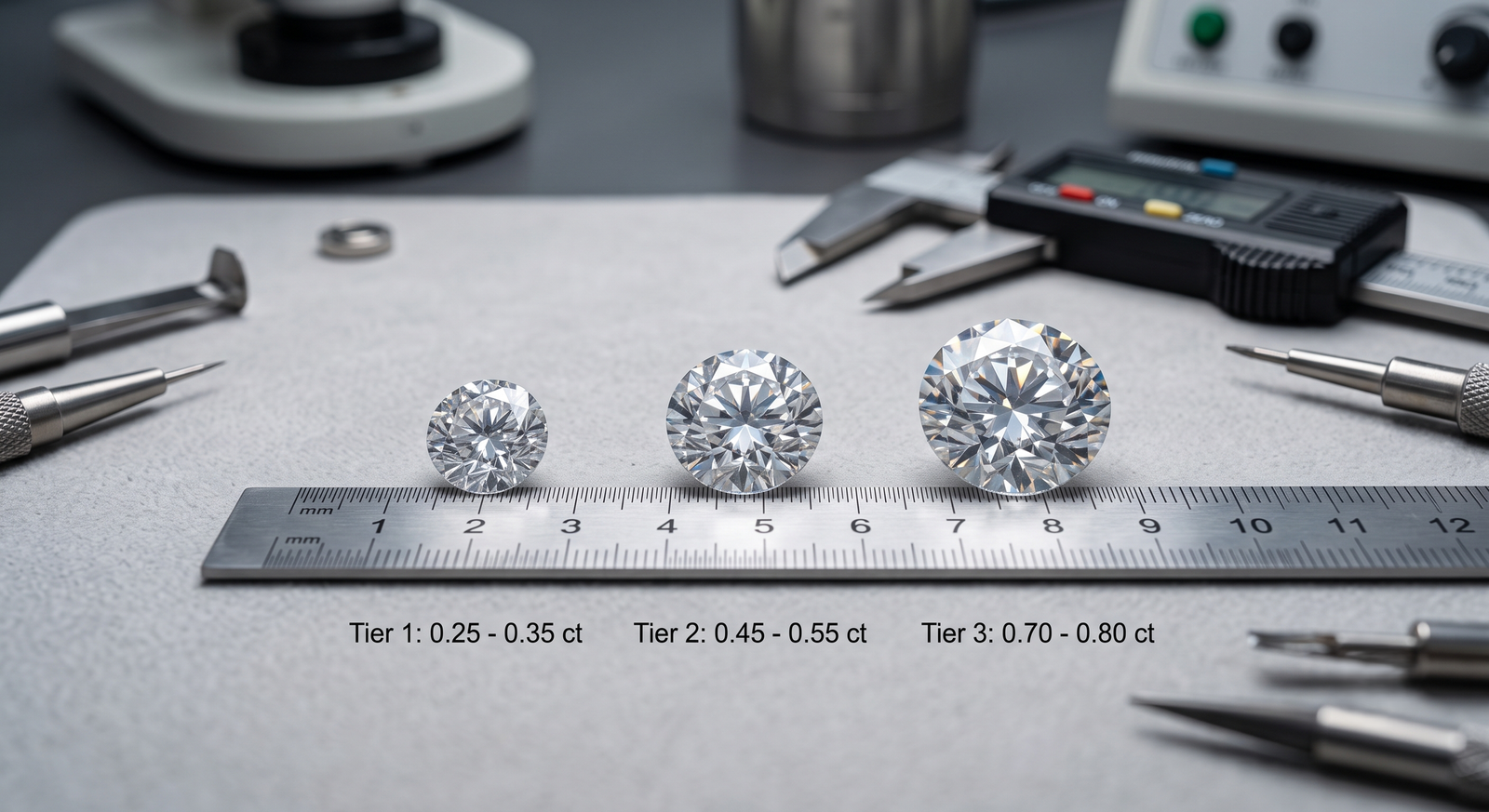
Size tierTypical caratTypical industry price range
Entry0.10 to 0.25 ct~$1,500 to $3,500
Mid0.5 to 1 ct~$5,000 to $15,000
Large / rare2 to 5+ ct~$20,000 to $75,000+
 Three memorial diamonds of increasing carat laid on a ruler for scale

Those are general 2026 industry ranges, not Memorial Diamond’s, which are not published. Settings, engraving and grading are quoted separately. What drives the cost of a husband memorial diamond takes a quote apart.

The sourced timing figure for a husband ashes diamond is 6 to 10 months of production from receipt of material, stretching to around 12 months for stones of roughly 2 ct and up or for specialty colors. Adding collection, shipping and setting gives a rough end to end span of eight to fourteen months, that total is our own arithmetic and an editorial estimate, not an industry figure. The hair route does not run faster; growth time dominates either way. The mechanism sits in the complete guide to what a memorial diamond is.

Frequently Asked Questions

Do I need my husband’s children to agree before I order a husband ashes diamond?

Legally, probably not, if disposition authority is yours, though that varies by state and by what he left in writing. Practically, telling them before you order rather than after costs nothing and prevents the version that goes wrong.

Can his stone be set into the wedding ring I already wear?

Possibly, but a jeweler has to assess your band first. Decades of daily wear thin a shank, and adding a setting changes how the ring sits. Ask before ordering the stone, not afterward.

Is there any reason not to decide this in the first few months?

Only one: a scheduled interment or scattering, which closes the ashes route once it happens. Retained ashes keep indefinitely in a sealed container, so provider, carat, color and setting can wait as long as you need.

He left written instructions about his ashes. Does that override what I want?

It may. A will, a pre need contract or a designated agent form can direct disposition, and can name someone other than a spouse, and the rules differ by state. Ask the funeral director and the estate attorney what is on file.

What happens if I order one husband ashes diamond now and want a second one later?

That depends on how much ash you retained. Each stone uses only a small portion, so a reserve can leave the option open, but stones grown in separate runs are unlikely to match each other in color.

Will anyone be able to tell a husband ashes diamond came from a person?

No. After purification to roughly 99.9% carbon, nothing visible distinguishes it from any other lab grown diamond of the same grade. What documents its origin is paperwork, an in house origin certificate, not anything in the stone.

If I remarry one day, does the stone become complicated?

That is a question about your life rather than the object, and nobody can answer it for you. Practically, a memorial diamond can be re set, worn on another hand or chain, or passed on, and none of that has to be decided now.

Final Thoughts on a Husband Ashes Diamond

Two questions are urgent, and one phone call answers both. Ask the funeral director whether a portion of his ashes can be set aside, sealed and labeled, and whether anything scheduled would close that door. Everything else about a husband ashes diamond, carat, color, your band or something new, whether you do this at all, keeps. Deciding alone is harder than it looks from outside; deciding slowly is the part that is entirely in your hands.

Learn More About Husband Memorial Diamonds

Talk With Memorial Diamond

When you want to talk a husband ashes diamond through, the portion, the carat, or simply whether it is the right thing for you, reach out to Memorial Diamond at memorialdiamond.us. It is a conversation rather than a purchase, and the only clock on it is the one the funeral home holds.

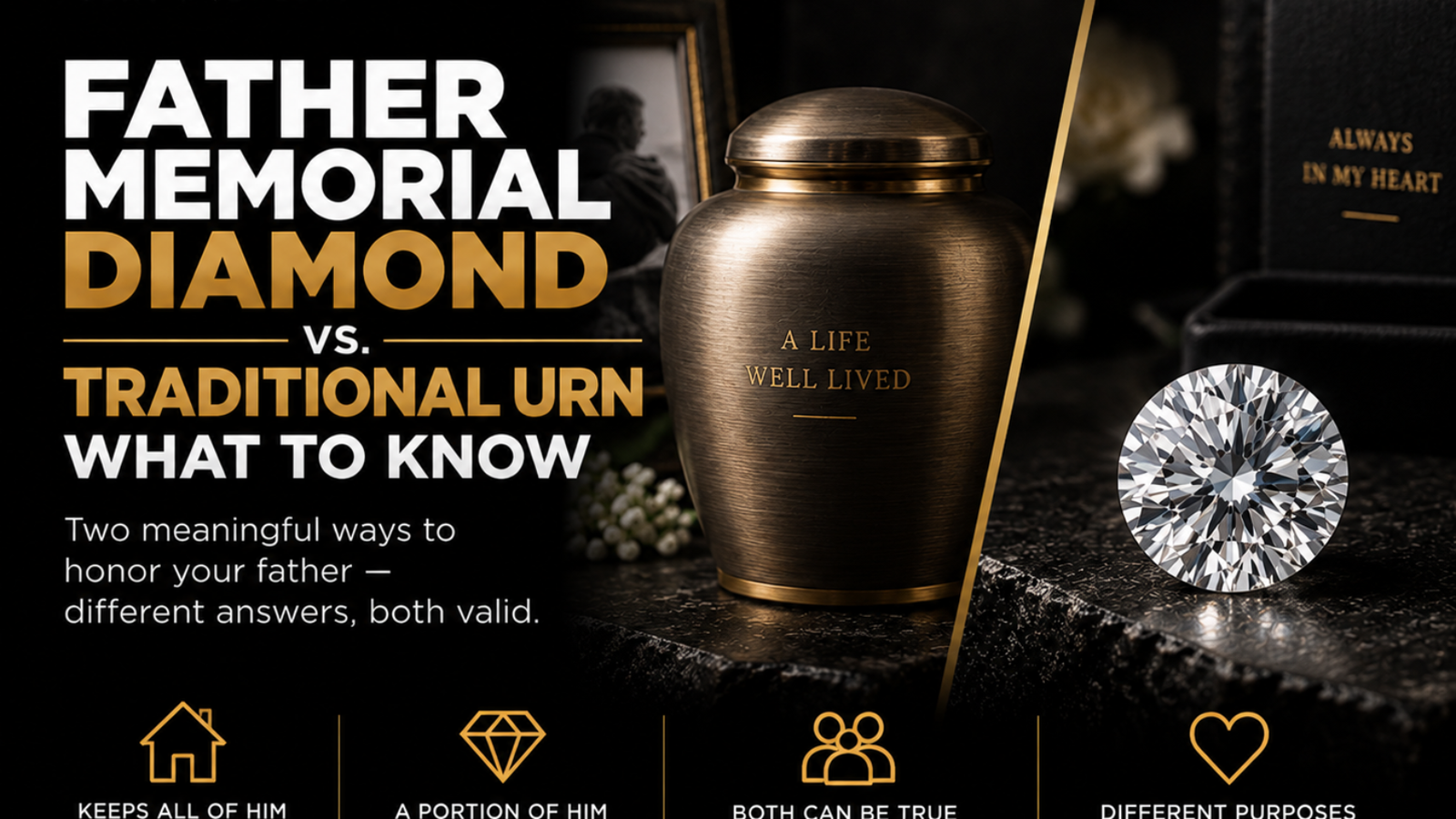
Father memorial diamond compared with a traditional urn showing two meaningful ways to honor a father

Blog Title: Father Memorial Diamond vs. Traditional Urn: What to Know

His urn has been in the same room since the week after the funeral, dusted around rather than moved, in a spot somebody chose quickly. So the live question is not which to buy. A memorial diamond and a traditional urn answer different questions. The urn keeps all of him in one place a household looks after; a diamond grown from a small portion of that same ash becomes a single person’s to carry. Both can be true in the same family, and this page is written for the family where the urn already exists.

Before you read further: Memorial Diamond grows memorial diamonds, so this comparison is published by a business with money riding on one side of it. The sections arguing for the urn are the ones we had the least commercial reason to write, and they are written straight.

If you are earlier than an urn, the complete guide to a father ashes diamond covers that sequence.

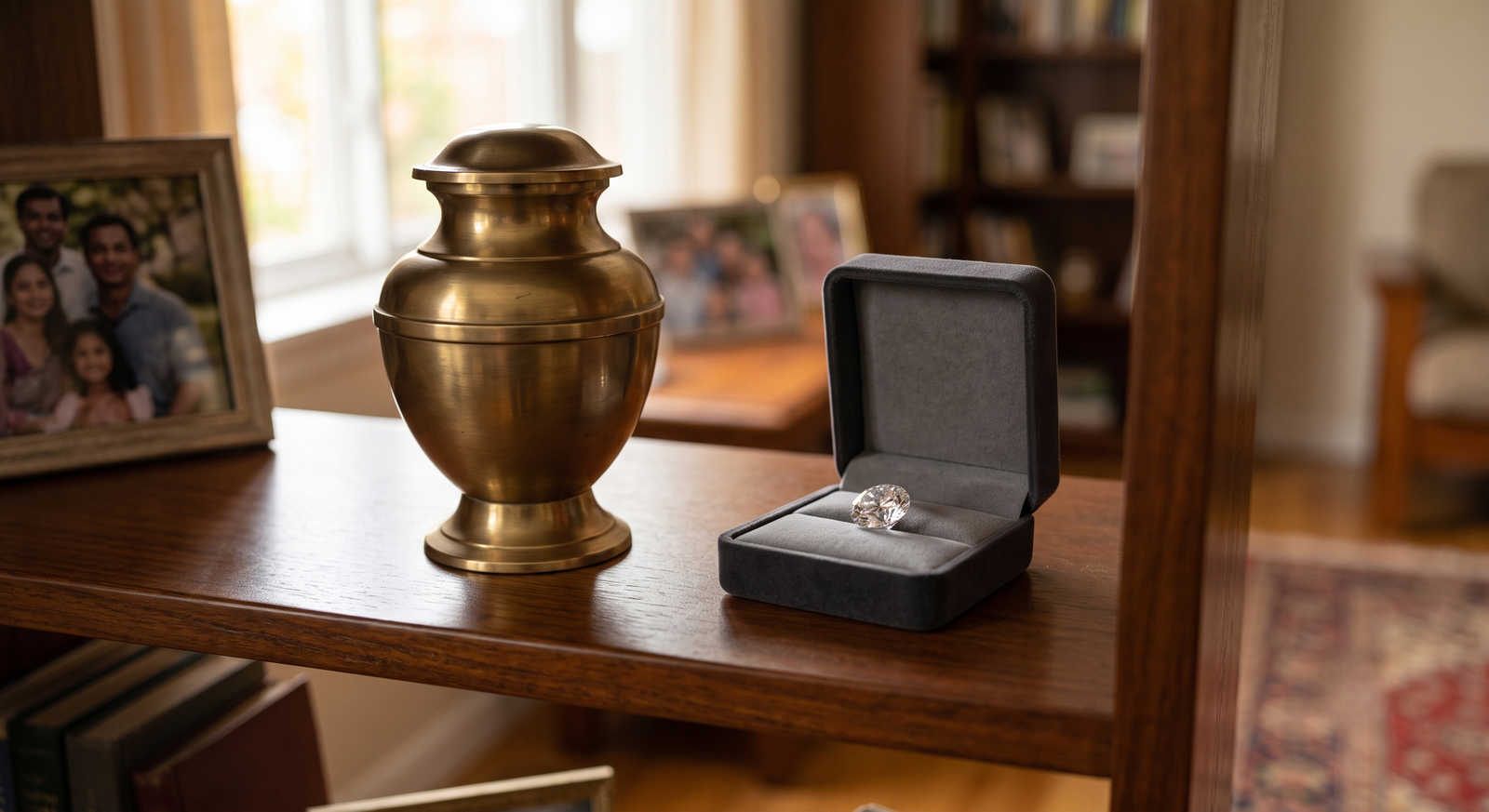
A traditional urn on a living-room shelf beside a small open case holding a lab-grown memorial diamond

What Changes If the Traditional Urn Stays and a Stone Joins It?

Less than the comparison implies. A portion of ash leaves the traditional urn, the rest stays put, and a second object exists doing a job the urn was never doing. The amount a growth run needs is small, industry guidance puts it between a few tablespoons and roughly 4 oz, worked through in how much ash you need for a father memorial diamond.

Be exact about what that second object is. The urn holds every gram the crematorium returned. A stone holds a measured fraction of it, roughly 10 15% of its finished mass across the industry, because a portion of ash carries too little carbon to charge a growth cell on its own, and supplemental lab sourced carbon makes up the balance. His carbon is cleaned to around 99.9% purity first, and what comes back is a small, real part of him, permanently, in a crystal that rates a 10 on the Mohs hardness scale.

An Urn Belongs to a Household. A Diamond Belongs to a Person.

That difference drives the rest of this comparison.

A traditional urn has an address. Whoever lives in the house it sits on becomes responsible for it, not because anybody decided, but because of where it happens to be. It cannot be in two places at once.

A memorial diamond has an owner instead. It is ordered by one person, kept by them, and named in a will if it is meant to go on. Nobody is left working out whose it is. That is not a superiority claim. It is a different object with a different failure mode: a traditional urn can be orphaned, and a small worn stone can be lost.

The Question You Are Actually Asking

Underneath the comparison sits a practical worry, and the two objects answer different ones.

The question you are actually askingWhat the traditional urn answersWhat a memorial diamond answers
“Where is he now?”A named place in a room, or a numbered niche.Nowhere fixed, wherever the owner happens to be.
“Who is responsible for him?”Whoever’s house it is in, by default rather than decision.One named person, chosen when the order is placed.
“What happens when this house is sold?”A decision somebody has to make under time pressure.It moves in a coat pocket. Nothing is settled.
“Can several of us have something of him?”One object, one place. People come to it.A portion can grow into several stones, one per person.
“How do I mark the day he died?”It gives you somewhere to stand.It gives you something to put on.
“Is it finished?”Yes, the afternoon you buy it.No, 6 10 months of production after the laboratory receives material.
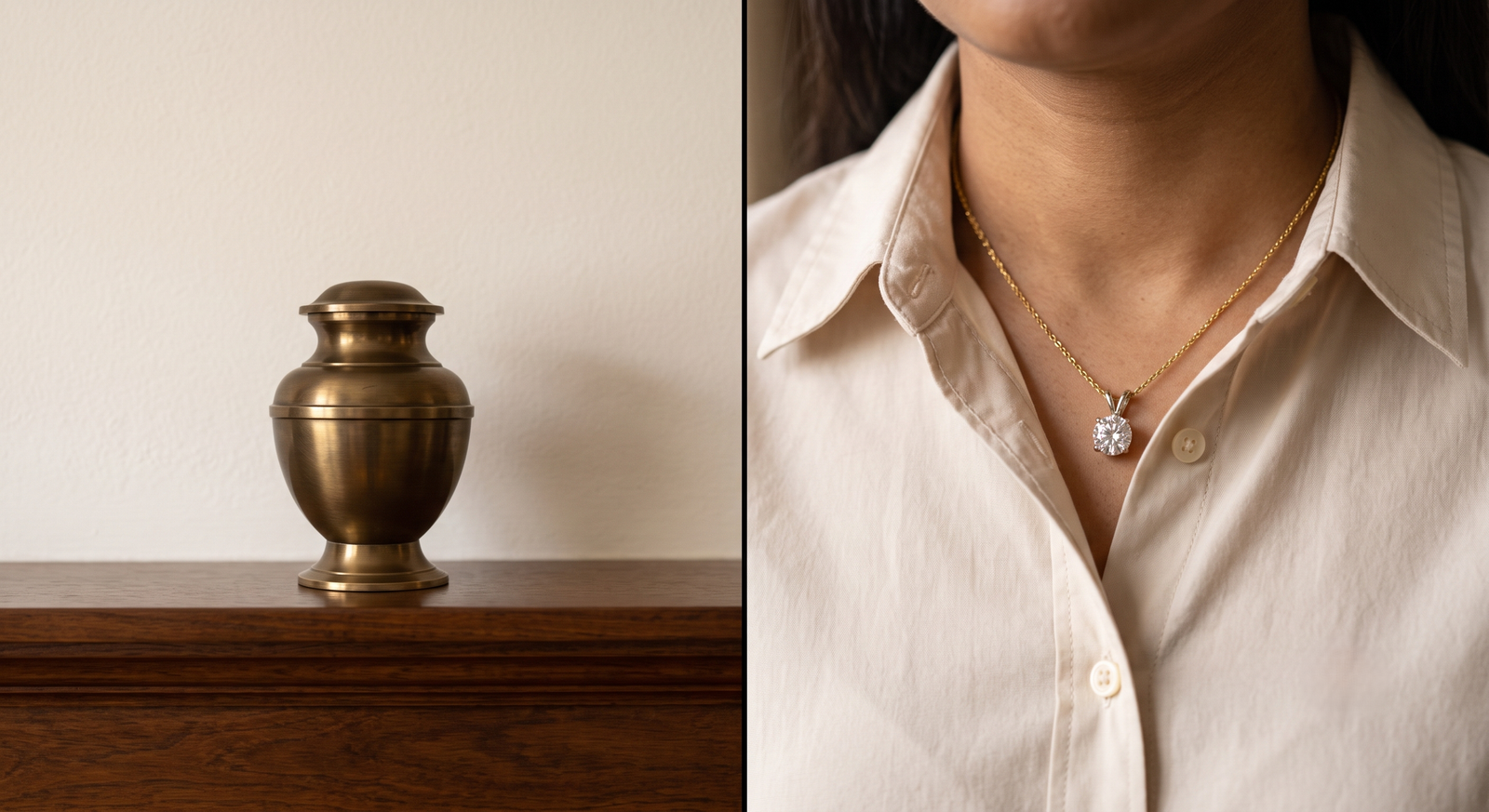
Split image: an urn on a mantel in an empty room, and a pendant diamond worn under a shirt colla

What Happens When the Household Changes?

If the urn is in a house that may one day be sold or downsized out of, this is the part that matters.

A traditional urn is only as stable as the household it belongs to. His widow downsizes and the shelf it stood on no longer exists. The house is sold and the urn is packed by whoever is packing the kitchen. Adult children each quietly assume a sibling will take it.

None of that is negligence. It is what happens to an object whose place in the world is a place rather than a person. If the urn is in your mother’s house, where it goes next is hers to lead, and how to raise a memorial diamond with the family is a better starting point than a proposal.

A diamond does not solve this. It sidesteps it by attaching to a person rather than a room, which turns the open question of where an object should live into the ordinary one of who it belongs to next.

What a Traditional Urn Does Better

Argued on its own terms, not as courtesy:

  • It holds him whole. No portion of him is anywhere else, in anyone else’s keeping.
  • It stays reversible. Ash in a traditional urn can still be scattered, interred or divided years from now. Diamond growth is one way: that portion of carbon is a crystal permanently.
  • It exists now. An urn is a purchase you complete in an afternoon. A memorial diamond takes 6 10 months of production from the date a laboratory receives the material.
  • It is shared. Several people can stand in front of one urn at once. A worn stone is with one person, by design.
  • It asks nothing of anyone. Nobody has to agree to it, insure it, resize it or decide who inherits it.
  • It costs what a container costs. A memorial diamond is a decision in the low thousands at the entry tier and climbs steeply with carat, see the cost of a father memorial diamond.

If the traditional urn is doing all six of those things and nobody is unsettled, there is no problem here to solve. With cremation now the majority choice in the US, 63.4% projected for 2025 by the NFDA, a great many families are in exactly this position, and most of them keep the urn and add nothing.

When an Interment Turns the Urn Into a Place

Interment changes the comparison more than anything else.

Once his traditional urn is placed in a columbarium niche, a family plot or a national or service cemetery, it stops being an object in a house and becomes a fixed location, with an address, opening hours and rules that are not yours. The comparison is no longer “urn or stone.” It is visit a place, or carry a thing, and those two are not rivals.

The practical consequence is timing: if an interment is booked and you want a portion set aside, the funeral director and the cemetery office are the people to ask before the urn is placed, and whether anything can be lifted afterwards is theirs to answer too. If that door is closed, turning your father’s hair into a diamond starts from material that was never in the urn.

Row of columbarium niches with one open niche holding an engraved urn

Does Any Faith Settle This?

No tradition has an official position on memorial diamonds specifically; religious guidance addresses cremation and the handling of ashes, and stops there. Where it reaches this comparison at all it tends to reach the traditional urn first, current Catholic guidance permits cremation but directs that ashes be kept intact in a sacred, church approved place rather than divided or kept at home, while Islamic teaching objects to cremation itself rather than to what follows it, which is why the hair route sits outside that objection altogether. Views differ by denomination, community and clergy, so ask your own, what different faiths say about cremation and ashes covers each tradition in turn.

Frequently Asked Questions

Does removing a portion make his traditional urn look noticeably emptier?

A memorial diamond uses only part of a full cremation, industry guidance ranges from a few tablespoons to around 4 oz. The portion taken is a small fraction of what the urn holds, and the rest can still be scattered or interred.

His urn is at my mother’s house. Do I need it in my own hands to arrange a stone?

You need her agreement and access to a portion, not custody of the urn. It can stay exactly where it is. What a provider needs is the material itself, sent by whoever holds it, with whatever paperwork the laboratory asks for.

If we take a portion out now, can the rest still be interred at a veterans’ cemetery later?

That is a question for the cemetery rather than for us. Eligibility and paperwork are set by the cemetery and the relevant authority, and removing a portion beforehand does not automatically affect them. Confirm current requirements directly before doing either.

What happens to a traditional urn when the house it has been living in is sold?

Somebody has to decide, at a moment when a great deal else is already being decided. That is the weakness of an object tied to a place rather than a person, and it is worth raising before the move, not during it.

Do we need everybody’s agreement before opening his urn?

Legally it depends on who holds the right to control his remains, a question answered by state law and by any written instruction he left, so check both. Practically, anyone who would be upset to hear it afterwards should be told beforehand, veto or no veto.

Is a memorial diamond a replacement for a traditional urn?

No. It uses a small portion and leaves the rest where it was. Families who order a stone almost always keep the urn, scatter, or inter as originally planned; the diamond is an addition, not an alternative.

Final Thoughts on a Father Memorial Diamond vs a Traditional Urn

If the urn is settled and the household is stable, the comparison may be over before it starts, and that is a fine outcome. The moment it becomes worth thinking about is when the household is going to change, or when more than one person wants something of him that lives with them rather than in one room. A traditional urn answers “where is he”; a diamond answers “who carries him.” A family can want both answers at once.

Learn More About Father Memorial Diamonds

Talk With Memorial Diamond

If the urn is staying where it is and you are weighing whether a stone should join it, that is exactly the conversation to have early. Reach out to Memorial Diamond at memorialdiamond.us to talk through what a small portion of his ashes could become, with no pressure to decide either way.