son-hair-diamond-color

What Color Will a Diamond Made From Your Son’s Hair Be?

Most parents have pictured the stone long before they type the question. Here is the plain answer: son hair diamond color usually lands somewhere in the yellow, blue or champagne to brown range, because shade is set by trace elements caught in the crystal lattice during growth, and a lock of hair is an organic, individual starting material. Colorless is achievable with additional processing and a higher price, and no laboratory can honestly promise a particular son hair diamond color before the run is finished.
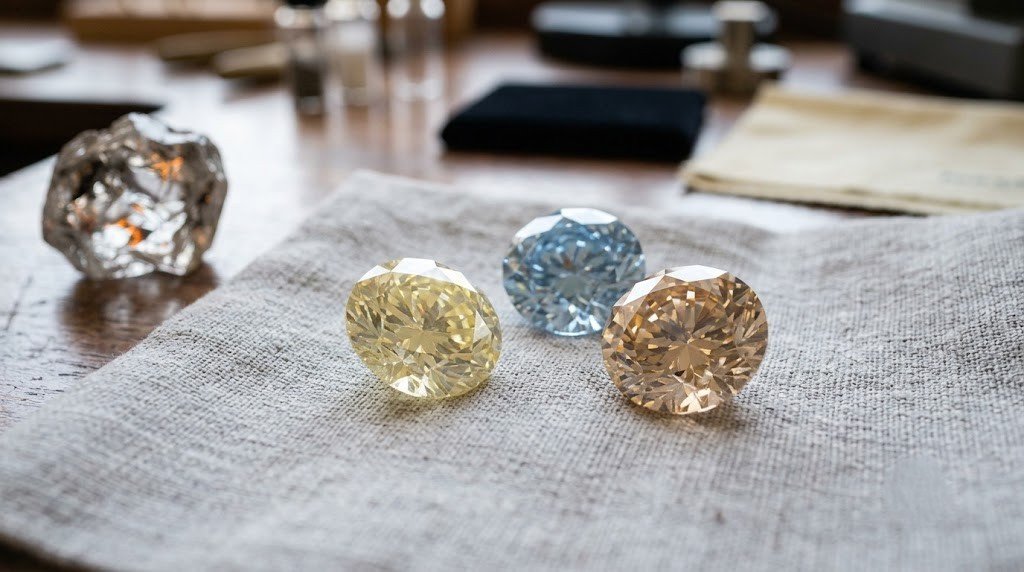
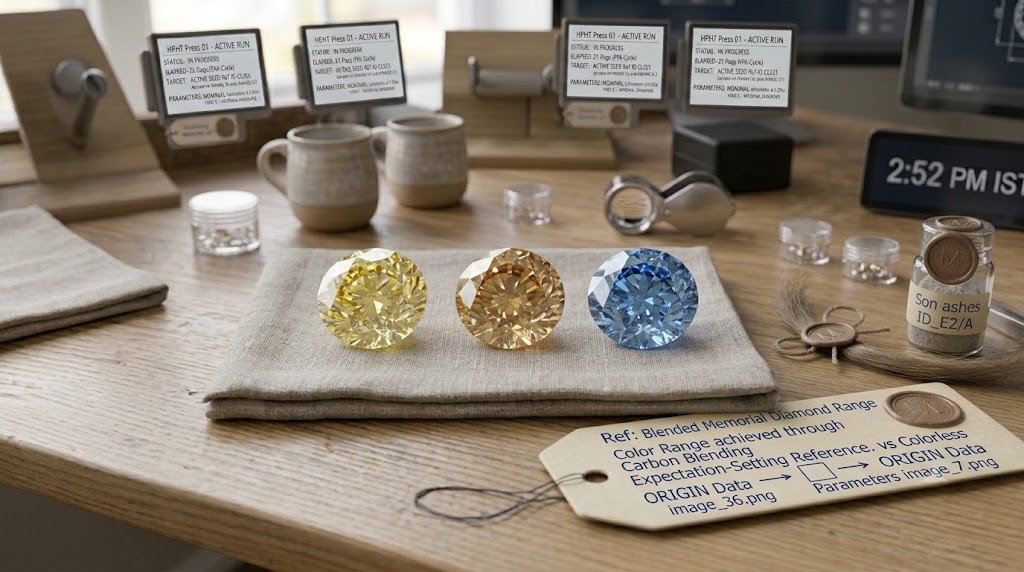
Son hair diamond color shown as three loose memorial stones in pale yellow, blue and champagne tones on linen

What Actually Decides a Diamond’s Shade?

Nothing you can see in the sample, and nothing about how carefully it was kept, which is the first uncomfortable truth about son hair diamond color. A diamond is a lattice of carbon atoms, and wherever an atom that is not carbon slips into that lattice while the crystal is forming, it changes how the finished stone handles light.

Two intruders do nearly all the work. Nitrogen sitting in the structure absorbs at the blue end of the spectrum and leaves the stone reading yellow. Boron does the opposite and leaves it reading blue. A crystal that took up neither has nothing to tint it, which is why colorless is best understood as an absence rather than as an added quality.

That single mechanism is the whole of the son hair diamond color question. Whatever is present in the growth cell as the crystal builds itself gets written into the structure permanently, and it is not a coating that could later be stripped and redone.

It is also why son hair diamond color cannot be adjusted afterward the way a metal or a cut can. How a memorial diamond is made from his hair follows the material through the stage where this is settled.

Does Hair’s Carbon Content Make the Stone Lighter?

No, and this is the assumption worth taking apart first, because it sounds so reasonable that most parents arrive already half convinced of it.

Hair is roughly 50% carbon by weight, a far richer starting material than cremated remains, where the recoverable carbon is a small fraction of the total. From there it seems to follow that a hair grown stone begins cleaner and must therefore finish whiter. It does not follow. Carbon content tells you how much usable material a sample yields. It tells you nothing at all about which trace elements travel along with it.

Purification takes the recovered carbon to roughly 99.9% purity or better on either route, and son hair diamond color is decided in the sliver left over plus the conditions inside the press itself. A richer source shortens the collection problem; it does not hand anyone a lever on the finished shade.

So nothing at your end makes son hair diamond color predictable. Not sending a longer lock, not sending a fresher one, not the care you take packing it. That is the honest position, and it is the same one taken about the ashes version of this question, neither route is the tidy one.

Which Son Hair Diamond Color Results Turn Up Most?

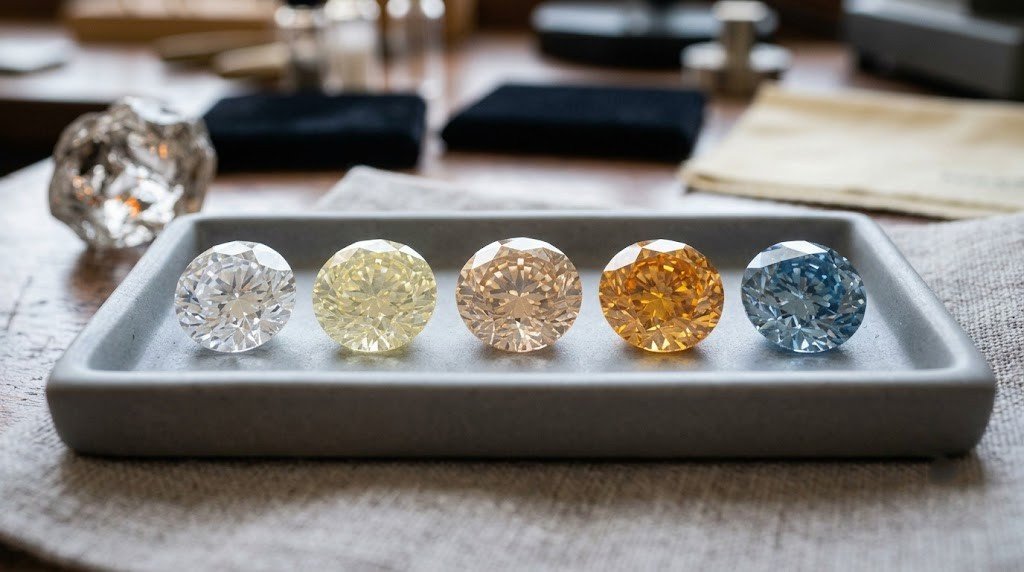
Five broad outcomes account for nearly everything families actually receive. Read the table as a map of the territory, not as a menu:

Shade familyWhat produces itHow often it appearsEffect on price
Yellow through amberNitrogen taken up during growthVery commonBaseline
BlueBoron taken up during growthCommonBaseline to a modest premium
Champagne and brownCombined trace elements plus growth conditionsCommonBaseline
Near colorless to colorlessBoth nitrogen and boron excludedLess commonPriced well above the rest
Red, pink, green or blackIrradiation applied after the crystal exists, where offeredCompany dependentExtra charge; black is slowest
Five hair-grown memorial diamonds arranged from colorless through yellow, champagne and blue on a neutral tray


The third column describes tendency across the category, not the odds for your particular run. Nobody can look at a lock of hair and tell you which row your son hair diamond color will occupy.

What the table is genuinely good for is settling expectations before anything is commissioned. A parent who already knows that warm tones are the most frequent son hair diamond color outcome is far less likely to be jolted by the stone that eventually arrives in the post.

Does His Natural Hair Color Carry Through?

This is the son hair diamond color question parents ask most, and the one with the least satisfying answer: there is no reliable published basis for saying that a fair haired son produces a pale stone or a dark haired son a deep one.

The reason is structural. Hair color comes from melanin pigment held in the hair shaft, and that pigment does not survive the process. The material is heated in a controlled, oxygen free environment until everything that is not carbon has been stripped away, then converted to graphite before it ever reaches a growth cell. Pigment is one of the things stripped.

So son hair diamond color is not a continuation of the shade you remember. It is decided further downstream, by trace elements and press conditions rather than by how his hair looked in the light.

If a provider suggests otherwise to you, treat it as a claim to be tested rather than a fact. Ask them directly what evidence they hold for a link between natural hair shade and finished son hair diamond color, and ask whether they will put that answer in writing. A company comfortable being asked is telling you something useful either way.

What Would a Colorless Stone Take?

It is possible. It is worth understanding what a white result involves, though, because a colorless son hair diamond color is not a checkbox on an order form.

Reaching colorless means keeping both nitrogen and boron almost entirely out of the growth environment. That calls for tighter process control and additional handling than a run where trace elements are simply allowed to express themselves, and across the industry a colorless outcome typically costs noticeably more than a yellow, blue or champagne stone of identical carat weight.

There is a second cost, less often mentioned: extra processing improves the odds without converting them into a guarantee. A laboratory aiming for a colorless son hair diamond color is still aiming.

If white matters to you, raise it in the first conversation rather than after a deposit has moved. Ask what proportion of their attempts at that outcome actually land, ask what happens if yours arrives tinted, and ask whether the additional charge applies regardless of result. The complete guide to a son hair diamond sets the rest of the commissioning conversation out in order.

Where Do Pink, Green, Red and Black Come From?

From a different route entirely. Red, pink, green and black come out of post growth irradiation, which some providers offer once the crystal has already been grown.

Two things are worth holding onto. First, availability varies from company to company, so a treated son hair diamond color you have set your heart on may simply not be on offer from the provider you otherwise like best. Ask early rather than assuming.

Second, treatment is added to growth rather than substituted for it. Carbon recovered from his hair still forms the crystal itself; what irradiation alters is the way that finished crystal reads to the eye. A treated son hair diamond color does not make the stone any less genuinely his.

Black stones in particular tend to run long. Specialty shades and larger carat weights are the two factors most likely to push a project toward the far end of the usual schedule. How long the wait usually runs covers that side of it properly.

How Much of the Stone Is His Hair?

Here the honest answer is that the reference figures quoted around this industry do not cover the hair route. Published percentages describing how much of a finished memorial stone came from the personal source are ash figures; they were measured on carbon recovered from cremated remains, and no equivalent published figure exists for hair.

That matters because it is easy to see a percentage quoted somewhere and assume it transfers. It does not, and a provider who quotes an ash percentage at a hair customer is being careless at best. Ask your provider what proportion of the finished stone their own hair process delivers, and ask for the answer in writing before you commit anything.

What can be said plainly is the shape of it. The recovered carbon is purified, then combined with additional lab sourced carbon until there is enough feedstock for a growth run, so the stone is part him and part supplementary material, never one hundred percent hair. Any company claiming total purity is overstating the physics.

None of that changes the son hair diamond color question, since blending does not make the shade any more forecastable. It is simply the thing to have straight before money changes hands, alongside the son hair diamond color question itself.

What Can a Provider Tell You Before You Commit?

Less than most parents expect about son hair diamond color, and how a company handles that gap is one of the more revealing things you will learn about it.

What a provider can legitimately offer is a stated aim and a described process, an intention to work toward blue, say, with an explanation of which variables sit under their control and which do not. What nobody can honestly offer is a guaranteed son hair diamond color written onto a form as though it were a carat weight or a cut.

Before anything is signed, get these answered plainly:

  • Which shade family will you be aiming for, and what in your process influences that?
  • How often does that aim actually land, in your own experience?
  • What happens if the finished stone comes out noticeably different?
  • Is any part of the fee adjusted, or a second growth run offered, in that event?
  • Will the finished son hair diamond color be documented, and by whom?

That last point deserves a sentence of its own. An independent grading report assesses cut, color, clarity and carat weight on the same basis used for any diamond, which makes it the only genuinely third party record of the son hair diamond color you actually received. It is normally an optional extra rather than something included by default, so ask.

Who Decides Whether His Hair Is Used at All?

Usually the person who signs the commissioning paperwork also sets the son hair diamond color being aimed for, which is worth thinking about before the form is in front of anyone, because that person may not be who you assume.

Most states publish a ranked list of who may decide what becomes of a person’s remains. A surviving husband, wife or registered partner is commonly placed high on it, and children he had of his own may be placed above the people who raised him. Written instructions he left behind can reorder that list, and no two states word it identically.

Hair you already hold is usually the simpler question in practice when a son hair diamond color is being commissioned, since those rules are aimed at the remains themselves rather than at a lock kept in a drawer. That is not the same as saying it sits outside every consideration; a decedent’s belongings can fall to an estate, the treatment varies, and a sample somebody else is keeping is a conversation to have rather than a decision to make alone.

Parents are also not always of one mind about this, and one parent arranging it by themselves is entirely ordinary. Where any of it is unclear, a short call with a local attorney resolves it far faster than family debate will.

How Does Son Hair Diamond Color Affect Cost and Waiting?

Son hair diamond color moves the figure, though carat weight moves it much harder. These are 2026 industry wide bands, not this brand’s published prices. A stone of 0.10 to 0.25 carats generally lands between roughly $1,500 and $3,500; half a carat to a full carat sits between $5,000 and $15,000; past two carats, quotes typically open around $20,000 and climb well beyond $75,000.

Inside any tier, a colorless result typically carries a real premium over a warm or blue stone of matching weight, because of the extra control needed to keep trace elements out. Treated shades normally add a charge of their own. Mountings, engraving, unusual cut shapes and an independent grading report are each billed apart from the stone.

On the calendar, the category wide norm runs from about six months to ten from the day material is received. A specialty son hair diamond color, black most of all, or a larger stone can stretch that toward a full year. What a son memorial diamond costs breaks the tiers down properly, and how much hair a laboratory actually needs covers the quantity side.

How Will the Shade Read Once It Is Worn?

Differently from how it looks loose in a box, which catches most families off guard. The metal surrounding a stone genuinely changes how a son hair diamond color registers to the eye.

Yellow gold warms a stone and can make a faint yellow tint recede into its setting. White metals such as platinum work by contrast and tend to push warmth forward instead. A blue stone usually reads strongest against white metal, and champagne tones often sit beautifully in rose gold.

Scale matters too. An identical tint is more visible in a larger stone than a small one, because there is simply more material for light to pass through on its way out.

If you can, ask to see the finished stone before the setting is fixed, or ask what flexibility exists to change metal after you have held it in daylight. Photographs taken under laboratory lighting rarely match how a son hair diamond color looks on a hand near a window. Rings, pendants and other settings goes through the options, and a submission combining both materials behaves no differently once it is set.
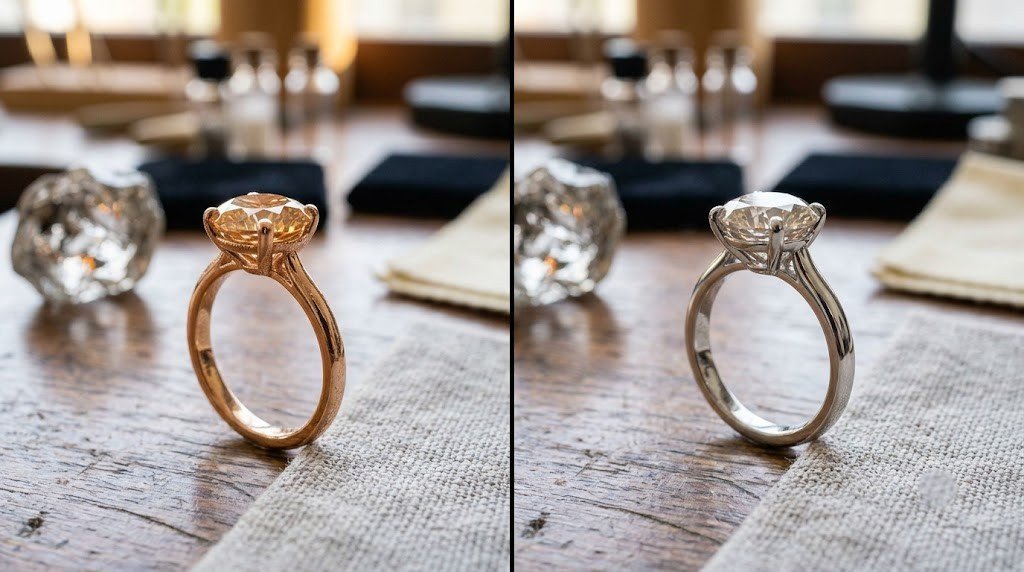
The same champagne-toned memorial diamond photographed set in rose gold and in platinum for comparison

Frequently Asked Questions

Will a blonde son produce a paler stone than a dark haired one?

There is no reliable published basis for that. Pigment is destroyed during purification long before growth begins, so his natural shade does not carry into the son hair diamond color you receive. Ask any provider who suggests otherwise what evidence they actually hold.

Can two locks from the same head produce matching stones?

Not dependably. Separate growth runs vary in their own conditions, so two stones from one submission can differ visibly in son hair diamond color. If matching pieces matter to you, say so before commissioning and ask what the laboratory can realistically achieve.

Does a hair grown diamond fade or yellow with age?

No. The shade sits in elements locked inside the crystal structure during growth, not in any coating or surface treatment, so it is permanent. Everyday wear, cleaning, sunlight and decades of handling will not alter it.

Is a tinted stone worth less than a white one?

A colorless son hair diamond color carries a premium because excluding trace elements demands more process control, not because a warm stone is a lesser diamond. Cut, clarity and carat are graded independently of shade, and a champagne memorial stone can grade very well.

Can the shade be changed after the diamond is finished?

Sometimes. Irradiation after growth can move a finished stone toward red, pink, green or black, where a provider offers it at all. Cost, availability and the added wait differ by company, so ask first and ask whether it is documented.

What if the shade that arrives is not what I hoped for?

Tell the provider and ask what their policy allows, but give yourself a little time before deciding anything. Plenty of parents describe a first reaction that shifted considerably once the stone was set and worn rather than seen loose.

Final Thoughts on the Color of a Diamond Grown From His Hair

Of everything in this process, shade is the part that stays furthest outside your control, which is hard, when so much else about the last year has already been outside it.

What is worth carrying is the reason the shade varies at all. The stone reads warm, or blue, or somewhere between, because the carbon in it came from one specific person rather than from a drum of industrial feedstock. A uniform result would mean something had been substituted for him.

Ask for the intended son hair diamond color in writing, ask what happens if the run misses it, and then let the press do what it does over the months that follow. Whatever son hair diamond color arrives will have arrived because of him, and no other family’s stone will be quite the same.

Learn More About Son Memorial Diamonds

Talk With Memorial Diamond

Wanting a particular shade is an ordinary thing to want, and it is better to find out early whether it is achievable than to hope quietly for months. Memorial Diamond can be reached at memorialdiamond.us for a plain account of what sits inside a laboratory’s control. No obligation follows from the question.
son-ashes-hair-diamond-steps

Step by Step: Turning Your Son’s Ashes and Hair Into a Diamond

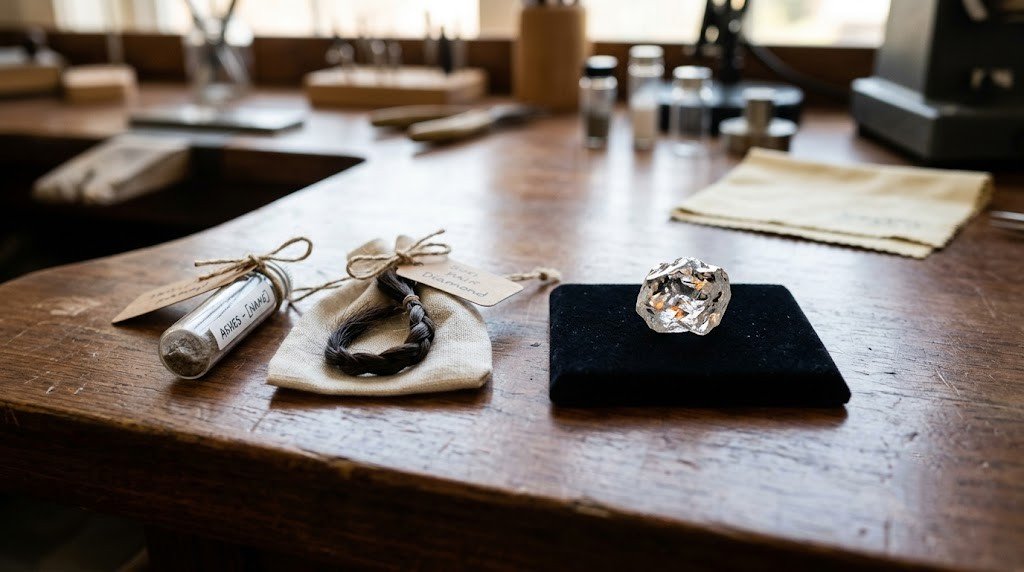
Some families have both, an urn, and a lock kept from a haircut nobody thought twice about at the time. The son ashes hair diamond steps run to eleven, because two materials mean two samples, two possible permission conversations and two things to package rather than one. The laboratory work behind them is the standard six to ten months; the extra stages all sit at your end, before anything is sent.

The son ashes hair diamond steps beginning with two sealed samples, an ash vial and a tied lock, beside a finished stone

What Makes the Son Ashes Hair Diamond Steps Different?

Everything inside a laboratory is essentially the same. What changes is the front end, where a combined submission doubles several things a single material order does once.

Two samples. Two containers. Potentially two people whose agreement matters, since rules about remains and a keepsake in a drawer are different questions. And one honest uncertainty neither single material route carries.

StageAsh onlyHair onlyBoth
Samples to prepareOneOneTwo
Permission questionsOneUsually onePotentially two
Cremation requiredYesNoYes, for the ash portion
Published carbon share of stoneRoughly 10 to 15%None publishedNone published for a blend
Typical growth wait6 to 10 months6 to 10 months6 to 10 months

Laid end to end, the son ashes hair diamond steps number eleven: decide what you want back, settle the ash authority, settle the hair question, choose a provider, ask the combined questions, gather documents, choose the stone, prepare the ash, prepare the hair, ship both, and wait. The complete guide to a son ashes and hair diamond fills in what sits behind each one.

Step 1: What Do You Want Back at the End?

Answer this before anything else, because it changes the shape of every stage after it. The son ashes hair diamond steps branch here in a way the single material routes never do.

Three things families commonly want, and they are not the same order. One stone grown from both materials. Two stones, one from each material, so ash and hair stay distinct. Or two stones from one combined charge, because two people each want something to hold.

Each of those has a different price and a different schedule. Two stones means two growth runs, whether they come from one submission or two.

Decide provisionally. You will refine it once a provider answers the questions at stage five.

Step 2: Who Can Authorize Releasing His Ashes?

The ash half of the son ashes hair diamond steps runs through whoever holds authority over his remains, and that is not automatically a parent.

Every state sets its own order of priority. A surviving spouse or registered partner is frequently first in line. Where a son left adult children, they can sit ahead of his mother and father. And anything he committed to writing, a directive, a will clause, a prepaid funeral arrangement, may displace that order altogether.

So the signature on a release form may belong to someone other than the parent organizing every one of the son ashes hair diamond steps. Discovering that at stage two costs a phone call; at stage ten it costs weeks.

Where the position is unclear, the funeral director who handled the cremation usually knows the local rule, and an attorney can confirm it.

Step 3: Whose Call Is the Hair?

A separate question, and treating it as the same one is how families get caught out midway through the son ashes hair diamond steps.

Those statutory rules about priority are written about a person’s remains. They are aimed at the ashes, which is why a lock of hair already in your own keeping tends to be the simpler of the two questions in practice.

In practice is the operative phrase. A decedent’s possessions can be part of an estate, the position differs from state to state, and where the hair sits in somebody else’s home, an ex partner, a grandparent, a sibling who cleared his things, the honest description is a conversation rather than a decision.

It is also worth saying that parents do not always agree about the son ashes hair diamond steps, and that one parent arranging all of this without the other is common rather than remarkable.

Step 4: How Do You Find a Provider That Takes Both?

By asking, plainly, in the first email. Not every company handles combined submissions alike, and the son ashes hair diamond steps depend on knowing that before you build plans.

Ask whether both materials are accepted, whether they can be grown into a single stone, and whether the company has done it before. A straight answer to the third is worth a great deal.

Ask too where growth physically takes place, since some providers operate their own presses and others contract to a partner laboratory. Neither is inherently better, but a combined submission adds handoffs and you are entitled to know how many.

A company that answers clearly by email is showing you something about its record keeping, precisely what matters when two samples travel together. Questions worth asking before you commit sets out a fuller list.

Step 5: What Must You Ask About a Combined Submission?

Five things, and this is the stage most specific to the son ashes hair diamond steps. Generic process pages do not cover it, because the answers differ between companies.

  1. How much of each material do you require, in grams or ounces?
  2. Does sending both change either of those figures?
  3. Are the two samples processed into a single growth charge, or handled in stages?
  4. If one sample is insufficient on arrival, does the other proceed or does everything pause?
  5. What documentation will trace the finished stone back to both materials?

The second question deserves particular attention. Nothing published in this industry says that a combined submission reduces either requirement, so do not assume a discount that nobody has offered you.

Get the replies by email before the later son ashes hair diamond steps begin. A written answer you can point to months later; a remembered call is not. How much of each material is needed sets out the industry typical quantities behind those questions.

Step 6: What Documents and Signatures Are Needed?

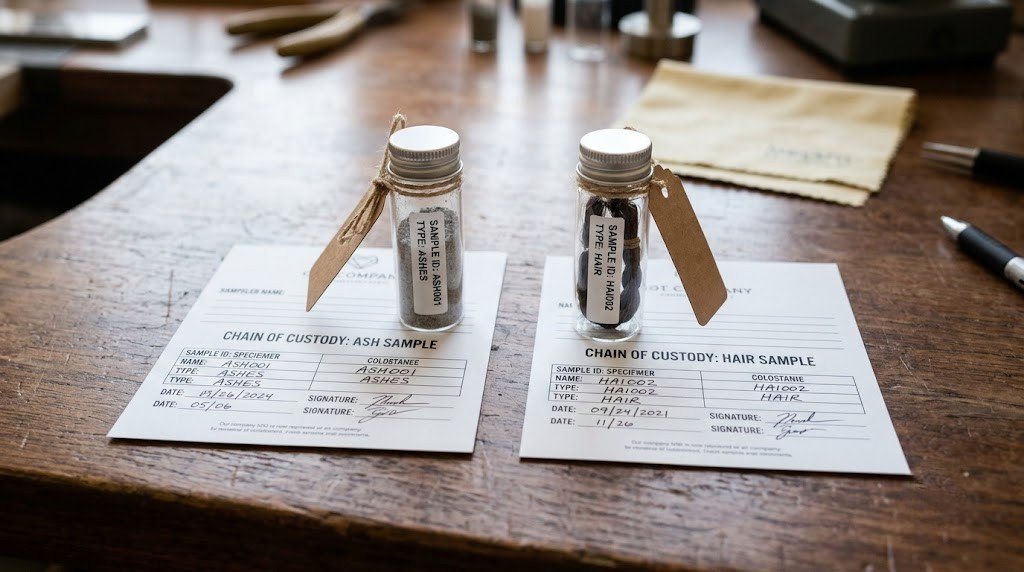
Usually a death or cremation certificate, identification for whoever signs, the provider’s authorization form, and chain of custody paperwork for each sample.

That last detail is where the son ashes hair diamond steps differ from a single material order. Two samples generally mean two custody records, so check the forms you were sent accommodate both rather than assuming one line covers everything.

Where somebody else signs for the ashes, build waiting time into your expectations. An unsigned form in another household is the commonest reason a first month disappears.

Keep every document from the son ashes hair diamond steps together, the quote, the quantity figures, the tracking numbers, the forms. In month seven you will be grateful not to be searching an inbox.

Step 7: How Do You Choose Carat, Color and Cut?

Early. This is the stage of the son ashes hair diamond steps that sets both the price and the length of the wait, and a provider cannot quote properly without it.

Carat is the lever that matters. The range on offer generally starts near a tenth of a carat and reaches five carats or beyond, and size depends on time in the press rather than on how much material arrives. Sending more of either sample changes nothing about the son ashes hair diamond steps that follow.

Color is part choice, part chemistry. Nitrogen present during growth draws a crystal toward yellow; boron toward blue; a colorless stone depends on the near total absence of both. Organic carbon tends to carry trace elements, so warm and blue tones are common. What color a stone from his ashes and hair will be treats that honestly.

Cut is the last of the three and can reasonably wait until a rough crystal exists.

Step 8: How Do You Prepare the Ash Sample?

Industry wide the ask lands somewhere between a couple of tablespoons and 4 oz, near enough 100 grams, which is a small share of what a full adult cremation produces. Most of the remains stay where you planned.

If a kit has been sent, use the container in it; the son ashes hair diamond steps assume each material travels in its own. Work over a tray, in good light, taking breaks as needed. Cremated remains are largely bone mineral and handle more like coarse sand than like anything powdery.

Do not fight a sealed urn. A funeral home will open, portion and reseal one as an ordinary service, and many will do the measuring for you.

Nothing in the son ashes hair diamond steps requires that this particular job be yours. Asking a sibling, a friend or the funeral director is entirely reasonable, and plenty of parents do. The ashes only version of this sequence covers the stage in more depth.

Step 9: How Do You Prepare the Hair Sample?

Far more simply, and this is the lightest of the son ashes hair diamond steps. Hair runs to roughly 50% carbon by weight as a starting material, so the usual request is a lock you could hold in one hand, or a few grams, rather than ounces.

Tie the lock at one end with thread if it is loose, so it arrives as a bundle rather than a scatter. Use the paper envelope provided; paper beats plastic for anything that might trap moisture.

Disclose dye, bleach, heavy styling product, or adhesive residue from a locket or memory frame before the son ashes hair diamond steps go further. None of it is automatically disqualifying, but a laboratory told in advance can plan for it.

Keep a portion back if there is enough to divide. It costs nothing and removes the worst outcome: an undersized sample with no reserve. The hair only version of this sequence covers sample condition in more detail.

Step 10: How Do You Ship Two Samples in One Parcel?

As two clearly separate, clearly labeled items inside one tracked package. Do not combine them to save room, the son ashes hair diamond steps depend on the laboratory receiving each material distinctly.

Photograph both sealed containers before the box closes, the cheapest insurance in the son ashes hair diamond steps. Put the signed forms inside the parcel rather than mailing them separately, and write the tracking number somewhere you will find it without hunting.

If the provider offers a prepaid insured courier label, use it. Not the stage to economize.

An acknowledgement listing both samples by name is the formal handover point. Everything up to it is yours; everything after belongs to the laboratory. If it names only one sample, say so immediately rather than assuming clerical shorthand.

A collection kit laid out with two labeled containers and separate chain-of-custody forms for each sample

Step 11: What Happens Across the Waiting Months?

Four processes, none of which need anything from you, and this final stage of the son ashes hair diamond steps is where nearly the whole calendar lives.

Purification first: each material is heated in a controlled, oxygen free environment that strips away everything that is not carbon, leaving purity at roughly 99.9% or better. Ash gives up little for its weight, since usable carbon is only about 0.5% to 4% of cremated remains.

Graphitization second, the hottest point in the son ashes hair diamond steps: the purified carbon is taken to somewhere near 2,500 to 2,700°C and converted into graphite, the feedstock a press can use.

Growth third: the graphite is combined with additional lab carbon until the charge is viable, then loaded into a press around a diamond seed at roughly 6 to 8 GPa and 1,400 to 2,500°C, or fed into a chemical vapor deposition chamber at the minority of providers using that method. Cutting and polishing come fourth, with optional irradiation and optional independent grading against the standard four quality factors afterwards.

What Can Nobody Tell You About a Blended Charge?

How much of the finished stone came from him, not from any published figure, at least. This is the honest limit of the son ashes hair diamond steps, better stated plainly than papered over.

For the ash route, the industry figure is that personal carbon recovered from cremated remains accounts for roughly 10 to 15% of a finished stone’s mass, with some providers citing as little as 3% depending on size and quantity submitted. That number belongs to ash alone, and nothing in the son ashes hair diamond steps stretches it any further.

For hair, no equivalent published percentage exists. And for a blended charge, both materials grown into one crystal, there is no published figure at all. Anyone quoting a tidy number for a combined stone is extrapolating, not citing.

So ask your provider, in writing, for its own figures before the son ashes hair diamond steps begin, separately for ash, hair, and the two together. Whether the stone is genuinely made from his ashes and hair works through how that link is documented instead.

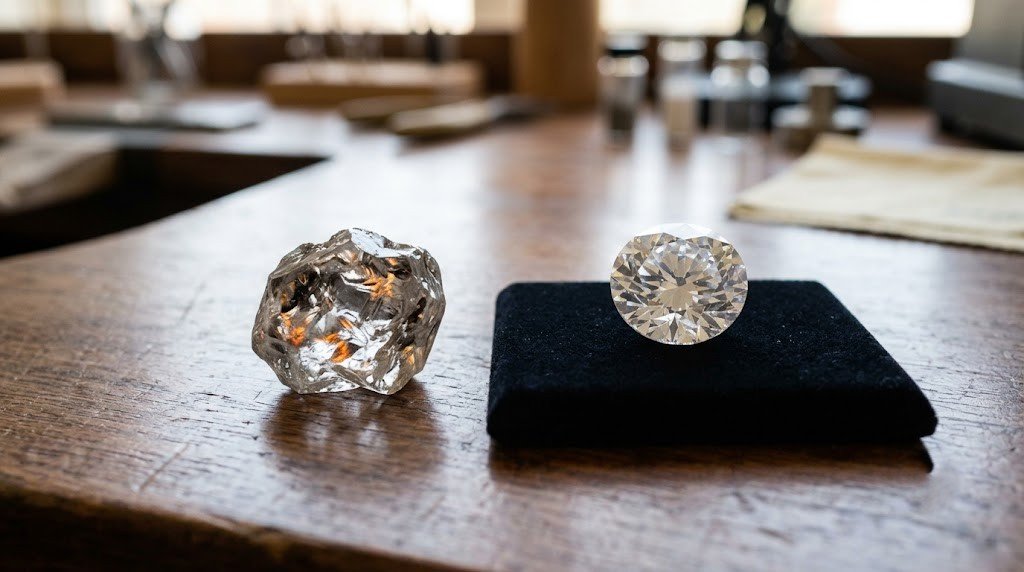
 A rough memorial diamond crystal shown beside the same stone after cutting and polishing

What Do the Son Ashes Hair Diamond Steps Cost and How Long Do They Run?

Six to ten months from receipt is the usual industry span, reaching toward twelve for larger stones or specialty colors. The son ashes hair diamond steps you personally handle rarely occupy more than a few weeks of that.

As general 2026 industry ranges, not any one company’s published rate:

  • A tenth of a carat up to a quarter: $1,500 to $3,500 as a rule
  • Half a carat through one: $5,000 to $15,000
  • Anything from two carats: $20,000 at the low end, occasionally over $75,000
  • Colorless: more expensive than a warm or blue tone of matching weight
  • Quoted on their own: mountings, engraving, fancy shapes, optional independent grading

Combining two materials does not by itself double anything. Two stones would, two growth runs, two prices, two schedules, but one stone from two samples is one commission. What a son memorial diamond costs breaks the tiers down properly.

Where Do the Son Ashes Hair Diamond Steps Trip Families Up?

Almost never in the laboratory. The son ashes hair diamond steps fail, when they fail, in the two weeks before a parcel is sent.

The most common is a missing signature on the ash release, sitting in somebody else’s house. Identifying the right signatory at stage two removes it.

Second is an assumed discount, a family sends less ash because hair is going too, and lands below the threshold. Nothing published supports that trade off, which is why stage five asks directly.

Third is a mismatch of expectation about what the son ashes hair diamond steps can deliver. Sending more of either material will not produce a larger stone, and no honest provider can promise a color in advance. Hearing that at stage one is easier than by month eight.

Frequently Asked Questions

Can both materials really go into one diamond?

Many providers accept combined submissions, but not all run the son ashes hair diamond steps the same way, and some process each material in stages rather than as one charge. Ask directly in your first email.

Does the hair let me send less of his ashes?

Nothing published in this industry supports that, so do not plan around it. Ask your provider whether either figure changes when both materials arrive together, and get the reply in an email before you measure anything out.

What proportion of the stone is actually him?

For a blended stone, no published figure exists. The commonly quoted 10 to 15% applies to carbon recovered from cremated ashes alone, and nothing equivalent is published for hair or for a combination. Ask your provider for its own numbers in writing.

Can we have two stones, one from each material?

Often, yes. Each stone repeats the growth stage of the son ashes hair diamond steps, so expect two prices and two timelines rather than one of each. Raise it at the quoting stage, since it changes what a provider needs.

Will the two stones match if we order a pair?

Not necessarily. Growth conditions vary between cells, so separate runs from one submission can differ visibly. If matching matters to two parents or two siblings, say so explicitly before anything is commissioned rather than afterwards.

Who has to sign when the ashes and hair are held separately?

Releasing ashes runs through whoever a state’s priority rules put first, which can be a spouse, a registered partner, or his adult children ahead of his parents. Hair kept by another relative is a discussion with them. Check your own state.

Final Thoughts on the Steps of Combining His Ashes and Hair

Eleven son ashes hair diamond steps sounds like a great deal until you notice that six of them are emails and two are afternoons. The laboratory’s half is identical to every other route; what the combined version really adds is care at the front.

The son ashes hair diamond steps reward one habit above all: not assuming. Not assuming the ash requirement drops because hair is coming too. Not assuming one signature covers both materials. Not assuming a published percentage exists for a blend, when it does not.

Ask the five questions, get the answers in writing, and prepare two samples rather than one. What comes back is a single object carrying a traceable line to both of the things you had left of him.

Learn More About Son Memorial Diamonds

Talk With Memorial Diamond

If you have both an urn and an envelope and would rather talk than read another page, that is a reasonable place to start. Memorial Diamond can be reached at memorialdiamond.us to discuss the son ashes hair diamond steps, the two samples involved, and what happens at each stage. Nothing is committed by asking.

Word count: 3,011 words · Reading time: about 15 minutes

son-ashes-hair-diamond-question

Questions to Ask Before Turning Your Son’s Ashes and Hair Into a Diamond

Sending two things instead of one doubles everything quietly, two packages, two permissions, two ways for a plan to go sideways. The son ashes hair diamond questions that matter most are therefore about how the two are handled together: whether they are combined into a single charge or run apart, what happens if one of them falls short, who authorized each, and what the finished certificate will actually say. Put all of it in writing first.

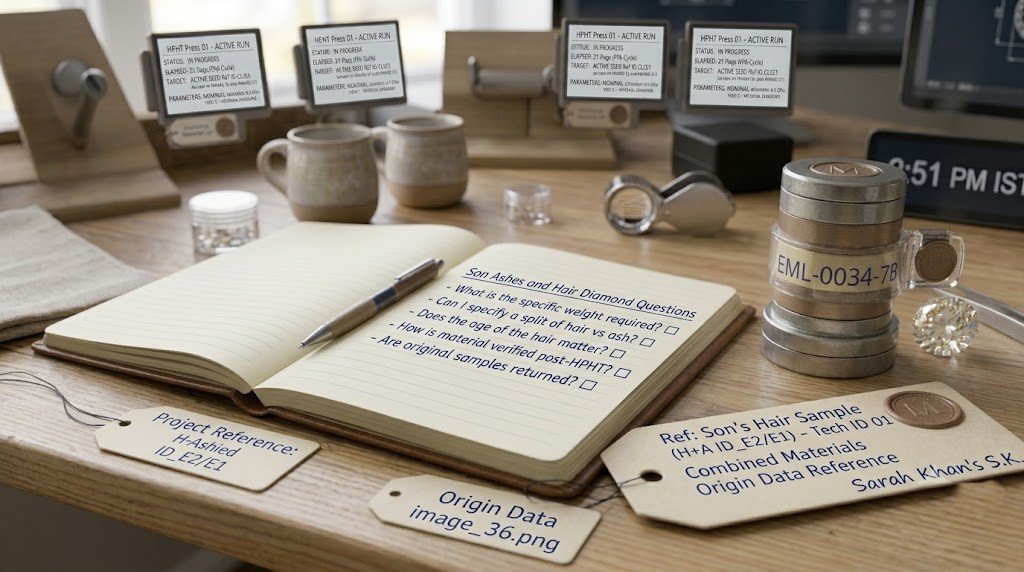
Son ashes hair diamond questions on a printed list beside a sealed ash container and a labeled hair envelope

Why Do Two Samples Change the Son Ashes Hair Diamond Questions?

Because almost nothing about a provider’s process is published for the combined route, while a great deal is published for each material on its own. That gap is where the son ashes hair diamond questions live.

The son ashes hair diamond questions begin with a material difference. Cremated remains are dominated by calcium phosphate, with usable carbon at roughly 0.5% to 4% of ash by weight. Hair is roughly 50% carbon by weight as a starting material, a completely different yield, from a completely different chemistry, arriving in a completely different form.

A laboratory handling both makes decisions about sequencing, proportion and what to do when one input disappoints, and the son ashes hair diamond questions exist to surface them. Few companies volunteer those decisions, and none of them are visible on a website.

So the son ashes hair diamond questions on this page are not a longer version of the single material list. They are the specific ones that only arise when two irreplaceable things are in the same building at the same time, being turned into one object.

Which Son Ashes Hair Diamond Questions Belong on Your List?

Ten. Each is written so that a one word answer is impossible, which is the whole point of sending the son ashes hair diamond questions as an email rather than raising them on a call.

#AreaThe question to put in writing
1ProcessAre the two samples purified separately and combined later, or handled as one charge from the start?
2ProcessIs one material ever used as a substitute for the other without telling me?
3ProcessIf one sample is insufficient, do you pause and contact me before proceeding?
4CustodyWhat separate identifiers are assigned to the ash and the hair on arrival?
5CustodyIs either sample ever processed alongside another family’s material?
6ContentWhat proportion of the finished stone’s mass comes from each of the two?
7DocumentsWill the certificate name both materials, and who issues it?
8DocumentsIs independent grading included, offered at extra cost, or unavailable?
9TermsWhat is billed separately, and does sending two samples change the price?
10TermsIf the growth cycle fails, what remains and what is your obligation?

Of the son ashes hair diamond questions above, two and three are unique to this route, and the ones most worth having answered before a single parcel is packed.

Are the Two Samples Combined or Run Separately?

Ask this first of the son ashes hair diamond questions, and ask for the sequence in plain language rather than a diagram.

There are two broad possibilities and a provider should be able to say which describes their work. Either the ash derived and hair derived carbon are purified along separate paths and then combined before graphitization, or the two are brought together earlier and processed as a single input. Both produce a stone containing carbon from both sources, but they are not the same process and do not carry the same risk.

The distinction matters because of what happens when something goes wrong partway, which is why it heads the son ashes hair diamond questions. Carbon kept separate until late can often be salvaged individually. Carbon combined early cannot be unpicked.

So among the son ashes hair diamond questions, this is the structural one. Ask at which stage the two meet, ask whether you are told when that happens, and ask whether the sequence the laboratory follows is the same for every combined order or varies with what arrives.

What If One Sample Fails or Falls Short?

Of the son ashes hair diamond questions, this is the one the combined route creates and the single material routes do not, and almost no family thinks to ask it.

Picture the realistic version. The hair weighs less than the laboratory needs, or the ash yields less usable carbon than expected. A choice then arises about proceeding on one source alone, and the honest issue is not whether that is possible, but whether anyone tells you.

So ask this one of the son ashes hair diamond questions flatly. If one of the two is insufficient, do you proceed using more of the other? Do you stop and contact me first? Will the certificate still describe the stone as made from both if, in practice, one contributed almost nothing?

Get the answer in writing. Of all the son ashes hair diamond questions here, this is the one where a vague reply should genuinely change your decision, because the substitution can happen invisibly and you would never know to ask afterward.

Who Authorized Each of the Two Samples?

The two halves of this raise two different kinds of permission, so the son ashes hair diamond questions about consent come in pairs, and treating them as one is how families get stuck at month two.

For the ashes, authority over remains is the governing issue. Should your son have had a wife, or adult children of his own, that authority may rest with them rather than with you. Statutes differ from one state to the next, and anything he recorded in writing during his life can rearrange the order completely. The answer is legal and local, and it reflects nothing about who loved him.

For the hair, the framing is different. Those rules are aimed at the remains themselves, so a lock you already have at home tends to be the more straightforward matter in practice. That does not make it unowned. A decedent’s belongings may pass to an estate, the position differs by state, and where the hair sits with his widow, a sibling or an aunt, you are opening a conversation rather than making a decision.

Put both son ashes hair diamond questions to the provider directly: whose signature do you need for the remains, and what declaration do you need for the hair? Where several relatives each want a stone is worth raising at the same time.

How Are Two Chains of Custody Kept Apart?

One container of ash and one envelope of hair are physically unlike each other, which makes the son ashes hair diamond questions about custody more answerable than you might expect.

Begin the son ashes hair diamond questions about intake with identifiers: ask what each receives on arrival, and whether they share an order number or carry distinct references. Ask whether both are weighed and logged at intake and whether you can be sent those figures.

Ask how many handovers each sample passes before they meet, and whether the same staff handle both. Extraction, purification, graphitization and growth are distinct stages, and a careful laboratory logs a transfer at each.

Then ask the batching question twice, because it has two answers. Is his ash ever processed alongside another family’s? Is his hair? Some laboratories batch one and not the other. Ask too what happens to anything unused, returned, retained, or destroyed. Practice varies genuinely, so these belong among your son ashes hair diamond questions rather than your assumptions.

How Much of the Stone Comes From Each Source?

Of the son ashes hair diamond questions, this one needs two numbers, and the second is harder to get than the first.

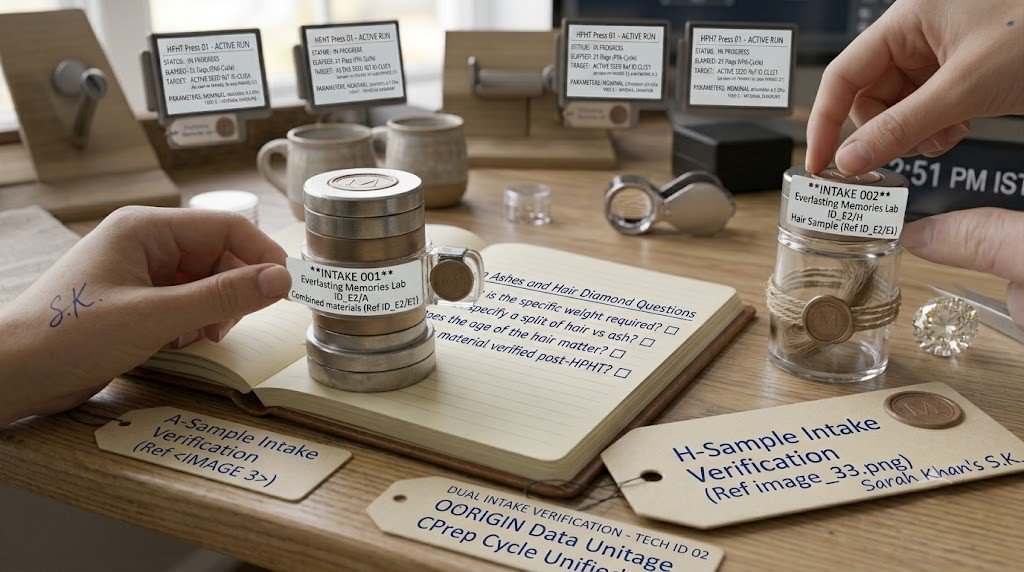
Two numbered intake labels being applied to separate sample containers on a laboratory benc

For the ash route on its own, industry figures put the personal carbon recovered from ashes at somewhere around 10 to 15% of a finished stone’s mass, with some providers citing figures as low as 3%. That is an ash figure. It describes stones grown from cremated remains alone.

For hair, and for a blended charge of the two, no equivalent published figure exists. Hair being roughly 50% carbon by weight describes the starting material, not the finished stone, and nothing in the public record states what share of a combined stone comes from each input. Any percentage you are quoted for this route is that company’s own, which makes it one of the son ashes hair diamond questions to have in writing rather than over the phone.

What can be said plainly is that personal carbon from either source, once purified, is topped up with lab grown carbon until there is enough of it to fill a growth cell. A provider claiming the stone is 100% your son is claiming something the physics of diamond growth does not permit.

What Will the Paperwork Actually Say?

Two documents exist, and the son ashes hair diamond questions here add a third thing to check for a combined stone, whether either of them mentions both materials at all.

An origin or authenticity certificate is normally issued in house and records provenance: that this stone was grown from what your family submitted. Ask whether it names the ashes and the hair separately, or whether it refers only to “submitted material” in a way that would read identically had one been left out.

A grading report from an independent gemological laboratory measures the stone against the usual grading scales for cut, color, clarity and carat. Independent grading is optional everywhere in this field, normally carries a fee of its own, and reveals nothing at all about where the carbon started. Do not accept one as evidence of the other.

Ask who issues each, ask for a specimen with another family’s details removed, and ask whether you approve the wording before printing. These son ashes hair diamond questions take five minutes to answer and reveal how carefully a company documents anything.

Which Son Ashes Hair Diamond Questions Cover Time and Cost?

Ask whether a combined submission changes either figure, because these son ashes hair diamond questions have counterintuitive answers: families reasonably assume it does, and it may not.

On timing, the industry norm runs from six to ten months between a laboratory receiving material and a finished stone, stretching toward twelve for larger stones or specialty colors. Growth time, not the amount of material submitted, is what sets carat size, so sending two samples does not automatically lengthen or shorten anything. Ask the provider for their own range, ask whether preparing two inputs adds a stage, and ask what the months are actually spent on.

On price, the industry wide picture is about $1,500 to $3,500 at the entry tier of roughly 0.10 to 0.25 carats, about $5,000 to $15,000 from half a carat up to one carat, and anywhere from $20,000 past $75,000 at two carats or more, colorless being dearer than yellow or champagne at matching weight. What genuinely moves that figure is worth knowing before you ask for a quote.

Then finish the son ashes hair diamond questions about money: is there a surcharge for two samples, what is billed separately, and what is the refund position at each stage?

What Color Should You Expect From a Blended Charge?

Start the son ashes hair diamond questions about color by asking what range is realistic, and treat any confident single shade promise for a two source stone as a reason to slow down.

The mechanism is well understood. Trace elements present during growth set the tone: nitrogen produces yellow, boron produces blue, and a colorless result requires the near absence of both. Carbon from a person carries trace elements that a purely synthetic feedstock would not, which is why memorial stones lean yellow, blue and champagne rather than white. What shade to expect has its own answer.

What nobody publishes is how a blended charge behaves compared with either material alone. So ask that directly rather than assuming the ash answer or the hair answer transfers.

Then ask the usual three: is colorless offered and at what additional cost, is irradiation available for red, pink, green or black stones and is it recorded, and what is your position if the finished tone differs from the sample shown? Guarantees here should make you more cautious, not less.

Three memorial diamonds in yellow, champagne and blue tones photographed together on a neutral surface

What If You Would Rather Have Two Stones?

Worth adding to the son ashes hair diamond questions even if it is not what you want, because the answer tells you how flexible a provider is.

Because only a portion of either material is consumed, more than one stone can often be grown from a single submission. That opens a choice the combined route hides: one blended diamond, or two stones, one from his ashes, one from his hair, in different settings or with different people.

So ask what a second stone costs, whether it runs concurrently or consecutively, and whether both can be grown from one submission or a second would need more material. Ask how the quantity requirements change if you want two.

If your family is divided about this, that is common and no provider will be surprised by it. Raising these son ashes hair diamond questions early gives everyone something concrete to decide about instead of an argument in the abstract.

How Do You Judge the Answers?

Put the same son ashes hair diamond questions to two or three companies and lay the replies side by side. Warmth is universal in this field and therefore worthless as a signal. Detail is not.

What you askedA reply you can useA reply that tells you nothing
Are the two combined or kept separate?“Purified separately, combined before graphitization.”“Everything goes in together.”
If the hair is short, do you substitute?“We stop and contact you, here is the clause.”“We work with whatever arrives.”
What percentage comes from each?“Ours is roughly X and Y; nothing industry wide is published for blends.”“It’s completely made from him.”
Does the certificate name both?“Yes, both are listed, here is a specimen.”“It comes fully certified.”
Is either batched with other families?“Neither. One growth cell per order.”“Every stone is unique to its family.”

Three things mark a reply worth trusting: it contains a number, it points to a written term, and it distinguishes between the two materials instead of collapsing them into one word. A reply failing all three means the son ashes hair diamond questions need sending again.

Frequently Asked Questions

Can ashes and hair really go into the same diamond?

Yes. Both are carbon sources, and purified carbon from either can enter the same growth cell. Ask the provider at which stage the two are combined and whether they are tracked separately until that point, since practice differs between companies.

Does sending both make the diamond more “him”?

Not in the way most families expect. Carat size follows growth time rather than the quantity of material supplied, and purified carbon from either source is blended with supplemental lab carbon regardless. Sending both is a meaningful choice, not a chemical advantage.

What if I only have a little of one of them?

Ask before sending. The important point is whether the laboratory pauses and contacts you or quietly proceeds on the other material. Ask what the certificate would then say, and get that answer in writing rather than by telephone.

Do I need the same permission for both samples?

Ask the provider what each requires. Authority over remains governs the ashes, and a spouse or his adult children may hold it ahead of a parent depending on state law and anything he left in writing. The hair is usually a simpler matter in practice.

Can one stone be made from ashes and another from hair?

Often, yes, since only a portion of either is used. Ask whether both can come from one submission, whether they grow at the same time or one after another, and how a second stone is priced.

Is a blended stone graded any differently?

No. Independent grading assesses cut, color, clarity and carat exactly as it would for any diamond, and it says nothing about origin. It is optional across this industry and generally billed separately from the stone.

Final Thoughts on Asking Before You Send Both

The combined route asks something slightly harder of a family than either single material does. Two things leave the house, two permissions have to hold, and the process that joins them is the part nobody writes about publicly.

That is exactly why the asking matters here. If you only get four of the son ashes hair diamond questions answered, make them these: are the two kept separate until they are combined, what happens if one falls short, whose authorization covers each, and what the certificate will actually name. Everything else is comparatively easy to recover from.

Then let it be decided. The full background is here if you want it, but at some point the reading stops and a parcel goes out, and that is allowed.

Learn More About Son Memorial Diamonds

Talk With Memorial Diamond

If you would rather talk the son ashes hair diamond questions through than work from a checklist, that is a perfectly good way to begin. Memorial Diamond can be reached at memorialdiamond.us to discuss how two samples are handled, what documentation follows them, and what a realistic schedule looks like. Asking carries no commitment.

Word count: 2,975 words · Reading time: about 15 minutes