
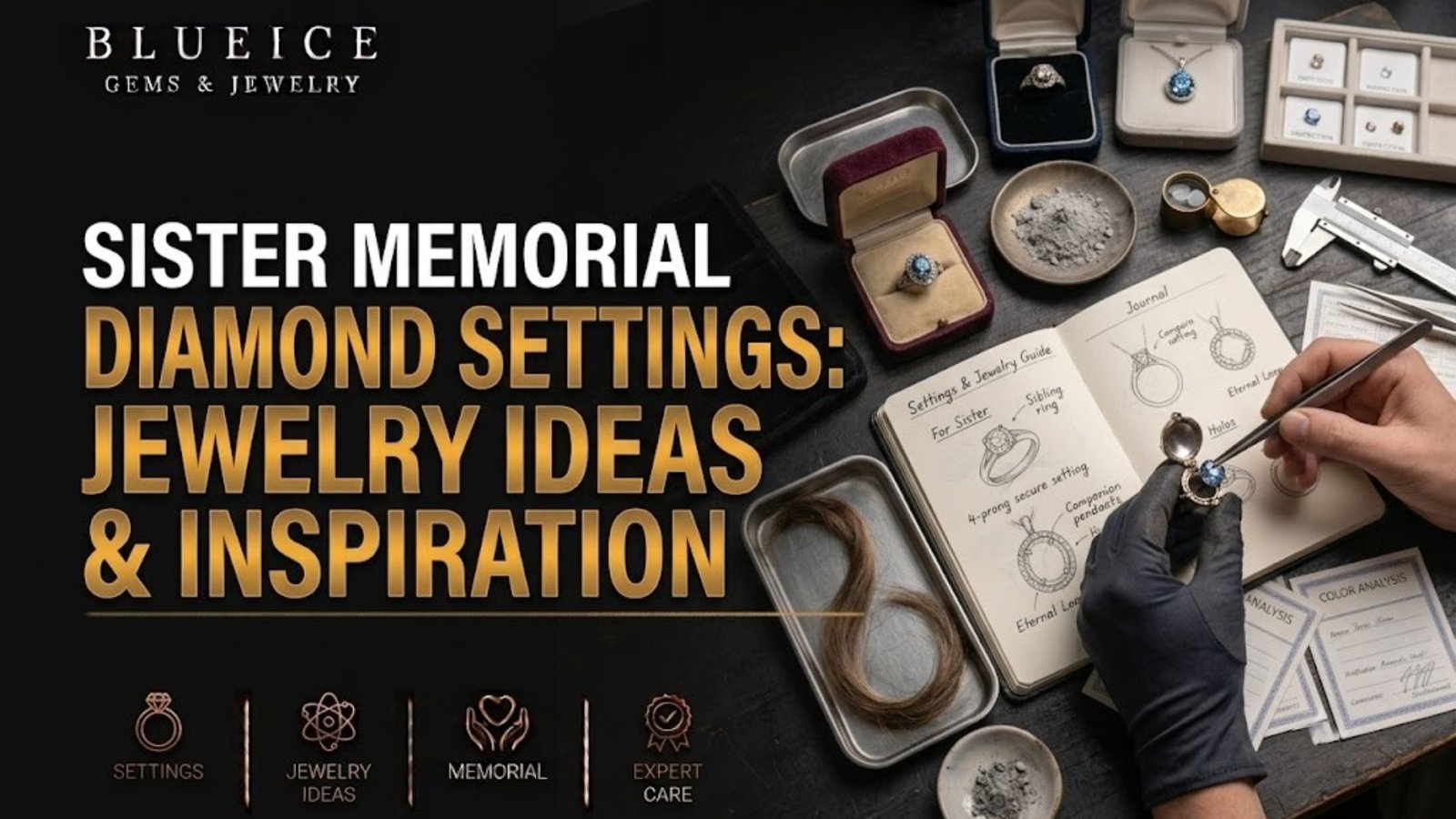
You might already picture the piece she would have worn without a second thought, or you might have no picture at all yet. Sister memorial diamond settings come down to three practical decisions: how the metal holds the stone (bezel, prong, halo, flush or tension), which metal surrounds it, and how often it will be worn. For a small stone worn every day, bezel and flush settings offer more protection; prongs and halos favor sparkle and visibility.
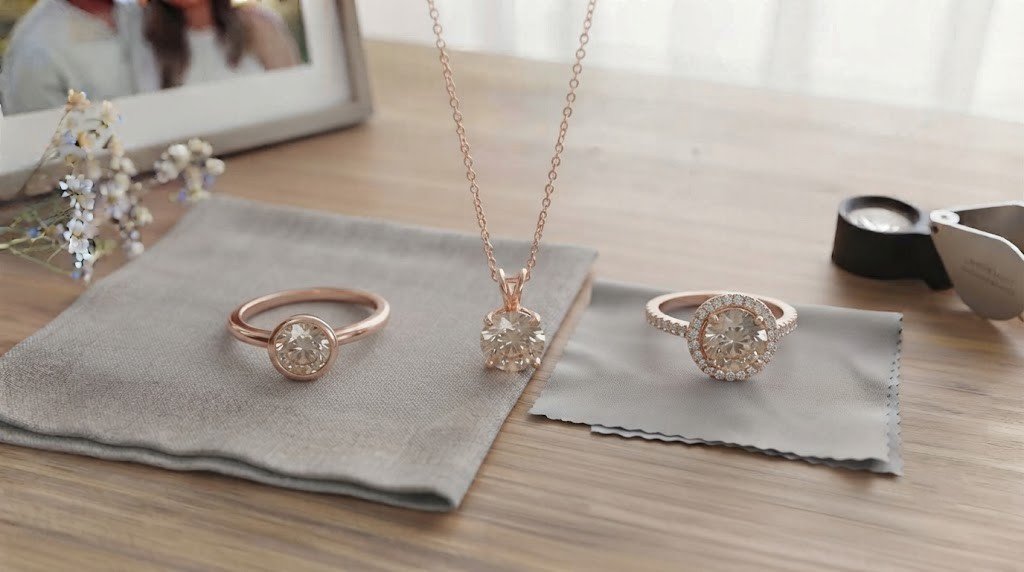
Table of Contents
Which Sister Memorial Diamond Settings Hold a Small Stone Securely?
Before comparing sister memorial diamond settings, it helps to know what a setting actually does. It is the part of a ring, pendant or earring that grips the diamond, and it determines how much of the stone meets light, how much is exposed to knocks, and how easily the piece catches on sweaters, hair or bag straps. These details matter for a memorial stone because replacing it may not be possible in the same personal sense as replacing an ordinary piece of jewelry.
Five styles cover nearly all the sister memorial diamond settings you are likely to encounter:
- Bezel setting: A thin rim of metal wraps around the entire edge of the stone.
- Prong setting: Small metal claws, usually four or six, rise up and hold the stone at several points.
- Halo setting: A ring of smaller accent stones circles the center diamond, which itself sits in prongs or a bezel.
- Flush setting, sometimes called gypsy setting: The stone is sunk into a prepared seat so its top sits level with the surrounding metal surface.
- Tension setting: The band’s pressure holds the stone between two ends of metal without traditional claws.
None of these settings is the right answer for every family. The best of the sister memorial diamond settings for you is the one that matches how you will live with the piece. Someone who wears a ring every day and has busy hands needs different protection from someone who plans to wear a pendant on anniversaries and keep it safely stored the rest of the year.
How Do the Five Sister Memorial Diamond Settings Compare?
The table below compares five common sister memorial diamond settings against the questions jewelers usually hear first. Treat it as the start of a conversation rather than a final verdict. Craftsmanship, metal thickness, stone shape and the quality of the setting can change the result for an individual piece.
| Setting | How It Holds the Stone | Protection From Knocks | Light and Sparkle | Snag Risk | Fit for a 0.10–0.25 Carat Stone |
|---|---|---|---|---|---|
| Bezel | A continuous metal rim surrounds the edge. | High; the edge is covered by metal. | Less light enters from the sides, but the top remains visible. | Very low | A strong option; the rim can make a small stone look larger. |
| Prong | Four or six claws grip the stone at points. | Moderate; the edges and claws remain exposed. | High; light can enter from many angles. | Moderate to high | Good when the prongs are fine and low profile. |
| Halo | Accent stones circle the center stone, which is held separately. | Moderate; the accent stones add their own small risks. | High; the surrounding stones add sparkle. | Moderate | Good for visibility, although the center stone shares attention. |
| Flush | The stone sits level with the metal surface. | Very high; very little sticks out. | Lower; mostly the top of the stone catches light. | Very low | Good for a wider band; it may be less visible on a narrow band. |
| Tension | The band holds the stone between two ends through carefully engineered pressure. | Variable; it depends heavily on precise design and fit. | High; open sides allow light through. | Low to moderate | More challenging; small stones require precise engineering. |
Across these five sister memorial diamond settings, one pattern stands out. Styles that show off a diamond’s light tend to expose more of its edge, while styles that protect the edge may hide some light. The choice involves a trade-off, and only you know which side matters more for her stone.
Which Metals Suit Sister Memorial Diamond Settings Best?
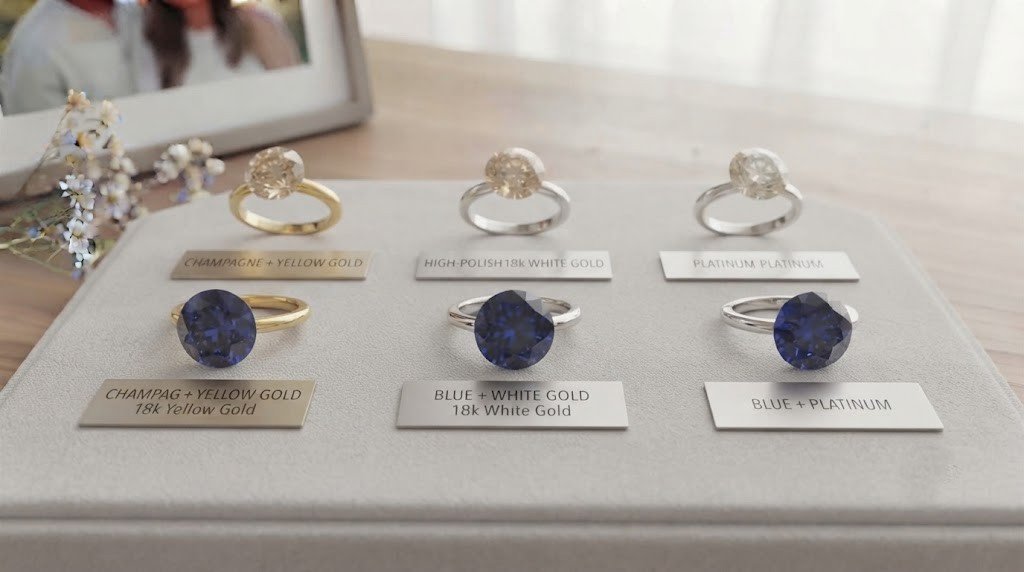
Metal influences sister memorial diamond settings as much as the setting style does because it affects durability, comfort, color and cost. Common choices include platinum, white gold, yellow gold and rose gold, with sterling silver and titanium appearing in some designs.
Platinum is dense and tends to wear slowly, which is one reason jewelers often suggest it for prongs in everyday jewelry. White gold is gold alloyed with whiter metals and is commonly plated with rhodium. That finish may need renewing over time. Yellow gold and rose gold offer warmer tones. Higher-purity gold is softer than lower-purity gold, so ask how the recommended karat will perform with your expected daily wear.
The stone’s color is the other half of the pairing. Memorial diamonds may finish with a yellow, blue or champagne tint rather than a colorless appearance. The final color cannot reliably be determined from the source material alone. Our guide to the colors a sister’s stone can come out explains more about these possibilities, while this section focuses on the metal.
Once the finished color is known, you can choose a metal that complements it. Some people like yellow gold beside a yellow or champagne stone for a warm, unified look. Others prefer a white metal beside a blue stone. Holding the finished diamond against several sample bands is a practical way to see which pairing you prefer.
If you are choosing sister memorial diamond settings before the stone is finished, ask whether the jeweler can wait to confirm the metal until the diamond arrives. A short wait may help you choose a combination you will be happy with for years.
How Should Sister Memorial Diamond Settings Fit a 0.10–0.25 Carat Stone?
Memorial diamonds are offered in a range of sizes, from around 0.10 carats to more than 5 carats in some industry offerings. Smaller stones can be a suitable starting point. Entry-size stones of roughly 0.10–0.25 carats may cost around $1,500–$3,500 as an industry range, with settings, engraving and grading potentially priced separately. These figures are general estimates, not a quote or published price from Memorial Diamond. Confirm current prices and available sizes directly with the provider.
A small stone is no less meaningful, but its size affects how the mount should be designed. When comparing sister memorial diamond settings for a smaller stone, consider the following points:
- Keep the metal proportionate. Heavy prongs or a thick bezel can overwhelm a small stone. Ask about fine, tapered prongs or a thin, polished bezel rim.
- Use the setting to frame, not hide. A slim bezel or delicate halo can help the stone appear more prominent without increasing its carat weight.
- Mind the height. A low-profile mount offers more protection and catches less often on clothing. A taller mount may allow more light in but leaves the stone more exposed.
- Match the band width to the style. Flush settings need enough metal around the stone, so they often suit wider bands. Prongs and bezels can work well on finer bands.
- Think about the cut. Round stones are generally straightforward to set securely at small sizes. Shapes with pointed ends, such as pear or marquise, need suitable protection at those points.
That is why slim bezels and fine halos deserve a close look among sister memorial diamond settings for smaller stones. When thoughtfully designed, a small memorial diamond can look deliberate and refined rather than understated. The setting should complement the stone instead of competing with it.
Will the Piece Be Worn Every Day or Kept for Certain Days?
How often you plan to wear a piece is one of the clearest ways to narrow down sister memorial diamond settings. Diamond ranks 10 on the Mohs scale of mineral hardness, the top of that scale, which means it resists scratching from everyday materials better than any other gemstone. Hardness, however, is not the same as toughness. A sharp blow at the wrong angle, such as a ring striking the edge of a countertop, can still chip a diamond, particularly near a thin edge or pointed tip.
Expected wear should therefore influence your choice:
- Everyday rings: Rings experience frequent impacts. Bezel and flush styles are often more protective options. If you prefer prongs, ask a jeweler whether six prongs and a lower profile would suit the stone.
- Everyday pendants: Pendants generally sit away from many direct knocks, making prong and halo designs practical options to discuss with a jeweler.
- Earrings: Earrings may catch on hair and clothing more often than they experience hard impacts. Bezel-set studs can be a simple, secure choice.
- Occasional jewelry: A piece worn on her birthday, at family gatherings or on other meaningful days can use a more open setting if you are comfortable with its protection needs. It will spend more time stored safely when not worn.
Some families choose two pieces: one sturdy design for everyday wear and another more open, sparkling design for special occasions. Whether more than one stone can be grown from the available material, and who each stone will belong to, are questions worth discussing early. Our article on several relatives receiving a stone from one sister explains considerations around sharing.
Can the Diamond Go Into a Piece of Jewelry She Owned?
Among the many sister memorial diamond settings you could consider, one of the most personal options is a piece she already wore. Her ring, locket or pendant might be reworked to hold the new stone. A skilled bench jeweler can often assess whether this is possible, although the jewelry may need a new setting head, a new bezel or a reworked seat. Older or thin metal may need repair first.
Before taking her jewelry to a workshop, check who currently owns or holds it. Jewelry she owned may form part of her estate, and rules vary by location. The executor or person managing her affairs should agree before the piece is altered. A conversation in advance can prevent a more difficult disagreement later, especially if several relatives feel connected to the same item.
If the original stone is removed to make room for the memorial diamond, decide in advance what should happen to it. It could be reset in another piece, returned to the person who holds the jewelry, or kept with the memorial diamond’s paperwork.
Can Sister Memorial Diamond Settings Be Changed Later?
In most cases, a memorial diamond can be removed from one setting and reset into another, just like other diamonds. That means your first choice does not necessarily have to be permanent. A pendant chosen today might become a ring for another family member decades from now, depending on the design and the stone.
Some sister memorial diamond settings are easier to change than others. Prong mounts are often relatively straightforward for a qualified jeweler to open and close. Bezels may be carefully worked to release the stone. Flush settings involve metal shaped around the stone and can require more care. Tension bands depend on precise fit and engineering, so a stone from one design may not fit another.
If you decide to reset the diamond, follow three practical steps:
- Ask the jeweler how the stone will be documented and tracked while it is outside the setting. Ask whether you can be present during the process.
- Keep the provider’s origin certificate and any grading report with the stone’s records rather than relying on the old mount to identify it.
- Ask for the stone to be examined under magnification before and after the work so any existing marks or damage can be recorded.
What Can Be Engraved, and Where Does It Go?
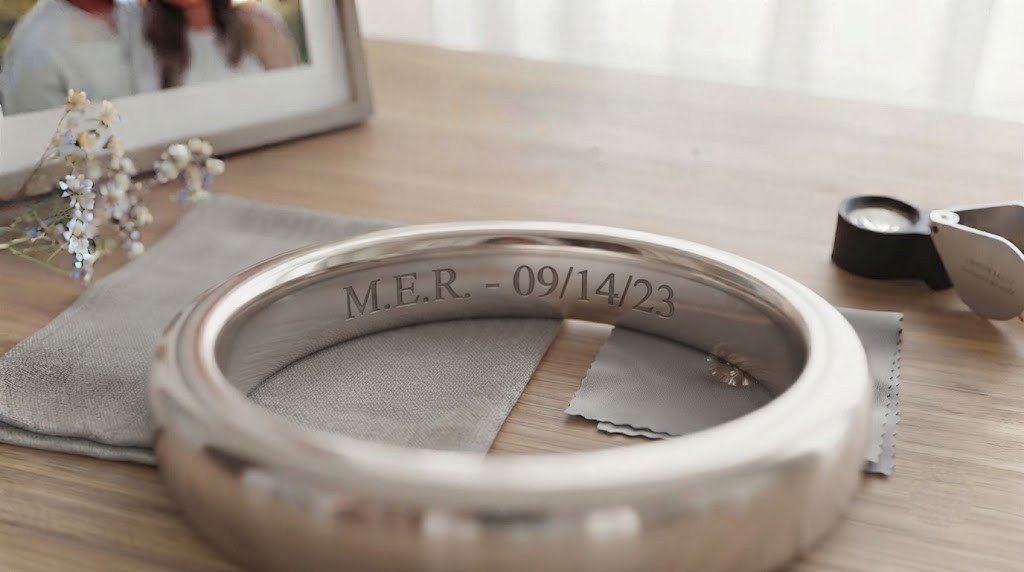
Engraving can be added to many sister memorial diamond settings, but the available space depends on the design. Common locations include the inside of a ring band, the back of a pendant, the area beneath a bezel cup, and the inner face of a locket. These surfaces can be small and curved, so the setting influences how many characters will remain readable.
Hand engraving and laser engraving create different appearances, and some fonts remain easier to read as metal wears. Ask to see a sample at its actual size before committing. Some providers may also offer a small laser inscription, such as a reference number, on the diamond’s girdle. Whether that service is available and what it costs are questions to ask the provider rather than assume.
A thoughtful engraving can complement a quiet design. For example, a plain, sturdy bezel ring with her initials inside can feel personal without drawing attention from strangers. That may be the right choice for someone who prefers to keep the meaning of the jewelry private.
What Should You Ask a Jeweler and an Insurer First?
A good jeweler should welcome questions, and a memorial stone deserves careful handling. Bring this checklist to any consultation about sister memorial diamond settings:
- Have you set memorial or lab-grown diamonds before, and can I see examples of your work?
- Which setting would you suggest for a stone of this size and shape, considering how it will be worn?
- How will you identify, hold and track the stone while it is in your workshop?
- Who is responsible if the stone is damaged during the setting process?
- What maintenance do you recommend, and how often should prongs or the bezel be checked?
- Can the piece be resized or reset later, and what risks would that involve?
Insurance is a separate conversation. A memorial diamond may have a market value, but its personal meaning cannot be replaced. Policies differ, so ask your insurer whether a memorial stone can be listed on a policy or rider, what type of appraisal is required, and whether the jewelry setting and stone are assessed together or separately.
Ask how a loss or chip would be handled, too. An independent grading report that references GIA’s diamond quality factors may be optional and priced separately, but an appraiser or insurer could ask for documentation. A licensed insurance agent can explain the terms and limits of your particular policy.
When Should You Start Planning the Setting?
Growing a memorial diamond typically takes around 6–10 months after a provider receives the material, with some stones taking up to about 12 months, particularly larger stones or specialty colors. These are general industry timelines rather than a guaranteed Memorial Diamond turnaround. Ask your chosen provider for its current schedule and process.
This timeline gives you room to plan without rushing. It can make sense to narrow down your preferred sister memorial diamond settings early and finalize specific details later.
At the beginning, decide on the form, such as a ring, pendant, earrings or another keepsake, along with the broad setting style and budget. Once the finished stone arrives with its exact color, shape and measurements, the jeweler can confirm the metal, seat dimensions and engraving options. To understand the stages involved, read the timeline for a sister’s memorial diamond.
If you are still weighing jewelry styles, our guide to ideas for rings, pendants and keepsakes made with her stone explores more options. If you have not yet chosen a provider, begin with where to begin when choosing a memorial diamond for your sister. For a broader look at size and budget, read what a sister memorial diamond typically costs.
Whatever you choose, sister memorial diamond settings are not a test with one correct answer. They are a way of deciding how close to keep her stone and how you want to carry it.
Frequently Asked Questions
Can a local jeweler set a memorial diamond that was grown by a different company?
Usually, yes. A memorial diamond is a real diamond, so an experienced bench jeweler can assess and set it. Bring the origin certificate, ask how the stone will be tracked in the workshop, and confirm who is responsible if anything goes wrong during setting.
Does a lab-grown memorial diamond need a different kind of setting from a mined one?
No. A memorial diamond is a real diamond, so a jeweler can use setting styles suitable for other diamonds. What differs for many families is the personal importance of the stone and the difficulty of replacing it with another stone that carries the same meaning. That makes protective choices and careful workshop tracking worth discussing.
Can siblings choose different settings for stones grown from her ashes or hair?
Yes. Sister memorial diamond settings can differ from one piece to another. One sibling might prefer a bezel ring, while another chooses a prong pendant. Agreeing in writing who owns each stone before it is grown can help avoid confusion later.
Should the origin certificate stay with the jewelry?
Keep the provider’s origin certificate with the jewelry’s important records, along with any grading report and appraisal. If the stone is reset or passed down, the paperwork should travel with it so the records remain together.
How often should a memorial diamond setting be checked?
There is no single schedule that suits every piece, so ask your jeweler what they recommend for the specific design and how often you wear it. Daily-wear rings may need closer attention than occasional jewelry. Have a piece examined promptly if a prong feels rough, catches on fabric, or the stone appears to move.
Is a bezel too plain for a memorial diamond?
Not at all. Among sister memorial diamond settings, a bezel can be slim, polished, textured or scalloped. It frames a small stone and may make it appear larger. Some people choose it precisely because it feels calm, secure and quietly personal.
Final Thoughts on Choosing a Setting for Her Stone
There is no single correct way to wear a diamond grown in part from the material of someone you love. A plain bezel ring worn every day and a sparkling halo pendant brought out on her birthday can both honor her, just in different ways.
If you weigh protection against light, think honestly about daily wear, and leave room to reset the stone later, the sister memorial diamond settings you choose can fit your life and your preferences. That fit matters more than any trend.
Learn More About Sister Memorial Diamonds
- Sister Memorial Diamond Ideas: Rings, Pendants, and Keepsakes — explore more forms and design directions for her stone.
- Memorial Diamond Colors for a Sister: What to Expect — learn why stones may appear yellow, blue, champagne or colorless.
- Sister Ashes Diamond: The Complete Guide — learn about the process from ashes to a finished stone.
- How to Talk to Family About a Sister Memorial Diamond — consider how to approach relatives who share in the decision.
Talk With Memorial Diamond
If you are thinking about how her stone might be set, or want to talk through which sister memorial diamond settings may suit the way you plan to wear it, visit Memorial Diamond. You can explore the available information and ask questions at whatever pace feels right for you.