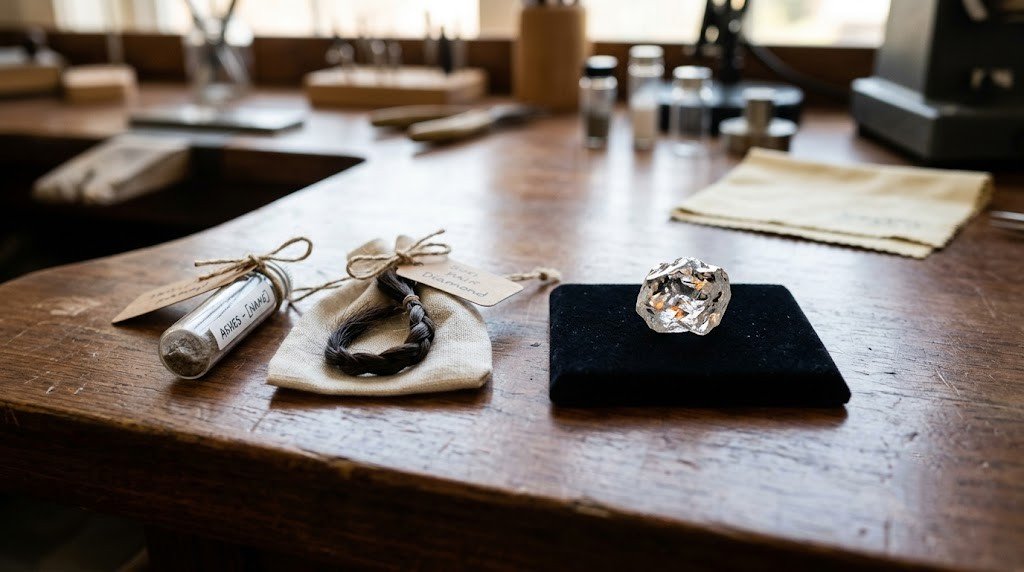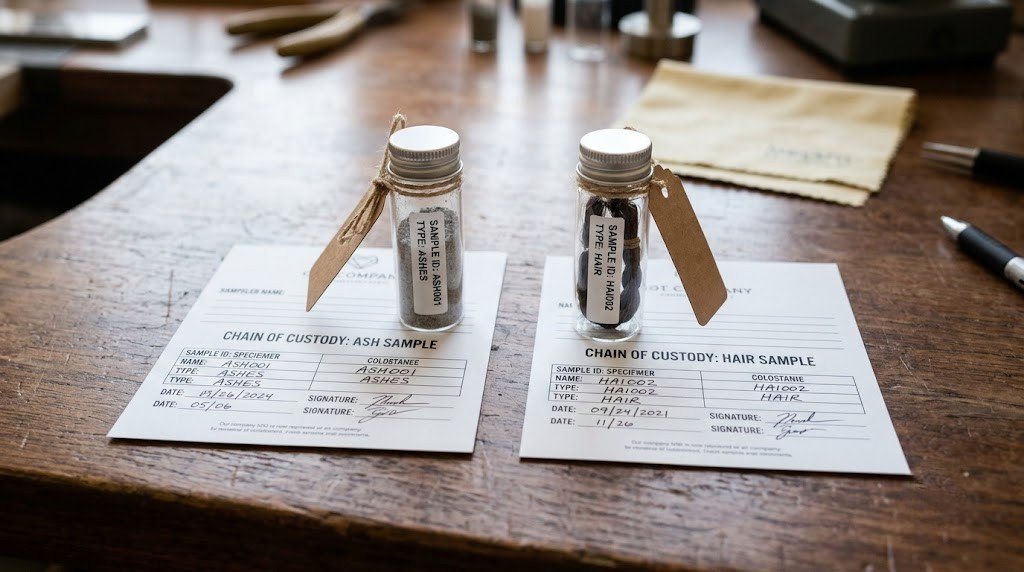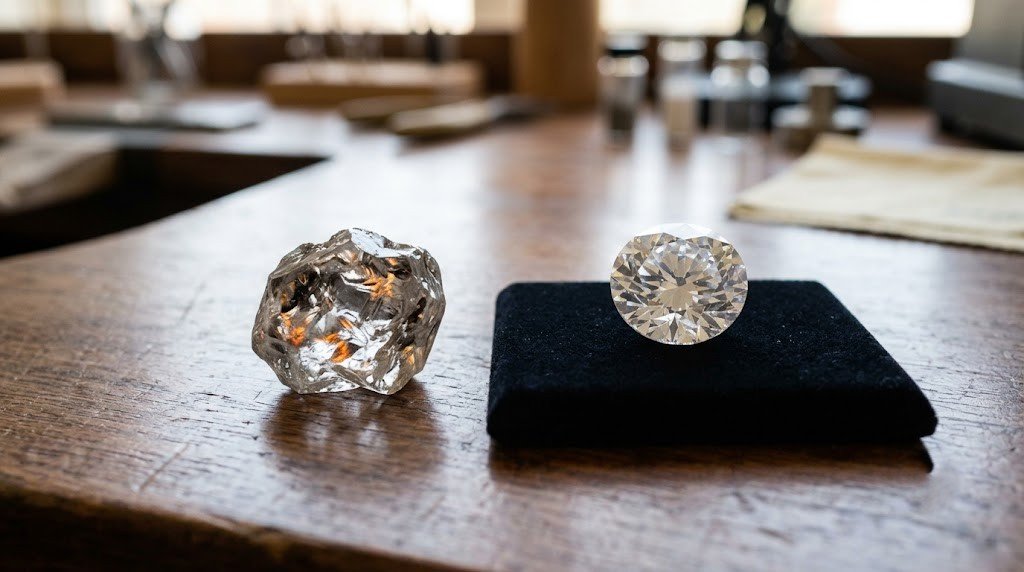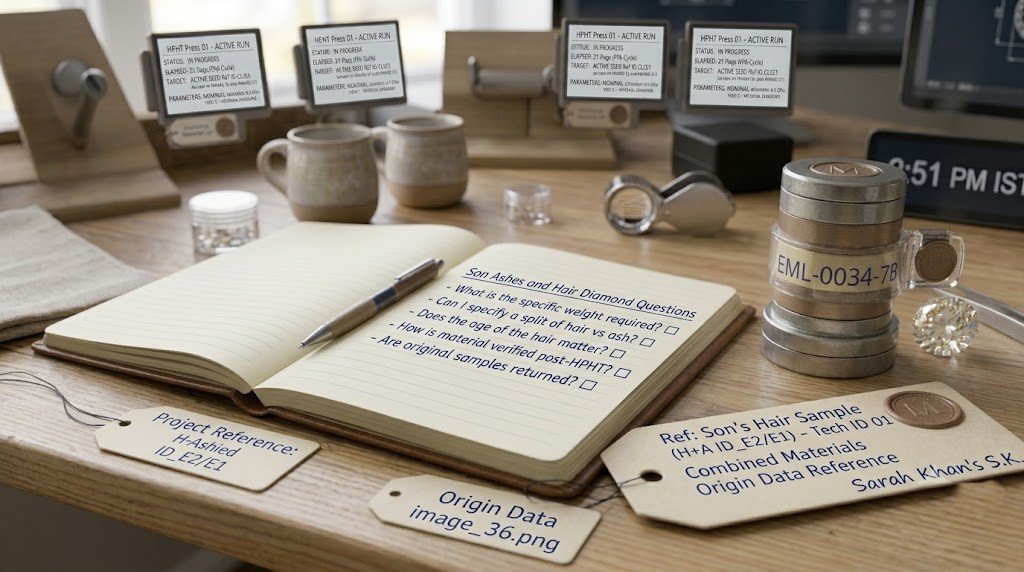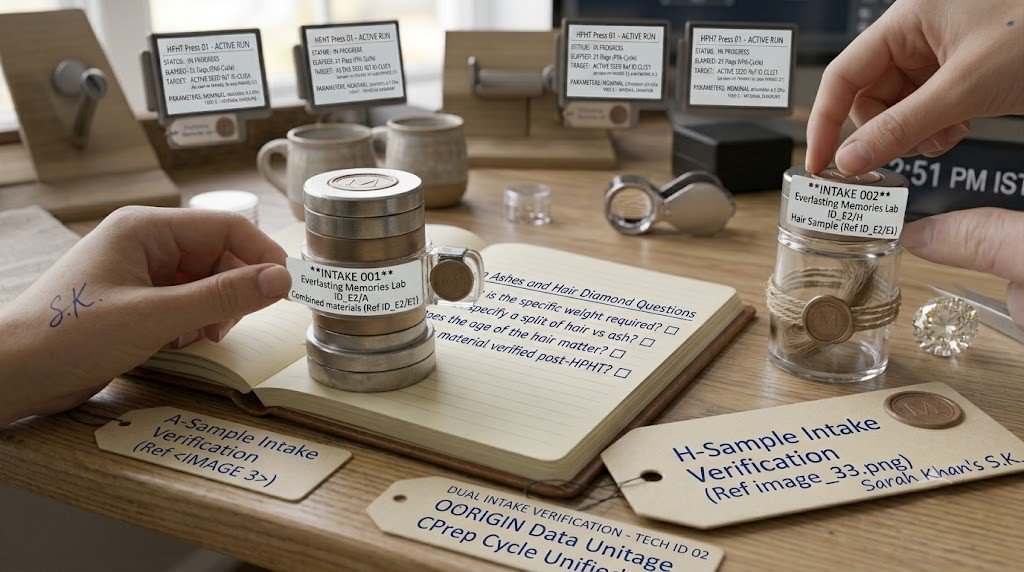
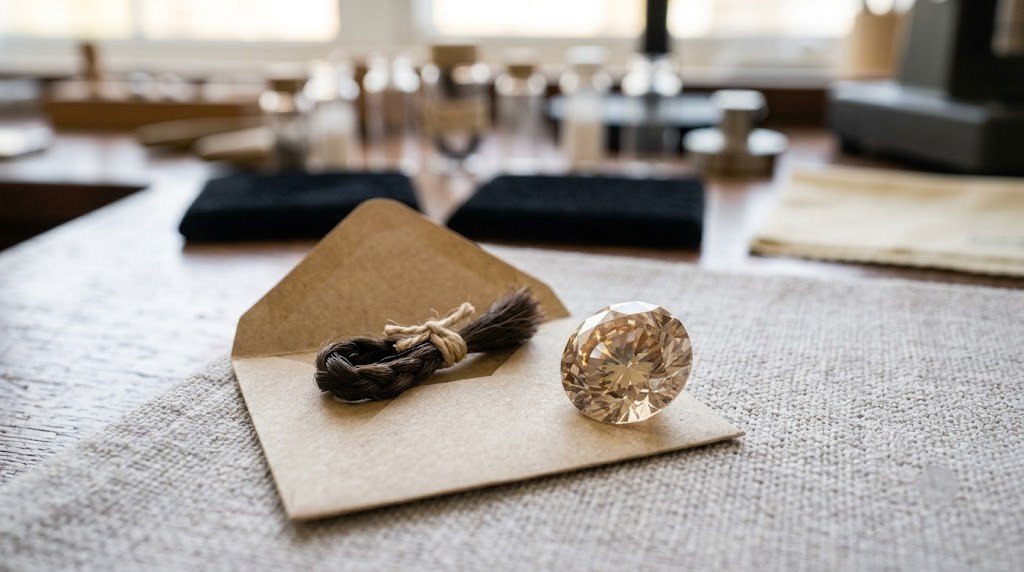
It usually starts with an envelope you already own, a curl from a first haircut, a lock cut in a hospital room, something kept without a plan for it. The son hair diamond steps come to seven: look at the sample, settle whose decision it is, pick a provider, choose the stone, post the lock, wait out the growth, then receive and set it. Six to ten months is the usual industry span.
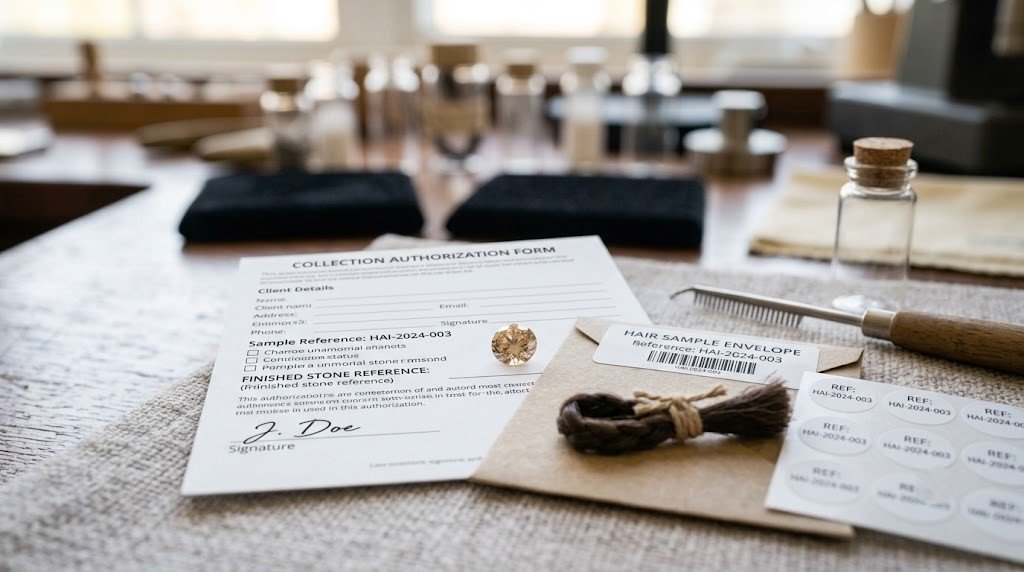
Table of Contents
How Do the Son Hair Diamond Steps Differ From the Ashes Route?
In three ways that matter, and they change the shape of the whole thing rather than just the wording.
The first is that no cremation is involved at any point. A son who was buried, or who died decades ago, or whose remains were never yours to direct, can still be represented in a stone if a lock of his hair exists somewhere. That single fact is why the son hair diamond steps exist as a separate route at all.
The second is quantity. Hair is roughly 50% carbon by weight as a starting material, against the small carbon fraction recoverable from cremated remains, which is why the request is measured in grams rather than ounces.
The third is that the material is usually already in your possession, which means the son hair diamond steps can begin on the afternoon you decide to begin them. Nobody has to open an urn.
| Hair route | Ashes route | |
|---|---|---|
| Cremation required | No | Yes |
| Typical amount requested | A small lock, a few grams | A few tablespoons to roughly 4 oz |
| Where the sample usually sits | A keepsake box, a locket, a baby book | An urn or a funeral home’s keeping |
| Published finished stone carbon share | None published | Roughly 10 to 15%, some providers as low as 3% |
| Typical wait | 6 to 10 months | 6 to 10 months |
The complete guide to a son hair diamond covers the background that sits behind these seven stages.
Step 1: What Do You Actually Have in That Envelope?
Open it, in your own time, and look properly. The son hair diamond steps begin with an honest assessment of the sample, because everything afterwards is sized against it.
Note three things. Roughly how much is there, a pinch, a lock, a full braid? Is it loose strands or a tied bundle, since a tied lock is easier to weigh and handle? And is there anything on it: dye, bleach, styling product, or the residue of a mounting adhesive if it came out of a locket or a memory frame?
Age is rarely the problem parents fear it is, and it delays none of the son hair diamond steps. Hair is chemically stable and keeps for decades in a drawer, which is exactly why baby curls kept in the 1970s are still workable material today.
Loose strands from a brush are a genuine question mark rather than an automatic no. They tend to be fewer and lighter than a cut lock, and whether they meet a given laboratory’s threshold is a question for that laboratory. How much hair is actually needed sets out the quantities in detail.
Step 2: Whose Decision Is It?
Worth thinking through before you commit to any of the son hair diamond steps, even where the answer turns out to be straightforward.
The rules most states write on this subject are aimed at a person’s remains, a statutory order of priority naming who may direct them, with a surviving spouse or registered partner usually high on that list, adult children of his own able to outrank his parents, and everything subject to whatever he set down in writing and to which state you are in. Because that machinery is pointed at the remains themselves, a lock already sitting in your own keeping is usually the more straightforward question in practice.
Usually is doing real work in that sentence. A decedent’s belongings can form part of an estate, how that plays out differs by state, and if the sample is in someone else’s house, a former partner, a grandparent, whoever packed up his apartment, then the first of the son hair diamond steps is a conversation rather than a decision.
Parents also do not always agree about the son hair diamond steps, and one parent arranging this alone is common rather than unusual. Where anything feels unclear, a short call to a local attorney costs less than a family rift.
Step 3: How Do You Pick a Provider and Confirm What It Needs?
By making a company write things down. The son hair diamond steps are only as dependable as the specification behind them, and warmth on a phone call is not a specification.
Four things to get in an email before you begin the later son hair diamond steps: the minimum weight or length of hair required, whether treated or dyed hair is accepted, what documentation will link the finished stone to your sample, and whether any unused hair is returned.
That second one catches people out. Dye, bleach and heavy styling product are worth disclosing rather than hoping nobody notices, and a laboratory’s answer will tell you whether it needs a larger sample to compensate.
Paperwork is lighter here than on the ashes route, since no cremation certificate exists to supply. Expect a signed authorization form, identification for whoever signs it, and the provider’s own intake sheet. Ask what it wants before you assemble anything, because requirements differ and a wasted trip to a notary helps nobody.
It is also fair to ask where growth physically happens, since some companies run their own presses while others work through a partner facility. Neither is automatically better, but you are entitled to know. Questions worth asking before you commit works through a fuller list.
Step 4: How Do You Choose the Stone Itself?
Before anything is posted, because these decisions set both the price and the length of the wait. In the son hair diamond steps this stage comes early for a practical reason: a provider cannot quote you properly until it knows what you want.
Carat first. Sizes on offer typically run from about a tenth of a carat to five carats or more, and size is a function of how long the crystal is grown rather than how much hair you sent. A bigger stone means more months, not a bigger envelope.
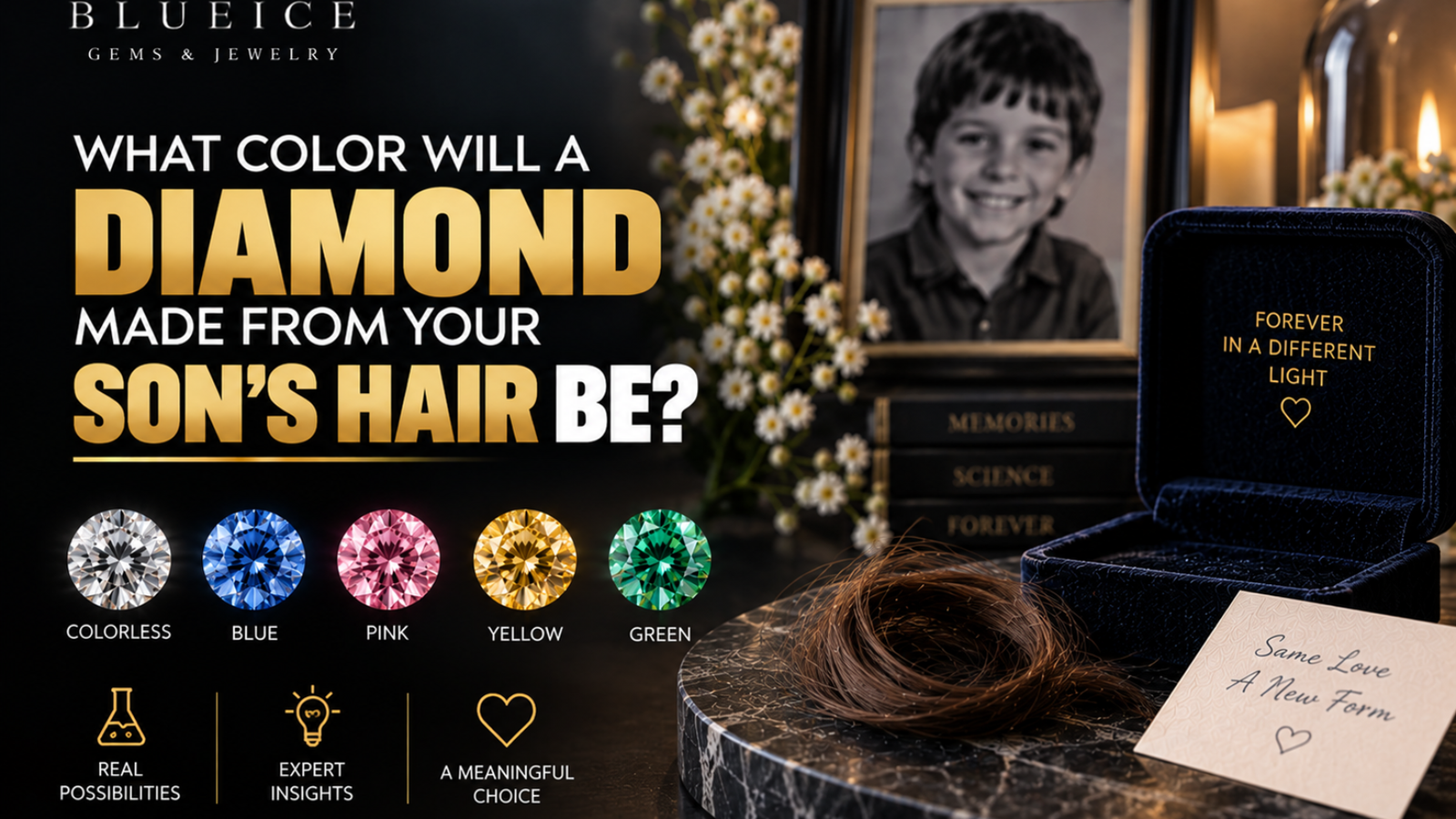
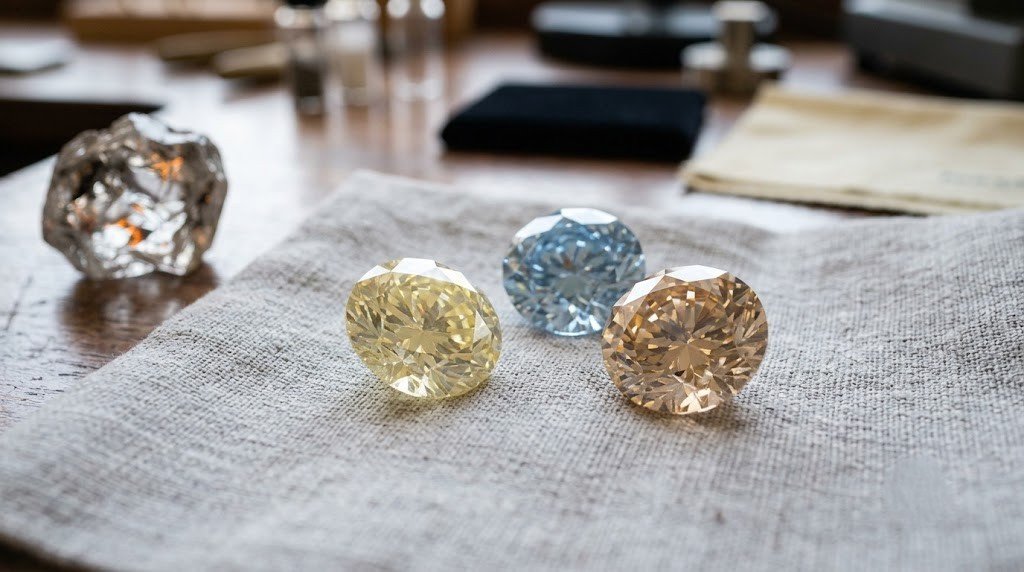
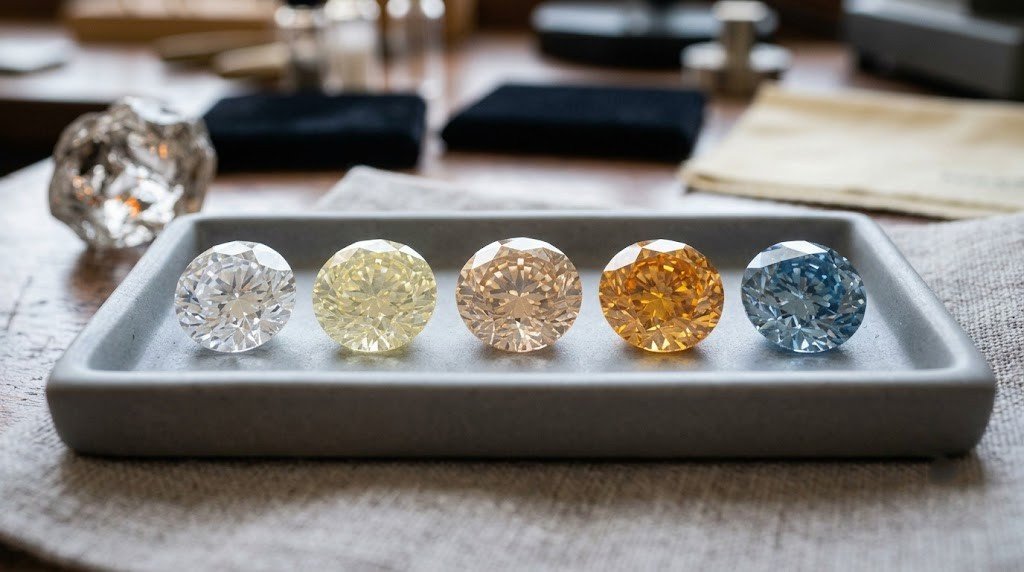
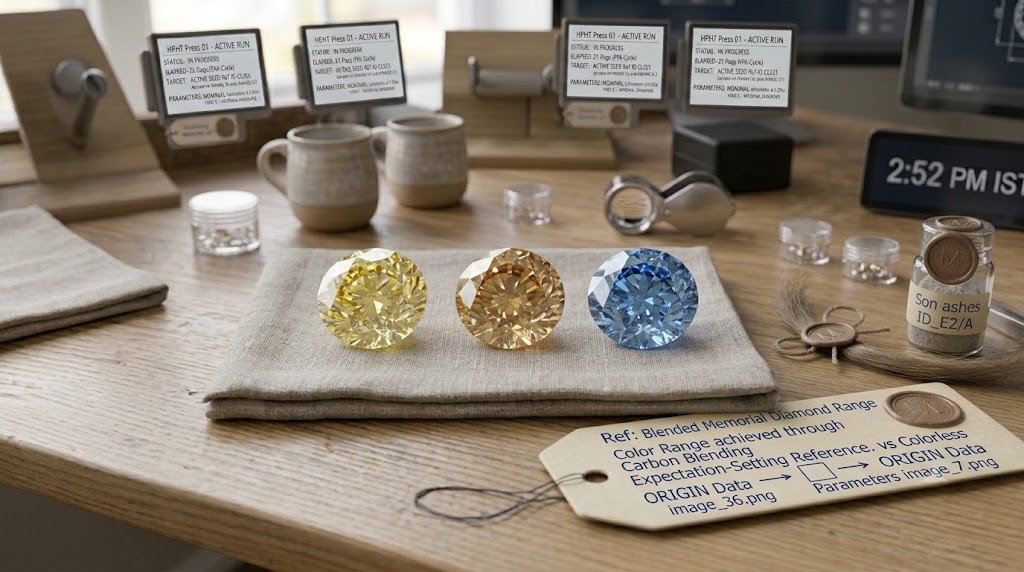
Color next, and it is partly chosen and partly inherited from the material. Nitrogen present during growth pushes a crystal toward yellow, boron toward blue, and a colorless result depends on the near absence of both. Because the carbon here comes from something organic and personal rather than a sterile feedstock, warm tones turn up often. What color a diamond grown from his hair will be covers that honestly, including what nobody can promise.
Cut last. Round, cushion, princess, emerald, the same shapes offered for any diamond, and the one decision in the son hair diamond steps that can sensibly wait until the rough crystal exists.
Step 5: How Do You Send a Lock of Hair Safely?
More simply than families imagine, which is one of the quiet advantages the son hair diamond steps hold over the alternative. There is no urn to open and nothing heavy to package.
Most providers send a small kit: a paper envelope or sachet, a label and a form. Paper is preferred over plastic for anything that might hold moisture. If the lock is loose, tie it at one end with thread before it goes in, so it arrives as a bundle rather than a scatter.
- Tie the lock at one end if it is not already bound.
- Seal it in the paper envelope provided and label it clearly.
- Include the signed authorization form in the same parcel.
- Photograph the sealed envelope before you close the package.
- Send it tracked, and keep the tracking number somewhere findable.
Do not send your only sample into the son hair diamond steps if you can avoid it. Where there is enough hair to divide, keeping a portion back is sensible insurance, and it costs nothing. An acknowledgement of receipt is the formal handover point in the son hair diamond steps, everything before it is yours to manage, everything after belongs to the laboratory.
Step 6: What Is Happening While You Wait?
A sequence of four processes, none of which needs anything from you. This is the longest of the son hair diamond steps by a wide margin and the one families find hardest, because there is genuinely nothing to do.
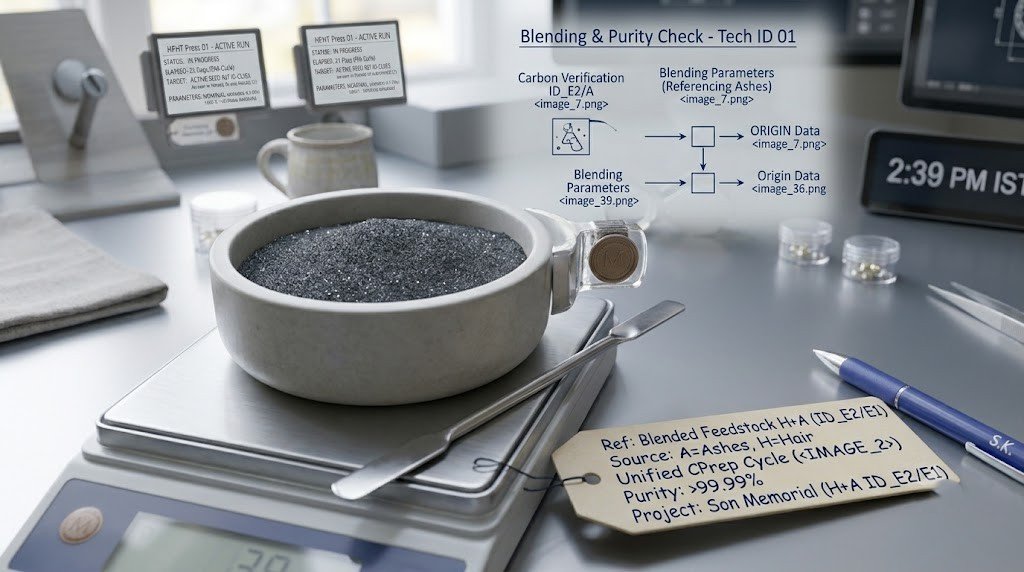
Purification comes first. The hair is heated in a controlled, oxygen free environment that drives off everything in the keratin that is not carbon, leaving purified carbon at roughly 99.9% or better.
Graphitization follows, and it is the hottest part of the son hair diamond steps: that carbon is taken to somewhere around 2,500 to 2,700°C and converted into graphite, the form a growth press can actually use.
Then growth. That purified graphite, topped up with lab sourced carbon until the charge is large enough, sits in a press with a tiny diamond seed under conditions equivalent to the deep mantle, roughly 6 to 8 GPa at somewhere between 1,400 and 2,500°C. Weeks to months later, a rough crystal exists, and it is as hard as any diamond on earth. How his hair becomes a diamond follows that chemistry in more depth.
Step 7: What Arrives, and What Do You Do With It?
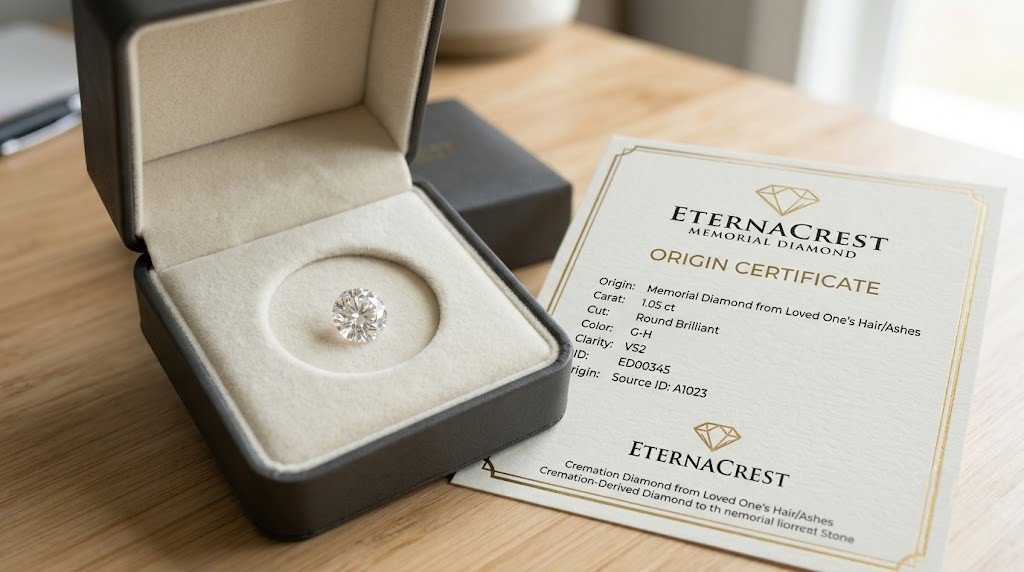
The stone, loose, unless you ordered a setting alongside it, plus an origin document, and a grading report if you asked for one. Independent grading against the four quality factors used for any diamond is offered as an extra across this category rather than included by default.
Two finishing decisions come back to you near the end of the son hair diamond steps, usually shortly before delivery. One is the cut, confirmed against what the rough crystal can actually yield. The other is irradiation, an optional post growth treatment some providers offer to shift or deepen color; plenty of families decline it precisely because the stone’s own color came from him.
Expect the arrival to be a strange hour. Parents respond to it very differently, some want the house empty, some want everyone there, some leave the box closed for a week. There is no correct version of this.
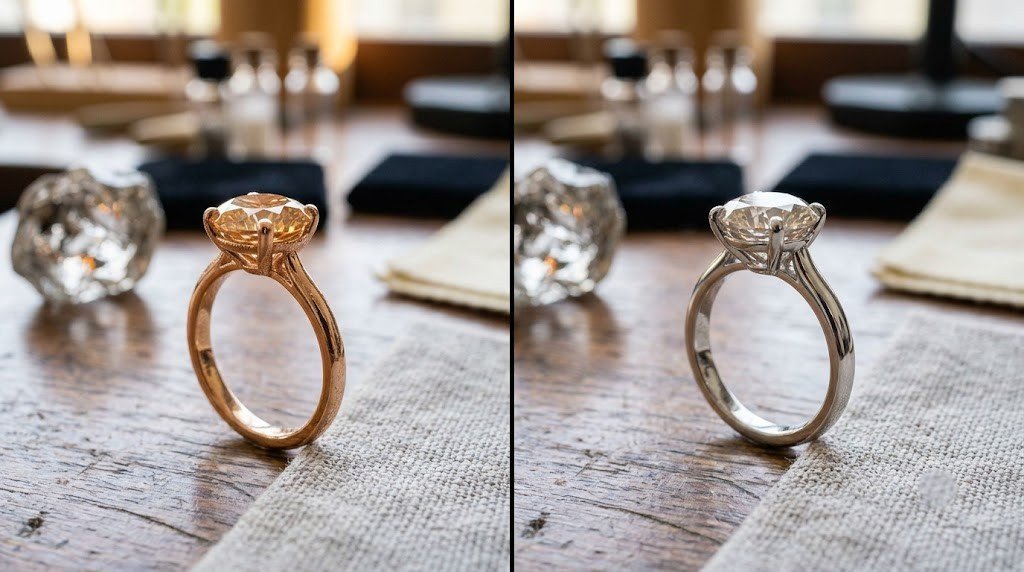
Setting can wait indefinitely. A loose stone does not deteriorate, and the last of the son hair diamond steps has no deadline attached to it. Ideas for rings, pendants and keepsakes is worth reading without any obligation to decide.
What Should You Not Assume About Hair?
One thing above all: that the widely quoted personal carbon percentage applies here. It does not, and this is where the son hair diamond steps are most often misdescribed online.
That figure, personal carbon making up roughly 10 to 15% of a finished stone’s mass, is published for carbon recovered from cremated ashes, and it has no documented bearing on the son hair diamond steps. It is an ash figure. No equivalent published percentage exists for a diamond grown from hair, and nobody should be quoting you one as though it were settled.
Hair being roughly 50% carbon by weight is a separate fact entirely. It describes what enters the son hair diamond steps rather than what leaves them, the raw material before processing, not the composition of the finished crystal, and treating it as a share of the stone is simply wrong.
So if that proportion matters to you, and for many parents it does, ask your provider directly for its own figure for hair grown stones, and ask for the answer in writing. A company that works with this material routinely should be able to tell you. Whether the diamond is genuinely made from his hair examines how that link is documented and verified.
What Do the Son Hair Diamond Steps Cost and How Long Do They Take?
Between six and ten months, typically, is how long the son hair diamond steps run once the laboratory logs your envelope in, stretching toward twelve for larger stones or unusual colors. Nearly all of that is growth time, since the stages you personally handle are measured in hours.
On price, given as general 2026 industry ranges rather than any single company’s published rate:
| Size | Typical industry range |
|---|---|
| Around a tenth to a quarter of a carat | $1,500 to $3,500 |
| Half a carat up to one carat | $5,000 to $15,000 |
| From two carats upward | $20,000 to $75,000 plus |
Colorless costs more than a warm or blue tone at matching weight. Settings, engraving, unusual shapes and optional grading are each quoted apart from the stone.
Nothing in that list changes because you sent a longer lock. Across the son hair diamond steps, the carat you chose at stage four drives both figures. What a son memorial diamond costs breaks the tiers apart in more detail.
Where Do the Son Hair Diamond Steps Go Wrong?
Rarely in the laboratory, and fairly often in the two weeks before anything is sent.
The commonest issue is an undersized sample. A parent sends what they have, it falls below the threshold, and there is no second lock to fall back on. Weighing the sample against a written requirement first removes that risk almost entirely.
The second is undisclosed treatment, which can stall the son hair diamond steps at intake. Dye and bleach are not automatically disqualifying, but a laboratory that learns about them after the fact is in a worse position than one told up front.
The third is a mismatch of expectation rather than process, assuming a colorless stone, or assuming more hair produces more carats. Neither is how the son hair diamond steps behave, and the time to hear it is now rather than in month eight.
Frequently Asked Questions
What share of the finished stone is genuinely his hair?
No published figure exists for hair grown stones, the commonly quoted 10 to 15% applies to carbon recovered from cremated ashes. Ask your provider for its own figure for hair specifically, in writing, rather than accepting a number borrowed from the ash route.
Does it matter that he was buried rather than cremated?
Not at all. The son hair diamond steps require no cremation at any point, which is exactly why this route exists for families who buried their son, or who made that decision long before a diamond was ever considered.
Can hair from a hairbrush be used?
Possibly, though it depends on how much there is and on the individual laboratory’s threshold. Brush strands are usually fewer and lighter than a cut lock. Weigh what you have and ask before sending, rather than posting it hopefully.
Is dyed or bleached hair a problem?
It is not automatically disqualifying, but disclose it at the outset. A laboratory may want a larger sample to compensate, and finding out afterwards is worse for everyone. Mention styling product and adhesive residue from lockets in the same conversation.
Can more than one stone come from one lock?
Sometimes, depending on the weight available and each provider’s threshold. Each stone needs a growth run of its own within the son hair diamond steps, so expect two waits and two invoices. Ask before committing to the first.
Who needs to agree before I send his hair?
Rules on directing remains are aimed at the remains themselves, so a lock you already keep is usually the simpler question in practice. Belongings can fall to an estate and that varies by state, so confirm locally.
Final Thoughts on the Steps of Turning His Hair Into a Diamond
Seven stages, and five of the son hair diamond steps are things you could finish in an afternoon. What makes this feel large is not the process; it is opening the envelope.
The route has one real advantage worth naming plainly. Because no cremation sits anywhere in it, the decision is open to families it would otherwise be closed to, a son who was buried, a son who died long before this was possible, a son whose remains someone else directs.
Get the sample weighed, get the requirement in writing, and the remaining son hair diamond steps are mostly patience. What comes back at the end is a real object with a documented line running straight back to something of his that you kept without quite knowing why.
Learn More About Son Memorial Diamonds
- A son hair diamond explained from beginning to end which covers the full background
- How his hair becomes a diamond which explains the chemistry plainly
- How much hair is actually needed which covers weights, lengths and what to do with a small sample
- Questions worth asking before you commit which provides a fuller provider checklist
- What color a diamond grown from his hair will be which explains what can and cannot be promised
Talk With Memorial Diamond
If you are holding an envelope and would rather ask a person than read another page, that is a fair instinct. Memorial Diamond can be reached at memorialdiamond.us to talk through the son hair diamond steps, what a sample needs to weigh, and what happens at each stage. Asking commits you to nothing.