
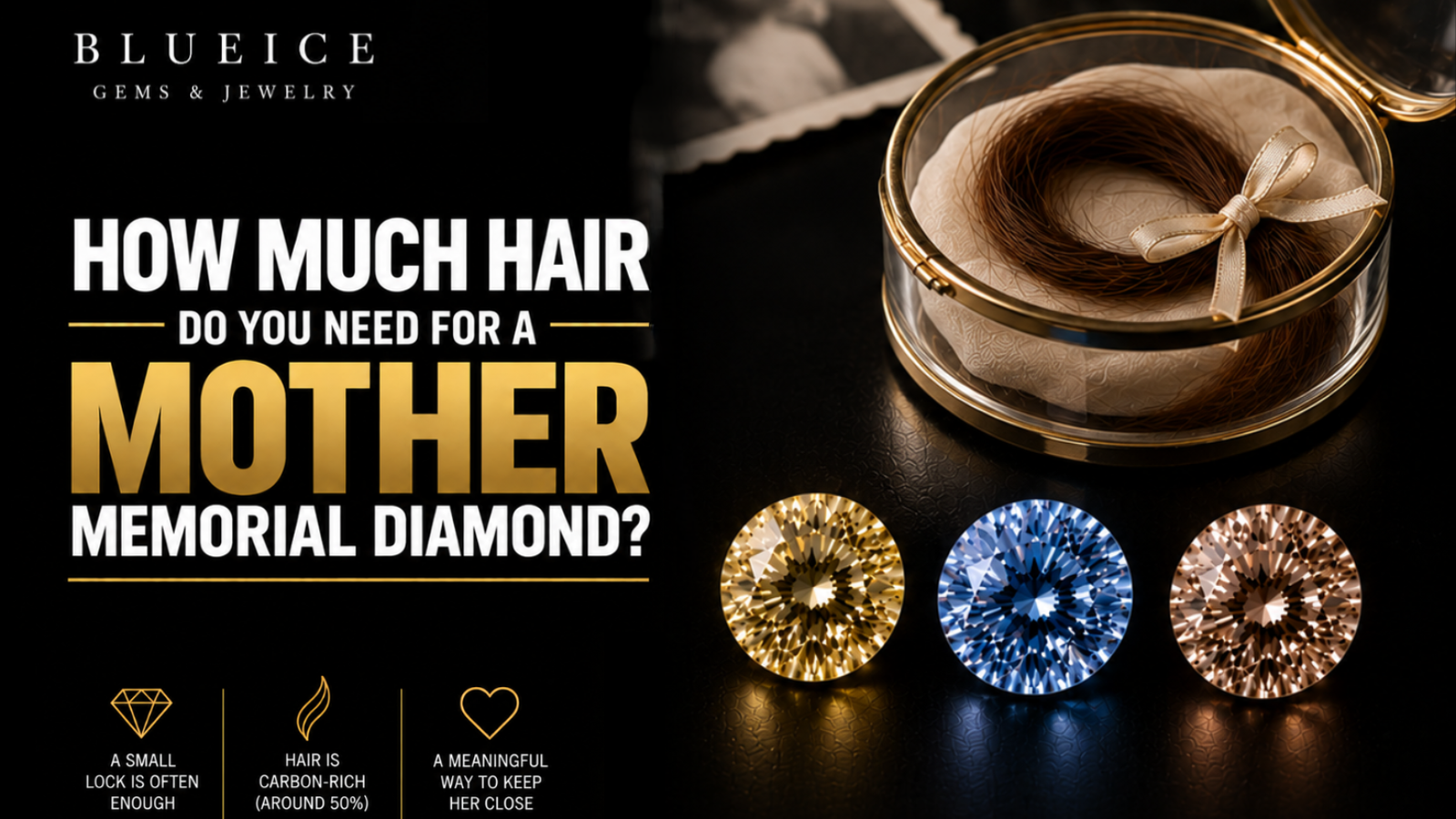
Most people reading this are holding something finite. An envelope from a bedside drawer. A braid tied with ribbon since 1974. A few strands a hospice nurse thought to save. There is no more of it, so the number matters in a way it doesn’t for a family with an urn.
Industry-wide, a memorial diamond grown from hair takes a small lock or a few grams often described as palm-sized, or a few wisps.
That is genuinely all. Hair is roughly 50% carbon by weight, and no cremation is involved at any point, which is why the requirement is measured in grams.
On This Page
- How Little Hair Is Genuinely Enough?
- Why Does Hair Need Far Less?
- How Do You Know if the Lock You Have Is Enough?
- Length or Weight?
- Hair Kept for Years, or Collected During Illness
- FAQ
How Little Hair Is Genuinely Enough?
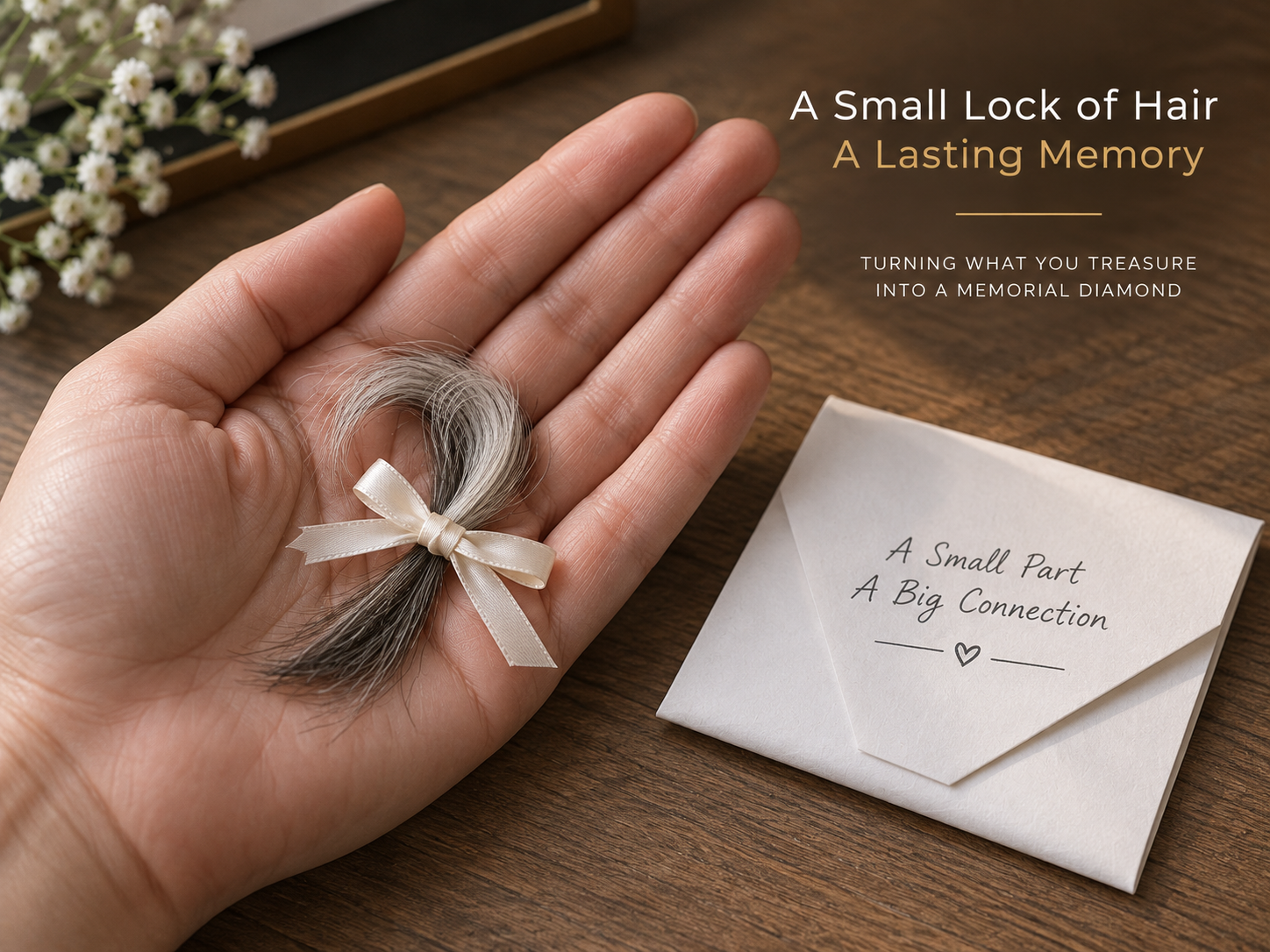
A small lock. A few grams. Something you could close your hand around without effort.
Requirements vary between providers inside that band, so the figure that governs your decision is the one your provider gives you for your specific lock. But the band is small enough that most people who arrive here worried are, in fact, holding enough.
| What’s Being Measured | Industry-Typical Figure | What It Means for the Lock in Your Hand |
|---|---|---|
| Hair a provider asks for | A small lock or a few grams, often described as palm-sized | Grams, not ounces — no urn required, and none exists in most of these cases |
| Carbon content of hair | ~50% by weight | Keratin is a carbon-rich protein, which is why so little goes so far |
| Cremation required | None | Works for a mother who was buried, and for someone still living |
| Purity after extraction | ~99.9%+ carbon | The non-carbon components of keratin are stripped away |
| Carat sizes generally offered | ~0.10 ct to 5+ ct | Chosen when you order, not limited by the size of your lock |
| Growth time to reach that size | ~6–10 months, up to ~12 for large or specialty stones | The only real lever on carat |
One row deserves saying plainly rather than leaving in a table: more hair does not produce a larger diamond. Carat size is a function of weeks spent growing under pressure, and once the cell has enough feedstock to run, additional material changes nothing. A braid does not outrank a lock.
Her carbon is also blended with lab-sourced carbon to reach the volume a growth cell requires. No memorial diamond is 100% the person. If you are considering this process, it is worth understanding whether a memorial diamond is really made from your mother’s hair before you commit to any provider.
Why Does Hair Need Far Less Than Ashes?
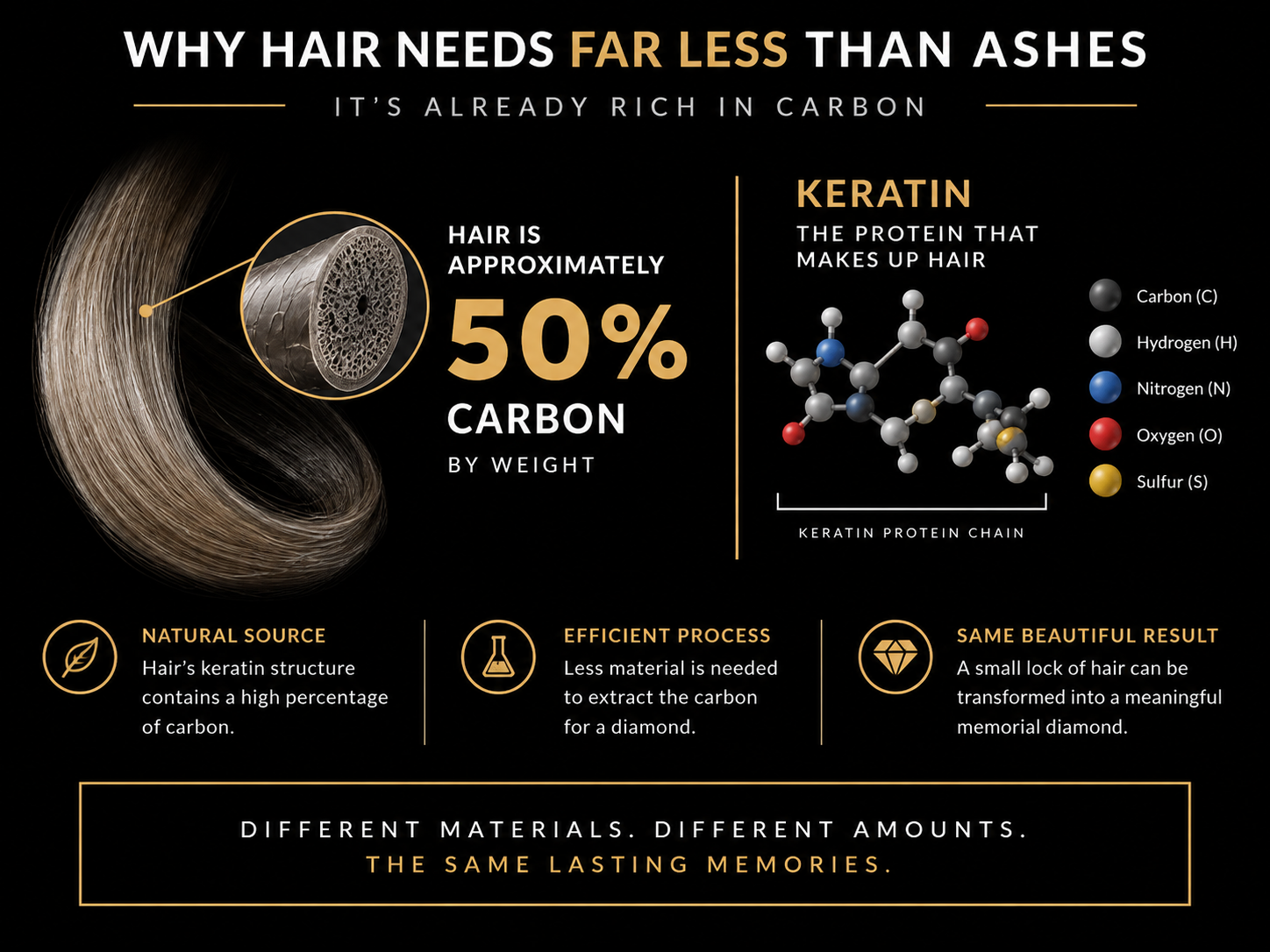
Because of what hair is made of. Hair is built from keratin, a carbon-rich protein, and comes out at roughly 50% carbon by weight. Cremated remains are a small fraction of that, which is why hair is measured in grams and ash in ounces.
It also means hair is the route that stays open when cremation never happened. A mother who was buried, a mother whose ashes were scattered years ago in a place nobody wrote down, or a mother whose remains a family is unwilling to divide for religious reasons — all may still have a hair-based option if a lock exists.
Hair-based options for a loved one who wasn’t cremated covers that ground, while ashes to diamond versus hair to diamond compares the two for anyone who has both.
How Do You Know if the Lock You Have Is Enough?
You ask, and you ask before you do anything to it. Judging a few grams by eye is unreliable in both directions.
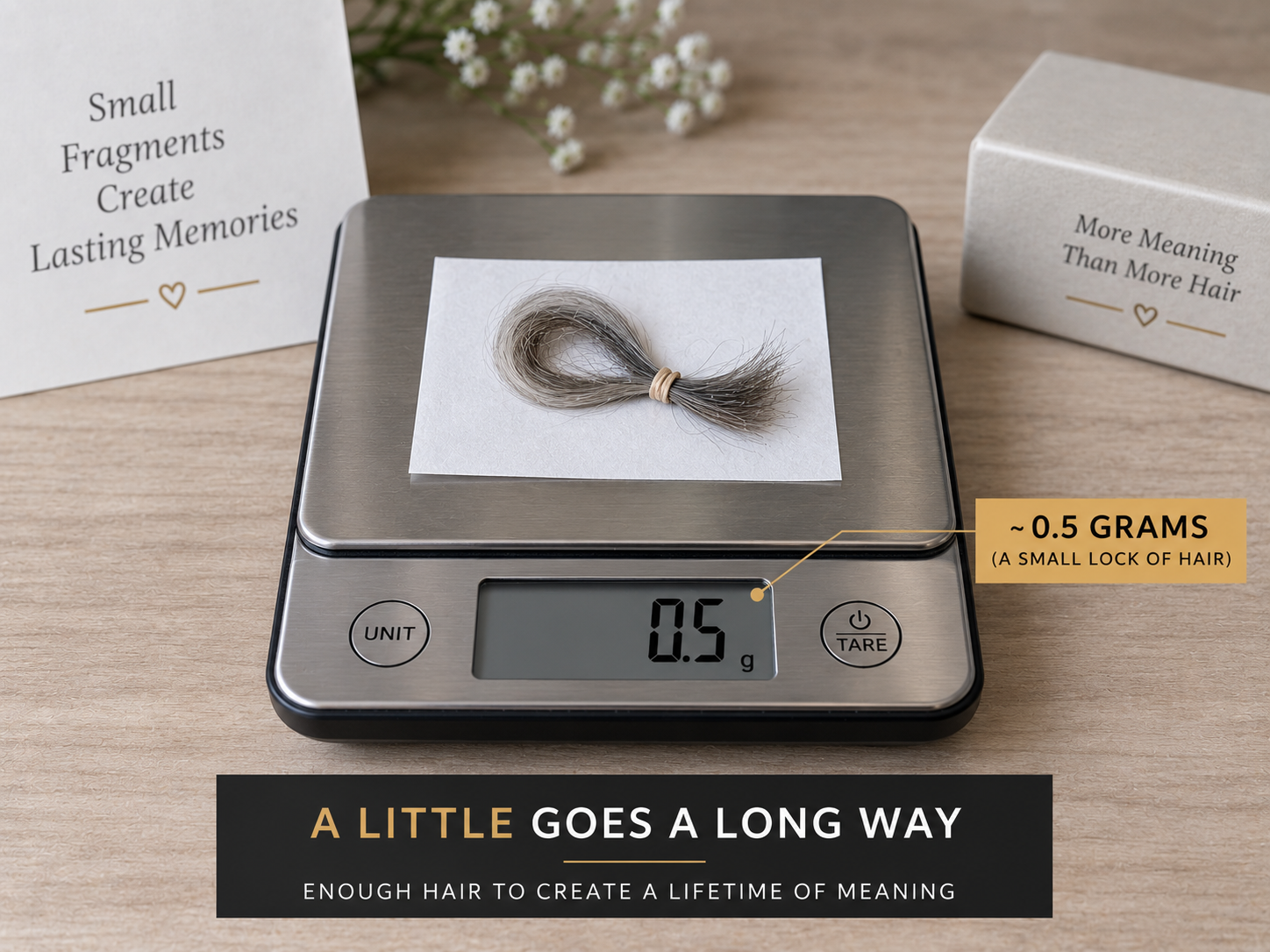
Weigh it if you can. A digital kitchen scale reading to the gram costs very little and turns an anxious guess into a number a provider can answer against. Put the hair on a square of paper, tare the scale, and you have something concrete to put in an email.
Then photograph it beside something ordinary for scale a coin, a pen, or your own hand. A provider looking at a photograph can tell you far more than one reading the phrase “a small amount.”
And then the part that matters most:
- Send it intact. Don’t divide it yourself. Cut the lock into what you think is the right portion and you may end up with two amounts that are each individually short. Let the provider take what they need from the whole.
- Don’t trim, wash or tidy it. Hair needs no preparation, and handling it only risks losing strands.
- Ask before you cut anything new. If more is genuinely needed and a source exists — a hairbrush, a second keepsake, or a hat you want to know before you go looking, not after.
- Ask what happens to hair they don’t use. Confirm the provider’s policy on returning unused material before sending the lock.
- Ask about treated hair specifically. Dyed, bleached, permed, or chemically straightened hair should be discussed with the provider rather than assumed to be accepted or rejected.
If the answer is that you don’t have enough, that is something you can act on and it arrives while the lock is still whole.
Does the Length of the Lock Matter, or the Weight?
Weight is what the process consumes. Length is what you can see, which is why a short lock causes far more worry than it should.
A dense lock of thick hair can weigh more than a long, fine wisp. Someone holding a short piece cut during chemotherapy, or a soft curl from a mother whose hair had thinned in her last year, can easily focus on the wrong dimension. Weighing the material, or simply asking the provider, beats estimating every time.
Carat size has nothing to do with either measurement. Choosing a carat size is a decision about budget, setting, and how you plan to wear it — a 0.25 ct stone and a 2 ct stone can start from the same small lock and differ primarily in how long they grow.
What About Hair That’s Been in a Drawer for Decades?
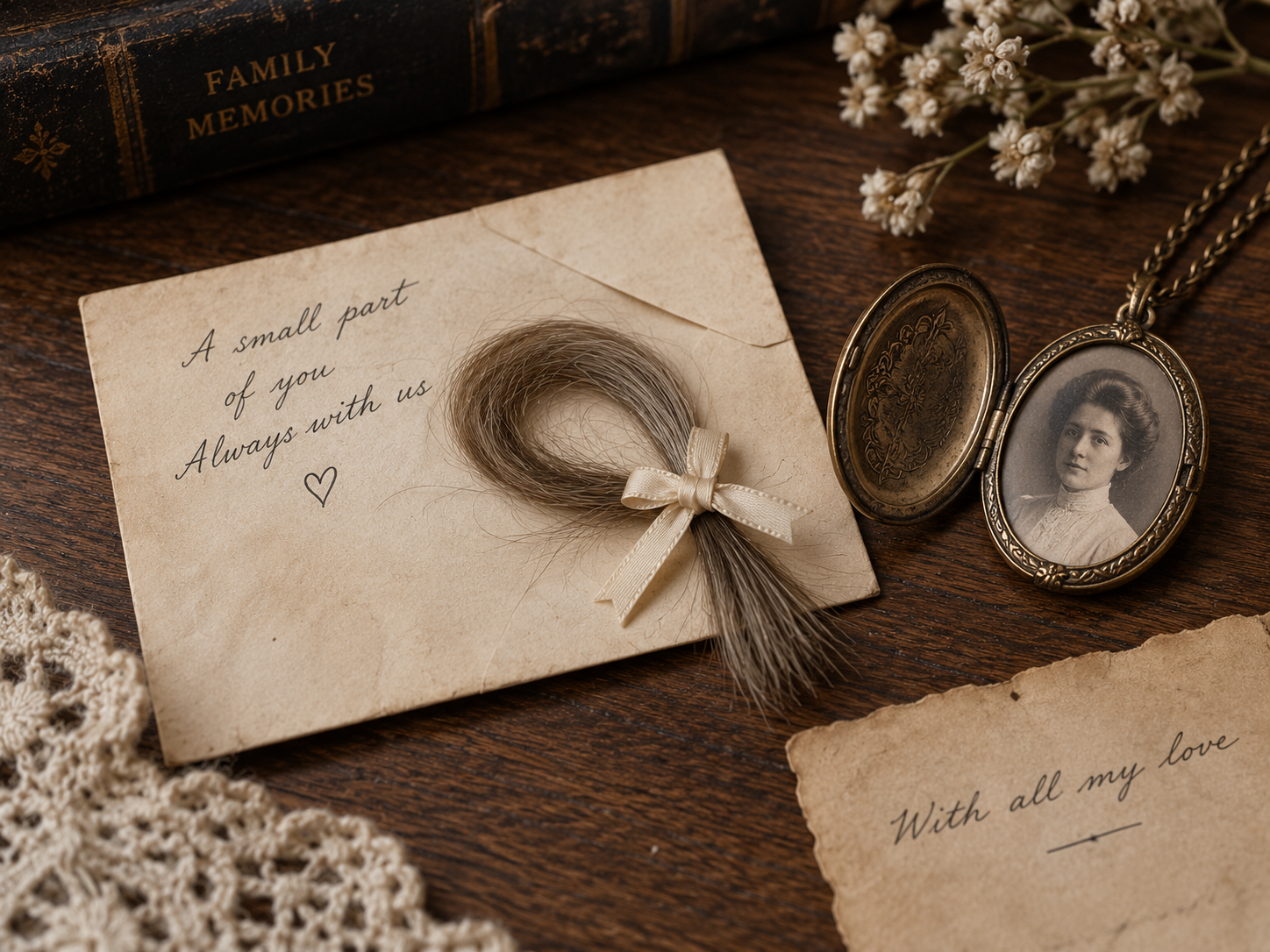
It is usually fine, and that surprises people.
Hair is stable, structural material. Kept dry and out of direct light, a lock from a childhood haircut in the 1960s, a strand saved from a wedding day, or hair collected during a final illness can remain as a keepsake for many years.
For an old keepsake, preserve its provenance carefully. Keep any ribbon, tag, or note that came with it, because that history may be more meaningful to your family than anything else surrounding the material. If the lock has been glued into a memory book or set into mourning jewelry, tell the provider rather than freeing it yourself.
For a mother who is still living, the same general quantity concept applies, and hair can simply be collected with her knowledge. Read what to ask before turning your mother’s hair into a diamond before making arrangements.
Frequently Asked Questions
Is one small lock really enough for a full-carat diamond?
Usually. A provider’s requirement is a threshold rather than a ration once the growth process has what it needs, additional growth time is what allows a larger stone to develop. A 0.25 ct and a 2 ct order can start from the same envelope.
Is there enough usable hair on a hairbrush?
Sometimes, but weigh it before you rely on it. A brush can be a possible source when no cut lock exists, although the amount recoverable varies significantly and providers differ on whether they accept it. Send a photograph and a weight when asking.
Will dyed, bleached or permed hair be accepted?
Ask the provider specifically rather than assuming. Hair treatments can affect how a provider handles submitted material, so getting the provider’s position in writing beforehand is better than discovering the answer at intake.
My mother was buried, not cremated. Can hair still work?
Yes. One of the advantages of a hair-based memorial diamond is that the process does not depend on cremated remains. A lock kept before or after a burial can provide starting material without requiring a family to disturb or exhume remains.
Should I split the lock and keep half?
Send it whole and ask the provider what material they require and what happens to anything unused. Dividing it yourself can create unnecessary uncertainty about whether either portion meets the provider’s requirement.
Does more hair make a bigger or faster diamond?
Neither. Sending a whole braid where a lock would do does not automatically create a larger or faster-grown diamond. Once sufficient material is available for the process, stone size is primarily associated with the selected growth schedule rather than simply sending more hair.
Before You Cut or Divide Anything
The lock in the envelope may be enough, and finding out costs nothing while it is still whole.
Before sending it, weigh the hair if possible, photograph it beside an ordinary object for scale, and ask the provider what quantity is required, what happens to unused material, whether treated hair is accepted, and what documentation or handling process applies.
For a broader overview, read The complete guide to a mother hair diamond or learn how a memorial diamond is made from her hair.