change the side img repeteadly not give same img

Questions to Ask Before Turning Your Sister’s Ashes and Hair Into a Diamond

Your sister’s ashes may rest with one relative while a lock of her hair is kept in a drawer at another person’s home. If you are considering combining both materials into one memorial diamond, there are several decisions to make before anything is sent to a laboratory.

These sister ashes hair diamond questions help you understand who needs to agree, how each material will be handled, how the laboratory combines and documents the sources, and what happens if the process does not go as expected.

A blended memorial diamond can carry special meaning because it brings together two keepsakes connected to your sister. However, it also requires careful communication between the people holding each material and the provider making the stone.

This guide covers 16 important questions, including what to ask yourself, what to ask each relative, and what to ask the provider. It also explains what a clear answer looks like, which warning signs deserve attention, and when two separate stones might be a better option.
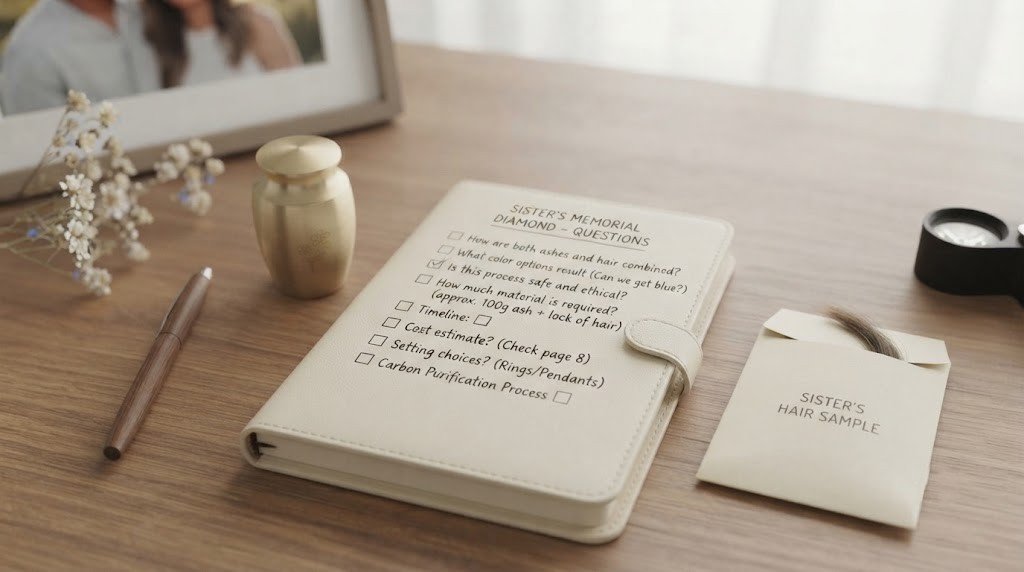
sister ashes hair diamond questions

Table of Contents

Who Has Her Ashes, and Who Has Her Hair?

Before working through the sister ashes hair diamond questions, establish where each material is and who can authorize its use.

There are several possible situations:

  • Both materials are with you. Handling the logistics may be simpler, but you should still establish who has authority over the remains and whether any additional permission is needed.
  • The ashes are with another relative, but the hair is with you. You need to discuss the ashes with the appropriate person and clarify the status of the hair.
  • The hair is with another relative, but the ashes are with you. The person keeping the lock may have strong emotional reasons for wanting to preserve it.
  • Both materials are with different people. You will need to coordinate the permissions, shipping arrangements, and records for both sources.

Possessing an item does not automatically establish legal authority to use it. Rules concerning cremated remains and a deceased person’s belongings vary by jurisdiction. If you are unsure who can authorize the decision, contact the funeral home or crematory, or seek advice from a local attorney where necessary.

For a broader overview, read the complete guide to a sister ashes and hair diamond.

Which Sister Ashes Hair Diamond Questions Should You Answer Yourself?

Before asking relatives or contacting a provider, think about what you want the finished diamond to represent. These first two questions help you decide whether blending both materials is right for you.

1. Why do I want both materials in one stone?

Perhaps you feel that your sister’s ashes and hair represent different parts of her life. Maybe the hair was saved during an ordinary family moment, while the ashes are connected to her final arrangements. Bringing both together may feel meaningful to you.

Other people may prefer to use just one material or preserve each separately. There is no single correct choice.

A clear answer sounds like: “Having both materials represented in one stone is important to me.”

An answer that needs more thought sounds like: “Using more material must make a bigger diamond.”

The amount of material does not automatically determine the finished diamond’s size. Growth conditions and production time are important factors. Ask the provider how it determines carat size.

2. What will the diamond be used for, and what is my budget?

A small pendant, a ring, or a loose stone kept privately may require different specifications. Decide how you expect to use the diamond and how much you can comfortably spend.

Write down your budget before speaking with providers. This makes it easier to compare quotes and avoid feeling pressured into a more expensive option.

A clear answer sounds like: “I want a small pendant stone and have a firm budget that includes the setting.”

An answer that needs more thought sounds like: “I’ll decide the cost after choosing the diamond.”

Your budget should account for possible additional charges such as special colors, independent grading, engraving, jewelry settings, shipping, and insurance.

What Do You Ask the Person Keeping Her Ashes?

The person who holds your sister’s ashes may be emotionally attached to them or may have been entrusted with their care. Ask respectfully and give them time to consider the request.

Legal authority over cremated remains varies by location. If the authorized person is unclear, do not assume that being a sibling or possessing the ashes is enough to make the decision.

3. Will you release a portion of her ashes for a stone made with her hair?

Permission for an ash only memorial diamond does not necessarily mean someone is comfortable with a blended diamond. Explain that the stone would use carbon prepared from both ashes and hair.

A clear answer sounds like: “I understand that the stone will use both materials, and I agree to releasing the agreed portion.”

An answer that needs more discussion sounds like: “I might agree, but I thought the diamond would be made only from ashes.”

Make sure the person understands the proposed process before proceeding. Do not treat uncertainty as consent.

4. How much ash can be spared, and does adding hair change the amount required?

Ask the provider for its exact material requirements before requesting a portion of the ashes. Some providers may request anything from a few tablespoons to around four ounces, but requirements vary and a blended order may have different instructions.

A clear answer includes: A specific amount agreed upon by the relevant person and the provider.

An answer that needs more thought sounds like: “Send whatever the laboratory asks for.”

You should know the required amount before any material is removed. The family can then decide what portion to preserve and what should happen to the remaining ashes.

Read more about how much ash and hair a sister memorial diamond may require.

Which Sister Ashes Hair Diamond Questions Belong With the Person Keeping Her Hair?
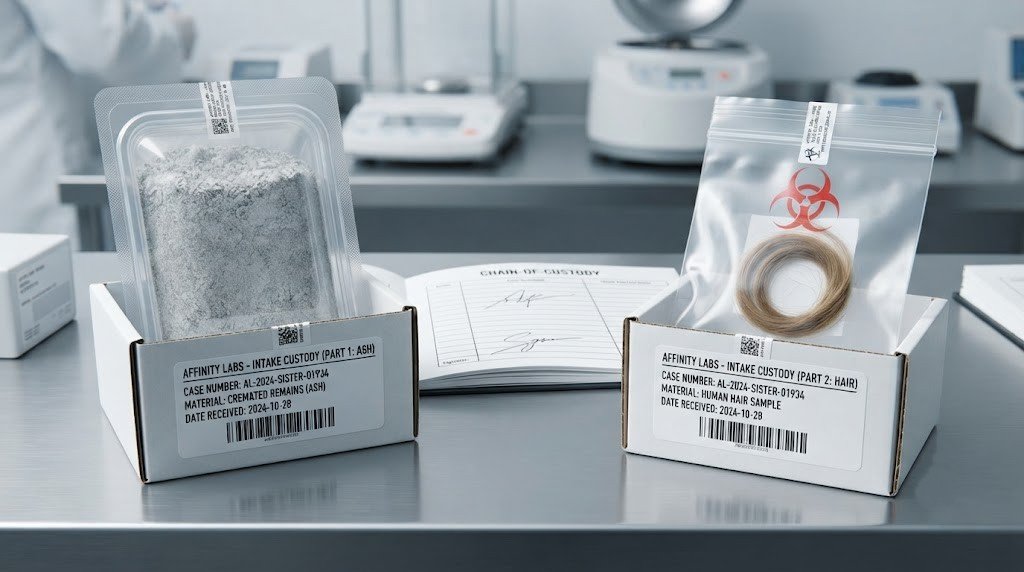
A lock of hair can be an especially personal keepsake. It may have been saved by a parent, partner, sibling, or friend. Respect the person who has cared for it and establish whether the material can be used.

5. Is this hair definitely hers, and are you comfortable sharing a portion?

A labeled lock saved specifically for your sister is easier to identify than strands collected from a shared hairbrush. If the source is uncertain, explain that before sending it to the provider.

A clear answer sounds like: “I know this is her hair, and I’m comfortable sending a small portion while keeping the rest.”

An answer that needs more thought sounds like: “I think it’s hers, so take all of it.”

Ask whether a small portion is sufficient for the provider’s process. Avoid sending an entire keepsake unless it is necessary and the person responsible for it agrees.

If ownership or authority over the hair is unclear, seek appropriate advice before using it.

6. Do both material holders understand and agree to the same plan?

This question is essential when the ashes and hair are kept by different people.

One relative might believe they are contributing to an ash only diamond, while another may assume the hair will be used separately. Such misunderstandings can cause distress later.

A clear answer includes: Both people understand that the finished stone is intended to use the ashes and hair, and both agree to the arrangement.

An answer that needs more thought sounds like: “They each agreed, so there is no need to tell them about the other material.”

Keep the arrangement transparent. If the diamond will belong to more than one relative, discuss ownership and responsibilities before placing the order.

Our guide to sharing a sister memorial diamond among family members explores how relatives can approach shared decisions.

Which Sister Ashes Hair Diamond Questions Go to the Provider?

Once you have clarified the family arrangements, ask the provider how it will process, track, and document both sources. The following ten questions can help you compare companies and understand the terms before committing.

7. Do you combine ashes and hair in one stone, and how?

Not every memorial diamond provider offers blended stones. Those that do may use different procedures.

Ask whether the ashes and hair are processed separately before their carbon is combined, or whether the provider follows another method.

A clear answer includes: A written explanation of the process and the stage at which the two materials are combined.

A warning sign: The company cannot explain its method beyond saying that both materials will be used.

You do not need to understand every laboratory detail, but you should receive an understandable description of the process.

Read how a memorial diamond is made from your sister’s ashes and hair for additional background.

8. How will each material be identified and tracked if the packages arrive separately?

The ashes and hair may be shipped from different addresses and arrive on different days. Ask how each package will be recorded and connected to the same order.

A clear answer includes: An explanation of the identification system, confirmation of each arrival, and a process for tracking both materials through the relevant stages.

A warning sign: The provider says it will match everything up later but cannot explain how it records the two packages.

Keep shipping receipts and confirmations. Ask when the production timeline begins and whether it starts only after both materials have arrived.

9. Will her materials be processed separately from other families’ materials?

Labeling and physical separation are not necessarily the same thing. Ask how the provider prevents mix ups and whether the ashes and hair are processed in dedicated runs or handled alongside other customers’ materials.

A clear answer includes: A specific description of the company’s handling and separation procedures.

A warning sign: The response only says that the company is organized without explaining how materials are identified during processing.

Do not assume that every provider uses the same procedures. Ask for the actual policy that applies to your order.

10. What share of the finished stone will be carbon from her ashes and hair?

This is a particularly important question because the carbon content of ashes and hair can differ significantly.

Cremated remains are largely mineral material, while hair contains carbon as part of its organic structure. The amount of usable carbon recovered depends on the source material and the laboratory’s processing method.

Providers may also use supplemental laboratory carbon to provide enough feedstock for diamond growth.

Some industry discussions cite an ash derived carbon contribution of around 10 to 15 percent for ash only stones, while some providers cite lower figures. Those estimates should not automatically be applied to a diamond made from both ashes and hair. There is no universal, established percentage for the contribution from each source in a blended stone.

A clear answer includes: An explanation of what the provider can measure, what it estimates, whether supplemental carbon is used, and whether it can provide a written statement.

A warning sign: The company claims that adding hair makes the finished stone entirely your sister’s carbon without explaining or substantiating the claim.

Ask for transparency rather than an unsupported exact percentage.

11. Will the color come from growth or treatment, and will you disclose it?

Diamond color can be influenced by trace elements and the growth process. Nitrogen can contribute to yellow coloration, boron can produce blue coloration, and controlling impurities can be important when aiming for a colorless stone.

Some providers also offer post growth treatments for selected colors. Availability and methods vary.

A clear answer includes: The colors the provider offers, which results come from growth, which require treatment, and how any treatment will be documented.

A warning sign: The provider promises that combining ashes and hair will produce a special or predictable shade without explaining its basis.

The source materials do not let you reliably predict the finished color. Ask about the actual options available for your order and review any relevant documentation.

12. Will the origin certificate name both sources, and is independent grading included?

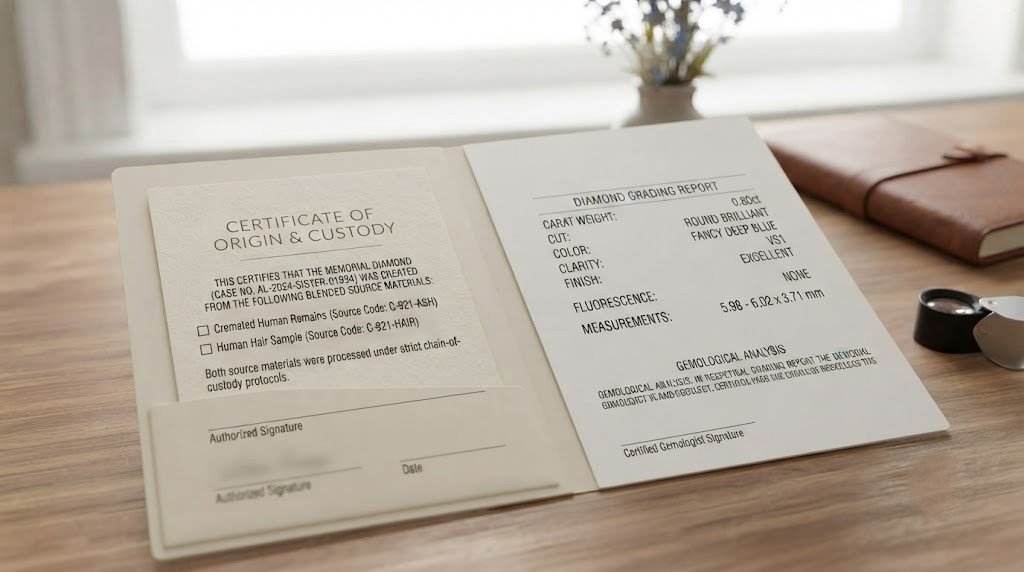
An origin or authenticity certificate issued by a provider may document its claimed connection between the submitted material and the finished diamond. Ask whether it will explicitly identify both ashes and hair.

Independent grading serves a different purpose. A grading report assesses characteristics of the diamond, such as cut, color, clarity, and carat weight.

You can learn more about the four Cs of diamond quality from GIA.

A clear answer includes: A sample of the provider’s origin documentation, confirmation that both materials can be recorded, and the name and fee of any independent grading service.

A warning sign: The company says its certificate proves everything but cannot explain what the document actually verifies.

Before ordering, understand the distinction between the provider’s origin claim and an independent assessment of the diamond.

13. What happens if growth fails or the stone fractures during cutting?

Diamond is extremely hard, but a diamond crystal can still fracture. A growth run may also fail to produce a usable stone.

With a blended order, you should ask what happens to any remaining prepared carbon from both materials.
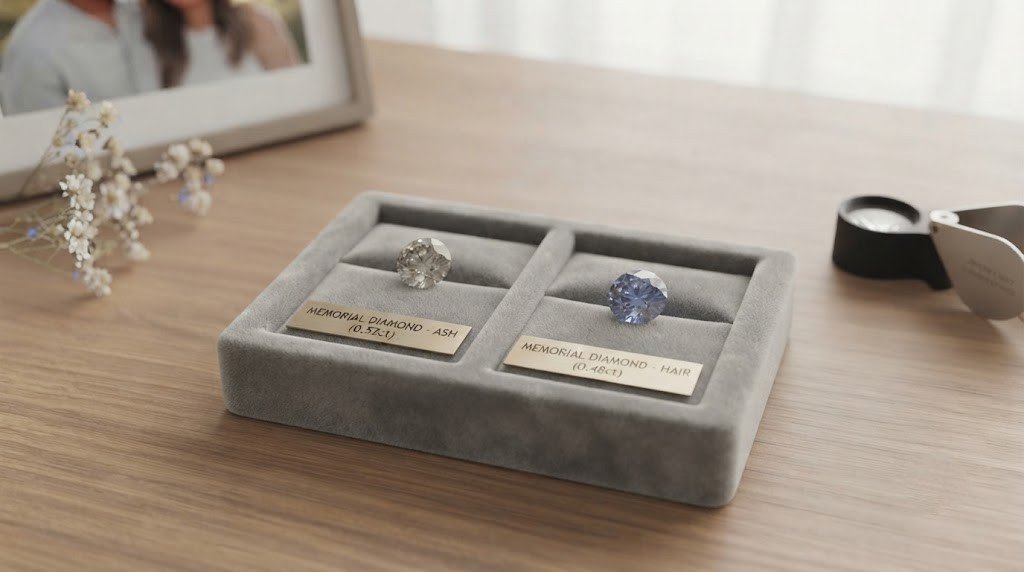
A clear answer includes: A written policy covering unsuccessful growth, damage during cutting, possible regrowth, additional fees, reserved carbon, and changes to the timeline.

A warning sign: The provider dismisses the question without explaining its actual policy.

You are not expecting the provider to guarantee that every process will succeed. You are asking how it handles a problem if one occurs.

14. What happens to unused ashes and hair, and can they be returned separately?

If different relatives contributed the materials, they may want any unused portions returned to different people.

A clear answer includes: The company’s policy for unused material, storage periods, return arrangements, shipping costs, and how each portion is identified.

A warning sign: The provider cannot explain what happens to the remaining material after processing.

Confirm the intended return addresses before shipping. Do not assume unused material will automatically be returned.

15. Does blending change the quote?

Ask whether the provider charges an additional fee for processing two source materials. Request an itemized quote showing the diamond, any blending charge, color options, grading, setting, shipping, and other services.

General industry estimates vary widely. Smaller memorial diamonds may cost a few thousand dollars, while larger stones or specialty options may cost substantially more. These estimates are not verified current prices from Memorial Diamond.

A clear answer includes: A dated quote with all known charges listed separately and an explanation of what could cause the total to change.

A warning sign: The company says everything is included but does not provide a breakdown.

Share the quote with both material holders if they are involved in the decision. This can help everyone understand the same financial commitment.

For additional context, read how much a sister memorial diamond costs.

16. When does the production timeline begin if the two materials arrive at different times?

Ask whether the timeline begins when the first package arrives, when both packages have been received, or when the laboratory begins processing.

Industry estimates often place production in the range of several months, with larger stones or specialty colors potentially taking longer. Your provider’s current estimate and terms should guide your expectations.

A clear answer includes: A defined start date or start event, an estimated completion period, and an explanation of how delays are communicated.

A warning sign: The provider quotes a general turnaround time without explaining how it applies to a two material order.

Ask for the expected completion period in writing before you sign or pay.

What Warning Signs Can These Questions Reveal?

The way a provider answers your questions can tell you a great deal about its communication and documentation practices.

Pay attention if you encounter any of the following:

  • A claim that adding hair automatically makes the stone entirely your sister’s carbon.
  • An ash only carbon percentage applied to a blended stone without an explanation.
  • No clear description of how ashes and hair are combined.
  • An origin certificate that cannot identify both source materials.
  • No clear record for packages arriving on different dates.
  • No explanation of material separation or identification procedures.
  • No written policy for failed growth or damage during cutting.
  • No plan for handling unused ashes and hair.
  • Unclear extra charges or a vague final quote.
  • Pressure to commit quickly or emotional pressure about proving your love for your sister.

A provider that welcomes questions should be willing to explain its procedures, limitations, fees, and documentation.

You do not need to make a decision during the first conversation. Take time to compare the written answers and ask for clarification wherever something is unclear.

Which Answers Do You Need, and From Whom?

Use this checklist to keep the most important answers together.

Who you askMain questionWhat a good answer includes
Person keeping the ashesWill you agree to a blended stone?Clear permission for the proposed use
Person keeping the hairIs the hair hers, and can a portion be used?Source clarification and agreement
Both material holdersDo you understand the same plan?Shared understanding of the blend and ownership
ProviderHow are the materials combined?Written process explanation
ProviderHow are packages tracked?Identification and receipt records
ProviderWhat is the carbon contribution?Honest explanation of available evidence and estimates
ProviderWill both sources appear on the origin document?Sample documentation or written confirmation
ProviderWhat if the process fails?Written policy and possible additional costs
ProviderWhat happens to unused material?Clear storage and return arrangements
ProviderWhen does the timeline start?Defined start event and estimated completion period

Save the answers in one folder along with the order confirmation, permissions, shipping records, and any certificates. This makes it easier to review the arrangement before making a payment or sending irreplaceable material.

Would Two Separate Stones Suit Your Family Better?

Sometimes the answers to the sister ashes hair diamond questions may lead you to consider a different arrangement.

You might prefer two separate stones, one made using material from the ashes and another using material from the hair. This allows each material to remain separately represented, although the availability, costs, and requirements depend on the provider.

Another option is to use one material and keep the other as a keepsake. You can also decide to wait until every family member feels comfortable with the plan.

None of these choices is less meaningful than a blended diamond. What matters is that the decision is informed, voluntary, and respectful of everyone involved.

If you decide to explore one source at a time, read the guides to questions to ask before turning your sister’s ashes into a diamond and questions to ask before turning your sister’s hair into a diamond.

Frequently Asked Questions

Can the ashes and hair be sent at different times?

Some providers may allow separate shipments. Ask how the first package will be identified and stored while the second is in transit, and how both will be linked to the same order. Confirm the procedure before sending anything.

Does adding hair make the diamond larger?

Not automatically. The final carat weight depends on the growth process and the specifications of the order, not simply on the amount of source material supplied. Ask the provider how it determines the expected size.

Is a blended stone harder to verify than a single material diamond?

A blended order involves two sources that need to be documented. Ask how each package is identified, how the materials are linked to the order, and whether the origin documentation will name both sources.

What if one relative agrees and the other does not?

Do not use material without the appropriate permission. You may be able to proceed with only the material you are authorized to use, depending on the circumstances and the provider’s process. Alternatively, you can wait until the family has reached a comfortable decision.

Can hair be added after the diamond growth process has started?

Generally, the carbon must be prepared before the crystal grows, so adding another source after growth has begun may not be possible for the same stone. Ask the provider whether both materials must arrive before processing starts and whether a separate order would be required if hair arrives later.

Should both relatives see the written quote and provider answers?

It is often helpful when both relatives are contributing material or participating in the decision. Sharing the same quote, documentation policy, and return arrangements reduces the chance of misunderstandings.

Final Thoughts on Asking About a Blended Memorial Diamond

A memorial diamond made using carbon from both your sister’s ashes and hair may bring together keepsakes that have been held in different homes and cherished by different people. That is part of what makes the decision meaningful, but it is also why careful communication matters.

Take the sister ashes hair diamond questions one conversation at a time. Start with your own reasons and budget, speak respectfully with the person keeping the ashes, discuss the hair with its keeper, and then ask the provider for clear written answers.

Pay particular attention to consent, material tracking, carbon contribution, origin documentation, color, extra costs, failed growth, unused material, and timing.

You do not have to choose a blended stone if another arrangement feels more appropriate. Taking the time to make a thoughtful decision is itself a way to care for your sister’s memory and the people who share it.

Learn More About Sister Memorial Diamonds

Talk With Memorial Diamond

If you are considering a memorial diamond made from your sister’s ashes and hair, visit Memorial Diamond to explore your options.

Ask questions, review the process and costs in writing, and take the time you need before deciding how you would like to preserve her memory.
8 Clear, Expert Questions

What Color Will a Diamond Made From Your Sister’s Ashes and Hair Be?

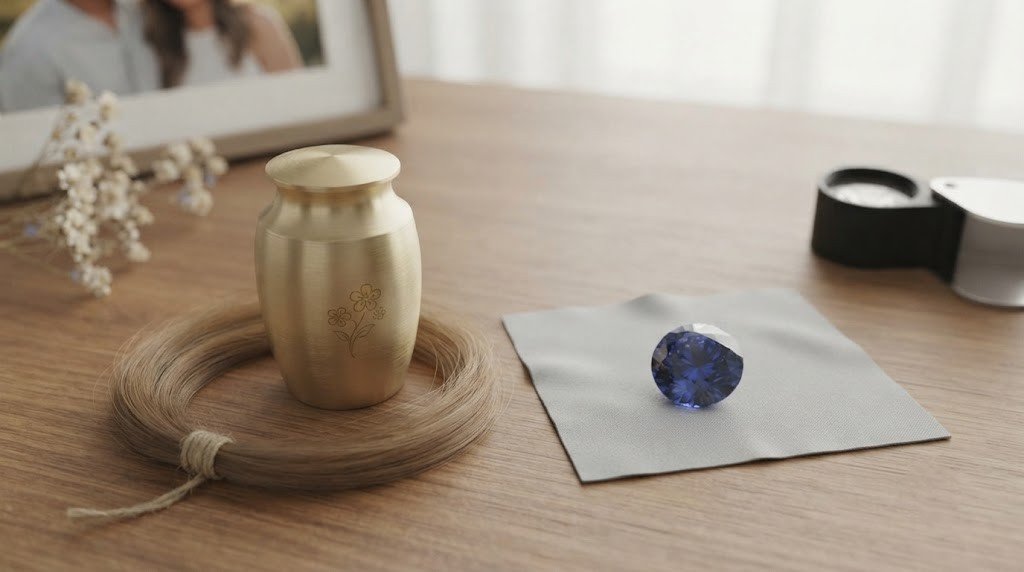
If your sister’s ashes are kept by one relative while a lock of her hair rests with another, you may be considering combining both materials into one memorial diamond. One of the first questions you may have is what color the finished stone will be.

The sister ashes hair diamond color cannot be predicted simply by knowing that both materials will be used. Diamond color develops during crystal growth and depends on factors such as trace elements and the laboratory’s process. A blended stone may have a yellow, blue, or champagne tone, while additional processing may be available for a colorless result.

This guide explains how combining ashes and hair works, what influences the finished color, what different options may cost, and which questions to ask a provider before making a decision.

sister ashes hair diamond color

Does Combining Ashes and Hair Change the Sister Ashes Hair Diamond Color?

There is no reliable way to predict the finished color simply from the combination of ashes and hair. Diamond color develops during growth, when trace elements and other characteristics of the process influence the crystal.

Nitrogen can contribute to a yellow appearance, while boron can produce blue coloration. A diamond grown with appropriate control of these impurities may be colorless. The exact outcome depends on the growth conditions and the provider’s process.

There is no established rule that hair makes a blended diamond lighter or that ashes make it darker. Both materials must be processed into usable carbon before diamond growth, and the final appearance cannot be guaranteed from the original materials alone.

This means the sister ashes hair diamond color is not something you can reliably select just by changing the ratio of ashes to hair.

For some families, combining the materials is meaningful because the finished stone represents two parts of their sister’s story. Other families prefer separate diamonds. Neither decision guarantees a particular color.

Who Holds Each Material, and Whose Agreement Do You Need?

Before discussing the sister ashes hair diamond color, make sure you have permission to use both materials.

Permission to use her ashes

The person who possesses the ashes is not necessarily the person who has legal authority to decide how they may be used. Applicable rules can vary by state, and written instructions or a designated representative may affect who can authorize the decision.

If you are unsure, contact the funeral home or crematory to ask what information it can provide. A local attorney can help clarify legal authority when necessary.

Providers have different material requirements. Ask your chosen company how much ash it needs rather than relying on a general quantity.

Permission to use her hair

Hair may be kept in a brush, envelope, keepsake box, or another family member’s home. Ask the person who holds the lock of hair whether they agree to its use.

Hair that belonged to your sister may also raise questions about her estate, depending on the circumstances and applicable law. If ownership or authority is unclear, seek appropriate local advice.

Keep both agreements documented

When different relatives hold the ashes and hair, record the permissions separately. Keep copies of any relevant correspondence, shipping receipts, and the provider’s intake confirmations.

This helps everyone understand which materials were submitted and supports the documentation for the finished diamond.

What If Her Ashes and Hair Reach the Laboratory at Different Times?

The ashes and hair may be sent in separate packages, particularly if they are held by different relatives. One package might arrive well before the other.

Ask the provider:

  • How will each package be identified and recorded?
  • How will the first material be stored while the other is in transit?
  • Does processing begin only after both materials arrive?
  • What happens if one material never arrives?
  • Can the order proceed with only one material if the family agrees?

These arrangements do not make the final color predictable, but they matter for traceability and communication.

Keep each shipping receipt and intake confirmation. Ask whether the origin documentation can identify both materials and explain how the company records their receipt.

How Do Laboratories Combine Two Sources Into One Stone?

The exact procedure varies by provider. Ask whether the ashes and hair are purified separately and when the resulting carbon is combined.

Carbon extraction and purification

Cremated remains contain substantial mineral material, while hair is made primarily of keratin and contains carbon as part of its organic structure. A laboratory must process each source using a method appropriate to the material.

The usable carbon recovered from ashes is limited and varies. Hair also requires processing before its carbon can be used. Ask the provider to explain its extraction method and what it can document about the material recovered.

Combining the carbon

Some providers may purify each source separately and combine the carbon afterward. Others may use a different workflow. There is no reason to assume that all companies follow an identical process.

Ask whether supplemental laboratory carbon is used to provide enough material for growth. Also ask what the provider can substantiate about the contribution from your sister’s ashes and hair.

There is no universal, established percentage for how much of a finished blended diamond’s mass comes specifically from the hair and ash carbon. Be cautious of precise percentages unless the provider explains how it measures them.

Growing the diamond

Laboratories may use high-pressure, high-temperature growth (HPHT) or chemical vapor deposition (CVD), depending on their process.

The growth method, impurities, and other conditions influence the crystal. The amount of original material alone does not tell you the final carat weight or color.

For a broader overview, read our complete guide to a memorial diamond made from a sister’s ashes and hair.

Why Do Memorial Diamonds Tend Toward Yellow, Blue, and Champagne?

The color of a laboratory-grown diamond can be influenced by trace elements and the conditions under which the crystal forms.

  • Yellow: Nitrogen can contribute to yellow coloration.
  • Blue: Boron can produce blue coloration.
  • Champagne or brown: Warm shades may occur depending on the crystal and growth conditions.
  • Colorless: Achieving a colorless result may require additional control over impurities and processing.

These are general explanations, not a guarantee of what a particular memorial diamond will look like.

A yellow, blue, or champagne stone is not automatically defective. The most suitable shade depends on your personal preference and the jewelry you want to create.

For a broader overview of available shades, read Memorial Diamond Colors for a Sister: What to Expect.

What Do the Color Options Cost, and How Long Do They Take?

Because the natural sister ashes hair diamond color cannot be guaranteed in advance, your practical choice is often whether to accept the expected natural tint or pay for additional processing if the provider offers it.

OptionWhat it meansCost and timing considerations
Natural colorThe shade produced by the growth processUsually the baseline option offered for that size
ColorlessAdditional processing may be needed to control impuritiesMay cost more and could affect the timeline
Treated colorSome providers offer post-growth treatments for selected colorsAvailability, disclosure, price, and timing vary
Independent gradingAn outside laboratory evaluates diamond characteristicsOften an additional charge and another production stage

General industry estimates have placed smaller stones of around 0.10 to 0.25 carat at approximately $1,500 to $3,500, stones of 0.5 to 1 carat at approximately $5,000 to $15,000, and stones of 2 to 5 carats or more at substantially higher prices. These are broad estimates, not verified current prices from Memorial Diamond.

Production estimates are also provider-dependent. A timeframe of roughly six to ten months is commonly cited for memorial diamond production, while larger stones or specialty colors may take longer. Ask whether your preferred color or a blended material changes the estimated schedule.

Engraving, settings, special cuts, shipping, and independent grading may cost extra. Always request a current itemized quote.

For more detail, see how much a sister memorial diamond costs.

When Is Irradiation an Option, and How Must It Be Disclosed?

Some providers offer post-growth irradiation to alter a diamond’s color. The colors available and the treatment methods vary between companies.

If you are considering a treated shade, ask:

  • Which colors can you produce?
  • Is the treatment included in the quoted price?
  • Will the treatment be disclosed on the invoice and relevant grading documentation?
  • Does the treatment affect care or jewelry repairs?
  • Is the final color guaranteed, or is it an estimate?

Treatment changes the diamond’s appearance; it does not establish the origin of the carbon. Do not assume that every provider offers irradiation or that every treated color is available for every stone.

The sister ashes hair diamond color should be documented honestly, whether the stone has a natural tint or a treated shade.

How Should the Paperwork Record Both Her Ashes and Her Hair?

A blended memorial diamond involves two source materials, so ask how the provider documents both.

Origin or authenticity documentation

A provider-issued origin certificate may record the company’s claimed connection between the submitted materials and the finished stone. Ask whether it can name both the ashes and hair and whether it records separate intake details when the packages arrive on different dates.

Do not assume that every origin certificate follows the same standard or independently verifies every stage of the process.

Independent grading report

An independent grading report evaluates characteristics of the diamond itself, such as cut, color, clarity, and carat weight. It serves a different purpose from a provider-issued origin certificate.

You can read about GIA’s diamond quality factors to understand the four Cs.

Ask which laboratory would issue the report, whether the service is optional, what it costs, and how it describes treated colors.

What to keep

Keep the written permissions, shipping receipts, intake confirmations, order confirmation, origin documentation, and any grading report. If the provider cannot document the exact percentage of carbon from each source, it should explain that limitation rather than imply that a precise split is established.

Could Blended Stones for Different Siblings Look Different?

Yes. Two diamonds may look similar or different, even when they are ordered from material associated with the same person. Each growth run can produce its own result, so a matching color cannot be promised.

Families may choose different arrangements. One sibling might prefer a blended stone, while another may want a diamond made from ashes alone or hair alone.

Before ordering multiple stones, ask whether the provider can coordinate the orders and what material is needed for each. Do not assume the same color, size, price, or timeline will apply to every stone.

If several relatives will share ownership of one diamond, record the arrangement in writing.

You can also read about sharing a sister memorial diamond among family members.

Which Decisions Stay With Your Family?

Although the natural color cannot be predicted precisely, your family can make several meaningful choices.

  • Whether to combine ashes and hair or make separate stones.
  • Whether to accept a natural tint or ask about colorless processing.
  • Whether to investigate treated colors where available.
  • Which cut and shape to request.
  • Which metal and jewelry setting to use.
  • Whether to obtain independent grading.
  • How to divide costs and determine ownership.
  • What should happen to unused material.

The cut and setting may affect how a stone’s color appears to the eye. Ask a jeweler to show you suitable options for the actual stone rather than relying on a general rule about which metal or cut will look best.

For inspiration, explore memorial diamond settings and jewelry ideas for a sister.

What Eight Questions Should You Ask a Provider About Color?

Before sending any material, ask the provider these eight questions and keep the answers in writing.

  1. Do you purify the ashes and hair separately, or are they combined at another stage?
  2. What evidence supports your explanation of how blending affects color?
  3. Which natural shades have you produced, and can you provide representative, unretouched photographs?
  4. What is the additional cost of a colorless option for my chosen carat weight?
  5. Do you offer irradiation or other post-growth treatments, and how are they disclosed?
  6. Will your origin documentation name both source materials and record their receipt?
  7. What happens if growth fails or the stone fractures during cutting?
  8. What happens to unused ashes and hair, and can they be returned?

A provider should be able to explain its actual process, costs, limitations, and documentation. Clear answers are more useful than a promise that the finished stone will have a particular appearance.

If you are still comparing materials, read our guides to the color of a diamond made from your sister’s ashes and the color of a diamond made from your sister’s hair.

Frequently Asked Questions

Will her ashes or hair have more influence on the diamond’s color?

There is no reliable general rule that identifies one material as the deciding factor. The color forms during growth and depends on the growth conditions and trace elements. A provider should explain what it knows about its own process without promising a color based solely on the source material.

Can a diamond made from both ashes and hair be colorless?

A colorless option may be available, depending on the provider’s process. Additional processing may be required, and it can increase the price or affect timing. Confirm the availability, expected result, and terms before ordering.

Does a blended diamond take longer than a diamond made from one material?

That depends on the provider’s workflow. Ask whether it waits for both materials before beginning and whether processing two sources affects the schedule. Request a written estimate rather than assuming that every blended order takes longer.

What if one relative agrees but the other does not?

Do not use material without the appropriate permission. You may be able to proceed with only the material you are authorized to use, if the provider supports that option and everyone involved understands the arrangement.

Will the certificate show the percentage from ashes and the percentage from hair?

There is no universal percentage standard for blended stones. Ask the provider what its origin documentation records and whether it can substantiate a source-specific estimate. Be cautious about unsupported claims of precise percentages.

Final Thoughts on the Color of a Blended Diamond for Your Sister

Combining your sister’s ashes and hair into one diamond may hold special meaning when those keepsakes are kept by different members of the family. However, the final color is not a predictable result of blending the two materials.

The sister ashes hair diamond color depends on the diamond growth process and the factors that influence its appearance. Your family can choose how the materials are used, compare color options, review the costs, and decide how the finished stone will be set and preserved.

Before making a commitment, obtain the necessary permissions, ask how both materials will be documented, and request clear written answers about color, treatment, cost, and timing. Take the time you need to choose an option that feels right for your family.

Learn More About Sister Memorial Diamonds

Talk With Memorial Diamond

If you are considering combining your sister’s ashes and hair, visit Memorial Diamond to explore your options. Ask about the available colors, the process, documentation, and costs before deciding how you would like to preserve her memory.
Really Made From Daughter Ashes and Hair 7 Proven Truths

Is a Memorial Diamond Really Made From Your Daughter’s Ashes and Hair?

Doubt is reasonable here, and it deserves a straight reply rather than a soothing one. Yes: a stone described as really made from daughter ashes and hair does contain carbon recovered from both of those materials, purified and grown into a genuine laboratory diamond. It also contains supplemental laboratory carbon, no published figure states what share of a blended stone is hers, and nothing about a gem really made from daughter ashes and hair can prove its origin on its own. The proof sits in the chain of custody record for each material.

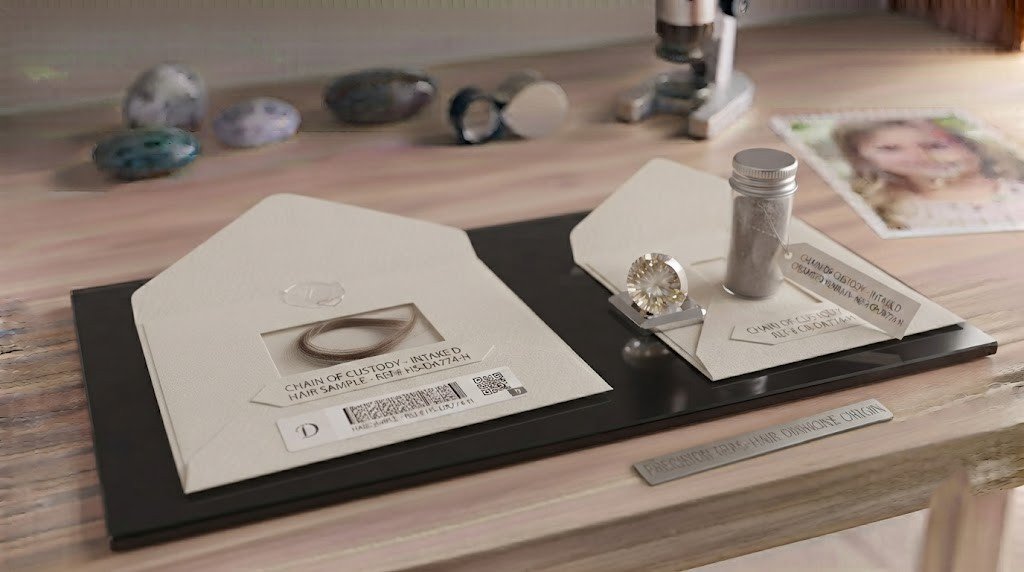
 A loose memorial diamond really made from daughter ashes and hair resting beside two labeled sample envelopes

Is a Stone Really Made From Daughter Ashes and Hair, or Mostly Lab Carbon?

Both, and an honest provider will say so unprompted. Her carbon is physically inside the crystal; laboratory carbon is too.

The skeptic’s worry runs like this: if much of the stone is supplemental carbon, is calling it really made from daughter ashes and hair anything more than marketing? “Made from” describes a genuine, traceable contribution, not a total. Carbon from her remains and her hair is purified, graphitized and grown into the lattice alongside the added material. It is structural, not a coating.

What a truthful description of a gem really made from daughter ashes and hair cannot promise is purity. No memorial diamond is grown only from personal carbon.

That leaves three things to check before trusting any stone really made from daughter ashes and hair: how much of it is hers, whether the two sources can be told apart, and what paperwork links the crystal to what you sent. The complete guide to a daughter ashes and hair diamond covers the broader choice if you are still deciding.

How Do Two Such Different Materials Feed One Crystal?

Each is purified separately, and the purified carbon is combined into a single charge for the growth press, where it is the same substance whichever source it came from.

The starting points could hardly be less alike, which is why families wonder whether a stone really made from daughter ashes and hair is, in practice, mostly one or the other.

Cremated remainsHair
What it is mostly made ofCalcium phosphate, the mineral of boneKeratin, a protein rich in carbon
Carbon in the starting materialAround 0.5% to 4% by weightAround 50% by weight
Amount providers usually ask forA few tablespoons up to about 4 oz, roughly 100 gA small lock, or a few grams
Needs a cremation?YesNo
Published finished stone shareAround 10% to 15% on the ash route, some citing as low as 3%None published

Weight for weight, hair holds far more carbon than ash, so a modest lock is not a token gesture. That still does not tell you the proportion inside a diamond really made from daughter ashes and hair, because it depends on the quantities sent and on how a particular laboratory works.

After purification to roughly 99.9% carbon or better, both materials go through graphitization at about 2,500 to 2,700°C, and that graphite is what enters the press. How a memorial diamond is made from her ashes and hair follows each stage in more detail.

Why Is Laboratory Carbon Still Added When You Send Both?

Because the carbon recovered from a family’s submission is rarely enough, by itself, to fill a growth cell for a stone of useful size. Adding hair raises the personal carbon available; it does not usually remove the need for supplement.

It feels logical that two materials should mean a purer stone. Across the industry, though, the published process still describes blending recovered carbon with laboratory carbon, and nothing published says a stone really made from daughter ashes and hair escapes that step.

A diamond really made from daughter ashes and hair is therefore a blend in two senses: two personal sources, plus the supplement. None of that makes her contribution less real. The accurate sentence is “made in part from her,” which is also the sentence any reputable provider will put in writing.

Growth usually happens under high pressure and high temperature, roughly 6 to 8 GPa and 1,400 to 2,500°C, the same methods used to make any lab grown synthetic diamond. A minority of providers use chemical vapor deposition instead. Either way, the result is a real diamond, not a simulant.

What Share of a Diamond Really Made From Daughter Ashes and Hair Is Hers?

Nobody has published that number, and anyone quoting one without seeing your submission is estimating.

For ash on its own, industry descriptions put personal carbon at around 10% to 15% of the finished stone’s mass, some providers citing as low as 3%. That figure belongs to the ash route only. No equivalent finished stone percentage has been published for hair alone, and none at all for a blended charge. Hair’s roughly 50% carbon content describes the raw material, not the finished diamond.

So resist borrowing the ash figure for a gem really made from daughter ashes and hair. The blend may behave differently, and no public work settles how.

Instead, turn the gap into a written request. Ask the provider, at the carat size you are considering:

  • What percentage of the finished stone they expect to be her carbon.
  • How including hair changes that estimate compared with ash alone.
  • Whether they will state it in writing before you send anything.

Keep whatever reply comes back. It is the only figure that will ever apply to your own stone really made from daughter ashes and hair.

Can You Learn How Much Came From the Ash and How Much From the Hair?

Ask, but expect the answer to be “not precisely.” Most providers do not itemize the finished stone by source, and once the two carbons are pooled there is no way to separate them again.

A laboratory can often tell you what went in: how much ash and hair arrived, and roughly what each yielded. Some share those intake and yield figures on request; others treat them as internal. Either response is worth knowing before you commit to anything really made from daughter ashes and hair.

Families sometimes want the split for reasons unrelated to suspicion. Wanting to know both are present in a stone really made from daughter ashes and hair is completely understandable. If both were logged, purified and pooled, both are there, even if nobody can state the proportion.

If one material matters enough that you want it in a stone by itself, raise that before anything ships. Growing one diamond from each is sometimes possible and removes the question. How much ash and hair a daughter memorial diamond needs explains how quantities affect that choice.

Can a Lab Test Show a Stone Is Really Made From Daughter Ashes and Hair?

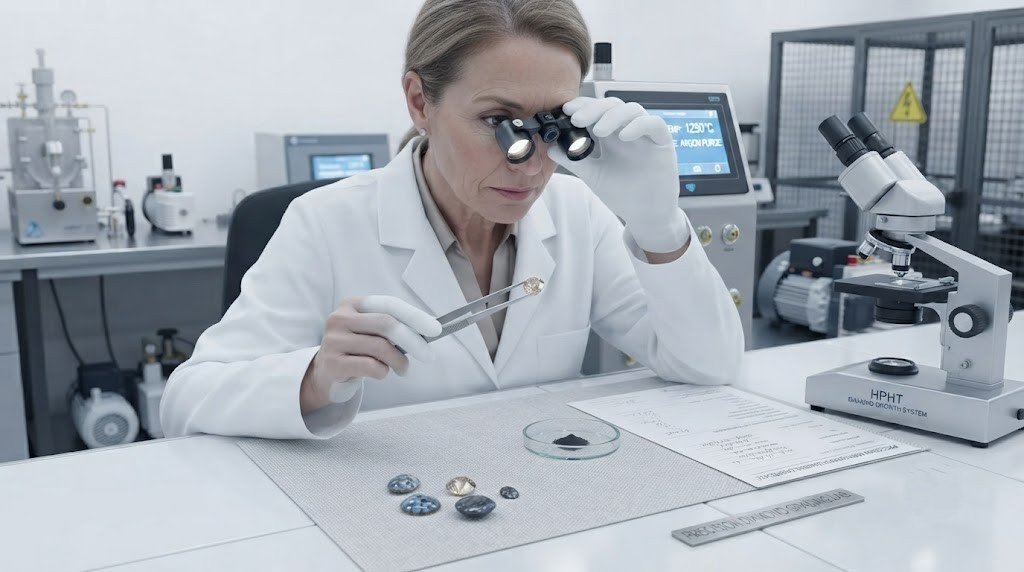
A gemologist examining a finished lab-grown diamond through a loupe at a grading bench

No. No test on a finished diamond can confirm its carbon came from a particular person, from ash, or from hair. Carbon atoms in the lattice carry no personal signature.

A gemological laboratory can establish that the stone is a real diamond, that it was grown rather than mined, and how it grades. None of that speaks to origin.

This is the uncomfortable center of the question. A stone really made from daughter ashes and hair and one grown purely from laboratory carbon would look identical under any available instrument. That is true across the category.

So trust has to rest on a documented, unbroken record of what happened to each of your two samples from arrival onward. Anyone implying that a gem really made from daughter ashes and hair “proves” its own origin is overstating what is possible.

What Documents Show a Diamond Is Really Made From Daughter Ashes and Hair?

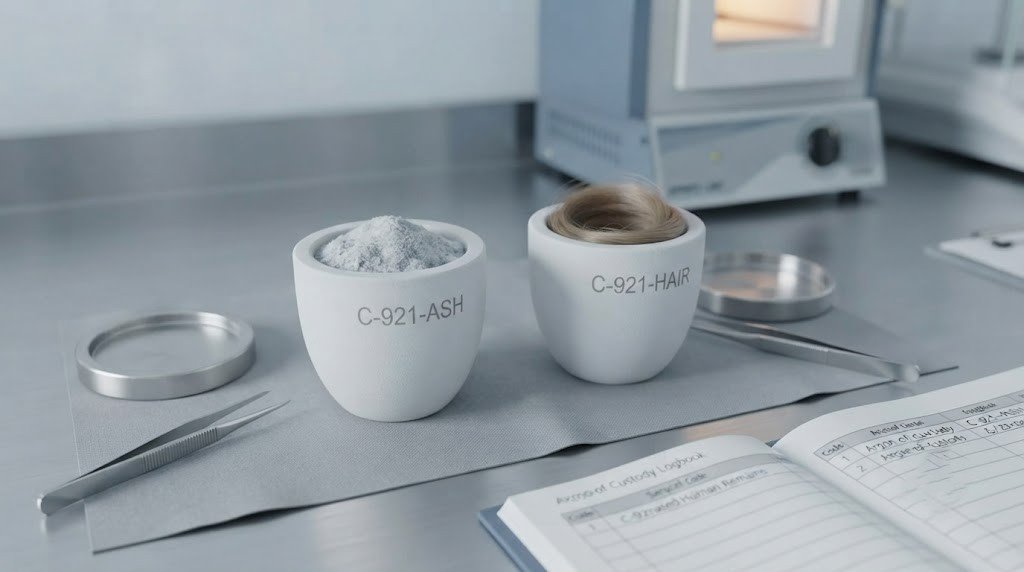
A chain of custody record following both materials from arrival to the growth run is the core evidence. Everything else supports it.

When a family is told a stone is really made from daughter ashes and hair, reasonable documentation behind that claim looks like this:

  • Two intake confirmations: one per material, each with its own reference number and date.
  • A custody log for each material: through purification and graphitization.
  • A record of the pooling step: or confirmation that the two were grown separately.
  • The provider’s written carbon estimate: since no published figure covers a blend.
  • An origin or authenticity certificate: usually in house, naming both materials.
  • An optional independent grading report: if you choose to have one.

The last two do different jobs. An in house origin certificate is the provider’s own statement that the stone came from your submission. An independent report judges it against the standard cut, color, clarity and carat measures; it is optional across the industry and cannot say whether a stone is really made from daughter ashes and hair.

Ask to see a redacted sample of each document before you commit. The step by step route for her ashes and hair shows where each record is created.

Which Warning Signs Should Make You Slow Down?

A few answers should give you pause, not because they prove anything is wrong but because they make it hard to verify that a stone is really made from daughter ashes and hair.

  • A claim that the stone is 100% her, with nothing added.
  • A precise percentage for a blended stone offered before anyone knows what you are sending.
  • The ash route percentage presented as if it also covers hair or a blend.
  • Reluctance to describe the custody process, or to put it in writing.
  • A suggestion that testing the finished diamond confirms whose carbon it holds.
  • No separate intake record for the hair once it arrives alongside the ash.
  • Pressure to decide quickly, or discounts tied to deciding by a date.

Any of these may have an innocent explanation; what matters is whether it comes back clearly and in writing. How to turn her ashes and hair into a diamond sets out the fuller decision in order.

Who Can Authorize Sending Her Ashes and Her Hair?

It may not be one person, and it is not automatically her parents. Before a stone can be really made from daughter ashes and hair, both materials need someone’s go ahead, and the two can fall under different considerations.

For cremated remains, priority is a matter of state law, and no one national rule covers every family. At whatever age she died, a spouse or partner may hold authority ahead of her parents, as may her own adult children. Anything she left in writing, such as a directive, a will provision or a pre arranged plan, can override the default order.

Hair is often simpler in practice, particularly a lock already in your keeping, though that does not place it automatically beyond any rules. Belongings can form part of an estate, rules vary by state, and if someone else holds the sample or has a stronger claim, talk with them first.

Parents may disagree, or one may be arranging alone; neither is unusual. A funeral director or local attorney can usually settle who signs.

What Happens to Whatever Ash and Hair Is Not Used?

Two small sealed keepsake containers returned to a family after processing

It depends on the provider, so ask before anything is sent, and ask about each material separately.

Only part of either sample becomes purified carbon. Some providers return what remains, some dispose of it respectfully, and some offer a choice.

A clear written policy covering both is part of what makes a claim that a stone is really made from daughter ashes and hair trustworthy. Most of her ashes stay with the family regardless, so burial, scattering, an urn at home or sharing among relatives all remain open.

Does Sending Both Change the Cost, the Wait or the Color?

Not in the way people expect. Price and timing follow the stone you choose, and color cannot be promised either way.

In general 2026 industry terms, not any one company’s prices, roughly 0.10 to 0.25 carat runs about $1,500 to $3,500; half a carat to one carat about $5,000 to $15,000; and two to five carats or more from around $20,000 to $75,000 and beyond. Settings and an optional grading report are usually priced separately.

Most stones take six to ten months from receipt, with larger or specialty color stones sometimes stretching toward twelve. Size is set by time in the press, not by how much you send, so a stone really made from daughter ashes and hair is neither faster nor larger for including hair.

Color comes from trace elements during growth: nitrogen pushes toward yellow, boron toward blue, and colorless requires neither, which generally costs more. Including hair does not make the result predictable, and hair grown stones are not automatically lighter. Optional irradiation can produce red, pink, green or black. Choose what feels right to the people who will keep it. What color a diamond from her ashes and hair will be goes further.

Frequently Asked Questions

Is any memorial diamond grown only from her carbon?

No. Across the industry, carbon recovered from ash and hair is typically blended with supplemental laboratory carbon so that a stone of useful size can grow. Her carbon is genuinely part of the crystal, but a claim of total purity overstates what the process delivers.

Does adding hair make the stone more hers than ash alone?

It may raise the personal carbon available, because hair holds around half its weight in carbon. No published figure says how much it changes a stone really made from daughter ashes and hair, though, so ask the provider for an estimate in writing for your specific submission and carat size.

Can we ask for the ash and hair percentages separately?

You can ask, and you should. Most providers do not itemize the finished diamond by source, because pooled carbon cannot be separated again. Many can tell you what quantities were received and roughly what each yielded, which is often the closest honest answer available.

Will an independent grading report confirm the stone came from her?

No. A grading report assesses cut, color, clarity and carat, and can confirm the stone is a genuine lab grown diamond. It cannot identify whose carbon is inside. Origin rests on the provider’s chain of custody records and certificate, which is why those documents deserve close attention.

Could we have two stones, one from her ashes and one from her hair?

Often, yes. Because only a portion of each material is needed, many providers can grow separate stones instead of one diamond really made from daughter ashes and hair. Each stone carries its own growth time and price, so ask for quotes on both arrangements before deciding which suits your family.

What if her hair sample turns out to be too small or damaged?

Ask before sending. A very small or poorly stored lock may not yield enough usable carbon, and then the stone is no longer really made from daughter ashes and hair. A good provider contacts you before continuing with ash alone, and a written policy should say whether you are consulted first and whether the price changes.

How long after her death can we still send both materials?

There is generally no fixed deadline, whether months or many years have passed. Cremated remains are chemically stable, and hair keeps well when stored dry. Tell the provider how and where each has been kept, since storage conditions can matter more than the time that has passed.

Final Thoughts on Whether It Is Really Made From Her

The skeptical question has an answer more modest, and more solid, than marketing tends to offer. A stone really made from daughter ashes and hair holds genuine carbon from both materials, blended with laboratory carbon; the share for a combined stone has not been published, and no instrument can confirm origin afterward.

What you can verify is the record. If each material was logged on arrival, tracked through processing and documented at pooling, you have as much certainty as this category offers anyone.

Before you accept any gem as really made from daughter ashes and hair, get the important answers in writing, take the time you need, and let the decision belong to the people who will live with it. The same question for ash alone is worth reading alongside this one.

Learn More About Daughter Memorial Diamonds

Talk With Memorial Diamond

If you want these questions answered for your own submission, Memorial Diamond can be reached at memorialdiamond.us to explain how each material would be logged and documented. There is no obligation in asking.