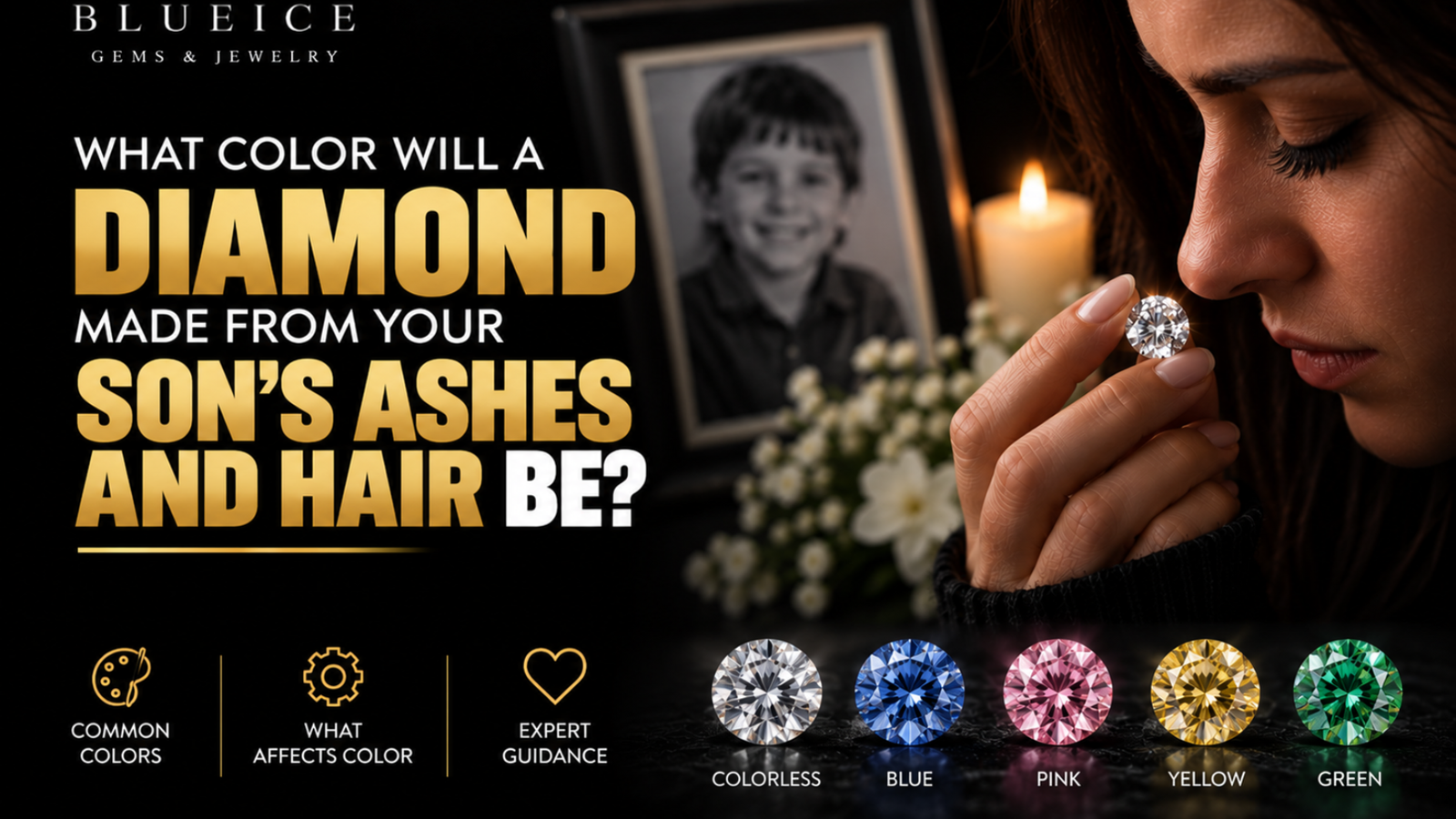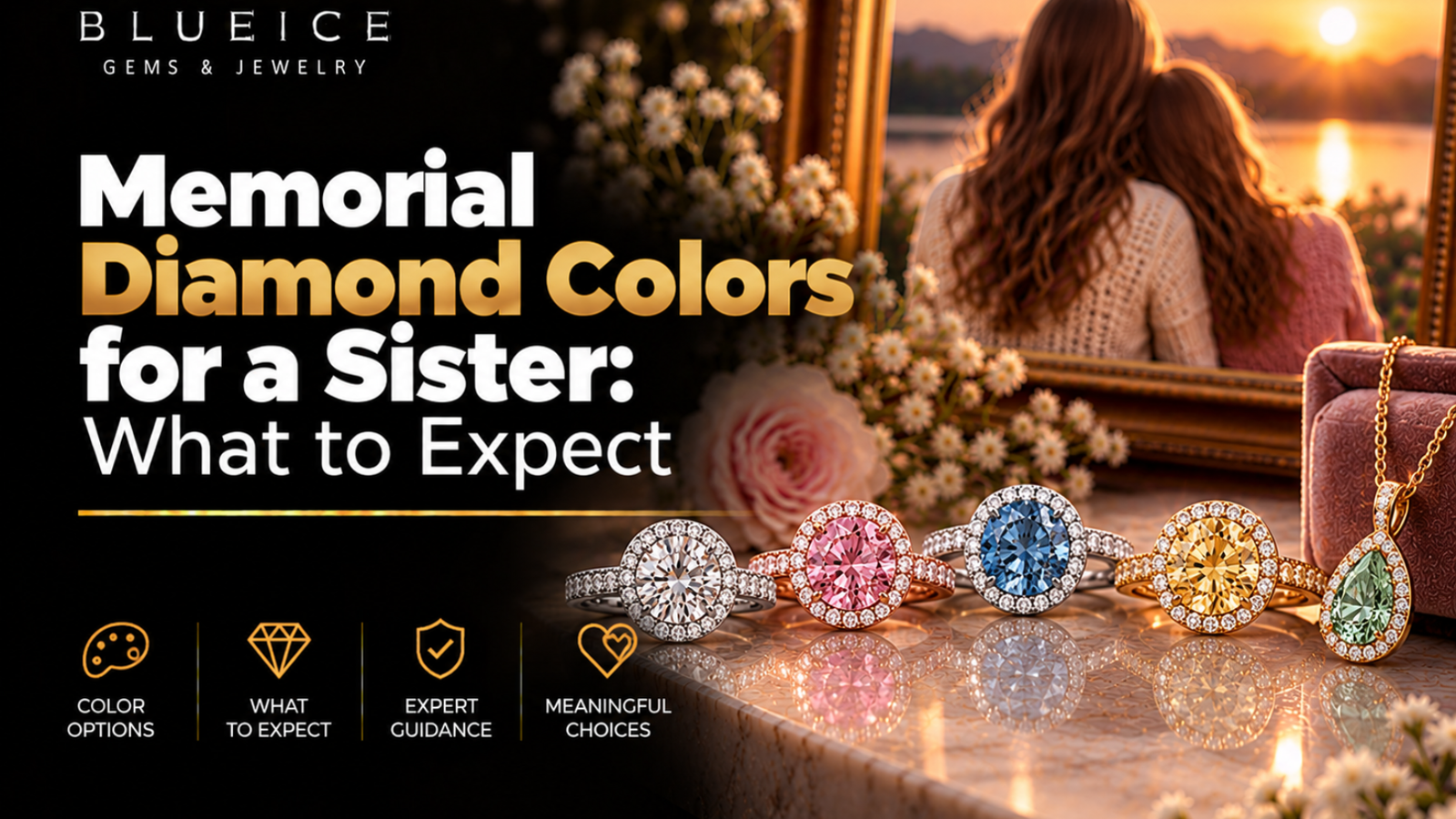
Before carat size or jewelry setting, color is often the detail people picture first. Memorial diamond colors for a sister commonly include yellow, blue, champagne, and brown. These shades can be influenced by trace elements such as nitrogen and boron during diamond growth. Colorless stones may be possible with additional processing and typically cost more, while some providers offer pink, red, green, or black through disclosed post-growth treatments.
Choosing a color can feel personal, especially when the diamond is intended to honor someone you love. You might prefer a shade that matches her favorite jewelry, reminds you of a special place, or simply looks beautiful in a ring or pendant. There is no single correct choice. Understanding the options can help you compare providers and make a decision with confidence.
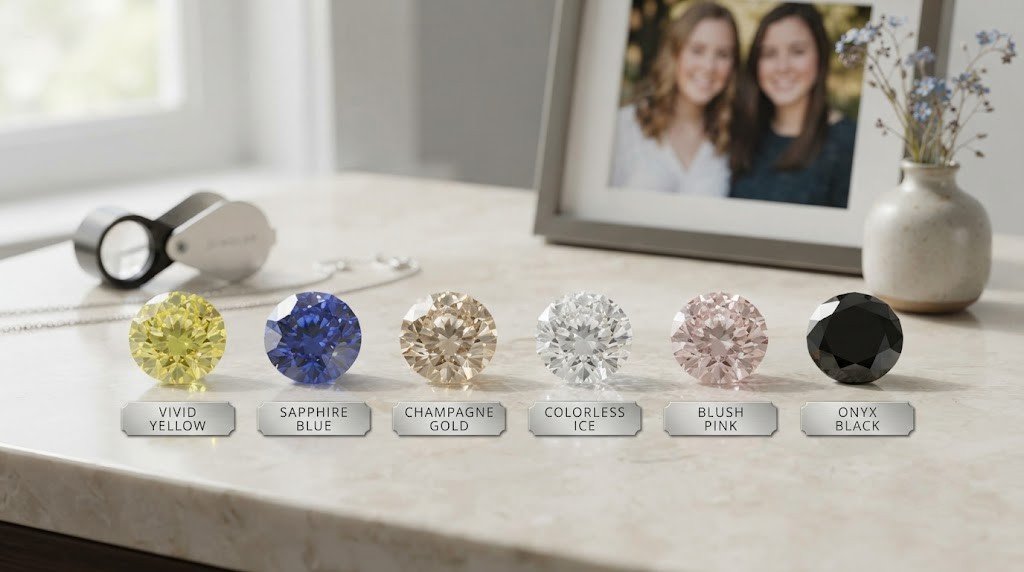
Table of Contents
Which Memorial Diamond Colors for a Sister Occur Naturally?
Several color families cover most of the memorial diamond colors for a sister you may be offered. Some colors develop during the diamond-growth process, while others can be created or intensified through treatment after growth. Understanding this distinction helps you know what questions to ask before placing an order.
| Color family | Where the color may come from | Natural growth color or treated? | Cost considerations |
|---|---|---|---|
| Yellow | Trace nitrogen in the growing crystal | Growth color | Ask for a quote at your chosen carat size |
| Blue | Trace boron in the growing crystal | Growth color | Ask for a quote at your chosen carat size |
| Champagne and brown | Trace elements and growth conditions | Growth color | Availability and pricing vary |
| Colorless | Requires careful control of unwanted trace elements | Extra processing may be needed | Typically costs more |
| Pink and red | May be produced through post-growth irradiation | Treated | Ask about treatment and additional cost |
| Green and black | May be produced through post-growth irradiation | Treated | Ask about treatment and additional cost |
Yellow, blue, and champagne are common options discussed when exploring memorial diamond colors for a sister. The carbon used for a memorial stone begins with a personal source, and trace elements and laboratory growth conditions can influence the finished color. These differences are part of the material and process, not automatically a sign of a defect.
Shades within the same color family can vary, too. One yellow diamond may memorial diamond colors for a sister look pale and lemon-like, while another appears warmer and closer to honey. A blue stone may look light and icy or deeper and more intense.
When providers show memorial diamond colors for a sister in photographs, ask to see several examples of each available shade. Also ask whether the photographs show finished diamonds, what their carat sizes are, and whether the colors have been treated. A single promotional image may not represent the full range you could receive.
Why Do Nitrogen and Boron Set the Shade?
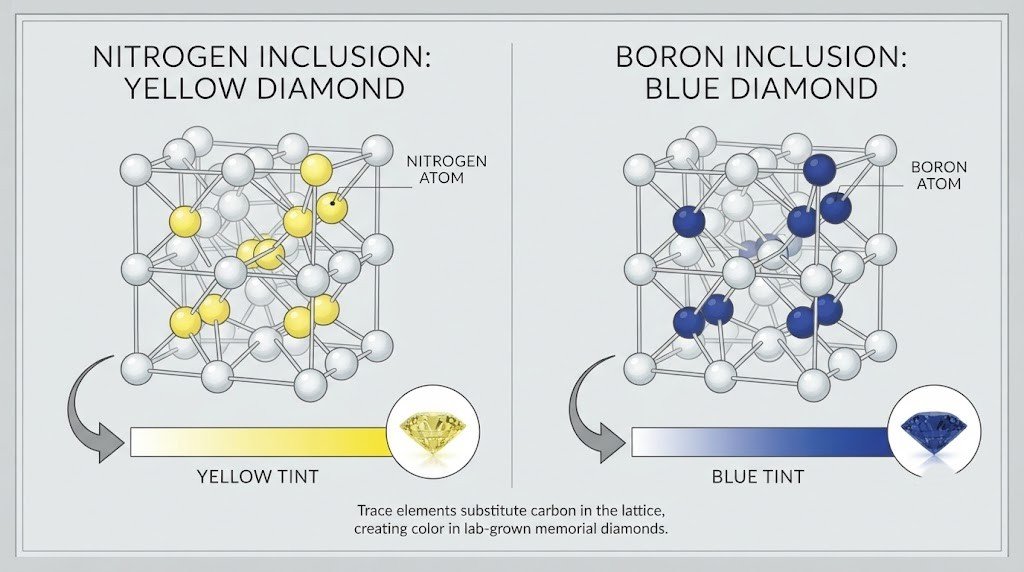
A diamond is made primarily of carbon atoms arranged in a crystal structure. When trace amounts of other elements become incorporated into that structure during growth, they can affect how the stone interacts with light. Nitrogen is associated with yellow tones, while boron can produce blue coloration.
This helps explain two of the most familiar memorial diamond colors for a sister: yellow and blue.
The starting material and the growth process both matter. Purification aims to memorial diamond colors for a sister produce carbon suitable for diamond growth, but the final result can still depend on trace elements and the conditions used in the laboratory. The visible tint is a result of the stone’s composition and growth—not a hidden message about the person being remembered.
Understanding this mechanism can take some pressure off your decision. Memorial diamond colors for a sister do not reveal her personality, emotions, or character. The science explains the shade; the meaning comes from your connection to her.
Most memorial diamonds are associated with high-pressure, high-temperature (HPHT) growth, although some providers may use chemical vapor deposition (CVD). You can read a general overview of how lab-grown diamonds are produced to learn more about laboratory diamond growth.
When comparing providers, ask them to explain which process they use and how it relates to the colors they offer. Do not assume that every provider can produce every shade or that every source material will produce the same result.
What Does a Colorless Stone Involve?
Among memorial diamond colors for a sister, colorless is often the option people picture when they want a traditional white-diamond appearance. Achieving a colorless result may require careful control of trace memorial diamond colors for a sister elements such as nitrogen and boron during growth, along with additional processing.
That additional work can affect the price. Across the industry, colorless memorial memorial diamond colors for a sister diamonds typically cost more than yellow, blue, or champagne stones of the same size. The difference depends on the provider, the carat size, the growth process, and the services included in the quote.
Colorless is not more authentic, more respectful, or more meaningful than any other shade. It is simply the appearance some people prefer. It may match jewelry they already own or suit a classic engagement-ring or pendant design.
If you are considering a colorless stone, ask the provider these three questions:
- Is a colorless diamond available in the carat size I want?
- How much does the color choice add to the total price, itemized separately?
- Is independent grading available to document the finished diamond’s characteristics?
Also ask to see examples that are similar in size and cut to the diamond memorial diamond colors for a sister you are considering. A small colorless stone can look different from a larger one, especially when viewed in different lighting conditions.
Compare the full quote rather than the color alone. A provider may include some services in its price while another charges separately for grading, cutting, setting, or shipping.
What Are Treated Colors, and Should They Be Disclosed?
Some providers offer post-growth treatments that alter or intensify a diamond’s color after the crystal has grown. Irradiation is one method that may be used to produce certain shades, including pink, red, green, or black.
These specialty memorial diamond colors for a sister may appeal to people who want something distinctive. However, you should understand whether a color develops during growth or is created through a treatment afterward.
Treatment does not mean a stone is no longer a diamond. However, the treatment should be disclosed clearly in the provider’s documentation. Anyone who later appraises, insures, repairs, or resets the stone may need to know how its color was produced.
If a provider offers a vivid pink, deep green, or black stone, ask directly:
- Was the color produced during growth or through post-growth treatment?
- Will the treatment be disclosed in writing?
- Is the treatment described in any available grading documentation?
- Does the treatment affect the price, timeline, or care instructions?
Disclosure is especially important when comparing memorial diamond colors for a sister across different providers. Two stones that appear similar in photographs may have been produced through different processes.
Specialty colors can also affect production time. Some providers quote approximately six to ten months for a typical process, while larger stones or specialty colors may take longer. These are general industry estimates, not a guaranteed timeline for every laboratory.
Ask for a written schedule and find out when the provider considers the color choice final. If your material has already entered production, changing the desired shade may not be possible.
Can Her Ashes or Hair Tell You the Color in Advance?
No. Memorial diamond colors for a sister cannot reliably be predicted from the memorial diamond colors for a sister appearance of her ashes, hair, or other source material. The finished color depends on the laboratory process, the material, trace elements, and the conditions under which the diamond grows.
Two people’s source materials may produce stones of similar colors. Material from the same person may also lead to different results in separate growth runs. A provider should explain what it can reasonably predict and what remains uncertain.
Color also says nothing about who your sister was. A blue stone does not prove that she was calm, and a yellow one does not mean she was cheerful. Treat suggestions that a particular shade reveals her personality as symbolism or personal interpretation, not scientific fact.
If you want to explore this question for a specific source material, these related guides may help:
- What color a diamond made from her ashes will be
- What color a diamond made from her hair will be
- What color a diamond made from her ashes and hair will be
- The wider sister memorial diamond FAQ
The key point remains the same: no source material lets you choose or accurately predict every detail of the finished diamond’s shade.
How Is Color Graded and Written Up?
When comparing memorial diamond colors for a sister, you may encounter two different types of documentation: an origin or authenticity certificate and an independent grading report. They serve different purposes.
An origin certificate is generally issued by the provider. It may document the chain of custody and connect the submitted material to the finished stone. The provider may also describe the stone’s color, but the certificate’s main purpose is usually to document origin and provenance.
An independent grading report focuses on the diamond’s characteristics, which may include color, cut, clarity, and carat weight. Some reports use established grading terminology and standards. Ask which grading laboratory is available and request a sample report before paying for this service.
The Gemological Institute of America’s overview of diamond quality factors explains the characteristics commonly used to assess diamond quality.
Independent grading is usually an optional service and may cost extra. If precise documentation of memorial diamond colors for a sister matters to you—for example, for insurance or future resale documentation ask what report is available and what it will actually confirm.
Keep in mind that a grading report and an origin certificate are not interchangeable. One describes the diamond’s characteristics; the other may document its claimed connection to the submitted material.
Before ordering, ask:
- Who issues the origin certificate?
- Is independent grading available?
- Which laboratory would assess the diamond?
- What is the additional fee?
- Will the report describe the color and any treatment?
- When will the documentation be provided?
Clear answers can help you compare providers and understand exactly what you will receive.
How Does Color Change the Price?
Carat size is an important price factor, while the chosen color and the memorial diamond colors for a sister process needed to produce it may also affect the quote. When comparing memorial diamond colors for a sister, evaluate size and color together rather than comparing two stones with different specifications.
The following figures are general industry estimates for 2026, not prices from a specific provider. Actual prices can vary considerably.
| Size tier | General estimated industry range | Color considerations |
|---|---|---|
| About 0.10–0.25 ct | $1,500–$3,500 | Confirm which colors are available at this size |
| 0.5–1 ct | $5,000–$15,000 | Colorless stones may carry a meaningful premium |
| Roughly 2 ct to 5+ ct | $20,000–$75,000+ | Larger stones may require longer growth times; specialty colors may cost more |
These figures may not include additional services. A quote could list a grading report, engraving, a specialty cut, a jewelry setting, or shipping separately.
When comparing memorial diamond colors for a sister, ask for itemized quotes that specify the carat size, color, cut, treatment if any, and all additional fees. A lower price for a yellow diamond and a higher price for a colorless diamond of the same size may reflect different processing requirements, so compare like with like.
The complete cost guide for a sister memorial diamond offers more information about the factors that can influence the overall cost.
Do not rely on a general industry range as a final budget. Request current memorial diamond colors for a sister pricing directly from the provider and confirm whether the quoted amount includes the finished stone, documentation, setting, and delivery.
How Do You Choose a Color You Will Want to Wear?
Choosing a color is a personal decision. You do not need to assign a symbolic meaning to it or feel that one shade is more appropriate than another. Some people start with a color their sister loved; others begin with the type of jewelry they want to wear every day.
Both approaches are valid ways to narrow the memorial diamond colors for a sister to one or two options.
Consider these questions:
- Was there a color she often wore, chose for her jewelry, or used in her home?
- Is there a place connected to her, such as a coastline, garden, or favorite travel destination, that inspires a color?
- Do you usually wear yellow gold, white metals, or rose gold?
- Will you wear the stone every day or reserve it for special occasions?
- Do you prefer a traditional white-diamond appearance or a visibly colored stone?
- Would you like the stone to blend into your existing jewelry or stand out as a distinctive piece?
There is no wrong answer. Choosing blue because it reminds you of her favorite place is a perfectly good reason. Choosing champagne because it works with your wardrobe is equally reasonable.
The connection to your sister comes from the meaning you give the piece, not the shade alone. Memorial diamond colors for a sister are a design decision, and you are allowed to choose what feels right to you.
Before making a final decision, look at actual examples in different lighting. If possible, compare the stone against the metal you plan to use for the ring or pendant.
What If Siblings Want Different Colors?
Siblings choosing different memorial diamond colors for a sister is entirely memorial diamond colors for a sister workable when the provider can produce separate stones from the available material. One sibling may prefer blue, while another may want a colorless or champagne stone.
Each stone is grown separately, so two diamonds requested in the same color will not necessarily memorial diamond colors for a sister look identical. If matching tones matter to your family, ask the provider how closely it can align the appearance of separate stones.
Talk openly about expectations if several relatives are involved. Full siblings, half-siblings, step-siblings, adopted siblings, and twins may all have different memories and preferences. No single color choice needs to represent everyone’s relationship in the same way.
Before ordering more than one stone, ask:
- Can the available material support the number of stones requested?
- Does each stone require a separate quantity of material?
- Can different colors be requested from the same source?
- Will separate stones have separate certificates or records?
- How closely can the provider match the color of multiple stones?
- What happens if the material is insufficient for every requested stone?
If two people plan to share one stone rather than receive separate pieces, agree in writing who will own it before production begins. Clear expectations can prevent misunderstandings later.
The choice of memorial diamond colors for a sister should support remembrance rather than become a competition between family members. Different preferences can coexist, and everyone should have room to choose a meaningful keepsake.
Will the Color Look the Same Once It Is Cut, Set, and Worn?
Not always. The way a diamond appears can be affected by its size, cut, lighting, and the metal surrounding it. These are viewing factors to examine with real samples, rather than guarantees that every stone will look a particular way.
Size and shape matter when comparing examples. A shade shown in a large stone or a fancy cut may not appear the same in a smaller diamond. When you compare memorial diamond colors for a sister in photographs, check the carat weight and cut of each example.
Lighting also matters. A sample seen only under a showroom lamp or on a phone screen may look different from one viewed in daylight or under ordinary indoor lighting. If possible, look at the same sample in more than one environment.
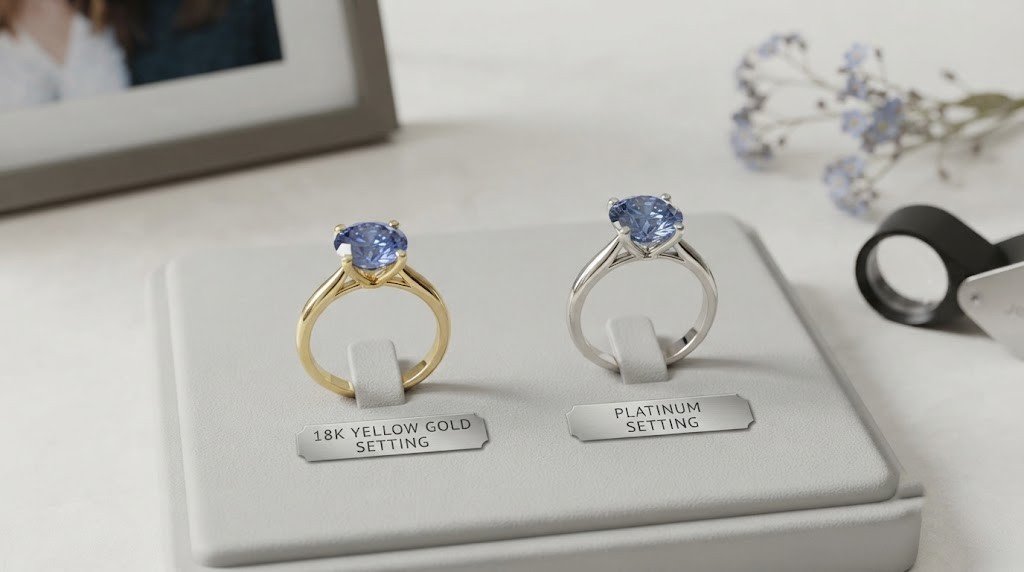
The setting can influence the overall appearance. The metal around a diamond may change the contrast you see between the stone and the jewelry. Compare the shade against the metal you plan to wear rather than relying only on a photograph of a loose diamond.
Before settling on one of the memorial diamond colors for a sister, use this checklist:
- Ask for photos or samples close to your intended carat size and cut.
- View the examples in daylight and ordinary indoor light.
- Compare them with the metal you wear most often.
- Ask whether the photographs show treated or untreated colors.
- Keep a written note of the color you selected.
- Confirm when the color choice becomes final.
The guide to settings and jewelry ideas for a sister’s stone covers how different metals can be paired with memorial diamonds.
If you are still deciding between a ring, pendant, or another keepsake, explore these ring, pendant, and keepsake ideas to picture how a colored stone might look in different jewelry styles.
Frequently Asked Questions
Can a memorial diamond change color over time?
Ask the provider for written care guidance for your particular stone. A color formed during growth and a color created through a separate treatment are different processes. Keep the documentation and share any care instructions with a jeweler who repairs or resets the piece.
Is a yellow memorial diamond lower quality than a colorless one?
No. Yellow, blue, and champagne are color options, not automatic indicators of poor quality. Colorless diamonds may cost more because they require additional processing, not because they carry greater emotional meaning. Cut, clarity, and carat are assessed separately.
Can I ask for a black or pink diamond for my sister?
Some providers offer black, pink, red, or green stones through post-growth treatment. Confirm that your provider offers the shade you want, ask for the treatment to be disclosed in writing, and check whether the specialty color affects the price or production schedule.
Will two stones grown from her ashes match each other?
Not necessarily. Each stone is produced in a separate growth run, so the final tones may vary even when the same source material and requested color are used. If matching is important, ask the provider how closely it can align the stones before placing multiple orders.
Does a grading report describe the color precisely?
An independent grading report may describe the diamond’s color alongside cut, clarity, and carat. An in-house origin certificate generally focuses on the stone’s documented connection to the submitted material. Independent grading is usually optional, so confirm the report’s scope and cost before ordering.
Can I change my mind about the color after growth starts?
Color decisions generally need to be made before growth or treatment begins, but each provider sets its own policies. Ask when the choice becomes final and whether changes are possible after the material enters production. Get the answer in writing before you approve the order.
Final Thoughts on Memorial Diamond Colors for a Sister
Color is one of the parts of this process where you can make a choice based on your own taste. The science influences which shades are possible, while you decide what you would like to see on your hand, around your neck, or in another piece of jewelry.
Memorial diamond colors for a sister are not a test with one right answer. Yellow, blue, champagne, and colorless stones can all be meaningful choices, and some providers offer additional treated shades.
If you are uncertain between two options, take your time. Compare real samples in daylight, view them against the metal you wear most, and ask the provider about treatment, documentation, cost, and timing.
The stone’s color does not determine the value of your memories or your relationship. Choose the shade you feel comfortable wearing or keeping, and make sure you understand the process before committing to an order.
Learn More About Sister Memorial Diamonds
Explore these related guides for more information:
- How Long Does It Take to Make a Sister Memorial Diamond? learn about the production schedule and factors that may affect it.
- Questions to Ask Before Turning Your Sister’s Ashes Into a Diamond prepare questions for a provider before ordering.
- Can More Than One Family Member Get a Diamond From the Same Sister’s Ashes? explore considerations when several family members want a stone.
- Sister Ashes Diamond: The Complete Guide understand the process from source material to finished stone.
Talk With Memorial Diamond
Questions about memorial diamond colors for a sister are welcome, whether you already have a shade in mind or are only beginning to explore the options.
Visit MemorialDiamond.us when you are ready to learn more. Take the time you need, ask clear questions, and choose the option that feels right for you and your family.