
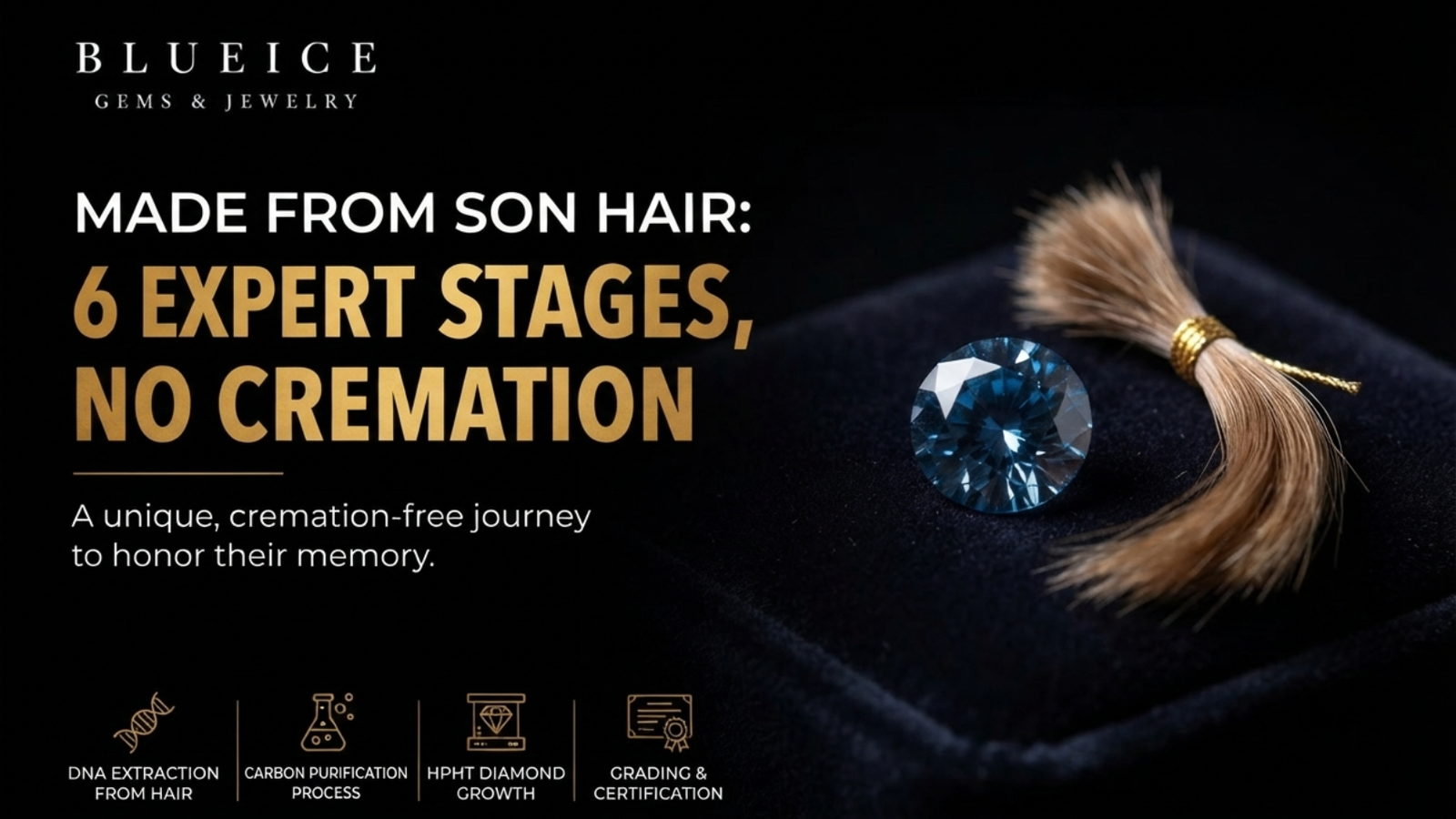
Almost every parent asks the same thing first, and it is not a question about chemistry: what will I actually be told, and when? A memorial diamond made from son hair is produced by extracting carbon from a small lock of his hair, purifying it, converting it to graphite and growing it into a real diamond over roughly six to ten months, and across that span there are about six moments when a laboratory genuinely communicates with you. This page is organized around those six moments rather than around the machinery.
Table of Contents
What Do You Send, and How Should You Prepare It?
The first point of contact is the one you control entirely. A diamond made from son hair typically begins with a small lock, often described across the industry as a few grams, or a palm sized amount, rather than anything approaching a full head of hair.
Most providers ask for hair in a clean, sealed paper envelope rather than plastic, since paper lets residual moisture escape. Bind it with thread so it does not scatter in transit. Write nothing on the hair itself. Labels belong on the envelope, and a stone made from son hair should never be delayed because a marker pen was used on the sample.
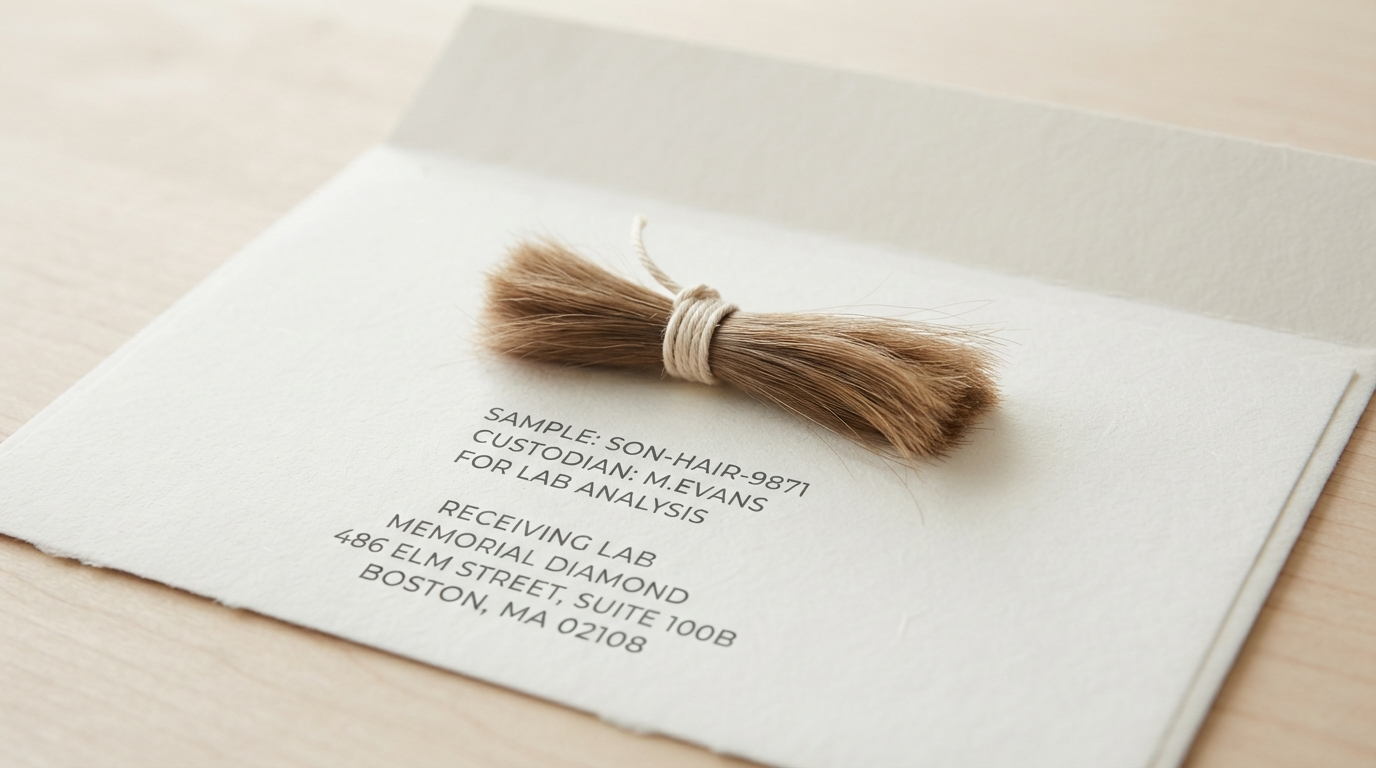
Where the hair came from matters far less than parents expect. A childhood lock kept in a book, an envelope from a barber, hair from a brush nobody emptied, a sample taken at a hospital or by a funeral director, any of these can become a diamond made from son hair, whether your son was six or sixty when he died.
Two things do matter, and both are worth mentioning at intake: whether the hair was bleached, dyed or chemically treated, and whether it is very fine or very short. Neither rules out a stone made from son hair, but both can change how much a laboratory asks you to send. How much hair a lab needs goes into the quantities properly.
Who Should You Speak To Before You Post His Hair?
This is the conversation parents most often skip, and the one most likely to matter later.
The rules governing what may be done with a person’s remains are written about the remains themselves. A lock of hair you have kept at home for years is therefore usually the simpler question in practice, but it is not a question with no answer at all. A decedent’s personal belongings can form part of his estate, the treatment varies from state to state, and where the sample sits in somebody else’s keeping, asking for it is a conversation rather than something you settle alone.
The people with standing are worth naming plainly. If your son was married, his surviving spouse may hold authority over his remains ahead of you, and in many states so may his own adult children. Anything he set down in writing can change that ordering. If any of his ashes are also involved, that authority question applies squarely and should be settled first.
None of this is a reason not to proceed. Parents commission a diamond made from son hair every week without difficulty, and a single parent arranging it alone, separated, widowed, or simply the one who can face the logistics, is entirely ordinary. How to turn his hair into a diamond walks through the same decision from the family’s side. Raise it early with whoever else loved him, and where the sample is not yours to begin with, ask rather than assume.
What Do You Hear Back in the First Fortnight?
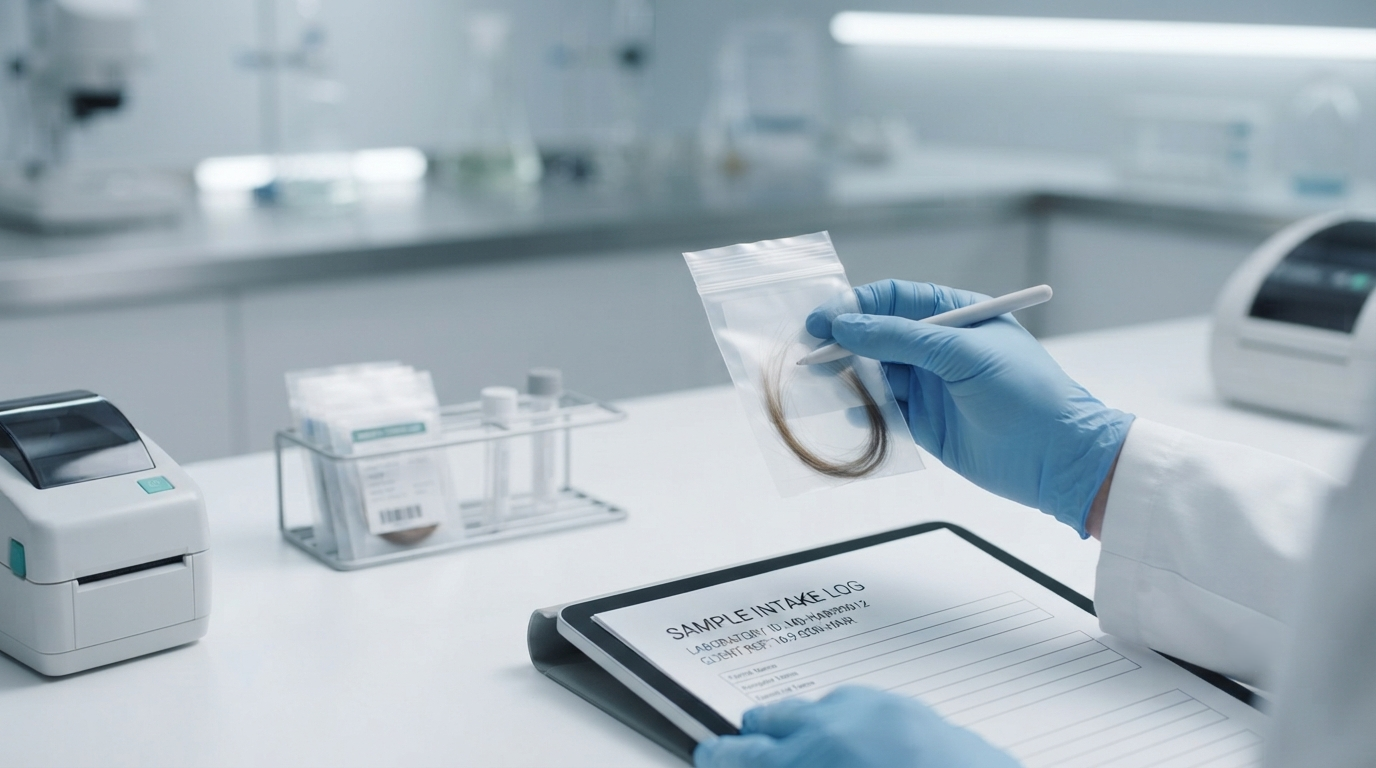
The second point of contact comes shortly after the package arrives. You should expect confirmation of receipt, an identifier assigned to the sample, and whatever intake paperwork that provider uses.
That identifier is the thread you can actually pull on later. Everything made from son hair in a given batch should be traceable against it from receipt to return, and you are entitled to ask to see that record at any stage rather than only at the end.
This is also when a laboratory will tell you if the sample is insufficient. It usually resolves with a second envelope. Hair from a brush, from an older keepsake, or from more than one collection point can generally be combined, and a diamond made from son hair grown from two envelopes is no different from one grown from a single lock.
Ask three things while you have someone’s attention: what the identifier is, what happens to hair not consumed, and whether the estimate quoted for a diamond made from son hair has changed now the material is weighed.
What Are You Told While a Diamond Made From Son Hair Grows?
Honestly: not very much, and that is the hardest part of the whole arrangement.
Between intake and cutting, a diamond made from son hair passes through stages that produce no photographs and no milestones a family can meaningfully witness. The hair is heated in a controlled, oxygen free, multi stage process that strips away everything that is not carbon, reaching roughly 99.9% plus purity. That purified carbon is then heated to somewhere around 2,500 to 2,700°C and converted into graphite. The graphite, combined with supplemental lab sourced carbon to reach a workable volume, goes into a growth cell around a tiny diamond seed.
Then a press holds that cell at pressures in the region of 6 to 8 gigapascals and temperatures between 1,400 and 2,500°C for weeks to months. A minority of providers grow by CVD instead, depositing carbon from gas onto a seed plate in a vacuum. Either way, the chemistry is the same as any other laboratory grown diamond, the origin of the carbon is what differs.
Here is what you should realistically expect to receive, and when:
| Point of contact | What you get | Typical timing |
|---|---|---|
| 1. You send the sample | Shipping instructions and an intake form | Week 0 |
| 2. Receipt confirmed | Identifier, chain of custody record, any request for more hair | Weeks 1 to 2 |
| 3. Extraction complete | Confirmation that carbon was successfully recovered | Weeks 3 to 10, varies widely |
| 4. Growth underway | Usually a start date and an estimated completion window | Varies |
| 5. Cutting and optional grading | Cut confirmation, a grading report if you ordered one | Near the end |
| 6. Delivery | The finished stone, its documentation, any returned hair | Month 6 to 10 typically |
Ask at the outset which of these six you will actually be contacted at, because providers differ enormously, and a diamond made from son hair grown in near silence for eight months is a very different experience from one with a check in at every stage.
What Should You Ask at Each of the Six Points?
These are the questions parents most often wish they had asked earlier. Put them in an email, so the answers survive a change of staff.
- Before you send: how much hair do you need for the size I want, and does treated or fine hair change that figure?
- Before you send: what is your contingency if the sample turns out to be insufficient once weighed?
- At intake: what identifier have you assigned, and may I see the custody record for anything made from son hair in this batch?
- After extraction: did the recovery go as expected, and has anything about my quote changed?
- Before growth: what proportion of this diamond made from son hair do you estimate will be carbon recovered from him, and on what basis?
- Before growth: what color range are you expecting, and what happens if the stone falls outside it?
- Before delivery: is the grading report independent or in house, and is it inside my quoted price?
- Before delivery: what unused hair comes back, and in what packaging?
A provider who answers all eight plainly is telling you something useful about how a stone made from son hair will be handled for the next eight months. Questions to ask first expands each of these.
What Happens If Something Goes Wrong Midway?
Growth runs fail sometimes, and so do extractions. A provider who never mentions that possibility is not being straight with you.
The likeliest early problem is yield: not enough usable carbon recovered from the sample supplied. That is normally solved with a second envelope, which is one reason many parents keep some hair back rather than sending everything they have.
Later, a crystal can grow heavily included, grow off axis or fracture. A diamond made from son hair is no more prone to that than any other laboratory grown stone, but it hurts more, because the starting material is not replaceable in the ordinary sense.
Ask, before you commit, what a second attempt involves: whether it is included, whether it requires more hair, and how long it adds. Ask too what happens to material already consumed if you decide to stop. This is ordinary diligence, and a laboratory that grows stones made from son hair regularly will have answered it many times. The step by step version sets the sequence out in order.
How Much of a Diamond Made From Son Hair Is Actually His?
Here is where you should be told the truth rather than a percentage that sounds reassuring.
Hair is rich in carbon to begin with, keratin, the protein it is built from, puts hair at roughly 50% carbon by weight. That is a fact about what goes in, the reason hair based stones need so little material and no cremation at all. It is not a statement about what comes out.
There is no published, industry wide figure for what proportion of a finished stone made from son hair is personal carbon. Percentages you may have read elsewhere, the 10 to 15% band, for instance, are published for the ash route and do not transfer to hair. Anyone quoting you a confident figure for a diamond made from son hair should be asked exactly where that number came from, and from which route.
So ask your provider directly, and ask for the answer in writing: what proportion of this specific stone do you estimate will be carbon recovered from his hair, and how did you calculate it? A laboratory that grows stones made from son hair routinely can answer that. One that cannot, or will not, has told you something useful in itself.
What is true regardless is that supplemental lab sourced carbon is always part of the charge, because the recovered material alone is not enough volume to grow a gem of meaningful size. No diamond made from son hair is 100% him, and none needs to be for a real, verifiable part of him to be inside the crystal. Whether the stone is genuinely his examines that claim in detail.
What Will You Be Told About Color?
Usually a range, and rightly so, no responsible laboratory will commit to a precise shade in advance.
Trace nitrogen present during growth tints a crystal yellow. Trace boron tints it blue. A white stone requires that effectively neither element got in, which is difficult when the carbon originated in a living body rather than an industrial feedstock. That is why a diamond made from son hair tends toward yellow, blue, champagne or brown tones rather than colorless.
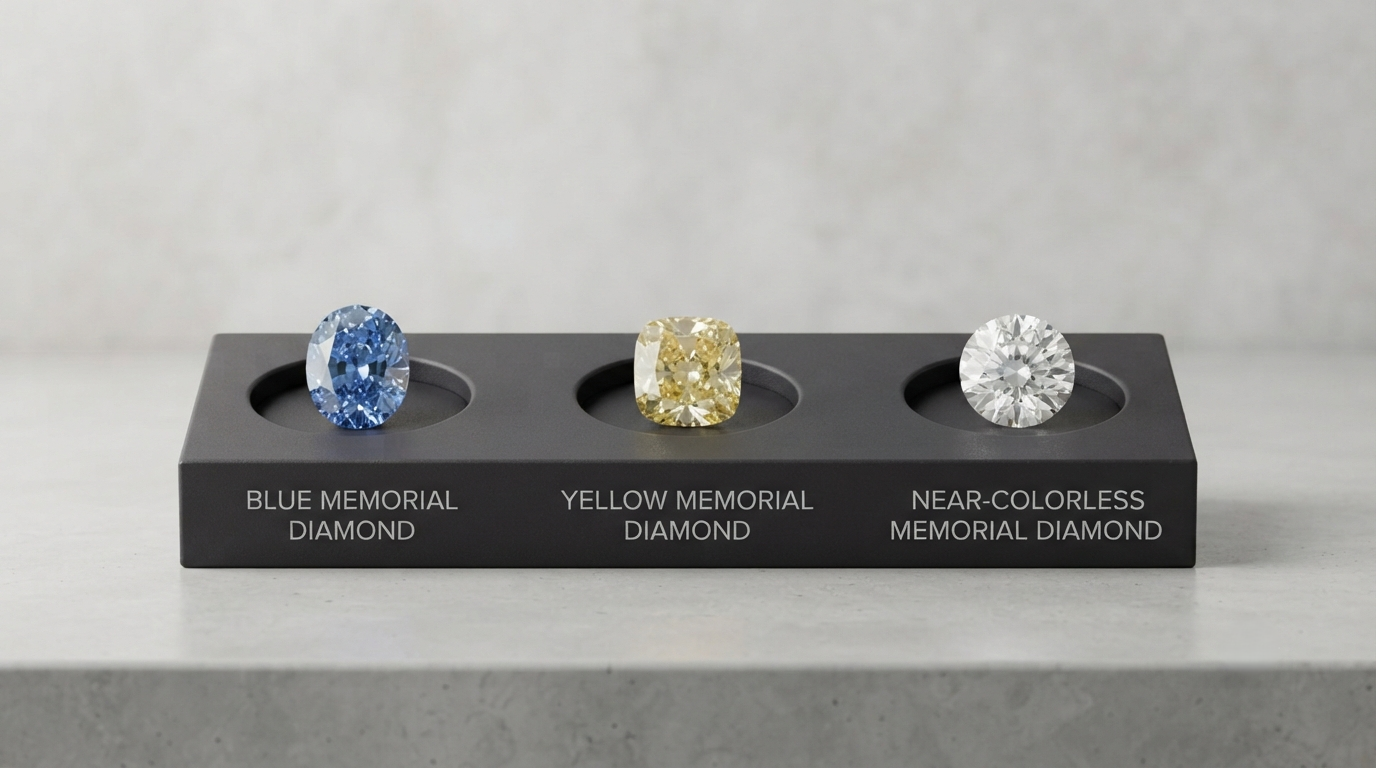
Colorless is achievable with additional processing and generally costs more. Some providers also offer post growth irradiation to produce red, pink, green or black, and if you order it, a grading report should disclose it.
What a good provider will tell you is which range is likely for a diamond made from son hair and why, and what they will do if the result falls outside it. What no provider can honestly tell you is the exact color of a stone made from son hair before it has been grown. What color to expect covers the likely range in more depth.
What Arrives at the End, and What Should Be in the Box?
The sixth point of contact is the one parents rehearse in their heads for months. It is worth knowing in advance what should arrive with a diamond made from son hair.
- The stone itself, loose or already set, depending on what you ordered.
- An origin or authenticity document, issued by the provider, recording that this diamond was grown from your family’s submitted material. This is a chain of custody record, not a quality assessment.
- A grading report, if you asked for one, ideally from an independent third party laboratory, documenting the cut, color, clarity and carat weight. Independent grading is optional across this industry, not standard.
- Any unused hair, if the provider returns it and you asked them to.
- Care and setting information, if the stone is loose.
Every one of those items should be checked against the identifier you were given at intake before the box is closed and shelved. If a diamond made from son hair arrives with paperwork that does not reference the original record, ask about it before you put the box away.
A finished stone made from son hair is a genuine diamond in every testable respect, the same hardness, the same optical behavior, the same grading criteria. It can be set in a ring and worn daily without special handling.
What Does the Waiting Cost, in Time and Money?
The industry band runs from roughly six months to roughly ten, measured from receipt of material rather than from the day you first inquire. Larger stones, beyond about two carats, and specialty colors such as black can extend that toward twelve.
Size is a function of growth time, not of how much hair you sent, and this surprises almost everyone. A diamond made from son hair grown to two carats simply spent longer in the press than one grown to half a carat. Posting a larger lock does not shorten the wait or enlarge the stone, and a diamond made from son hair is quoted by finished carat rather than by input weight.
General industry pricing for 2026, not any single company’s published rates:
| Finished size | Typical range | What moves the number |
|---|---|---|
| 0.10 to 0.25 ct | About $1,500 to $3,500 | The usual starting tier |
| 0.5 to 1.0 ct | About $5,000 to $15,000 | Colorless costs notably more than yellow or champagne |
| 2 to 5+ ct | About $20,000 to $75,000+ | Growth time rises steeply |
Settings, engraving, unusual cuts and independent grading reports are normally priced separately. Ask which sit inside your quote, that single question resolves most of the reported sticker shock. How long the process takes sets out the calendar in more detail.
Frequently Asked Questions
If he was buried rather than cremated, is a diamond made from son hair still an option?
Yes, and this is one of the clearest advantages of the hair route. No cremation is required at any point, so a lock kept from before his burial, from a childhood haircut, or from a hairbrush works exactly the same way chemically as any other sample.
Does hair from a hairbrush work as well as a cut lock?
It generally does. Brush hair is often mixed with other people’s and carries product residue, so a laboratory may ask for more of it, but the keratin itself is identical. Say at intake where the sample came from so the quantity can be judged properly.
Does gray, bleached or dyed hair change anything?
Possibly the quantity requested, rather than the outcome. Bleaching and dyeing alter hair’s surface chemistry and can reduce usable yield, so some laboratories ask for a larger sample. Mention any treatment at intake rather than after the material has already been processed.
How long can hair be kept before it is used?
Indefinitely, if it stays dry. Keratin is stable and does not decay in the way soft tissue does, so hair kept in an envelope or a locket for decades remains perfectly usable. Store it somewhere dry and dark until you are ready.
Can more than one stone come from a single lock?
Sometimes, depending on the weight you send and the sizes chosen. Because a portion may remain after extraction, several family members can occasionally each receive a stone from one collection. Confirm feasibility and per stone pricing before ordering rather than afterwards.
Will the finished diamond look different from a mined one?
Not to the eye. It has the same hardness, brilliance and grading criteria as any other diamond, and its color sits in the same range as other fancy colored stones. Gemological testing identifies it as laboratory grown, which is accurate and expected.
Final Thoughts on a Diamond Made From Your Son’s Hair
The part nobody prepares you for is the middle. The envelope goes, the confirmation arrives, and then there are months in which nothing visible happens at all, and for a parent, months of nothing can be considerably harder than months of activity.
Knowing in advance which six moments will actually involve you makes that stretch easier to sit with, and it is the main practical reason to read about how a diamond made from son hair is produced before commissioning one rather than after. So does knowing what you will be told at each one, and what you are entitled to ask for rather than wait to be offered.
A diamond made from son hair is a small, concrete thing: carbon that was part of him, in a form you can wear. It does not finish anything or replace anything, and it sits perfectly well alongside a grave, an urn, a scattering, or a shelf you have not touched. Nothing about commissioning a stone made from son hair rules out a single one of those.
Learn More About Son Memorial Diamonds
- Son hair diamond: the complete guide, the whole subject in one place
- How to turn his hair into a diamond, the decision side walkthrough
- The step by step version, laid out as an ordered sequence
- Questions to ask first, what to establish before you post anything
- How much hair a lab needs, quantities, treated hair, brush samples
Talk With Memorial Diamond
If you want to understand what you would actually be told and when, rather than read another process diagram, reach out to Memorial Diamond at memorialdiamond.us and ask about the hair you have. There is no form to complete first, and no timeline you are behind on.
Word count: 3,042 words
Reading time: about 15 minutes