Whether your sister’s ashes already rest in an urn or the decision is still ahead, you might wonder whether a diamond would let you carry her memory differently. A sister memorial diamond vs urn decision is rarely an either-or choice. An urn keeps her cremated remains together in one place, while a memorial diamond is a real lab-grown diamond created using carbon recovered from a small portion of the ashes. The two can exist side by side.
Both options offer meaningful ways to remember someone you love. The right choice depends on your family’s wishes, your beliefs, your budget and how you would like to keep her memory close. Understanding the differences can help you make a thoughtful decision without feeling that one option is more meaningful than the other.
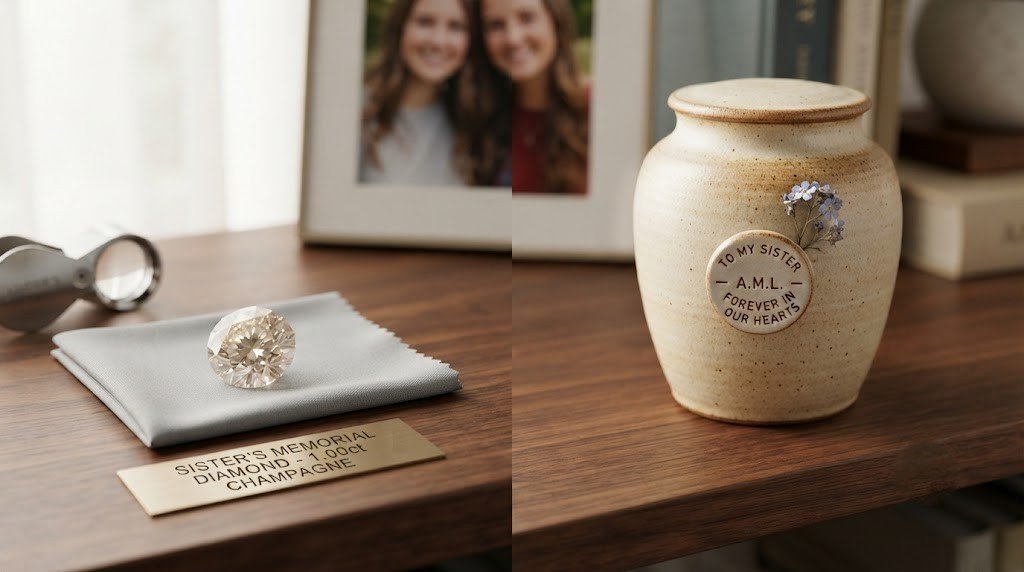
Table of Contents
What Does Each Option Actually Keep of Her?
An urn holds her cremated remains as they are. Nothing needs to be extracted or transformed. The ashes returned by the crematory are placed in a container chosen by the family. The urn may remain at home, rest in a columbarium niche or be buried, depending on family preferences, applicable rules and religious or cultural practices.
Urns are available in many materials, including metal, wood, stone, ceramic, glass and biodegradable materials. They also come in different sizes, from full-size urns to small keepsake containers that hold a portion of the ashes.
The diamond side of the sister memorial diamond vs urn comparison preserves something different: carbon recovered from a portion of the ashes. Cremated remains consist largely of mineral material from bone, and the amount of usable carbon varies. The provider extracts and purifies the available carbon before preparing it for diamond growth. Providers may also combine personal carbon with supplemental laboratory carbon, depending on their process.
A memorial diamond is a real diamond, typically grown using high-pressure, high-temperature (HPHT) technology. Some providers use chemical vapor deposition (CVD). The resulting diamond can be cut and polished into a chosen shape and kept as a loose stone or set into jewelry.
The important distinction in a sister memorial diamond vs urn decision is that the urn keeps her cremated remains together, while the diamond carries some of the recovered carbon in a new form. A diamond should not be described as containing all her ashes, and an urn is not a less meaningful memorial simply because its contents remain unchanged.
How Does a Sister Memorial Diamond vs Urn Comparison Look Side by Side?
Comparing the practical differences can help you decide which option suits your needs. The table below covers eight considerations, including what each option preserves, cost, portability, ownership, durability, timing and religious concerns.
| Point of Comparison | Traditional Urn | Sister Memorial Diamond |
|---|---|---|
| What it preserves | Her cremated remains, kept together and unchanged. | Carbon recovered from a portion of the ashes, potentially combined with laboratory carbon. |
| Typical cost | Varies widely by material, size, design and maker. | General industry estimates range from about $1,500 to $3,500 for 0.10 to 0.25 carats, with larger stones costing substantially more. |
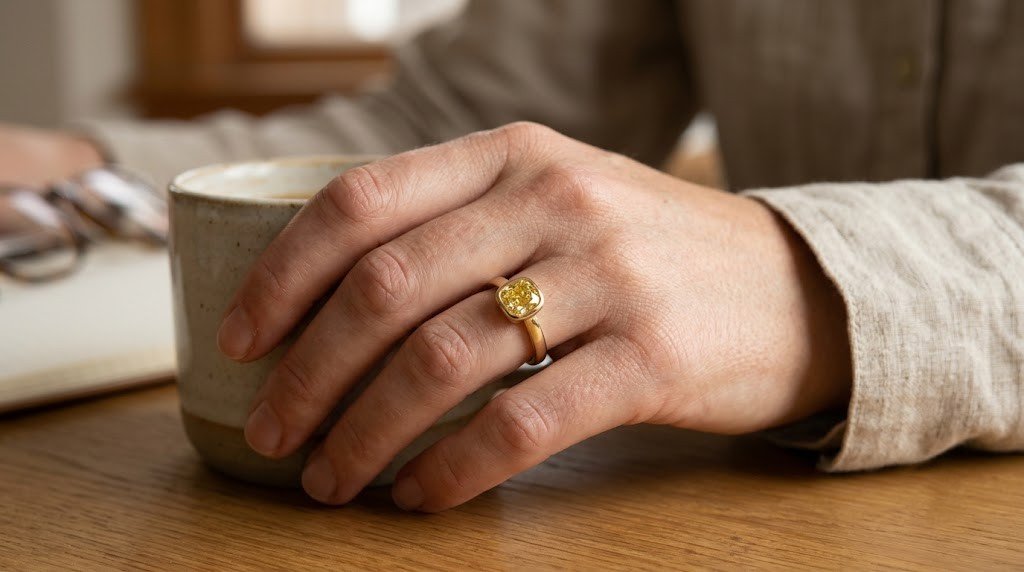
| Portability | Usually kept in one place, such as a home, niche or grave. | Can be worn as jewelry or carried as a loose stone. |
| Who keeps it | Often the person authorized to receive or manage the remains, subject to applicable rules. | May be kept by the person who orders it, with appropriate authorization for the material used. |
| Durability | Depends on the urn’s material and storage conditions. Some biodegradable urns are designed to break down. | Diamond ranks 10 on the Mohs hardness scale, but a hard impact can still chip it. |
| Timing | Generally available once the remains are returned and the urn is selected. | Typically takes months to produce, with general estimates of 6 to 10 months from receipt of the material. |
| Religious considerations | May fit traditions that permit cremation, although some traditions specify how ashes should be kept or laid to rest. | Involves setting aside a portion of ashes, and religious views on this practice vary. |
| Long-term options | Can remain in one place or be moved between homes, depending on the family’s wishes. | Can be kept as a loose stone, set in jewelry or passed on to another person. |
Think of these differences as trade-offs rather than a scorecard. In a sister memorial diamond vs urn comparison, an urn offers an immediate way to keep her remains together. A diamond offers portability and the possibility of carrying a personal keepsake, but it generally involves a longer wait and a larger financial commitment.
Budget may influence your decision. Memorial diamond prices vary according to carat size, color, cut and provider. Settings, engraving and independent grading may also be quoted separately. The figures above are general industry estimates, not confirmed Memorial Diamond prices. For more detail, read our sister memorial diamond cost breakdown.
Why Does the Urn Often Stay With Whoever Holds Authority?
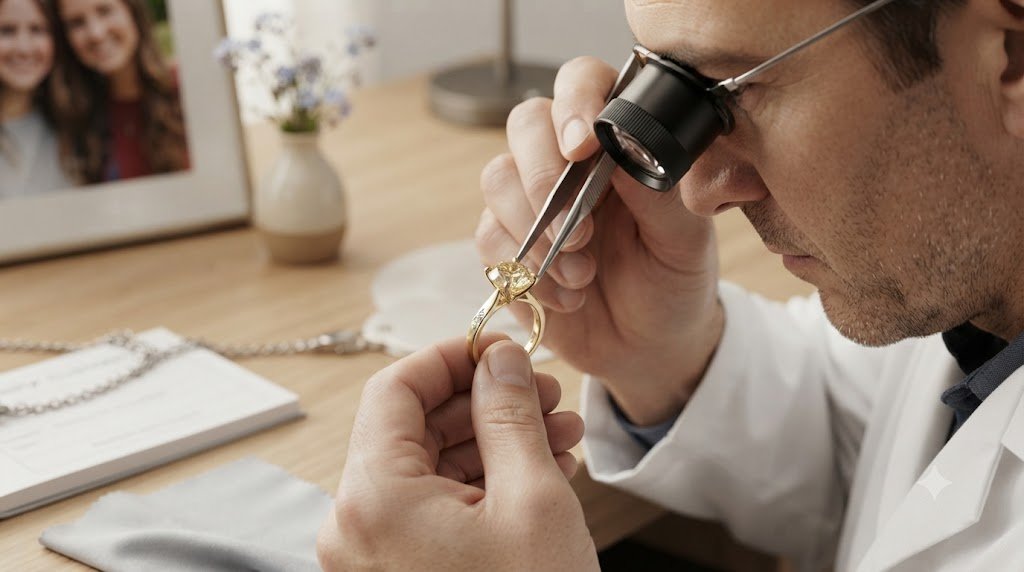
This is an important part of the sister memorial diamond vs urn decision for siblings. The person who wants to keep the urn may not be the same person who feels most connected to the memory of the person who passed away.
Practices and legal requirements vary by state and crematory. The remains are generally released to the person authorized to receive them or someone that person designates. That individual may then decide where the urn is kept, subject to applicable law and any relevant instructions.
In some states, a spouse or registered partner, adult children or parents may have priority over siblings when decisions about remains must be made. There is no single national rule that applies to every situation. Your sister’s written wishes, any appointed representative and the applicable state law may affect who has authority.
As a result, the urn may remain with her spouse, partner, adult child or parent, while you visit it rather than keep it yourself. That arrangement does not measure the strength of your relationship with her. It reflects the practical responsibilities and rules surrounding her remains.
For some siblings, part of the appeal of a sister memorial diamond vs urn decision is that a diamond may offer a personal keepsake they can keep close, even if they do not hold the urn. However, using a portion of the ashes still requires appropriate authorization.
If you are unsure who signed the cremation authorization, the funeral home or crematory may be able to clarify the records. A local attorney can explain how your state’s requirements apply. If you need to ask a family member for a small portion of the ashes, a specific and respectful conversation can help. Our guide to talking with family about a sister memorial diamond offers additional guidance.
Can a Stone and an Urn Coexist?
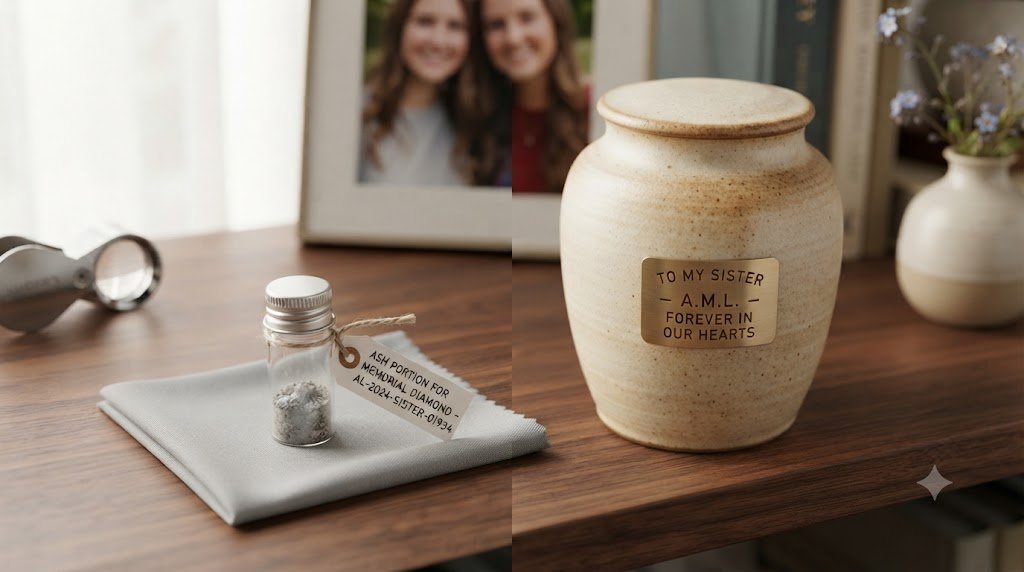
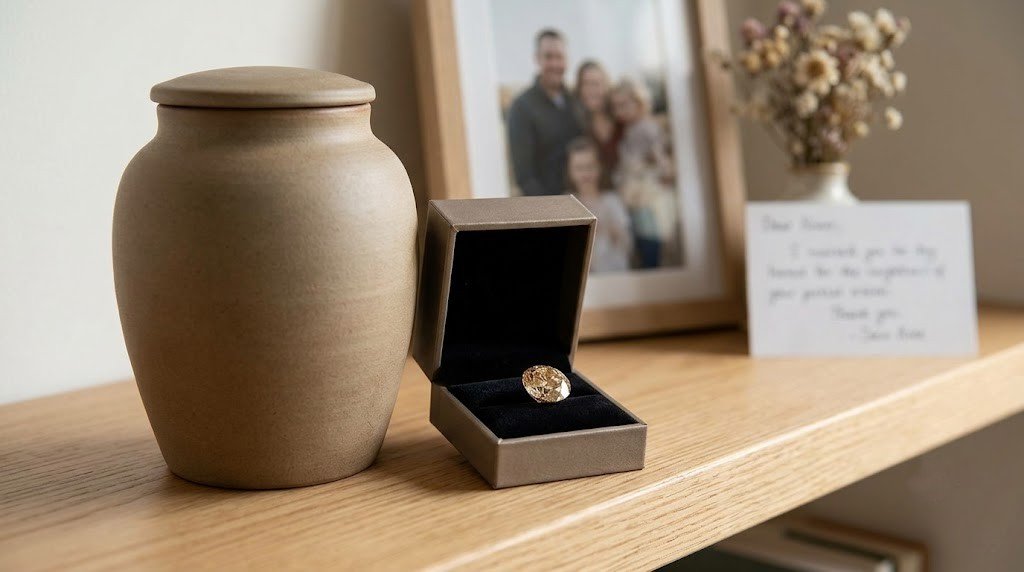
Yes. This may be the most helpful way to think about the sister memorial diamond vs urn question. Choosing a memorial diamond does not necessarily mean giving up the urn or using all the ashes.
Providers have different material requirements. Some request a few tablespoons of ashes, while others may request a larger amount, potentially up to about 4 ounces or 100 grams. The quantity depends on the provider’s process and should always be confirmed before sending anything.
For many families, setting aside an authorized portion allows most of the ashes to remain in the urn. The urn can stay in its existing place while a diamond is created from the portion provided. You do not need to empty the urn to explore both options.
Sending more ashes does not automatically make a larger or faster-growing diamond. The final carat size depends on the growth process and other production factors, so provide only the amount the provider requests.
If your family chooses both a diamond and an urn, consider these steps:
- Agree on the portion. Discuss the amount with the person authorized to make decisions about the remains and obtain the necessary permission.
- Arrange careful handling. Ask the funeral home or an authorized family member to help transfer the portion into an appropriate sealed container.
- Document the arrangement. Record the date, the amount and who the portion is intended for.
- Keep the urn in its chosen place. The remaining ashes can stay in the urn, whether it is kept at home, in a niche or elsewhere.
- Follow the provider’s shipping instructions. Use the approved packaging and shipping method rather than improvising.
Several relatives may be able to receive individual stones from one source, depending on the amount of usable material and the provider’s process. Our guide to sharing her ashes among several relatives covers authorization, separate records and written agreements.
Where Do Keepsake Urns and Other Options Fit In?
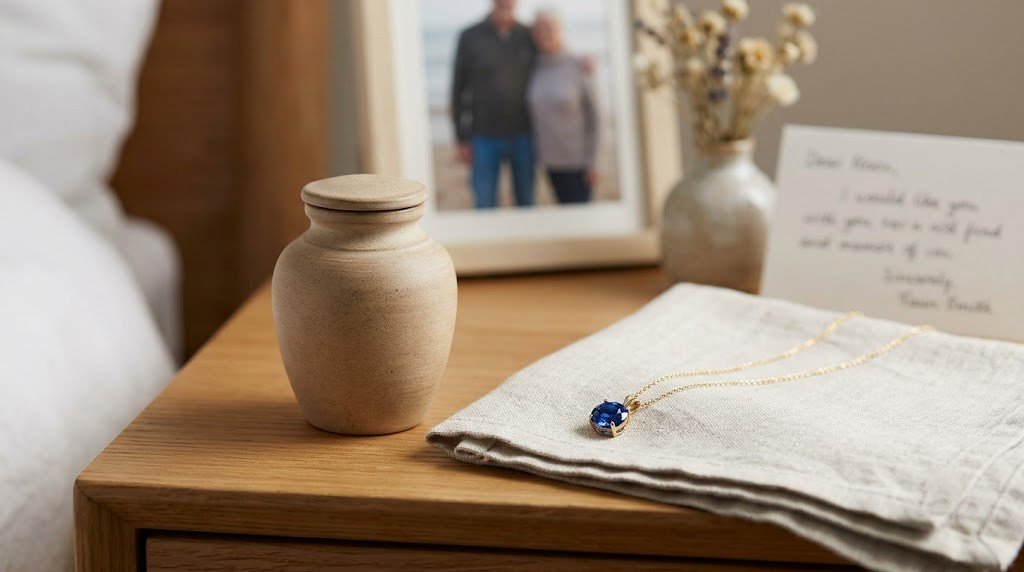
Thinking only in terms of a sister memorial diamond vs urn choice can overlook useful alternatives. A keepsake urn, for example, is a smaller container designed to hold a portion of cremated remains. It lets more than one family member keep some of her ashes unchanged, provided the arrangement is authorized and acceptable to the family.
For someone who values keeping actual ashes rather than carbon in a new form, a keepsake urn may be a better fit than a diamond. Its cost depends on the material, size, design and maker.
Other possibilities include:
- A memorial pendant with a sealed chamber: Some pendants can hold a small portion of ashes while keeping them in their original form.
- Scattering ashes: Some families choose a place that mattered to their loved one, subject to local rules and permission.
- Burial of the urn: A family plot or cemetery may provide a dedicated place to visit and remember her.
- A hair-based memorial diamond: If suitable hair was kept, a provider may be able to use it without using cremated remains. Confirm the requirements and any necessary authorization first.
None of these options is inherently better than another. Each meets a different need: having a place to visit, carrying a keepsake, keeping ashes unchanged or creating something new. Families can combine options when their wishes and circumstances allow.
How Do Cost and Care Compare Over the Years?
A sister memorial diamond vs urn comparison should include the total cost, not just the initial purchase price. Both can involve a one-time purchase, but additional services and placement arrangements may affect the final amount.
For a memorial diamond, ask whether the quote includes the finished stone, cutting and polishing, independent grading, engraving, the jewelry setting and shipping. Each provider structures its pricing differently, so request an itemized quote before committing.
Urn prices also vary considerably according to material, craftsmanship and design. If the urn will be placed in a columbarium or cemetery, ask about placement, opening, maintenance or other applicable fees. These costs depend on the facility and arrangement.
Day-to-day care is different for each option. Diamond ranks 10 on the Mohs scale of mineral hardness, which means it resists scratching very well. However, hardness does not make it impossible to damage. A hard impact at the wrong angle can chip a diamond, and a jewelry setting can loosen over time. Ask a jeweler to recommend suitable inspections and care.
An urn kept at home needs a stable location away from accidental knocks, pets and other hazards. An urn placed in a niche may require little day-to-day attention, although any maintenance or access arrangements depend on the facility.
Insurance is another point worth checking. Ask an insurer whether a memorial diamond or a valuable urn can be covered, what documentation or appraisal is required, and how the item would be assessed under your policy. Coverage varies, so do not assume either item is automatically insured.
Over time, both items may be passed to another family member or trusted person. A ring or pendant can be inherited, while an urn may move between households as family circumstances change. Writing down your wishes about who should eventually receive each item can help prevent uncertainty later.
Does Faith Change the Sister Memorial Diamond vs Urn Decision?
Religious beliefs may be an important part of a sister memorial diamond vs urn decision. Views on cremation, dividing ashes and keeping remains vary across faiths, denominations, communities and individual families. General teachings about cremation do not necessarily answer every question about memorial diamonds specifically.
The following overview is general information, not a substitute for guidance from your own religious leader. If faith is central to your decision, ask someone familiar with your tradition and your family’s circumstances.
- Catholic: Catholic guidance permits cremation under specified conditions and generally directs that cremated remains be kept together in a sacred, approved place rather than divided among relatives or kept privately at home. Specific questions about setting aside a small portion for a diamond should be discussed with a knowledgeable Catholic clergy member.
- Jewish: Views and practices differ among Jewish movements and communities. Orthodox and Conservative traditions generally oppose cremation, while Reform communities may approach the issue differently. Ask your rabbi about your family’s circumstances and any concerns about dividing or transforming remains.
- Muslim: Cremation is generally prohibited in mainstream Islamic practice. A diamond made from hair raises a different question from one made using cremated remains, but religious guidance should still be sought for your particular situation.
- Hindu: Cremation is a traditional funeral practice, and immersion of ashes in sacred waters is customary in many communities. Whether a portion may be retained for a keepsake or memorial diamond depends on family, regional and community practices.
- Buddhist: Cremation is practiced in many Buddhist traditions, although customs vary. Views on keeping remains or turning them into a keepsake may differ among teachers and communities.
- Protestant: Practices vary by congregation and denomination. Some communities accept cremation without concern about dividing ashes, while others may have specific views about how remains should be treated.
- Secular or non-religious: The choice is generally guided by personal meaning, family agreement and any wishes expressed by the person who passed away.
If dividing the ashes is not acceptable to your family, the sister memorial diamond vs urn decision does not necessarily have to end there. A hair-based memorial diamond may be an alternative if suitable hair is available and its use is authorized. Read our sister hair diamond guide for more information. Before using hair kept at home, check with the executor or person responsible for the belongings, as ownership and estate rules can vary.
Which Questions Help You Decide?
There is no universal right answer to the sister memorial diamond vs urn question. The goal is to choose an option that respects your sister, fits your family’s circumstances and feels right to you.
These questions may help you clarify your priorities:
- Who is authorized to make decisions about her remains, and what do they want?
- Did your sister express her wishes verbally or in writing?
- Would you prefer to keep her remains unchanged or carry a portion of the recovered carbon in a new form?
- Would you wear a memorial stone regularly, or would you prefer to keep it somewhere safe?
- What can you comfortably spend, and would it be better to make the decision later?
- Do your religious beliefs or family traditions call for the ashes to remain together?
- If using ashes is not suitable, would a hair-based memorial diamond be an option?
- Who will care for the urn and any memorial jewelry in the years ahead?
If your answers point toward a diamond, our guide to choosing a memorial diamond for your sister explains where to begin. If you prefer to keep the ashes together, an urn can be a complete and meaningful choice in its own right.
Where Does Memorial Diamond Stand in This Comparison?
Memorial Diamond offers memorial diamonds, so we have a direct interest in one side of the sister memorial diamond vs urn comparison. It is important to say that openly. A traditional urn is a complete and dignified memorial, and this guide is not intended to suggest otherwise.
The two options preserve different things and serve different preferences. An urn keeps cremated remains together, while a memorial diamond offers another way to keep a part of a loved one close. Some families may prefer one option, while others may choose both.
If you are exploring the process for the first time, our complete guide to sister ashes diamonds explains the broader journey from source material to finished stone.
Take time to compare the process, current pricing, material requirements and expected production timeline before making a decision. The best choice is the one that fits your circumstances, your family’s wishes and the way you want to remember your sister.
Frequently Asked Questions
Is a memorial diamond more respectful than keeping her in an urn?
No. A sister memorial diamond vs urn decision is not a test of devotion. An urn keeps her cremated remains together, while a memorial diamond carries a portion of recovered carbon in a new form. Respect comes from honoring her wishes, considering your family’s circumstances and making a thoughtful decision. Either option can be meaningful.
Can I still get a diamond if the urn is already in a niche or buried?
Possibly, but accessing an urn in a niche or cemetery may require permission from the responsible person and the facility. There may also be fees or additional procedures. A memorial diamond made from suitable hair may be an alternative, provided its use is appropriate and authorized.
Will taking ashes for a diamond leave the urn noticeably emptier?
Usually, the quantity requested is only a portion of the remains, but the exact amount varies by provider. Ask the provider how much material is required, and agree on the portion with the person authorized to make decisions about the ashes before anything is removed.
Can ashes kept in an urn for years still be used for a diamond?
They may be suitable, even after years of storage, but each provider has its own material requirements. Keep the urn appropriately sealed and stored, and ask the provider whether the age and storage conditions of the ashes affect its process.
What if her spouse keeps the urn and I would like a stone?
You can ask her spouse respectfully whether they would consider allowing a small portion of ashes to be used. If they hold the relevant authority, their approval may be required. A funeral director or local attorney can help clarify the applicable rules if the situation is complicated.
Which costs more over time, an urn or a memorial diamond?
The answer depends on the choices involved. Memorial diamonds can cost substantially more than many urns, particularly as carat size increases or when optional services are added. Urn costs also vary, and cemetery or columbarium fees may apply. Compare the full quoted costs, including any setting, grading, placement and maintenance charges.
Final Thoughts on Diamonds, Urns and Your Sister
Sometimes, the sister memorial diamond vs urn comparison becomes easier once you realize that the two options do not have to compete. The urn can remain where it is, keeping her remains together, while a small authorized portion is used to create a diamond you can carry. Other families decide that the urn is exactly what they want, and that decision is complete in itself.
There is no need to choose a diamond to prove how much you loved your sister. Nor do you need to keep every part of her remains in one place to honor her memory. Think about her wishes, your family, your beliefs and what will bring you comfort over time.
Whatever you choose, let the decision come from what feels right for your family rather than from the idea that one option demonstrates more love than another.
Learn More About Sister Memorial Diamonds
- Sister Ashes Diamond: The Complete Guide learn about the process from ashes to a finished stone.
- Can More Than One Family Member Get a Diamond From the Same Sister’s Ashes? explore considerations when several relatives want a stone.
- Sister Memorial Diamond Ideas: Rings, Pendants, and Keepsakes discover ways to wear or keep a memorial stone.
- How Much Does a Sister Memorial Diamond Cost? review general price considerations and potential add-ons.
Talk With Memorial Diamond
If you are weighing a sister memorial diamond vs urn decision or wondering whether both could work for your family, visit Memorial Diamond. You can ask questions about material requirements, authorization, timing and available options before deciding. Take the time you need to choose an approach that feels right for you and your family.