
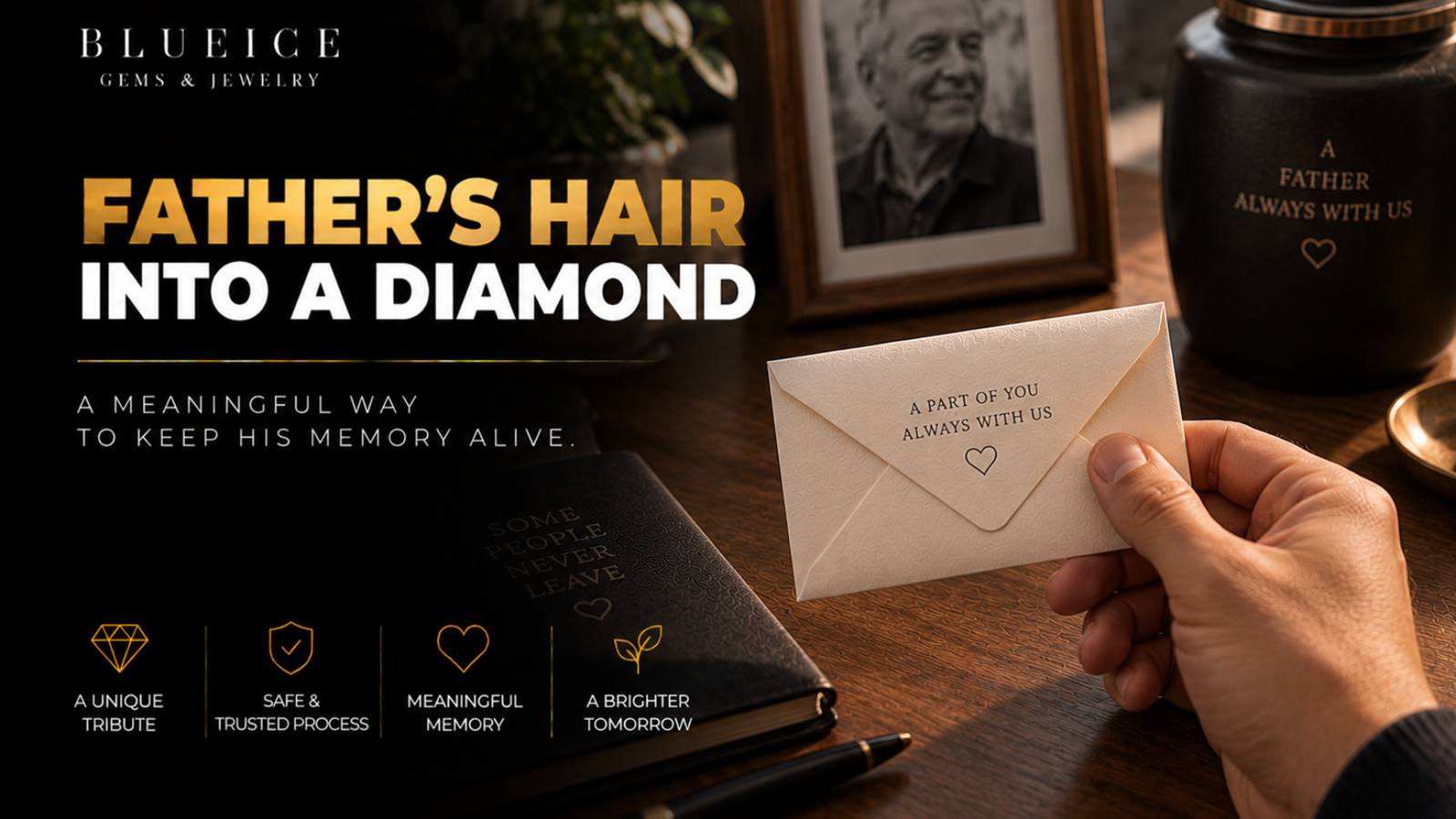
Somebody found an envelope. Maybe it came from a barber’s shop, a small pouch from a grooming kit, or the back of a drawer. You are holding it now, and you do not know whether what sits inside contains enough hair.
The direct answer is simple. Turning your father’s hair into a diamond requires no cremation, no death certificate, and no special courier. Hair contains roughly 50 percent carbon by weight. An industry typical requirement involves a small lock or a few grams. You can usually send hair through ordinary tracked mail.
Before you cut, divide, wash, or send anything, weigh what you have and confirm the provider’s minimum requirement in writing.
Does Hair Have the Same Shipping Restrictions as Ashes?
No, and this is one of the most useful things to understand before you begin.
Cremated remains involve regulated shipping requirements. UPS, FedEx, and DHL restrict individual shippers from sending cremated remains. Families who post cremated remains directly generally use USPS under the applicable service requirements, or they work through a funeral professional.
You can read the ashes version of this process for the specific differences.
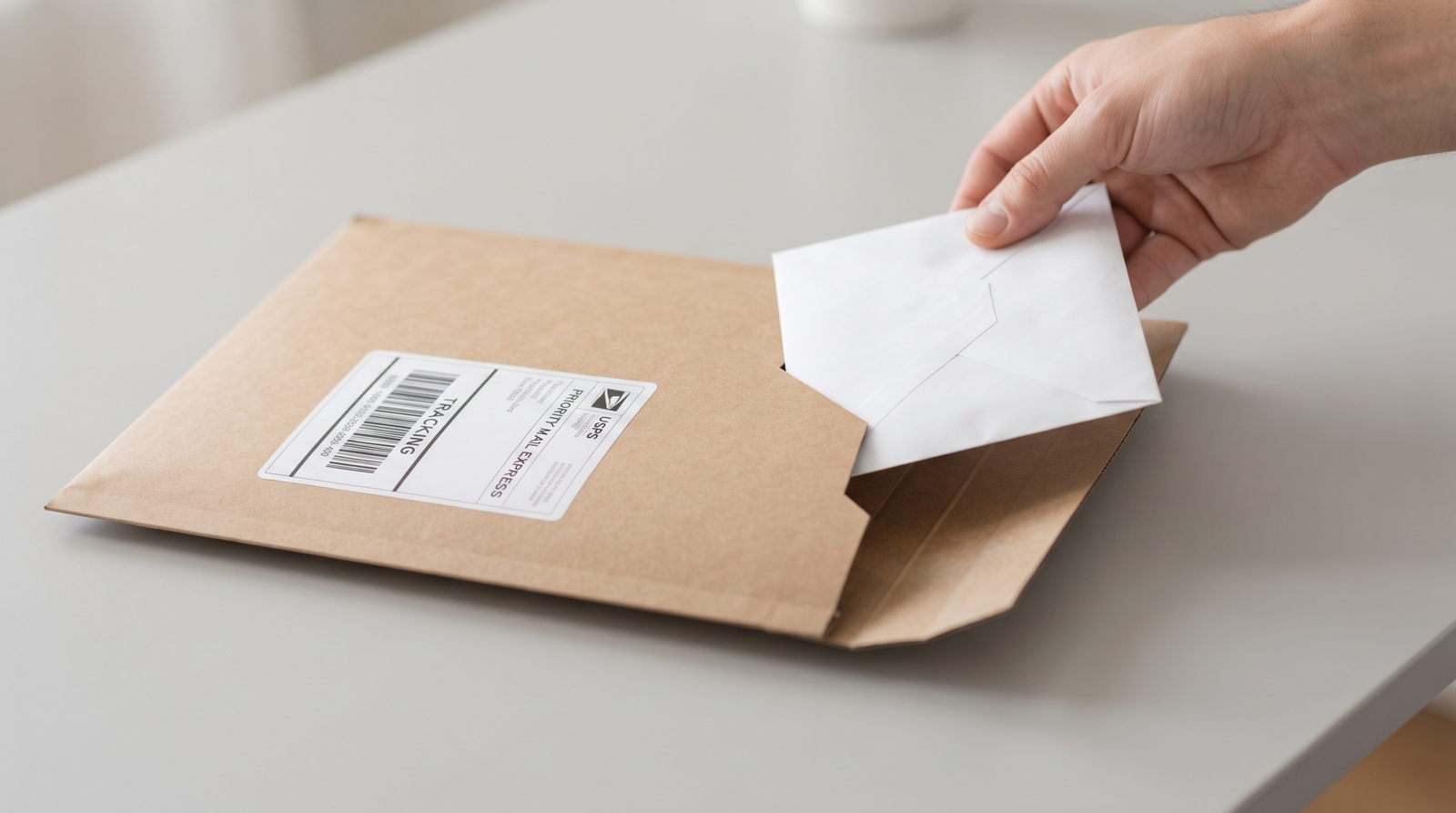
Hair does not follow the same shipping rules. A lock of your father’s hair can travel through ordinary mail. You still need to protect it physically because loose strands can escape from a weak envelope during sorting.
Use a sealed paper inner envelope inside a rigid mailer. Add tracking so you can follow the delivery.
| A lock of his hair | His cremated remains | |
|---|---|---|
| Carrier restrictions | No specific restriction for hair | UPS, FedEx, and DHL restrict individual shippers. USPS provides the practical direct mailing route for families |
| Paperwork | No cremation paperwork required | Providers may request cremation or death documentation |
Hair therefore creates a different kind of responsibility. No external shipping process checks the contents for you. Your own handling, documentation, packaging, and tracking create the safeguards.
When What You Found Is Short, Sparse, or Not Clearly His
Weight matters more than length. Short clippings, beard hair, thinning hair, and other forms of hair can raise questions that you should settle before mailing anything.
The complete guide to a father hair diamond covers the broader question of which types of hair can work.
What if you are not completely sure the hair belonged to him?
Provenance matters. A shared hairbrush, razor, cap, or another household item can create uncertainty if more than one person used it.
A laboratory cannot separate mixed hair after you send it. The family needs to establish where the hair came from before posting it.
If you cannot establish the source with confidence, tell the provider during your enquiry. Do not wait until the laboratory receives the material.
What if you genuinely have too little hair?
Do not cut more hair before you understand the minimum. A smaller diamond generally requires less material, so how much hair a father memorial diamond needs can help you understand the relationship between material and size.
If ashes also exist, you can ask whether the provider accepts both materials. Sending his ashes and hair together explains that combined route.
Before posting anything, ask whether the provider will review a photograph and your stated weight and tell you what options you have. Some providers may offer this service, but you should confirm it rather than assume it.
Handling a Lock So It Stays Usable
Hair can remain usable for decades when you store it properly. Your goal should therefore focus on preserving what you already have.
- Keep it whole and dry. Loose strands can disappear during handling, while moisture creates an unnecessary storage problem.
- Do not wash it. Washing can send strands down the drain and does not provide a useful advantage because the purification process removes material that does not contribute the required carbon.
- Use paper rather than sealed plastic. A paper envelope provides a practical storage option. A sealed plastic bag can trap moisture around the hair.
- Do not divide it before you know the minimum. Splitting a small amount can leave you with too little material for your preferred diamond size.
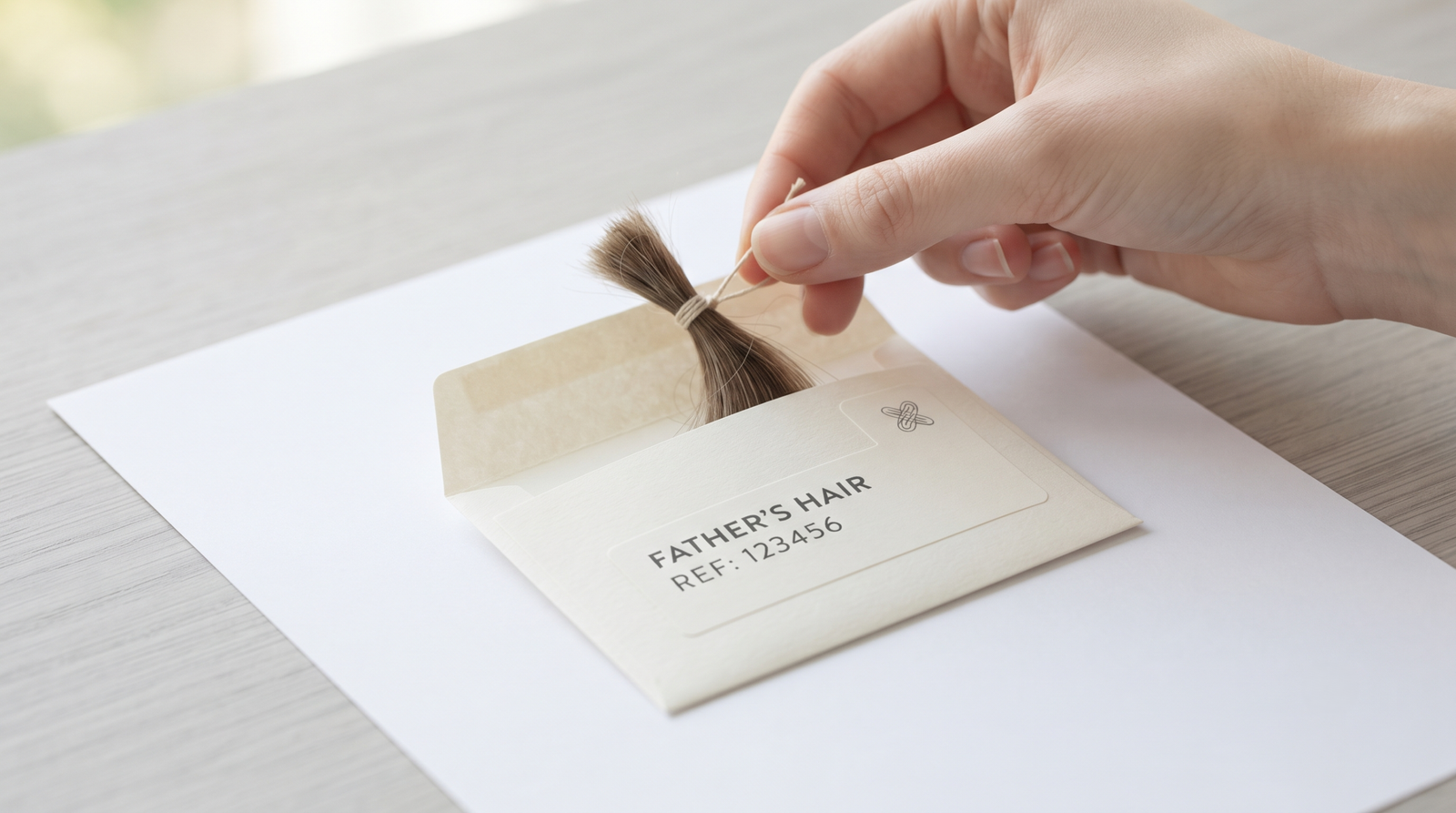
- Label the inner envelope. Include your father’s name and the provider reference number when the provider gives you one.
Dyed, grey, treated, and long stored hair can remain chemically workable because the extraction process focuses on the carbon within the material. Hair colour does not determine the final diamond colour.
Building a Record When There Is No Cremation Paperwork
This represents one of the biggest practical differences between ashes and hair.
Ashes usually come with an institutional history. A crematorium can record the cremation, a funeral home can release the remains, and documentation can identify the person and date.
Hair does not automatically carry that same institutional record. You can therefore create your own record before sending it.
| What ashes can have behind them | What hair has behind it | What you can create yourself |
|---|---|---|
| A cremation certificate and funeral home record | No equivalent institutional record | A dated note naming your father, who collected the hair, when they collected it, where they found it, and who has held it since |
| Recorded weights | No automatic weight record | Your own weight in grams and a photograph showing the hair on the scale |
| A regulated carrier record | Ordinary mail | Tracking information and delivery confirmation |
| Provider intake documentation | Provider intake documentation | Written confirmation of what the provider received and its recorded weight |
Keep copies of anything you place inside the package. Keep the tracking number and delivery confirmation with your records.
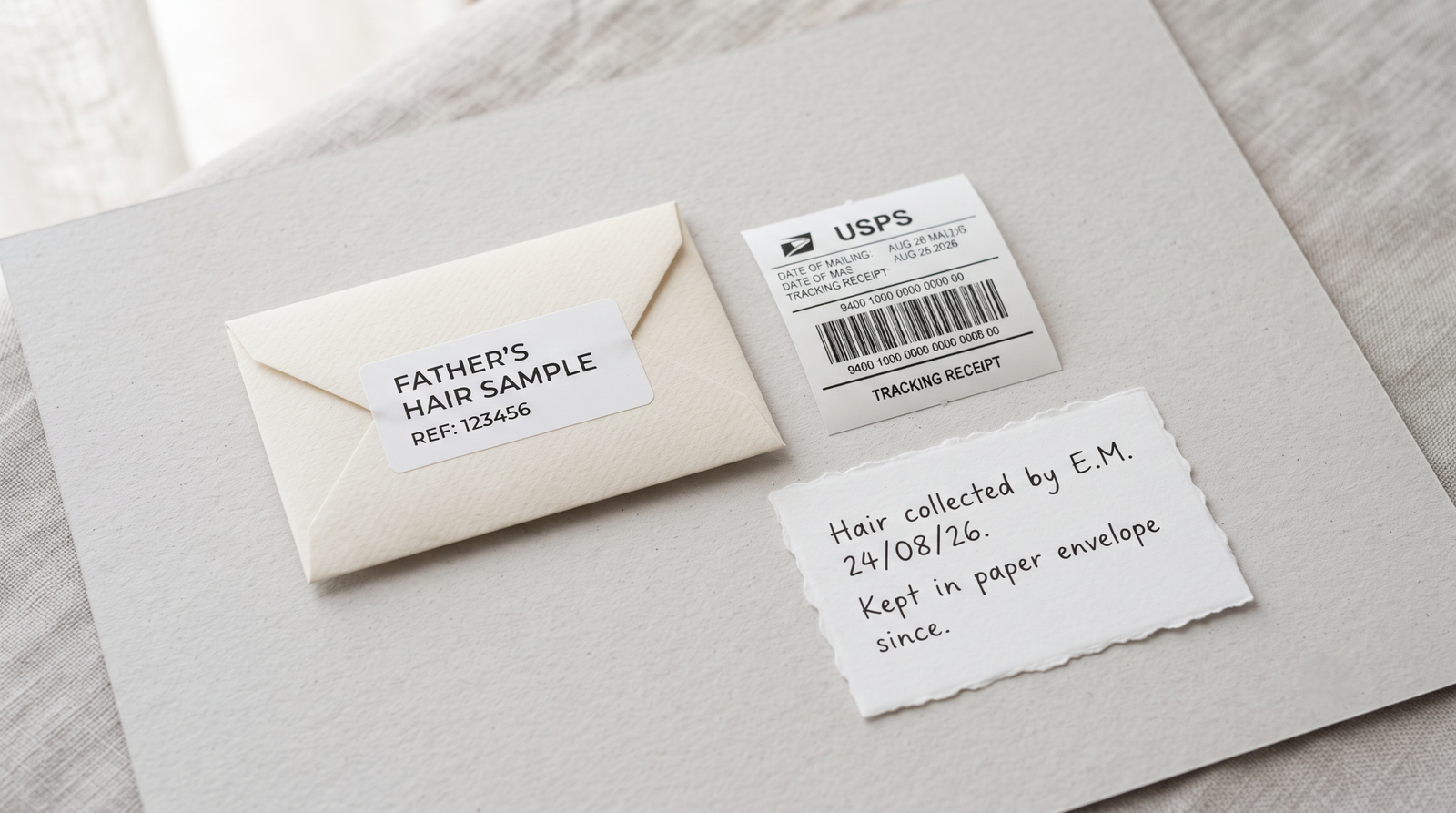
Also record the source of the hair with as much useful detail as you can. Instead of writing only “his hair,” write something such as “cut by the hospice nurse on 3 March and kept in the bedside drawer since.”
A detailed source note gives your family something concrete to refer to if questions arise years later.
If you want to understand the provider side of this process, read how companies track a loved one’s material through the process.
What Should You Ask Before You Post Anything?
Everything before the mailing can change. Once you send the hair, the process moves into another stage. Get the important answers in writing first.
- What is your minimum weight for the carat and colour I am considering?
- Will you assess a photograph and stated weight before I send anything?
- Do you accept short clippings, beard hair, or body hair?
- What happens if the material arrives underweight?
- Do you return unused hair, and if so, how?
- What reference number will you assign to the material?
- Will you confirm the weight received?
If your available hair sits close to the minimum, choosing a smaller diamond can make more sense than cutting additional hair. Questions worth asking before turning your father’s hair into a diamond covers additional questions about pricing, grading, and the overall process.
What Happens After the Hair Reaches the Lab?
The provider logs the material under its chain of custody. The laboratory then purifies the hair, converts the carbon into a suitable form, and grows the diamond around a diamond seed before cutting and grading the finished stone.
How a memorial diamond is made from your father’s hair explains the production stages in greater detail.
One important qualification belongs in any honest explanation of the process. Your father’s purified carbon combines with supplemental laboratory carbon to provide enough material for diamond growth. Industry information places the personal carbon contribution at roughly 10 to 15 percent of the finished stone’s mass.
The finished diamond therefore contains a real physical portion of his carbon. It does not consist entirely of his carbon.
Production commonly takes around 6 to 10 months from the laboratory receiving the hair. Larger or specialty colour stones can take longer, with some timelines reaching around 12 months. The complete journey from the first decision through production, delivery, and final jewellery work can reach roughly 8 to 14 months.
Growth time determines the carat size. Sending more hair does not automatically make the diamond larger or make the laboratory finish it faster.
The complete guide to memorial diamonds covers the broader process, material requirements, timing, and major decisions.
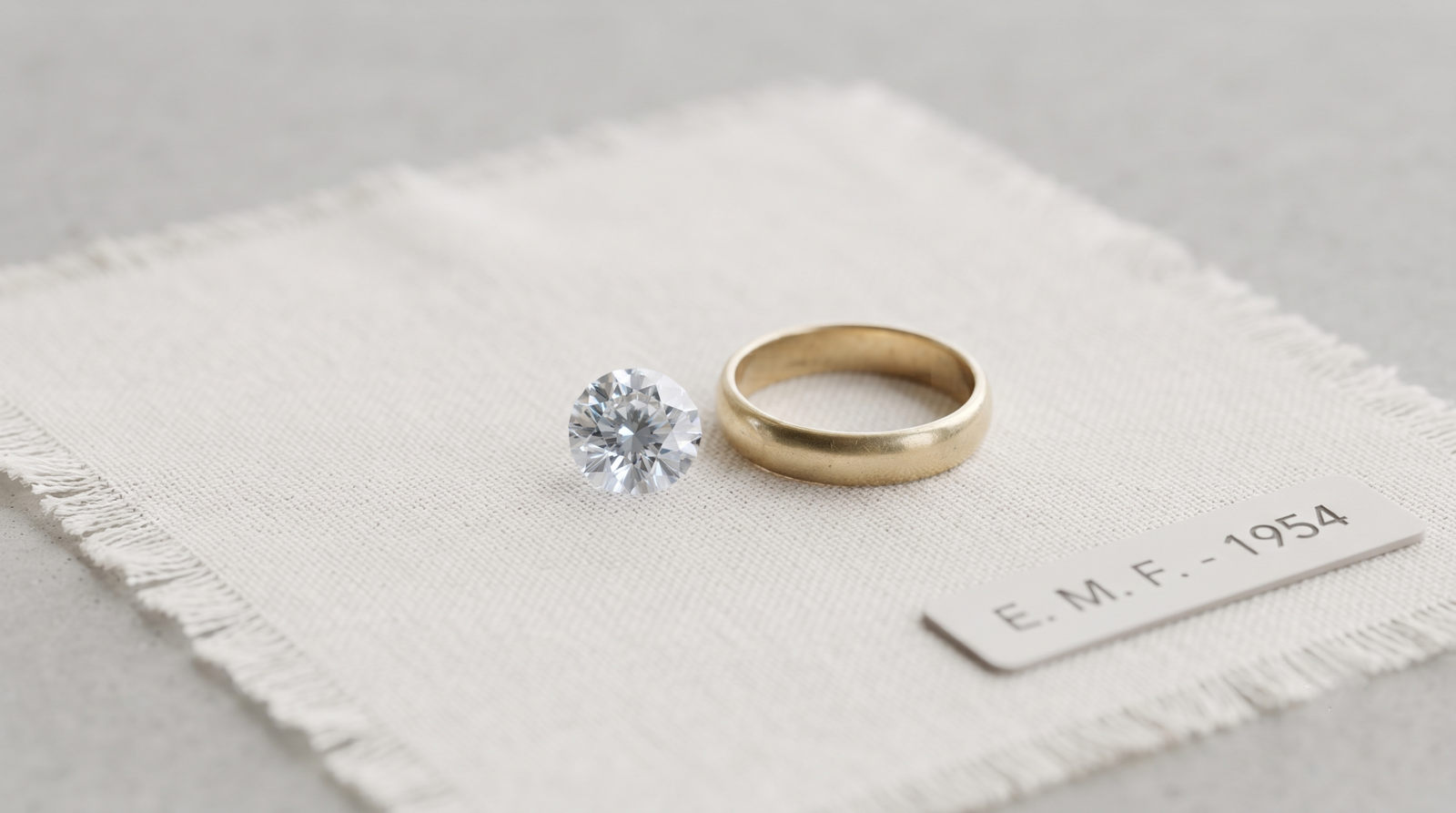
The finished diamond can arrive loose in a presentation box with its documentation. If your father left behind a wedding band, signet ring, or watch, you may want to ask a jeweller whether they can incorporate the memorial diamond into an existing piece. The jeweller can assess the individual item and explain whether the design can safely accommodate the stone.
Frequently Asked Questions
Do I need a death certificate or cremation paperwork to send hair?
No. Hair does not require cremation, so you do not need cremation paperwork simply to mail the hair. A provider may still request identifying information or its own documentation. You can also create a dated record that identifies your father and explains where the hair came from.
How do I document a lock when no cremation paperwork exists?
Create the record yourself. Write the date, your father’s name, who collected the hair, when and where they collected it, and who held it afterwards. Add the weight in grams, photograph the hair on the scale, and keep the provider’s confirmation of what arrived.
Should I wash the hair before I send it?
No. Washing can cause you to lose strands and does not provide a useful advantage. Keep the hair dry and whole. Place it in a paper envelope rather than a sealed plastic bag and follow the provider’s intake instructions.
Can I send part of the lock and keep the rest?
Wait until you know the provider’s minimum requirement. Dividing a small lock before confirming the required weight can leave you with too little material. Once you know the minimum, you can decide whether you want to keep some of the remaining hair.
Does mailing hair require special postage or a special carrier?
Hair does not carry the same shipping restrictions as cremated remains. You can generally use ordinary mail. A tracked service and rigid mailer can provide practical protection while the package travels.
Put It on a Scale Before You Put It in the Post
None of this needs to happen immediately. Hair can remain usable on a shelf when you store it properly, so you have time to make a careful decision.
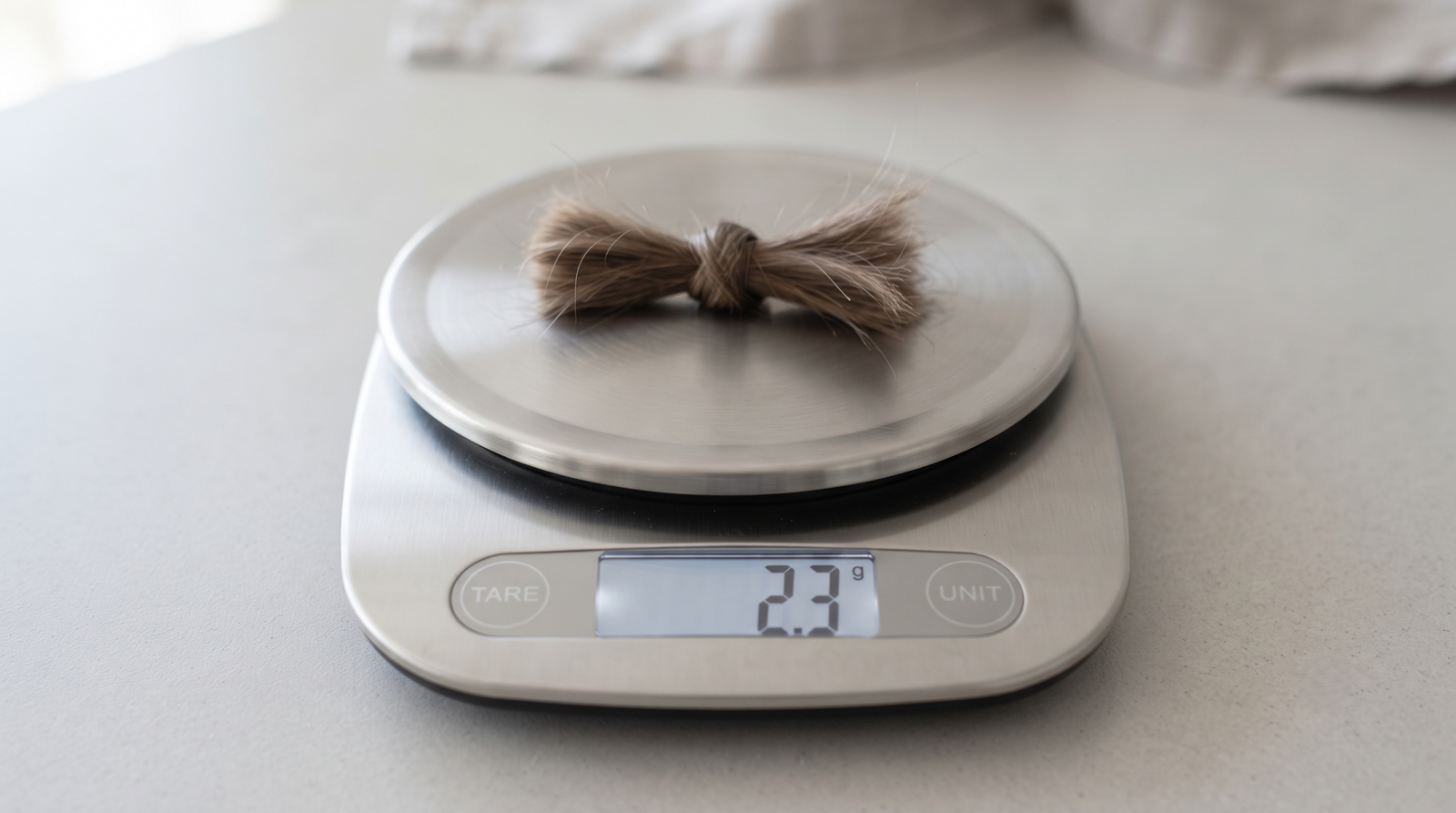
Your first step does not need to involve a purchase or a pair of scissors. Start with a scale, a photograph, and one question for the provider.
Is this enough for the diamond size I am considering, and can you confirm that before I send it?
Weigh the hair before you cut or divide anything. Record the result. Photograph it. Then ask the provider about the minimum requirement and the material they accept.
If you want to understand the full process before making that decision, explore the complete guide to memorial diamonds.
The envelope in your hand may contain the only hair you have from your father. Treat it accordingly.