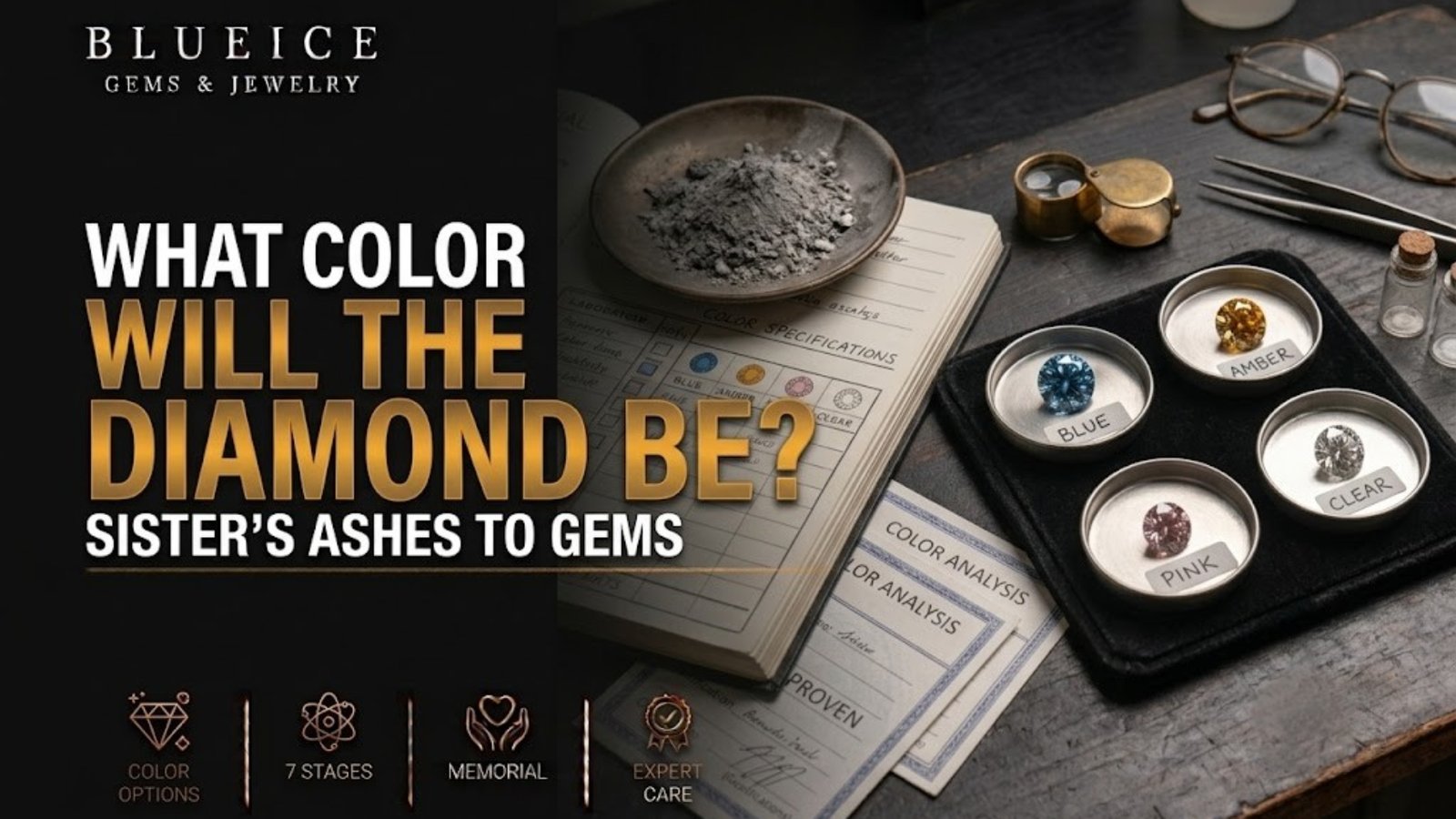
After losing a sister, even a small detail about a memorial diamond can feel important. You may wonder whether the stone will be yellow, blue, champagne, or completely colorless. You might also want to know whether you can choose its color before the diamond is created.
When it comes to sister ashes diamond color, the honest answer is that nobody can guarantee the natural color before the diamond is grown. Trace elements and the growth process influence the final appearance. Yellow, blue, champagne and brown tones are possible, while achieving a colorless result may require additional processing.
The color does not change the meaning of the memorial. Each stone represents a personal way to remember someone who mattered to you.
This guide explains what influences the color, what you can ask a provider to control, how treatments work, and what to understand before choosing a memorial diamond for your sister.
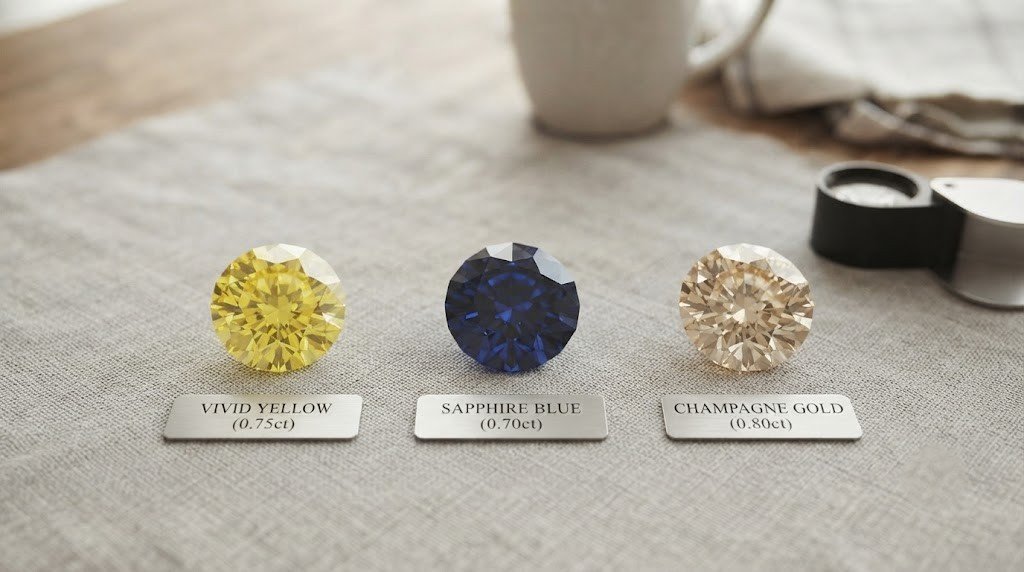
Table of Contents
Why Can’t Anyone Predict a Sister Ashes Diamond Color Before Growth?
Diamond color develops during the crystal-growth process. Trace elements and other characteristics of the growing crystal can affect how the finished stone absorbs and transmits light.
Nitrogen can contribute to yellow coloration, while boron can produce blue coloration. Diamonds with very little color-causing impurities may appear colorless. Other growth conditions and structural characteristics can also influence the final appearance.
The composition of the submitted ashes alone cannot tell you exactly what color the finished diamond will be. The carbon must be prepared and the crystal grown under controlled conditions before its appearance can be assessed.
That is why a provider should explain the colors it commonly produces, the options it offers, and the limitations of predicting the outcome.
If a company promises an exact natural color before production, ask how that promise is supported and whether it refers to a naturally developed color or a post-growth treatment.
Does the Color Have a Special Meaning?
A yellow, blue or champagne diamond does not reveal anything about your sister’s personality. The tint is a physical characteristic of the crystal, not a reflection of who she was.
Your family can attach its own meaning to the stone. Some people prefer a classic colorless appearance, while others appreciate a natural tint that makes their memorial diamond visually distinctive.
The right choice is the one that feels meaningful to you, provided you understand what the provider can and cannot guarantee.
What Happens to Her Ashes Before Color Is Decided?
Before discussing sister ashes diamond color, a portion of your sister’s cremated remains must be made available to the provider. This may require a conversation with the person legally authorized to make decisions about her remains.
Who has that authority depends on applicable law, any instructions your sister left, and the circumstances of her arrangements. A spouse or registered partner may have priority in some jurisdictions, but the order of authority varies. A funeral home or local attorney can help clarify the situation.
If another relative is responsible for the ashes, begin with a respectful request for permission to use a small portion. Do not assume that being a sibling automatically gives you authority to divide or send the remains.
How Much Ash Is Needed?
The amount required varies by provider. Some industry estimates range from a few tablespoons to approximately four ounces, or around 100 grams, for a stone. These figures are not universal requirements, so ask the company for its exact instructions.
The remaining ashes may be kept for an urn, burial or another memorial arrangement, depending on your family’s wishes.
For more information, read our guide to how much ash a sister’s diamond needs.
How Is Carbon Prepared?
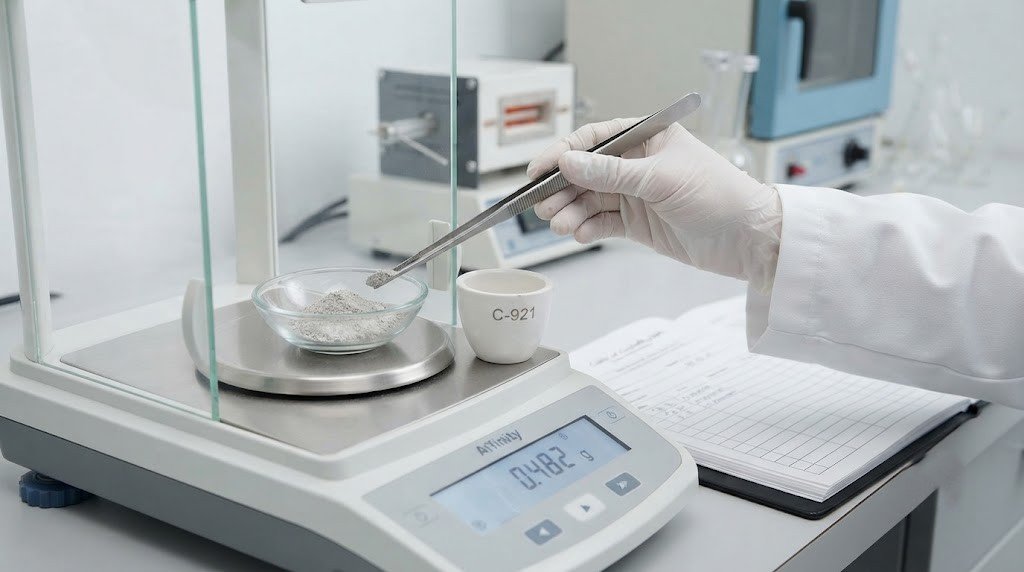
Cremated remains consist mainly of mineral material, including calcium phosphate. The amount of usable carbon in the remains is relatively small.
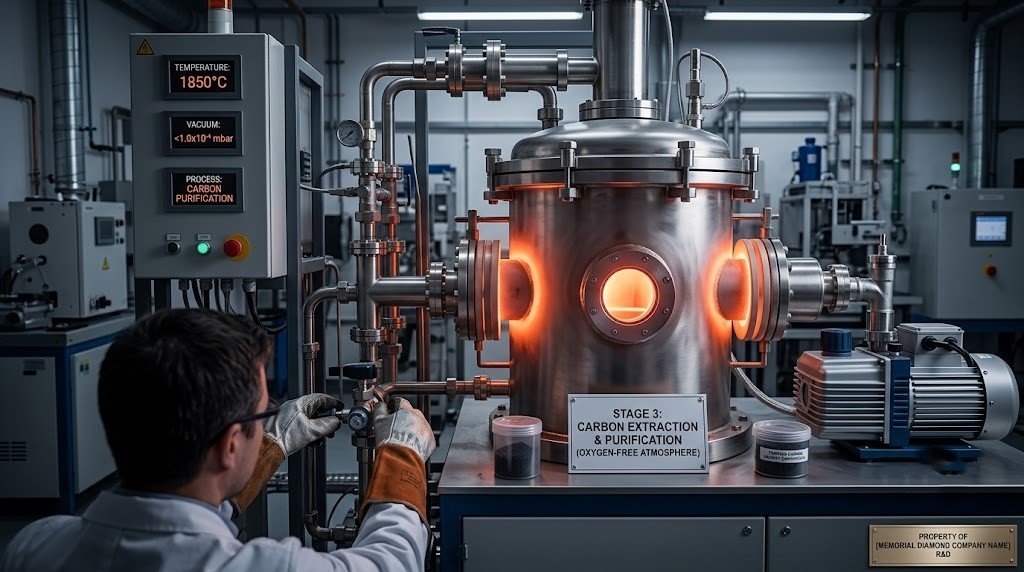
A provider may process the submitted material to recover and purify carbon. Depending on its process, the recovered carbon may be combined with supplemental laboratory carbon before the diamond is grown.
Memorial diamond production methods vary. Some providers use high-pressure, high-temperature technology, while others may use chemical vapor deposition. The overview of synthetic diamond production provides background on laboratory-grown diamonds.
The key point is that this preparation does not let a family select an exact natural color. The appearance develops during growth, and the final result must be evaluated afterward.
For the complete process, see our Sister Ashes Diamond: The Complete Guide.
Why Do Diamonds Grown From Ashes Lean Yellow, Blue, or Champagne?
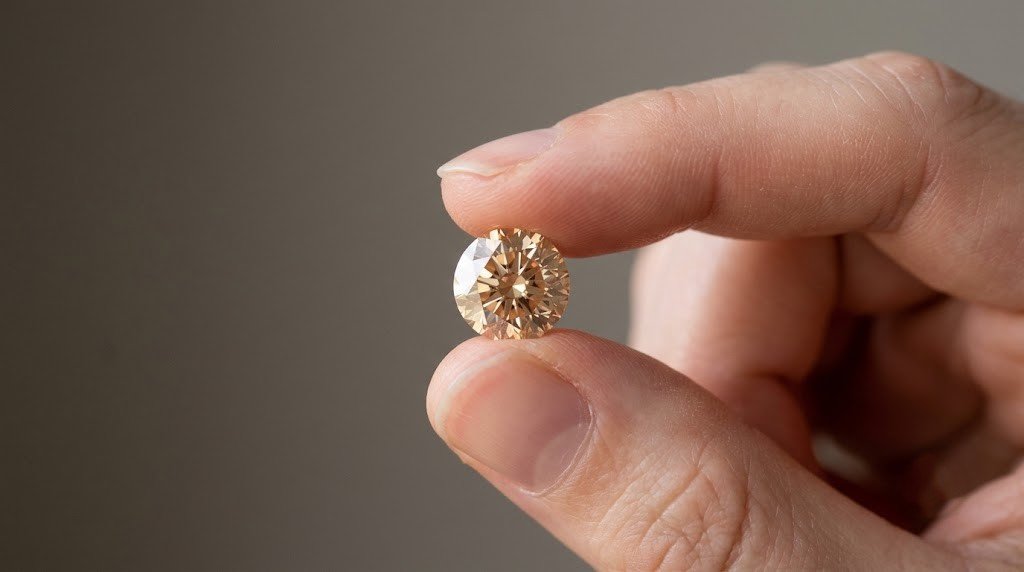
Memorial diamonds may display a range of colors, depending on the material, growth conditions and any subsequent treatments. Yellow, blue, champagne and brown are among the colors discussed in the memorial diamond industry, but no single shade is guaranteed for every order.
Yellow Diamonds
Yellow coloration can be associated with nitrogen in the diamond’s crystal structure. The intensity may vary, from a subtle warm tint to a more noticeable yellow appearance.
Some families like yellow diamonds because they pair naturally with yellow gold and have a warm appearance. Others prefer a cooler or more neutral stone.
Blue Diamonds
Blue coloration can be associated with boron. The shade may range from pale blue to a deeper blue, depending on the crystal and its characteristics.
A blue diamond can look particularly striking in white gold or platinum, although the final combination depends on the exact stone and setting.
Champagne and Brown Diamonds
Champagne and brown tones provide a warmer appearance. These shades can range from light golden brown to deeper cognac-like colors.
A champagne diamond may pair well with yellow or rose gold, but metal choice is a matter of personal preference rather than a rule.
Can You See the Colors Before Ordering?
Ask the provider for photographs of actual finished stones, ideally with consistent lighting and minimal retouching. Images of other memorial diamonds can help you understand the range of possible outcomes, but they cannot guarantee that your sister’s diamond will look the same.
For a broader overview of available shades and treatments, read Memorial Diamond Colors for a Sister: What to Expect.
Can a Sister Ashes Diamond Be Colorless, and What Does It Cost?
A colorless result may be available, depending on the provider’s production capabilities. It can require additional processing and greater control over impurities, which may increase the cost.
The price depends on several factors, including the diamond’s carat weight, production method, selected color, cut, grading and any jewelry setting.
The following figures are broad illustrative industry estimates for 2026. They are not verified Memorial Diamond prices or guaranteed quotes.
| Approximate size | Illustrative industry price range | What to ask about color |
|---|---|---|
| 0.10–0.25 carat | $1,500–$3,500 | Ask whether colorless processing is available and priced separately |
| 0.50–1.00 carat | $5,000–$15,000 | Compare the quoted price of colorless and naturally tinted options |
| 2.00–5.00+ carats | $20,000–$75,000+ | Confirm the production timeline and any additional processing charges |
| Additional services | Varies | Grading, engraving, fancy cuts and settings may cost extra |
Actual prices can differ considerably between companies. Request a written quote for your preferred size and color rather than relying on broad industry estimates.
Does a Colorless Diamond Cost More?
It may. If a provider charges extra for colorless processing, ask it to identify that amount separately on the quote. This lets you compare the additional cost against other choices, such as selecting a smaller stone or choosing a setting that complements a natural tint.
A colorless diamond is not automatically more meaningful than a colored one. The difference is primarily in appearance and the production requirements involved.
How Long Does Production Take?
Some industry estimates place memorial diamond production at around six to ten months after the provider receives the material. Larger stones or specialty-color requests may take longer, potentially approaching twelve months. These are general estimates, not guaranteed delivery dates.
If you hope to receive the diamond by a birthday, anniversary or another meaningful date, tell the provider before placing the order.
Our sister memorial diamond cost guide explains additional factors that may affect the overall budget.
Can Irradiation Change the Color After Growth?
Some diamond providers offer post-growth treatments, including irradiation, to alter or intensify a stone’s color. Depending on the treatment and the diamond, treated colors can include pink, green, red or other shades.
Availability, suitability and pricing vary, so confirm that the provider offers the treatment you are considering.
Irradiation changes how the diamond interacts with light; it does not add more of your sister’s carbon. It is important to distinguish a naturally developed color from one created or modified through treatment.
What Should You Ask About a Treated Diamond?
Before choosing a treatment, ask:
- Which colors and treatments are available?
- What is the additional charge?
- Will the treatment be disclosed in writing?
- Will the invoice and any grading report identify the treatment?
- Is the color stable under ordinary wear?
- Are there special care requirements for resizing or repairing the jewelry?
Do not assume every provider offers irradiation or that every treatment produces the same result. Get the details in writing before agreeing to additional work.
How Is Diamond Color Graded and Documented?
Two types of documents may be relevant when you receive a memorial diamond: documentation from the provider about its origin and an independent grading report about the stone’s characteristics.
Origin or Authenticity Documentation
A provider may issue an origin certificate or authenticity document describing its claimed connection between the submitted material and the finished diamond.
Ask what the certificate verifies, how the company tracks material during production, and whether the document includes a description of the finished stone. An origin certificate should not automatically be treated as independent verification of diamond quality.
Independent Diamond Grading
An independent grading report can describe characteristics such as carat weight, color, clarity and cut. The exact terminology and grading approach depend on the laboratory and the type of diamond.
The Gemological Institute of America’s guide to diamond quality factors explains how these characteristics contribute to diamond evaluation.
If independent grading is important to you, ask which laboratory the provider uses, whether grading is available for your stone, and whether it is included in the quoted price.
A grading report can help document the stone’s observed characteristics. It does not predict the color before the diamond is grown or, by itself, prove the source of its carbon.
What Can Your Family Choose?
Although the natural color cannot be guaranteed in advance, several parts of the final design may be within your control.
Choices You May Be Able to Make
- Color treatment: Ask whether colorless processing or post-growth treatment is available.
- Cut and shape: Choose from the cuts the provider can produce, recognizing that shape can influence how color appears.
- Metal: Select yellow gold, white gold, rose gold or platinum, depending on your budget and design preferences.
- Setting: Consider a bezel, prong setting or another style offered by your jeweler.
- Jewelry type: Choose a ring, pendant, earrings or a loose stone.
- Independent grading: Decide whether a separate grading report is worth the additional cost.
What Remains Uncertain?
- The exact natural color that develops during growth.
- How light or dark the finished tint will be.
- Whether separately grown diamonds will match.
- The final appearance under different lighting conditions.
How Does Metal Affect the Appearance?
The metal surrounding a diamond can influence how its color is perceived.
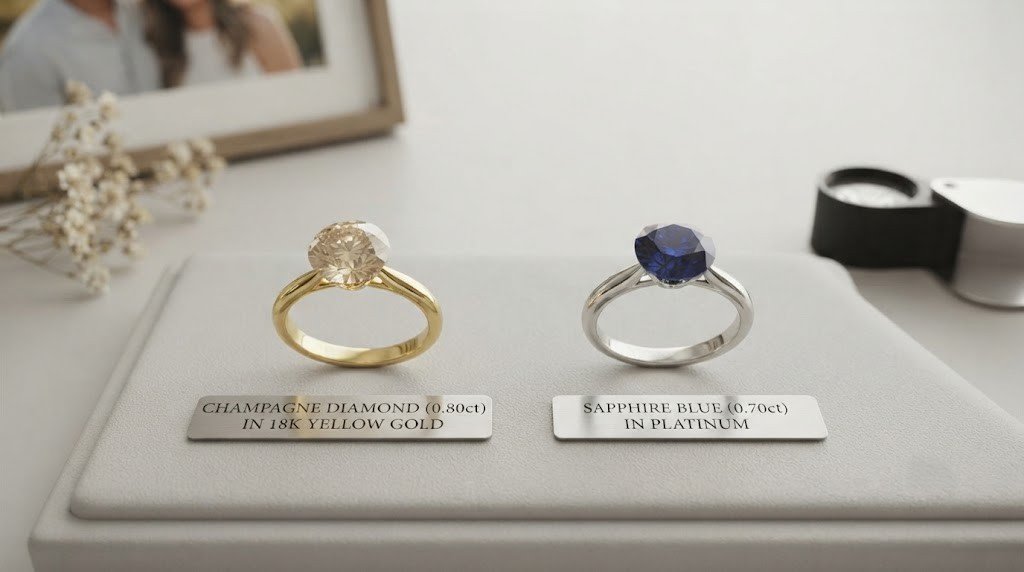
Yellow gold may complement a warm yellow or champagne stone. White gold and platinum often provide a cooler contrast for blue or colorless diamonds. Rose gold can create a warm combination with champagne tones.
These are design tendencies, not strict rules. Ask a jeweler to show you comparable stones beside different metals before selecting a setting.
For inspiration, explore our guide to memorial diamond settings and jewelry ideas for a sister.
Will Two Diamonds From the Same Ashes Match?
Not necessarily. Two stones grown in separate production runs may develop different appearances, even when the submitted carbon comes from the same person’s remains.
Differences in growth conditions, trace elements and other characteristics can influence the final color. Matching the cut and carat weight does not guarantee matching color.
What If Several Relatives Want Their Own Diamonds?
If multiple relatives want individual stones, discuss the possibility of different colors before placing the orders. Ask the provider whether it can accommodate similar specifications and what limitations apply.
Do not assume that diamonds produced separately will match perfectly, or that growing them during the same period guarantees identical results.
Families should also agree on who may authorize each portion of the ashes and how each order will be documented.
Read our guide to sharing a diamond from the same sister’s ashes for more information about coordinating multiple orders.
What Should You Ask a Provider About Color?
Clear questions help you compare providers and understand what is included in the price.
Consider asking:
- What colors do your memorial diamonds commonly display?
- Can I see photographs of actual finished stones under neutral lighting?
- Is colorless processing available, and what does it cost separately?
- Do you offer post-growth color treatment, and how is it documented?
- Can an independent laboratory grade the finished diamond?
- If my family orders two stones, can their specifications be matched?
- What happens if a growth attempt fails or a stone is damaged during cutting?
- What happens to unused ashes or recovered carbon?
- What is the estimated production timeline for my selected size and color?
- Which services are included in the written quote, and which cost extra?
Ask for the answers in writing. A trustworthy provider should explain what it can offer, what remains uncertain, and which additional services may increase the cost.
If you are considering other materials, our companion guides discuss the possible color of a diamond made from your sister’s hair and a diamond made from your sister’s ashes and hair.
Frequently Asked Questions
Can You Request a Blue or Yellow Diamond From Your Sister’s Ashes?
You can tell a provider which color you prefer, but the natural color cannot necessarily be guaranteed. Ask what shades the provider can realistically produce and whether treatments are available if you want a particular appearance.
Does Sending More Ashes Change the Diamond’s Color?
No reliable color prediction can be made simply from the amount of ashes submitted. The usable carbon is prepared for growth, and the final appearance depends on the production process and characteristics of the resulting crystal. Sending more material does not automatically produce a larger or faster-growing stone.
Is a Champagne or Brown Tint a Sign That Something Went Wrong?
Not necessarily. Champagne and brown are possible diamond colors, and a warm tint does not automatically indicate a production problem. Ask the provider to explain the finished stone’s characteristics and whether it meets the agreed specifications.
Is a Yellow Memorial Diamond Worth Less Than a Colorless One?
Pricing depends on the provider, production requirements, stone characteristics and additional services. Colorless processing may carry a premium in some offerings, but price alone does not determine a stone’s emotional significance or establish its overall quality.
Will the Origin Certificate List the Diamond’s Color?
It depends on the provider’s documentation. An origin certificate generally addresses the company’s stated connection between the submitted material and the finished stone. An independent grading report is more appropriate when you want a separate assessment of characteristics such as color, clarity, cut and carat weight.
Does the Diamond’s Color Say Anything About Your Sister?
No. The color is a physical characteristic influenced by the diamond’s growth and composition. The meaning of the memorial comes from your sister, your memories and the significance your family gives the stone.
Final Thoughts on the Color of Your Sister’s Diamond
Not knowing the final color ahead of time can feel frustrating, particularly when you are making a decision connected to someone you miss. Understanding the process can help you separate what you can choose from what cannot be guaranteed.
You may be able to select the cut, metal, setting and jewelry type, and some providers offer additional processing or treatments. The natural color, however, is influenced by the growth process and should not be promised without a clear explanation of what the provider means.
Take time to ask questions, compare written quotes and understand the documentation supplied with the finished stone. Whether the diamond is yellow, blue, champagne or colorless, its significance comes from the person it commemorates.
Learn More About Sister Memorial Diamonds
- Sister Ashes Diamond: The Complete Guide Learn about the process from the first conversation to the finished stone.
- Memorial Diamond Colors for a Sister: What to Expect Explore possible natural and treated colors.
- How Much Does a Sister Memorial Diamond Cost? Understand pricing factors and potential additional charges.
- Is a Memorial Diamond Really Made From Your Sister’s Ashes? Learn about material sourcing and origin documentation.
Talk With Memorial Diamond
If you have questions about color, cost or how to request a small portion of your sister’s ashes, take the time you need to explore your options.
Visit Memorial Diamond to learn more and ask about the available choices, production process and documentation. Clear answers can help your family make a decision with greater confidence.