Made From Daughter Ashes 8 Expert Stages, Gently Explained

How a Memorial Diamond Is Made From Your Daughter’s Ashes

Between the day a small portion of her ashes leaves your hands and the day a finished stone comes back, a great deal happens that most families never get to see. A diamond made from daughter ashes moves through eight laboratory stages, one of them optional: intake and logging, carbon extraction, purification, graphitization, crystal growth, cutting, optional color treatment, and certification before it is returned. Most of that sequence is chemistry and patience, and across the industry it typically fills six to ten months.

This page walks through each stage of a diamond made from daughter ashes in plain language, at whatever pace suits you. Nothing here has to be understood before you begin.
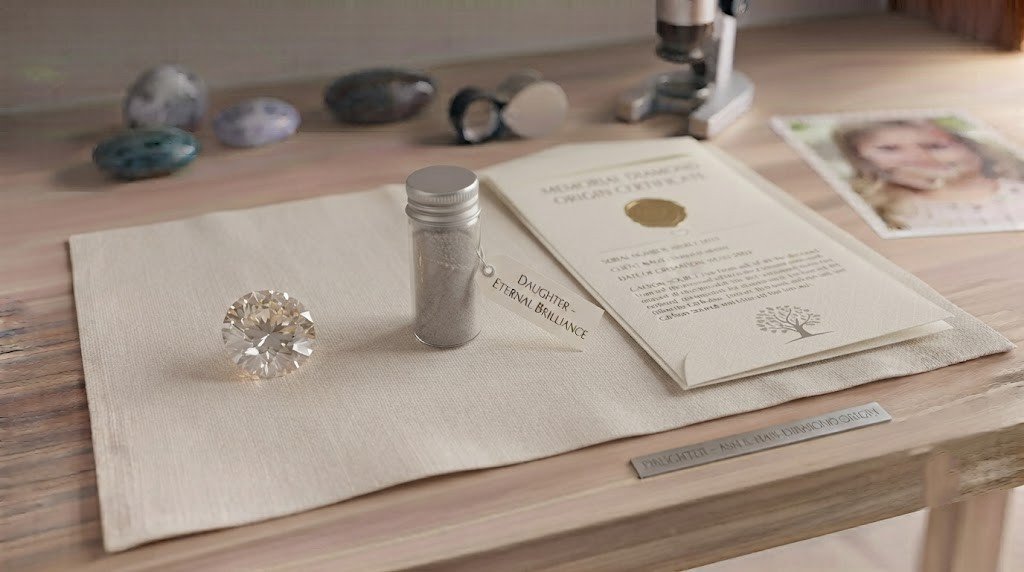
A loose memorial diamond made from daughter ashes resting beside a small sealed container and its origin certificate

How Is a Diamond Made From Daughter Ashes, Stage by Stage?

In eight stages, nearly all of them invisible from the outside. Laboratories name the work differently, but the sequence is shared across the industry: from a mineral heavy powder toward a single, ordered crystal.

StageWhat happens to the materialWhat it producesDoes it involve you?
1. Intake and loggingThe sealed container is checked against its paperwork and given a unique referenceA tracked submissionOnly to confirm it arrived
2. Carbon extractionControlled heating without oxygen drives off what is not carbonA small amount of raw carbonNo
3. PurificationFurther processing removes remaining trace mineralsCarbon at roughly 99.9% purity or betterNo
4. GraphitizationHeat at roughly 2,500 to 2,700°C reorders the carbonGraphite feedstockNo
5. GrowthAn HPHT press, or less often CVD, builds a crystal on a seedA rough diamondNo
6. Cutting and polishingA gemologist studies, cuts and polishes the roughA finished loose stoneConfirming the shape
7. Optional irradiationPost growth treatment shifts color, only if chosenA treated colorOnly if you ask for it
8. Certification and returnOrigin paperwork is issued; independent grading if requestedThe stone and its documentsDeciding on grading

The combined span for a diamond made from daughter ashes is usually six to ten months from receipt, occasionally twelve for larger stones or specialty colors. For the authorization, collection kit and shipping, the family’s side of turning her ashes into a diamond sets that out separately.

What Are Cremated Remains Actually Made Of?

Mostly bone mineral. By the end of cremation the soft tissue is gone, and what remains is largely calcium phosphate, the hard, pale mineral that gave her skeleton its strength. Grainy and light gray, it is closer to coarse sand than to fireplace ash.

Carbon rides along as a minor part of that mineral. Industry figures place usable carbon around 0.5% to 4% of the ash by weight, shifting from person to person and between crematories. That small proportion is why any stone made from daughter ashes starts from a measured portion rather than a pinch.

The portion requested is itself a small share of what you hold. Across providers it typically runs from a few tablespoons up to around 4 oz, roughly 100 grams, leaving most of her remains for burial, scattering, an urn or whatever else the family has planned. How much ash a daughter memorial diamond needs goes through those quantities in detail.

None of this depends on her age. At whatever age she died, in childhood or well into adult life, the chemistry is the same, and so is the laboratory method.

How Is Her Carbon Separated and Purified?

With heat, in the absence of oxygen, over more than one pass. Without oxygen the carbon cannot burn away as gas, so the laboratory keeps it while calcium phosphate and the other minerals are driven off or separated.

A first pass recovers raw carbon from the mineral bulk, and later passes strip out the remaining traces until the carbon reaches roughly 99.9% purity or better. The precise chemistry differs between laboratories and is often kept proprietary.

What emerges is modest in quantity, and that small amount shapes every stage that follows. For anyone wondering how a diamond made from daughter ashes can contain any of her at all, extraction is the answer: the carbon carried forward is carbon that came from her.

Purity matters because anything carried into the growth of a diamond made from daughter ashes can affect the crystal. It does not, however, make the final color predictable; even very clean carbon can surprise a laboratory.

Why Does the Carbon Become Graphite Before It Becomes Diamond?
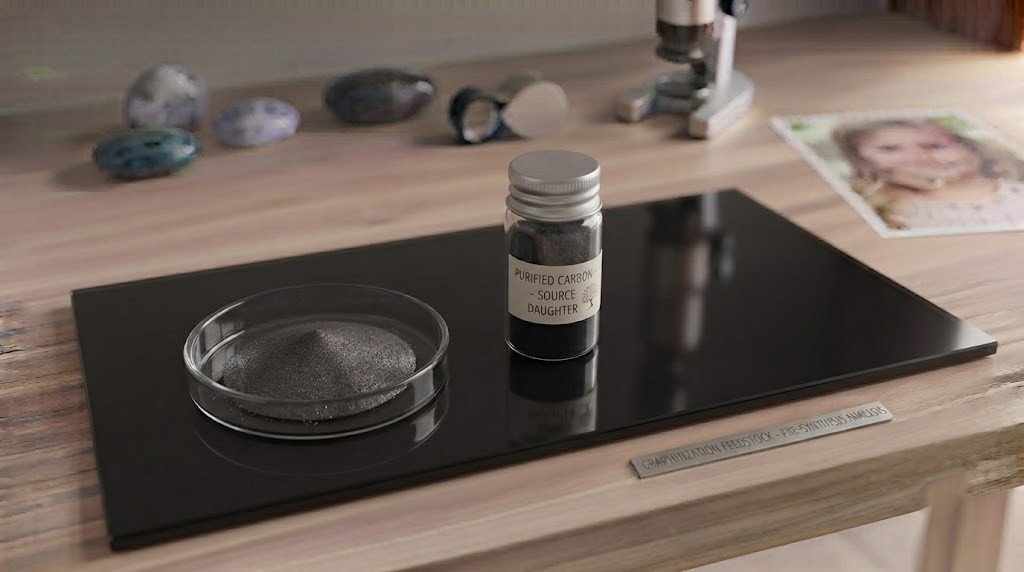
A small dish of dark graphite feedstock beside a vial of purified carbon on a laboratory bench

Because a growth press works best with carbon in an ordered, stable form. Purified carbon destined for a stone made from daughter ashes is still a loose, irregular material. Heating it further, to roughly 2,500 to 2,700°C, rearranges its atoms into graphite, the soft, layered form of carbon familiar from pencil lead.

Graphite and diamond are one element arranged two different ways. In graphite the atoms lie in flat sheets that slide easily over each other; in diamond every atom is locked to four neighbors in a rigid three dimensional lattice.

For a family, graphitization is mainly a milestone: her carbon has been recovered, cleaned and prepared, but no crystal has begun to form. If a provider offers progress updates, this is a natural stage to ask about.

How Does the Crystal Actually Grow?

Under immense pressure and heat, around a tiny diamond seed. Most laboratories growing a diamond made from daughter ashes use HPHT, short for high pressure, high temperature: the graphite is sealed into a growth cell with a seed crystal and held at roughly 6 to 8 GPa and 1,400 to 2,500°C, recreating conditions far below the surface where natural diamonds took shape.

Over weeks to months, carbon dissolves and settles onto the seed, and the crystal slowly thickens. A minority of providers use CVD, chemical vapor deposition, in which a carbon bearing gas such as methane deposits crystal onto a seed plate inside a vacuum chamber. Both are established methods of growing synthetic diamond, and either can yield a genuine diamond made from daughter ashes rather than a lookalike.

The most misunderstood fact here is what controls size. Carat weight is set by how long the crystal stays in growth, not by how much ash was sent; a full urn would not produce a bigger stone or a faster one. Carat is a choice the family makes near the beginning, and it largely decides how long the press runs.

Stones made from daughter ashes are generally offered from about a tenth of a carat to more than five, and the upper end is where timelines stretch toward a year. Clarity is shaped here too, usually landing between SI2 and VVS.

How Much of a Stone Made From Daughter Ashes Is Really Hers?

A real portion, though not the whole. On the ash route, the carbon recovered from her remains usually accounts for about 10 to 15% of what the finished diamond weighs, with a few providers citing as little as 3%. The share moves with stone size and with how much ash was submitted.

The balance is supplemental carbon, prepared in the laboratory and blended with hers before growth. The reason is arithmetic: with usable carbon at a few percent of the ash by weight, a few tablespoons cannot supply enough to grow a stone of meaningful size alone.

That can be hard to read, but the honest version still means something. Her carbon is not set beside the diamond or sealed inside a cavity; it becomes part of the crystal lattice itself, her atoms bonded among the others. A stone made from daughter ashes this way is not a symbol standing in for her. It is, in part, physically made from her.

Any claim that a diamond made from daughter ashes is 100% pure ash describes something the physics does not support. Whether a memorial diamond is really made from her ashes takes up that question from the skeptic’s side, including what records can evidence it.

Questions worth putting to any provider in writing:

  • What share of the finished stone is expected to be her carbon, at the size you want
  • Whether that share is an estimate or is measured for each stone
  • What happens to leftover ash or unused extracted carbon
  • Whether a second stone can be grown from the same submission

What Happens After the Rough Crystal Leaves the Press?

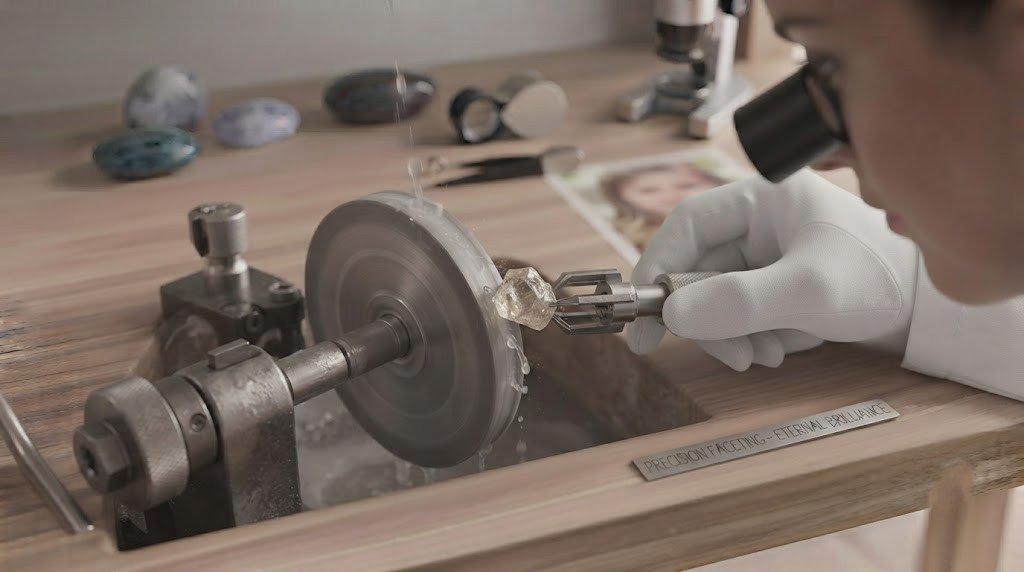
Cutting comes first, then an optional color treatment, then the paperwork. A rough crystal made from daughter ashes looks nothing like jewelry when it leaves growth; a gemologist has to study it before deciding how best to cut it.

Cutting and polishing turn that rough into a recognizable shape: round, princess, cushion, oval, emerald or any other diamond shape. Some weight is always lost, and the rough occasionally suits a different shape than the one requested. A careful provider will tell you rather than proceeding quietly.

Color, meanwhile, was mostly settled during growth. Trace nitrogen draws a diamond toward yellow, trace boron toward blue, and a colorless result depends on keeping both out, which tends to add processing and cost. Because this carbon began as organic material rather than a controlled feedstock, warm yellow, champagne and blue tones are common in stones made from daughter ashes. What color a diamond grown from her ashes might be explores why.

Irradiation is the optional part. After growth, some providers offer a treatment that shifts or deepens color toward red, pink, green or black. It is an add on rather than a stage every stone passes through, and many families keep whatever color their diamond made from daughter ashes grew on its own. If a color matters, let it be one that meant something to her or to you.

Grading Report or Origin Certificate: What Is the Difference?

They answer two separate questions. An origin or authenticity certificate, usually issued in house by the provider, states that this particular stone was grown from the carbon in your submission. It is, in effect, the closing page of the chain of custody.

A grading report describes the stone’s quality: its cut, color, clarity and carat weight, measured against the same quality factors used for any diamond. Independent grading of a stone made from daughter ashes by a third party gemological laboratory is optional across this industry and normally priced as an extra. Some families value that outside view; others feel the origin document is the only paper that matters.

For a diamond made from daughter ashes, the two documents do complementary jobs. The certificate speaks to where the stone came from; the grading report, if you choose one, speaks to what the stone is.

How Is Her Carbon Tracked From One Stage to the Next?

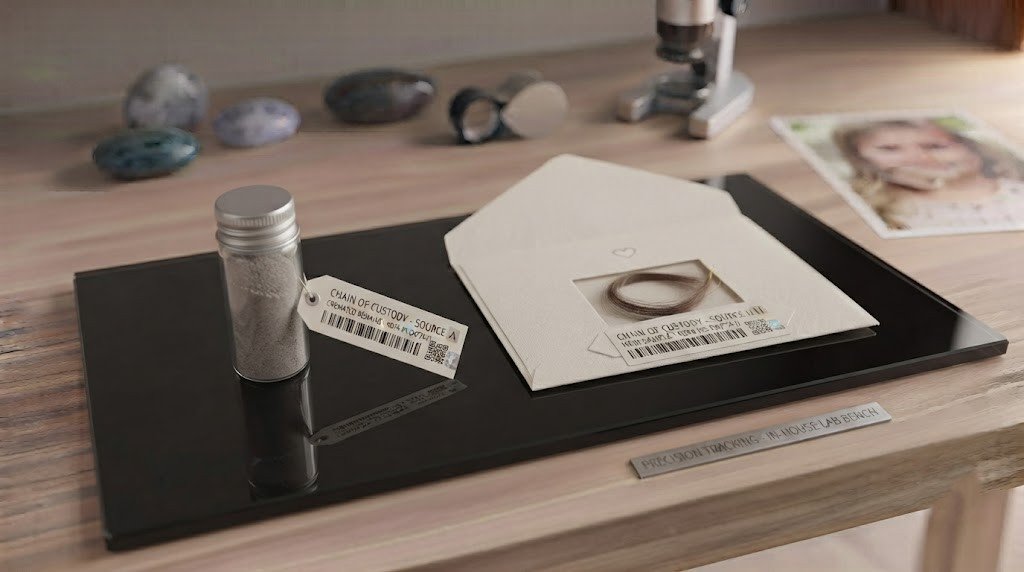
Through paperwork and reference numbers that stay with the material at every handoff. Chain of custody is the record of which container arrived, when, who handled it, and which batch of carbon entered which growth cell. Without it, nothing links the finished stone to your submission, and any claim that the stone was made from daughter ashes at all rests on trust alone.

For a diamond made from daughter ashes, a sound tracking process tends to include:

  • Logging the submission on arrival and confirming receipt to the family
  • Keeping each family’s material physically separate throughout
  • Assigning a reference that follows the carbon through extraction, graphitization and growth
  • Tying the final origin certificate back to that same reference

Ask how a provider handles each, and expect specific answers in writing.

This is also the moment to ask what is not used. Extraction rarely consumes every grain of a submission, and policies differ: some providers return remaining ash, others handle it another way. Knowing before you ship is kinder than wondering afterward. Each step of turning her ashes into a diamond places this in the full sequence.

How Long Does a Diamond Made From Daughter Ashes Take, and What Drives Cost?

Six to ten months is typical across the industry, counted from the day material is received; larger stones and specialty colors can run to twelve. Nearly all of that is growth time, with the chemical stages and the finishing work brief beside it.

Cost follows the stone you choose, not the ash you send. As general 2026 industry ranges rather than any one company’s prices:

  • About 0.10 to 0.25 carat: roughly $1,500 to $3,500
  • Half a carat to a full carat: roughly $5,000 to $15,000
  • Two carats and above: roughly $20,000 to $75,000 or more
  • Colorless: usually costs more than yellow, champagne or blue at the same size
  • Extras: such as independent grading, engraving, fancy cuts, settings and, where offered, irradiation are typically priced apart from the stone

For a diamond made from daughter ashes, the decisions that move price and timeline alike are carat, color and cut. The quantity of ash moves neither one.
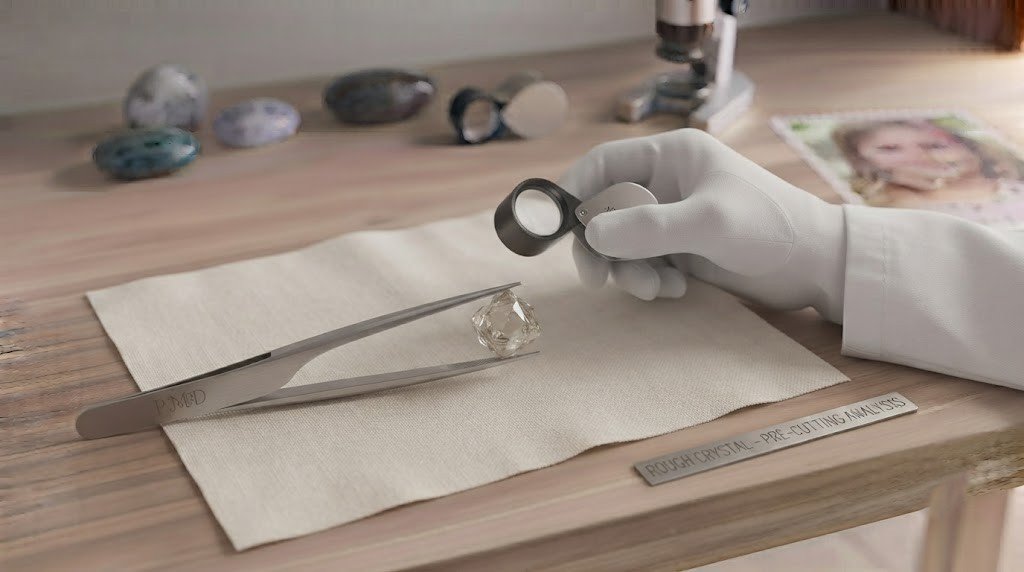
 A rough lab-grown diamond crystal held in tweezers under a gemologist's loupe before cutting

What Has to Happen Before Anything Reaches a Laboratory?

Two things no laboratory can do for you: confirming who may authorize release of her remains, and preparing the portion that is sent.

Authority is the one to settle first. Each state sets its own order of priority, with no national standard. A spouse or partner she leaves behind, or grown children of hers, may come before her parents in that order, and written wishes of hers, such as a directive, a clause in a will or a funeral pre arrangement, can override the default. A parent arranging a diamond made from daughter ashes is not automatically the person who signs. The funeral home or an attorney can confirm the local rule.

Families arrive at this differently, too. Parents do not always agree, and one parent handling everything alone is common. None of that changes the laboratory side once the right authorization is in place. The complete guide to a daughter ashes diamond covers those decisions alongside cost, color and settings.

Frequently Asked Questions

Can the laboratory tell her carbon apart from the added carbon?

Not once they are blended and grown into one crystal, because carbon atoms are chemically identical wherever they came from. What shows her carbon is present is the chain of custody record, which follows her material from arrival through extraction, graphitization and growth. That is why it is reasonable to ask exactly how a provider keeps each submission separate.

Does it matter how long ago she was cremated?

Generally not. Cremated remains are a stable mineral material, so ashes kept for years can usually still yield carbon for a diamond made from daughter ashes. How they were stored can matter more than when, so describe the container and storage conditions when you first contact a provider and let the laboratory judge whether anything affects extraction.

Is a diamond made from daughter ashes a real diamond?

Yes. HPHT and CVD both produce genuine diamond with the same crystal structure, hardness and optical properties as a mined stone. It can be graded on the same cut, color, clarity and carat scales and rates 10 on the Mohs hardness scale. What makes it a memorial stone is the origin of part of its carbon, not any difference in the material.

Can more than one stone come from the same ashes?

Often, yes. Because only a portion of her remains is used, parents, siblings or her own children may each be able to receive a stone. Each diamond made from daughter ashes goes through growth separately, with its own timeline and its own price. Ask whether a single submission can supply several stones or whether each one needs its own measured portion.

Why does the laboratory side take so many months?

For a stone made from daughter ashes, almost all of the time is crystal growth. Extraction, purification and graphitization are comparatively short, but building a diamond layer by layer under high pressure is slow, and larger carats need longer in the press. Across the industry, six to ten months from receipt is typical, and larger or specialty color stones can take up to twelve.

Will I see the stone at any point before it is finished?

That depends on the provider. Some share photographs of a rough crystal made from daughter ashes before cutting or send updates at milestones such as graphitization, while others communicate mainly at the end. If following the progress matters to you, raise it before sending anything, and ask for the update schedule in writing.

Final Thoughts on How Her Ashes Become a Diamond

Laid out stage by stage, the way a diamond is made from daughter ashes is less mysterious than it first appears. Her ashes are mostly bone mineral; a small share of carbon is drawn out, cleaned, reshaped into graphite, grown into a crystal, then cut and documented.

Knowing why each stage exists will not shorten the wait, but it can sharpen the questions. Ask what share of a stone made from daughter ashes will be hers, how her material is tracked, what happens to whatever is not used, and which optional steps really are optional. The answers tell you a good deal about who you are trusting with her.

Learn More About Daughter Memorial Diamonds

Talk With Memorial Diamond

If you would rather talk any of these stages through with a person, Memorial Diamond can be reached at memorialdiamond.us. Ask whatever you need to about how a diamond made from daughter ashes is handled, documented and returned. There is no obligation in asking.
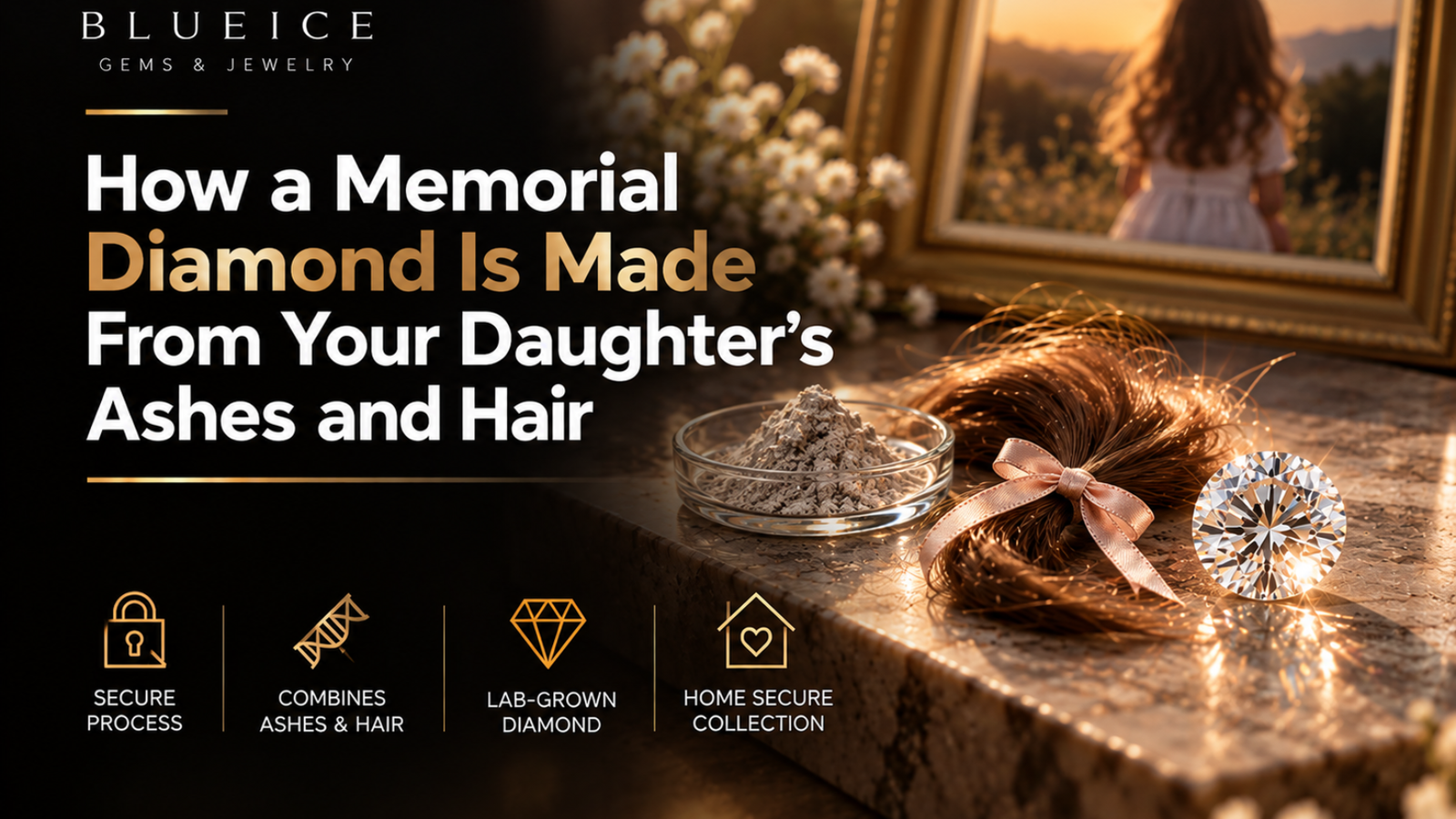
made from daughter ashes and hair

How a Memorial Diamond Is Made From Your Daughter’s Ashes and Hair

When you send two different parts of her, it is natural to wonder whether they simply go into the press together. They do not: a stone made from daughter ashes and hair usually comes from two separate purification runs, one per material, whose cleaned carbon is joined before graphitization and growth, as providers that offer blending typically describe it. Bone mineral and keratin are different enough that each needs its own treatment first.

What follows is the laboratory’s side, stage by stage, for the adults making the decision, at whatever age she died.

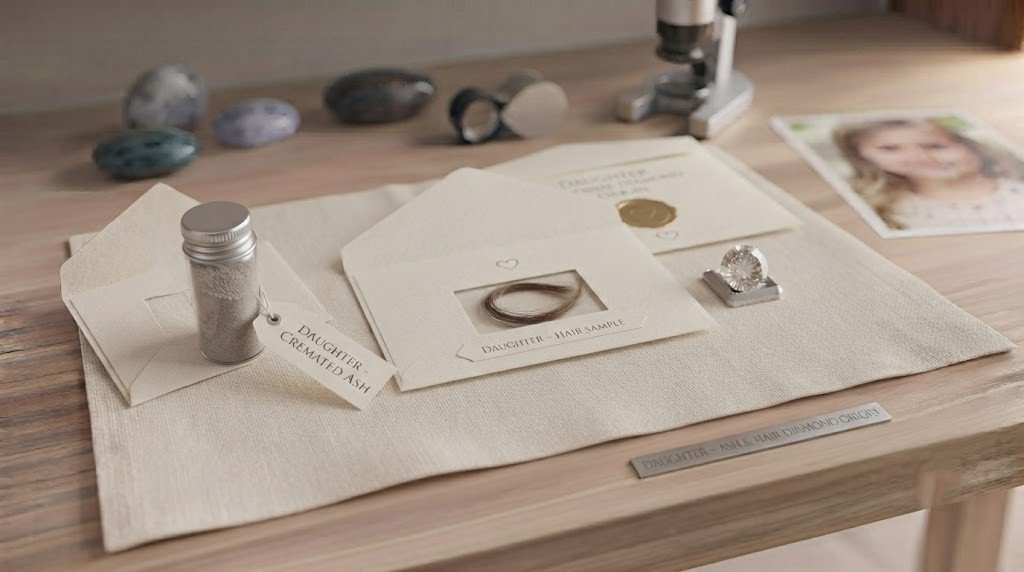
A finished stone made from daughter ashes and hair resting beside two separately labeled sample containers

What Happens to a Stone Made From Daughter Ashes and Hair, Stage by Stage?

Eight stages, most invisible to the family. The first half of a stone made from daughter ashes and hair is chemistry done twice; the second half is ordinary growth and finishing.

#StageWhat the lab is doingWhat it means for you
1IntakeLogging two separately labeled containers against one orderYour paperwork has to name both materials
2Ash purificationStripping calcium phosphate and minerals away from the small carbon fractionOnly a few tablespoons to about 4 oz is typically asked for
3Hair purificationBreaking keratin down and removing everything that is not carbonA small lock, a few grams, is the usual request
4CombiningJoining the two purified carbons, then adding supplemental lab carbonAsk what proportion the lab will document
5GraphitizationHeating the combined carbon to roughly 2,500 to 2,700°CNo action needed
6GrowthPressing that feedstock around a seed crystal for weeks to monthsCarat size sets how long this stage runs
7Cutting and polishingShaping the rough crystal into the cut you choseOccasionally the rough suggests a better shape
8Optional finishingIrradiation for color, independent grading for qualityBoth are choices, not requirements

Seen this way, a diamond made from daughter ashes and hair differs from a single material stone at only three points: intake, the doubled purification, and the moment the two carbons meet. After stage four, a gem made from daughter ashes and hair follows the usual path. For the family side sequence rather than the lab side one, the step by step guide to her ashes and hair lays out what you actually do at each point.

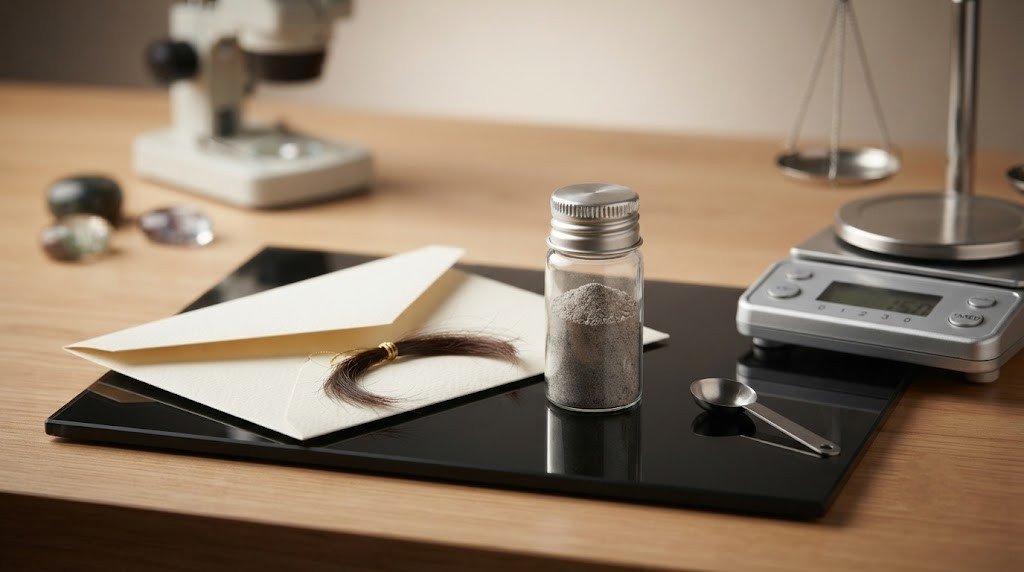
Two labeled laboratory containers, one holding cremated remains and one holding a small lock of hair

Why Do Her Ashes and Her Hair Start Out on Separate Benches?

Because they are chemically almost opposite starting points, and a process tuned for one would waste the other. Every stone made from daughter ashes and hair begins with that mismatch.

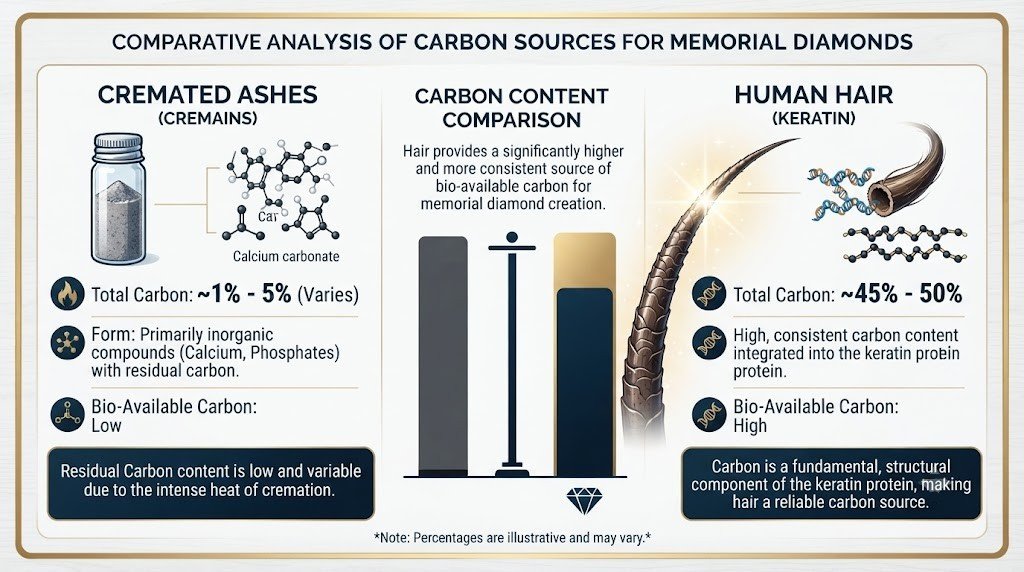
Cremated remains are overwhelmingly calcium phosphate, the mineral that gave her bones their structure. Industry figures place usable carbon at somewhere around 0.5% to 4% of the ash by weight, so the job is to find a sliver inside a great deal of mineral.

Hair is the reverse problem. Keratin is a protein in which carbon accounts for roughly half the weight, but that carbon is bound up with nitrogen, sulfur, hydrogen and oxygen, which have to be driven off cleanly.

So a lab preparing a stone made from daughter ashes and hair runs two differently tuned extractions. Keeping them apart also lets each material be weighed and logged on its own before anything is merged, which is part of what keeps a diamond made from daughter ashes and hair traceable. Ask a provider to confirm this happens rather than assuming it.

How Is Carbon Recovered From Her Ashes?

Through heat in a sealed, oxygen free chamber, carried out in several passes. Burning in air would turn the carbon into gas and lose it.

Across those passes the calcium phosphate and other minerals are separated out, and what remains is refined to roughly 99.9% carbon or better. Because the carbon fraction of ash is so small, a fair volume of ash yields only a modest amount of purified carbon for a stone made from daughter ashes and hair.

That is why the ash portion is still measured in tablespoons to ounces rather than a pinch, even when hair is also sent. Industry typical requests run from a few tablespoons up to about 4 oz, around 100 grams, a small fraction of what a full cremation returns. The rest of her ashes can stay in the urn, be buried or scattered, or be shared as your family intends.

Ask what happens to any ash that is not consumed; some providers return it, some dispose of it respectfully. The ash only route is covered in how a memorial diamond is made from her ashes. How much ash and hair a daughter memorial diamond needs goes through quantities for a combined order in more detail.

How Is Carbon Recovered From Her Hair?

Along a similar oxygen free route, tuned for protein rather than mineral. The keratin breaks down under controlled heat, the non carbon elements are driven off, and what is left is refined to the same high purity.

Because hair is so carbon rich, the amount asked for is small: typically a lock or a few grams. Hair from a brush, a braid kept after a haircut, or a lock taken before cremation can all be suitable, though a provider should confirm whether dye or the age of the sample matters.

Keep one misconception in view. Hair’s higher carbon content describes the starting material, not the finished crystal. It does not mean a stone made from daughter ashes and hair is mostly hair, and it does not make a gem made from daughter ashes and hair lighter in color. Those outcomes depend on growth conditions and trace elements. The hair only process goes deeper on keratin.

Permission for hair is usually a quieter matter than for cremated remains, yet it is not a free for all. A lock kept in a drawer may still count among her belongings for estate purposes, and how that works differs from state to state, so confirm whose consent makes sense before posting it.

At What Point Are the Two Carbons Joined, and What Else Goes In?

After both purifications are finished and before graphitization. Providers that offer blending typically describe merging the two purified carbons at this point, so one uniform feedstock goes into the furnace for a diamond made from daughter ashes and hair. Not every provider offers blending, and methods are not standardized, so ask for a written description of where the merge happens.

Then comes supplemental carbon. A diamond of meaningful size needs more carbon than a personal sample reliably yields, so labs add high purity lab carbon. That is typical of memorial diamonds generally, including one made from daughter ashes and hair.

How much of the crystal is her? On the ash route alone, personal carbon is usually described as around 10% to 15% of the stone’s mass, with some providers publishing figures as low as 3%. For a blended charge there is no equivalent published figure. Nobody publishes an industry wide share for a stone made from daughter ashes and hair, so ask the provider to state its own figure in writing and explain how it arrives at it.

None of this makes the diamond less real. Her carbon is physically part of the lattice; it is simply not the only carbon there, and any stone made from daughter ashes and hair presented as purely her should be questioned. The wider guide to a blended stone for her puts this in context.

How Is Chain of Custody Kept Across Two Materials?

With two sets of records that converge into one. Chain of custody is the paper trail proving the stone grew from what you sent, and a gem made from daughter ashes and hair doubles the places where that trail needs care.

A sound process for a stone made from daughter ashes and hair usually includes:

  • Separate labeling at intake — each container logged with its own identifier under one order
  • Individual weights recorded — how much of each material arrived
  • Documented purification runs — one record per material
  • A recorded merge point — the date and batch reference where the carbons were combined
  • Isolation during growth — her feedstock in its own growth cell
  • A certificate of origin — an in house document tracing the stone back to your submission

Ask which of those records you will receive for a diamond made from daughter ashes and hair and which are available on request.

Before any of this begins comes the question of who can authorize releasing her ashes. It varies by state, with no single national rule. A spouse or registered partner often comes first, and her own adult children may rank ahead of her parents. Her own written wishes, whether in a will, an advance directive or a prepaid funeral plan, can displace that sequence altogether. Parents are sometimes divided, and one parent arranging alone is common. The funeral home that handled the cremation usually knows the local rule.

What Happens Inside the Graphitization Furnace and the Growth Press?

Two very hot stages turn loose carbon into a crystal. First, graphitization: the merged feedstock is heated to roughly 2,500 to 2,700°C and reorganizes into graphite, the layered form of carbon a growth press can use.

Then growth. Most memorial diamonds are grown by the high pressure, high temperature method, known as HPHT, one of the two established ways of growing a lab diamond. The graphite for a stone made from daughter ashes and hair goes into a growth cell with a tiny diamond seed, held at roughly 6 to 8 GPa and about 1,400 to 2,500°C, and carbon slowly builds onto the seed. A minority of providers use chemical vapor deposition instead.

Size is governed by time in the press, not by how much ash or hair you sent; more material does not mean a bigger or quicker stone. Sizes on offer generally run from about a tenth of a carat to beyond five.

Color is also decided here. Nitrogen present during growth pulls a crystal toward yellow; boron pulls it toward blue; colorless requires the near total absence of both and usually costs more. Two purified materials do not make the color of a diamond made from daughter ashes and hair more predictable. What color a diamond from her ashes and hair will be explores the range, and the choice should rest on what feels right to you rather than on any assumption about what suits a daughter.

How Is the Crystal Cut, and Are Irradiation and Grading Required?

A cutter shapes and polishes the rough crystal into the style you chose: round, oval, cushion, princess, emerald or others. A careful provider will say if the rough would suit a different shape better.

Two optional steps can follow. Irradiation is a post growth treatment some providers offer to shift color toward red, pink, green or black. It costs extra, and many families keep the color a stone made from daughter ashes and hair grew with.

Independent grading is the other option. A third party gemological laboratory can assess the finished stone for cut, color, clarity and carat, like any diamond; memorial stones commonly grade between SI2 and VVS. That report is separate from the in house certificate of origin: one describes quality, the other documents where the carbon came from.

However it is finished, a stone made from daughter ashes and hair is a genuine diamond, sitting at 10 on the Mohs scale of mineral hardness, so it suits everyday wear.

A rough lab-grown diamond crystal held against a polishing wheel during cutting

How Long Does a Diamond Made From Daughter Ashes and Hair Take, and What Does It Cost?

Industry wide, expect roughly six to ten months from the day both materials arrive, with large or specialty color stones sometimes stretching to twelve. A stone made from daughter ashes and hair adds a second purification run, so ask whether that changes the estimate; growth still takes most of the calendar.

On price, these are general 2026 industry ranges, not any single company’s published rates:

TierCarat bandUsual spread
SmallRoughly a tenth to a quarter carat$1,500 to $3,500
MiddleHalf a carat up to one$5,000 to $15,000
LargeTwo carats and beyondFrom $20,000, past $75,000 at the top

Colorless tends to cost more than blue, yellow or champagne at the same weight. Settings, engraving, fancy cuts and a grading report are usually priced separately. Ask whether a gem made from daughter ashes and hair carries a supplement for handling two materials.

The final figure for a diamond made from daughter ashes and hair depends on carat, color, cut and extras, not on how much of either material you send. How to turn your daughter’s ashes and hair into a diamond walks through those decisions in the order most families make them.

What Should the Lab Confirm in Writing Before You Send Both?

The details that are easy to assume and hard to check afterward. For a stone made from daughter ashes and hair, written answers matter more than usual, because two materials create more room for misunderstanding.

Useful questions to put by email:

  1. Do you blend ashes and hair, and at what stage are the carbons combined?
  2. What share of the finished stone will be personal carbon, and how is that measured?
  3. How much ash and hair do you need, and in what containers?
  4. What happens to unused ash and hair?
  5. Which custody records will I receive for each material?
  6. Is growth done in house or at a partner laboratory?
  7. Does a second material change the timeline or price?
  8. What happens if a growth run fails?

A provider that answers those clearly is showing you how it will handle a stone made from daughter ashes and hair; vague answers are a reason to keep looking. For a skeptic’s view of the whole question, whether a memorial diamond is really made from her ashes and hair goes through the verification side in depth.

Frequently Asked Questions

Are her ashes and hair mixed together before processing?

Not usually. Providers that offer a stone made from daughter ashes and hair typically purify the ash and the hair in separate runs, because bone mineral and keratin need different treatment. The two cleaned carbons are then merged before graphitization. Methods vary, so ask for a written description of where the merge happens.

Does adding hair increase how much of the diamond is her?

No published figure answers that. Hair holds far more carbon than ash, but that describes the starting material, not the finished crystal. Supplemental lab carbon is still added, and no industry wide percentage exists for a gem made from daughter ashes and hair, so ask your provider to state its own figure in writing.

Will combining two materials make the color easier to predict?

No. Color is decided during growth by trace elements, chiefly nitrogen toward yellow and boron toward blue. Two purified materials do not make the result more predictable, and hair does not automatically produce a lighter stone. Colorless is possible but requires excluding both elements and usually costs more.

Can I send hair that was saved years ago?

Often, yes. Hair kept dry, clean and away from heat usually stays usable for a long time. Mention how it was stored and whether it was ever dyed or chemically treated, since some providers want to know first. A small lock or a few grams is the typical request.

Is a stone made from daughter ashes and hair larger than one from ashes alone?

Not because of the extra material. Carat size is set by how long the crystal grows in the press, which follows the size you choose at the start. Sending hair as well as ash changes the record keeping and possibly the price, but it does not make the diamond bigger.

Can more than one family member receive a stone from the same ashes and hair?

Frequently, because only a portion of each material is used. Each additional diamond needs its own growth run, with its own timeline and cost. Ask whether one submission can support several stones and how the provider documents which stone came from which batch.

What happens if I only have enough of one material?

Many providers can work from ashes alone or hair alone, and a single material stone is still made from her. If you have only a little hair to go with her ashes, ask whether a diamond made from daughter ashes and hair is still feasible before sending anything.

Final Thoughts on How Her Ashes and Hair Become a Diamond

Two materials make the laboratory’s work a little more involved, but the core is the same for every memorial diamond: purify, graphitize, grow, cut. What changes with a stone made from daughter ashes and hair is the record keeping, and that is where your attention is best spent.

Get the blending method, the personal carbon figure and the unused material policy in writing, and confirm who can release her ashes. After that, the months of growth ask nothing more of you.

What returns is a real diamond with a documented line back to both materials you entrusted to the lab, whatever age she was and however you choose to keep it.

Learn More About Daughter Memorial Diamonds

Talk With Memorial Diamond

If it would be easier to talk this through with a person, Memorial Diamond is available at memorialdiamond.us to explain how a stone made from daughter ashes and hair is handled and what documents are involved. Asking commits you to nothing.

ash-for-a-daughter-memorial-diamond

How Much Ash Do You Need for a Daughter Memorial Diamond?

Less than most families expect. Across the industry, the ash for a daughter memorial diamond is typically somewhere between a few tablespoons and roughly 4 oz, or about 100 grams, which is a small fraction of what a cremation returns. The rest of her ashes stays with you, to keep, scatter, bury or divide exactly as you had intended.

That single figure answers the headline question, but setting aside ash for a daughter memorial diamond tends to raise several more: what that amount looks like in the hand, whether there will be enough, who has to agree, how to take it from the urn, and what happens to anything the laboratory does not use.

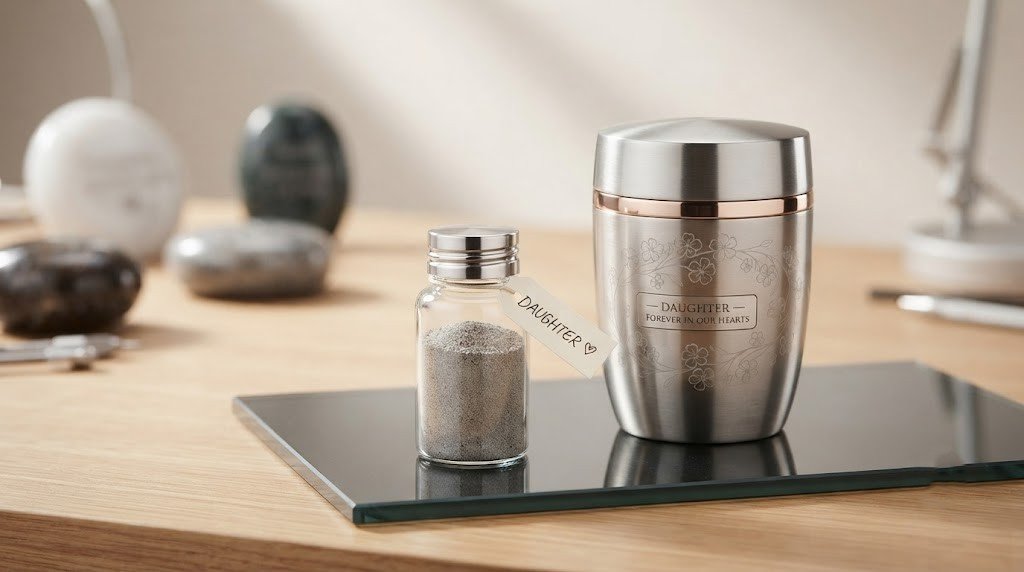
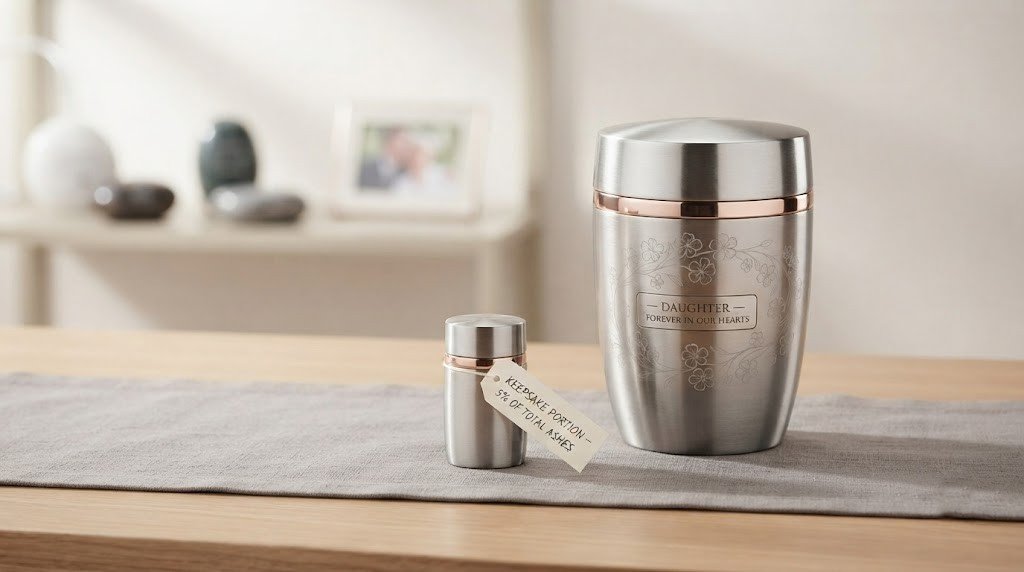
A small sealed container holding the ash for a daughter memorial diamond beside a closed urn

How Much Ash for a Daughter Memorial Diamond Do Laboratories Request?

Industry wide, requests usually fall between a few tablespoons and about 4 oz, roughly 100 g, with each provider setting its own exact figure.

Here is how that quantity fits into the wider picture:

What is being measuredTypical industry figureWhat it means for your family
Low end of a provider’s requestA few tablespoonsSome laboratories work at this level
Upper end of a provider’s requestAbout 4 oz, roughly 100 gMost requests fall at or below this
An adult’s full cremationMany times the requested portionThe portion is a small fraction of the whole
Usable carbon inside that portionAbout 0.5 to 4% by weightWhy a measured amount is still needed
Her carbon in the finished stoneAround 10 to 15%, with some providers publishing about 3%The rest is supplemental lab carbon
Ash sent beyond the requestNot neededDoes not enlarge the stone; ask whether it comes back

Treat that table as orientation rather than instruction. The ash for a daughter memorial diamond should always be measured against the figure your chosen provider confirms in writing, not against a general range read online. It also helps to know, when picturing it, that cremated remains are not fine powder but mostly bone mineral, closer to coarse sand.

What Does That Amount Look Like Beside the Whole Cremation?

A small portion of the whole. For an adult cremation, even the upper end of the usual request leaves the great majority of the remains untouched, which is why setting aside ash for a daughter memorial diamond rarely forces a choice between a diamond and an urn.

Many families find this the most reassuring part of the whole subject. The worry that ash for a daughter memorial diamond means “using up” her remains is common, and in most cases it simply does not match the numbers.

Cremation has become the majority choice in the United States, with the national cremation rate projected at 63.4% for 2025, so funeral homes are used to dividing off a small portion for a keepsake or a second resting place. Portioning ash for a daughter memorial diamond falls squarely within that familiar practice.

What If There Is Less Ash Than You Expected?

Ask before assuming anything. The total volume of a cremation varies from person to person, and if she died young, the amount returned may be smaller than for a grown adult. That alone does not rule a diamond out.

The practical step is simple when you are unsure whether there is enough ash for a daughter memorial diamond: tell the provider how much you have, or how much the funeral home believes there is, and ask plainly whether it is enough. The funeral home that carried out the cremation can usually estimate it, or weigh the remains if you ask.

Where the total is modest, some families decide that the ash for a daughter memorial diamond should come only from a very small portion, with everything else kept together. Others would rather keep every part of her in one place and look at a diamond grown from her hair instead, or at combining a little of each. None of these is a lesser choice, and none has to be decided quickly.

Why Doesn’t Sending More Ash Grow a Larger Stone?

Because a diamond’s size is governed by how long it grows in the press, not by how much material arrives. Carat is chosen in advance, and growth is planned around it.

Extra ash for a daughter memorial diamond beyond the requested amount does not change the outcome. A half carat and a two carat stone can begin from the same portion; the difference is weeks or months of additional growth time.

The practical consequence is freeing. When you measure ash for a daughter memorial diamond, you do not need to send more of her than the laboratory asks for in the hope of a bigger stone, and you should not feel any pressure to. Available sizes across the industry run from about a tenth of a carat to beyond five.

Why Does a Lab Need Any Particular Amount at All?

Because very little of cremated ash is carbon. Usable carbon typically makes up only about 0.5% to 4% of ash by weight; the rest is largely calcium phosphate and other minerals from bone.

So the ash for a daughter memorial diamond is really a source from which a small amount of carbon is extracted. That carbon is purified to roughly 99.9% or better, then converted to graphite at around 2,500 to 2,700°C so it can go into a growth press. How a memorial diamond is made from her ashes walks through each of those stages.

The growth itself usually uses HPHT, a method that recreates roughly 6 to 8 GPa of pressure at temperatures between about 1,400 and 2,500°C, with a small diamond seed as the starting point. Chemical vapor deposition is the route a minority of providers take instead. A general overview of HPHT and CVD growth explains the underlying science.

One honest point belongs here, because it shapes what the ash for a daughter memorial diamond actually contributes. On the ash route, the personal carbon typically accounts for around 10 to 15% of the finished stone’s mass, with some providers publishing figures as low as 3%. The remainder is supplemental lab carbon added to reach a workable growth volume. No reputable provider should describe the result as purely her carbon, and it is fair to ask any company what share it can document.

Who Needs to Agree Before the Ash Is Set Aside?

Whoever holds legal authority over her remains, and that is not always her parents. Releasing ash for a daughter memorial diamond needs that person’s signature. The rules are set state by state rather than nationally, and the order of priority differs from one to the next.

Where a daughter was married or in a registered partnership, her spouse or partner often ranks first. If she had adult children of her own, they may rank ahead of her parents too. Anything she put in writing, such as a directive, a will provision or a pre arranged funeral plan, can override the default order entirely.

Parents do not always agree, and one parent arranging everything alone is not unusual. Before setting aside ash for a daughter memorial diamond, it is worth confirming who has to sign the release. The funeral director who handled the cremation usually knows how the local rule works, and an attorney can confirm it where the position is unclear.

How Do You Take a Portion From the Urn?

A small labeled keepsake container placed next to a full cremation urn to show the difference in volume

The simplest route is to ask the funeral home to measure out the ash for a daughter memorial diamond. Dividing cremated remains is a routine service, and many will open the urn or temporary container, take the requested portion and reseal everything.

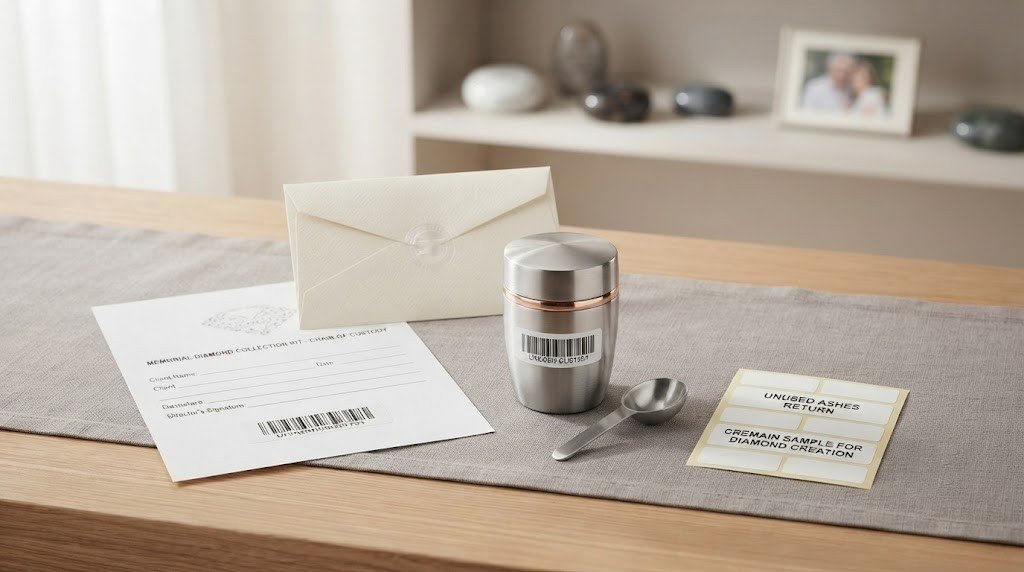
If you prefer to do it yourself, a provider will typically mail you a collection kit containing labels, a scoop and a container that seals. A few practical points make it easier:

  • Work over a tray or a large sheet of paper so nothing is lost if a little spills.
  • Do not force a sealed urn. Some are permanently closed; a funeral home can open and reseal them properly.
  • Measure by the provider’s instructions, whether that is by weight, by volume or simply to a fill line on the container.
  • Photograph the sealed container before it is packed, for your own records.
  • Keep the paperwork inside the parcel, so the chain of custody travels with the ash.
  • Ask someone else to help, or to do it entirely, if handling her remains feels like too much. That is a completely reasonable request.

The step by step guide to turning her ashes into a diamond shows where portioning sits among the other stages, from authorization through to delivery.

Can Several Family Members Share From the Same Cremation?

Often, yes. Because the ash for a daughter memorial diamond is usually a small share of the whole, the remaining ashes can frequently be divided between several people, for example a portion for her partner’s urn, a portion to scatter, and a portion for a stone.

More than one diamond can also be grown, each as its own growth run with its own price and timeline.

Sharing works best when it is discussed openly first, ideally before anyone measures out ash for a daughter memorial diamond. Deciding together how her ashes will be divided, and who will hold what, spares families a harder conversation later.

What Happens to the Rest of Her Ashes?

Exactly what you decide. The portion taken as ash for a daughter memorial diamond is separated off, and the rest remains yours to keep in an urn at home, inter in a cemetery or columbarium, scatter somewhere meaningful, or divide among family.

If a burial or scattering is already planned, it is worth taking the ash for a daughter memorial diamond first, since reaching remains after interment is far harder than setting them aside in advance.

Will Unused Ash Be Returned After the Stone Is Grown?

That depends on the provider, which is why the fate of unused ash for a daughter memorial diamond belongs on your list of questions before anything is sent. Policies differ across the industry: some return unused ash as a matter of course, some return it on request, and some do not.

Two kinds of leftover are worth separating: ash never processed at all, and residual mineral material after extraction. Ask about both, and ask for the answer in writing.

Knowing ahead of time lets you decide how much ash for a daughter memorial diamond to send in the first place. If unused material is not returned, you may prefer to send exactly the stated minimum.

Does the Ash for a Daughter Memorial Diamond Affect Cost or Timing?

Not in any meaningful way. Within the usual range, the ash for a daughter memorial diamond has little bearing on the bill: price and timeline are driven by the stone you choose, mainly carat, color and cut, rather than by the quantity of ash supplied.

As general 2026 industry ranges, not any single provider’s published price:

  • Roughly 0.10 to 0.25 carat: about $1,500 to $3,500
  • Roughly 0.5 to 1 carat: about $5,000 to $15,000
  • Roughly 2 to 5 or more carats: about $20,000 to $75,000 and upward
  • Color: colorless generally costs more than a warm or blue tone of the same weight
  • Extras: settings, engraving, specialty cuts and optional independent grading are usually priced separately

On timing, most providers quote about six to ten months from receipt of the material, with larger stones or specialty colors sometimes taking up to twelve. Almost all of that is growth time, which is why sending extra ash for a daughter memorial diamond neither shortens nor lengthens the wait.

Color comes from chemistry rather than quantity. Nitrogen present during growth tends to produce yellow tones and boron blue, while a colorless stone needs the near absence of both. Some providers offer optional irradiation afterward for reds, pinks, greens or black. What color a diamond grown from her ashes will be covers that in more depth.

 A collection kit with a sealed container, scoop, labels and chain-of-custody paperwork laid out on a table

What Should You Confirm in Writing Before Sending Anything?

Five points cover nearly everything. Before you set aside ash for a daughter memorial diamond, ask the provider to put each of these in writing:

  1. The exact quantity of ash it requires, and how it wants that measured.
  2. Whether the amount you have is enough, particularly if the total is limited.
  3. Whether unused ash, and any residual material, will be returned.
  4. What documentation links the finished stone to your specific submission, usually an origin or authenticity certificate.
  5. Whether independent grading is available, since it is optional and separate from that origin certificate.

It is also worth asking what happens if a growth run fails, and whether a second attempt would need more ash for a daughter memorial diamond. The complete guide to a daughter ashes diamond gathers the wider background in one place.

Frequently Asked Questions

Is a few tablespoons of ash really enough for a diamond?

For many providers, yes. The ash for a daughter memorial diamond that laboratories request typically runs from a few tablespoons to about 4 oz, or roughly 100 grams, and some laboratories work at the low end of that range. Always confirm the exact figure with your chosen provider in writing before measuring anything out.

Can a diamond be made if her cremation produced only a small amount of ash?

Often it can, but only the provider can say for certain. Tell them how much you have, or ask the funeral home to weigh it, and ask directly whether that is sufficient. If the answer is unclear, a diamond grown from her hair is another route worth exploring.

Will sending more ash give us a larger or better diamond?

No. Carat is determined by how long the stone grows, and color and clarity by growth conditions, not by the quantity supplied. Sending more than the provider requests does not change the result, so there is no reason to part with more of her remains than necessary.

Can the funeral home measure out the ash for a daughter memorial diamond?

Yes, and many families prefer it. Funeral homes routinely open urns or temporary containers, divide remains and reseal them. Ask the one that handled her cremation whether it offers this, and give them the exact quantity and container your diamond provider specifies.

Do we get back any ash that isn’t used?

It depends entirely on the provider. Some return unused ash automatically, some on request, and some not at all. Residual material after carbon extraction is a separate question. Ask about both before sending, and keep the written answer with your other paperwork.

Can two diamonds be grown from the same portion of her ashes?

Sometimes. Certain providers can grow more than one stone from a single submission, while others ask for a separate portion for each. Every stone is its own growth run with its own price and timeline, so confirm the arrangement and quantity before dividing anything.

How long after the cremation can we set aside ash for a diamond?

There is no fixed limit. Cremated remains are mineral and chemically stable, so ash kept for years can usually still be used. Mention how the ashes have been stored when you first contact a provider, and take the portion before any burial or scattering if possible.

Final Thoughts on How Much Ash a Daughter Memorial Diamond Needs

The short answer is that the ash for a daughter memorial diamond is a small amount, and in most cases a small share of the whole. A diamond rarely has to compete with an urn at home, a scattering or a family plot.

The longer answer, once you know the ash for a daughter memorial diamond is modest, comes down to a few questions: how much this particular provider needs, whether what you have is enough, who needs to sign, and what comes back afterward. Getting those answers in writing turns an uncertain decision into a manageable one.

There is no need to rush. Her ashes will keep, and how families turn a daughter’s ashes into a diamond can be read whenever you are ready.

Learn More About Daughter Memorial Diamonds

Talk With Memorial Diamond

If you would like to talk through the ash for a daughter memorial diamond, the paperwork or anything else on this page with a person, Memorial Diamond can be reached at memorialdiamond.us. Asking carries no obligation.

ash-and-hair-for-a-daughter-memorial-diamond

How Much Ash and Hair Do You Need for a Daughter Memorial Diamond?

A small portion of her ashes and a lock of her hair can sit side by side on a shelf for months before anyone feels ready to measure either one. As a rough answer on how much ash and hair for a daughter memorial diamond a laboratory will want: ash requests across the industry usually run from a few tablespoons to about 4 oz, roughly 100 grams, and hair requests are usually a small lock of a few grams. Whether each material must clear its own minimum, or one combined figure covers both, differs from provider to provider. That answer belongs in writing before anything is packed.

How Much Ash and Hair for a Daughter Memorial Diamond Is Typical?

Less of each than most parents picture. When families ask how much ash and hair for a daughter memorial diamond to set aside, published guidance across the memorial diamond category puts the ash portion somewhere between a few tablespoons and about 4 oz, roughly 100 g, and the hair portion at a small lock, often described as palm sized, or as a few grams. These are industry typical figures, not a requirement Memorial Diamond has published.

Seen together, the two parts of the ash and hair for a daughter memorial diamond look oddly mismatched: one is counted in spoonfuls, the other fits in an envelope. The gap comes down to carbon, the only part of either a laboratory can grow. The complete guide to her ashes and hair diamond covers the wider background.

None of this depends on who she was. Whether she was a small girl or a grown woman with a household of her own, the amounts follow a provider’s process, so plan around the figure one company confirms. A keepsake lock may weigh barely more than the grams requested, which is why hair is the material families guard most closely.

Does Each Material Need Its Own Minimum, or Is There One Combined Figure?

It varies, and it is the most useful single question to put to a provider before collecting any ash and hair for a daughter memorial diamond. Some companies handle a combined order as two intakes, each with its own threshold. Others work toward one overall carbon target and are flexible about how the two materials contribute to it.

In practice, three arrangements come up:

  • Separate minimums. The ash has to meet the ash requirement and the hair has to meet the hair requirement, exactly as though each were a standalone order.
  • One combined target. The laboratory needs a set amount of recovered carbon in total, so a generous hair sample can offset a smaller ash portion, or the reverse.
  • A lead material plus a smaller addition. One material carries the process, and a modest amount of the other is included chiefly for what it means to the family.

None is more honest than the others. What matters is knowing which applies, because it changes how much ash and hair for a daughter memorial diamond you set aside. A two line email settles it.

Ask, too, whether the ash and hair for a daughter memorial diamond are purified together or separately. Either approach can be sound, but the answer shapes what records you receive about each.

Why Doesn’t More Ash and Hair for a Daughter Memorial Diamond Mean a Bigger Stone?

Because carat weight is decided by time in the growth chamber, not by the volume that arrives. Doubling the ash and hair for a daughter memorial diamond does not double the stone; the laboratory grows toward the size you chose at the outset.

The chemistry explains why. Oxygen free heating strips out everything that is not carbon, leaving it at roughly 99.9% purity or better, and a further stage near 2,500 to 2,700°C turns it into graphite. That recovered carbon is then blended with supplemental lab carbon to reach a workable volume.

Most memorial stones then grow by the high pressure, high temperature method, at roughly 6 to 8 GPa and about 1,400 to 2,500°C, around a tiny seed. A minority of providers use chemical vapor deposition; both are established ways of growing a real diamond.

Timing and price therefore follow the stone you choose, not the size of the parcel. The industry norm is about 6 to 10 months from receipt, up to 12 for larger or specialty color stones. As general 2026 industry ranges, a tenth to a quarter of a carat runs roughly $1,500 to $3,500, half a carat to a full carat $5,000 to $15,000, and two carats upward $20,000 to $75,000 or more.

How much of the stone is her own carbon depends on the route. For ash alone, personal carbon is commonly described as around 10 to 15% of the stone’s mass, with some providers citing as little as 3%. No comparable finished stone percentage is published for hair, or for a charge that blends the two, so ask the provider to state in writing what share its process attributes to her material.

How Do Her Ashes and Her Hair Compare as Starting Material?

Very differently. The table below compares ash and hair for a daughter memorial diamond side by side, using industry typical figures.

Her AshesHer Hair
Amount typically requestedA few tablespoons to about 4 oz, roughly 100 gA small lock, a few grams
Carbon in the raw materialRoughly 0.5 to 4% by weightRoughly 50% by weight
Published share of the finished stoneAbout 10 to 15%, low end about 3%, ash route onlyNo equivalent figure published. Ask in writing
Needs cremation to have taken placeYesNo
Usual share of what the family holdsA small fraction of a full cremationCan be much of a keepsake lock
Main packing concernA sealed, rigid containerDry, loose strands with no tape touching them
Side-by-side chart comparing the carbon content of cremated ashes and human hair

Hair’s carbon figure describes the starting material only. It explains why a few grams can suffice, but says nothing about how much of a combined stone came from her hair.

The table cannot forecast color. Nitrogen during growth pushes a stone toward yellow and boron toward blue; colorless needs both kept out and usually costs more. A cleaner looking material does not make the color predictable, and a stone grown partly from hair is not automatically paler than one grown from ash. What color an ash and hair stone for her may be covers that in depth; choose a color for reasons that belong to your family, not for any idea of what a daughter ought to want.

What If You Have Very Little of One Material?

Say so at the first contact, because coming up short when gathering ash and hair for a daughter memorial diamond happens, and it is often workable. Perhaps only a keepsake portion of her ashes came to you while the rest went to her spouse, or the only hair left is a few strands in a brush.

With plenty of ash and little hair, the ash can carry the carbon load and the hair becomes a meaningful addition, provided the company accepts small amounts. Brush strands are sometimes declined in favor of cut hair, so ask.

With little ash and ample hair, a company working to one combined target may manage comfortably, because hair yields far more carbon per gram. One that insists on separate minimums may not.

Where both are scarce, ask whether a single material stone would be more dependable, and whether anything comes back if the combined ash and hair for a daughter memorial diamond proves insufficient. Never send the last of either until the company confirms in writing it can use it. How much ash is needed on its own and how much hair is needed on its own set out the single material figures in more detail.

How Should Ash and Hair for a Daughter Memorial Diamond Be Labeled and Packed?

Separately and clearly, in the provider’s own containers wherever it supplies them. Even when both are headed for a single stone, the ash and hair for a daughter memorial diamond should travel as two distinctly labeled items, so the laboratory can log, weigh and track each one on arrival.

Label each with her full name, the material, the sealing date and your order reference, and photograph both. Keep the ash in a sealed, rigid container; keep the hair dry in a paper envelope, unwashed, with no tape touching the strands. The signed paperwork goes inside the outer box, sent tracked and insured.

Nobody has to do the measuring alone. A funeral home can usually open a sealed urn, weigh out a portion and reseal it, and portioning the ash and hair for a daughter memorial diamond is a task a sibling or friend can take on. The step by step sequence for her ashes and hair places packing within the wider process.

What Happens to Whatever the Laboratory Does Not Use?

That depends on the provider, so ask what becomes of surplus ash and hair for a daughter memorial diamond before anything is shipped. Some return it, some hold it in case a second stone is ordered, and some process everything.

With ash, most of it stays home regardless. The remainder can rest in an urn, be buried, scattered or divided among relatives, and each of those choices sits comfortably alongside a diamond.

Hair carries more weight. A single lock may be all that exists, so send only what the company confirms it needs, and ask whether unused strands come back and whether loose or intact.

Can Several Family Members Share What Is Gathered?

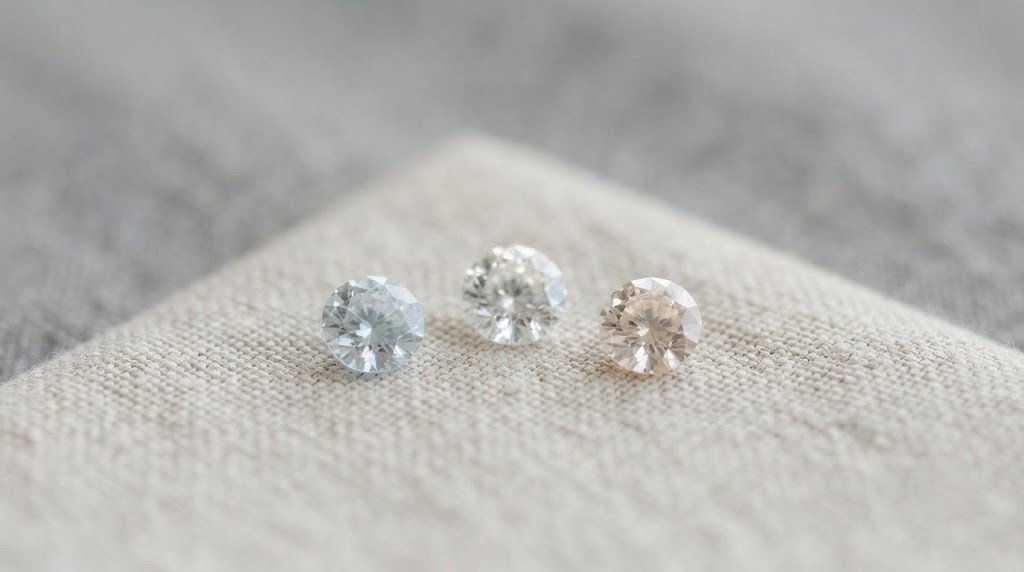
Three small loose memorial diamonds of different tones resting on a plain linen cloth

Often, yes. Because only a portion of each goes into a stone, her parents, siblings, partner or children may each receive a diamond, though what you gather then has to be divided several ways. Each stone has its own timeline and price.

The practical question is whether one submission can cover several stones, or whether every stone needs its own full allocation of the ash and hair for a daughter memorial diamond. Hair is frequently the limiting factor here: there may be plenty of ash for three stones, but only enough hair for one.

Agree early among yourselves who keeps any returned material. How to turn her ashes and hair into a diamond looks at ordering more than one stone.

Who Needs to Agree Before Anything Is Measured?

Settle this before anyone measures out ash and hair for a daughter memorial diamond, because the person arranging the stone is not always the person entitled to authorize it. Each state decides who may control a person’s remains; no one national rule applies.

A spouse or registered partner often ranks ahead of parents, and so may her own adult children. Anything she put in writing, an advance directive, a provision in her will, a prepaid arrangement, can override the default order entirely. A parent does not automatically hold that authority.

Hair raises a quieter version of it. A lock kept at home may feel entirely yours, yet personal possessions may count as part of her estate, and each state treats that differently, so it is worth confirming whose agreement is appropriate. The two parents may see it differently, or one of them may be handling everything. A funeral director or attorney can confirm the local position.

What Should You Ask in Writing About the Ash and Hair for a Daughter Memorial Diamond?

Put these to any provider by email before you set aside ash and hair for a daughter memorial diamond, and keep the replies in one folder.

  1. Does each material need to meet its own minimum, or is there one combined requirement?
  2. What exact amount of each do you need for the carat size I am considering?
  3. Are the ash and hair purified together or separately?
  4. What share of the finished stone does your process attribute to her material?
  5. What happens to unused ash and unused hair, and are both returned?
  6. What happens if either material falls short once processing starts?
  7. Can one submission cover more than one stone?
  8. What does your origin certificate document, and is independent grading available as an option?

The last matters because the documents do different jobs: an in house origin certificate links the stone to your submission, while an independent grading report, optional across the industry, assesses cut, color, clarity and carat. How a stone is made from her ashes and hair explains where each document fits.

Frequently Asked Questions

Can I send her hair now and her ashes later?

Some providers accept the ash and hair for a daughter memorial diamond in separate shipments, but many prefer both to arrive together under one order and one schedule. Ask before shipping either. If the ashes are still with a funeral home or held by another relative, say so when you first get in touch.

Does a longer lock of hair produce a larger diamond?

No. Carat size comes from how long the stone grows, not from how much material is supplied. Extra hair beyond what the provider asks for simply goes unused, so keep anything surplus at home. Choose the size first, then confirm the matching quantity of ash and hair for a daughter memorial diamond with the company in writing.

Is there a published carbon percentage for a combined ash and hair stone?

Not in the way there is for ash alone. The ash route is usually described as producing a stone with roughly 10 to 15% personal carbon, sometimes as low as 3%. No equivalent finished stone figure is published for hair, or for combined ash and hair for a daughter memorial diamond, so ask each provider to put its own figure in writing.

Can hair from her hairbrush be used alongside her ashes?

Sometimes. Brush hair often carries dust or product residue, so some providers prefer cut hair. Ask whether they accept it as part of the ash and hair for a daughter memorial diamond, and how much they need. Where it is the only hair left, confirm in writing that the laboratory can use it before you send any of it.

Should the ashes and hair go in the same container?

No. Pack the ash and hair for a daughter memorial diamond as two separately sealed and labeled items inside one outer box, with her name, the material, the date and your order reference on each. Keeping them apart lets the laboratory weigh and log each material on arrival, and it protects the hair from ash dust.

What if the provider says one material falls short?

Ask what the options are before sending more ash and hair for a daughter memorial diamond. A company working to one combined target may be able to compensate with the other material. One that needs separate minimums may suggest a single material stone instead. Either way, ask whether your submission is returned or held while you decide.

Will adding her hair change the color of the stone?

Not predictably. Color comes mainly from trace nitrogen, which pushes toward yellow, and boron, which pushes toward blue, present during growth. Adding hair does not make a stone automatically lighter or more colorless. Colorless results usually require extra processing and cost more, whichever material is used.

Final Thoughts on Gathering Ash and Hair for Her Diamond

The amounts of ash and hair for a daughter memorial diamond are small, a few spoonfuls and a few grams, usually, and most of what you hold can stay exactly where it is.

What deserves your care is the order of questions. Settle who can authorize it, confirm whether the provider uses separate minimums or one combined figure, and ask what comes back. Once those answers are in writing, gathering the ash and hair for a daughter memorial diamond becomes an afternoon’s task rather than a worry that follows you around. If one material is scarce, that is simply the first thing to tell the company you choose.

Learn More About Daughter Memorial Diamonds

Talk With Memorial Diamond

If you would like to talk through what you have and what would come back, Memorial Diamond can be reached at memorialdiamond.us. Bring whatever questions you have about the ash and hair for a daughter memorial diamond; there is no obligation attached to asking.