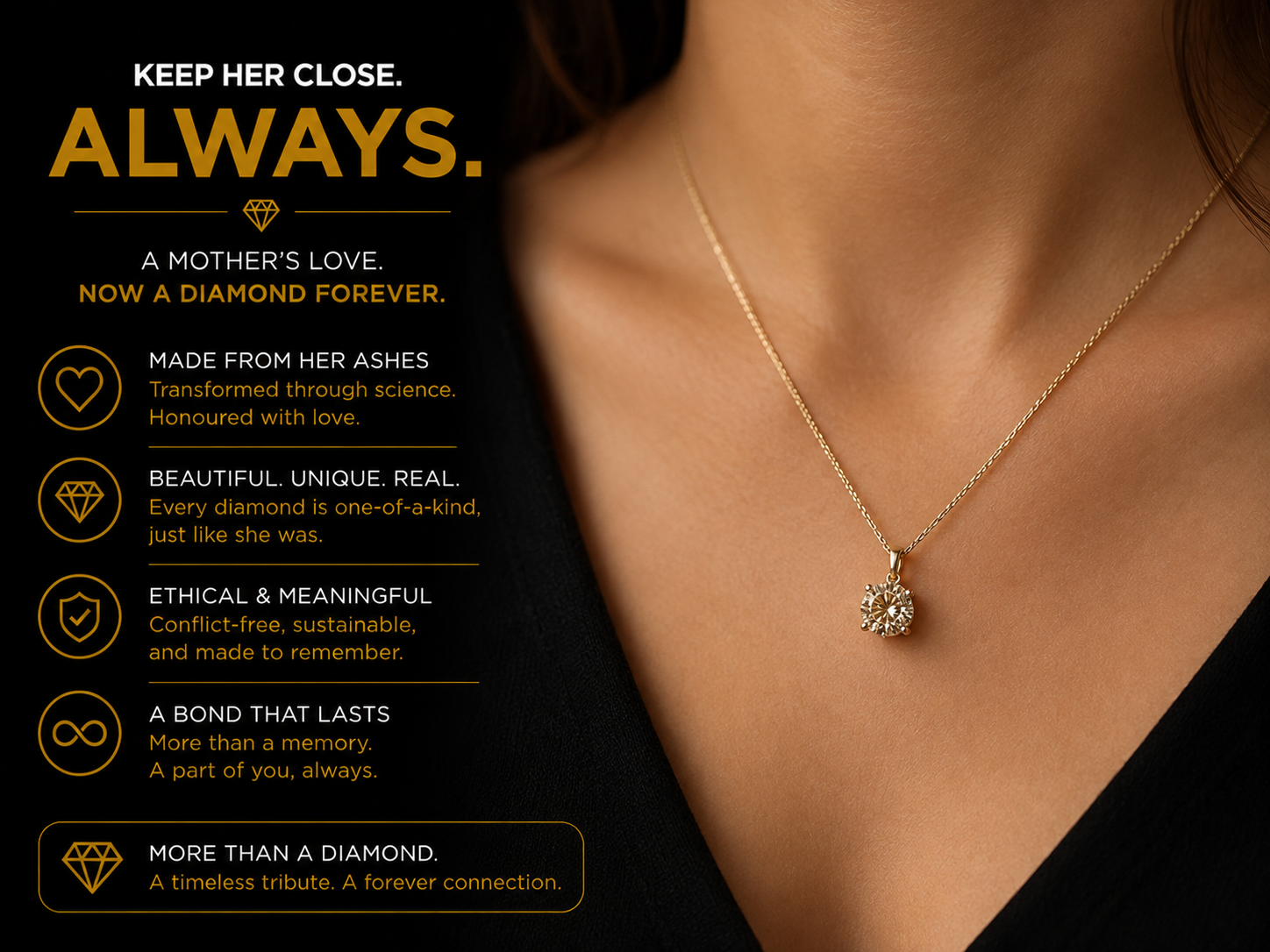
Families who send both usually picture the two going into the same vessel. That isn’t what happens.
A memorial diamond made from your mother’s ashes and hair is grown from carbon purified from each material separately. Ash nd hair carry entirely different non-carbon contaminants, so each requires its own purification process before the recovered carbon is combined into a single feedstock.
The result is one diamond crystal containing carbon from both sources not a stone divided into halves.
Why Can’t Her Ashes and Her Hair Be Purified Together?
Because they arrive at the laboratory with very different challenges.
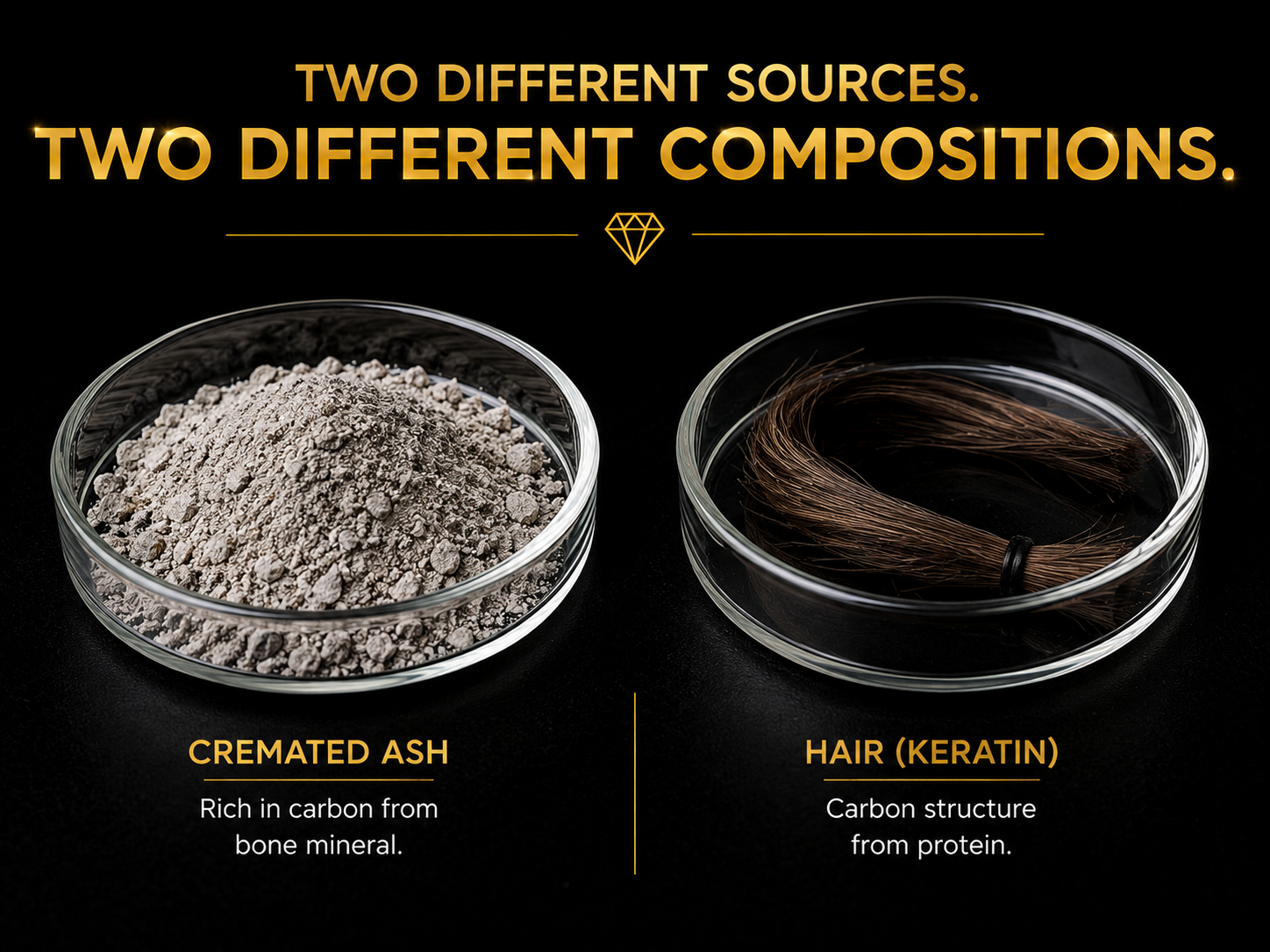
Cremated remains are primarily made of calcium phosphate, the mineral structure associated with bone. Carbon is only a small component of cremated remains, so recovering usable carbon requires separating it from a large amount of mineral material.
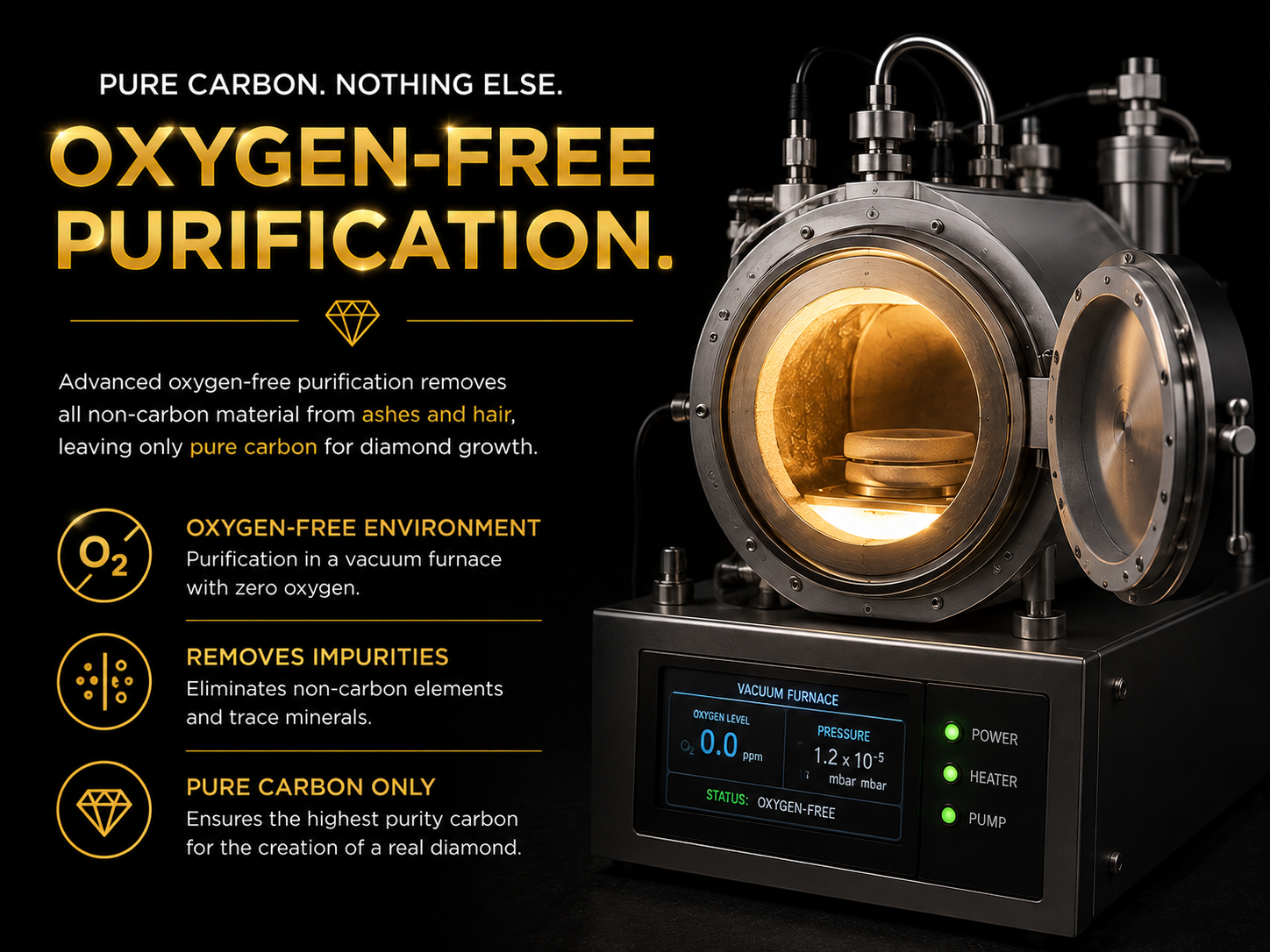
Hair is very different. It is primarily made of keratin, a carbon-rich protein containing a much higher proportion of carbon. The purification process must instead remove non-carbon elements such as nitrogen, oxygen, hydrogen and sulfur.
Different source materials require different purification targets. For that reason, ashes and hair are processed separately before the recovered carbon is prepared for diamond growth.
Where Do the Two Tracks Converge?
The two materials converge once usable carbon has been recovered and purified.
After purification, carbon recovered from hair and carbon recovered from cremated remains are both elemental carbon. The two purified carbon sources can then be combined into a single feedstock before the diamond-growing process begins.
Stage
Her Ashes
Her Hair
What it mostly contains
Calcium phosphate and bone mineral
Keratin, a carbon-rich protein
Approximate carbon content
Lower carbon content
Higher carbon content
Purification removes
Mineral material
Non-carbon protein components
After purification
Recovered carbon can be combined into one feedstock
A real and measurable portion of the diamond can originate from the carbon recovered from the materials you provide. However, the exact percentage can depend on the amount and quality of the available carbon, the size of the diamond, and the requirements of the growth process.
Hair generally contains significantly more carbon by weight than cremated remains. Because of this, hair can contribute a substantial amount of the personal carbon recovered when both materials are submitted together.
The important point is that a memorial diamond is not honestly described as being made entirely from personal carbon alone. Supplemental laboratory carbon may be required during the growth process.
That does not change the meaning of the memorial diamond. Carbon originating from your mother’s ashes and hair can become part of the crystal lattice of the diamond created in her memory.
Once the carbon sources are combined, the process becomes the same type of diamond-growing process used for other memorial diamonds.
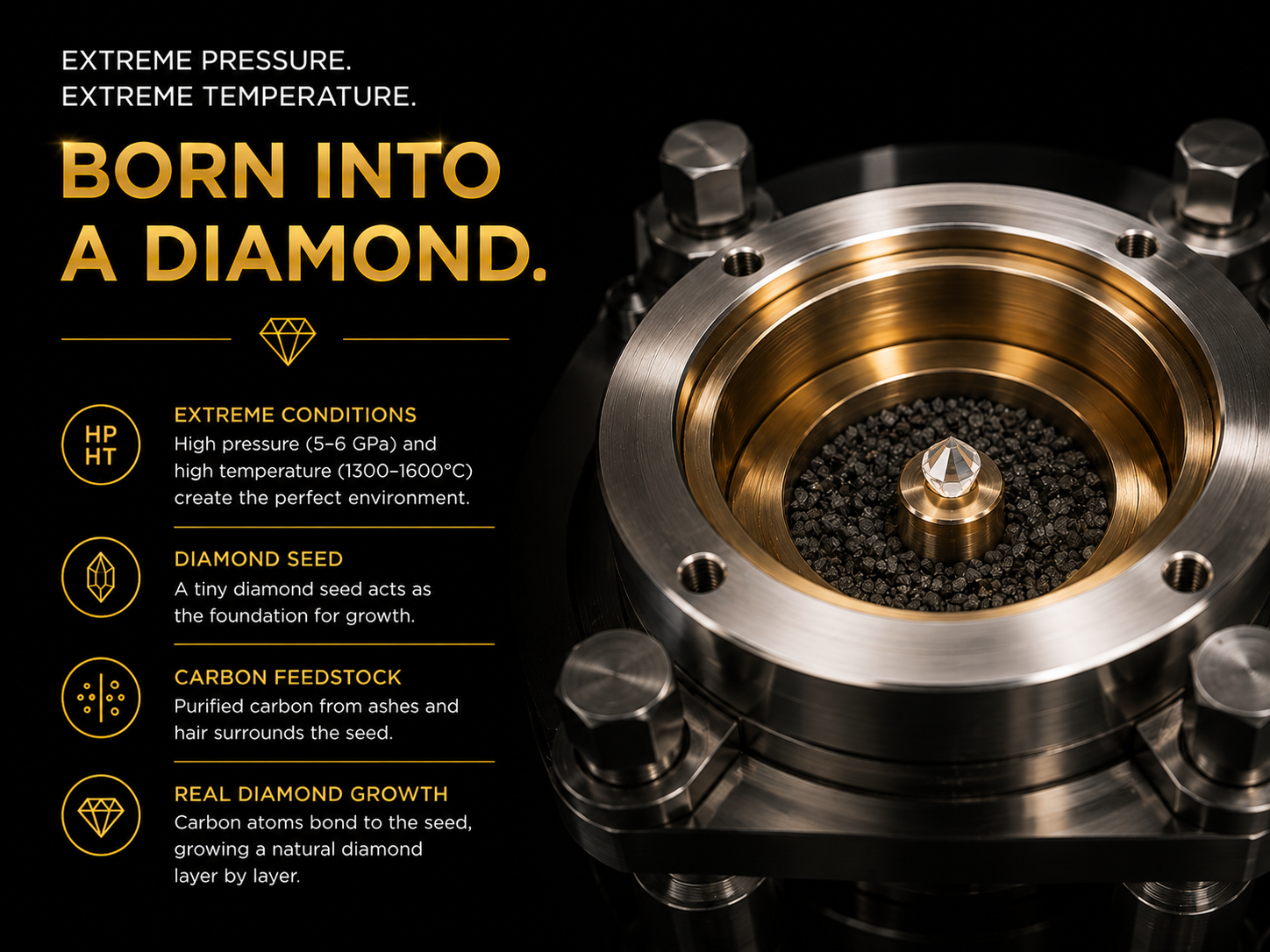
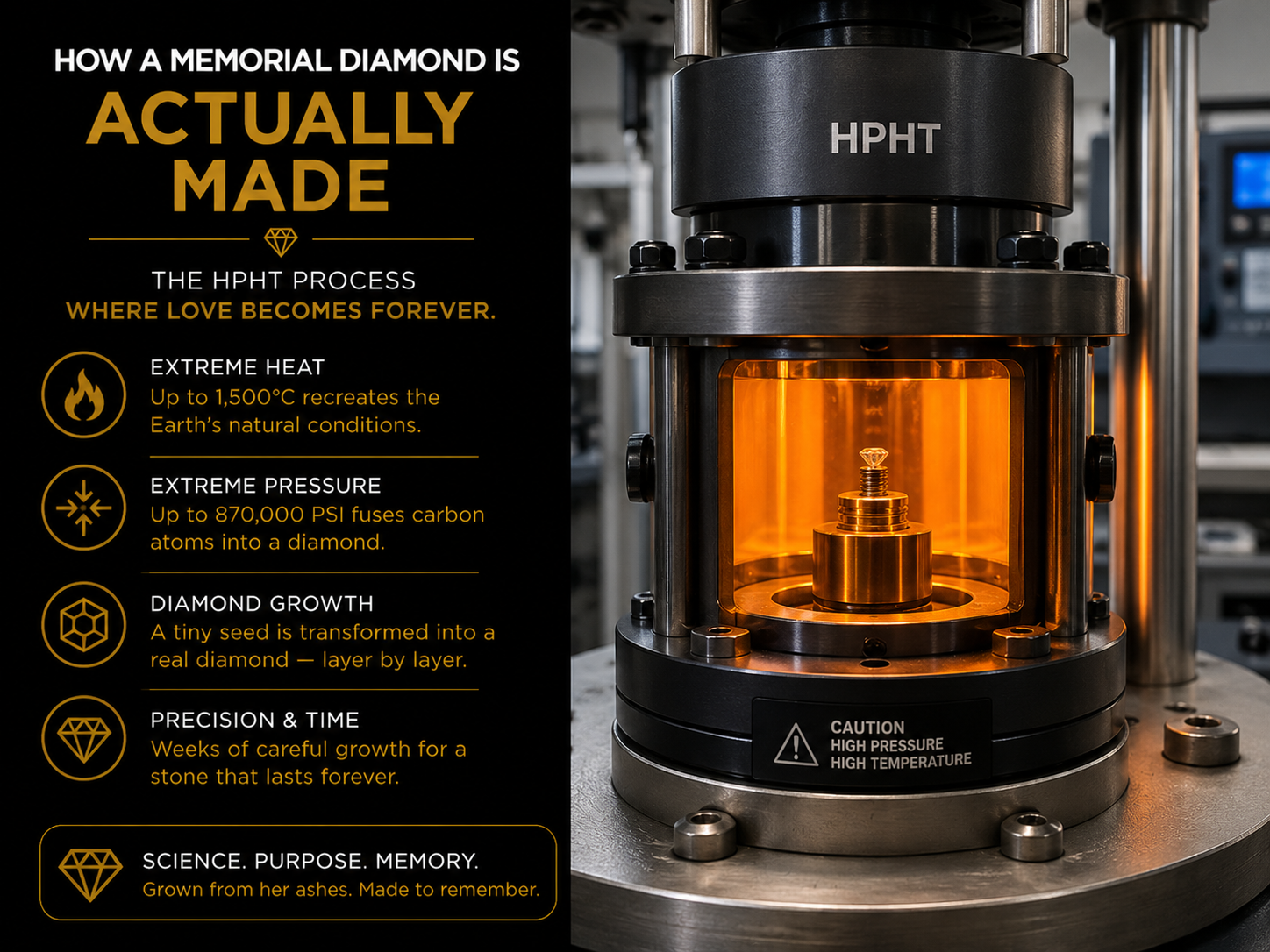
The carbon feedstock is prepared for diamond growth and may be converted into graphite. The graphite can then be placed into a high-pressure, high-temperature environment with a small diamond seed.
Under controlled laboratory conditions, carbon atoms gradually form around the seed and develop into a diamond crystal. Crystal growth can take weeks or months depending on the process and the desired result.
One important point is that submitting more material does not automatically produce a larger diamond. The final size depends on the selected diamond and the growth process rather than simply on the amount of ashes or hair submitted.
After growth, the rough diamond is cut, polished and evaluated according to characteristics such as cut, color, clarity and carat.
Will a Stone Made From Two Materials Be Two-Toned?
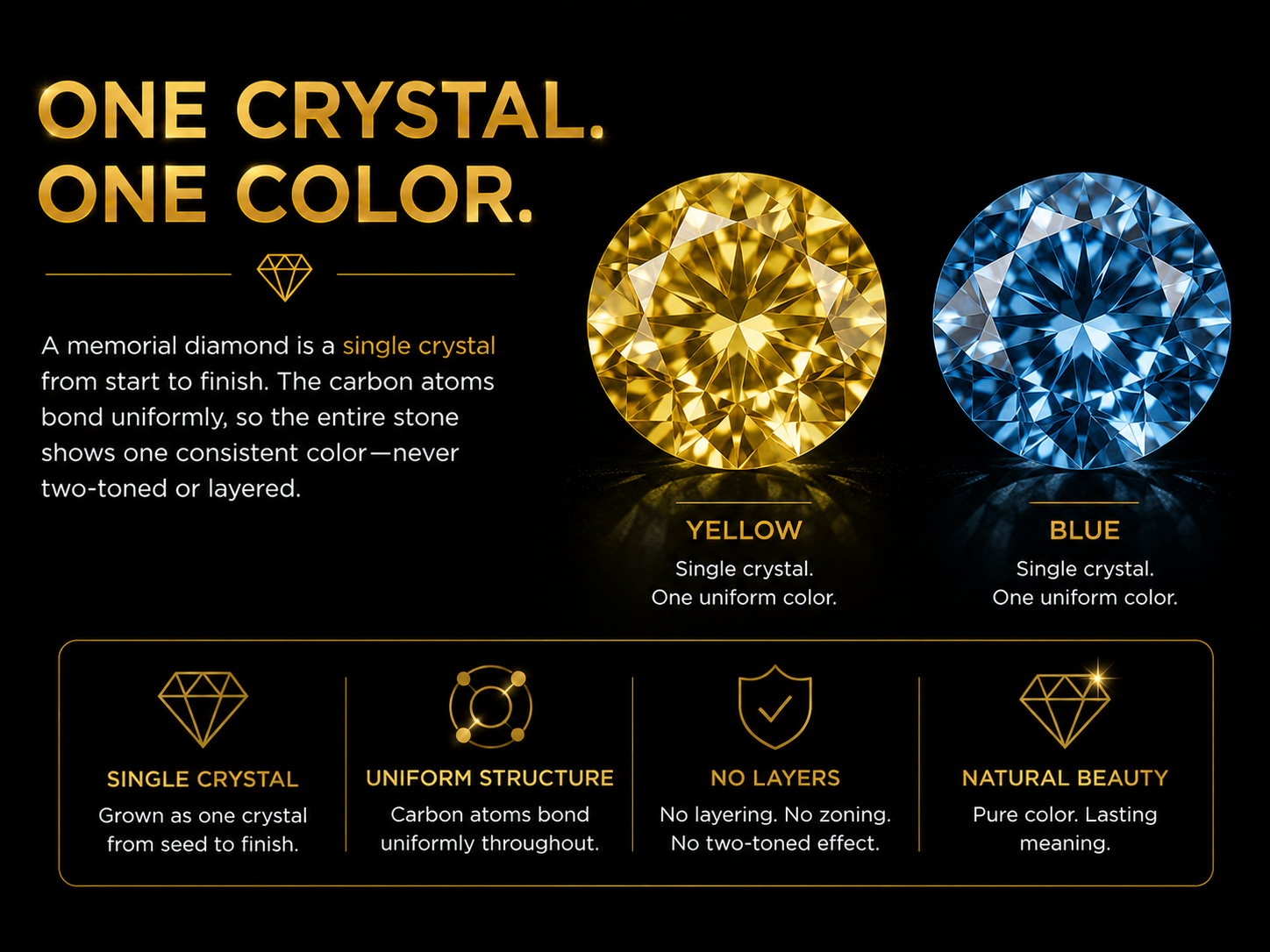
No. The finished memorial diamond grows as one crystal.
It is understandable to imagine that using two different materials could create separate areas or layers inside the diamond. However, after the carbon has been purified and prepared for growth, the finished crystal does not divide itself according to whether individual carbon atoms originally came from ashes or hair.
The color of a diamond is influenced by conditions and trace elements involved during crystal growth rather than by visible separation between the original source materials.
This means a memorial diamond made using both ashes and hair is still one crystal with one overall appearance.
Your part of the process begins with deciding what materials you would like to use and ends once they have been safely submitted for processing.
You may need to consider how much ash and hair you have available, discuss the decision with family members, and choose the memorial diamond that feels right for you.
After the materials enter the laboratory process, the purification and diamond-growing stages are handled over the following months.
Are her ashes and her hair processed at the same time?
Because cremated remains and hair contain different materials, they may require different purification approaches. The goal is to recover usable carbon before preparing the material for the diamond-growing process.
Can a lab tell which carbon in the finished stone came from her hair?
Once carbon has been purified and incorporated into a growing diamond crystal, individual carbon atoms are chemically the same element. The finished diamond does not visibly identify the original source of each carbon atom.
Does adding hair to an ashes submission mean more of her is in the stone?
Hair generally contains more carbon by weight than cremated remains, so including hair can increase the amount of personal carbon available for recovery. The exact contribution to a finished diamond can vary.
Will the finished diamond have visible layers, streaks or two colors?
No. The diamond grows as a single crystal. Using two source materials does not mean the finished stone will be divided into visible sections based on ashes and hair.
Does using two materials make the process take longer?
The overall timeline is generally driven more by diamond growth, cutting and finishing than by the number of source materials used. Processing requirements can vary depending on the individual order.
Thinking About Creating a Memorial Diamond?
Understanding how ashes and hair can be prepared for diamond creation can make an emotional decision easier to understand.
Using both materials creates a way to include different physical connections to the person you love in one memorial piece. Her ashes and her hair maHow a Memorial Diamond Is Made From Your Mother’s Ashes and Hair.
Someone has probably already said it to you a brother, an aunt, or perhaps your own voice at two in the morning:
“You know that’s not really her, right?”
The honest answer is yes, with one important qualification.
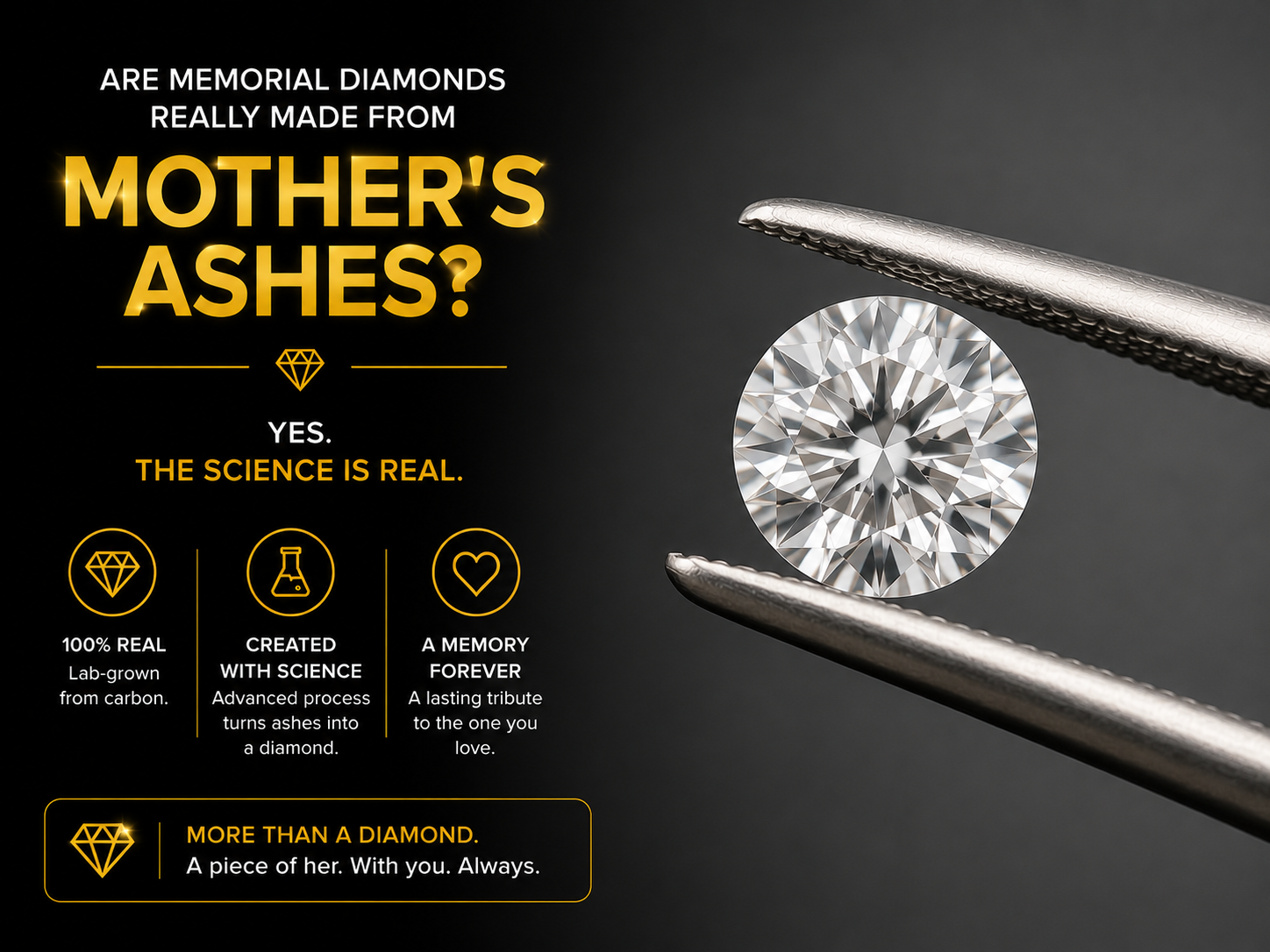
Carbon extracted from your mother’s cremated remains can genuinely become part of the finished diamond crystal. However, it is not the only carbon in that crystal. Personal carbon is blended with additional lab-sourced carbon required during the diamond-growing process.
Anyone claiming that a memorial diamond is made 100% from one person’s ashes is overstating the reality.
That does not mean the memorial diamond is merely symbolic. Carbon from your mother’s remains can become physically incorporated into the crystal lattice of the finished diamond.
On This Page
How much of the diamond comes from your mother?
Why lab carbon is added
What you are actually buying
What a family can verify
Questions to ask a provider
Frequently asked questions
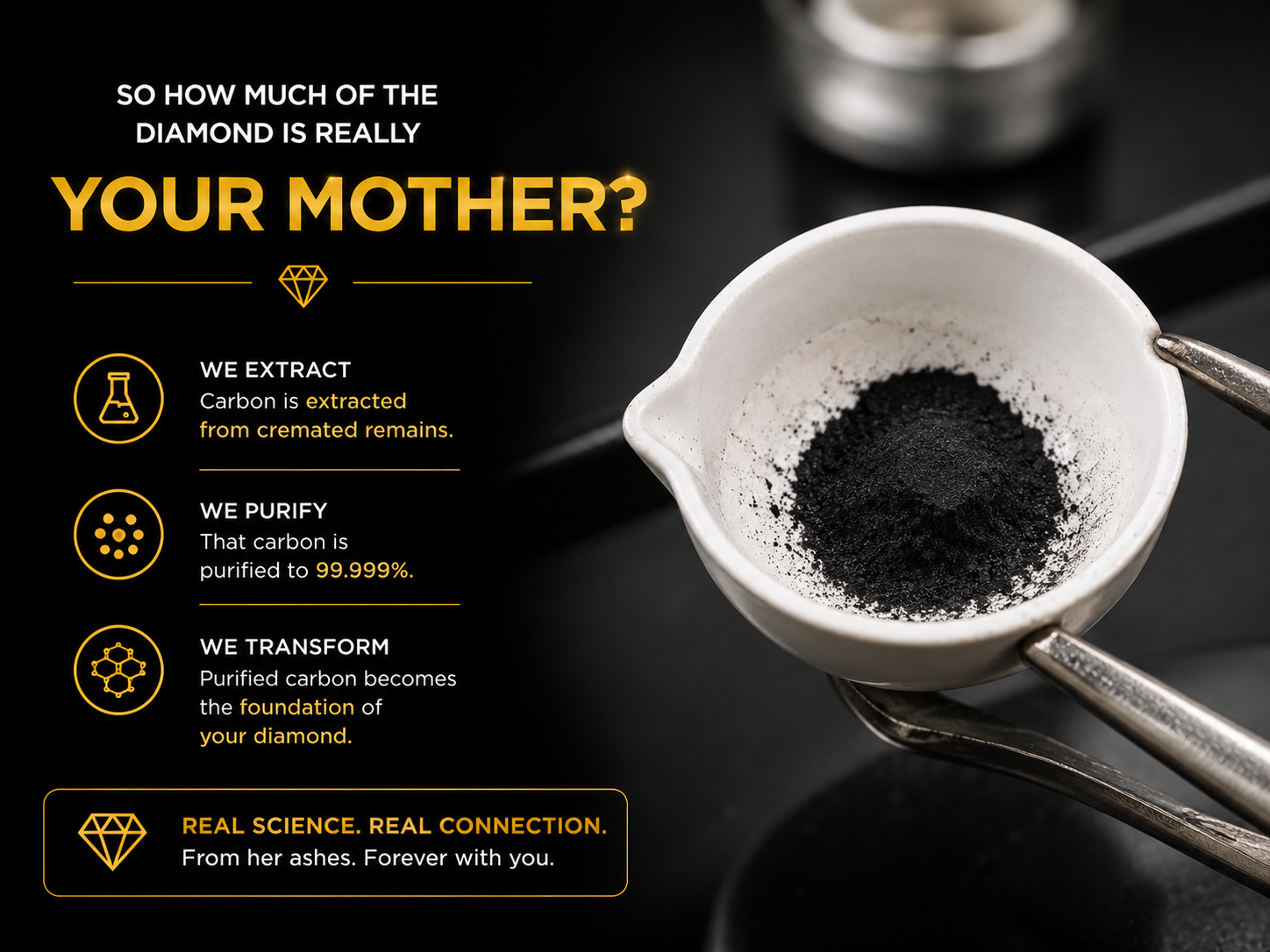
So How Much of the Diamond Is Really Your Mother?
Cremated remains are not the same as the ash left behind by a campfire.
Instead, they consist primarily of mineral material, especially calcium phosphate from bone. Carbon makes up only a relatively small portion of cremated remains, and the amount can vary depending on the individual and the cremation process.
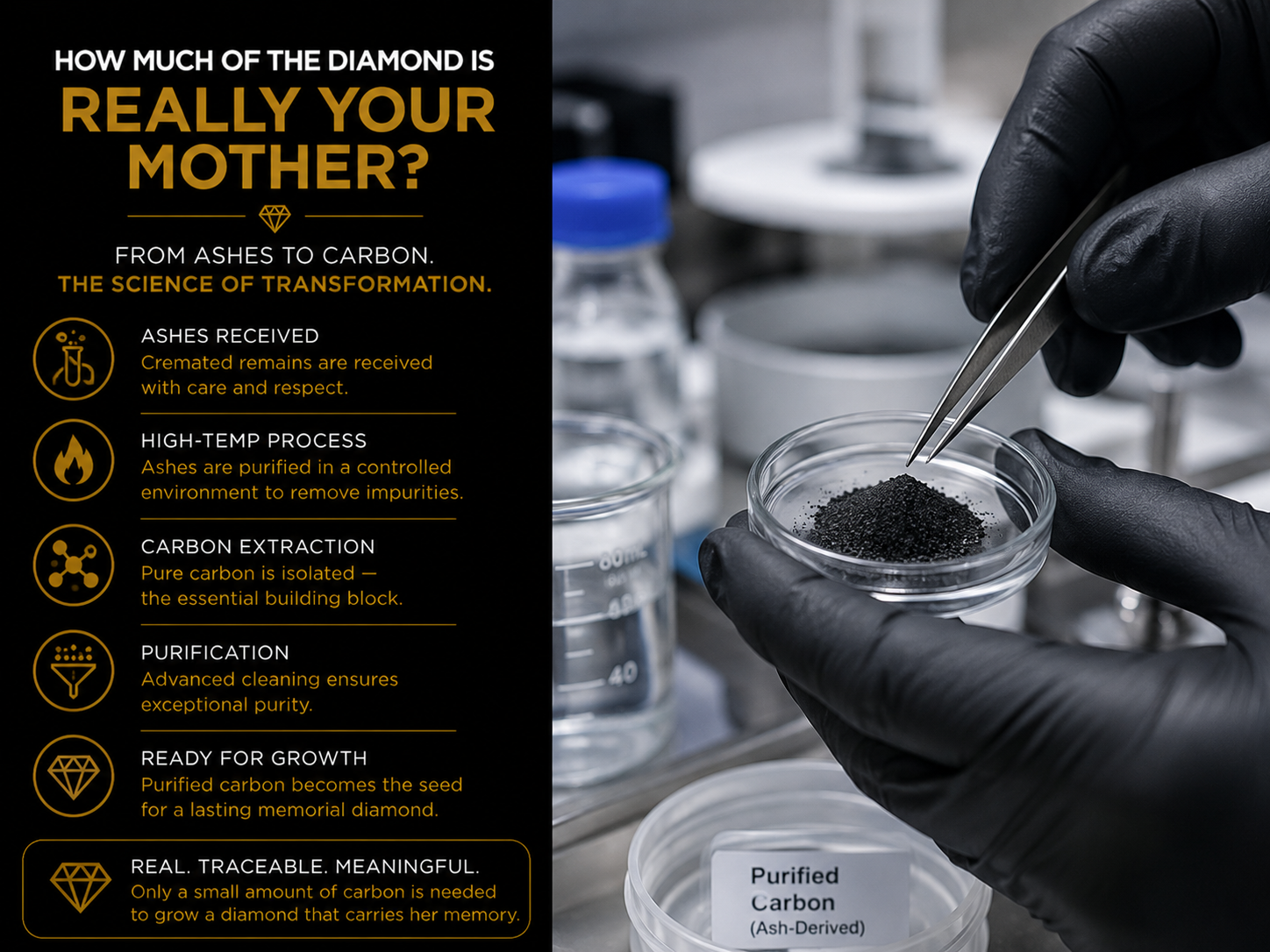
First, the recoverable carbon undergoes extraction and purification before the laboratory prepares it for diamond growth.
However, because a diamond-growth cell requires enough carbon feedstock, the provider generally combines the personal carbon with additional laboratory-sourced carbon.
Industry figures commonly describe personal carbon as making up only a portion of the finished stone rather than the entire diamond.
So the skeptical relative is only partly right.
They may be wrong to say that none of her is in the diamond, but they are also right to question claims suggesting that the entire stone consists exclusively of her remains.
That distinction matters.
Why Can’t the Stone Be Grown From Her Ashes Alone?
The reason is primarily about the composition of cremated remains and the physical requirements of diamond growth.
An HPHT diamond-growth process requires a sufficient quantity of purified carbon material. Cremated remains simply do not contain enough recoverable carbon to provide all of the feedstock necessary to grow a meaningful diamond crystal.
Adding more ashes does not necessarily mean that a larger diamond can be created.
Diamond size depends on factors such as the growth process and growth time, rather than simply on the quantity of ashes you submit.
As a result, most of your mother’s cremated remains can remain available to your family for other purposes, including keeping them in an urn, burial, or scattering.
However, you should not automatically view supplemental carbon as a replacement for your mother’s material.
Instead, the laboratory uses supplemental carbon as part of the physical process required to grow the diamond.
So What Are You Actually Buying?
Here is the most accurate way to describe a memorial diamond:
A laboratory can extract and purify carbon that was once part of your mother’s body and incorporate that carbon into the crystal structure of a diamond grown through a controlled laboratory process.
This process differs from simply creating a piece of jewelry in her memory.
At the same time, you should not describe the entire diamond as physically made only from her remains.
Instead, the finished diamond can serve as a genuine physical object that contains material derived from the person you remember.
For many families, that distinction is meaningful.
A memorial diamond is still a personal choice. It does not replace an urn, burial, scattering, or any other way of remembering someone.
It is simply another option.
What Can a Family Actually Verify?
This is one of the most important questions to ask before choosing a memorial diamond provider.
The strongest evidence generally comes from documentation and chain-of-custody procedures, rather than from a test performed on the finished diamond.
Two types of documentation may be relevant.
Document
What It Establishes
What It Does Not Establish
Who Issues It
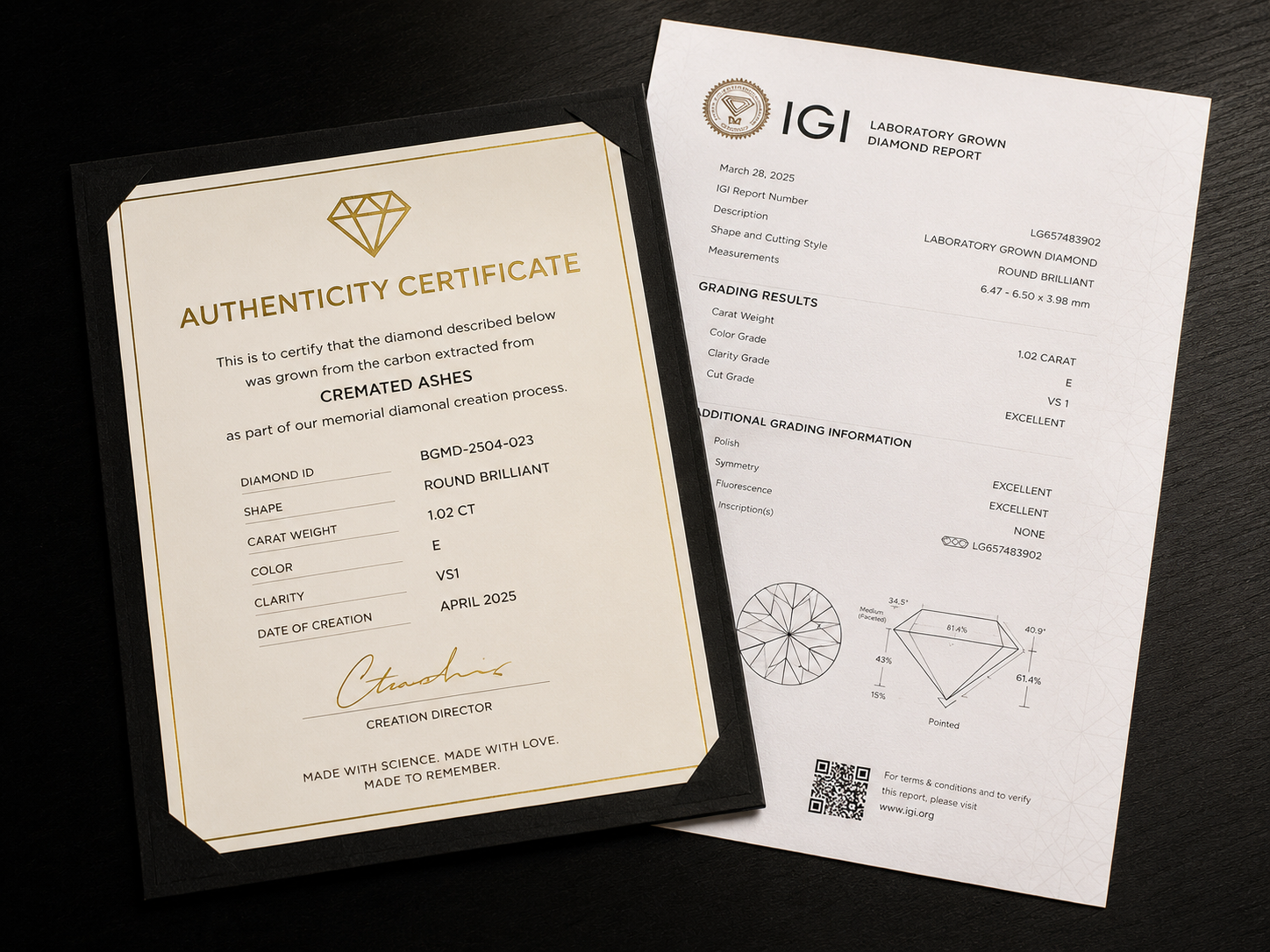
Authenticity or origin certificate
Documents the submitted material and production history associated with the memorial diamond
The independent quality of the diamond
The provider
Independent grading report
Documents characteristics such as cut, color, clarity, and carat weight
The origin of the carbon used
A gemological laboratory
Why Chain of Custody Matters
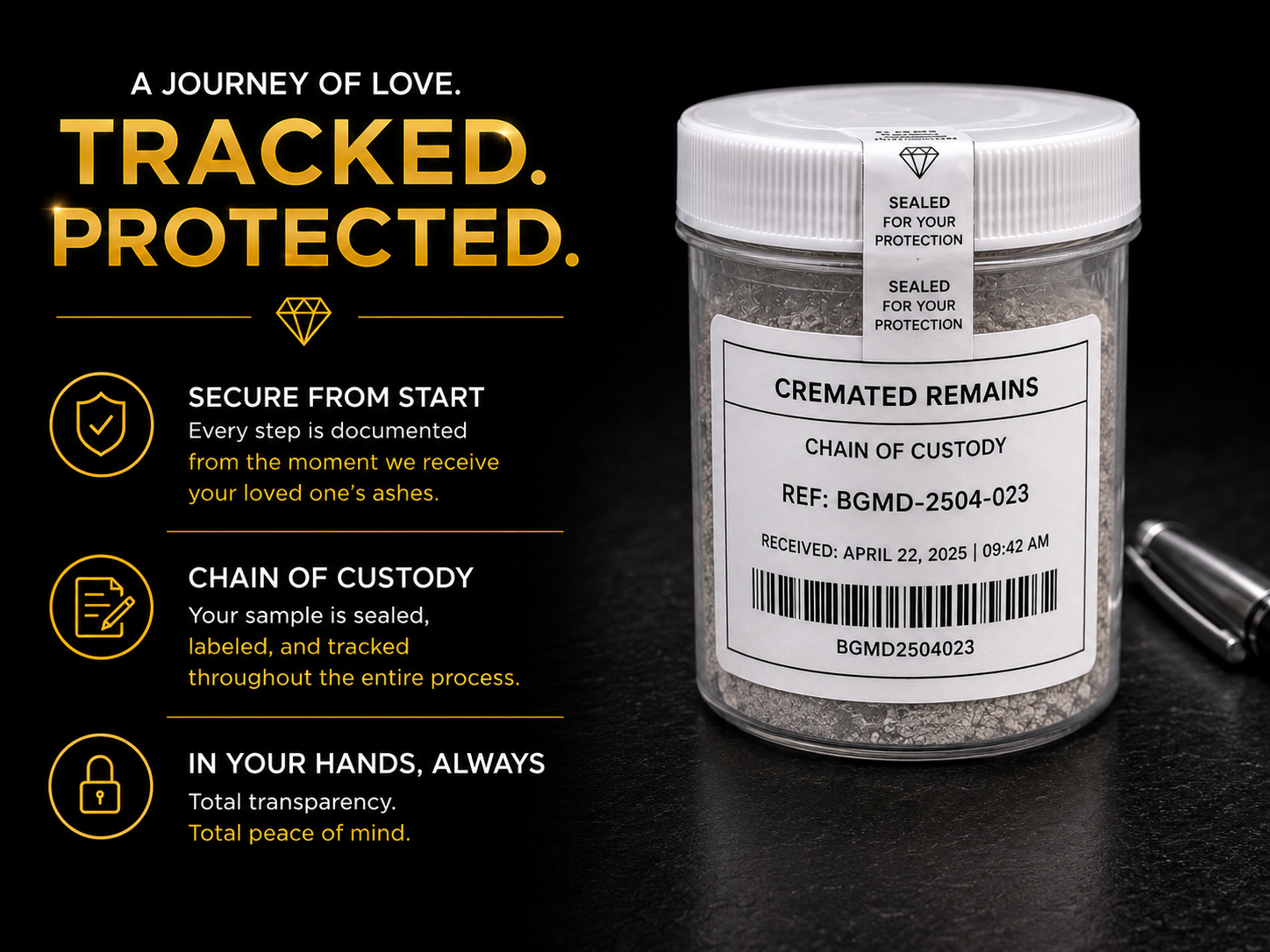
A provider may assign a tracking or chain-of-custody reference when the family submits its material.
This reference can help the provider track the material through stages such as processing, carbon preparation, diamond growth, and the handling of any remaining material.
The provider should maintain clear documentation because you cannot determine the source of a finished diamond through visual inspection alone.
Therefore, before placing an order, ask the provider which records it provides and which stages it documents.
Which Questions Expose a Provider Who Can’t Back This Up?
A transparent provider should answer clear questions about its process and explain how it handles your material.
1. What Tracking Reference Will I Receive?
Ask the provider whether it assigns a unique tracking reference to your submitted material and when it records that reference during the process.
Also, ask what documentation the provider will give you when it completes the process.
2. Is Carbon Extraction Done In-House?
Ask the provider whether its team handles carbon extraction and preparation directly or uses another facility.
If the provider uses another facility, ask how it tracks your material during the transfer.
3. What Happens to the Material That Is Not Used?
Ask the provider whether it returns unused material to your family and what procedure it follows.
In addition, make sure the provider clearly explains this process before you send any material.
4. What Documentation Comes With the Diamond?
Ask whether you will receive:
An authenticity or origin certificate
An independent diamond grading report
Both
Also ask which organization performs any independent grading.
5. What Happens if a Growth Run Fails?
Diamond growth is a technical process, and families should understand what happens if a particular growth attempt does not produce the intended result.
Ask about the timeline, available material, and the provider’s process for handling a re-growth.
Frequently Asked Questions
Can Anyone Prove the Diamond Came From My Mother’s Specific Ashes?
The strongest evidence generally comes from documented handling and chain-of-custody records.
Purified carbon becomes chemically similar regardless of its original source, which is why documentation about the handling and production process is so important.
Before ordering, ask exactly what evidence and records the provider can provide.
Do Providers Ever Just Use Lab Carbon Instead?
This is exactly why transparency matters.
Families should ask about the provider’s tracking procedures, extraction process, documentation, and chain of custody before submitting any personal material.
A detailed and clearly documented process provides more confidence than marketing claims alone.
Is It a Real Diamond or a Substitute?
A memorial diamond can be a real diamond.
Lab-grown diamonds have the same fundamental crystal structure and chemical composition as diamonds formed naturally in the Earth.
They are not the same thing as simulants such as cubic zirconia or resin.
Like other diamonds, a laboratory-grown diamond can be evaluated using characteristics such as cut, color, clarity, and carat weight.
Will I Be Able to See the Ashes Inside the Diamond?
No.
The carbon derived from cremated remains is processed at the material level before the diamond is grown.
You should not expect to see visible ash particles or flecks inside a finished memorial diamond.
The finished stone is a diamond crystal rather than a container holding visible ashes.
What Should I Do if a Provider Doesn’t Deliver What Was Promised?
Before sending cremated remains or making a payment, make sure important promises are documented.
This can include:
The expected process
Documentation provided
Treatment of unused material
Estimated timeline
Diamond specifications
Terms and conditions
Keep copies of the written information provided during the purchase process.
Clear written documentation is generally more useful than relying only on verbal assurances.
If You’re Still Unsure
Being skeptical is reasonable.
Choosing what to do with a mother’s cremated remains is deeply personal, and there is no requirement to make a decision immediately.
Take the time to understand the process.
Ask how the material is handled.
Ask what documentation you will receive.
Ask what happens to unused ashes.
Ask how the provider tracks the material throughout the process.
A trustworthy decision should be based on clear answers rather than emotional pressure.
A memorial diamond may contain carbon derived from your mother’s remains, but understanding exactly what that means is important before choosing one.
When you are ready, ask the provider directly about the documentation and process used for a diamond created from your mother’s ashes.
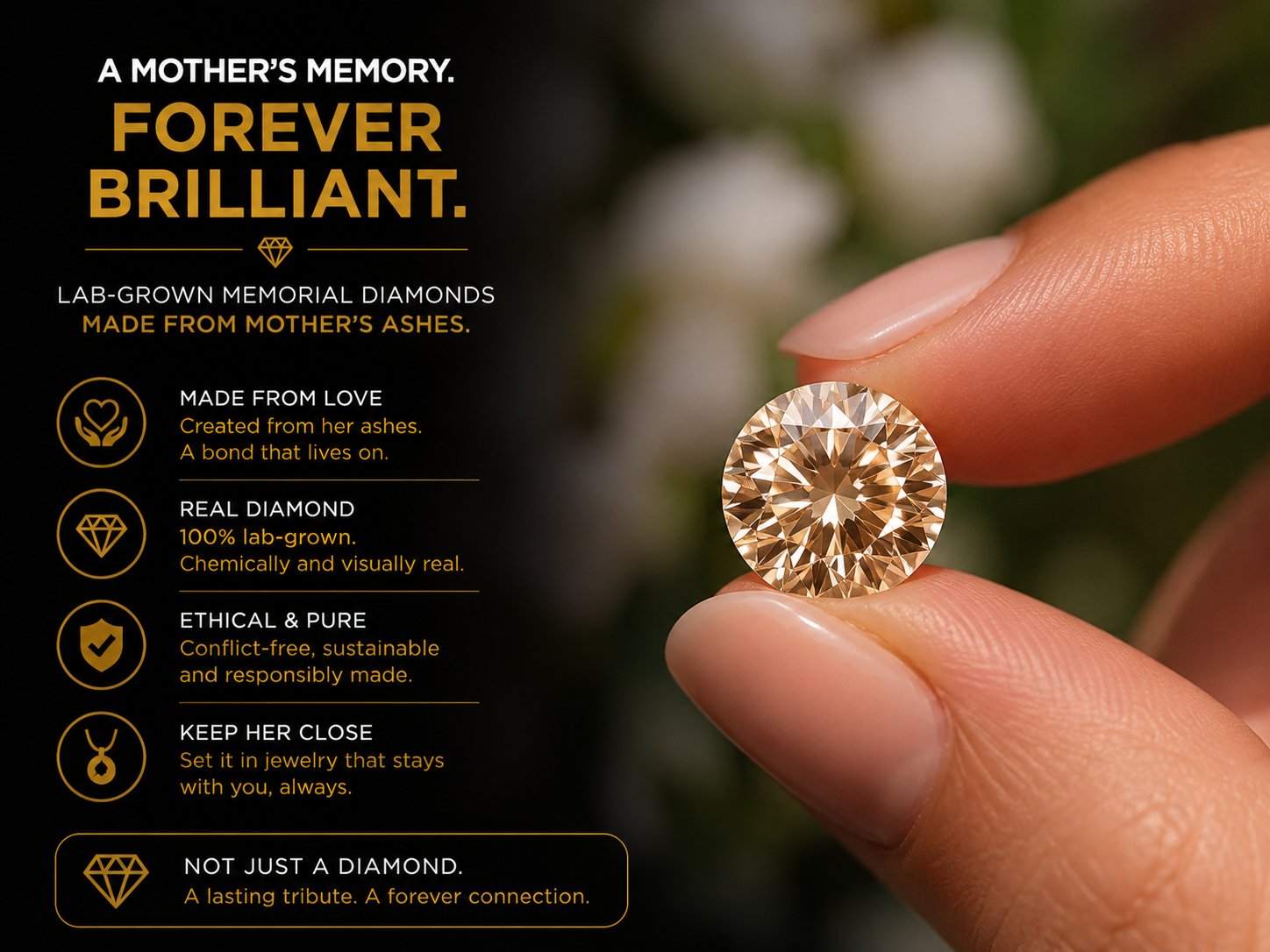
A mother ashes diamond gives families a meaningful way to preserve a physical connection with someone they love. A memorial diamond can be created in part from carbon extracted from cremated remains, producing a genuine lab grown diamond with the same crystal structure and physical properties as other lab grown diamonds.
Diamond is exceptionally durable for everyday jewelry because diamond is rated 10 on the Mohs scale However, hardness does not mean a diamond cannot fracture under a strong impact.
For many families, the most important question is not simply whether a diamond can be made from their mother’s ashes. They want to know how the process works, how much of the finished diamond comes from her, how much ash they need to provide, what color the diamond may become, how long the process takes, and what the experience may cost.
This guide answers those questions clearly so you can understand the process before deciding whether a diamond from your mother’s ashes feels right for your family.
Why Choose a Mother Ashes Diamond?
Families choose a mother ashes diamond for many personal reasons. An urn can remain at home, a grave can provide a place to visit, and ashes can be scattered in a meaningful location. A memorial diamond offers another option that families can carry with them.
A diamond can become a private keepsake that you wear every day. You can have it placed into a ring, pendant, earrings, or another piece of memorial jewelry. It can also become a family heirloom that passes from one generation to the next.
For children who live far from where their mother was buried or where her ashes were placed, portability can make a meaningful difference. A memorial diamond allows them to keep a physical reminder of her close without changing the family’s existing plans for the remaining ashes.
A mother ashes diamond does not have to replace traditional memorial choices
You do not necessarily have to choose between a memorial diamond and other ways of honoring your mother. Only a small portion of cremated remains may be required, depending on the provider and the selected diamond. The remaining ashes can therefore remain available for burial, scattering, or keeping within the family.
How Is a Mother Ashes Diamond Made?
The process of creating a mother ashes diamond involves several stages. The process uses controlled chemistry and diamond growth technology rather than simply placing ashes inside a finished stone.
1. Collection and identification
The cremated remains arrive at the facility and receive a tracking reference. A clear chain of custody helps identify the submitted material throughout the process.
2. Carbon extraction and purification
Cremated remains consist largely of mineral material, especially calcium phosphate. A small amount of carbon may remain after cremation. The material undergoes controlled processing to isolate and purify the available carbon.
3. Graphitization
The purified carbon can then undergo additional processing that converts it into graphite. This graphite becomes a carbon source for the diamond growth stage.
4. Diamond growth
With the HPHT method, the carbon source and a small diamond seed enter a high pressure and high temperature growth environment. Under controlled conditions, carbon atoms arrange themselves into the crystal structure of diamond.
5. Cutting and polishing
After growth, the rough crystal can be cut and polished into the selected shape. Common diamond shapes include round, princess, cushion, and emerald.
6. Grading and certification
The finished stone can be evaluated as a laboratory-grown diamond and graded for characteristics such as cut, color, clarity, and carat weight.
The amount of ash you provide does not automatically determine the final diamond size. Diamond size, growth conditions, and the selected specifications influence the overall process and timeline.
HPHT versus CVD diamond growth
Some providers use HPHT technology while others may use CVD technology. CVD grows diamond by depositing carbon containing material onto a diamond seed in controlled conditions. Ask your provider which growth method they use and whether the growth takes place in their own facility or through another company.
How Much of Your Mother Is in the Diamond?
This question deserves a clear and honest answer. A finished mother ashes diamond should not be described as being entirely composed of your mother’s remains.
Cremated remains consist mainly of mineral material from bone. The amount of carbon available for extraction can vary. Industry sources commonly discuss carbon levels in cremated remains within a relatively small percentage range.
The extracted carbon can then become part of the diamond growth process. Depending on the provider, the stone may also require additional carbon from another source to support the desired growth conditions and final size.
For this reason, families should be cautious about any claim that a finished memorial diamond is 100 percent composed of their mother’s remains.
What makes the diamond connected to your mother?
The important distinction is that carbon extracted from the submitted material can become part of the diamond growth process. That carbon becomes incorporated into the crystal structure of the resulting stone.
This makes the connection more than a decorative symbol. The provider should be able to explain exactly how your submitted material enters the process and how they maintain identification throughout the stages.
If the amount of personal carbon is an especially important consideration for your family, hair may provide another source of carbon. Hair generally contains considerably more carbon than cremated remains. You can also ask whether a provider accepts both ashes and hair together.
How Much of Your Mother’s Ashes Do You Need?
One of the most reassuring aspects of a mother ashes diamond is that you may not need to send an entire urn of cremated remains.
Industry requirements can range from a few tablespoons to approximately 4 ounces, or about 100 grams, depending on the provider and process. A typical adult cremation produces considerably more material than this amount.
What happens to the remaining ashes?
You can keep the remaining ashes with your family.
You can bury the remaining ashes according to your family’s plans.
You can scatter the remaining ashes at a meaningful location.
You can divide the remaining ashes between family members.
You can keep a portion for another memorial item in the future.
Requirements vary between providers, so confirm the exact material requirement before sending anything. Also ask how the provider handles any unused material and whether they return it to your family.
What Color Will a Mother Ashes Diamond Be?
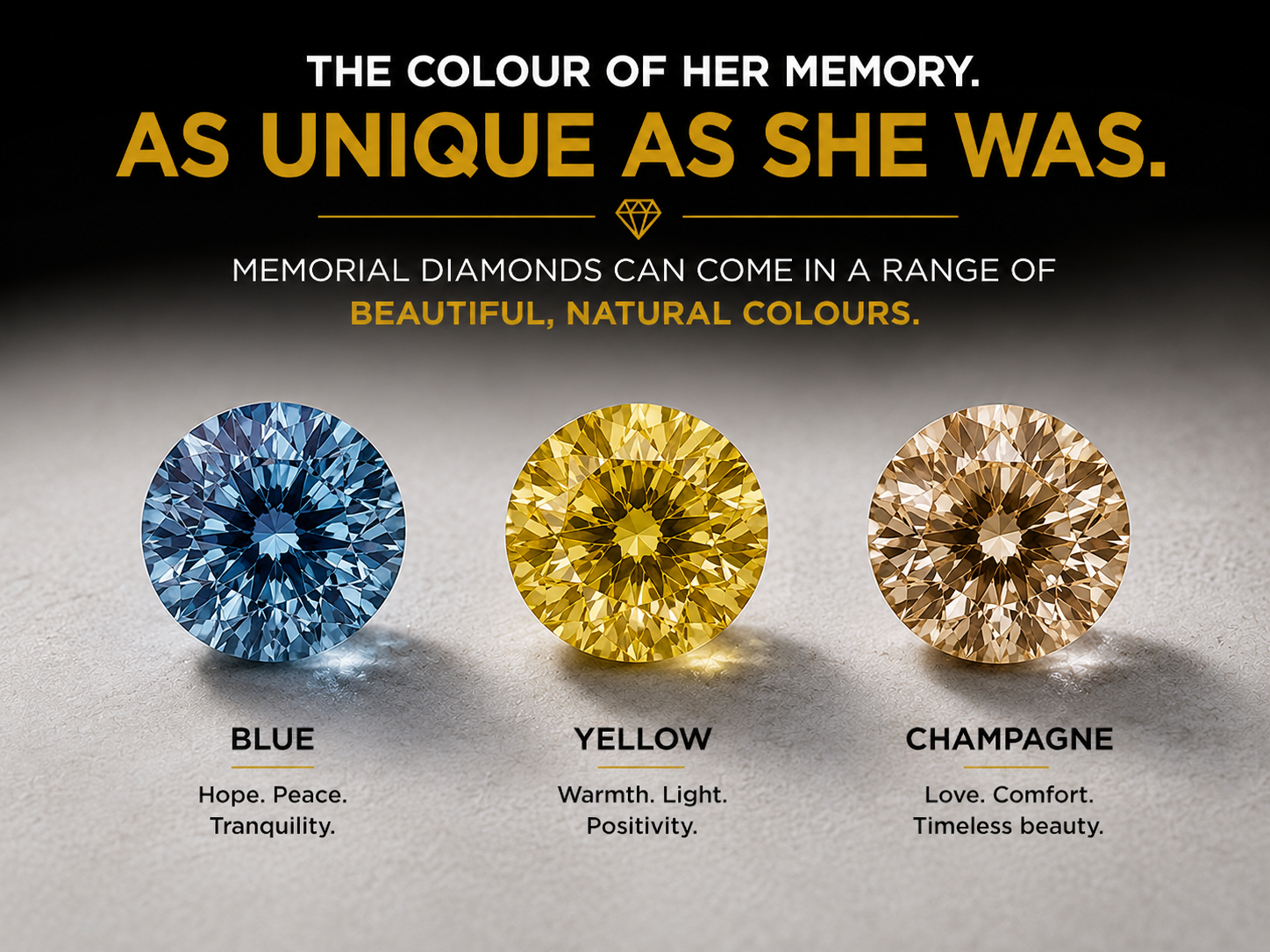
Diamond color can develop from trace elements present during the growth process. Different elements can influence the final appearance of the stone.
Common memorial diamond colors
Memorial diamonds may display blue, yellow, champagne, or brown tones. The final color depends on the growth conditions and the materials present during the process.
Some providers may also offer additional treatments that create other colors. If you have a specific color in mind, ask your provider whether that color can be achieved and whether the color results naturally from growth or comes from an additional treatment.
Many families appreciate the individuality of the final color. Instead of choosing a stone that looks identical to another diamond, they may prefer a color that becomes part of their personal memorial story.
How Long Does a Mother Ashes Diamond Take?
A mother ashes diamond typically takes several months from the receipt of material through diamond growth, cutting, polishing, and grading.
Industry estimates commonly place the overall process around 6 to 10 months. Larger stones or certain specialty colors may require additional time, with some processes extending toward 12 months.
Why does the process take several months?
The timeline includes more than diamond growth. The provider must receive and identify the material, prepare and purify the carbon, complete the diamond growth process, cut and polish the rough crystal, and complete grading or certification.
Before sending your mother’s ashes, ask for a realistic estimated timeline. You should also ask what happens if the first growth attempt does not produce the expected result and whether another growth attempt affects your timeline or submitted material.
The price of a mother ashes diamond depends on several factors. Carat size, color, cut, clarity, grading, and additional services can all affect the final price.
Typical industry price ranges
Size tier
Typical carat range
Typical industry price range
Entry
0.10 to 0.25 carat
Approximately $748 to $3,500
Mid
0.5 to 1 carat
Approximately $9000 to $15,000
Large or rare
2 to 5 or more carats
Approximately $15,000 to $75,000 or more
These figures represent general industry ranges rather than confirmed Memorial Diamond pricing. Your final price can differ based on the selected specifications and services.
What affects the price of a mother ashes diamond?
Diamond carat size
Diamond color
Diamond cut and shape
Clarity
Grading and certification
Additional color treatment
Jewelry setting
Engraving and personalization
A loose diamond and finished memorial jewelry usually represent different costs. A ring, pendant, earrings, or another setting can add to the overall price.
Can Siblings Share the Same Ashes?
Yes. Because a provider may need only a portion of the available cremated remains for one diamond, families can potentially use material from the same source for multiple stones.
This can make sense when several children want their own memorial diamond. One sibling may choose a ring while another chooses a pendant. A family could also choose different diamond sizes or shapes.
Will diamonds made from the same ashes look identical?
Not necessarily. Each diamond grows as an individual crystal, so stones created from the same source material can have different colors, clarity characteristics, and appearances.
If several family members are considering diamonds, discuss the plan with the provider before submitting the ashes. Ask how much material they require for each stone and whether growing multiple diamonds together can simplify the process.
What Should You Ask Before Sending Your Mother’s Ashes?
Your mother’s ashes are irreplaceable. Before sending any material to a memorial diamond provider, ask detailed questions about identification, processing, growth, certification, timelines, and unused material.
1. How do you maintain chain of custody?
Ask whether your material receives a unique tracking reference and how the provider records it during each stage.
2. What happens to unused ashes?
Ask whether unused material returns to your family and whether the provider has a written policy covering it.
3. Which diamond growth method do you use?
Ask whether the provider uses HPHT or CVD technology and whether the diamond grows in their own facility or through another company.
4. What grading report will I receive?
Ask which independent laboratory grades the finished diamond. Also ask whether you receive a separate certificate of authenticity or documentation relating to the submitted material.
5. What happens if diamond growth does not succeed?
Ask what happens after an unsuccessful growth attempt. Find out whether the provider starts another growth cycle, how that affects the timeline, and what happens to the submitted material.
6. Who will communicate with me during the process?
A memorial diamond can take many months to complete. Having a clear contact person can make it easier to receive updates and ask questions throughout the process.
Frequently Asked Questions About Mother Ashes Diamonds
Is a diamond made from ashes a real diamond?
Yes. A lab grown diamond has the same basic crystal structure as a diamond produced through geological processes. It is not a resin imitation or a diamond look alike. A finished lab grown diamond can be evaluated using characteristics such as cut, color, clarity, and carat.
Can a mother ashes diamond be made from old ashes?
Yes. Cremated remains can remain available for many years. Families may consider a memorial diamond long after the funeral, provided the material meets the provider’s requirements.
Will the finished diamond contain visible ashes?
No. The finished diamond does not look like cremated remains. Carbon enters the diamond growth process at the atomic level, while the finished stone appears as a crystal.
Can I keep the rest of my mother’s ashes?
Yes. A provider may require only a small portion of the available cremated remains. This can allow your family to continue with burial, scattering, or other memorial plans for the remaining ashes.
Can a diamond be made from my mother’s hair instead?
Hair can provide another source of carbon and generally contains considerably more carbon by weight than cremated remains. If you have a lock of your mother’s hair, ask a provider whether they accept hair and whether you can submit it instead of or together with ashes.
Can a mother ashes diamond be used in memorial jewelry?
Yes. A finished diamond can be placed into different types of jewelry, including rings, pendants, earrings, and other personalized pieces. The appropriate setting depends on the diamond’s size, shape, and your preferred design.
Is a memorial diamond appropriate for every family?
No single memorial choice works for every family. Some families prefer an urn, burial, scattering, jewelry, or another keepsake. A memorial diamond is simply one option. Families should choose the approach that feels appropriate for their circumstances and wishes.
Does a memorial diamond help with grief?
A memorial diamond is not a treatment for grief. Some people may find comfort in having a tangible item that keeps a connection with someone they loved. If grief feels overwhelming, consider speaking with a qualified counselor, grief support group, or someone you trust.
Final Thoughts on Choosing a Mother Ashes Diamond
Choosing a mother ashes diamond does not have to be an immediate decision. Cremated remains can remain safely with your family while you learn about the process, compare providers, discuss the decision with relatives, and decide what feels right.
The most important questions involve more than price. Understand how the provider handles your mother’s material, how they maintain identification, which diamond growth method they use, how much material they require, what certification they provide, and what happens if the process takes longer than expected.
A memorial diamond can also coexist with the other ways your family wants to remember your mother. Because only a portion of the ashes may be required, you can potentially create a diamond while keeping the remaining ashes for burial, scattering, or sharing among family members.
If you are considering a diamond made from your mother’s ashes, take your time, ask questions, and choose a provider that gives you clear answers about every stage of the process.
Learn More About Mother Memorial Diamonds
If you want to explore the process further, learn about related topics such as using your mother’s hair, combining ashes and hair, memorial diamond colors, pricing, and questions to ask before choosing a provider.
If you are considering a memorial diamond for your mother, you can discuss your questions and understand what options may be available before making a decision.