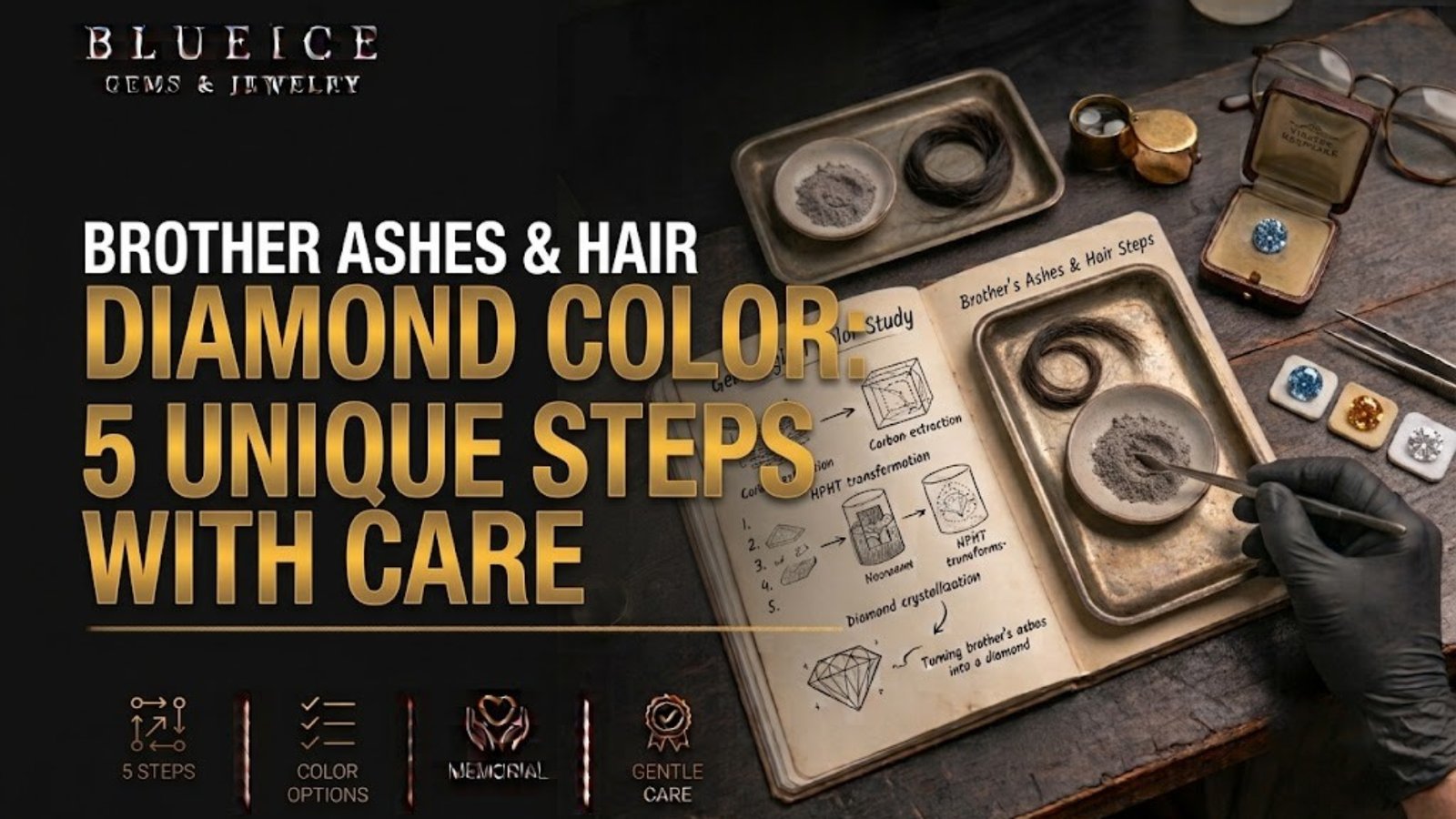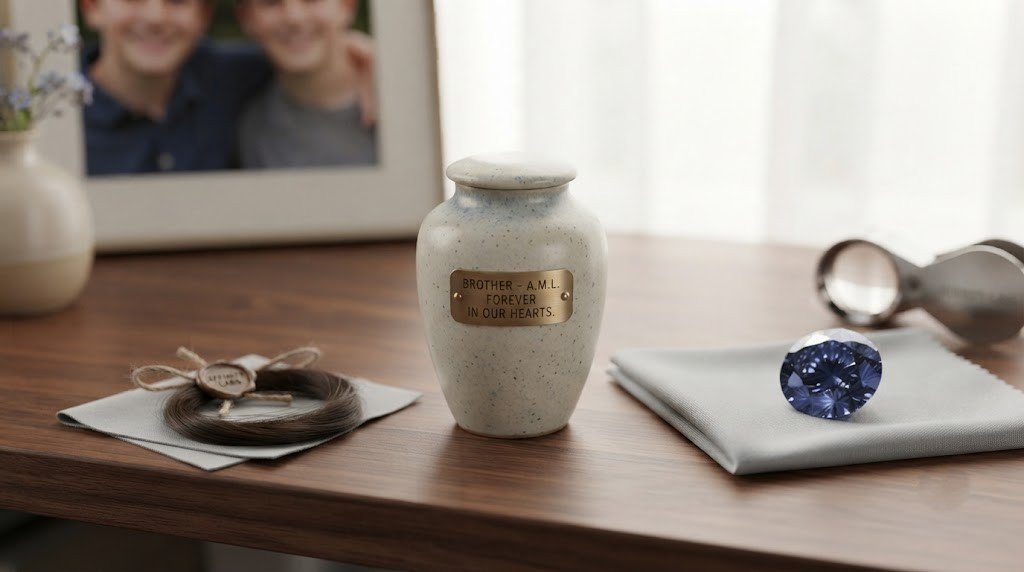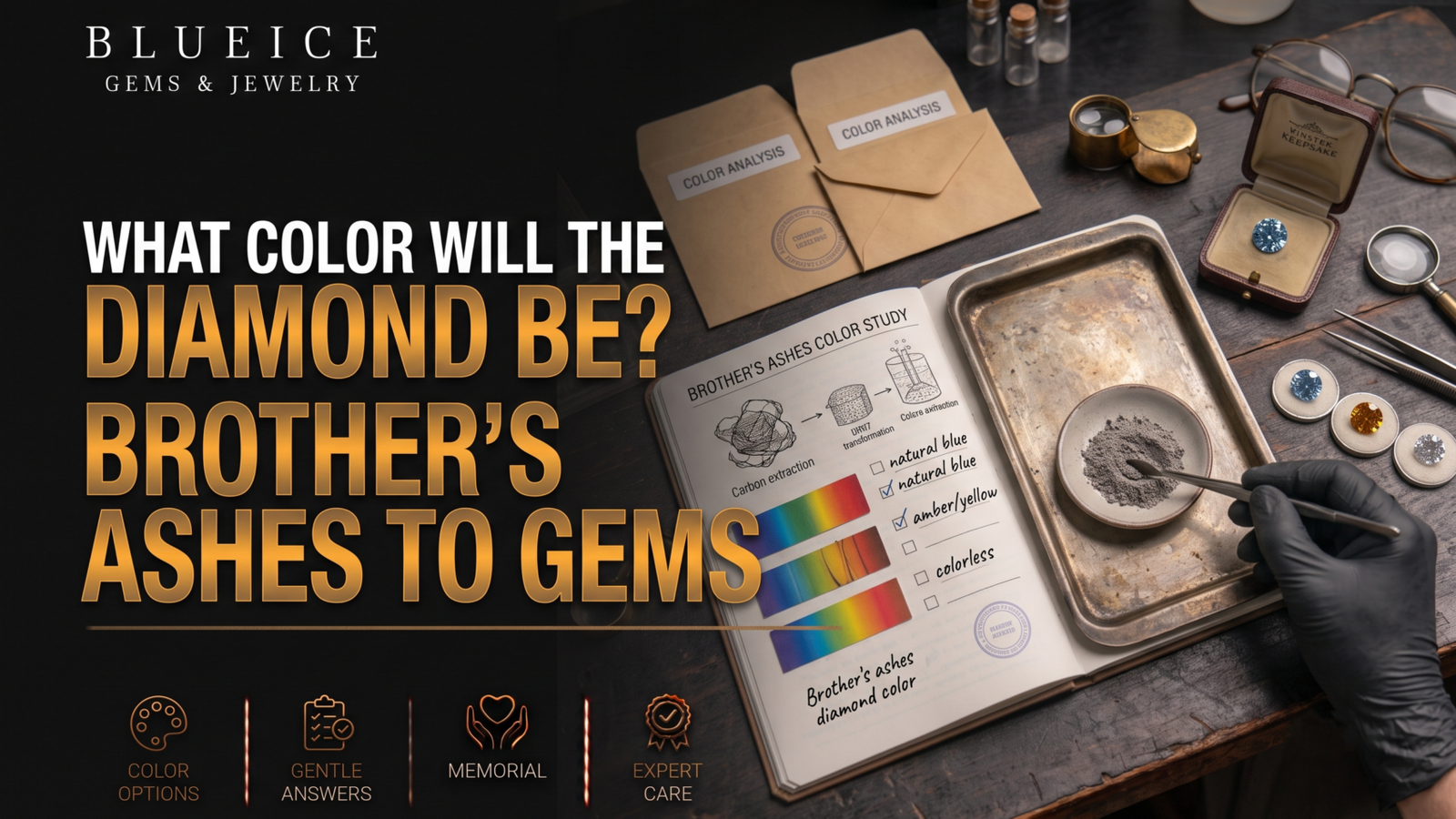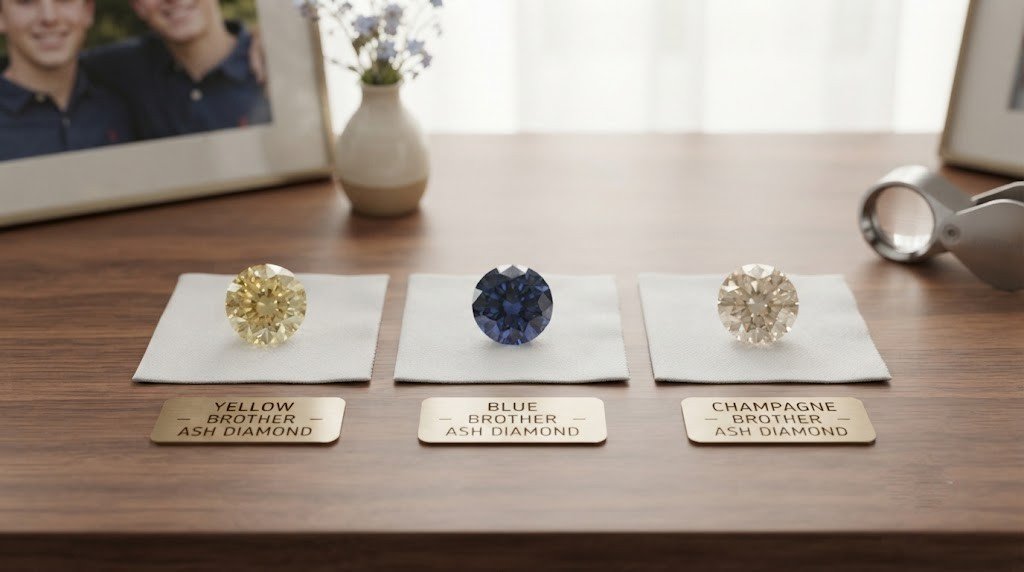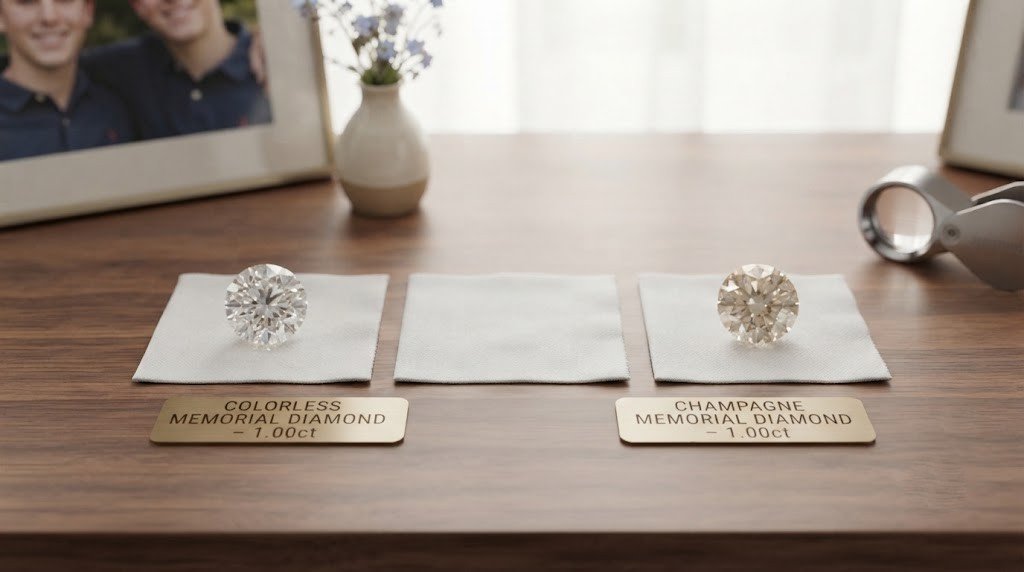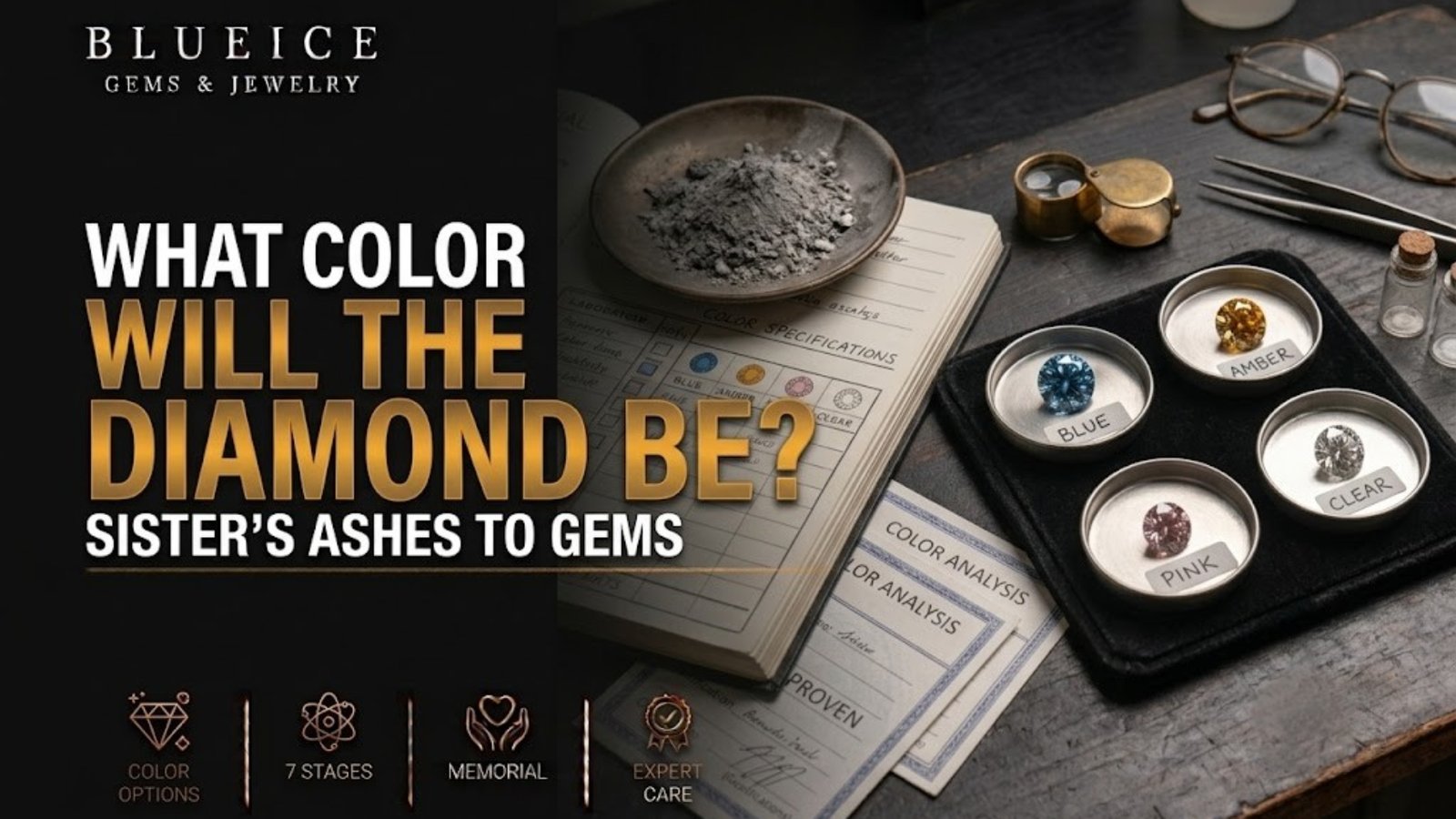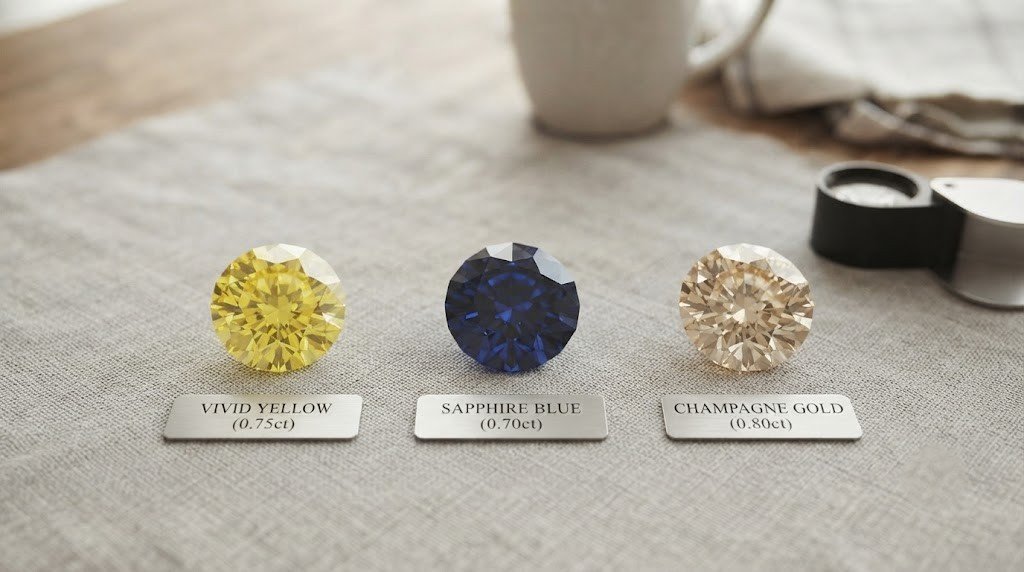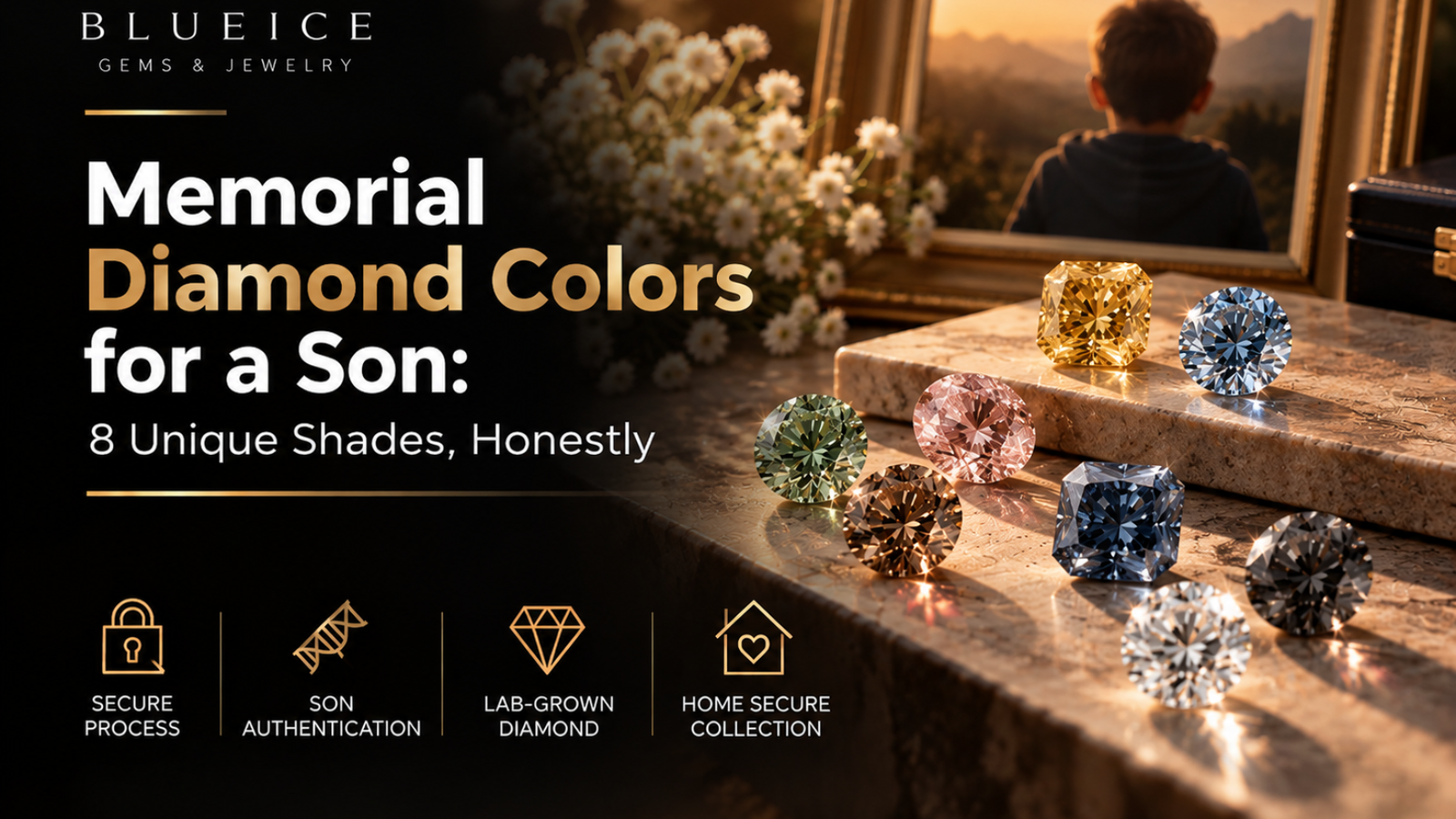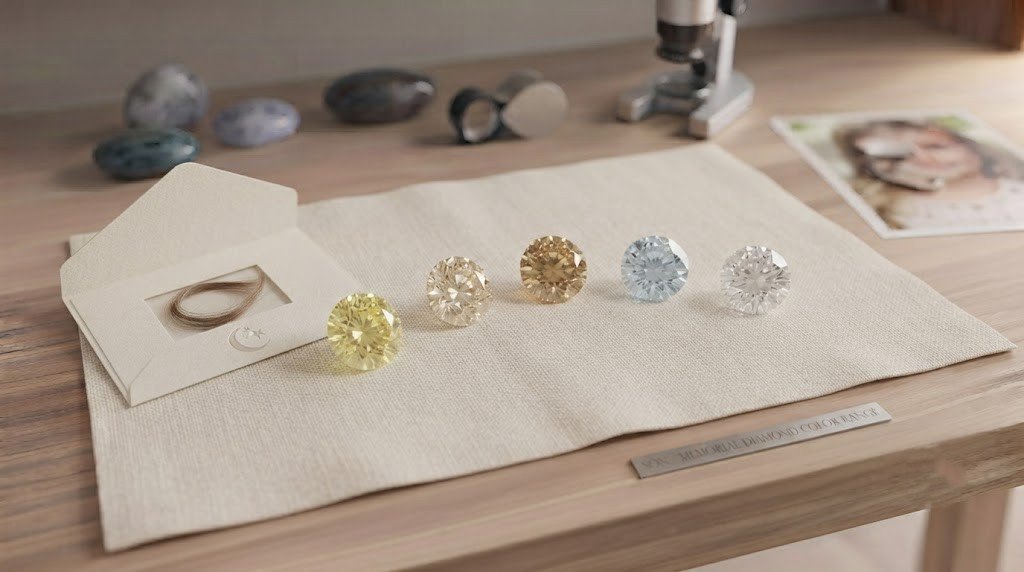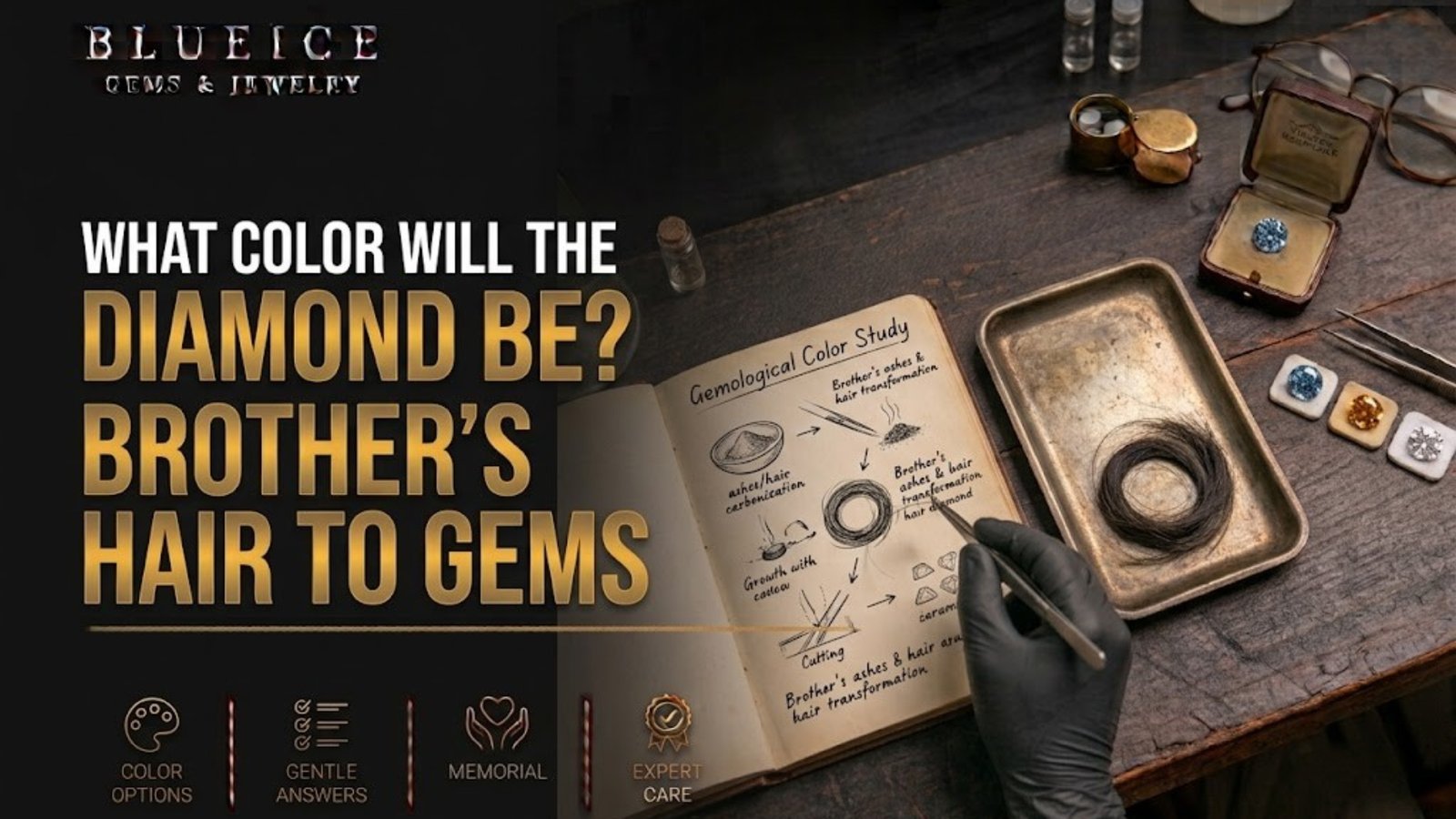
A lock of his hair may be the one thing you kept without quite knowing why, folded into an envelope or tucked between the pages of a book. Now you are wondering what it could become. Brother hair diamond color cannot be read from the hair itself: stones grown from hair usually land in yellow, blue, or champagne tones shaped by traces of nitrogen and boron, while colorless is possible with extra processing at a higher price, and some providers offer irradiated shades.
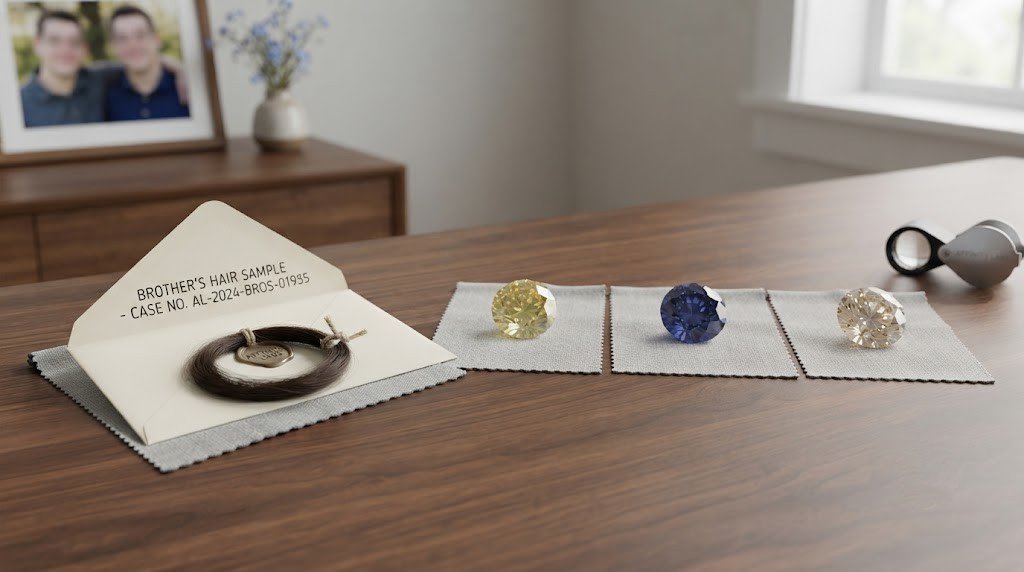
Table of Contents
Why Can’t His Hair Tell You What Color the Diamond Will Be?
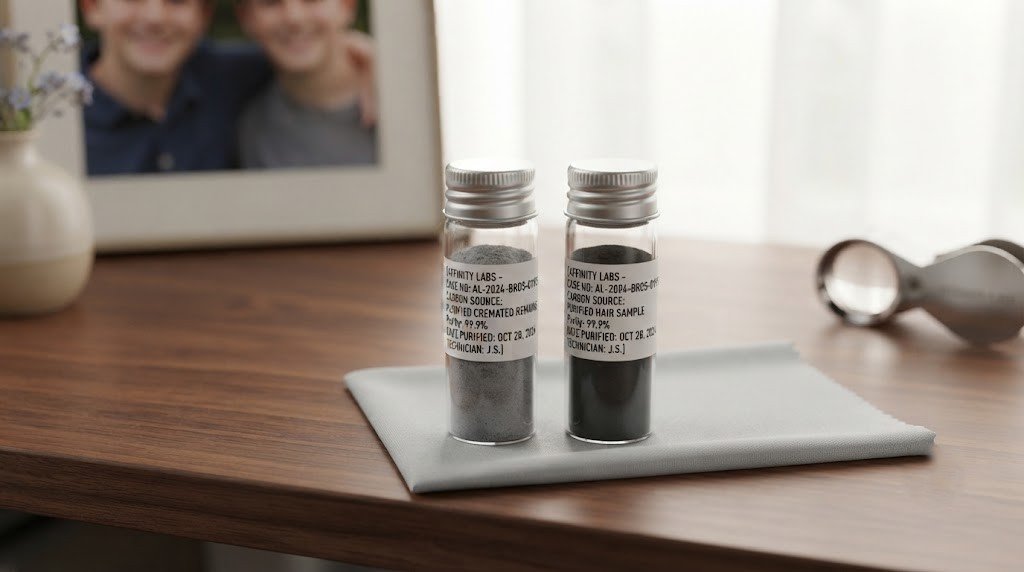
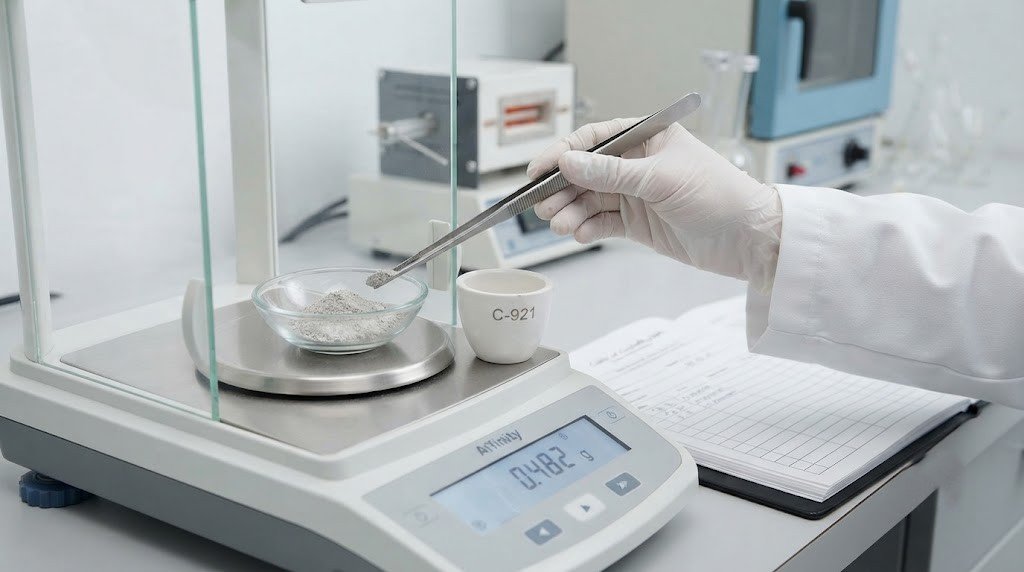
It is natural to look at the hair in your hand, whether it is sandy, black, auburn, silver, or somewhere in between, and imagine the brother hair diamond color taking on that shade. It does not work that way. Before any growing begins, the hair goes through a controlled, oxygen-free heating process that strips away everything except carbon, bringing the material to roughly 99.9% carbon purity or higher.
Everything in the strand that is not carbon is removed at that stage. Carbon atoms carry no memory of whether they sat in a dark strand or a fair one, and a second, hotter firing in the region of 2,500 2,700°C rearranges the purified carbon into graphite before it ever reaches a growth cell. So the shade of his hair is not carried forward into the brother hair diamond color in any predictable way.
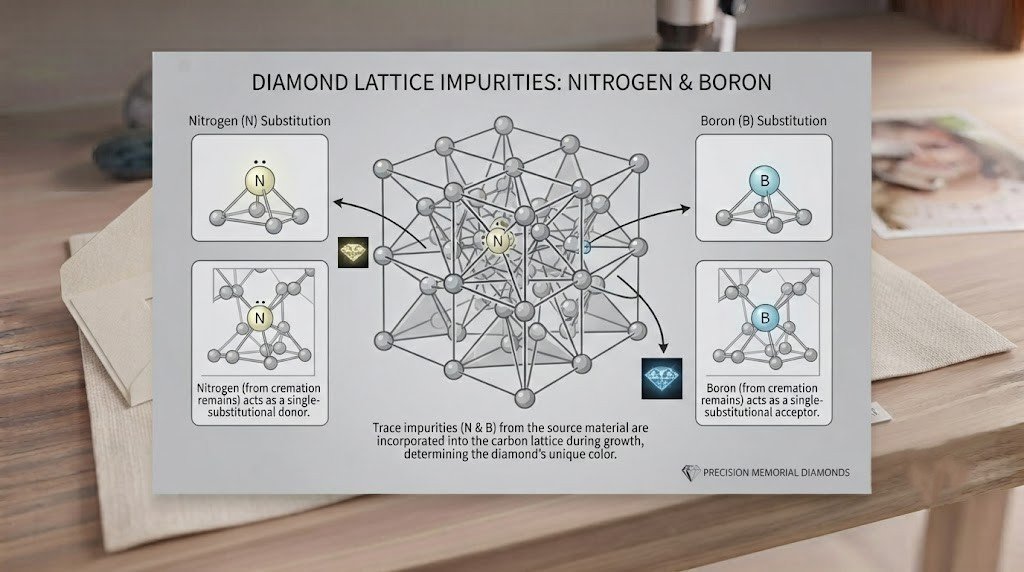
The brother hair diamond color of the finished stone is decided later, inside the press, by whichever trace elements end up in the crystal as it grows. That is the honest starting point for every other question about color, and it is also a relief of sorts: nothing about his hair being light or dark, fine or coarse, makes it a better or worse source for a beautiful stone.
Which Trace Elements Shape Brother Hair Diamond Color?
Two elements matter most. Nitrogen trapped in a growing diamond tints it yellow, and boron tints it blue. When both are absent, the crystal can grow colorless. Every brother hair diamond color you might be offered traces back to one of these three situations, or to a treatment applied once growth is finished.
Keratin, the protein that makes up most of each strand, is so rich in carbon that roughly half the weight of his hair is carbon. Cremated ashes hold far less, which is why a small lock is usually enough. The purified carbon from his hair is then typically blended with supplemental lab-sourced carbon and grown under high-pressure, high-temperature conditions of about 6 8 GPa and 1,400 2,500°C, the HPHT method most memorial providers use, with CVD used by a minority.
Because the starting material is organic and personal rather than a controlled industrial feedstock, trace elements are common, and memorial diamonds across the industry tend toward yellow, blue, and champagne or brown. That tendency is part of what makes each brother hair diamond color individual. Growth itself takes weeks to months, and the full journey from receipt to finished stone typically runs 6 to 10 months.
Does Hair Give a Lighter Brother Hair Diamond Color Than Ashes?
It is an understandable assumption, but there is no published evidence to support it. Hair carries more carbon by weight than ash, so less of it is needed, but carbon content and color are different questions. A higher carbon share does not translate into a paler, clearer, or more predictable brother hair diamond color.
The same color tendencies apply whether the carbon came from hair or from ashes. A stone grown from his hair can come out yellow, blue, champagne, or, with extra processing, colorless, exactly as a stone from ashes can. Anyone telling you hair reliably produces a whiter diamond is going beyond what the industry actually knows.
It also helps to know what is not published. Providers cite a share of ash-derived carbon in finished stones, but no comparable percentage is published for hair. What you can say with confidence is that a real, purified portion of his own carbon is grown into the crystal, typically alongside supplemental lab carbon. If you are comparing sources, the companion piece on what color a diamond from your brother’s ashes will be covers the ash side of the same question.
What Color Families Can a Hair-Grown Memorial Diamond Fall Into?
Think of the possibilities in two groups: tones that come from growth itself, and tones added afterward by treatment. This table sets out what each family usually means, so you can talk about brother hair diamond color with a provider using the same vocabulary.
| Color family | What usually causes it | How it is arrived at |
|---|---|---|
| Yellow | Nitrogen in the crystal lattice | Arises during growth; depth varies stone to stone |
| Blue | Boron in the crystal lattice | Arises during growth; depth varies stone to stone |
| Champagne or brown | Trace elements in an organic source | A frequent natural outcome for memorial stones |
| Colorless | Near-total absence of nitrogen and boron | Requires additional processing; typically costs more |
| Red or pink | Post-growth irradiation | Offered by some providers only |
| Green or black | Post-growth irradiation | Offered by some providers; black may take longer |
None of the growth colors is a defect, and none is a sign that something went wrong with his hair. A canary yellow, a pale sky blue, and a warm champagne are all simply records of the conditions inside that particular crystal. The table cannot tell you which family the brother hair diamond color will land in, only what each one means once it does.
What Does a Colorless Brother Hair Diamond Color Involve?
A colorless memorial diamond is achievable, but it asks more of the process. The provider has to keep nitrogen and boron out of the growing crystal, which means additional processing and tighter control. That is why a colorless brother hair diamond color typically costs more than a yellow, blue, or champagne stone of the same carat weight.
In the 0.5 to 1 carat range, industry-wide prices typically fall around $5,000 to $15,000, and colorless sits toward the upper end. If a white stone is what you picture, raise it early, ask how the provider prices colorless at the size you want, and ask whether it changes the schedule.
It is worth asking yourself, gently, where the wish for colorless comes from. If it feels like him, or matches the way you want to wear the stone, it is a fine reason. If it comes from a sense that only a white diamond counts as the real thing, it may help to know that a stone with a tinted brother hair diamond color has the same hardness, the same optical behavior, and the same 4Cs grading as any other diamond.
Which Brother Hair Diamond Color Options Come From Irradiation?
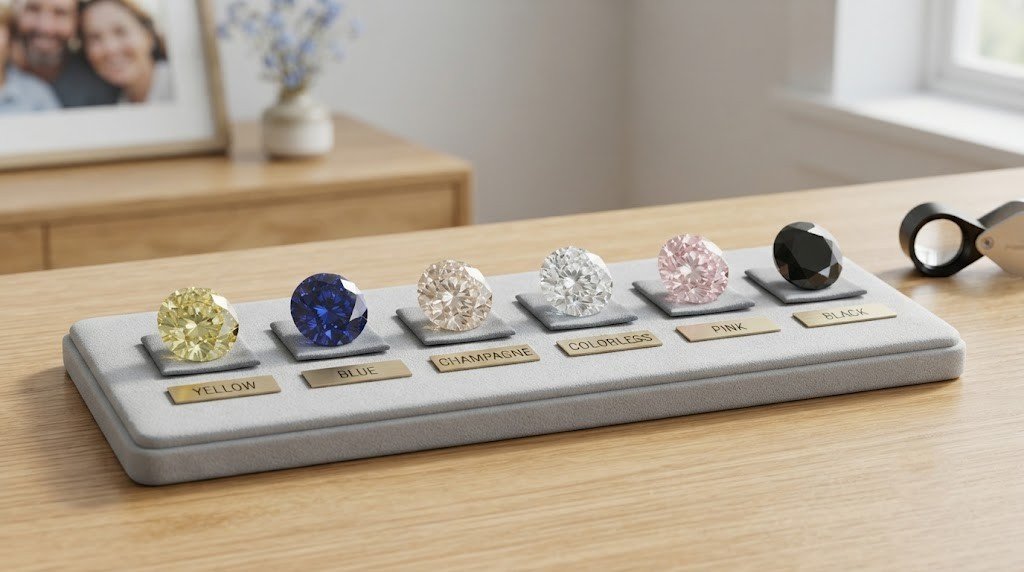
Some providers offer an optional irradiation step once the diamond has been grown. It can shift or deepen color to produce red, pink, green, or black, shades that do not usually emerge from growth on its own. The treatment alters the brother hair diamond color, yet the stone still contains the same purified carbon from his hair that went into the press.
Availability varies from one provider to the next, and some shades may not be offered at all. Timing can stretch too: stones in specialty colors such as black, along with stones above roughly 2 carats, can take up to about 12 months rather than the more typical 6 to 10.
If a treated brother hair diamond color appeals to you, ask three things: which shades are available, how the treatment is disclosed on the grading paperwork, and how it affects price. A deep green, a soft pink, or a near-black stone can each feel exactly right for reasons that are entirely personal, and there is no right or wrong reason to want one.
How Do Brother Hair Diamond Color and Carat Shape the Budget?
Carat weight comes mainly from how long the crystal grows, not from how much hair you send. A larger stone needs longer growth and more careful control, which is why price climbs steeply with size. Brother hair diamond color then sits on top: colorless typically carries a meaningful premium over natural tones at the same weight, and irradiated shades may be priced separately.
General 2026 industry ranges, offered as typical figures rather than any one provider’s prices, look like this:
- Entry tier, about 0.10 0.25 ct: roughly 1,500 3,500 for the loose stone.
- Mid tier, 0.5 1 ct: roughly 5,000 15,000; choosing colorless pushes a stone in this band toward its upper limit.
- Large or rare, 2 5+ ct: roughly 20,000 75,000+, with longer growth and, for specialty colors, a timeline that can approach 12 months.
- Add-ons: an independent grading report, engraving, fancy cuts, and settings are typically priced separately.
One useful approach is to rank what matters most. If a colorless brother hair diamond color is the priority, a smaller stone may keep the total comfortable; if a larger carat matters more, a natural tone frees room in the budget. The full breakdown of what a brother memorial diamond typically costs goes deeper into each tier and add-on.
Where Can the Hair Come From, and Whose Say Matters?
Hair is often the most accessible source for a sibling. It does not require cremation, so it can come from a brother who was buried, and only a small lock or a few grams is typically needed, though each provider sets its own requirements. The guide to how much hair a brother memorial diamond needs explains amounts and collection in more detail.
Ownership still deserves care. A lock saved in his home, or tucked among his possessions, can count as part of his estate, and how that is handled differs from state to state, so it is worth talking with whoever is handling his affairs before you send any. If the funeral home trimmed a lock, it generally goes out through the person who holds authority over his remains, which is often a spouse or registered partner, adult children, or parents rather than a sibling, with the order set state by state and open to change by his written wishes.
If asking feels awkward, it can help to explain that only a small amount is needed and that the rest stays with the family. The complete brother hair diamond guide walks through these conversations, and the list of questions to ask before turning his hair into a diamond can help you prepare.
Should the Metal or Setting Influence Your Choice?
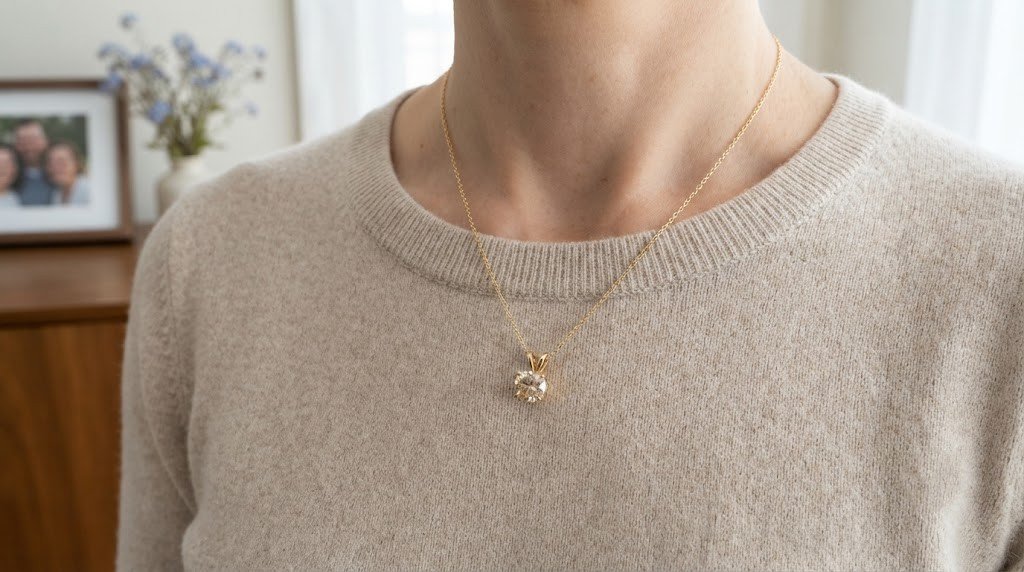
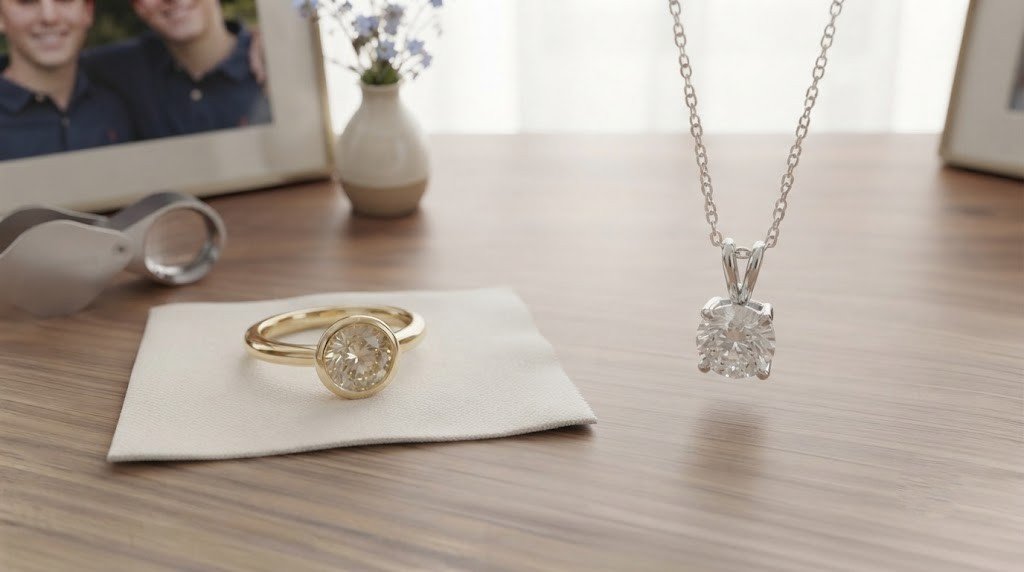
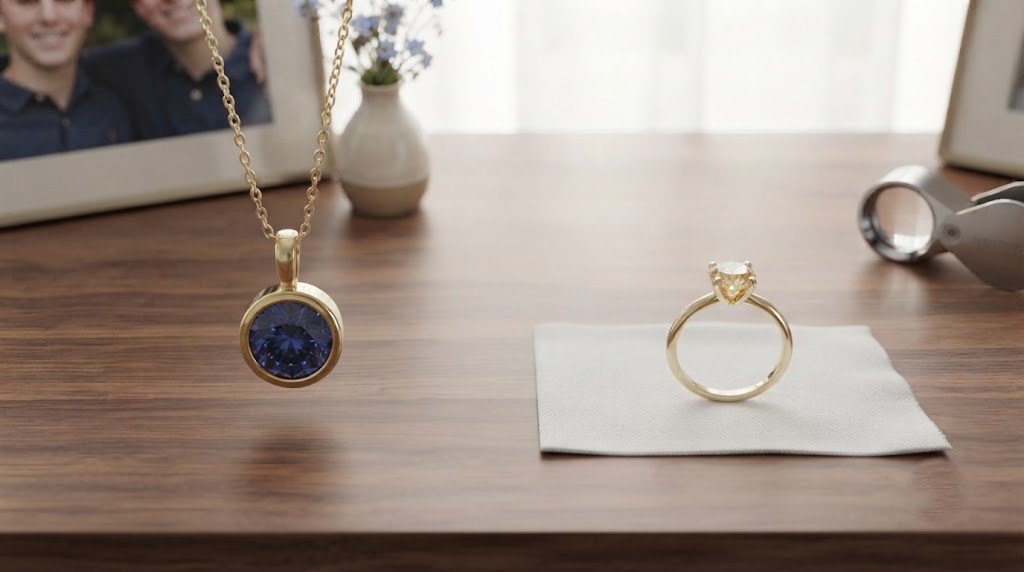
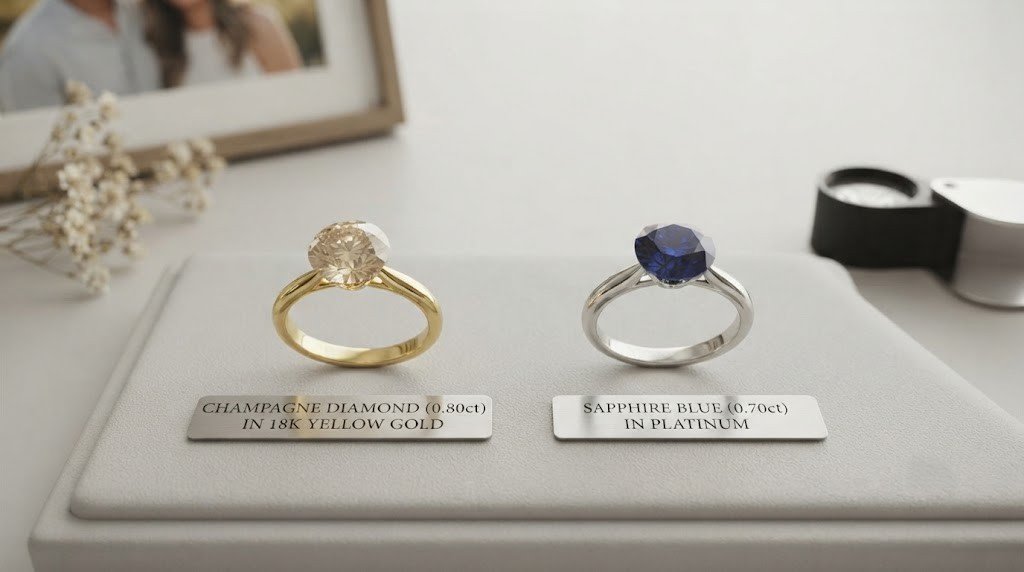
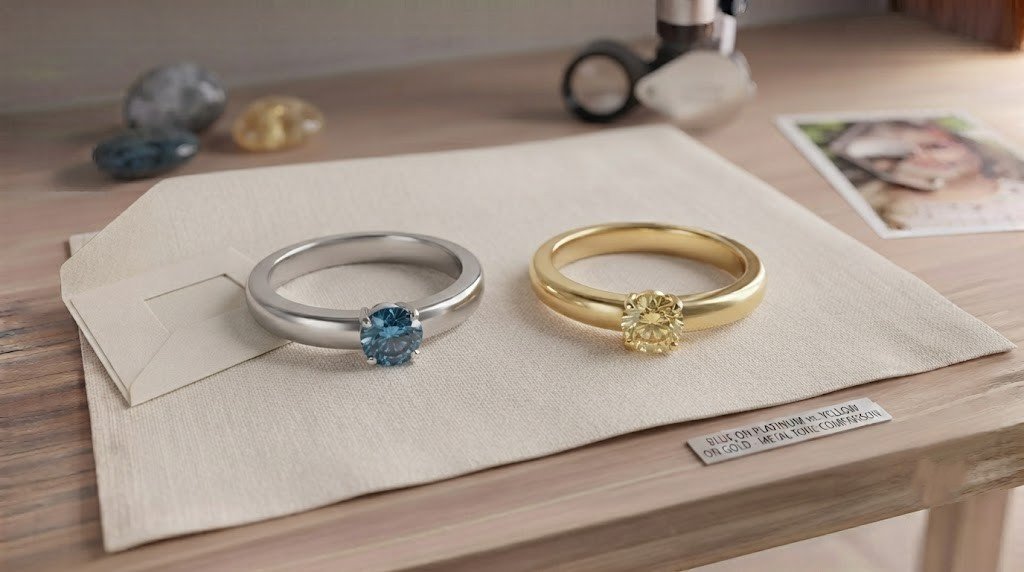
Settings and metals come down to personal taste. Platinum, white gold, yellow gold, rose gold, and other metals each have people who love them, and the best choice is simply the one you will want to wear. A memorial diamond can live in a solitaire ring, a bezel pendant, a pair of studs, a cuff, a band with a flush-set stone, or a keepsake box, whatever the brother hair diamond color turns out to be.
If you have heard that one metal flatters a particular brother hair diamond color more than another, treat it as a question for a jeweler rather than a rule. Ask to see a stone of similar color held against a few metals, and trust what your own eyes tell you.
Durability is worth raising in the same conversation. Diamond rates 10 on the Mohs scale of mineral hardness, the top of the scale, but a hard knock at an unlucky angle can still chip one, so ask which settings suit daily wear. For format inspiration, see these brother memorial diamond ideas for rings, pendants, and keepsakes.
How Can You Match a Brother Hair Diamond Color to Everyday Wear?
Begin with how you live, not with assumptions about which colors belong to men or women. A blue stone is no more fitting for a brother than a pink one, and the person wearing it can be anyone in the family. The right brother hair diamond color is the one that makes you think of him, or the one you will reach for without hesitation in the morning.
Some questions to turn over:
- Will you wear it daily, on special occasions, or keep it close in a drawer or box?
- Do you want a tone people notice, or one that reads quietly against your skin and clothes?
- Is there a color that already belongs to your memories of him, from a jacket, a car, a coastline, or a favorite season?
- Would you prefer to accept whatever natural tone emerges and let that be part of the stone’s story?
When more than one relative wants a stone, each can choose a different brother hair diamond color. A sibling might keep a natural blue in a pendant while a parent chooses colorless for a ring. A provider can tell you whether several stones from one lock of hair are possible and how the pricing and grading would work for each.
When you speak with a provider, ask whether the finished stone comes with an independent grading report, ideally referencing standards such as GIA’s diamond quality factors, and how that differs from the in-house origin certificate that documents chain of custody. Clarity for memorial diamonds typically falls between SI2 and VVS, and the grading report is where the brother hair diamond color is formally recorded. If you are also considering a blend, the post on color for a stone made from his ashes and hair together covers that combination.
Frequently Asked Questions
Will blond or dark hair change the color of the diamond?
No. Purification removes everything in the hair that is not carbon, leaving carbon of roughly 99.9% purity or higher. The finished stone’s tint comes from trace elements such as nitrogen and boron present during growth, not from the shade of his hair.
Does hair produce a more predictable brother hair diamond color than ashes?
There is no published evidence that it does. Hair holds more carbon by weight, so less is needed, but stones from hair still typically come out yellow, blue, or champagne, and no provider can predict the exact shade in advance.
How much more does a colorless diamond from hair cost?
Colorless typically carries a meaningful premium over yellow, blue, or champagne at the same carat weight, because nitrogen and boron must be excluded. In the 0.5 to 1 carat range, industry prices run about $5,000 to $15,000, with colorless near the top.
Can a hair diamond be made in red, pink, green, or black?
Yes, if the provider offers irradiation, a treatment applied after growth that can create red, pink, green, or black tones. Not every provider offers every shade, a black stone can stretch the process to about 12 months, and the paperwork should note the treatment.
Does the amount of hair I send affect the brother hair diamond color?
No. Color depends on trace elements present during growth, and carat size depends mainly on growth time. Providers typically ask for a small lock or a few grams, and requirements vary, so confirm the amount before collecting or sending anything.
Should the color match what he would have worn?
It can, but it does not have to. Some people choose a shade linked to a memory of him, others choose what suits their own wardrobe. Any color, from blue to pink to colorless, can honor him equally well.
Final Thoughts on Brother Hair Diamond Color
A small lock of hair can feel almost too fragile to hold so much meaning, and yet it carries enough carbon to become a genuine diamond. The brother hair diamond color that emerges will be shaped by chemistry no one can fully script, whether that is a soft yellow, a cool blue, a warm champagne, or a colorless stone you chose on purpose. Whatever the result, it will have grown, in real part, from him.
Learn More About Color in Hair Diamonds
- Brother Hair Diamond: The Complete Guide the whole hair-to-diamond journey, start to finish
- What Color Will a Diamond Made From Your Brother’s Ashes Be? the ash side of the color question
- How Much Hair Do You Need for a Brother Memorial Diamond? amounts, collection, and storage questions
- How Much Does a Brother Memorial Diamond Cost? price tiers and add-ons
Talk With Memorial Diamond
Whenever you feel ready, Memorial Diamond is here to talk through what his hair could become, including the color options worth considering and the questions to settle first. Visit memorialdiamond.us to start the conversation, with no pressure to decide anything today.