What remains of a brother is sometimes scattered across a family: his ashes with one relative, a lock of his hair with another, and a cap still hanging in your hallway. A brother ashes hair diamond is a lab-grown diamond created using carbon recovered from both a small portion of his ashes and some of his hair.
Each material may require permission from a different person. The process typically takes 6–10 months, depending on the provider and the diamond being created. Keeping both sources documented separately from the beginning can help protect the family’s wishes and give everyone greater peace of mind.
Table of Contents
What Is a Brother Ashes Hair Diamond, Exactly?
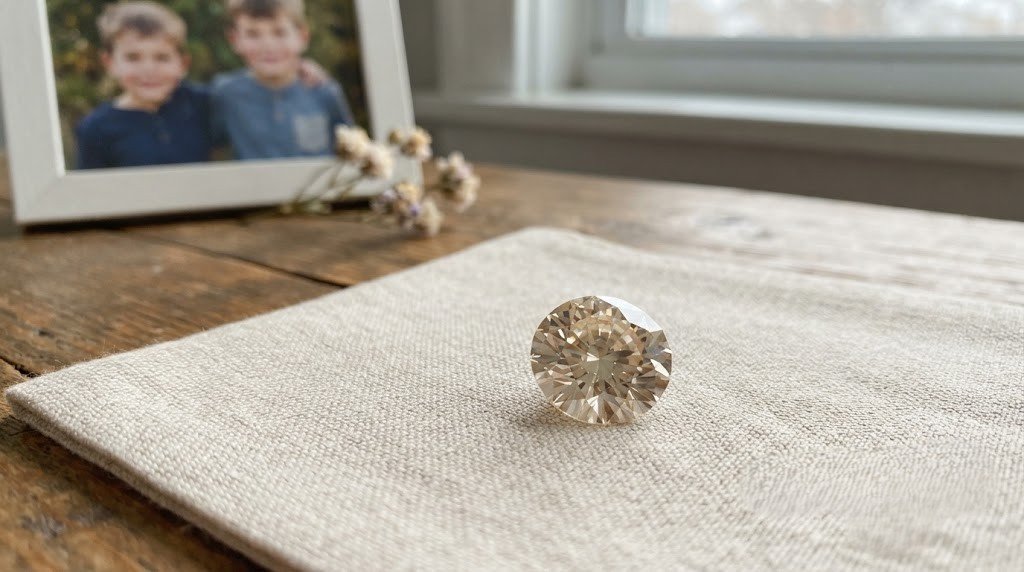
A brother ashes hair diamond is a lab-grown diamond created brother ashes hair diamond using carbon derived from two materials associated with your brother: a portion of his cremated remains and some of his hair.
It is not a stone with ashes and hair sealed inside it. Instead, the materials are processed to recover carbon, which may then be used during diamond growth.
The resulting stone has the characteristic physical properties of a diamond. It can be cut, polished, graded, and set into a ring, pendant, or another piece of memorial jewelry.
This type of keepsake belongs to the broader category of memorial diamonds, which are created using carbon from a person’s ashes, hair, or other accepted carbon sources.
Why combine the two materials?
For some families, each material represents a different part of a person’s life. His ashes may connect to his final arrangements, while his hair may bring back memories of ordinary days, family photographs, or a familiar keepsake.
Combining them can provide a way to represent both connections in one stone.
However, not every provider offers blended memorial diamonds, and the methods brother ashes hair diamond used can vary. Before ordering, ask whether the company accepts both materials for one diamond and how it documents their use.
When Does Combining His Ashes and Hair Make Sense?
A blended memorial diamond is a personal choice, not necessarily an upgrade over a diamond made brother ashes hair diamond from one material.
A brother ashes hair diamond may be suitable in several circumstances.
- Both materials are available and meaningful. Your family has access to some ashes and a saved lock of hair, and you would like to include both.
- Two relatives want to contribute. One person keeps his ashes, while another has preserved his hair. A combined stone may allow both relatives to contribute to one keepsake.
- The available ash quantity is limited. Hair contains a relatively high proportion of carbon by weight. A provider may be able to use it alongside ashes, but you should ask whether the combination changes the amount required for your order.
- Different relatives value different keepsakes. One sibling may feel connected to his ashes, while another treasures a lock of hair or an item he once wore.
Sometimes, however, using one material is simpler. A relative may not want to share a keepsake, only one material may be available, or the provider may not offer a combined process.
An ash-only or hair-only brother ashes hair diamond memorial diamond can be just as meaningful. The right decision is the one that respects your family’s circumstances and your brother’s memory.
Alternatives When One Material Is Unavailable
A brother ashes hair diamond may not be possible if his ashes were scattered, a relative does not wish to share them, or no hair remains.
You still have options.
- An ash-only memorial diamond: Read the complete guide to a diamond made from your brother’s ashes to learn about ash requirements and the general process.
- A hair-only memorial diamond: If his ashes are unavailable, the complete guide to a brother hair diamond explains this alternative.
- Separate memorial diamonds: Different relatives may choose separate stones using the materials available to them, if the provider can accommodate their requests.
- Waiting until the family is ready: There is no need to rush into a decision. You can take time to talk with relatives and consider what feels right.
An urn, burial, or scattering ceremony already has its own meaning. A memorial diamond is another possible tribute, not a replacement for those choices.
What If His Ashes and Hair Are With Different People?
This is one of the most important practical considerations when planning a brother ashes hair diamond.
The two materials may be held by different relatives, and each may have different responsibilities or rights concerning the material.
Who Can Authorize the Use of His Ashes?
The person legally authorized to make decisions about cremated remains depends on the applicable state law and the circumstances of the arrangements.
A spouse or partner, adult child, parent, sibling, or designated representative may have a role, depending on the situation. A written designation or other legal arrangement may also affect who can make decisions.
Do not assume that the person who physically brother ashes hair diamond holds the urn is automatically the only person authorized to approve its use.
If you are unsure, contact the funeral home orcrematory that handled the arrangements. For a disagreement or unclear legal situation, consult a local attorney familiar with estate and funeral matters.
Who Can Authorize the Use of His Hair?
The answer may depend on where the hair came from and who owns or controls the item containing it.
For example, hair saved from a brush or cap may be connected to personal belongings or the estate. A lock collected by a funeral home may be handled differently.
If the hair was among your brother’s belongings, speaking with the executor or estate representative may be a sensible first step. You should also talk to the person who currently keeps the hair.
How Can You Ask Two Relatives Respectfully?
Imagine that one relative keeps your brother’s ashes, while another has his saved hair. You would like to create one diamond using both materials.
The most respectful approach is to have two separate conversations. Explain what you hope to create, why both materials matter to you, and how little material the provider says it needs.
Avoid pressuring either person. They may have a strong emotional connection to the material or may not be comfortable sharing it.
A simple conversation can establish whether everyone is willing to participate before you begin the ordering process.
If there is disagreement, take time to understand each person’s concerns. A memorial keepsake should not come at the cost of damaging important family relationships.
How Do Labs Combine Two Materials in One Stone?
Providers do not all publish their exact methods for combining ash-derived and hair-derived carbon. The following is a general explanation of the process, not a guarantee that every company follows the same procedure.
1. Separate Sample Intake
The ashes and hair may begin as separate samples, each with its own identification and intake record.
This is particularly important when two relatives supply the materials.
2. Carbon Recovery
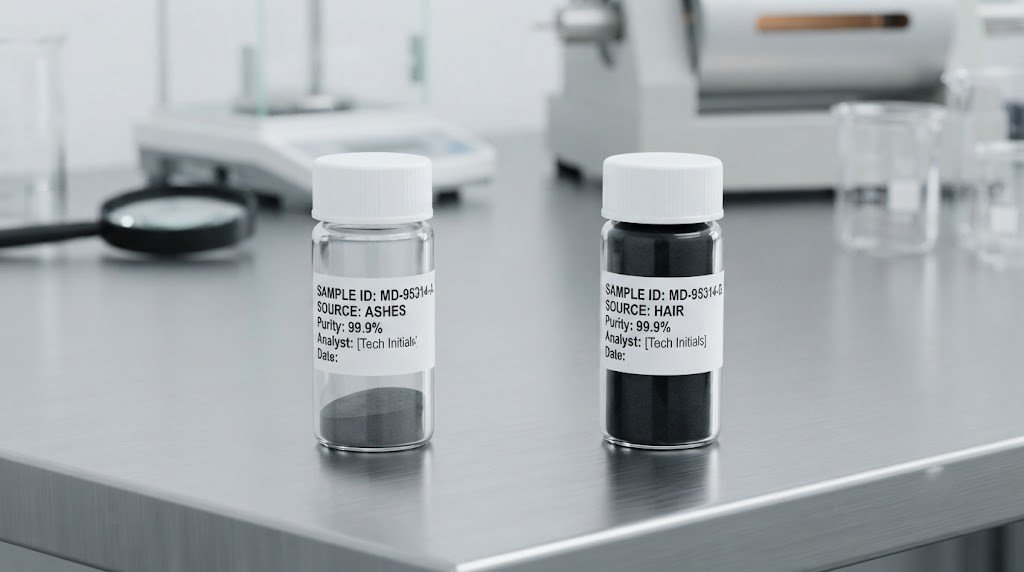
Each material is processed to recover carbon. Ashes contain minerals and other substances, while hair contains keratin and other components.
The objective is to obtain carbon suitable for the provider’s diamond-growth process.
3. Purification and Preparation
The recovered carbon may undergo additional purification. Some providers may prepare each source separately before combining them.
Ask the company to explain its own method rather than assuming every laboratory uses the same process.
4. Combining the Carbon Sources
If the provider offers a blended diamond, it must have a method for using carbon recovered from both materials.
Ask when the sources are combined, whether their separate identities are recorded, and whether the company can provide documentation describing the process.
5. Diamond Growth
Many laboratory-grown diamonds are produced using high-pressure, high-temperature (HPHT) technology. Other diamonds are grown using chemical vapor deposition (CVD).
The technology available for memorial diamonds depends on the provider. Ask which method will be used for your order.
6. Cutting and Polishing
After growth, the diamond may be cut and polished into the selected shape. The final appearance depends on the resulting crystal and the cutting choices available.
7. Documentation and Delivery
Before the diamond is delivered, ask what paperwork will accompany it. Depending on the provider, this may include an origin certificate, product details, or an independent grading report.
For a more detailed overview, read how a memorial diamond is made from your brother’s ashes and hair.
Questions to Ask About the Blending Process
Before placing an order, ask:
- Are the ashes and hair processed separately before being combined?
- Will the records identify both materials?
- Can you estimate the amount of carbon contributed by each source?
- What happens if one sample produces less usable carbon than expected?
- What happens if diamond growth fails?
- What happens if the stone fractures during cutting?
- Will any unused material be returned, and to whom?
Clear answers can help you understand what the provider can and cannot promise.
How Should You Document Both Sources?
When two materials come from different people, good documentation becomes especially important.
A simple record can help preserve the history of the samples and clarify what each person agreed to contribute.
| Record to keep | Ash portion | Hair portion |
|---|---|---|
| Previous holder | Person authorized to release the ashes | Executor or person keeping the hair |
| Written agreement | Consent to release the requested amount | Agreement permitting the hair to be used |
| Source | Urn or container, and crematory details if known | Brush, cap, saved lock, or keepsake |
| Amount sent | Approximate weight or quantity | Approximate weight or description of the lock |
| Shipping record | Shipping date, carrier, and tracking number | Shipping date, carrier, and tracking number |
| Provider intake | Intake identification assigned by the company | Intake identification assigned by the company |
| Unused material | Person designated to receive the remainder | Person designated to receive the remainder |
Before sending anything, ask the provider whether the certificate can identify both source materials.
If the samples will arrive on different dates, confirm how the first sample will be stored, how long it will be kept, and how the company will identify it until the second sample arrives.
Photographing each sample and its label before packaging can also help you maintain your own records.
Keep copies of the consent documents, shipping receipts, tracking numbers, provider correspondence, and any certificate supplied with the finished diamond.
How Much of the Finished Stone Comes From Him?
This is an important question, and the answer should be communicated honestly.
In an ash-only memorial diamond, some providers report that personal carbon accounts for approximately 10–15% of the finished stone’s mass, while other reported brother ashes hair diamond figures can be lower. The amount brother ashes hair diamond depends on the material recovered and the provider’s process.
Ashes generally contain only a small proportion of usable carbon by weight. Hair contains substantially more carbon by weight, but that fact alone does not establish what percentage of a finished diamond comes from the hair.
There is no single published percentage that can reliably describe every diamond made from a blend of ashes and hair.
Additional carbon may be used during the growth process. The amount contributed by each source depends on the provider’s method and the specific order.
The most accurate way to describe a brother ashes hair diamond is that carbon recovered from both his ashes and hair is used in growing the crystal, potentially alongside other carbon used by the laboratory.
The stone should not automatically be described as being made entirely from your brother’s remains.
Before purchasing, ask the provider for a written estimate of the personal carbon contribution for your chosen size and how that estimate is calculated.
You can also read about whether a memorial diamond is really made from your brother’s ashes and hair.
How Much Ash and Hair Do You Need?
The required quantities depend on brother ashes hair diamond the provider, the diamond brother ashes hair diamond size, and the materials available.
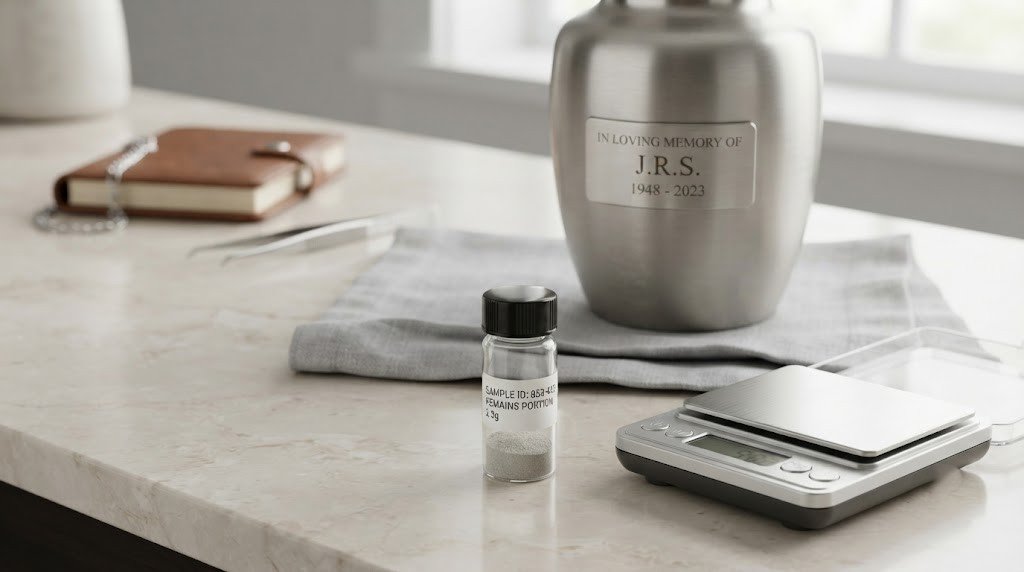
As general guidance, some providers request a few tablespoons of ashes, while others may request a larger amount, potentially around 100 grams. Hair requirements may be a small lock or a few grams.
These are broad examples, not universal requirements. A blended order may have different requirements from an ash-only or hair-only order.
Contact the provider before collecting or shipping the materials. Ask for the exact quantity, acceptable packaging, labeling instructions, and shipping procedure.
The quantity supplied does not necessarily determine the finished diamond’s carat weight. Diamond size depends on the growth process and the size selected for the order.
You should not send extra material unless the provider requests it.
Before shipping, also ask what happens to unused ashes and hair. If two different relatives contributed the materials, specify in writing who should receive each unused portion.
What Color, Cost, and Timeline Should You Expect?
Memorial Diamond Colors
The color of a lab-grown diamond depends on factors that affect crystal growth, including trace elements and the provider’s process.
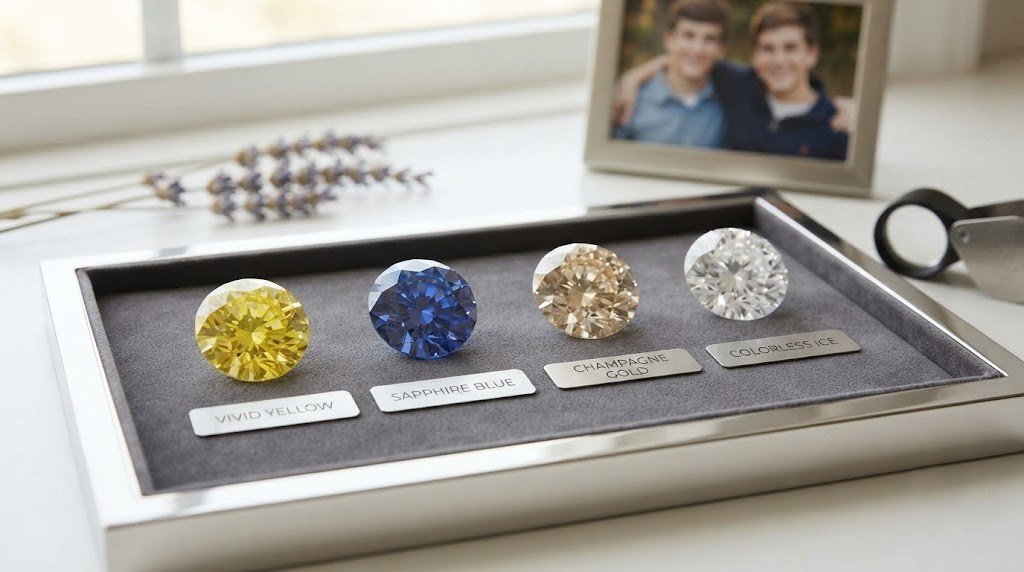
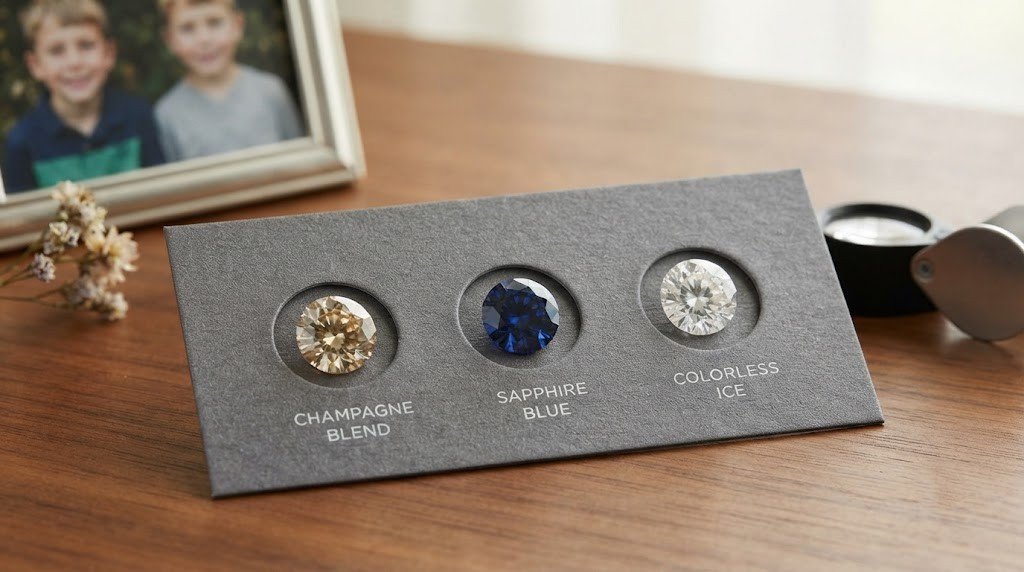
Memorial diamonds may be available in shades such as yellow, blue, champagne, or brown. Some providers offer additional colors or color treatments.
Adding brother ashes hair diamond hair to ashes does not guarantee a particular shade. A provider should explain which colors are available, whether any post-growth treatment is used, and how the chosen color affects price and delivery time.
Color does not measure the emotional brother ashes hair diamond significance of the diamond or the relationship you shared with your brother.
For more information, read the guide to brother ashes hair diamond color.
Estimated Price Ranges
The following are broad illustrative industry estimates, not a quote from Memorial Diamond or a guarantee of current market prices.
| Diamond size | Illustrative price range |
|---|---|
| 0.10–0.25 carat | $1,500–$3,500 |
| 0.5–1 carat | $5,000–$15,000 |
| 2–5+ carats | $20,000–$75,000+ |
Actual prices vary with the provider, carat weight, color, cut, grading, setting, and other options. Processing two materials may also affect the price.
Request an itemized quotation before ordering. Ask whether the price includes the diamond itself, cutting and polishing, a certificate, independent grading, shipping, and any jewelry setting.
An independent grading report may describe the brother ashes hair diamond diamond’s characteristics using criteria such as those explained in GIA’s diamond quality factors.
How Long Does It Take?
A memorial diamond may take approximately 6–10 months, depending on the provider and order, brother ashes hair diamond. Larger stones, specialty colors, or other complications may take longer.
Ask when the timeline begins. Some companies calculate it from receipt of the required materials, while others may use a different milestone.
If the ashes and hair will be sent separately, confirm whether processing begins only after both samples have arrived.
Get the estimated completion date and the provider’s policy for delays in writing.
Caring for the Finished Diamond
Diamonds are very hard, but they are not impossible to damage. A hard impact can chip or fracture a diamond, depending on where and how it strikes.
If you intend to wear the stone every day, consider a brother ashes hair diamond protective setting and ask a jeweler about appropriate care. If the diamond is valuable, you may also want to ask your insurer what documentation is required for coverage.
Can Each Sibling Receive a Blended Stone?
Possibly. Whether the same supply of ashes and hair can be divided between multiple orders depends on the available quantities and the provider’s requirements.
Ask whether the company can use one set of brother ashes hair diamond source materials for several diamonds and whether each order needs separate samples or intake records.
Before deciding, talk with the family members who may want to participate. One sibling may prefer a blended diamond, another may want an ash-only stone, and another may not want a memorial diamond at all.
These choices do not measure how much anyone loved your brother.
If one diamond will be shared by several relatives, discuss ownership and future arrangements before ordering. If multiple diamonds will be made, decide how the cost will be divided and who will receive each finished stone.
Written agreements can prevent misunderstandings later.
What Should Be Agreed in Writing Before Anything Ships?
Before sending either material, try to establish the following details in writing:
- Who has authorized the release of the ashes.
- Who has agreed to the use of the hair.
- Who will place and manage the order.
- How the costs will be divided.
- Who will own the finished diamond or diamonds.
- Who should receive any unused ashes and any unused hair.
- How the provider will document both sources.
- What happens if one sample cannot provide enough usable carbon.
- What happens if growth fails or the stone is damaged during cutting.
- Whether the price includes grading, a certificate, shipping, and any setting.
- How the provider handles storage when samples arrive at different times.
- Whether any color treatment will be used and disclosed.
If you need practical guidance on ordering and shipping, read how to turn your brother’s ashes and hair into a diamond.
Taking these steps before shipping can make the process clearer for everyone involved.
Frequently Asked Questions
Does a brother ashes hair diamond contain more of him than an ash-only stone?
There is no universal published figure for a diamond made from a blend of ashes and hair. The amount of personal carbon depends on the materials recovered and the provider’s process. Ask for a written estimate specific to your order.
Can his ashes and hair be sent to the laboratory at different times?
That depends on the provider. Before sending either material, confirm whether the laboratory accepts separate deliveries, how the first sample will be stored, and how both samples will be tracked.
Do both relatives need to give written consent?
Obtaining written agreement from both contributors is a sensible precaution. The person authorized to make decisions about the ashes may differ from the person who owns or keeps the hair. Legal requirements depend on the circumstances and applicable law.
Will adding his hair change the diamond’s color?
Not predictably. The final color depends on factors involved in diamond growth and any disclosed treatment. Ask the provider which colors are available and how they are produced.
Can unused ashes and hair be returned to two different people?
Possibly, depending on the provider’s policy.brother ashes hair diamond Before sending brother ashes hair diamond anything, specify who should receive each unused material and obtain written confirmation of the arrangements.
Is a combined diamond more expensive than a single-material diamond?
It may be. Some providers may charge additional fees for handling or processing a second material. Ask for an itemized quotation that identifies any blending fee.
What if his ashes and hair are in different states?
The two holders may be able to send their samples separately, but shipping rules and provider procedures can differ. Ask the company for instructions for each material, and retain the tracking and intake records.
Final Thoughts on a Brother Ashes Hair Diamond
A brother ashes hair diamond brother ashes hair diamond can require more planning than a diamond made from a single material. There may be two relatives to speak with, two permissions to obtain, and two packages to document.
Handled carefully, that process can give family members an opportunity to contribute to a shared memorial while respecting the wishes of everyone involved.
Keep your records clear, ask the provider direct questions, and be realistic about what can be verified about the finished stone. Most importantly, allow every relative to make their own decision without pressure.
For some people, a memorial diamond offers comfort by bringing brother ashes hair diamonddifferent reminders of a loved one into one small, lasting keepsake. For others, a different tribute feels more appropriate. Both choices deserve respect.
Learn More About Brother Memorial Diamonds
- Brother Ashes Diamond: The Complete Guide — Learn about ash-based memorial diamonds.
- Brother Hair Diamond: The Complete Guide — Explore the hair-only option.
- How to Turn Your Brother’s Ashes and Hair Into a Diamond — Understand the ordering and shipping process.
- How a Memorial Diamond Is Made From Your Brother’s Ashes and Hair — Learn about the laboratory process.
Talk With Memorial Diamond
If your brother’s ashes and hair are held by different relatives, or you brother ashes hair diamond are unsure which materials are available, you can start by learning about the options before asking anyone to contribute.
Visit Memorial Diamond to explore memorial diamond options and ask questions about creating brother ashes hair diamond a brother ashes hair diamond at a pace that feels right for your family.
A meaningful memorial begins with care, brother ashes hair diamond honest information, and respect for the people who share his memory.