brother-memorial-diamond

Memorial Diamond Settings and Jewelry Ideas for a Brother

A stone grown partly from your brother’s carbon deserves a mount that keeps it safe through ordinary days, not only special ones. The best brother memorial diamond settings match three things: how often the piece will be worn, the size of the stone, and the work and habits of the person wearing it. Bezel and flush settings protect a diamond best for daily wear, prongs show more of the stone but leave it more exposed, and the metal you choose affects durability, upkeep and later resizing.

This guide stays with the practical construction choices. If you are looking for inspiration first, the separate post on ring, pendant and keepsake ideas for a brother’s diamond is the better starting point.
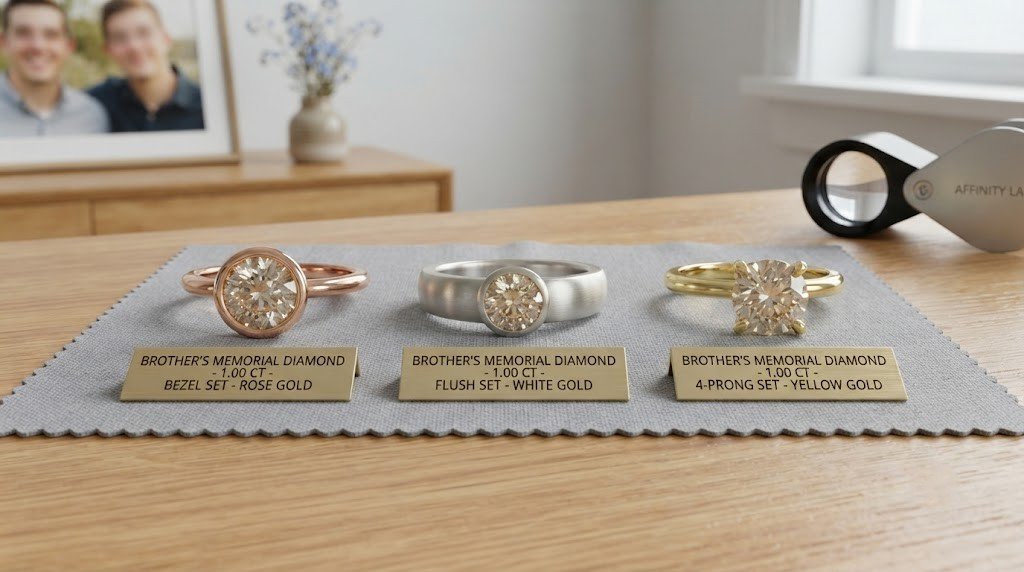
brother memorial diamond settings

Table of Contents

What Do Brother Memorial Diamond Settings Need to Do?

Brother memorial diamond settings have two jobs. A setting holds the diamond securely, and it decides how much of the stone is on show. Those two jobs pull against each other: the more metal wrapped around the edge of a diamond, the safer it is, and the less light reaches its sides.

A memorial diamond is a real lab-grown diamond, graded on the same 4Cs and rated 10 on the Mohs scale of mineral hardness. Hardness is about scratch resistance, though, not toughness. In general gemology, a sharp knock at the wrong angle can still chip any diamond, which is why the mount matters so much for a stone that cannot be replaced.

Thinking about the setting before the stone is finished

It helps to start talking about brother memorial diamond settings while the stone is still being grown, because the choice can shape the cut and size you ask for. Across the industry, growth typically takes 6 to 10 months from the day material arrives, and up to about 12 months for larger or specialty-color stones. That window gives you time to talk with a jeweler, decide who will wear the piece and agree a budget without rushing.

Which Brother Memorial Diamond Settings Hold Up Best to Daily Wear?

For a piece worn every day, protection usually comes first. Here is how common brother memorial diamond settings compare.

Setting styleHow it holds the stoneProtection for daily wearTrade-offs
Full bezelA continuous metal rim around the whole edgeHighShows less of the stone’s sides; can make a small stone look smaller
Half-bezelMetal on two opposite sides, open on the othersModerate to highMore light than a full bezel; open edges still exposed
Flush or recessedStone sits level with or below the metal surfaceVery highSuits smaller stones best; less sparkle visible
Prong (four or six)Thin metal claws grip the stoneLowerMost light and sparkle; prongs can snag, bend or loosen
ChannelStone held between two metal wallsHighUsually used for rows of small stones in a band
Tension-stylePressure from the band holds the stoneVariesSpecialist work; ask about security and later resizing

Bezel and half-bezel

A full bezel wraps the girdle, the diamond’s thin outer edge and its most vulnerable point. That makes it one of the most protective brother memorial diamond settings for anyone who uses their hands constantly. A half-bezel gives up some of that cover in exchange for more light and a lighter look.

Flush and recessed

Flush setting drills a seat into the metal so the stone sits level with the surface. Very little can catch on it. It suits smaller stones especially well and is worth raising with a jeweler for a band that will be worn through work, sport or travel.

Prongs

Among brother memorial diamond settings, prongs show the most diamond and suit people who wear jewelry carefully or less often. They do need checking, because a prong that bends or wears thin is one of the ways a stone can work loose from a ring. If you choose prongs, ask a jeweler how often they recommend an inspection.

How Do Metals Differ for Brother Memorial Diamond Settings?

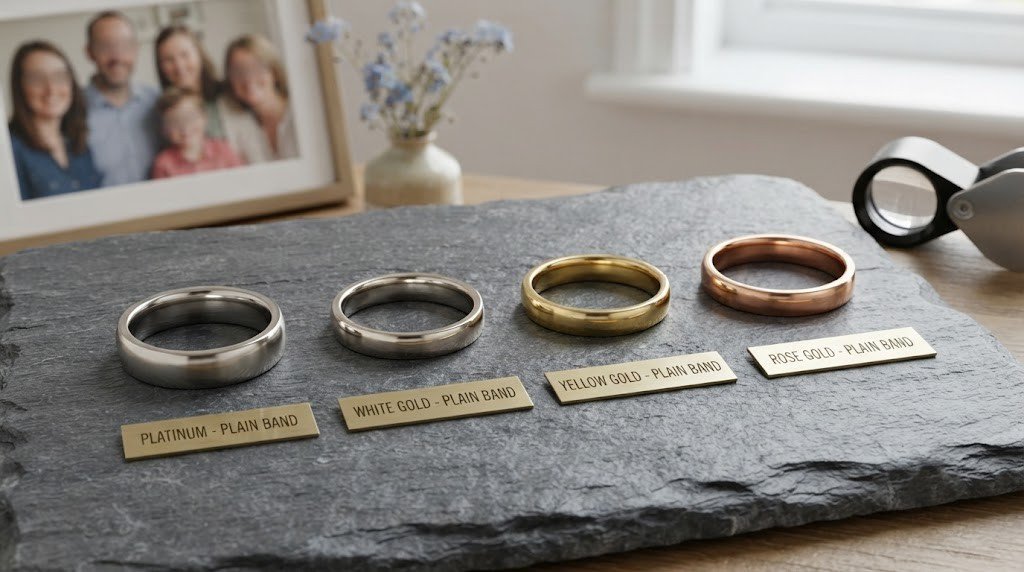
In brother memorial diamond settings, the metal affects durability, upkeep, comfort and whether the piece can be changed later. These are general differences; a jeweler can explain how they apply to a specific design.

  • Platinum is dense and naturally white. It wears slowly and tends to hold a stone securely, and it usually costs more than gold for the same design.
  • White gold is gold alloyed with white metals and often plated with rhodium for brightness. The plating wears with time and can be renewed by a jeweler.
  • Yellow and rose gold keep their color through the metal itself. Lower-karat golds are typically harder, while higher-karat golds are softer and richer in color.
  • Sterling silver is affordable but softer and tarnishes, so it is less often chosen for a stone worn daily.
  • Titanium, tungsten and other alternative metals appeal to some wearers, but some are hard or impossible to resize.

Metal and stone color together

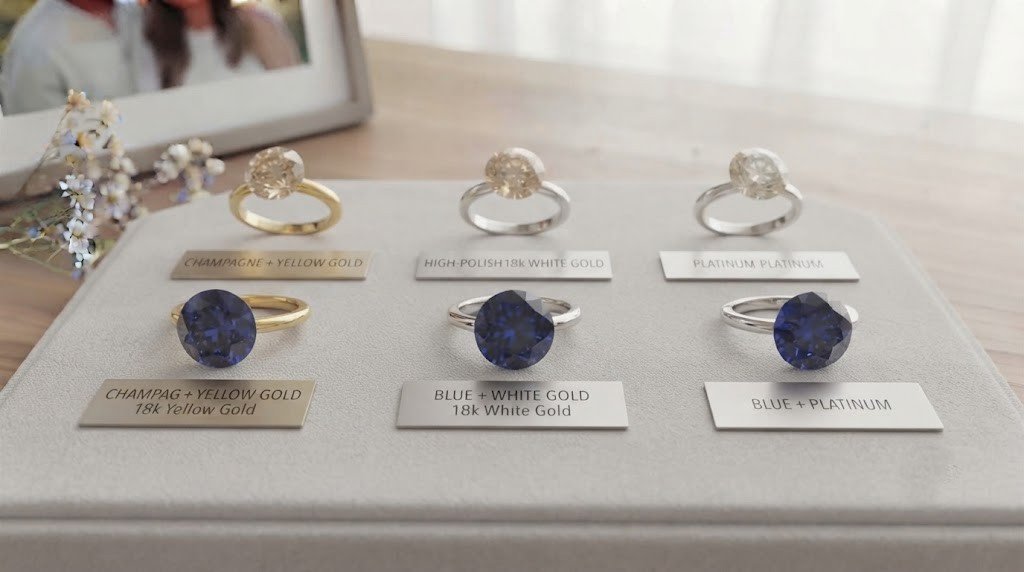
Brother memorial diamond settings also change how the stone’s color reads. White metals tend to keep a stone looking cooler, while yellow and rose gold tend to warm it. The post on what color his memorial diamond is likely to be explains why most stones lean yellow, blue or champagne, which is worth knowing before you choose a metal. Ask the jeweler to show you samples in more than one finish.

How Should Stone Size and the Wearer’s Routine Shape the Setting?

Memorial stones are generally offered from about 0.10 carats up to 5 carats or more. A small stone sits comfortably in a flush band, a bezel pendant or a stud. A larger one gives more design freedom but also sits higher and is more exposed, so protective brother memorial diamond settings matter more as size grows.

Matching the setting to the wearer’s day

Picture the actual person wearing the piece and walk through an ordinary week with them in mind. Questions that help:

  1. Do they work with their hands, tools, machinery or patients?
  2. Does their workplace limit rings or dangling jewelry for safety or hygiene?
  3. Do they wear gloves for long stretches, which can catch on prongs?
  4. Do they swim, climb, lift weights or play contact sports?
  5. Will they wear the piece daily or only for occasions?

Someone who wrenches on engines, nurses, cooks professionally or teaches toddlers may be happiest with a flush band or a bezel pendant worn under clothing. A person who wears jewelry mostly for occasions can choose more open brother memorial diamond settings without as much risk. None of this follows from gender; it follows from routine.

Who the piece is really for

The wearer might be you, another sibling, his partner or children if he had them, a parent, or a close friend. Let that person’s habits and taste lead, since they are the one who will live with the piece. If you are still working out where to begin, the post on where to start when choosing a memorial diamond for your brother sets out the first decisions in order.

Which Pieces Can Hold His Diamond?

A wide range of wearers choose from the same handful of pieces. The table below covers seven common forms and which brother memorial diamond settings tend to suit each.
PieceSetting styles that often suit itPractical notes
Ring or bandFlush, bezel, half-bezel, prongMost exposed to knocks; protective styles favored for daily wear
PendantBezel, prong, half-bezelLess exposed; chain strength and clasp matter
CufflinksBezel, flushWorn occasionally; suits a pair if two stones are grown
Lapel pin or tie pinBezel, prongSecure backing is important; easy to lose if loose
BraceletBezel, flushWrists knock surfaces often; a bezel helps
EarringsBezel, prongA matched pair means two stones; ask about color matching
Loose stone in a boxNoneNo wear risk; can be set later

A loose stone is a real option

Keeping the stone loose, in a box with its paperwork, is a perfectly good choice. It removes wear risk and leaves brother memorial diamond settings open for later, or for someone in the next generation.

Less common objects

Families sometimes ask about setting a stone into a watch, a keychain, a compact mirror, a belt buckle, a guitar pick case or a tool handle. Some of these may be possible and some may not; it depends on the object, the stone size and the jeweler’s skill. Bring the object to a jeweler and ask whether it can hold a diamond securely, what the risks of loss are, and whether the work could be undone later. Treat brother memorial diamond settings in unusual objects as a conversation with a skilled jeweler, not a standard order.

Can You Engrave Brother Memorial Diamond Settings?

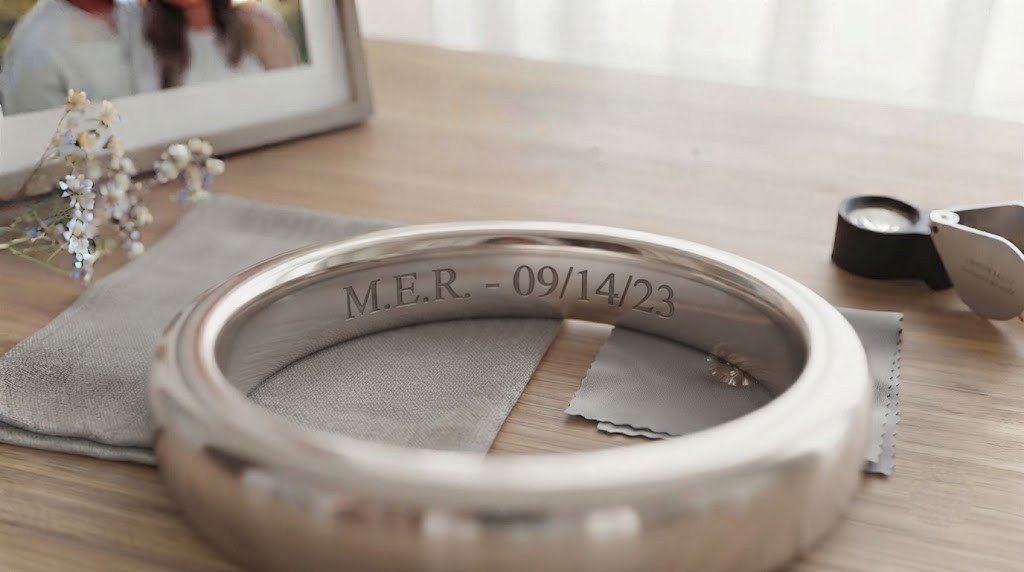
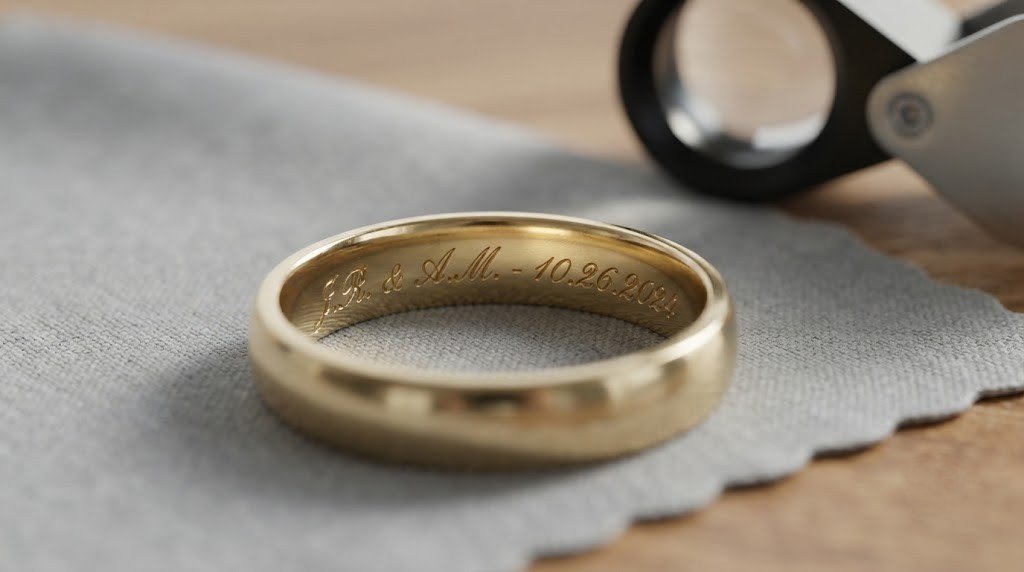
Most brother memorial diamond settings in metal can carry an engraving, typically on the inside of a band, the back of a pendant or the reverse of a cufflink. Common choices include his initials, dates, a nickname only the family used, coordinates of a place he loved, or a short line in his own handwriting if a jeweler can reproduce it.

Practical engraving questions

  • How many characters fit in the space available?
  • Is the engraving done by hand, by machine or by laser?
  • Will resizing a ring later affect an inside engraving?
  • Is engraving priced separately from the setting?

Beyond brother memorial diamond settings themselves, some providers offer a tiny laser inscription on the diamond’s girdle, such as an identification number. Whether that is available, and what it can say, is a question for the provider. Engraving is usually an add-on priced on top of the stone and setting.

How Can Family Members Coordinate Matching Pieces?

When several people want something to wear, coordinated brother memorial diamond settings can tie the pieces together without making them identical. Siblings might choose the same metal and bezel style in different forms, such as a ring for one and a pendant for another. If he had a partner or children, they may want pieces too, and a shared engraving or matching metal can link everyone’s jewelry.

Because only part of the ashes or hair is typically used, several stones can often be grown from the same shared material. Each stone may come out in a slightly different tone, so ask the provider how they handle a matched set. The post on how several relatives can each receive a stone walks through dividing material.

Who decides about his ashes

Decisions about his ashes rest with whoever has authority under the law of your state and any written wishes he left. Depending on the state and his situation, a spouse or partner, adult children or parents may come before a sibling. If someone else holds that authority, a respectful first step is to ask them whether a small portion could be set aside. Hair kept at home can be a simpler route, but personal belongings may count as part of his estate, so speak with whoever is acting as executor. For the conversation itself, the post on raising a memorial diamond with the rest of the family offers gentle ways in.

Can Brother Memorial Diamond Settings Be Resized or Changed Later?

Usually, yes, with some limits, and it is worth asking about before brother memorial diamond settings are made. A ring in platinum or gold can generally be resized a few sizes up or down, though rings with stones set all the way around, or made in some alternative metals, may not resize easily. A bezel or flush band may need more careful work than a plain shank.

Resetting into a new piece

A diamond can usually be removed from one setting and placed into another. That makes it possible to move a stone from a ring into a pendant if the wearer’s work changes, or to reset it for a new generation decades from now. Brother memorial diamond settings are not a permanent decision unless you want them to be.

When resetting, keep the grading report and any authenticity certificate with the stone. Ask the jeweler how they will document the stone while it is out of its mount, and whether they work on it in front of you.

What Should You Ask About Care, Insurance and Appraisal?

A diamond’s hardness makes cleaning simple, but brother memorial diamond settings need regular attention. Questions worth asking your jeweler:

  • How often should prongs, bezels or clasps be checked?
  • What cleaning method is safe for this metal and design?
  • Should the piece come off for gym work, swimming or gardening?

Insurance and appraisal

Coverage for brother memorial diamond settings and the stone they hold varies by insurer and policy, so ask an insurance agent whether the piece can be added to an existing policy or needs separate coverage, and what documentation they require. If an insurer asks for an appraisal, a jeweler or independent appraiser can explain what theirs covers. An independent grading report, typically an optional, separately priced add-on, can support that paperwork. GIA’s guide to diamond quality factors explains what a grading report records. Keep in mind that an appraisal value for insurance is not the same as a resale price.
What Do Brother Memorial Diamond Settings Add to Cost and Timing?

Settings are typically priced separately from the loose stone, along with grading reports, engraving and fancy cuts. Across the industry in 2026, loose memorial stones run roughly $1,500 to $3,500 at about 0.10 to 0.25 carats, roughly $5,000 to $15,000 at 0.5 to 1 carat, and roughly $20,000 to $75,000 or more at 2 to 5+ carats. These are general ranges, not Memorial Diamond’s prices.

The cost of brother memorial diamond settings themselves depends on the metal, the design, the labor involved and the jeweler. Ask for an itemized quote that separates stone, setting, engraving and any grading. A fuller look at how a brother memorial diamond is priced helps with budgeting.

Timing the setting

The stone’s growth sets most of the schedule, typically 6 to 10 months. How long setting and engraving take afterward depends on the jeweler and the design, so ask them directly rather than assuming a timeframe.

Frequently Asked Questions

Which brother memorial diamond settings are safest for someone who works with their hands?

Flush and full bezel styles are generally the most protective brother memorial diamond settings because metal surrounds the stone’s edge. A flush band leaves almost nothing to catch. Talk with a jeweler about the wearer’s actual tasks, and check any workplace rules about rings before choosing.

Is a prong setting a bad idea for a memorial diamond?

Not necessarily. Prongs show the most light of all brother memorial diamond settings and suit pieces worn carefully. They expose more of the stone and can bend or loosen over time, so schedule regular checks with a jeweler if a prong ring will be worn often.

Can one memorial diamond be split between two pieces of jewelry?

A single finished diamond is not usually divided. If two people want pieces, the usual route is growing two stones from shared material, which providers can often do. Ask the provider about matching tones and pricing for a pair before you commit.

Can his diamond be moved to a different setting years from now?

Generally yes. A jeweler can usually remove a diamond and reset it into a new piece, which lets a ring become a pendant or a stone pass to someone else. Keep the grading report and certificate with the stone whenever it is reset.

Pairs need two diamonds, and growing both from his shared material keeps them connected to him. Two stones can differ slightly in tone, so ask the provider how they approach a matched pair and whether they can describe the likely difference.

Do we need insurance before wearing his memorial diamond every day?

That depends on your circumstances and your insurer. Valuable jewelry can often be added to a policy, sometimes with an appraisal. Ask an insurance agent what coverage options exist and what documents they need before the piece goes into daily wear.

Final Thoughts on Setting Your Brother’s Diamond

The setting is the part of a memorial piece that meets the world every day. Choosing brother memorial diamond settings around the wearer’s real life, rather than around a picture in a catalog, gives the stone the best chance of staying safe for decades.

Nothing about the first setting has to be final. A ring can become a pendant, a loose stone can wait in its box, and a piece can be rethought when the next person in the family is ready to wear it.

Learn More About Planning a Piece Around His Diamond

Talk With Memorial Diamond

If you are weighing brother memorial diamond settings, or still deciding whether a stone is right for your family, Memorial Diamond is glad to talk it through at memorialdiamond.us. You do not need a design in mind to start.

Tell us who will wear the piece and how they spend their days, and we can work through the options together at whatever pace suits you.

Word count: 3,026 words · Reading time: about 15 minutes
Memorial Diamond Settings and Jewelry Ideas for a Sister

Memorial Diamond Settings and Jewelry Ideas for a Sister

You might already picture the piece she would have worn without a second thought, or you might have no picture at all yet. Sister memorial diamond settings come down to three practical decisions: how the metal holds the stone (bezel, prong, halo, flush or tension), which metal surrounds it, and how often it will be worn. For a small stone worn every day, bezel and flush settings offer more protection; prongs and halos favor sparkle and visibility.

sister memorial diamond settings

Which Sister Memorial Diamond Settings Hold a Small Stone Securely?

Before comparing sister memorial diamond settings, it helps to know what a setting actually does. It is the part of a ring, pendant or earring that grips the diamond, and it determines how much of the stone meets light, how much is exposed to knocks, and how easily the piece catches on sweaters, hair or bag straps. These details matter for a memorial stone because replacing it may not be possible in the same personal sense as replacing an ordinary piece of jewelry.

Five styles cover nearly all the sister memorial diamond settings you are likely to encounter:

  • Bezel setting: A thin rim of metal wraps around the entire edge of the stone.
  • Prong setting: Small metal claws, usually four or six, rise up and hold the stone at several points.
  • Halo setting: A ring of smaller accent stones circles the center diamond, which itself sits in prongs or a bezel.
  • Flush setting, sometimes called gypsy setting: The stone is sunk into a prepared seat so its top sits level with the surrounding metal surface.
  • Tension setting: The band’s pressure holds the stone between two ends of metal without traditional claws.

None of these settings is the right answer for every family. The best of the sister memorial diamond settings for you is the one that matches how you will live with the piece. Someone who wears a ring every day and has busy hands needs different protection from someone who plans to wear a pendant on anniversaries and keep it safely stored the rest of the year.

How Do the Five Sister Memorial Diamond Settings Compare?

The table below compares five common sister memorial diamond settings against the questions jewelers usually hear first. Treat it as the start of a conversation rather than a final verdict. Craftsmanship, metal thickness, stone shape and the quality of the setting can change the result for an individual piece.

SettingHow It Holds the StoneProtection From KnocksLight and SparkleSnag RiskFit for a 0.10–0.25 Carat Stone
BezelA continuous metal rim surrounds the edge.High; the edge is covered by metal.Less light enters from the sides, but the top remains visible.Very lowA strong option; the rim can make a small stone look larger.
ProngFour or six claws grip the stone at points.Moderate; the edges and claws remain exposed.High; light can enter from many angles.Moderate to highGood when the prongs are fine and low profile.
HaloAccent stones circle the center stone, which is held separately.Moderate; the accent stones add their own small risks.High; the surrounding stones add sparkle.ModerateGood for visibility, although the center stone shares attention.
FlushThe stone sits level with the metal surface.Very high; very little sticks out.Lower; mostly the top of the stone catches light.Very lowGood for a wider band; it may be less visible on a narrow band.
TensionThe band holds the stone between two ends through carefully engineered pressure.Variable; it depends heavily on precise design and fit.High; open sides allow light through.Low to moderateMore challenging; small stones require precise engineering.

Across these five sister memorial diamond settings, one pattern stands out. Styles that show off a diamond’s light tend to expose more of its edge, while styles that protect the edge may hide some light. The choice involves a trade-off, and only you know which side matters more for her stone.

Which Metals Suit Sister Memorial Diamond Settings Best?

Metal influences sister memorial diamond settings as much as the setting style does because it affects durability, comfort, color and cost. Common choices include platinum, white gold, yellow gold and rose gold, with sterling silver and titanium appearing in some designs.

Platinum is dense and tends to wear slowly, which is one reason jewelers often suggest it for prongs in everyday jewelry. White gold is gold alloyed with whiter metals and is commonly plated with rhodium. That finish may need renewing over time. Yellow gold and rose gold offer warmer tones. Higher-purity gold is softer than lower-purity gold, so ask how the recommended karat will perform with your expected daily wear.

The stone’s color is the other half of the pairing. Memorial diamonds may finish with a yellow, blue or champagne tint rather than a colorless appearance. The final color cannot reliably be determined from the source material alone. Our guide to the colors a sister’s stone can come out explains more about these possibilities, while this section focuses on the metal.

Once the finished color is known, you can choose a metal that complements it. Some people like yellow gold beside a yellow or champagne stone for a warm, unified look. Others prefer a white metal beside a blue stone. Holding the finished diamond against several sample bands is a practical way to see which pairing you prefer.

If you are choosing sister memorial diamond settings before the stone is finished, ask whether the jeweler can wait to confirm the metal until the diamond arrives. A short wait may help you choose a combination you will be happy with for years.

How Should Sister Memorial Diamond Settings Fit a 0.10–0.25 Carat Stone?

Memorial diamonds are offered in a range of sizes, from around 0.10 carats to more than 5 carats in some industry offerings. Smaller stones can be a suitable starting point. Entry-size stones of roughly 0.10–0.25 carats may cost around $1,500–$3,500 as an industry range, with settings, engraving and grading potentially priced separately. These figures are general estimates, not a quote or published price from Memorial Diamond. Confirm current prices and available sizes directly with the provider.

A small stone is no less meaningful, but its size affects how the mount should be designed. When comparing sister memorial diamond settings for a smaller stone, consider the following points:

  1. Keep the metal proportionate. Heavy prongs or a thick bezel can overwhelm a small stone. Ask about fine, tapered prongs or a thin, polished bezel rim.
  2. Use the setting to frame, not hide. A slim bezel or delicate halo can help the stone appear more prominent without increasing its carat weight.
  3. Mind the height. A low-profile mount offers more protection and catches less often on clothing. A taller mount may allow more light in but leaves the stone more exposed.
  4. Match the band width to the style. Flush settings need enough metal around the stone, so they often suit wider bands. Prongs and bezels can work well on finer bands.
  5. Think about the cut. Round stones are generally straightforward to set securely at small sizes. Shapes with pointed ends, such as pear or marquise, need suitable protection at those points.

That is why slim bezels and fine halos deserve a close look among sister memorial diamond settings for smaller stones. When thoughtfully designed, a small memorial diamond can look deliberate and refined rather than understated. The setting should complement the stone instead of competing with it.

Will the Piece Be Worn Every Day or Kept for Certain Days?

How often you plan to wear a piece is one of the clearest ways to narrow down sister memorial diamond settings. Diamond ranks 10 on the Mohs scale of mineral hardness, the top of that scale, which means it resists scratching from everyday materials better than any other gemstone. Hardness, however, is not the same as toughness. A sharp blow at the wrong angle, such as a ring striking the edge of a countertop, can still chip a diamond, particularly near a thin edge or pointed tip.

Expected wear should therefore influence your choice:

  • Everyday rings: Rings experience frequent impacts. Bezel and flush styles are often more protective options. If you prefer prongs, ask a jeweler whether six prongs and a lower profile would suit the stone.
  • Everyday pendants: Pendants generally sit away from many direct knocks, making prong and halo designs practical options to discuss with a jeweler.
  • Earrings: Earrings may catch on hair and clothing more often than they experience hard impacts. Bezel-set studs can be a simple, secure choice.
  • Occasional jewelry: A piece worn on her birthday, at family gatherings or on other meaningful days can use a more open setting if you are comfortable with its protection needs. It will spend more time stored safely when not worn.

Some families choose two pieces: one sturdy design for everyday wear and another more open, sparkling design for special occasions. Whether more than one stone can be grown from the available material, and who each stone will belong to, are questions worth discussing early. Our article on several relatives receiving a stone from one sister explains considerations around sharing.

Can the Diamond Go Into a Piece of Jewelry She Owned?

Among the many sister memorial diamond settings you could consider, one of the most personal options is a piece she already wore. Her ring, locket or pendant might be reworked to hold the new stone. A skilled bench jeweler can often assess whether this is possible, although the jewelry may need a new setting head, a new bezel or a reworked seat. Older or thin metal may need repair first.

Before taking her jewelry to a workshop, check who currently owns or holds it. Jewelry she owned may form part of her estate, and rules vary by location. The executor or person managing her affairs should agree before the piece is altered. A conversation in advance can prevent a more difficult disagreement later, especially if several relatives feel connected to the same item.

If the original stone is removed to make room for the memorial diamond, decide in advance what should happen to it. It could be reset in another piece, returned to the person who holds the jewelry, or kept with the memorial diamond’s paperwork.

Can Sister Memorial Diamond Settings Be Changed Later?

In most cases, a memorial diamond can be removed from one setting and reset into another, just like other diamonds. That means your first choice does not necessarily have to be permanent. A pendant chosen today might become a ring for another family member decades from now, depending on the design and the stone.

Some sister memorial diamond settings are easier to change than others. Prong mounts are often relatively straightforward for a qualified jeweler to open and close. Bezels may be carefully worked to release the stone. Flush settings involve metal shaped around the stone and can require more care. Tension bands depend on precise fit and engineering, so a stone from one design may not fit another.

If you decide to reset the diamond, follow three practical steps:

  • Ask the jeweler how the stone will be documented and tracked while it is outside the setting. Ask whether you can be present during the process.
  • Keep the provider’s origin certificate and any grading report with the stone’s records rather than relying on the old mount to identify it.
  • Ask for the stone to be examined under magnification before and after the work so any existing marks or damage can be recorded.

What Can Be Engraved, and Where Does It Go?

Engraving can be added to many sister memorial diamond settings, but the available space depends on the design. Common locations include the inside of a ring band, the back of a pendant, the area beneath a bezel cup, and the inner face of a locket. These surfaces can be small and curved, so the setting influences how many characters will remain readable.

Hand engraving and laser engraving create different appearances, and some fonts remain easier to read as metal wears. Ask to see a sample at its actual size before committing. Some providers may also offer a small laser inscription, such as a reference number, on the diamond’s girdle. Whether that service is available and what it costs are questions to ask the provider rather than assume.

A thoughtful engraving can complement a quiet design. For example, a plain, sturdy bezel ring with her initials inside can feel personal without drawing attention from strangers. That may be the right choice for someone who prefers to keep the meaning of the jewelry private.

What Should You Ask a Jeweler and an Insurer First?

A good jeweler should welcome questions, and a memorial stone deserves careful handling. Bring this checklist to any consultation about sister memorial diamond settings:

  1. Have you set memorial or lab-grown diamonds before, and can I see examples of your work?
  2. Which setting would you suggest for a stone of this size and shape, considering how it will be worn?
  3. How will you identify, hold and track the stone while it is in your workshop?
  4. Who is responsible if the stone is damaged during the setting process?
  5. What maintenance do you recommend, and how often should prongs or the bezel be checked?
  6. Can the piece be resized or reset later, and what risks would that involve?

Insurance is a separate conversation. A memorial diamond may have a market value, but its personal meaning cannot be replaced. Policies differ, so ask your insurer whether a memorial stone can be listed on a policy or rider, what type of appraisal is required, and whether the jewelry setting and stone are assessed together or separately.

Ask how a loss or chip would be handled, too. An independent grading report that references GIA’s diamond quality factors may be optional and priced separately, but an appraiser or insurer could ask for documentation. A licensed insurance agent can explain the terms and limits of your particular policy.

When Should You Start Planning the Setting?

Growing a memorial diamond typically takes around 6–10 months after a provider receives the material, with some stones taking up to about 12 months, particularly larger stones or specialty colors. These are general industry timelines rather than a guaranteed Memorial Diamond turnaround. Ask your chosen provider for its current schedule and process.

This timeline gives you room to plan without rushing. It can make sense to narrow down your preferred sister memorial diamond settings early and finalize specific details later.

At the beginning, decide on the form, such as a ring, pendant, earrings or another keepsake, along with the broad setting style and budget. Once the finished stone arrives with its exact color, shape and measurements, the jeweler can confirm the metal, seat dimensions and engraving options. To understand the stages involved, read the timeline for a sister’s memorial diamond.

If you are still weighing jewelry styles, our guide to ideas for rings, pendants and keepsakes made with her stone explores more options. If you have not yet chosen a provider, begin with where to begin when choosing a memorial diamond for your sister. For a broader look at size and budget, read what a sister memorial diamond typically costs.

Whatever you choose, sister memorial diamond settings are not a test with one correct answer. They are a way of deciding how close to keep her stone and how you want to carry it.

Frequently Asked Questions

Can a local jeweler set a memorial diamond that was grown by a different company?

Usually, yes. A memorial diamond is a real diamond, so an experienced bench jeweler can assess and set it. Bring the origin certificate, ask how the stone will be tracked in the workshop, and confirm who is responsible if anything goes wrong during setting.

Does a lab-grown memorial diamond need a different kind of setting from a mined one?

No. A memorial diamond is a real diamond, so a jeweler can use setting styles suitable for other diamonds. What differs for many families is the personal importance of the stone and the difficulty of replacing it with another stone that carries the same meaning. That makes protective choices and careful workshop tracking worth discussing.

Can siblings choose different settings for stones grown from her ashes or hair?

Yes. Sister memorial diamond settings can differ from one piece to another. One sibling might prefer a bezel ring, while another chooses a prong pendant. Agreeing in writing who owns each stone before it is grown can help avoid confusion later.

Should the origin certificate stay with the jewelry?

Keep the provider’s origin certificate with the jewelry’s important records, along with any grading report and appraisal. If the stone is reset or passed down, the paperwork should travel with it so the records remain together.

How often should a memorial diamond setting be checked?

There is no single schedule that suits every piece, so ask your jeweler what they recommend for the specific design and how often you wear it. Daily-wear rings may need closer attention than occasional jewelry. Have a piece examined promptly if a prong feels rough, catches on fabric, or the stone appears to move.

Is a bezel too plain for a memorial diamond?

Not at all. Among sister memorial diamond settings, a bezel can be slim, polished, textured or scalloped. It frames a small stone and may make it appear larger. Some people choose it precisely because it feels calm, secure and quietly personal.

Final Thoughts on Choosing a Setting for Her Stone

There is no single correct way to wear a diamond grown in part from the material of someone you love. A plain bezel ring worn every day and a sparkling halo pendant brought out on her birthday can both honor her, just in different ways.

If you weigh protection against light, think honestly about daily wear, and leave room to reset the stone later, the sister memorial diamond settings you choose can fit your life and your preferences. That fit matters more than any trend.

Learn More About Sister Memorial Diamonds

Talk With Memorial Diamond

If you are thinking about how her stone might be set, or want to talk through which sister memorial diamond settings may suit the way you plan to wear it, visit Memorial Diamond. You can explore the available information and ask questions at whatever pace feels right for you.

Memorial Diamond Settings and Jewelry Ideas for a Daughter

Memorial Diamond Settings and Jewelry Ideas for a Daughter

A loose memorial stone resting in its box can feel like a sentence left unfinished. Daughter memorial diamond settings finish it, and the choice is mostly mechanical: bezel and flush settings guard the stone’s edge best for daily wear, prongs let in more light but leave more exposed, platinum and 14k gold hold up longest, and almost any piece can be reset later for another relative.

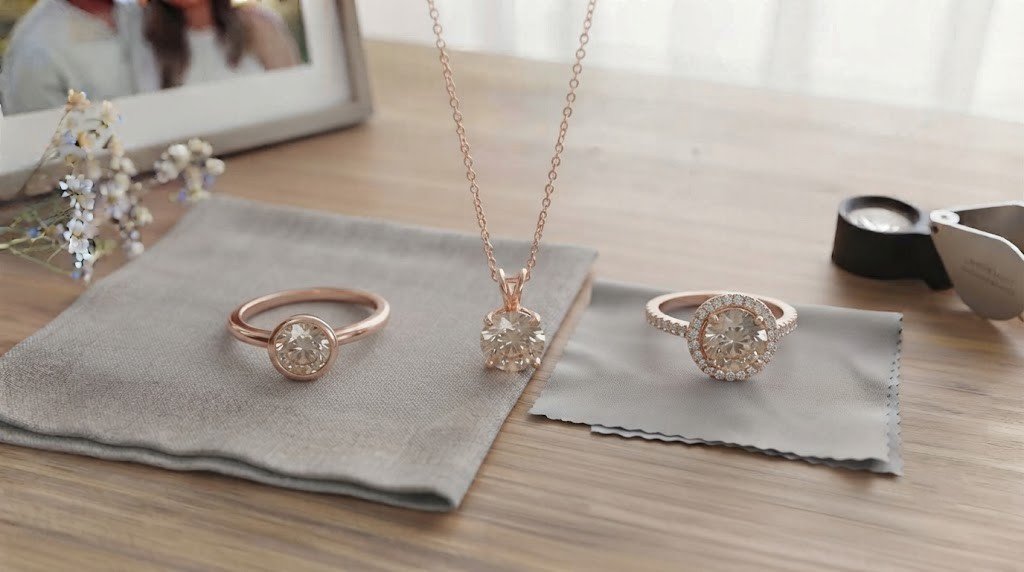
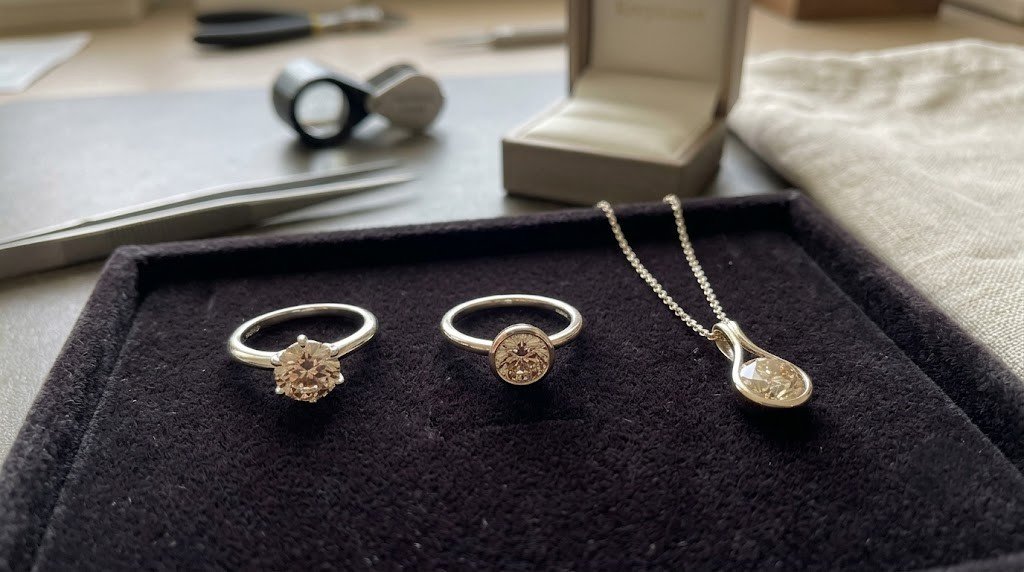
Daughter memorial diamond settings laid out on a jeweler's tray: a bezel ring, a six-prong ring and a pendant, each holding a champagne-toned stone

Why Do Daughter Memorial Diamond Settings Matter More Than Style?

A jeweler can replace a chipped stone in an ordinary engagement ring with one phone call. Nobody can do that here. The carbon recovered from her ashes or hair went into one particular crystal, and any replacement would be a different stone. That is why daughter memorial diamond settings deserve more thought than appearance alone.

Style still matters; it simply comes later. Security and edge protection come first, then whether the piece can change with its wearer.

Once the mechanics are settled, the rest, shape, metal color, chain or finger, becomes something a family can enjoy deciding rather than dread. The broader menu, from rings to keepsake boxes, lives in a separate guide to rings, pendants and keepsakes. This page stays with how daughter memorial diamond settings actually hold, protect and age.

Nothing here assumes anything about who she was or what she liked to wear. Good daughter memorial diamond settings are chosen for the person who will wear the piece, whether that is her mother, her father, her partner, a sibling or her own adult child.

Bezel or Prong: Which Protects a Memorial Stone Better?

A bezel protects better; prongs show more of the stone. For anyone weighing daughter memorial diamond settings, that short answer may settle the question on its own.

Diamond is rated 10 on the Mohs scale of mineral hardness, so very little will scratch it. Hardness is not toughness, though: diamond can split along cleavage planes if struck sharply at the wrong angle, and chips usually start at the girdle, the thin outer rim of a cut stone. A doorframe or countertop is the classic culprit.

A full bezel wraps a continuous band of metal around that girdle, so a blow lands on metal instead of crystal and the stone sits lower. A half bezel covers two sides and leaves the other two open, trading a little protection for a little more light.

Prongs grip the stone at four or six points, letting in more light so it looks larger and livelier. The cost is exposure: the girdle is open between the claws, which can bend or thin over years of ring wear. Six prongs spread the load and keep the stone seated if one fails; four show more diamond but leave less margin.

The wearer decides this more than the stone does. Among daughter memorial diamond settings, a bezel or flush mount usually suits someone who works with their hands, lifts weights, gardens or simply wants to forget the ring is there. Where daughter memorial diamond settings use prongs, they make more sense for a pendant worn under a collar, or a ring kept mostly for occasions.

How Do Seven Common Setting Styles Compare?

Seven styles cover nearly everything a jeweler will suggest for a single memorial stone. Use the table to narrow daughter memorial diamond settings to two or three candidates before you start looking at finished designs.

Setting styleHow it holds the stoneEdge protectionLight and visibilityResizing or resetting laterOften suits
Four prongFour metal claws over the girdleLowHighestStone releases easily; worn claws can be retippedPendants, occasional wear rings
Six prongSix claws spreading the loadLow to moderateHighReleases easily; more claws to inspectRings worn often, larger stones
Full bezelContinuous metal rim around the girdleHighestModerate; stone sits lowerResetting takes more bench workDaily wear rings, active wearers
Half bezelMetal on two sides, open on twoModerate to highGoodModerate effortRings and bracelets needing balance
Flush or gypsyStone sunk into a drilled seat, level with the surfaceHighestLower; mainly the top showsHarder; surrounding metal must be reworkedBands, signet rings, cufflinks
TensionStone held by spring pressure between two metal endsModerateVery highUsually cannot be resizedContemporary designs, careful wearers
HaloCenter stone ringed by small accent stonesModerateVery high; stone reads largerModerate; accents need checkingSmaller stones wanting more presence

Edge protection means the memorial stone itself; halo accents can be replaced without the same weight. Resetting is always possible in principle. What differs between daughter memorial diamond settings is bench time and cost. Ask about both before you commit to any of the daughter memorial diamond settings that would be hard to undo.

Which Metals Hold Up Best in Daughter Memorial Diamond Settings?

The metal carries the stone, absorbs every knock and decides how often the piece needs a jeweler’s attention. Here is how the usual options behave in daughter memorial diamond settings:

  • Platinum dense, naturally white and very durable; scratched metal is displaced rather than lost, so prongs keep their mass. Heavier and generally pricier.
  • 14k gold a harder wearing alloy than higher karat gold and a frequent choice for rings worn every day, in yellow, white or rose.
  • 18k gold richer color and higher gold content, but softer, so claws and thin bands wear faster.
  • White gold usually plated with rhodium for brightness; the plating wears through and is typically redone every year or two.
  • Palladium a lighter member of the platinum family, white all the way through, though fewer jewelers work with it routinely.
  • Sterling silver affordable and handsome for pendants, but soft and prone to tarnish, with prongs that bend readily.

A practical rule for daughter memorial diamond settings is to put the strongest metal where the wear is. A ring takes far more punishment than a pendant, so platinum or 14k gold earns its price there, while a pendant worn under clothing can sit comfortably in 18k gold, or even silver, inside a sturdy bezel.

Chains matter too: a thin one is an easy way to lose a pendant, so ask for a cable or wheat chain with a lobster clasp and have it checked with the setting.

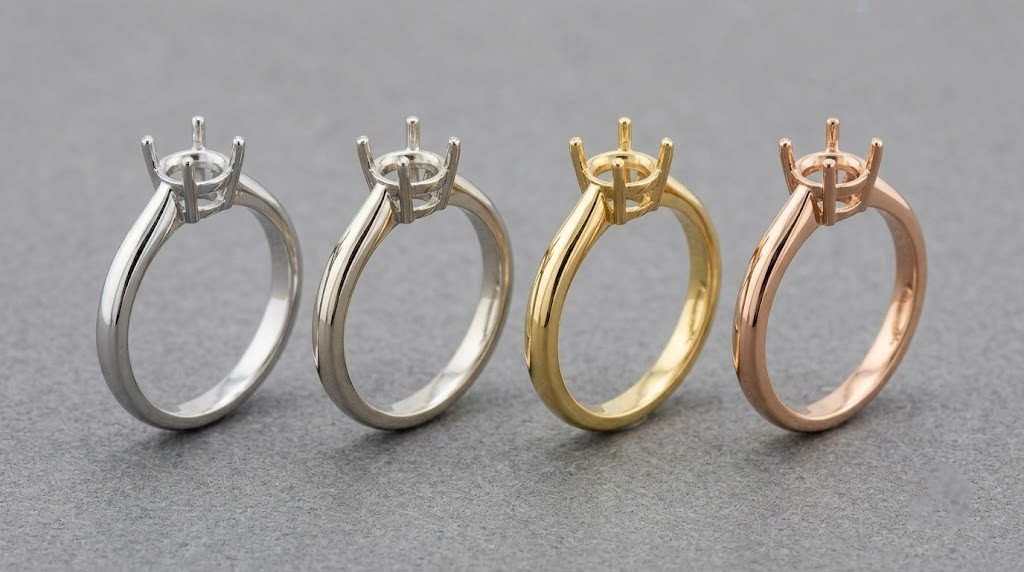
Four plain ring mounts in platinum, white gold, yellow gold and rose gold lined up side by side | Stock acceptabl

How Do Stone Size and Color Shape the Choice?

Size and color are the two things a family cannot fully control in advance, and both affect which daughter memorial diamond settings will flatter the finished stone.

Size. Memorial diamonds are generally offered from about 0.10 carats to 5 carats and beyond, and growth time in the press, not the quantity of ash or hair, determines carat weight. A round stone of 0.10 to 0.25 carats measures roughly 3 to 4 millimeters across, and it often looks best in daughter memorial diamond settings that add presence, such as a bezel or a halo. Half carat to one carat stones suit prongs, a bezel or a flush band equally well. Larger stones sit higher and catch on fabric, so a lower profile helps. Price climbs steeply with size, and how carat, color and grading move the total is worth understanding before a setting is added on top.

Color. Trace elements present during growth set the tone: nitrogen leans yellow, boron leans blue, and a colorless stone needs both absent plus extra processing. Memorial stones tend toward yellow, blue and champagne, and nobody can tell from the source material which one will come back. That is the strongest argument for choosing the metal after the stone exists.

Once you can see it, a few general pairings hold. White metals tend to keep a blue stone cool and a near colorless stone bright; yellow gold warms whatever it holds, deepening yellow or champagne; rose gold sits in between. A closed back bezel can darken a stone slightly by blocking light from beneath.

None of this is about her; it is about the actual stone and the person who will wear it. What range of color to expect has its own guide. When you finally compare daughter memorial diamond settings against the finished diamond, ask the jeweler to hold it against each metal in daylight.

Which Daughter Memorial Diamond Settings Work for Everyday Wear?

Most can, provided the setting is chosen with daily life in mind and the piece is looked after. These seven habits keep a set memorial stone safe for the long run:

  1. Choose a protective mount for rings. Of the daughter memorial diamond settings available, bezel, half bezel and flush mounts shrug off knocks far better than tall prongs.
  2. Take rings off for heavy work. Weights, gardening and moving furniture are classic ways to chip a stone or bend a claw.
  3. Keep it away from chlorine. Pool and hot tub water, and household bleach, can weaken gold alloys over time.
  4. Have the setting checked at least once a year. A jeweler can test prongs and inspect a bezel in minutes; every six months suits a ring worn constantly.
  5. Clean it gently. Warm water, mild soap and a soft brush are enough; ask before using an ultrasonic cleaner, since vibration can loosen a worn mount.
  6. Store it on its own. Diamond scratches other jewelry, so a soft pouch or lined compartment keeps everything intact.
  7. Keep the paperwork with the piece. The origin certificate, any grading report and the jeweler’s receipt belong together, where another family member could find them.

None of this should make the piece too precious to wear. Some families describe the daily contact, a thumb turning a ring, as the part they value most, and well chosen daughter memorial diamond settings let that continue for decades.

Should the Finished Piece Be Appraised and Insured?

Usually it is worth doing, though for a different reason than ordinary jewelry. Insurance can pay money or fund a comparable stone; it cannot return her carbon. A policy on daughter memorial diamond settings and the stones they hold can cover the financial value; whether it would also fund a new stone from retained material is for the agent and provider to answer. Ask the provider, in writing, whether anything you sent is retained and on what terms.

Two options worth asking about are a scheduled item on a homeowner’s or renter’s policy and a standalone jewelry policy. Insurers usually want a recent appraisal and, ideally, an independent grading report; how gemologists describe cut, color, clarity and carat is the vocabulary an appraiser will use. An in house origin certificate records where the carbon came from and says nothing about quality.

Questions to put to an insurance agent rather than a jeweler:

  • Does the policy pay replacement cost or actual cash value?
  • Is there a deductible on jewelry claims?
  • Is unexplained loss, often called mysterious disappearance, covered?
  • How often should the appraisal be updated?

Terms vary by insurer and state. Photograph the piece and keep copies of the paperwork outside the house.

Can a Ring Be Resized or the Stone Reset Later?

Usually, yes, and that flexibility is a good reason to treat daughter memorial diamond settings as something that can change. The stone will outlast any one mount, and quite possibly any one wearer.

Resizing. Most plain gold and platinum bands can be taken up or down a size or two. Eternity bands with stones all the way around, tension designs that depend on the band’s spring, and some patterned shanks resist it. If the ring may be handed on someday, a plain or partly set band keeps the door open.

Resetting. A memorial stone can move from a pendant into a ring, or from a parent’s ring into a younger relative’s pendant decades later. Among daughter memorial diamond settings, prong styles release a stone most easily; bezels and flush mounts take more bench work, because metal has to be opened, but a skilled jeweler can manage both.

A note about heat. Jewelers often use a torch for sizing and repair. If the stone’s color was produced by post growth irradiation, which some providers offer for colors such as red, green or black, strong heat can alter some treated colors. Tell the jeweler what the stone is and how its color came about, and ask that it be removed before any torch work.

Whatever daughter memorial diamond settings the stone passes through over the years, keep the provider’s documentation with it, and ask each jeweler to note on the receipt that a memorial diamond was handled.

Which Daughter Memorial Diamond Settings Suit Each Family Member?

When more than one stone is grown, it is often possible to divide one source of ashes or hair between several relatives. Each person may want something different. Daughter memorial diamond settings chosen for each wearer’s real life get worn; ones chosen only so everything matches can end up in a drawer.

WearerPieces worth consideringSetting points to weigh
A parent who wears a ring dailySolitaire or bandBezel or flush; platinum or 14k gold
A parent who prefers not to wear ringsPendant, lapel pin or keepsake charmBezel pendant on a sturdy chain
Her spouse or partner, if she had oneRing worn beside or instead of a wedding band, or a pendantLow profile that sits next to an existing band
A siblingPendant, cufflinks, signet ring or braceletFlush or bezel for daily wear
Her adult child, if she had childrenPendant now, ring laterProng mount that resets easily
A grandparentPendant or broochLightweight metal, secure clasp

Families sorting out daughter memorial diamond settings for several people sometimes settle on one shared detail, the same metal, or an engraved date inside each band, and let everything else differ.

A pair of earrings needs two stones, and two stones grown separately may not match in tone, since color cannot be predicted from the source; a jeweler can design around a slight difference. Stones for several relatives may also finish at different times, so how long each one is likely to take is worth knowing before anyone plans to hand them out together.

What Should You Ask a Jeweler Before the Stone Is Set?

Memorial Diamond Settings and Jewelry Ideas for a Daughter

Some providers set the stone themselves; other families take the loose diamond to a local jeweler they already trust. Either works if whoever handles it knows it cannot be replaced.

Before any of the daughter memorial diamond settings you are considering is made, ask whether the work happens on the premises, who handles the diamond and whether it is insured while there. Ask them to measure the stone in front of you, and what warranty covers their workmanship.

If you are still comparing providers, a guide on where to start covers that decision first. Choosing daughter memorial diamond settings goes more smoothly once the stone itself is real and in your hands.

Frequently Asked Questions

What is the most protective setting for a memorial diamond?

Among daughter memorial diamond settings, a full bezel or a flush mount gives the most protection, because metal covers the girdle where chips usually begin. Both suit rings worn every day. Prongs show more of the stone but leave its edge exposed, so they suit pendants better.

Should the metal be chosen before the diamond is finished?

It is safer to wait. Color cannot be predicted from her ashes or hair, and a yellow, blue or champagne stone can look quite different against white or yellow metal. Decide on the setting style early if you like, then confirm the metal once the stone exists.

Can a memorial diamond chip or crack?

Yes, although it is uncommon. Diamond resists scratching better than any natural material, but a sharp blow at the wrong angle can chip it, usually along the girdle. Picking daughter memorial diamond settings with protection in mind, such as a bezel or flush mount, reduces that risk.

Is sterling silver strong enough for a memorial ring?

Silver is soft and tarnishes, and silver prongs bend more readily than gold or platinum ones. It works well for a pendant inside a sturdy bezel. For a ring worn daily and holding an irreplaceable stone, platinum or 14k gold is the more durable choice.

Can her stone be moved into a different piece later?

Usually, yes. Prong mounts release a stone easily, while bezels and flush settings take more bench work. Tell the jeweler it is a memorial diamond, mention whether its color was produced by irradiation, and ask that it be removed before any torch work begins.

Does a memorial diamond need its own insurance?

It is worth discussing with an insurance agent. A scheduled item on a homeowner’s or renter’s policy, or a standalone jewelry policy, is common. Insurers usually want an appraisal and ideally a grading report. Coverage terms vary by insurer and state, so confirm the details directly.

Can two stones from the same source become matching earrings?

They can be set as a pair, but they may not match exactly. Each stone’s color is set by trace elements during its own growth, so two stones from the same source can differ in tone. A thoughtful jeweler can design the pair so any difference looks intentional.

Final Thoughts on Choosing a Setting for Her Stone

It can feel strange to think about claws and karats when what you are holding is part of someone you love. The mechanical questions turn out to be a kindness: once the stone is protected and the mount can change with its wearer, you are free to choose the rest with your heart.

The best daughter memorial diamond settings are rarely the most elaborate. They are the ones that let the stone be worn, checked, cleaned and eventually passed on without anyone holding their breath. If the family is still at the beginning, the complete guide to a daughter ashes diamond covers the steps that come before choosing daughter memorial diamond settings at all.

Learn More About Daughter Memorial Diamond Jewelry

Talk With Memorial Diamond

If you would like to talk through daughter memorial diamond settings with someone before deciding, Memorial Diamond is glad to help at memorialdiamond.us. A conversation about metals, mounts and what might suit each person in your family is simply that: a conversation, with nothing expected afterward.