

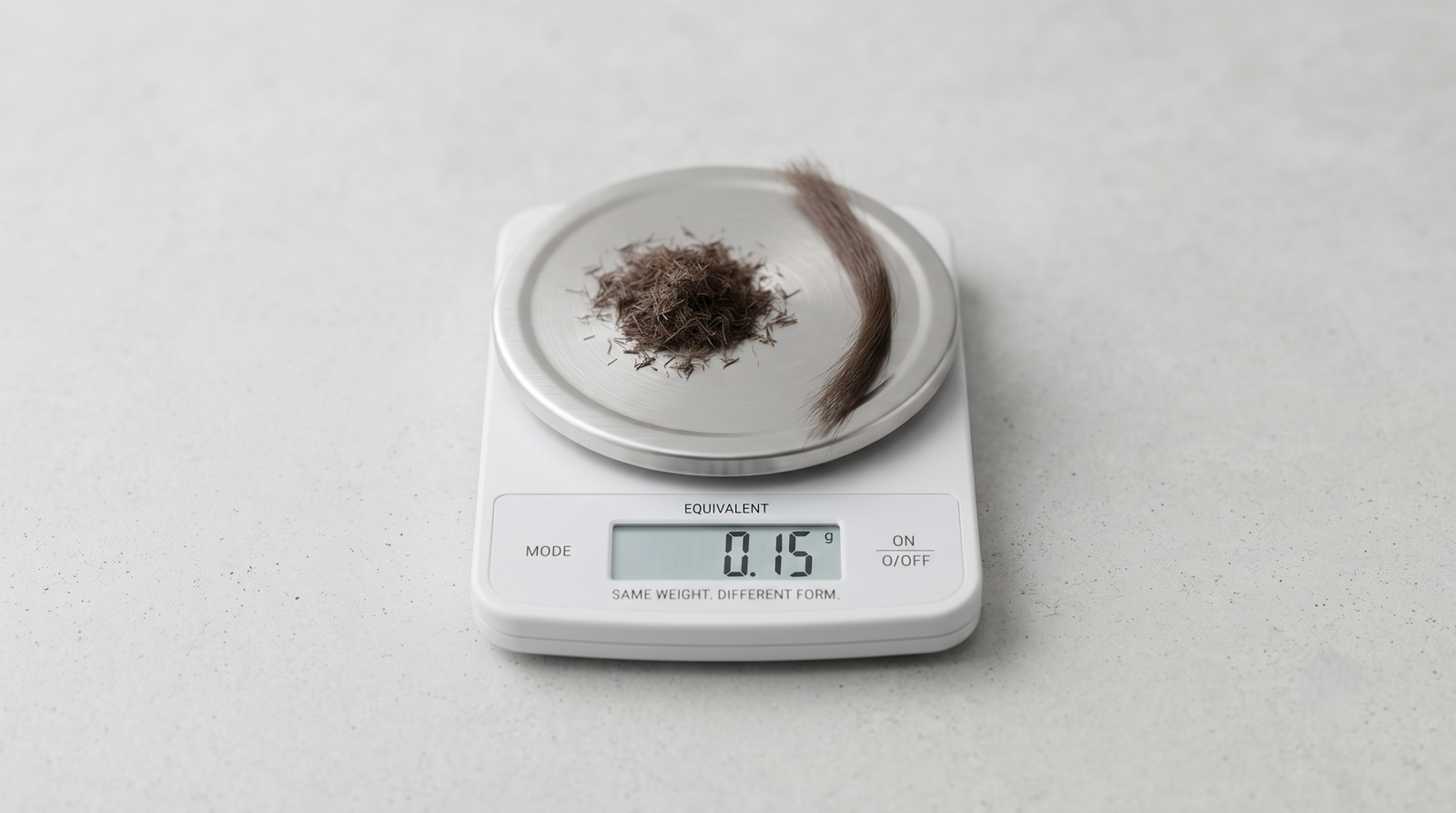
The decision in front of you is probably not which material means more. It is whether the hair you found can contribute enough on its own. A father ashes and hair diamond is a genuine lab grown diamond grown from carbon extracted from both his cremated remains and his hair. The two materials follow separate purification routes before they join one feedstock for growth. Hair contains roughly 50% carbon by weight, while ash contains roughly 0.5% to 4%. That difference means a small amount of hair can contribute meaningful carbon when you combine both materials.
That is the practical reason this route can matter when the hair you found amounts to a beard trim, shaver contents, or a few short clippings rather than a complete lock.
The Decision Is Not Really Ashes or Hair
The two materials arrive under different conditions, and that difference creates the real decision. His ashes are usually easy to identify and measure because a container holds them. You can retain a portion while the family’s wider plan continues. His hair creates more uncertainty. You may have a complete lock, a childhood keepsake, or only a few short clippings.
If the hair you found cannot meet a hair only requirement, combining it with his ashes may still allow that material to contribute carbon. The two materials follow separate extraction routes, so each material contributes according to its own characteristics.
One important rule deserves attention before you speak with a provider. Combining the materials does not automatically lower either material’s own minimum. A combined order does not turn two half portions into one qualifying portion. Ask for the ash minimum and the hair minimum as separate numbers.
For typical material quantities, read how much ash and hair you need for a father memorial diamond.
| What you have of his hair | What combining changes | What remains open |
|---|---|---|
| A full kept lock | His ashes become a second carbon source while both individual routes remain possible | Ordinary provider and process questions |
| A beard trim or shaver clippings | His hair contributes carbon without carrying the entire order alone | Confirm whether the provider accepts very short clippings |
| Hair from a shared brush or razor | Combining does not establish whose hair the material contains | Provenance and provider acceptance |
| A childhood keepsake lock | A small keepsake can join his ashes instead of serving as the only material | Whether you want to use an irreplaceable keepsake |
Why a Beard Trim Is the Real Reason to Combine
Combining makes particular sense when the hair you found is a beard trim rather than a long lock.
Beard, chest, and body hair contain keratin. From a carbon perspective, keratin provides the same basic material as scalp hair. Weight matters more than length. A short pile of beard clippings and a long lock with the same weight contain a comparable amount of carbon.
This distinction matters for fathers who experienced male pattern hair loss. A bald or thinning head does not automatically close the hair route. A beard trim, grooming cut, or other confirmed source may still provide usable material.
Chemistry does not create the main uncertainty here. Provider policy does. A provider may accept short clippings, or it may require a specific minimum. Ask for the answer in writing before you send the material.
Provenance also matters. Hair from a shared brush or razor may contain material from more than one person. No later laboratory step can tell you which person’s keratin entered the sample. The household must establish that history.
If you want to understand the hair only route, read the hair only guide for a father memorial diamond.
How Much of the Stone Is Actually Him?
Enough to make the connection real, but not enough to call the entire stone his carbon.
Cremated remains consist mainly of calcium phosphate, the mineral structure associated with bone. Usable carbon represents roughly 0.5% to 4% of ash by weight. Hair contains roughly 50% carbon by weight.
The laboratory purifies the recovered carbon to around 99.9% or higher before further processing. A diamond of meaningful size needs a workable feedstock volume, so the personal carbon joins supplemental laboratory carbon. Industry wide figures place ash derived personal carbon around 10% to 15% of the finished stone’s mass.
Adding hair can increase the personal carbon contribution, but it does not remove the need for supplemental carbon. The strongest description remains simple: carbon recovered from two different tissues becomes part of one diamond crystal.
For the broader explanation of the category, read what a memorial diamond is.
What Does a Lab Actually Do With Two Materials at Once?
A combined order does not mean that the laboratory throws ashes and hair into the same treatment process. The two materials require separate preparation routes before they meet.
Ash contains bone minerals that require removal. Hair contains keratin and may contain treatment residues that require removal. The laboratory processes each material separately in a controlled oxygen free environment until it reaches the required carbon purity.
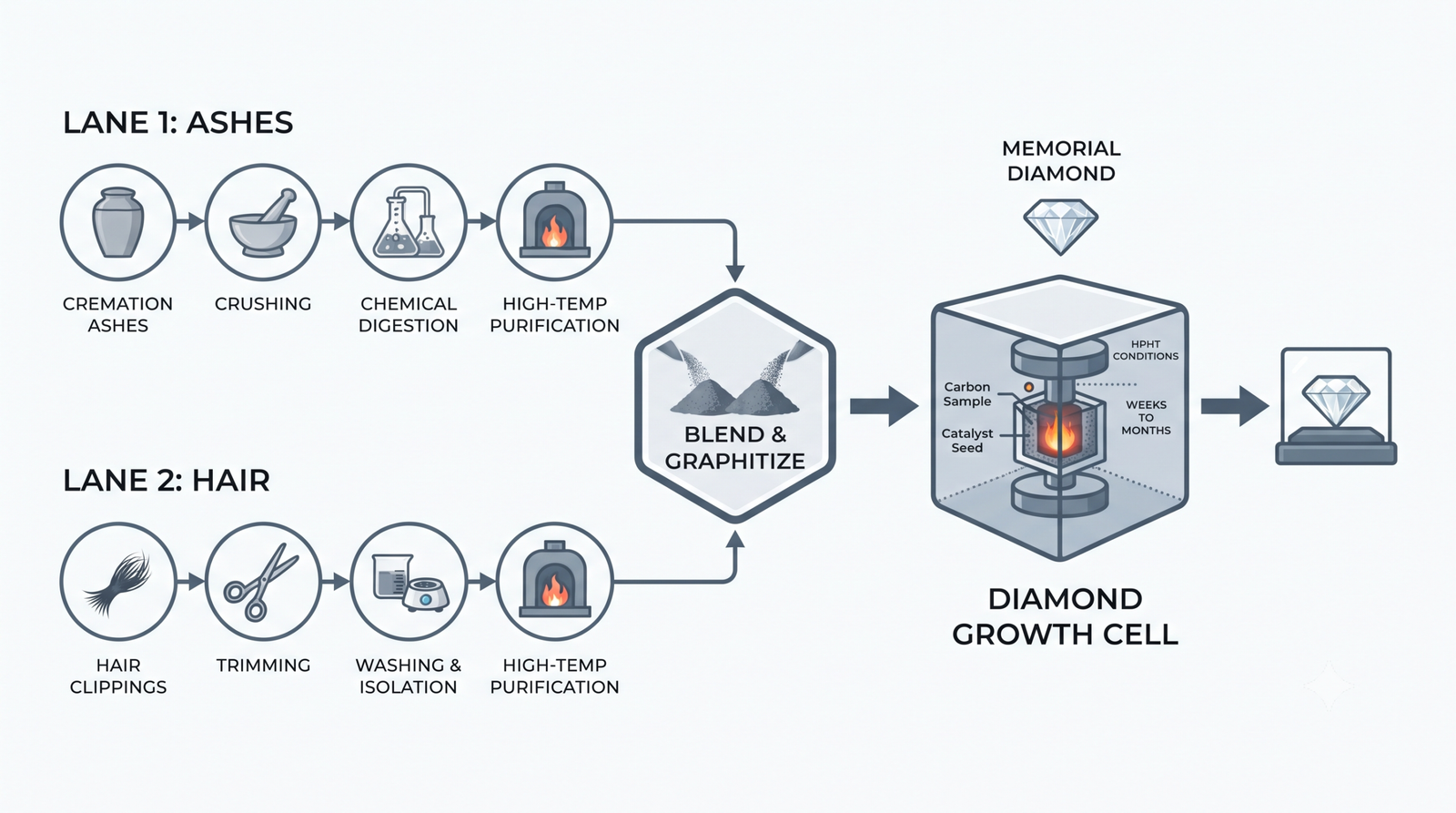
The purified carbon then undergoes graphitization at roughly 2,500 to 2,700°C. After that stage, the two graphite sources can meet in the feedstock used for diamond growth.
The growth stage can use an HPHT press around a diamond seed. Some providers use CVD instead. Industry information describes HPHT as the standard method for memorial work and CVD as a minority route.
Once both materials enter the same growth cell, the process creates one crystal. The finished stone receives one cut, one colour, one carat measurement, and one grading result.
| What stays separate | What follows for you |
|---|---|
| Two material intakes | Ask how the provider records each material |
| Two arrival dates when you ship separately | Ask how the provider handles the production clock |
| Two material minimums | Neither minimum automatically disappears because you combine materials |
| Two extraction yields | Ask what happens if one material produces less usable carbon than expected |
| One merged feedstock and one growth run | The finished stone becomes one crystal with one grading result |
Put the under yield question in writing before anything leaves your hands. Ask whether the provider pauses the order and consults you, requests additional material, or follows another procedure.
For the detailed process of turning both materials into a diamond, read how to turn your father’s ashes and hair into a diamond.
Combining Makes the Colour Less Predictable, Not More
That trade deserves a clear explanation.
Trace elements present during diamond growth influence colour. Boron can produce blue tones, while nitrogen can produce yellow tones. Colourless growth requires very low levels of those elements.
Memorial diamonds commonly show yellow, blue, and champagne tones because organic carbon sources can carry different trace element profiles. A combined order brings two personal organic sources into the same growth process. Each source can carry its own trace element profile, so the final colour can become less predictable.
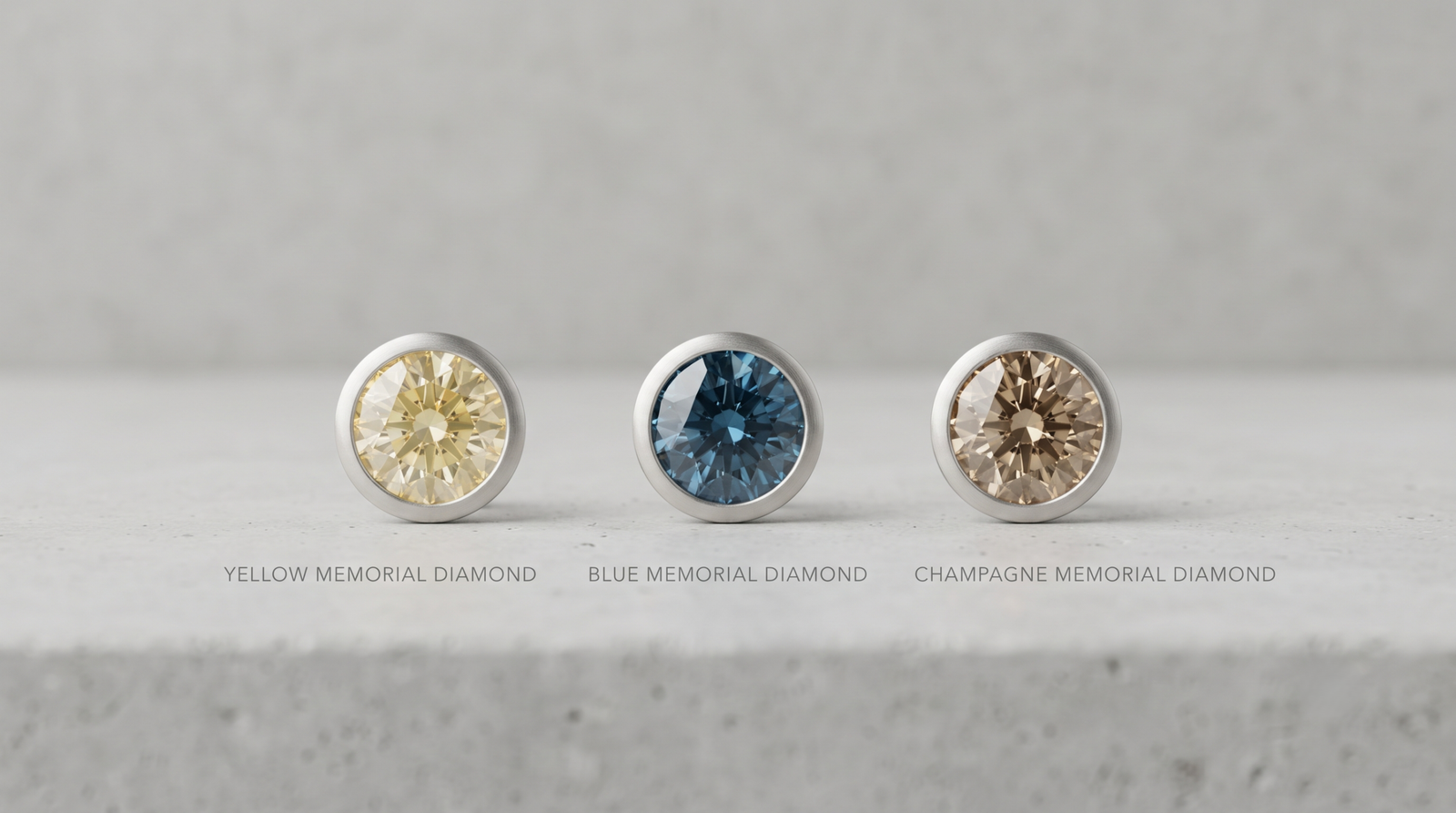
No provider should promise an exact natural colour before growth. You can choose from the colour options that a provider offers, but the exact result depends on the growth conditions and available carbon.
Read what colour a diamond made from your father’s ashes and hair can be for more detail.
How Long Does It Take, and What Will It Cost?
Industry wide production commonly takes about 6 to 10 months from laboratory receipt of the material. Large stones and specialty colours can take longer, with some projects reaching around 12 months. From the first family decision through material collection, shipping, production, grading, and jewellery setting, an overall period of roughly 8 to 14 months can make sense.
Combining two materials does not automatically make the diamond larger or faster to grow. Carat depends on growth time inside the growth equipment rather than simply on how much personal material you provide.
Industry pricing in 2026 commonly falls around $1,500 to $3,500 for 0.10 to 0.25 carats, $5,000 to $15,000 for 0.5 to 1 carat, and $20,000 to $75,000 or more for 2 to 5 carats. These figures represent general industry ranges rather than Memorial Diamond pricing.
Carat, colour, cut, and grading can influence the price. A second material may also require another intake and purification process. Ask the provider whether it charges an additional fee for the second material.
For the cost factors behind a father memorial diamond, read what actually drives the cost of a father memorial diamond.
Settle These Before You Commit, in This Order
| Settle this | Why it sits here |
|---|---|
| Whether the provider accepts combined submissions | A negative answer changes the entire plan |
| Both material minimums separately | You need two numbers rather than one combined assumption |
| Whether his hair clears its own minimum | If it does not, ask whether the provider accepts it as a secondary contribution |
| What happens if the ash lane produces less carbon than expected | You need to know when and how the provider will consult you |
| Whether both materials travel together | Separate shipments can affect the timing of the combined order |
| Carat and colour | These decisions can wait until the material and provider questions have clear answers |
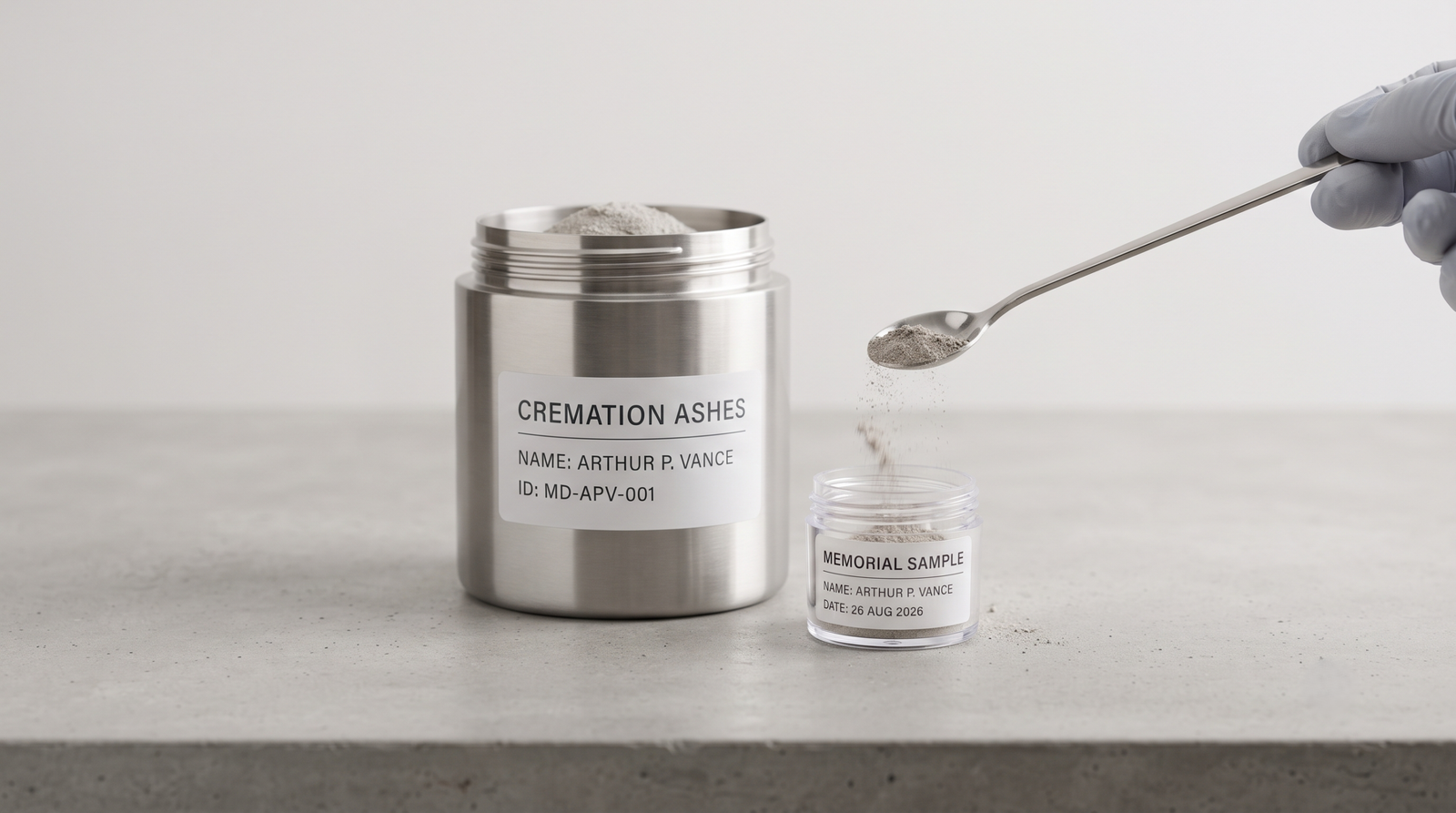
One deadline can override the normal order. If the family has scheduled an interment or scattering, retain the ash portion before that event. Once the ashes enter that final arrangement, the ashes route can close.
Read the ashes only guide for a father memorial diamond for the retention issue.
Frequently Asked Questions
What if the clippings we found weigh less than the stated hair minimum?
Combining does not automatically lower either material threshold. Ask for the hair minimum and ash minimum separately. Then ask whether the provider can accept a smaller hair quantity as a secondary contribution. Confirm the answer before you send anything.
Do we decide how much of each material goes in, or does the lab?
Ask the provider because no universal practice settles this question. The laboratory controls the blend it can process. Whether you can request a particular ratio or simply receive the laboratory’s final process depends on provider policy.
If his ashes yield less carbon than expected, does the order still go ahead?
Ask this before shipping. Cremated remains can produce different carbon yields. A provider may pause the order, request more material, or follow another procedure. The provider should explain its process before you commit the material.
Does using both materials cost more than using one?
Ask for the combined order as a clear line item. Industry pricing usually follows factors such as carat, colour, cut, and grading. A second material also creates another intake and purification stage, so the provider must confirm whether that adds a fee.
Could the two materials become two separate stones instead of one?
That depends on whether each material meets its own minimum without assistance. If both materials qualify independently, you can ask about two separate growth runs. That creates two stones, two reports, and potentially different colours.
Will the grading report record that two materials were used?
A grading report normally describes the finished diamond through characteristics such as carat, colour, clarity, and cut. After the materials merge, the finished crystal does not provide a simple way to identify which atom came from which source. Ask the provider how its chain of custody records the two materials.
Ask What Happens If His Hair Weighs Less Than They Need
This question can reveal how seriously a provider handles a combined order. Ask for the hair minimum, the ash minimum, and the procedure for a hair quantity that falls below the stated threshold.
A clear answer should give you specific numbers and a specific process. If the answer only says that the laboratory can work with the material without explaining the minimum or the next step, ask again.
You can also ask how the provider handles your father’s ashes and hair throughout intake, purification, growth, grading, and return. Those answers help you understand what happens to both materials once they leave your hands.
If you want to understand how a combined stone fits into the final jewellery piece, explore memorial diamond settings and jewellery ideas for a father.
Using His Ashes and Hair in One Memorial Diamond
A combined father memorial diamond can make sense when the ashes provide one source of personal carbon and the hair you found provides another. The strongest reason to consider the option often comes from the hair itself. A small beard trim or short clipping may not meet a hair only requirement, yet it can still represent a meaningful part of what you found.
The important step comes before you choose a carat or colour. Confirm that the provider accepts combined material. Then ask for the ash minimum and hair minimum separately. Confirm how the provider handles short hair, under yield, separate shipments, unused material, and the final records.
Once those questions have clear answers, you can decide whether using both materials in a single stone feels right for your family. The goal is not to use every material simply because you have it. The goal is to create a memorial that carries a genuine physical connection to your father and feels right for the people who will keep it.