
If you are sending both his ashes and a lock of his hair, you have probably already pictured the stone and somewhere in that picture is a quiet question about whether the two will show. A diamond made from your father’s ashes and hair will be one uniform color, most often yellow, champagne or blue, and only rarely colorless. There is no two tone stone, no boundary, no marbling. Both materials become one batch of carbon before growth begins, so one crystal forms with one color. What combining changes is not the appearance. It is the arithmetic underneath it.
Table of Contents
What Does a Diamond Made From Both Materials Actually Look Like?
Like a single source stone, because that is what it is.
His ashes and his hair are purified separately to roughly 99.9%+ carbon, then both pass through graphitization at around 2,500 to 2,700°C. At one step, immediately before or after that, depending on the provider, the two are combined with each other, and with supplemental lab sourced carbon, into one feedstock for one growth cell and one growth run. By the time anything is growing, there is no “ash carbon” and no “hair carbon.” There is carbon.
So a diamond made this way comes out of the press exactly as any memorial diamond does: one crystal, one color, graded on the same color scale gemologists use for every diamond. The sequence itself, collection, purification, growth, cutting, is walked through in how a memorial diamond is made from a father’s ashes and hair.
Why Isn’t the Color an Average of Ashes and Hair?
Because color is not a property either material brings with it. It is a property of the crystal that forms.
Boron pulls toward blue. Nitrogen pulls toward yellow. Both together, in different proportions, produce champagne and brown. Those elements ride into the growth cell on whatever feedstock is in it and then influence the whole crystal as it grows. They do not tint only “their” share of it. Two residue profiles enter one cell. One color comes out.
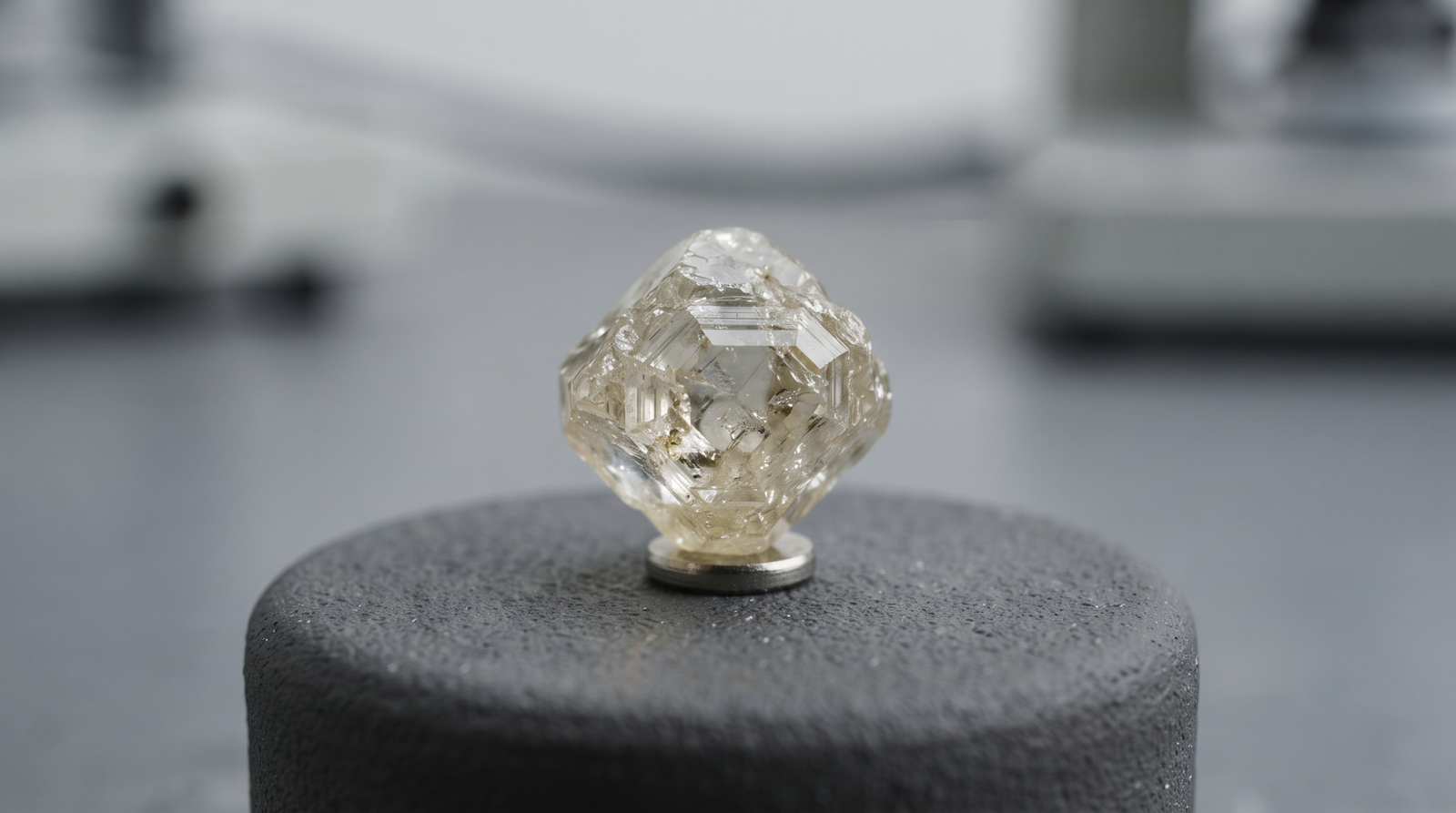
This is also where the honest qualification belongs. His carbon, from both sources together, does not fill that cell. It is blended with supplemental lab sourced carbon, and the personal carbon is a minority of what grows. The industry’s published figure for ash derived stones is roughly 10 to 15% of the finished stone’s mass, varying with stone size and how much material was submitted. No comparable published figure exists for a combined order. Most of what grows is controlled synthetic carbon. Even so, the trace elements arriving on the personal minority are enough to pull a diamond made from real remains away from colorless, which is why the whole category trends the way it does.
Which Five Colors Can You Expect?
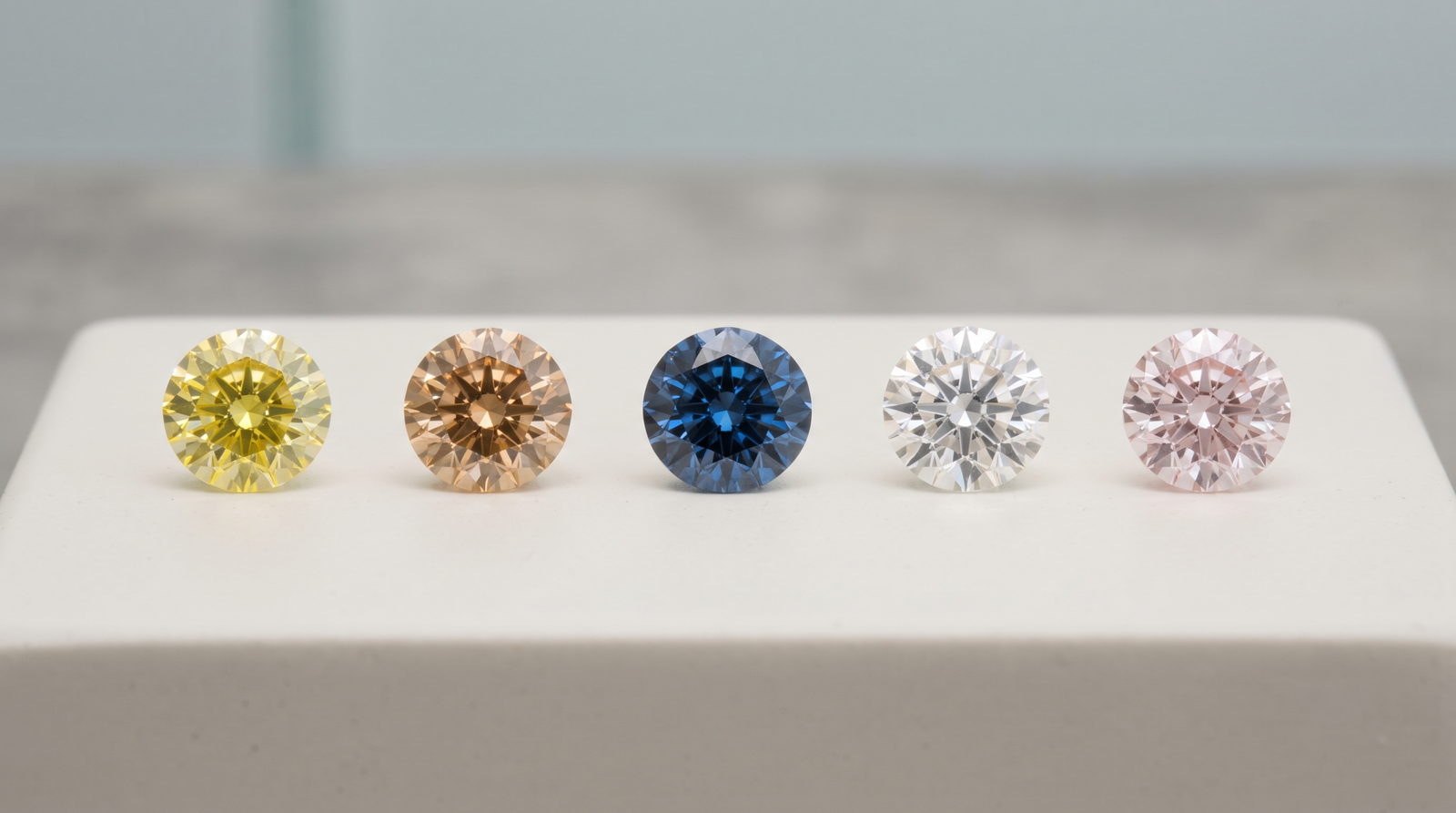
Every diamond made from ashes, hair, or both lands somewhere in the same short range. Here is what each outcome means for a combined order.
| Color | What produces it | What it means for a diamond made from both |
|---|---|---|
| Yellow | Nitrogen present during growth | The most common natural outcome. The two materials do not make it more or less likely. |
| Champagne / brown | Nitrogen and boron together, or nitrogen plus growth structure defects | Frequently what “we’ll let it be whatever it becomes” turns into. |
| Blue | Boron present during growth | Prized, but not orderable on demand from personal carbon alone. Treat it as a hope, not a spec. |
| Colorless | Near total exclusion of both nitrogen and boron | Achievable, but requires additional processing and costs more at the same carat. |
| Red, pink, green, black | Post growth irradiation or treatment after the stone exists | An add on step some providers offer. It acts on the finished crystal, not on the ashes or hair. |
Two things follow from that table. First, the color you receive is chosen from a provider’s menu, not deduced from the materials. Second, the one color decision that genuinely changes the process, colorless, is the one that costs more and takes longer, because excluding trace elements is extra work, not less work. The broader explanation of why memorial diamonds are rarely colorless covers that chemistry for every relationship and material.
Which Material Contributes More to the Color?
Not the heavier parcel, necessarily. This is the part almost nobody expects.
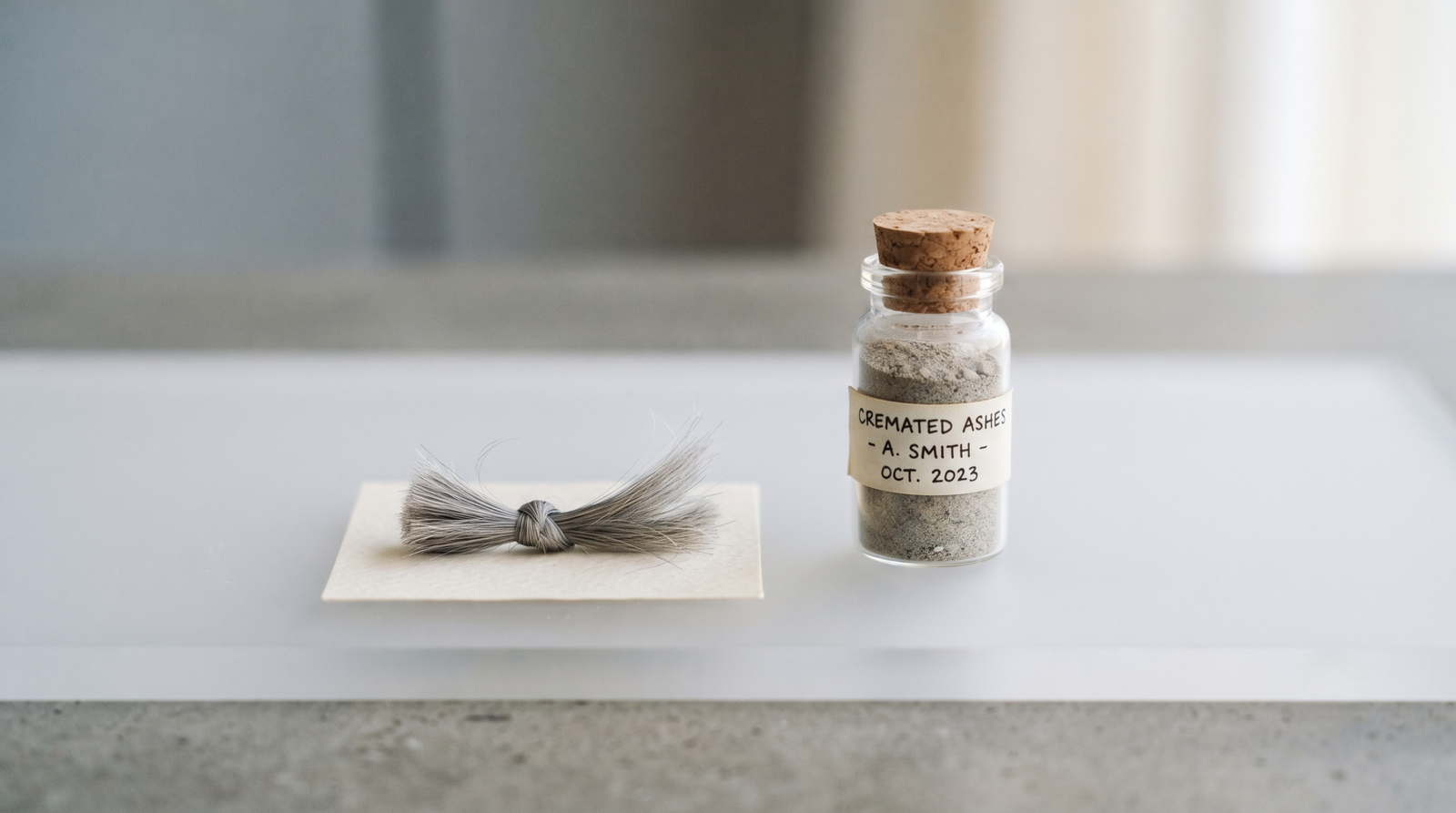
Cremated remains are mostly calcium phosphate. Usable carbon is only around 0.5% to 4% of ash by weight. Hair is built from keratin and is roughly 50% carbon by weight. So a small lock of hair can contribute carbon on the same order as a much larger quantity of ash. A family that sends four ounces of ashes and a single palm sized lock has not necessarily sent “mostly ashes” in any sense a diamond made from them would show.
That matters for expectations in a specific way:
- The ash derived carbon tends to carry more of the mineral and trace element residue that pulls color toward yellow and champagne.
- The hair derived carbon is cleaner by proportion, but it enters the same cell and the same crystal. It does not carve out a paler region.
- Neither source can be pointed to afterward. A diamond made from both is not “his ashes on one side, his hair on the other.” It is one lattice.
If you want to understand the quantities themselves before you decide on a size, how much ash and hair you need for a father memorial diamond is the right place to start.
What Should You Settle Before You Order?
Choosing the color of a diamond made from both materials adds no extra decisions. It adds two questions about the materials themselves. Sort these before you talk to a provider, and the color conversation becomes short.
- Are both materials confirmed usable? Hair treated heavily with dye or relaxer is sometimes declined by providers. Ashes from a very high temperature cremation can yield less carbon. Ask about both rather than assuming.
- Are you choosing a color, or accepting the natural outcome? Providers usually let you either specify a color from their menu or let the diamond made from them grow “as it comes.” The second is often the more affordable path.
- Does colorless matter enough to pay for it? At the same carat, a colorless diamond made from personal carbon costs meaningfully more than yellow, champagne or blue, because of the extra processing.
- Do you want treatment after growth? Red, pink, green or black stones come from a separate irradiation step on the finished crystal. Decide whether that fits what you had in mind.
- Who else in the family will see it? If siblings expect “his color,” agree together what that means, a chosen shade, or whatever the stone becomes.
A working list of questions to ask before turning a father’s ashes and hair into a diamond covers the non color questions alongside these.
Frequently Asked Questions
Will a diamond made from my father’s ashes and hair be two colors?
No. Both materials are purified and combined into one carbon feedstock before growth, so a single crystal forms with a single, uniform color. There is no visible boundary, no marbling, and nothing that indicates two sources once the stone is finished.
What color is most likely if I don’t choose one?
Yellow or champagne. Nitrogen is the most common trace element present during growth, and it produces yellow tones. Combined with other traces it shifts toward champagne and brown. Blue and colorless are less common as unrequested outcomes across the industry.
Can I get a blue diamond made from his ashes and hair?
Sometimes. Blue comes from boron present during growth, which providers can influence but cannot guarantee from personal carbon alone. Ask the provider directly what their process allows. Treat blue as an option on their menu, not something the materials decide.
Does adding hair make the stone whiter than ashes alone?
Not reliably. Hair derived carbon is cleaner by proportion, but it enters the same growth cell and the same lattice as the ash derived carbon, and trace elements affect the whole crystal. A colorless result comes from extra processing, not from mixing the materials.
Why does colorless cost more?
Because it requires excluding nitrogen and boron during growth, which is additional process control on top of the standard run. Across the industry, colorless stones cost meaningfully more than yellow, champagne or blue at the same carat weight.
Will the color change over the years?
No. The color of a diamond made this way is fixed at the point the crystal forms. It does not fade, deepen, or shift with wear, light, or time. A grading report records the color it has, and that is the color it keeps.
How is the color of a diamond made from both materials graded?
On the same GIA style scale as any diamond, D to Z for colorless to tinted stones, and “fancy” descriptors for stronger yellows, blues and other hues. Reputable providers have the finished stone graded by an independent third party lab rather than relying only on an in house certificate.
Final Thoughts on the Color of a Diamond Made From Both
Most families who send both materials are not looking for a two tone stone. They are making sure everything that is left of him goes into the one thing they will keep. The color that comes back, yellow, champagne, blue, or a colorless stone you paid a little more for, will not tell you which parcel did what, because a diamond made from both genuinely does not know. It was one run, one cell, one father. That is not a limitation of the process. It is the point of it.
Learn More About Father Memorial Diamonds
- Father Ashes and Hair Diamond: The Complete Guide
- How a Memorial Diamond Is Made From Your Father’s Ashes and Hair
- Memorial Diamond Colors for a Father: What to Expect
- What Color Will a Diamond Made From Your Father’s Ashes Be?
- What Color Will a Diamond Made From Your Father’s Hair Be?
Talk With Memorial Diamond
If you have both his ashes and his hair and are not sure what to expect, that is a normal place to start. Reach out to Memorial Diamond to talk through what is possible for the materials you have, including which colors a provider can offer for a diamond made from both, which one is simply the natural outcome, and what a colorless stone would add to the cost.