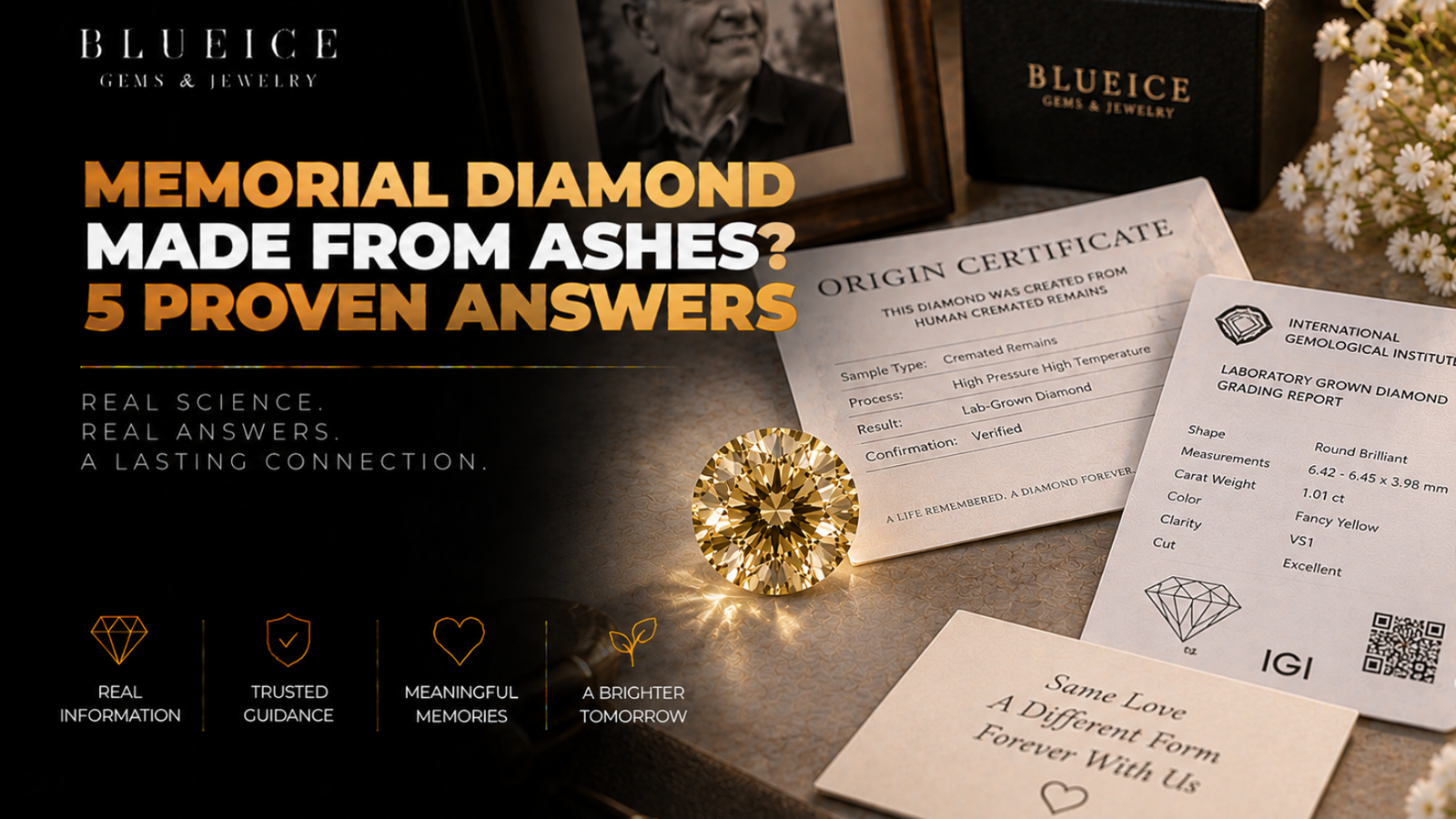
The doubt rarely arrives in your own voice. It comes from his brother, or your daughter, or a friend who read something, and you have to answer it out loud. So here is the answer: yes, a memorial diamond really made from your husband’s ashes is a genuine lab grown diamond containing carbon extracted from his cremated remains, purified, and grown into the crystal itself. It is not ashes sealed in glass. It is also not 100% him, and the honest figure is part of the answer.
Table of Contents
What a Memorial Diamond Really Made From His Ashes Means
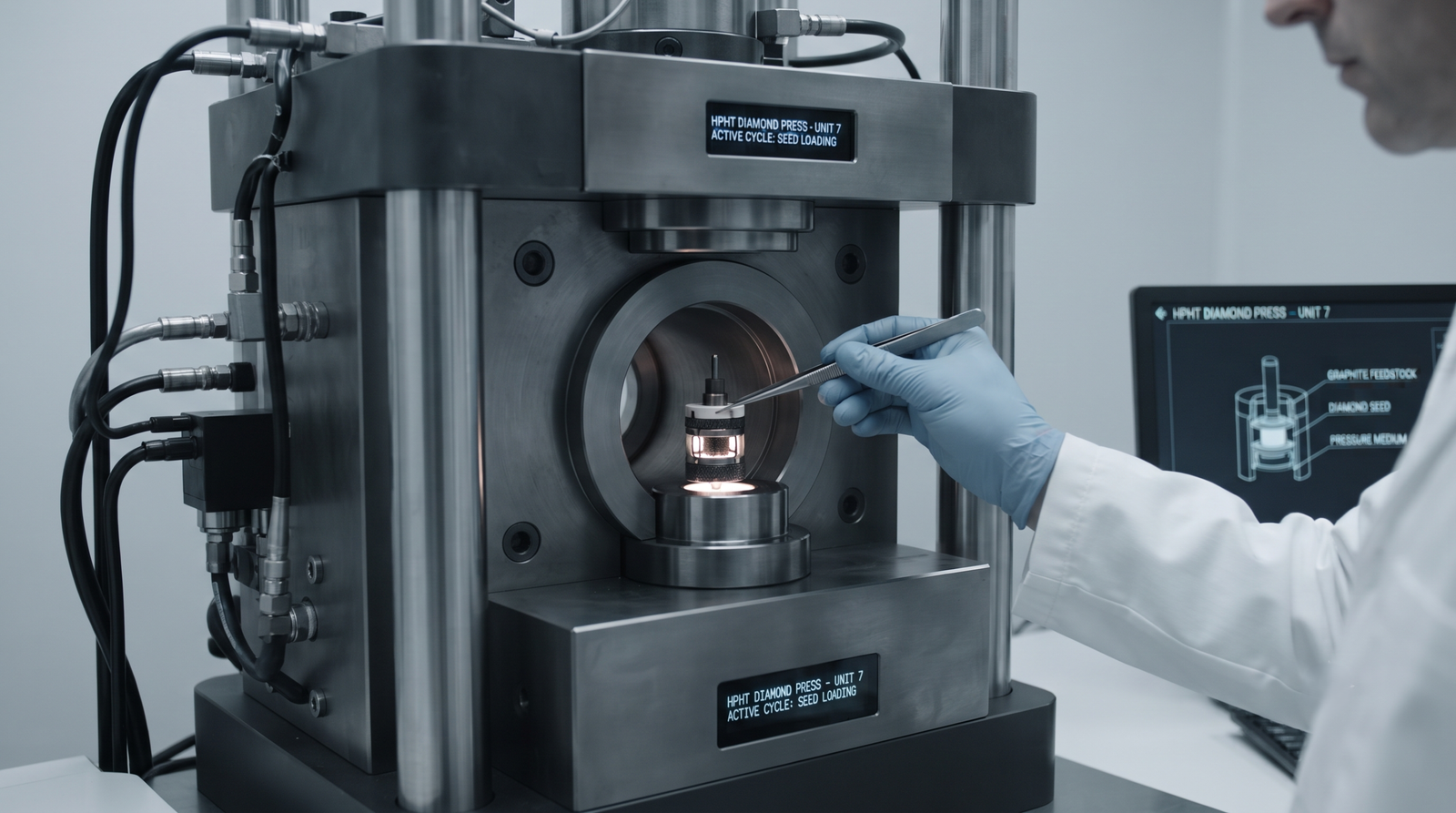
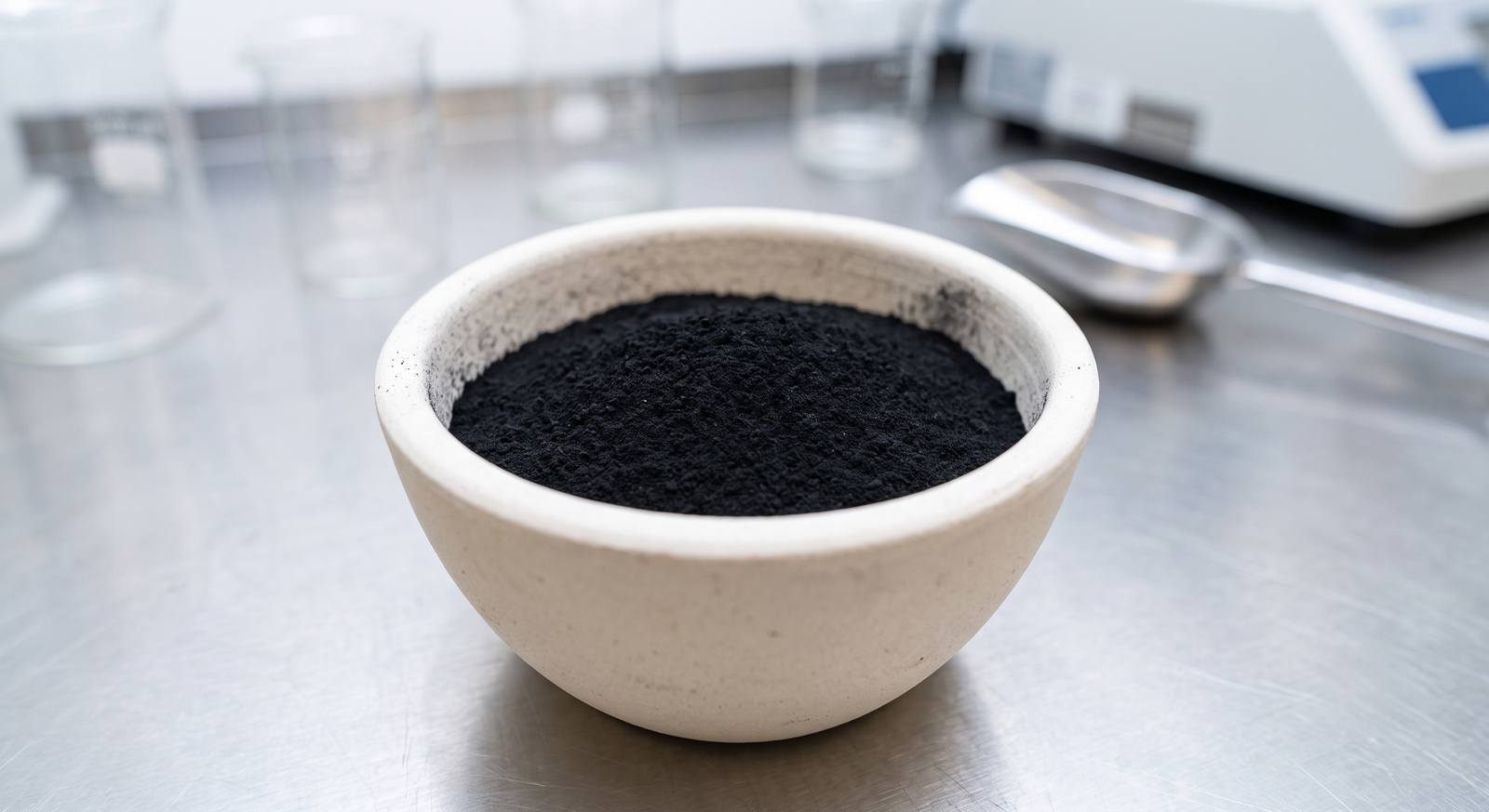
Cremated remains are mostly calcium phosphate, with carbon at roughly 0.5% to 4% by weight. A laboratory extracts that carbon in an oxygen free process, purifies it to about 99.9%, converts it to graphite, and grows a diamond around a seed under the same HPHT or CVD diamond growth conditions used across the lab grown industry. The carbon atoms in the lattice came, in part, from him. That is the sense in which a memorial diamond really made from his ashes is made from him: physically, not symbolically.
How Much of the Stone Is Him?
The claim
Accurate?
The honest version
“It’s 100% his ashes”
No
His ashes yield only grams of carbon; laboratory carbon supplies the rest of the volume
“It’s made from him”
Yes
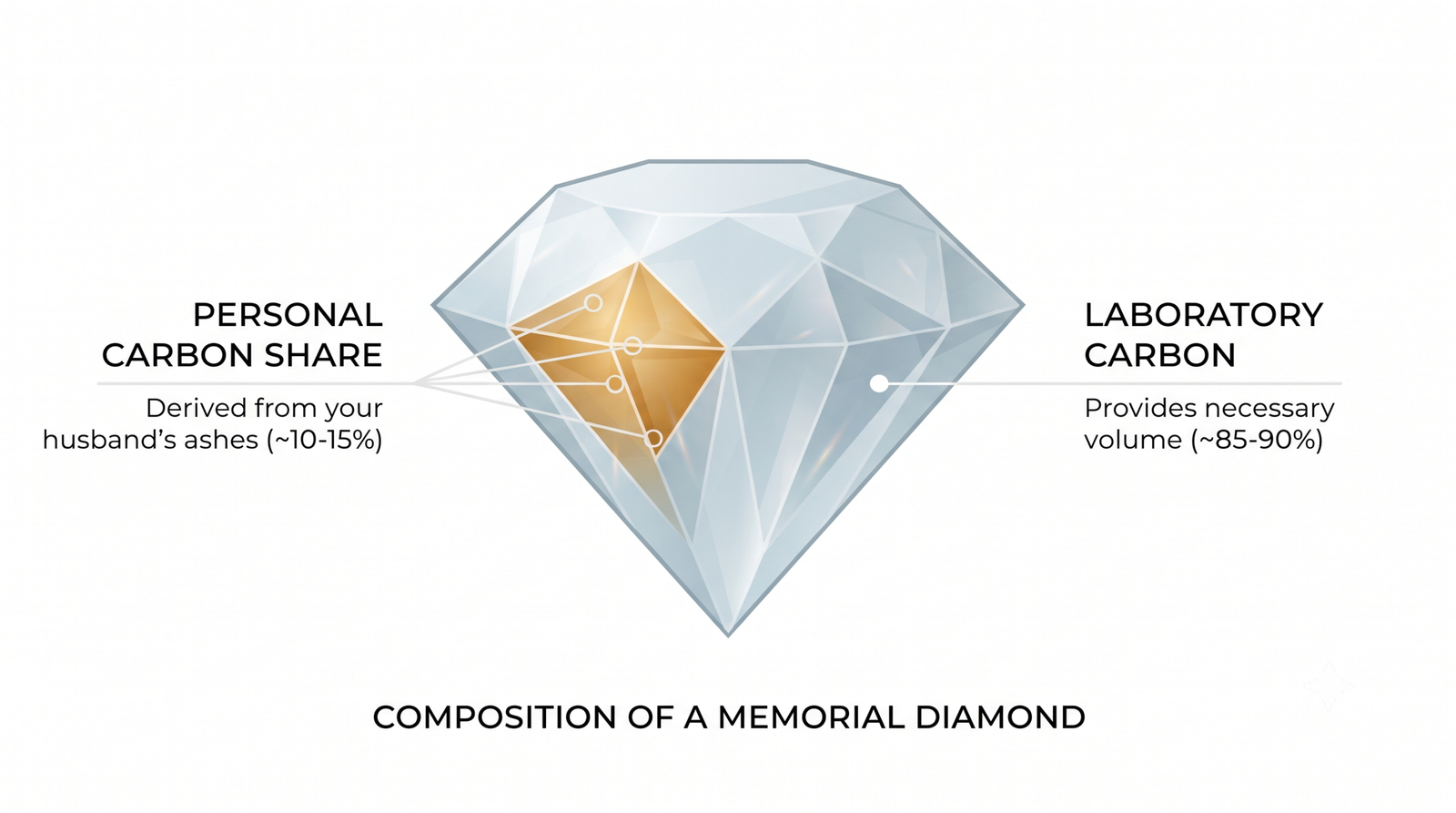
Personal carbon typically makes up around 10% to 15% of the stone’s mass, grown into the crystal
“It’s just ashes in resin”
No
Nothing is sealed inside; the diamond is diamond all the way through
“It’s a real diamond”
Yes
Same hardness, structure, and grading as any lab grown diamond
Some providers cite lower figures for larger stones. Anyone claiming the stone is entirely his ashes is overstating the physics; the full process, stage by stage, is in how a memorial diamond is made from your husband’s ashes.
What You Can Put in Front of a Doubter
Sorted by who is usually asking whether the memorial diamond really made from his ashes is what you say it is:
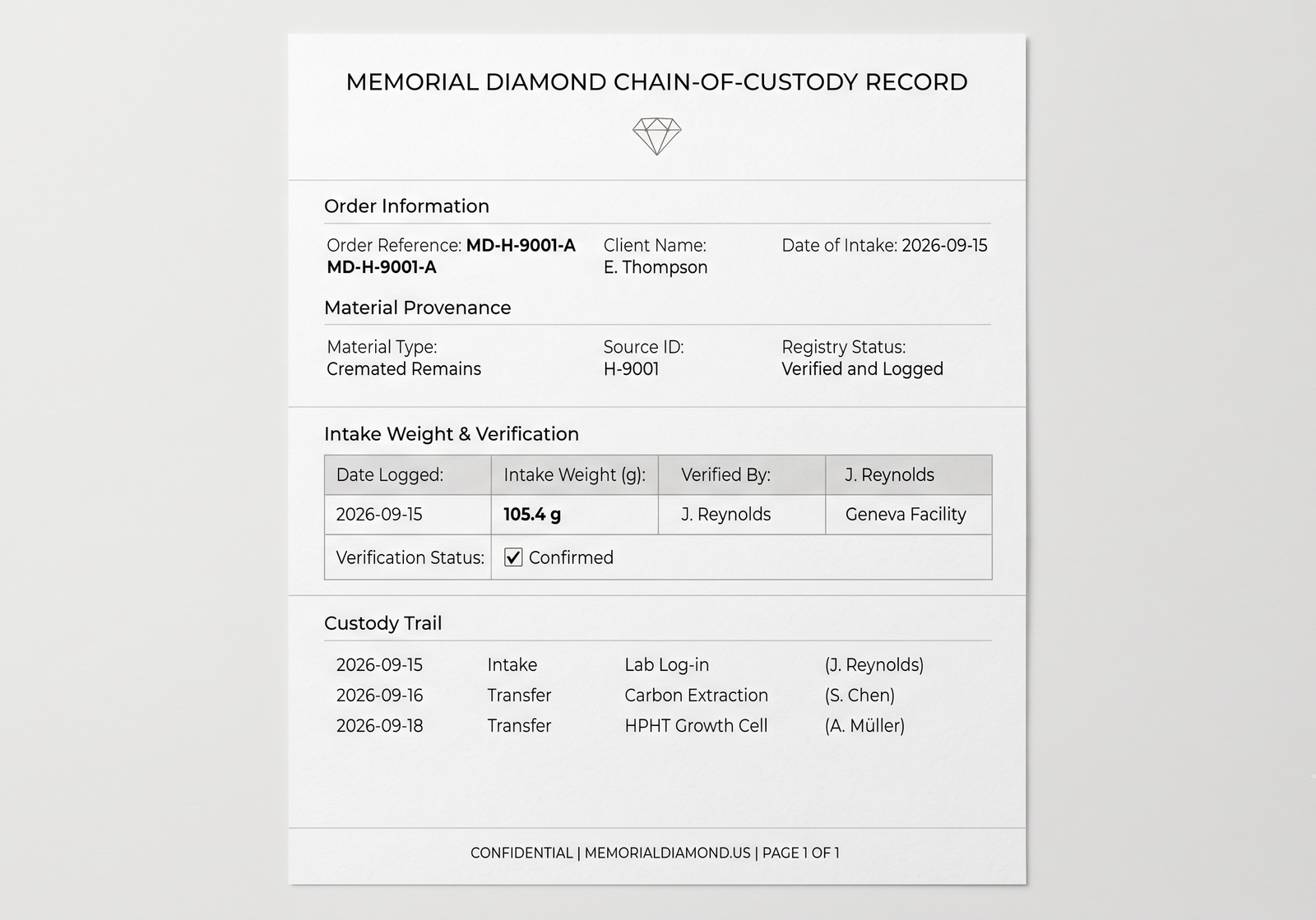
A relative who thinks it is a scam: the origin document that says this memorial diamond really made from his ashes came from your order, a reputable provider issues, tracing the stone to your order’s recorded intake weight, and the independent grading report on cut, color, clarity, and carat.
A friend who thinks it is ashes in glass: the carbon chemistry above; a diamond cannot contain sealed material and still be diamond.
Someone who thinks it is all him: the 10% to 15% figure, stated plainly; a memorial diamond really made from him is still mostly laboratory carbon. Overclaiming is what a skeptic is waiting for; the wider context is in the husband ashes diamond guide.
Yourself, at 2 a.m.: your own note of the date and weight you set aside, and the provider’s confirmation that they received it. Ask for both before you order.
Is a memorial diamond really made from my husband’s ashes, or is it symbolic?
It is physically made from them. In a memorial diamond really made from ashes, carbon is extracted from his cremated remains, purified to about 99.9%, and grown into the diamond’s crystal lattice. The stone exists because of his carbon; it is not a symbolic keepsake with ashes attached.
How much of the diamond is actually his ashes?
Typically around 10% to 15% of the stone’s mass is carbon recovered from his ashes, with laboratory carbon supplying the rest. That is because cremated remains are only about 0.5% to 4% carbon. Some providers cite lower figures for larger stones.
Can a lab test prove the diamond came from him?
No chemical test can identify a person from purified carbon; DNA does not survive the process. Proof comes from the chain of custody: your recorded portion, the provider’s intake weight and order reference, and the origin document issued with the stone.
Is it a real diamond or a simulant?
A real diamond. A memorial diamond really made from ashes has the same crystal structure and hardness as any lab grown diamond and is graded on the same cut, color, clarity, and carat scale. Reputable providers have it graded by an independent laboratory.
Why isn’t the diamond made only from his ashes?
Because a diamond of usable size needs more carbon than ashes can supply. Four ounces of cremated remains yield only grams of carbon, so laboratory carbon is blended in to reach a growable volume. Growth time, not ash quantity, sets the size.
Final Thoughts on Whether a Memorial Diamond Is Really Made From Your Husband’s Ashes
The plainest answer to whether a memorial diamond really made from his ashes is real is also the strongest one: part of the carbon in that crystal was part of him, and the paperwork can prove which order it came from. The combined material version of this doubt is in is a memorial diamond really made from your husband’s ashes and hair. Say the honest number before someone else says a dishonest one, and the doubt usually has nowhere left to go.
If you would like to see what documentation would come back with the stone before deciding, reach out to Memorial Diamond to talk through what’s possible with your husband’s ashes.
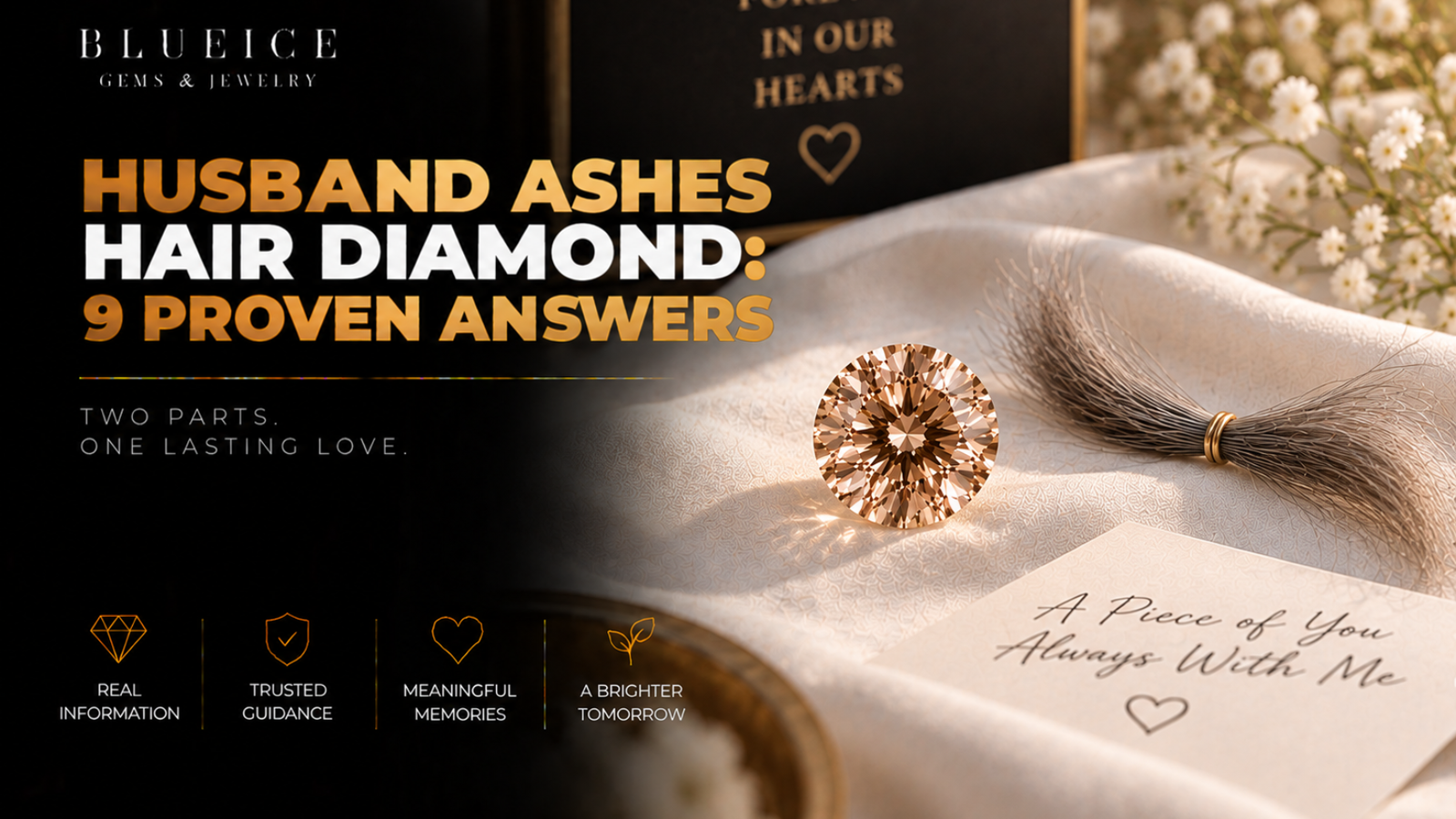
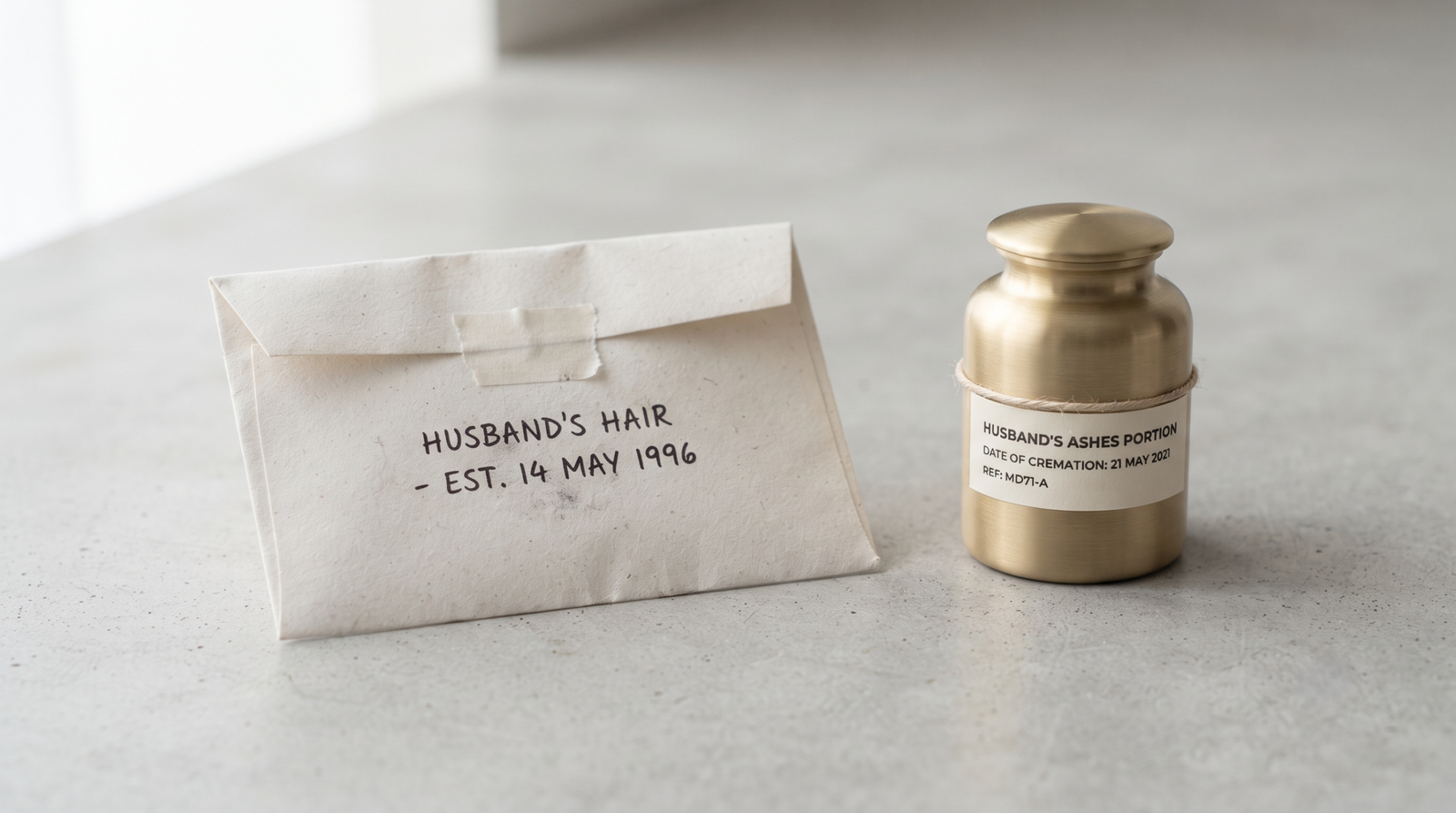
You may be the only person alive who holds his hair from more than one point in his life. A husband ashes hair diamond is a real, lab grown diamond made from carbon extracted from both his cremated remains and a lock of his hair, blended with laboratory carbon and grown over roughly six to ten months. The two materials do different jobs. His ashes carry no date; his hair always does. That difference is the reason to read the rest of this guide before deciding anything.
Table of Contents
1. What Is a Husband Ashes Hair Diamond?
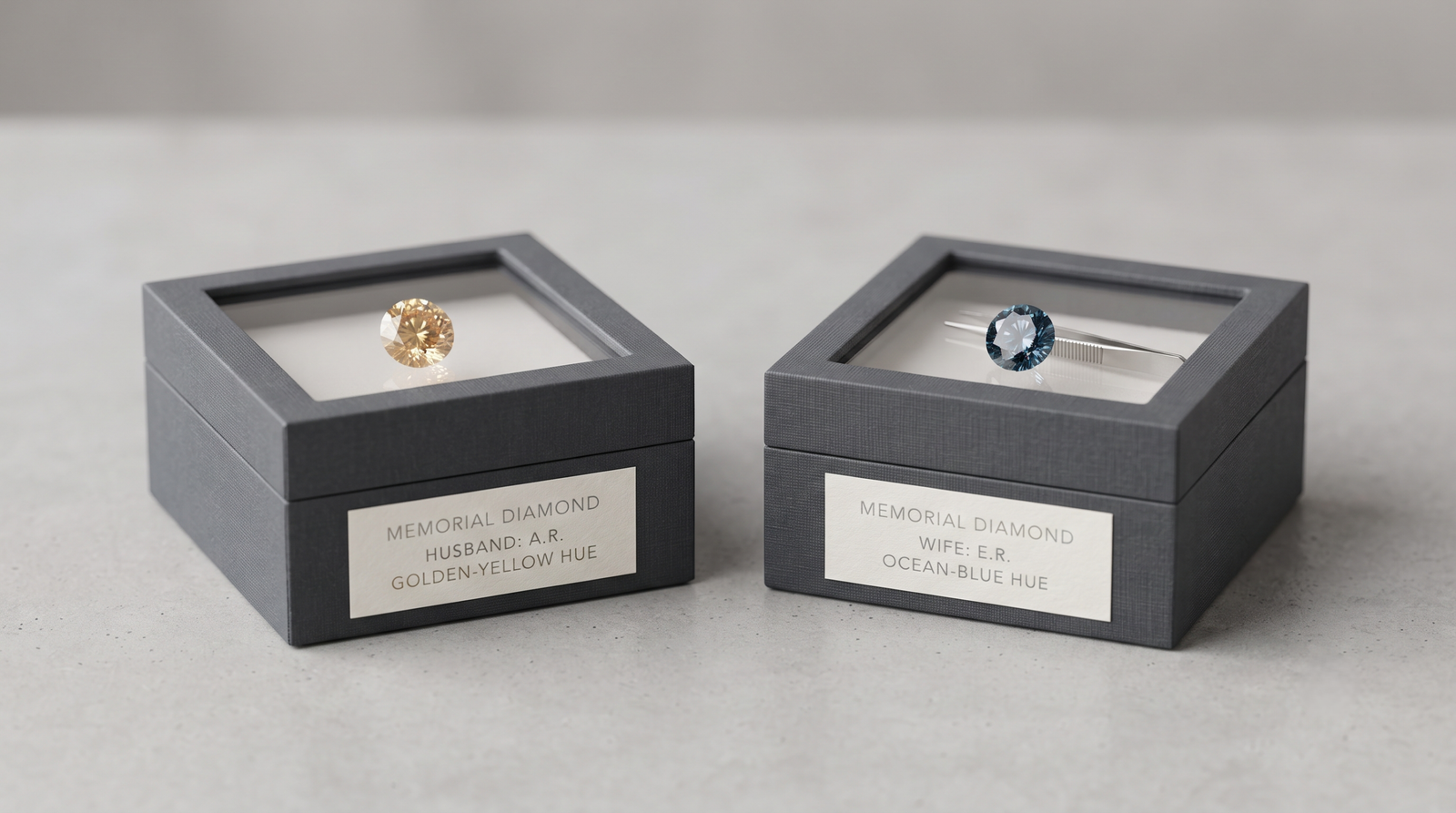
A husband ashes hair diamond is a single diamond grown from two sources of his carbon at once: a small portion of his cremated remains and a small amount of his hair. Both are purified to carbon, combined, and grown into one crystal using the same HPHT and CVD diamond growth methods the wider lab grown industry uses.
The finished stone is chemically a diamond. It scores 10 on the Mohs scale, the hardest known natural mineral, and it is graded on the same cut, color, clarity, and carat scale as any other diamond. It is not resin, and it is not a simulant with something sealed inside.
Most guides to this product treat the hair as a top up for families whose ashes ran short. For a spouse, the hair is rarely about quantity. It is about when.
2. Why Does Hair Carry a Date and Ashes Do Not?
Cremated remains are the same material whether he died at 52 or 84; the fire leaves calcium phosphate with a small fraction of carbon, and nothing about it points to a year. Hair is different. Every lock was cut on a specific day, and if you kept it, you usually remember which one.
That gives a husband ashes hair diamond something no ashes only stone has: a second material chosen from a particular moment in his life. The clipping from the day you met. The gray you saved from the last haircut you gave him at home. A lock from his twenties that his mother passed on to you.
One honest limit needs saying early. Choosing hair from 1994 does not put 1994 in the stone. Purification strips hair down to carbon and nothing else; the date survives in your records and your memory, not in the crystal. What the hair adds is a decision you made with intent, documented in the paperwork, not a chemical signature the diamond can carry.
Material
Carbon content by weight
Carries a “when”?
Typical amount used
Cremated ashes
Roughly 0.5 to 4%
No, cremation erases it
A few tablespoons up to about 4 oz, approximately 100 g
Hair
Roughly 50%
Yes, cut on a known date
A small lock, a few grams
Both together
Blended after separate purification
Yes, through the hair
Both of the above; ask whether the hair reduces the ashes needed
3. How Much of Each Material Is Needed?
A husband ashes hair diamond draws on two very different quantities. Ashes are carbon poor. Industry figures put usable carbon at roughly 0.5% to 4% of cremated remains by weight, which is why providers typically ask for somewhere between a few tablespoons and about four ounces. That is a small fraction of a full cremation, so the rest can still be interred, scattered, or kept as you planned.
Hair is roughly 50% carbon by weight. A small lock, often described as palm sized or a few grams, is typically enough on its own. Combined orders vary by provider: some treat the hair as supplementary and still ask for the standard ash quantity; others reduce the ash requirement when hair is included. Ask directly, because the answer decides how much of his ashes you set aside.
If you hold only a few strands, say so before ordering. A husband ashes hair diamond can be grown with hair as a minor contribution, and a provider should tell you plainly whether your sample is enough to matter or whether it would be recorded but not meaningfully present.
4. How Is a Husband Ashes Hair Diamond Actually Made?
The two materials are processed separately before they meet. Here is the sequence, step by step:
Intake and recording. Both samples for a husband ashes hair diamond are logged under one order reference, ideally as two separate intake records with a weight for each.
Carbon extraction, ashes. The remains are heated in a controlled, oxygen free, multi stage process that removes the calcium phosphate and other minerals, leaving carbon at roughly 99.9% purity.
Carbon extraction, hair. Keratin’s non carbon components are removed the same way. Because hair starts carbon rich, this stage yields far more from far less.
Graphitization. The purified carbon from both sources is heated to roughly 2,500 to 2,700°C and converted into graphite, the feedstock a diamond press uses.
Blending and growth. The graphite is combined, supplemented with lab carbon to reach the volume a viable stone needs, and placed in a growth cell with a diamond seed. Growth takes weeks to months. Time in the press, not the amount of material, determines carat size.
Cutting, polishing, and grading. A gemologist cuts the rough crystal; reputable providers then have it graded by an independent laboratory.
The honesty point that matters most: the personal carbon in a finished memorial diamond typically makes up around 10 to 15% of the stone’s mass, with the balance being laboratory carbon needed to grow a crystal of usable size. A husband ashes hair diamond is physically, verifiably made in part from him; it is not 100% him, and no provider should tell you otherwise. The full production sequence is covered in how a memorial diamond is made from your husband’s ashes and hair.
5. What Color and Size Can You Expect?
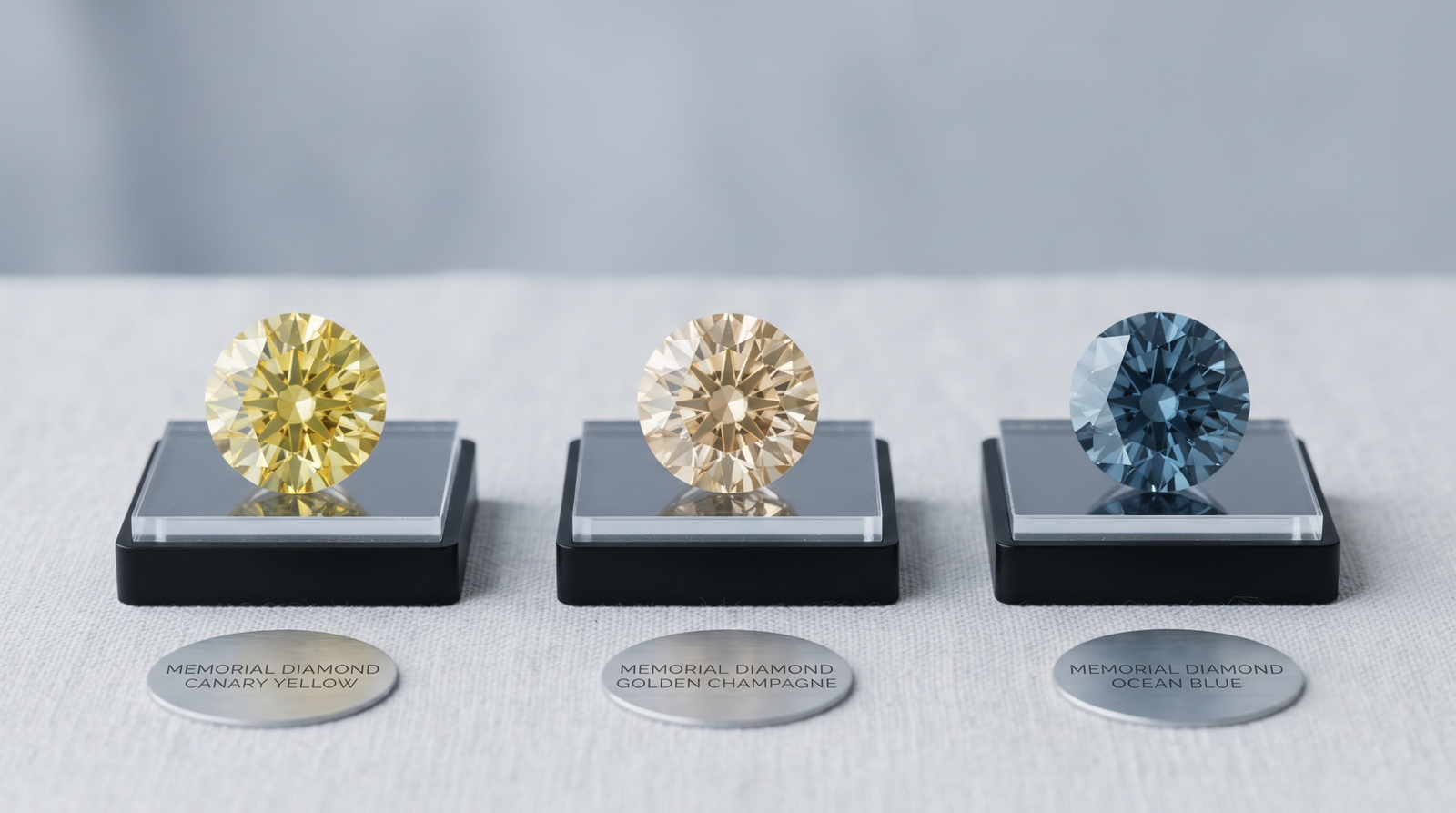
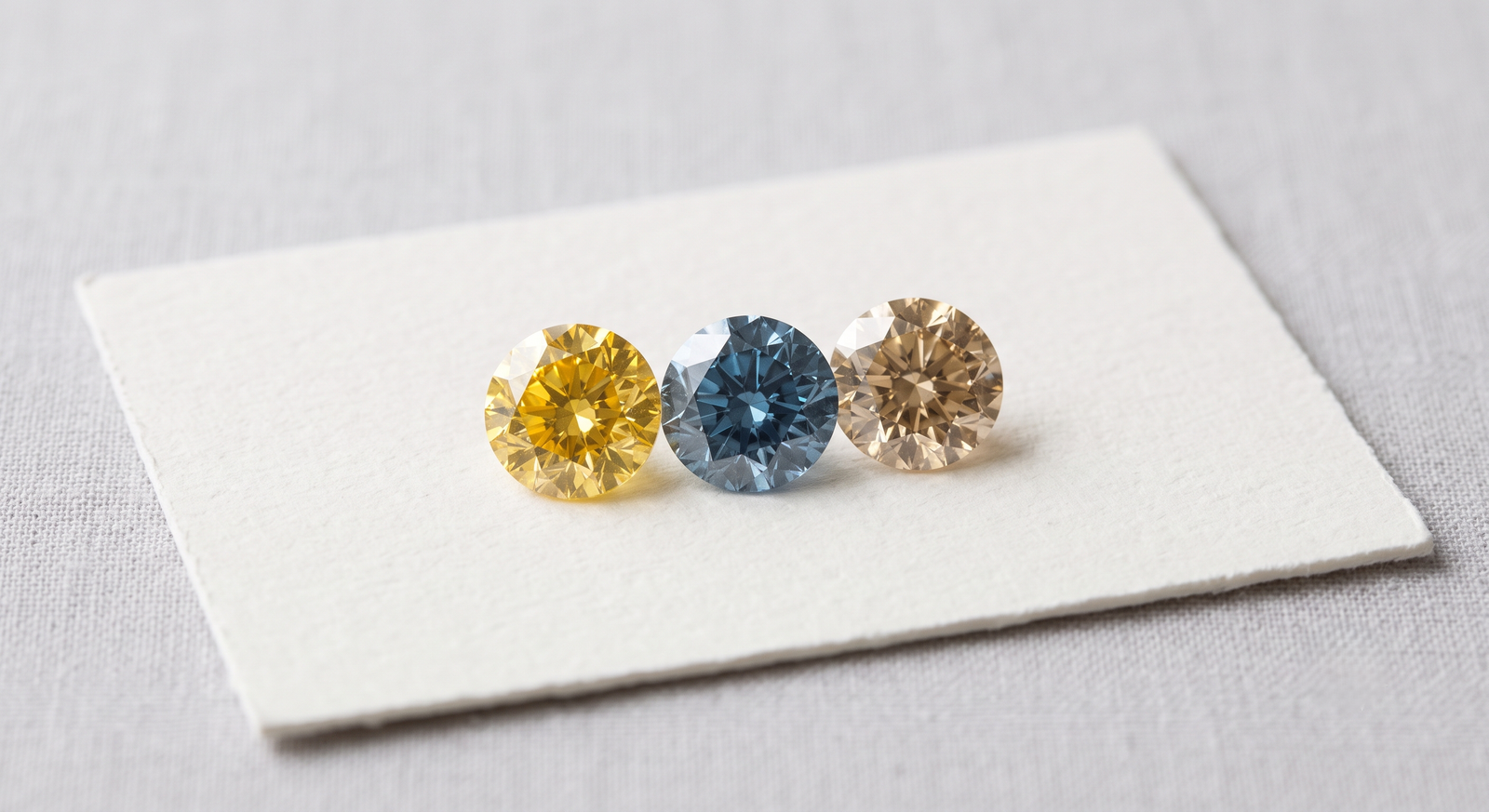
Color comes from trace elements present during growth. Nitrogen produces yellow tones; boron produces blue; a colorless stone requires both to be excluded, which takes additional processing and costs more. Because the carbon in a husband ashes hair diamond comes from an organic, imperfect, personal source rather than a controlled feedstock, trace elements are common, and memorial diamonds naturally trend toward yellow, champagne, and blue rather than colorless.
Size is a choice, not an outcome. A husband ashes hair diamond is generally offered from about 0.10 carats to 5 carats and above. A larger stone takes longer in the press, which is why larger or specialty color orders can run to 12 months instead of the typical six to ten.
6. What Does a Husband Ashes Hair Diamond Cost?
Industry wide, a husband ashes hair diamond falls into the same pricing tiers as any memorial diamond. Final price depends on carat, color, cut, and whether an independent grading report is included.
Tier
Approximate size
Typical industry range
Entry
Approximately 0.10 to 0.25 ct
$1,500 to $3,500
Mid
0.5 to 1 ct
$5,000 to $15,000; colorless costs meaningfully more
Large / rare
2 to 5+ ct
$20,000 to $75,000+
Settings, engraving, fancy cuts, and grading reports are typically priced separately from the loose stone. Whether a husband ashes hair diamond is priced differently from a single material one varies by provider; ask before you assume it is the same. A fuller breakdown is in how much a husband memorial diamond costs.
7. One Blended Stone, or Two?
This is the decision the two material option quietly forces. A husband ashes hair diamond blends both sources into one crystal. The alternative is two separate stones, one from each material, which some families choose so that a child can have the ashes stone and the spouse the hair stone, or so the hair from a specific year stands on its own.
One blended husband ashes hair diamond suits you if the point is one object that holds everything you have of him, worn by one person.
Two separate stones suit you if two people are waiting, or if the dated hair is the part you most want kept distinct.
A blended stone plus a hair only stone later is possible when you hold more hair than one order needs, because hair keeps indefinitely when stored dry.
If the ashes half of a combined order under yields, ask whether you will be told before blending or whether the shortfall is quietly covered by more laboratory carbon. That question is worth asking of any provider, and the answer belongs in writing. How a single material stone compares is covered in the husband ashes diamond guide and the husband hair diamond guide.
8. What Should You Ask a Provider Before Ordering?
Before ordering a husband ashes hair diamond, ask:
Are two separate intake records kept for a combined order, and does the origin document name both materials?
Does including hair reduce the ash quantity you ask for?
Will I be told if either material under yields before the two are blended?
What happens to any material not consumed by extraction, for each material separately?
Which method do you use, HPHT or CVD, and who grades the finished stone?
How is the hair dated in your records, if I supply a date?
Yes. It is a lab grown diamond with the same crystal structure, hardness, and grading scale as any other diamond. Carbon from his ashes and hair is purified, blended with laboratory carbon, and grown into a single crystal; the result is chemically diamond, not resin or a simulant.
Does adding hair to his ashes change the color of the diamond?
No. Color is set by trace elements such as nitrogen or boron present during growth, not by which material the carbon came from. Combining ashes and hair does not blend two colors; a husband ashes hair diamond trends toward yellow, champagne, or blue like any memorial diamond.
Can I use hair from years before he died?
Yes. Hair stored dry keeps its carbon indefinitely, so a lock from decades ago works as well as recent hair. The date does not survive purification into the stone itself, but it is recorded in your paperwork and is often the reason a spouse chooses that particular lock.
How much of his ashes does a combined order use?
Typically a few tablespoons to about four ounces, the same as an ashes only stone. Some providers reduce that amount when hair is included, because hair is roughly 50% carbon; others do not. Ask directly, since the answer determines how much you set aside.
Do the ashes and hair get mixed as soon as they arrive?
No. For a husband ashes hair diamond, reputable providers purify each material separately and combine the carbon only at the graphite stage, before growth. Ask whether two intake records are kept and whether you will be told if one material under yields before the two are blended.
How long does a husband ashes hair diamond take to make?
Industry wide, six to ten months from receipt of material to a finished stone, with larger or specialty color stones sometimes taking up to twelve. Growth time in the press, not how much ash or hair you send, determines the final carat size.
Can two people each get a diamond from the same ashes and hair?
Often, yes. Only a portion of each material is used, so several stones can be grown from one shared source if enough remains. Some families choose one blended stone and one hair only stone so the dated hair stands on its own.
Final Thoughts on a Husband Ashes Hair Diamond
Most of the decisions about a husband ashes hair diamond can wait. The hair cannot be re cut, and if his ashes are still with a funeral home, the request to hold a portion back has a deadline you may not have been told. Settle those two things, write down what you set aside and when the hair was cut, and let the rest of the choices take the months they deserve.
If you are holding both his ashes and a lock of his hair and are not sure whether a husband ashes hair diamond or two separate stones is right, reach out to Memorial Diamond to talk through what’s possible with what you have.
You are not short of his hair. Years of a shared bathroom leave it on a shirt collar, on his side of the pillow, in the trap under the sink. A husband hair diamond is a real lab grown diamond, grown in part from carbon extracted from his hair, roughly 50% carbon by weight, against 0.5% to 4% for cremated ashes, so a small lock is enough, no cremation is involved, and production runs 6 to 10 months.
The problem is the opposite of scarcity. Nearly everything on that list has been shared with you, and no lab can tell one person’s hair from another’s once it is purified. So this guide is organized around provenance: knowing what you send is only his, improving a doubtful sample, and deciding honestly when you cannot.
This guide comes from Memorial Diamond, which grows memorial diamonds: there is a commercial interest behind it. The useful thing a page like this can do is make you harder to sell to, including by us.
Table of Contents
Why Provenance Is the One Thing You Cannot Fix Later
Almost every mistake with a husband hair diamond is recoverable: a light sample topped up, a color discussed before growth begins, a setting changed later.
Provenance is the exception for a husband hair diamond. Purification strips hair to roughly 99.9% carbon, and everything that would distinguish his from yours, length, color, cuticle, DNA, is gone at that stage. No grading report addresses it, because a report describes the diamond rather than the submission.
The first question is therefore not how much hair you have but how sure you are that it is only his, answered before anything is sealed into an envelope.
How Sure Can You Be That a Sample Is Only His?
In a house you shared, where the hair for a husband hair diamond came from matters less than what kind of evidence it is. Four classes cover nearly anything you will find, and the middle column does the work.
Kind of source
Why confidence is high or low
How to improve it
Cut from him in front of a witness
Highest: someone watched the hair leave his head
Have whoever cut it seal, date and sign the envelope at the time
A device or garment only he used
High, and it rests entirely on “only”: one borrowed jacket or guest razor collapses it
Establish sole use before collecting: check for a second trimmer head, or a coat that was lent
Anything from a shared surface
Low: a shared surface mixes the household by design, and nothing unmixes it later
Not improvable afterwards. Use it only if the hair is unmistakably his, and say so on submission
A sample someone else kept and labeled
Depends on the label rather than on anyone’s memory of it
Ask what the label says, and write down their account while they can give it
One rule falls out of that: a source you can describe precisely beats one you can only describe hopefully, because the description travels with the submission and is the only provenance record a husband hair diamond will ever have.
How to Take a Clean Sample Now
If the funeral has not happened, this is the one time sensitive step toward a husband hair diamond. A funeral director or hospice nurse can be asked to take a lock; afterwards that chance is gone.
Collecting from objects instead, three habits matter more than equipment:
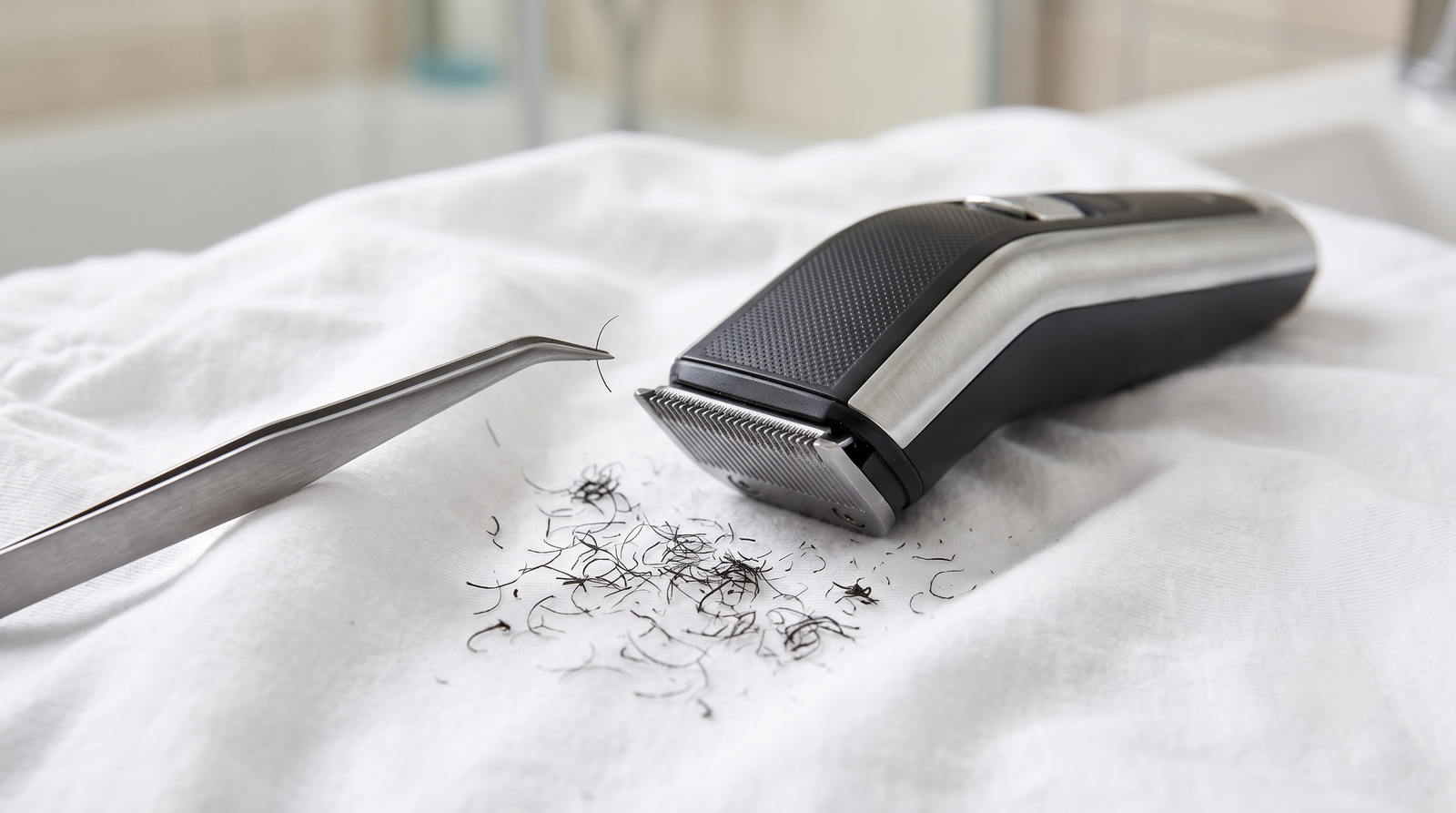
Work under a bright light with tweezers, hair by hair, rather than tipping a container out, selecting, not gathering.
Set anything ambiguous aside. A smaller certain sample beats a larger doubtful one, because weight can be topped up and certainty cannot.
Collect one source at a time, into separate envelopes. Pooling is a decision you can still make; unpooling is not.
Write it down now. In six months you will not remember whether that envelope came from his trimmer or the brush on the shelf, and that difference is the whole point of a husband hair diamond.
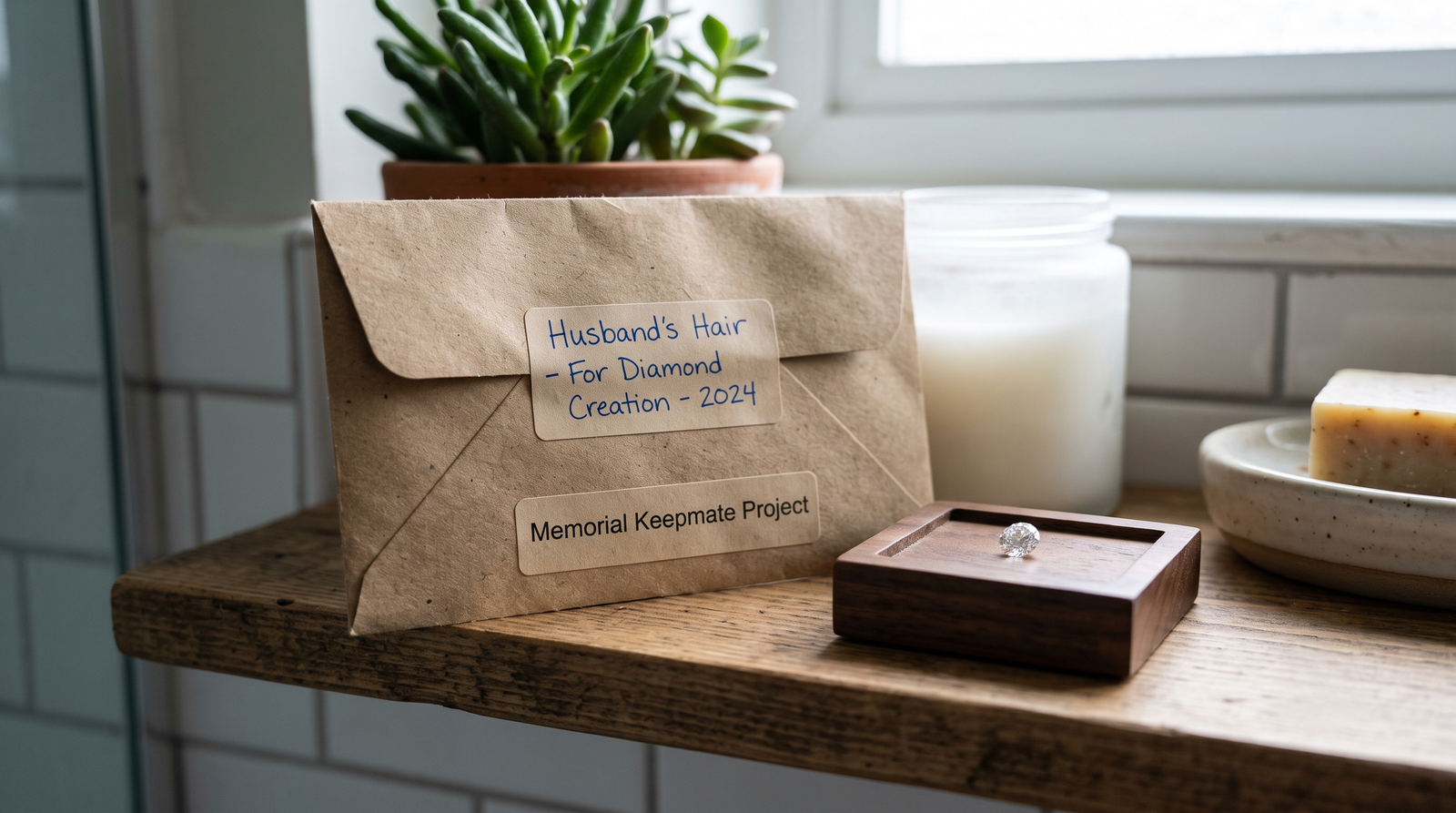
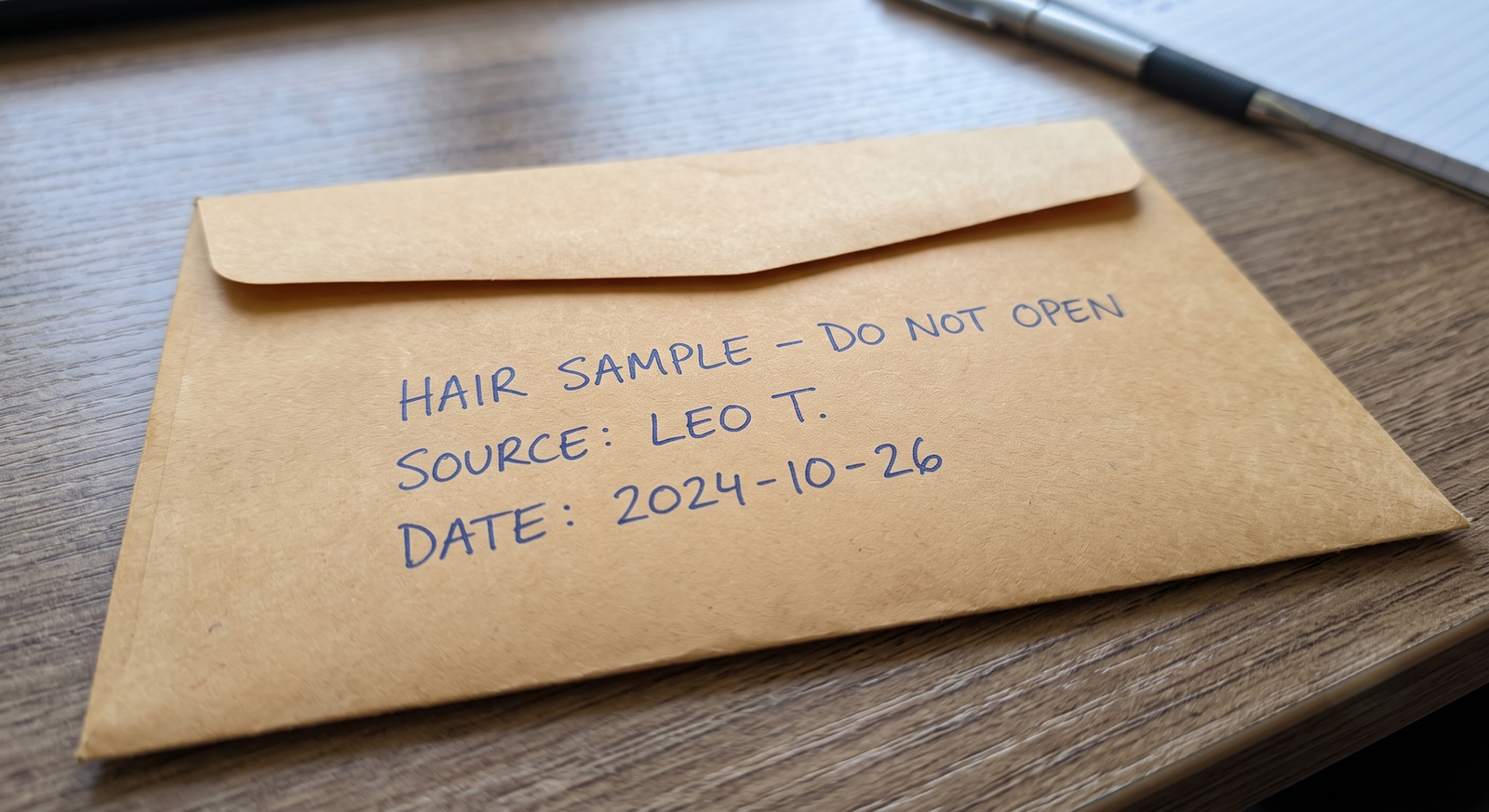
On the envelope itself, not a sticky note, write his full name, the collection date and the exact source: beard trimmer, his only, collected 4 March. Seal it and photograph the label.
Hair for a husband hair diamond keeps: dry and sealed, keratin is the same feedstock in ten years as today. The record of where it came from is what decays, fast.
How Much Hair Does a Husband Hair Diamond Actually Take?
Industry typical requirements are a small lock or a few grams, far less than an ashes submission, because hair is roughly 50% carbon by weight against ash’s 0.5% to 4%. Requirements are set by weight rather than length, so short clippings work: weigh what you have rather than measuring it. And growth time in the press, not the weight you send, sets the carat. How much hair you need for a husband memorial diamond covers quantities.
How Much of a Husband Hair Diamond Is Genuinely Him?
Hair is a far richer feedstock for a husband hair diamond than ash is for an ashes stone, but richer is not sufficient. After purification to about 99.9% carbon, a lock still falls short of the volume a growth run needs, so supplemental lab sourced carbon makes up the difference.
The published personal share figure of around 10% to 15% of the finished stone’s mass was arrived at for ash based stones. No hair based equivalent exists publicly, so treat it as indicative rather than a measurement of your submission.
What matters is the shape of the claim: part of a husband hair diamond is him and the rest is not. Ask a provider to put the working fraction in writing before you send.
The Process, and What an Uncertain Sample Means at Each Stage
A husband hair diamond passes through five stages. The third column matters if the source is in any doubt.
Stage
What happens with hair
What it means for an uncertain sample
Collection and intake
Logged under a chain of custody reference; the source recorded as you describe it
The last point at which the record can be corrected. Describe it exactly, doubts included
Purification
Non carbon parts of the keratin stripped in an oxygen free furnace to roughly 99.9% carbon
Everything distinguishing one person’s hair from another’s is gone, permanently
Graphitization
Converted to graphite at roughly 2,500 to 2,700°C
No test from here can tell you whose carbon it is
Diamond growth
Blended with supplemental lab carbon and grown around a seed, in an HPHT press running at roughly 6 to 8 GPa and 1,400 to 2,500°C
Growth time sets carat, so a doubtful sample yields the same stone with a doubt attached
A grading report describes the diamond; an in house origin certificate documents your submission. Neither verifies whose hair it was
Three questions the chemistry cannot answer, because each provider answers them differently. Put them in writing:
Which growth method, HPHT or CVD? HPHT is the industry standard for memorial stones; ask which your quote assumes and what it implies for color.
Grown in the provider’s own facility, or subcontracted? If subcontracted, ask how the custody record covers each handover.
If a growth run fails, what then? Ask whether a second run consumes more of your sample, and who bears the added time and cost.
What If You Cannot Establish Provenance?
Sometimes the honest answer about a husband hair diamond is that you cannot.
A husband hair diamond you privately doubt is a worse outcome than no stone. It is expensive and permanent, and a doubt of that kind is not one the object can settle for you later. If the only hair in the house came from a brush you both used, and that will bother you, it is a reason to stop.
Two routes out are not compromises. One is a source with a cleaner history than the one you have. The other is the ashes route, where identity is not in question. Deciding against all of it is a complete answer too, a burial, an urn, a scattering are whole ways of honoring someone, and a diamond sits alongside them, not above.
If Your Husband Is Still Living, Ask Him
Some readers are not bereaved: a diagnosis, a long separation ahead, or simply wanting the thing to exist while he is here.
The practical part of a husband hair diamond is easy, a small lock, cut at home, no cremation involved. What matters is the asking. Taking hair from his brush without telling him gives you the weakest provenance in a house you share; asking gives you a clean, dated sample he knows about. The living memorial version of this guide covers the conversation in full.
What Does a Husband Hair Diamond Cost, and What Color Will It Be?
Drop one intuition first: whether he was dark, fair or grey has no bearing on a husband hair diamond, because nothing carrying his hair color survives purification. Color comes instead from trace elements in the growth cell, nitrogen yellow, boron blue, and only the near absence of both leaves a stone colorless, which is why colorless costs meaningfully more per carat. Organic feedstock rarely arrives that clean, so yellow, blue and champagne are this category’s usual tones. What color a diamond made from your husband’s hair will be covers prediction.
Drop a second on timing. Extraction from a lock is a short front end step inside a schedule crystal growth dominates: 6 to 10 months of production once a laboratory has the material, nearer twelve for a stone of roughly 2 ct or a specialty color. Shortening the front end barely moves the finish date. Put collection, transit and setting around that window and the whole runs eight to fourteen months, arithmetic of ours, an editorial estimate rather than an industry figure. No cremation is involved, so a husband hair diamond stays open where cremation never was: hair based options for a loved one who was not cremated covers that.
For a husband hair diamond, price follows carat, and carat follows growth time.
The only hair I have is from a brush we both used. Should I order a husband hair diamond anyway?
Only you can judge. No lab can separate two people’s hair after purification, so the doubt would be permanent. If that would sit badly with you in ten years, look for a cleaner source.
Can a laboratory test whether the hair is my husband’s?
Not as part of this process. Providers work from what you tell them, and purification destroys everything that would distinguish one person’s hair from another’s. Identity testing would have to be arranged separately, beforehand.
How should I label a husband hair diamond sample so it still means something in a year?
Write his full name, the collection date and the exact source, “beard trimmer, his only, collected 4 March”, on the envelope itself, not a note that can fall off. Seal it, then photograph the label.
I found hair on the headrest of his car. Does that count?
It can, if the car was his and passengers were rare. Pick the hairs individually rather than emptying a vacuum canister, note what you did, and describe that source honestly when you submit.
Does a husband hair diamond arrive sooner than one made from ashes?
No. Extraction is a small part of a timeline dominated by crystal growth, which runs 6 to 10 months industry wide from receipt of material regardless of which material the carbon was recovered from.
If I collect a clean sample now, how long can I leave it before deciding?
Indefinitely, as far as the chemistry goes. Keratin kept dry in a sealed envelope is the same feedstock in ten years as today. Collecting carefully now and deciding later is a legitimate order to work in.
My husband is still living. Is it strange to ask him for a lock of hair?
It is a straightforward request, and asking is better than taking. It gives you a clean, dated sample he knows about, and makes a husband hair diamond something you agreed on rather than kept quiet.
Final Thoughts on a Husband Hair Diamond
If you take one thing from this page, take a pen. Label what you have with his name, the date and the source, in words still useful a year from now. Then talk it through before you cut, divide or post anything. A husband hair diamond is one of the few decisions in this year with no deadline attached, the sample keeps, and so does the choice.
Reach out to Memorial Diamond at memorialdiamond.us for a conversation rather than a purchase, bring a weight, a photograph of the label, and an honest account of the source. That is everything a provider needs to tell you whether a husband hair diamond is workable from what you have.
The first months after a death are almost entirely administrative. Certificates, account closures, a form that wants his date of birth in a box too small for it. A husband ashes diamond is the first decision in that pile that is not paperwork. It is a real, lab grown diamond grown in part from carbon extracted from his cremated remains, ashes are roughly 0.5% to 4% carbon by weight, with production running 6 to 10 months from the lab receiving the material.
It is also, probably, the first decision nobody else has to sign. Your situation is the inverse of the parent guides, where siblings negotiate, nobody to check the decision against, and a lot of advice you did not ask for. So this guide is organized around deciding alone well: what can be settled now, what is worth postponing, and the few things that carry a real clock.
Memorial Diamond makes memorial diamonds, so this page comes from a company that would be one of the options you weigh. Read it as informed rather than disinterested.
Table of Contents
Who Actually Decides What Happens to His Ashes?
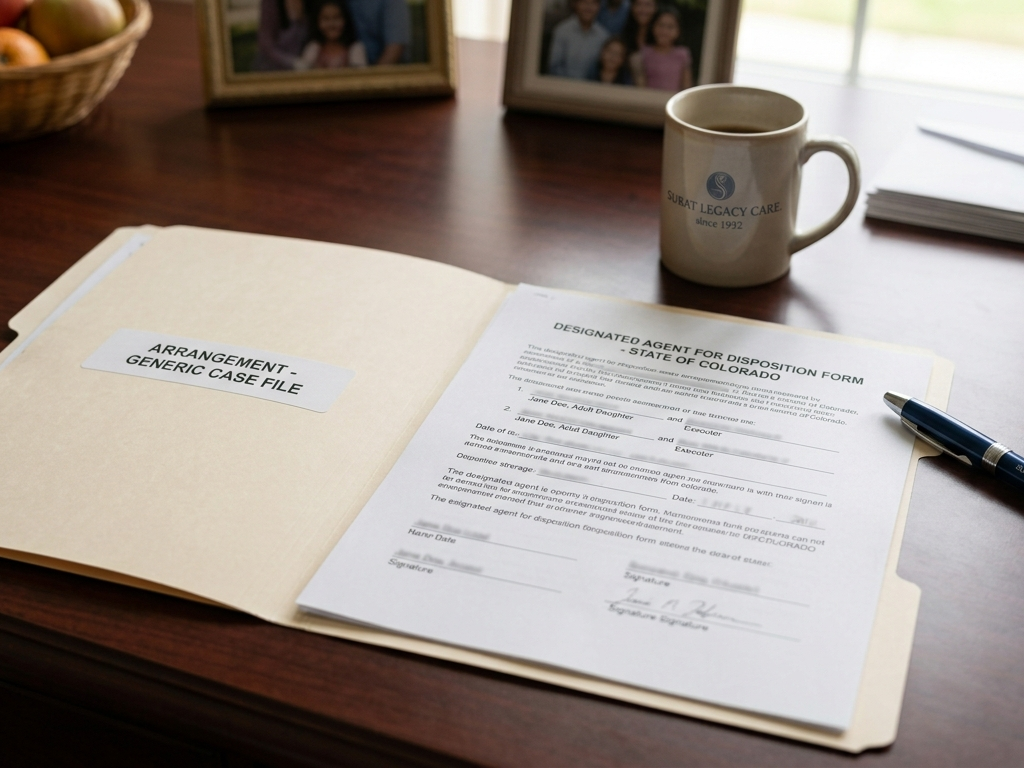
In the United States a surviving spouse commonly holds the right to control disposition of a deceased person’s remains. Treat that as a general pattern rather than settled national law. It varies by state, and it can be displaced by what he left in writing, a will, a pre need contract, a designated agent form, an instruction lodged with the funeral home. Some states let a person name someone other than a spouse.
So the accurate version of “you decide” is: probably you, unless he wrote something down or your state arranges it differently. Two calls settle who may order a husband ashes diamond: the funeral director who released the remains, and whoever handles the estate. Ask each what is on file. Whether it is legal to turn ashes into a diamond covers the general position.
Authority does not settle the family part: having the right to order a husband ashes diamond and having told his children are different things.
What Is a Husband Ashes Diamond, and How Much of It Is Him?
A husband ashes diamond is a chemically genuine diamond, 10 on the Mohs scale, graded on the same four Cs as any other stone, grown around a seed in a high pressure press from his carbon.
Cremated remains are mostly calcium phosphate, bone mineral, and only roughly 0.5% to 4% carbon by weight. What is recovered is purified to about 99.9% carbon, then blended with supplemental lab sourced carbon, because a crystal of wearable size needs more feedstock than his ashes can supply. Industry wide the personal share lands around 10% to 15% of the finished stone’s mass. Anyone offering a husband ashes diamond made entirely of him is describing something no growth run produces.
The accurate claim is smaller and firmer: a measured, documented portion of his own carbon sits inside the crystal lattice and stays there. Ask a provider to state that fraction for the carat you want, in writing.
Growth time in the press, not the quantity of ashes, sets the carat.
How Much of His Ashes Does a Husband Ashes Diamond Use?
Industry typical requirements run from a few tablespoons to roughly 4 oz, about 100g. A full adult cremation produces several pounds.
That arithmetic matters, because it means a husband ashes diamond is rarely an either or. A burial plot, a scattering he asked for, an urn on the shelf, all survive a submission this small, and none is a lesser choice. How much ash you need for a husband memorial diamond covers the measuring.
What Can Wait, and What Genuinely Cannot
Almost all of a husband ashes diamond decision is patient. A short list is not.
Carries a clock:
Ashes not yet released by the funeral home. Ask for a sealed, labeled portion to be set aside first.
A scheduled interment, scattering or committal, once ashes are placed, that route is closed.
Anything a cemetery or crematorium will only do while a file is open.
Does not carry a clock: whether to do this at all; carat, color, cut and shape; the setting; who eventually gets the piece; choosing a provider.
Rules for sending cremated remains vary by jurisdiction and by whoever carries them, so confirm the current requirements directly before anything is packed. Retained ashes keep indefinitely in a sealed container, so urgency elsewhere this year is not a reason to hurry a husband ashes diamond.
The Process, and What You Would Be Asked to Decide
Seven stages. Two of them ask nothing of you; the rest each carry a decision.
Stage
What happens
What you would be asked to decide at this point
Collection and intake
The portion you send is logged under a chain of custody reference
How much to submit, and whether unused ash returns
Extraction and purification
Non carbon material stripped in an oxygen free furnace to roughly 99.9% carbon purity
Nothing, but past here the ash no longer exists as ash
Graphitization
Purified carbon converted to graphite at roughly 2,500 to 2,700°C
Nothing
Diamond growth
Graphite blended with supplemental lab carbon, grown in an HPHT press at roughly 6 to 8 GPa and 1,400 to 2,500°C around a seed
Carat and color, agreed before growth starts, since growth time sets size
Cutting and polishing
A gemologist cuts the rough into a finished shape
Shape
Grading and certification
Graded on cut, color, clarity and carat, ideally by an independent third party lab
Whether to buy an independent grading report, and separately to ask for an in house origin certificate, different documents, different jobs
Setting
The stone is mounted, if you have chosen a piece
The setting, deferrable entirely, since a loose husband ashes diamond is a finished product
Three things the table cannot settle, because each provider sets them. Ask in writing:
HPHT or CVD? Which growth method your quote assumes, and what it implies for color.
In house growth, or placed with another laboratory? If placed, who holds his material at each handover.
A growth run that yields no usable stone. Whether a second attempt draws on more of his carbon, and how cost and timing are handled.
People who love you will have opinions about a husband ashes diamond, and some will be right. The useful move is to work out what each remark is actually about.
What you may hear
What is behind it
Where it is actually right
“Don’t make any big decisions this year”
Standard caution about irreversible moves
Right about what you cannot undo, dividing ashes, not asking questions or getting quotes
“He wouldn’t have wanted a fuss”
His modesty, read forward into a decision he may never have addressed
Right if he left instructions; check whether he did before treating it as his view
“That’s a lot of money for a rock”
A judgment about money by someone not spending it
Right that the sums are real, and worth pricing before committing
“You promised to scatter him”
A promise you may well have made
Right, and largely compatible: a submission uses a small fraction, so the scattering happens
Telling His Children Rather Than Asking Them
If his children are yours too, a husband ashes diamond is a family conversation. If they are his from an earlier marriage, it is more delicate, and better had early than perfectly.
The distinction that keeps it clean is between a request and an announcement. Where the authority is yours, telling them what you have decided, before you order, not after the stone arrives, is honest and hands them no veto you do not owe. Asking, if you genuinely want their view, is also fine, provided you know which you are doing. How to talk to family about a husband memorial diamond works through the wording.
Setting His Stone Into the Band You Still Wear
This is a different question from setting a stone into a ring he wore: the ring is already on your hand.
A band worn daily for decades has a thinned shank, and a jeweler has to assess whether it can carry a husband ashes diamond before anyone commits. Adding a setting changes the profile of a ring you are used to, and the work takes it off your hand for a period.
A Husband Ashes Diamond You Will Wear Every Day Is a Different Specification
A husband ashes diamond kept in a box and one that goes to work want different things. Daily wear argues for a protective setting over an exposed one, for a size that clears a coat sleeve and a steering wheel, and for a color you are content to see in ordinary daylight. Diamond is hard; a mounting is not, so ask what checking a setting involves and how often.
What Does a Husband Ashes Diamond Cost, and How Long Does It Take?
Color comes from trace elements present during growth: boron produces blue, nitrogen yellow, and a colorless stone needs the near total absence of both, which costs meaningfully more at the same carat. Memorial diamonds trend toward yellow, blue and champagne tones. What color a diamond made from your husband’s ashes will be covers prediction.
Size tier
Typical carat
Typical industry price range
Entry
0.10 to 0.25 ct
~$1,500 to $3,500
Mid
0.5 to 1 ct
~$5,000 to $15,000
Large / rare
2 to 5+ ct
~$20,000 to $75,000+
Those are general 2026 industry ranges, not Memorial Diamond’s, which are not published. Settings, engraving and grading are quoted separately. What drives the cost of a husband memorial diamond takes a quote apart.
The sourced timing figure for a husband ashes diamond is 6 to 10 months of production from receipt of material, stretching to around 12 months for stones of roughly 2 ct and up or for specialty colors. Adding collection, shipping and setting gives a rough end to end span of eight to fourteen months, that total is our own arithmetic and an editorial estimate, not an industry figure.The hair route does not run faster; growth time dominates either way. The mechanism sits in the complete guide to what a memorial diamond is.
Frequently Asked Questions
Do I need my husband’s children to agree before I order a husband ashes diamond?
Legally, probably not, if disposition authority is yours, though that varies by state and by what he left in writing. Practically, telling them before you order rather than after costs nothing and prevents the version that goes wrong.
Can his stone be set into the wedding ring I already wear?
Possibly, but a jeweler has to assess your band first. Decades of daily wear thin a shank, and adding a setting changes how the ring sits. Ask before ordering the stone, not afterward.
Is there any reason not to decide this in the first few months?
Only one: a scheduled interment or scattering, which closes the ashes route once it happens. Retained ashes keep indefinitely in a sealed container, so provider, carat, color and setting can wait as long as you need.
He left written instructions about his ashes. Does that override what I want?
It may. A will, a pre need contract or a designated agent form can direct disposition, and can name someone other than a spouse, and the rules differ by state. Ask the funeral director and the estate attorney what is on file.
What happens if I order one husband ashes diamond now and want a second one later?
That depends on how much ash you retained. Each stone uses only a small portion, so a reserve can leave the option open, but stones grown in separate runs are unlikely to match each other in color.
Will anyone be able to tell a husband ashes diamond came from a person?
No. After purification to roughly 99.9% carbon, nothing visible distinguishes it from any other lab grown diamond of the same grade. What documents its origin is paperwork, an in house origin certificate, not anything in the stone.
If I remarry one day, does the stone become complicated?
That is a question about your life rather than the object, and nobody can answer it for you. Practically, a memorial diamond can be re set, worn on another hand or chain, or passed on, and none of that has to be decided now.
Final Thoughts on a Husband Ashes Diamond
Two questions are urgent, and one phone call answers both. Ask the funeral director whether a portion of his ashes can be set aside, sealed and labeled, and whether anything scheduled would close that door. Everything else about a husband ashes diamond, carat, color, your band or something new, whether you do this at all, keeps. Deciding alone is harder than it looks from outside; deciding slowly is the part that is entirely in your hands.
When you want to talk a husband ashes diamond through, the portion, the carat, or simply whether it is the right thing for you, reach out to Memorial Diamond at memorialdiamond.us. It is a conversation rather than a purchase, and the only clock on it is the one the funeral home holds.
Shopping Basket
Need Help ?
Hello , welcome to Memorial Diamond Feel free to ask your queries.