
There is one envelope. Whatever is inside it, a lock cut at a hospital, a curl saved years ago, the strands still caught in a brush nobody could bring themselves to clean, there will never be a second one. The partner hair diamond questions that matter most are about provenance and irreplaceability: how a laboratory handles a sample nobody can independently identify, whether the condition of yours still works, and what “enough” means when running short is not survivable.
Memorial Diamond grows diamonds from hair, so treat this page as interested rather than neutral. Every figure here is an industry wide range, not a published requirement of ours. And the most important of the partner hair diamond questions has an answer you may not expect.
Table of Contents
The Sample That Cannot Be Replaced
Hair is a far better carbon source than ash. Roughly half of a strand’s weight is carbon, built into keratin, against the 0.5% to 4% that cremated remains yield. That is why this route needs a small lock rather than a scoop, and why it works for someone who was buried.
But chemistry is not the constraint behind the partner hair diamond questions here. Scarcity is. Ashes exist in quantity and can usually be re portioned if a first attempt goes badly. A lock of hair is a fixed object with a fixed weight, sitting in a drawer, and once it is gone it is gone. That single asymmetry is what should reshape every conversation you have with a provider.
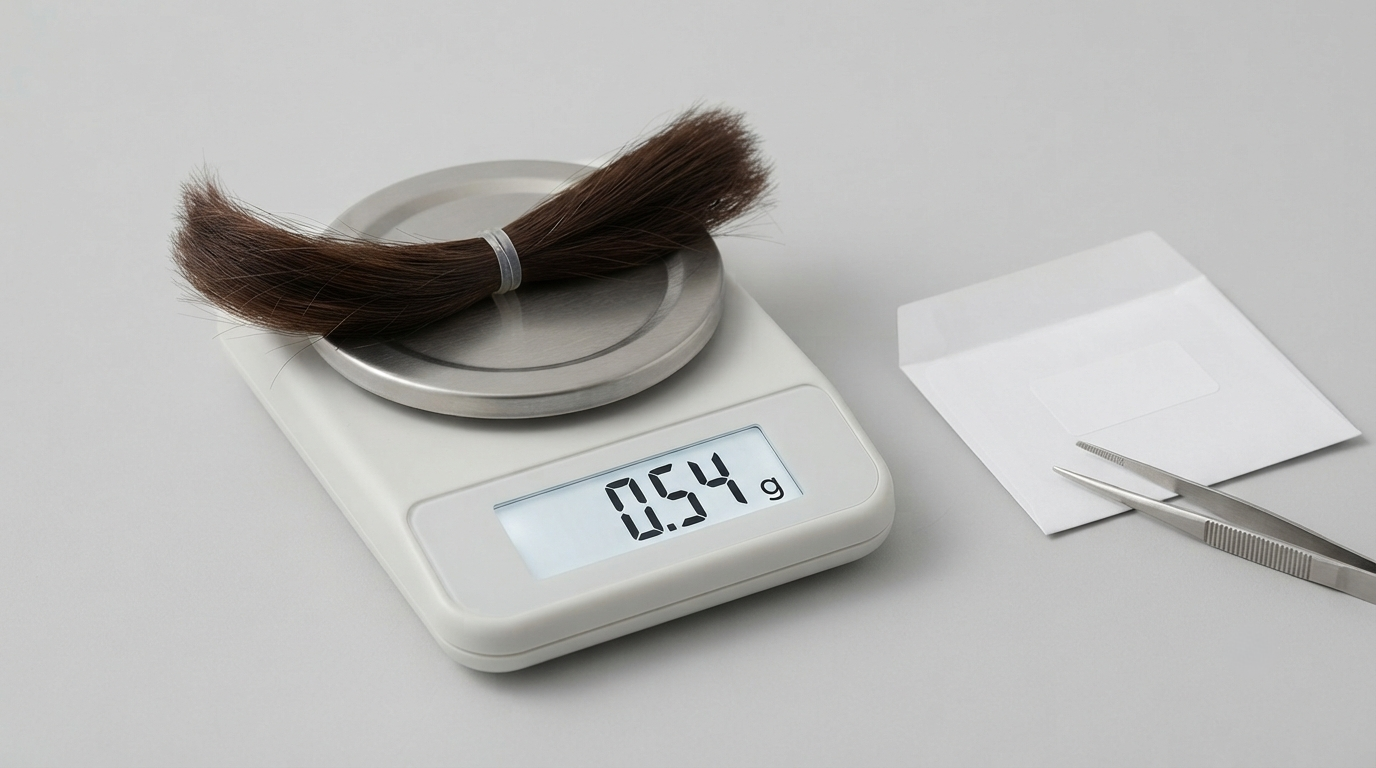
It changes which partner hair diamond questions matter, and when you ask them. With hair, the assessment conversation has to happen before anything is posted, because a sample declared marginal after arrival is a sample already out of your hands. That is the practical spine of the partner hair diamond questions below: front load everything that could disqualify your sample, and accept no answer that begins with “send it and we’ll see.”
- Weigh it first. A kitchen scale that reads to 0.1 g costs very little and tells you where you stand before anyone else knows.
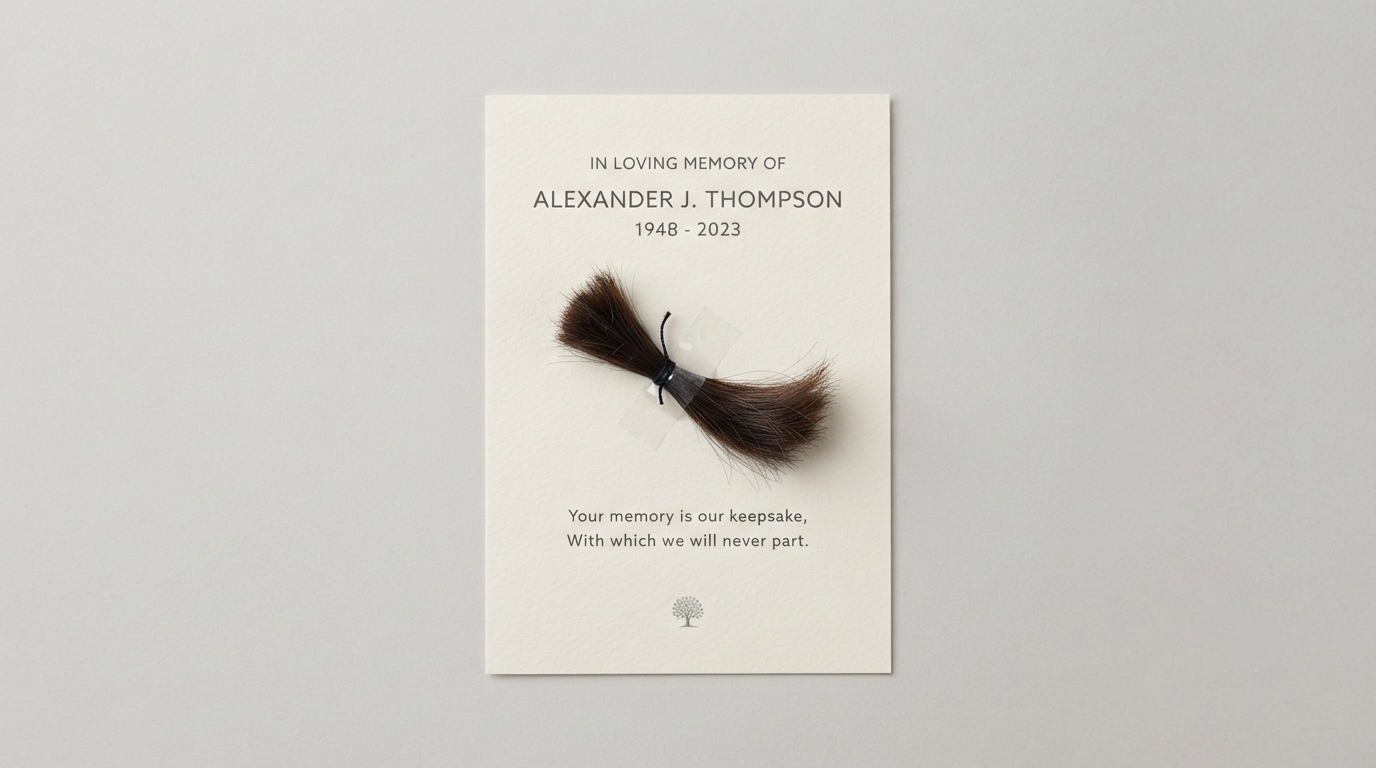
- Photograph it in the container it has lived in, including any tape, card, ribbon or plastic attached to it.
- Write down what you know, roughly when it was cut, by whom, and how it has been stored since.
- Ask for the provider’s minimum in grams, not in adjectives like “a small lock.”
How Would a Laboratory Know Whose Hair This Is?
This is the first of the partner hair diamond questions, and the honest answer surprises most people.
1. Can a provider verify that this sample is my partner’s?
Ask, and expect the answer to be no. Hair carries DNA in its root bulbs, but genetic testing is not something providers generally offer on this route, there would be nothing to test it against unless a reference sample exists, and the growth process itself, graphitization at roughly 2,500 to 2,700°C, then a press at 6 to 8 GPa, destroys every trace of biological material long before a crystal forms. A finished diamond cannot be tested afterwards to name anyone. Put it to the company in those words and see what comes back.
What a serious provider documents instead is a chain of custody beginning at receipt: this sample, logged under this reference, entered purification, and this carbon came out. That is a real and verifiable record. It simply starts at their door, not at your drawer.
So the truthful framing of one of the central partner hair diamond questions is this: the identity of the sample rests on your word, and the provider’s job is to make sure that whatever you sent is what they grew. A company that claims more than that is claiming something the physics does not allow.
2. What happens if the lock turns out to be mixed, or not theirs?
Expect nothing to flag it. Keratin from two people is chemically indistinguishable once purified to the 99.9% plus carbon the process requires, and separating or identifying sources is not what a purification and growth sequence is built to do, worth confirming with your provider rather than taking on trust. A brush sample that also holds a few of your own strands, or a child’s, will simply be carbon.
Whether that matters is one of the partner hair diamond questions only you can answer, and plenty of families conclude it does not, a brush two people shared is arguably a truer object than a clinical cut. But decide it now rather than discovering the ambiguity afterwards. If it does matter, a single clean lock with a known history beats a larger, vaguer sample.
This is also the point at which the partner hair diamond questions stop being technical. If nobody else can confirm what this is, your own record becomes the provenance. A dated note and a photograph taken today, kept with the paperwork, is worth more in twenty years than a memory.
Which Partner Hair Diamond Questions Are About the Sample’s Condition?
Two of the nine, and they are the partner hair diamond questions most often answered wrongly by well meaning guesswork.
3. The hair is old. Is it still usable?
Almost certainly, and this sits among the partner hair diamond questions where instinct misleads. Keratin is remarkably stable, hair survives for centuries in archaeological contexts, and a lock kept in a drawer for fifteen years has not lost its carbon. Age alone is not a disqualifier.
Storage is the real variable. Damp gives mold a foothold; adhesive tape, laminated cards and glued memorial books bond the hair to something that now has to be removed; loose strands may have picked up fibers. None of these is automatically fatal, and purification strips non carbon material anyway, but all are worth disclosing rather than hoping nobody notices.
4. Does dye, bleach or a treatment change anything?
Less than people fear, which makes this one of the partner hair diamond questions worth asking rather than assuming. Bleaching and permanent color alter the keratin cuticle, but they do not remove the carbon, and extraction strips out everything that is not carbon regardless. Heavily processed hair is generally still workable.
Hair thinned by illness or chemotherapy raises a volume issue rather than a viability one, fine, sparse strands weigh very little, so a visually generous lock may come in well under the gram figure a provider needs. Weigh it. The same goes for very short hair, where what looks like plenty on a card can be under a gram.
| What you have | Effect on carbon | Effect on viability | Disclose when you ask |
|---|---|---|---|
| Lock kept loose in an envelope for years | None, keratin is stable | Generally fine | How long, and where it was stored |
| Hair taped to a card or laminated | None to the hair itself | Adhesive must be removed first | That tape or lamination is involved |
| Dyed, bleached or permed | None, purification removes the rest | Generally fine | The treatment, so nothing is a surprise |
| Fine or chemotherapy thinned | None per gram | Volume is the risk, not chemistry | The actual weight in grams |
| Strands from a shared hairbrush | None | Works, but sources cannot be separated | That the sample may be mixed |
| Hair showing mold or damp damage | Reduced usable mass | Assessment needed before commitment | Immediately, with a photograph |
The pattern across that table answers several of the partner hair diamond questions at once: chemistry is rarely the obstacle, and mass almost always is. If your sample fails, it will fail on a scale, not in a beaker. To see how the numbers work out, how much hair a partner memorial diamond actually needs sets out the typical bands.
What Does “Enough” Mean With No Second Sample?
A provider quoting “a small lock” is describing a comfortable case, not a threshold. Weight sits at the dead center of the partner hair diamond questions. For an irreplaceable sample, comfortable is not the number you need.
5. What is your minimum, in grams, and what is your preferred amount?
Ask for both, because they are not the same and the gap between them is where your risk lives. Industry wide, hair submissions typically run to a few grams, which sounds trivial until you weigh a thin lock of fine hair and find it at 0.6 g.
If you sit between the minimum and the preferred amount, you are not disqualified, you are in the band where the provider’s honesty matters most. Among the partner hair diamond questions this is the one to ask in writing, so the answer exists as text rather than as an encouraging phone call.
6. Will you assess the sample before I commit, and will you tell me plainly if it is marginal?
The answer you want is yes to both, with specifics. Some providers will look at a photograph and a stated weight and give a view. Some accept a few strands as a test portion. Some assess only on arrival, which for an irreplaceable sample is a materially worse offer.
Then ask the follow up that separates careful companies from confident ones: if it is marginal, will you say so and pause, or proceed and hope? Of all the partner hair diamond questions, this one most reliably reveals how a company behaves when things are not going well. The rest of the sequence from posting a lock to receiving a finished stone is comparatively predictable.
What Survives If the Run Fails?
Growth runs fail occasionally, and the partner hair diamond questions here are the least pleasant to ask. Crystals fracture, cells misbehave, and a stone can be lost in cutting. With ashes there is usually more material. With hair there is usually not.
7. If the sample is consumed and the run fails, what exists afterwards?
Ask this in the bluntest form you can manage, because the answer defines your actual exposure. Is the purified carbon recovered and re grown, or is it lost with the crystal? Is a second attempt made without further material? Is money returned when material cannot be?
There is no industry standard answer to these partner hair diamond questions, and different policies are all legitimate. What is not acceptable is vagueness. Of the nine partner hair diamond questions on this page, this is the one most often left unanswered: if a provider cannot describe what happens in the bad case, you are being asked to carry a risk nobody has quantified for you.
8. Can the sample be split, so that part of it stays with me?
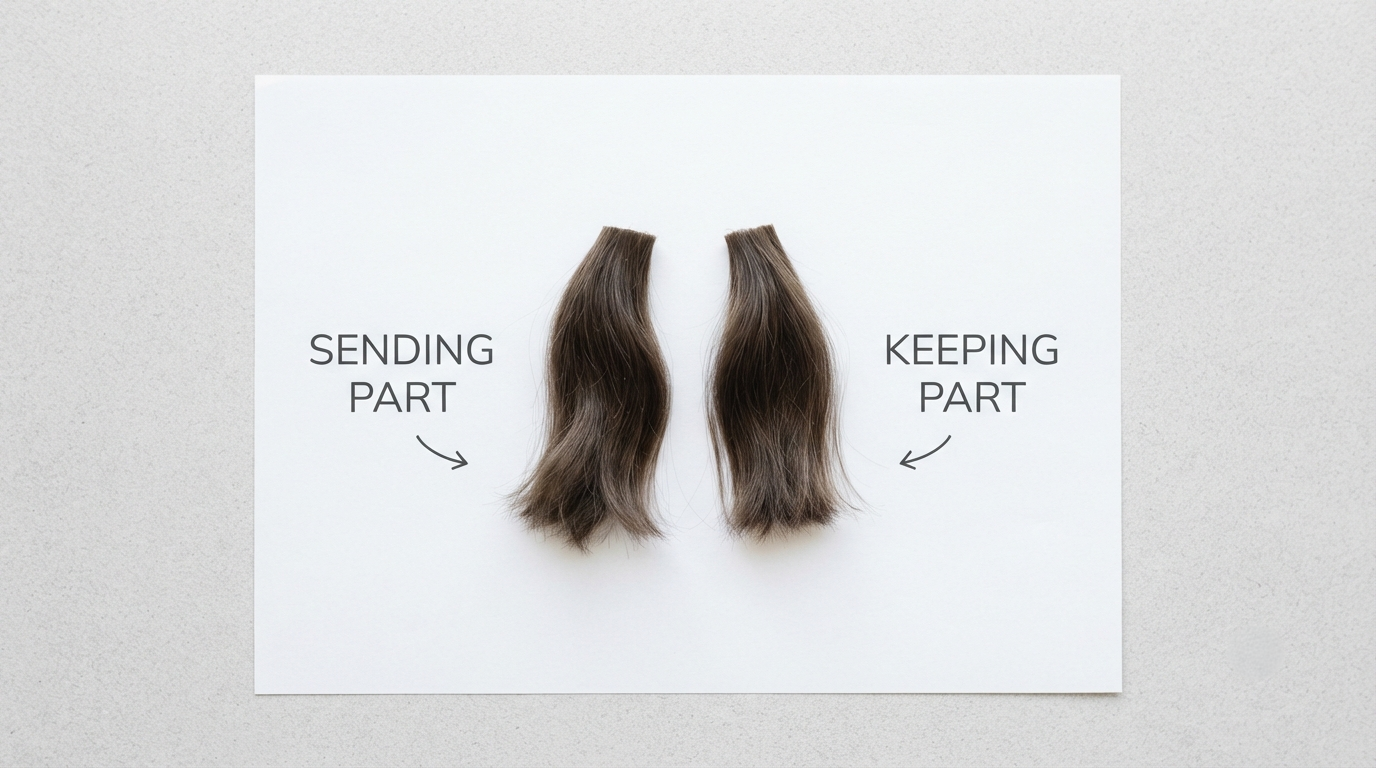
Often, and it is the single most effective protection available to you. Sending half a lock and keeping half means a failure costs you a stone rather than the object itself. It also leaves a second family member able to commission their own stone later from the same source.
Ask whether the provider will work from a reduced portion and whether doing so changes the likely outcome. If your sample is large enough to split, splitting it converts the worst case from irreversible to merely disappointing, which is why it belongs among the partner hair diamond questions asked before the envelope is sealed, not after. Where more than one person wants a stone, the practicalities of sharing a single source are worth reading first.
The Partner Hair Diamond Questions About What a Certificate Asserts
Documents outlast the people who commissioned them, which is why the partner hair diamond questions end here. Read yours before it exists.
9. What, exactly, does the certificate claim about origin?
There are two documents and they do different work. A grading report, ideally from an independent laboratory, describes the finished stone, cut, color, clarity, carat, the same category of assessment any diamond receives. An origin or authenticity certificate describes the submission: that this diamond was grown from carbon extracted from material received under this reference on this date.
Notice what the second document can and cannot say, because this is one of the partner hair diamond questions a certificate answers on your behalf for the rest of its life. It can say material was received and tracked. It cannot say whose hair it was, because nobody at the laboratory was in your house when the lock was cut. Good wording reflects that honestly. Wording that implies genetic verification is overreaching, and it is fair to ask for a sample certificate before you commit.
Ask too about the proportion, and be careful with the number you have probably already read. The often quoted 10 to 15% band describes carbon recovered from cremated ashes; no equivalent share is published for hair, so no honest document can put a hair figure on it. What is true on either route is that laboratory carbon makes up the bulk of the charge so the crystal reaches a viable size, and that the personal carbon is a real, verifiable, permanent minority of the lattice rather than the whole of it.
So make it one of your partner hair diamond questions: what share is my sample expected to contribute, and how is that recorded? Any document or salesperson claiming the stone is wholly your partner is overstating what a grown diamond actually is, and a company comfortable overstating that will be comfortable overstating other things. That honesty test sits underneath all nine partner hair diamond questions on this page.
Frequently Asked Questions
Can a finished diamond be tested to prove whose hair it came from?
No. The growth process runs far above the temperature at which biological material survives, so nothing identifiable remains in the crystal. Treat any claim that a finished stone can be genetically matched to a person as a reason to ask a great many more questions.
Is hair from a hairbrush usable?
Physically, yes, brush strands are the same keratin as a cut lock. The caveat is that a shared brush may hold more than one person’s hair, and nothing in the process distinguishes them. Decide in advance whether that ambiguity sits comfortably with you.
Does the hair need roots attached?
No. The carbon is in the shaft, and roots add almost nothing to the mass. Root bulbs would matter for DNA testing, which providers do not generally offer on this route, so cut ends are perfectly workable.
My partner’s hair was gray. Does that change the stone?
No. Pigment is present in trace quantities and is removed during purification like everything else that is not carbon. A diamond’s color comes from trace elements at growth, nitrogen tending yellow, boron tending blue, neither present giving colorless.
Can I send more hair later if the first sample falls short?
Ask, because it depends entirely on where the run has reached. Once material is purified and committed to a growth cell, adding to it is usually not possible. Before that stage, some providers will accept a top up. Get the deadline in writing.
My partner was buried rather than cremated. Does hair still work?
Yes, and that is the point of this route. Hair needs no cremation at all, which is why it also suits families whose faith or wishes ruled cremation out, and why a lock saved during life is enough on its own.
Final Thoughts on Partner Hair Diamond Questions
Everything on this page comes back to one sentence: there is no second envelope. The chemistry is forgiving, the timeline is ordinary at six to ten months, and the finished stone is a real diamond by every measure. The only unrecoverable thing is the sample you start with, and that is what shapes the partner hair diamond questions.
Which is why the partner hair diamond questions worth asking are the ones that happen before postage, weight, condition, assessment, splitting, and what a provider does on a bad day. Asked in that order, they cost you an afternoon. Asked afterwards, some of them have no useful answer at all.
If a company answers all nine partner hair diamond questions plainly, you have learned something. If one of them produces a shrug, you have learned something more useful still, and you have learned it while the envelope is still in your drawer.
Learn More About Partner Hair Diamonds
- Partner Hair Diamond: The Complete Guide
- Is a Memorial Diamond Really Made From Your Partner’s Hair?
- What Color Will a Diamond Made From Your Partner’s Hair Be?
- Questions to Ask Before Turning Your Partner’s Ashes Into a Diamond
- Questions to Ask Before Turning Your Partner’s Ashes and Hair Into a Diamond
Talk With Memorial Diamond
If you want the partner hair diamond questions above answered against your actual sample rather than in general, reach out to Memorial Diamond at memorialdiamond.us. Bring a weight in grams, a photograph of the lock as it currently sits, and an honest description of how it has been stored, including the parts you would rather not mention.
Nothing about the partner hair diamond questions needs deciding in a first conversation, and nothing should be posted before one. Ask what your sample would need to weigh, whether it can be split, and what happens on the day a run goes wrong.
Leave A Comment