
Wanting to wear something made from her is a natural impulse, and it often arrives long before anyone knows where to start. Families who turn grandmother ashes into a diamond usually follow the same order: agree on who decides, secure a small portion of the ashes, pick a provider, settle size and color, send the portion as instructed, and wait roughly 6 to 10 months for a graded, lab-grown stone.
Nothing about the decision to turn grandmother ashes into a diamond has to happen quickly. The seven steps below are written so you can stop at any point, talk with family, and pick up again when everyone is ready.
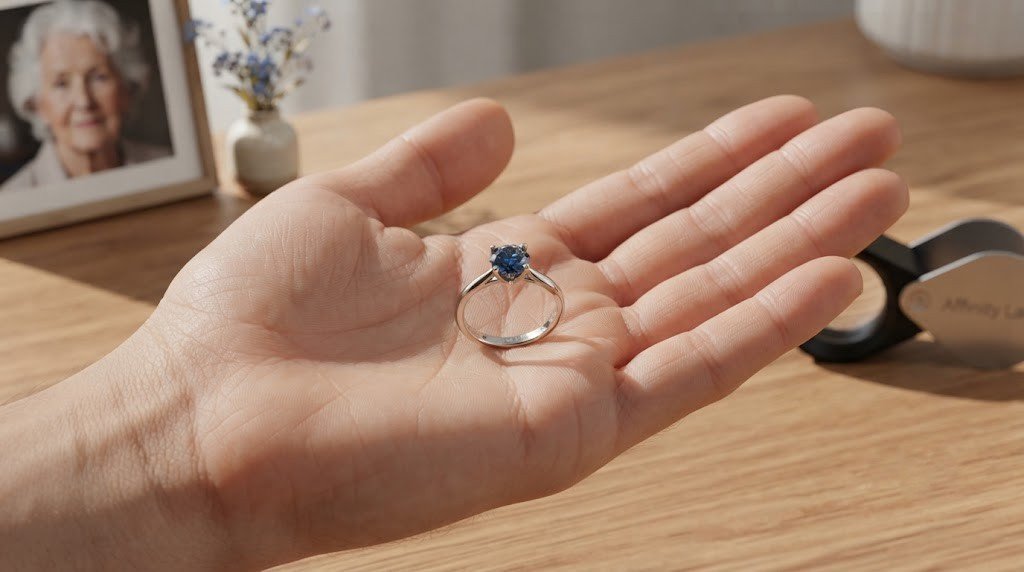
Table of Contents
What do you need to settle before you turn grandmother ashes into a diamond?
Three things matter more than any technical detail: who has the authority to release her ashes, how much of them the family is comfortable setting aside, and what the finished piece is meant to be. Getting these clear first saves awkward conversations once a provider is already involved.
It also helps to know what the stone will and will not be. What you get back is a genuine lab-grown diamond, judged on cut, color, clarity and carat like any stone in a jeweler’s case, and it typically contains a portion of her recovered carbon blended with supplemental lab carbon. Families who turn grandmother ashes into a diamond are choosing a stone grown partly from her, not one made entirely of her ashes. The encyclopedia entry on memorial diamonds gives useful background on how the category developed.
This table sets out how to turn grandmother ashes into a diamond at a glance, along with who usually needs to be involved at each point.
| Step | What you do | Who to involve |
|---|---|---|
| 1 | Confirm who holds authority and ask for agreement | Whoever signed the cremation authorization, close family |
| 2 | Locate the ashes and arrange a small portion | The relative who keeps them, any cousins who share them |
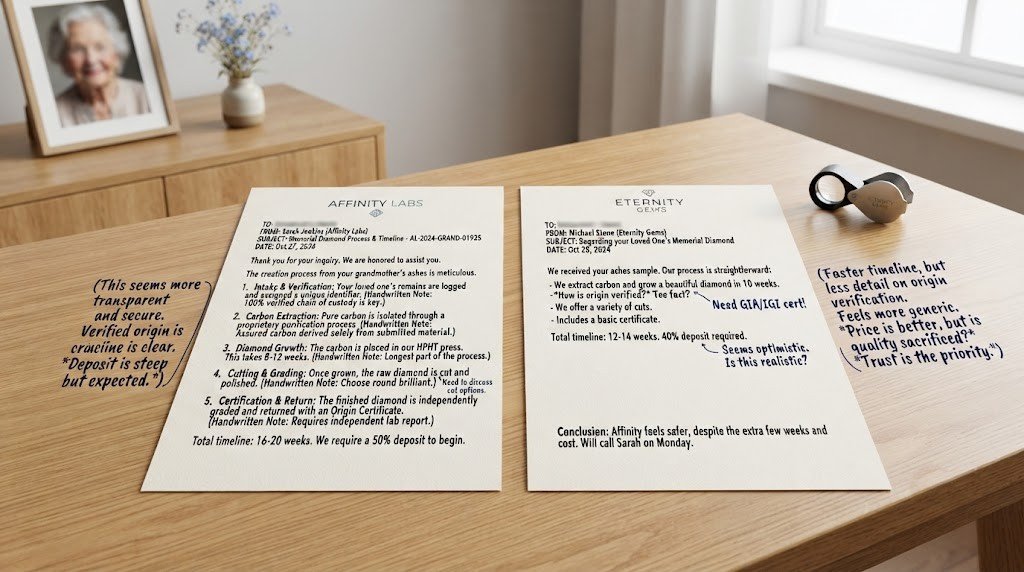
| 3 | Compare providers and get answers in writing | You, plus anyone sharing the cost |
| 4 | Decide size, color, cut and setting | The person who will wear the stone |
| 5 | Portion and ship the ashes per the provider’s kit | The keeper of the ashes, the provider |
| 6 | Wait while the lab extracts carbon and grows the stone | The provider |
| 7 | Receive the stone, certificate and any grading report | You, a jeweler if setting it later |
Step 1: Who holds authority over her ashes, and have they agreed?
Before you turn grandmother ashes into anything, find out whose decision it is. Authority over cremated remains comes from state law and from any written wishes she left, and states rank the possible decision-makers differently. A surviving spouse or partner frequently comes first, with her adult children next, and grandchildren further down.
The quickest way to learn who signed the cremation authorization is usually to ask the funeral home or crematory that handled her care. That person, or whoever now holds her ashes with the family’s blessing, is the one to approach if you hope to turn grandmother ashes into a keepsake stone.
Asking for a small portion so you can turn grandmother ashes into a stone
Lead with what you hope to make and why, then ask rather than assume. A keeper of ashes may feel more open to sharing a few tablespoons once they understand that most of the remains stay where they are. If the answer is no, or not yet, that is a complete answer for now.
If her wishes were written down, read them together, since they may settle whether to turn grandmother ashes into a diamond at all. Where faith shapes those wishes, remember that no tradition has ruled on memorial diamonds as such; guidance concerns cremation and how ashes are handled. Catholic teaching, for example, asks that ashes be kept intact in a sacred place, with only narrow room for setting aside a small portion. If faith mattered to her or to the family, a leader from that community can speak to what fits her tradition.
Step 2: What if her ashes are with a relative or already divided?
It is common for the ashes to be somewhere other than with the person who wants a diamond. An aunt might have the urn on a shelf, an uncle might have carried part of them to a place she loved, or a parent might hold them while deciding what to do. Families who turn grandmother ashes into a stone often begin with a phone call to whichever relative keeps them.
When the ashes are kept by an aunt, uncle or parent
Ask the keeper whether a small portion could be measured out so the family can turn grandmother ashes into a diamond without disturbing the rest. Offer to cover shipping, to let them be present when it is portioned, or to have the provider’s kit sent straight to them. Sharing control of the process tends to ease worries.
When the ashes were divided or partly scattered
If her ashes were split between branches of the family years ago, any branch that still holds a share may be able to contribute. If most were scattered or interred, a remaining keepsake portion may still be enough, depending on the provider. Ask the provider what amount they can work with before anyone opens an urn. Cousins who turn grandmother ashes into a diamond from a divided share should first agree on which share contributes.
When the family does not agree
Disagreement is not unusual, and there is no need to settle it quickly. Some relatives feel strongly that ashes should stay together; others see a stone as one more way to remember her. Pressing ahead to turn grandmother ashes into a stone over a relative’s objection can leave lasting hurt, so patience usually serves the family better. If ashes are off the table, her hair, if any was kept, may be an alternative; the practical guide to turning her hair into a diamond instead explains that route, along with the estate question that hair kept at home can raise.
Step 3: How do you choose a provider to turn grandmother ashes into a diamond?
Choosing where to send her ashes is the step where written answers matter most. Every provider sets its own rules on quantities, tracking, colors, grading and refunds, so compare at least two and keep their replies on file. When you turn grandmother ashes over to a lab, you are trusting it with something that cannot be replaced.
Put these questions to each provider in writing:
- How much ash do you need for the size I have in mind, and what happens to anything left over?
- Can unused ashes be returned, and how are they shipped back?
- How do you track her ashes from arrival to the finished stone, and what records will I receive?
- Of the finished stone’s mass, how much do you estimate comes from her, and how did you reach that number?
- Is an independent grading report included, or priced separately?
- What happens if a growth run does not succeed, and what are your refund terms?
- Are ashes that have been stored for many years still workable?
Answers to these questions are the clearest guide to whether a given lab is the right place to turn grandmother ashes into a diamond.
For ash-based stones, the industry commonly cites a personal-carbon share of about 10–15% of the finished mass, with some providers quoting as little as 3% and others more. A provider that promises a stone made purely from her ashes is overstating the process. If you want to test claims like these, the guide to whether a memorial diamond really holds her ashes lists the evidence worth requesting.
Step 4: What size, color and setting should you decide before ordering?
Providers that turn grandmother ashes into diamonds usually ask for these choices at the order stage, because they shape the growth run. Decide them with the person who will wear the stone, since their style, not a general idea of what suits a grandmother, is what matters.
Size and cost
Carat size is set by how long the stone grows, not by how much ash you send, so it is a choice rather than a result. Anyone hoping to turn grandmother ashes into a larger stone should plan for both a longer wait and a higher price. Treat the figures below as broad 2026 market ranges; Memorial Diamond has not published its own pricing yet.
| Carat range | General industry price (2026) | Worth knowing |
|---|---|---|
| About 0.10–0.25 ct | Roughly 1,500–3,500 | Suits pendants, earrings and smaller rings |
| About 0.5–1 ct | Roughly 5,000–15,000 | Colorless sits at the top of this range or above |
| About 2–5+ ct | Roughly 20,000–75,000+ | Longer growth, often a longer wait |
Settings, engraving, fancy cuts and independent grading are usually added on top.
Color
Trace boron in the growth cell leads to blue and trace nitrogen to yellow. If you want to turn grandmother ashes into a colorless stone, both have to be kept out, which adds processing and cost. Memorial stones commonly come out yellow, blue, or champagne to brown. Some providers offer irradiation after growth for red, pink, green or black. A family cannot pick an exact shade in advance, and the guide on what color her ashes might produce explains why.
Setting
A ring, pendant, pair of earrings or loose stone in a keepsake box are all common. If several relatives plan to turn grandmother ashes into jewelry at the same time, decide early whether the pieces should match or follow each wearer’s taste. Clarity in these stones typically falls between SI2 and VVS, which is worth keeping in mind for a larger, open setting.
Step 5: How do you portion and send her ashes?
Once an order is placed, the provider usually sends instructions and often a collection kit. Follow those instructions exactly, because they set the container, labeling and shipping method the lab expects. The portion needed is usually modest, which may ease the mind of a relative asked to help turn grandmother ashes into a diamond.
Requests across the industry typically run from a few tablespoons to about 4 oz (near 100 g), and each lab sets its own figure. Measured against everything the crematory returned, that is a small share, so the urn, the plot or the family’s chosen place keeps most of her. The guide to how much ash a grandmother memorial diamond needs covers amounts in more detail.
Practical tips for the day you portion the ashes
- Choose a calm moment and a clean, steady surface, and invite whoever wants to be present.
- Use the scoop or container supplied, and measure only what the provider requested.
- Seal and label the portion as the instructions describe, with her name and your order details.
- Keep a photo and a written note of the date, the amount and who was there.
- Ship using the method the provider names, and keep every tracking number.
Rules for mailing cremated remains, including which carriers accept them, are set by the carriers and can change. Before you turn grandmother ashes over to a courier, ask the provider which service they expect and check that carrier’s current rules.
Step 6: What happens at the lab once her ashes arrive?
You do not need to understand the chemistry to turn grandmother ashes into a diamond well, but a short outline helps. The lab logs the ashes on arrival under chain-of-custody tracking, then heats them without oxygen to separate carbon from the calcium phosphate that makes up most of the ash. Usable carbon makes up only around 0.5% to 4% of the ash’s weight.
What it recovers is purified to roughly 99.9% or better and converted to graphite. That graphite is typically blended with lab carbon and grown into a diamond, most often by HPHT and sometimes by CVD. The stone is then cut, polished and graded. The overview of synthetic diamond growth explains both methods, and a dedicated walkthrough of how her ashes become a diamond in the lab covers each stage in plain terms.
Whether a provider shares photos or updates while it works to turn grandmother ashes into a finished stone varies, so ask before ordering if regular news would help you.
Step 7: What do you receive, and when?
Across the industry, stones typically arrive 6 to 10 months after the lab receives the ashes. Stones above about 2 carats, and specialty colors, can take up to roughly 12 months. If you mean to turn grandmother ashes into a gift for a particular anniversary, plan around that window rather than a fixed date.
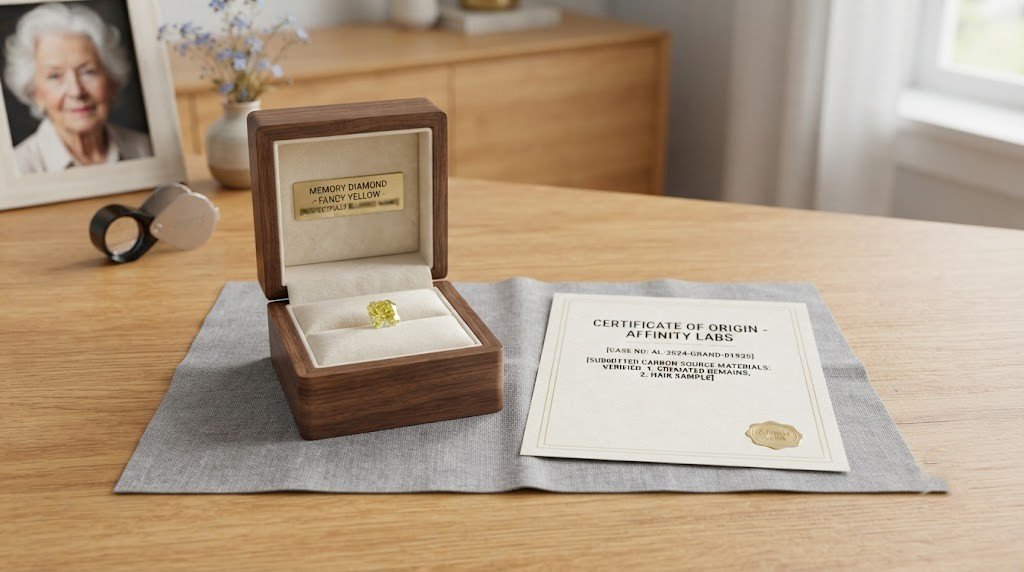
What arrives is usually the finished diamond, set or loose, along with a certificate of origin. That certificate, usually issued in-house, records that the stone was grown from the carbon submitted for her. A grading report is different: it records cut, color, clarity and carat, ideally from an independent lab, and is often an optional extra. If you plan to insure the stone, ask an insurer what paperwork they want.
The finished stone is hard, at 10 on the Mohs scale, but a sharp knock can still chip any diamond. A jeweler can suggest a protective setting if it will be worn every day.
Can several grandchildren turn grandmother ashes into separate stones?
Often they can, since each stone uses only a portion of the remains. When cousins want to turn grandmother ashes into several diamonds, one coordinated order is usually simpler than several separate ones, and it keeps the ashes moving only once.
When several grandchildren turn grandmother ashes into stones together, a few habits keep the order fair and calm:
- Agree on one contact person who speaks with the provider and the keeper of the ashes.
- Let each grandchild choose size, color and setting for their own stone, and pay for it.
- Write down who receives which stone before anything ships.
- Leave room for relatives who say no; their choice does not need defending.
Families weighing both her ashes and saved hair can read the complete guide to a stone from her ashes and hair. For the whole subject from the ground up, start with the grandmother ashes diamond guide.
Cremation is now the more common choice nationally; the NFDA’s 2025 cremation and burial report projects a 63.4% cremation rate against 31.6% for burial. That shift means more families hold ashes, and more grandchildren may wonder how to turn grandmother ashes into something they can wear.
Frequently Asked Questions
Can a grandchild order a diamond from her ashes without asking anyone?
It is best not to. Authority over her ashes follows state law and her written wishes, and a surviving spouse or partner or her adult children often decide first. Asking whoever holds that authority for a small portion protects family relationships and avoids problems with providers.
Her ashes were scattered years ago. Is a diamond still possible?
It depends on whether any portion was kept. If a relative still has a keepsake share, even a small one, a provider may be able to work with it. Ask the provider what minimum they need before anyone opens or moves the remaining ashes.
Does the whole urn have to be sent to the provider?
No. Industry requests typically range from a few tablespoons to about 4 oz, which is usually a small fraction of the total. The rest of her ashes can stay in the urn, be interred, or be scattered as the family planned.
Will sending more of her ashes make the diamond bigger?
No. Carat size depends on how long the stone grows in the press, not on how much ash is supplied. When you turn grandmother ashes into a diamond, you choose the size at ordering, and that choice, with color, largely sets price and waiting time.
What paperwork comes with a diamond made from her ashes?
Usually a certificate of origin from the provider, recording that the stone was grown from her submitted carbon. An independent grading report covering cut, color, clarity and carat is a separate document and is often an optional extra with its own fee.
Can the stone be ready for a particular anniversary?
Possibly, if you start early. Industry timelines typically run 6 to 10 months from when the lab receives the ashes, and up to about 12 for larger or specialty-color stones. Ask the provider for an estimate before committing to a date.
Final Thoughts on Turning Her Ashes Into a Diamond
When you turn grandmother ashes into a diamond, the order matters more than the speed. Agreement within the family comes first, then a provider whose answers you have in writing, then the choices that belong to whoever will wear the stone.
Some families take weeks over this and some take years. Either pace is fine, and the rest of her ashes can stay exactly where they are while you decide.
Learn More About Making a Diamond From Grandmother’s Ashes
- Step-by-step: turning your grandmother’s ashes into a diamond each stage of the process in sequence
- Grandmother ashes diamond: the complete guide the full picture, from carbon to cost
- How much ash a grandmother memorial diamond needs typical amounts and what is left over
- What color a diamond from her ashes might be trace elements and color choices
Talk With Memorial Diamond
Whenever you and your family want to talk about how to turn grandmother ashes into a diamond, Memorial Diamond is here to listen and explain. A first conversation commits you to nothing.
Find us at memorialdiamond.us.
Word count: 3,049 words · Reading time: about 15 minutes
Leave A Comment