
You may be holding a small envelope and doubting that anything so light could honestly become a gem. Asked plainly, is the stone really made from daughter hair? The answer is yes, in part: carbon from her hair is extracted, purified and grown into a genuine lab grown diamond, alongside supplemental laboratory carbon. What nobody can do is test the finished stone and point to her carbon inside it, so the proof you receive is a paper trail, and this page explains how to judge one.
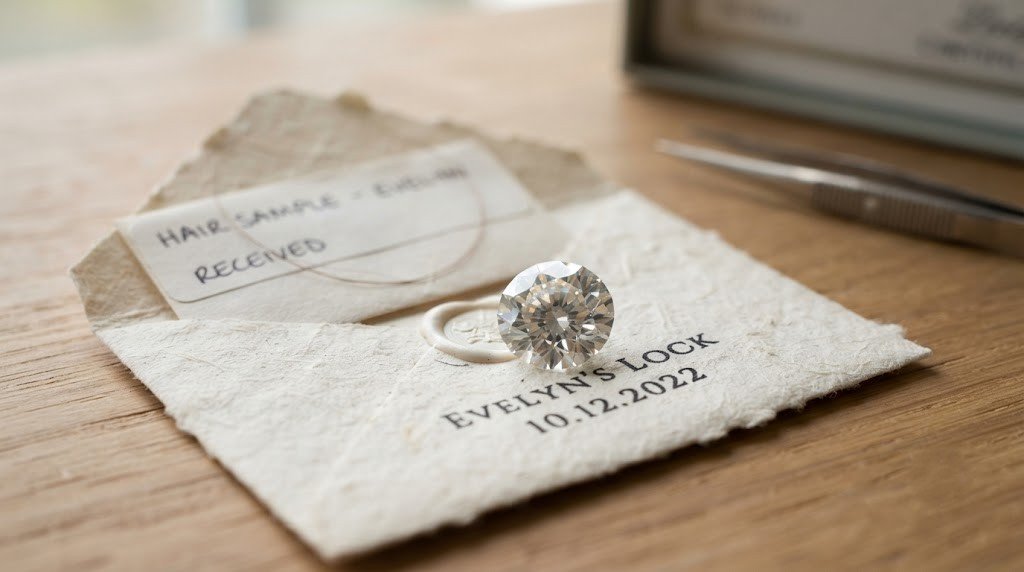
Table of Contents
Is a Diamond Really Made From Daughter Hair, or Is That Marketing?
It is a real process, and doubting it is sensible. The question usually arrives in its bluntest form, is this thing really made from daughter hair, or is it a nice story? It deserves a blunt reply.
Three statements are true together. Her carbon genuinely enters the crystal. The crystal is genuinely diamond. And the stone is not hair alone, because providers across the industry supplement personal carbon with laboratory carbon to reach a size worth growing.
Trouble starts when marketing keeps the first two statements and drops the third. A page promising a gem that is “100% her” describes something the physics does not allow. Any accurate account of a stone really made from daughter hair includes the blend.
Whether she was a little girl or a grown woman, the answer stays the same; what varies is how much you can verify, and that depends on the provider. The complete guide to a daughter hair diamond sets out the wider decision around it.
Why Is Hair Such a Rich Source of Carbon?
Hair is made mostly of keratin, a protein built on a carbon backbone, which puts it at roughly 50% carbon by weight. Cremated remains are a different substance altogether: mostly calcium phosphate, the mineral of bone, with usable carbon at only around 0.5% to 4% of their weight.
That contrast explains why so little is requested: typically a small lock or a few grams of hair, against a few tablespoons to about 4 oz of ash. A gem really made from daughter hair begins with material that is, gram for gram, far richer.
Hair also removes cremation from the picture. A family that chose burial, or whose tradition does not permit cremation, can still pursue a stone really made from daughter hair, provided some of her hair was kept somewhere.
Hold on to one distinction, though. The 50% figure describes what sits in the envelope, not how much of a diamond really made from daughter hair is hers. How much hair a laboratory typically asks for covers quantities and collection.
If Hair Is Half Carbon, Why Is Lab Carbon Added?
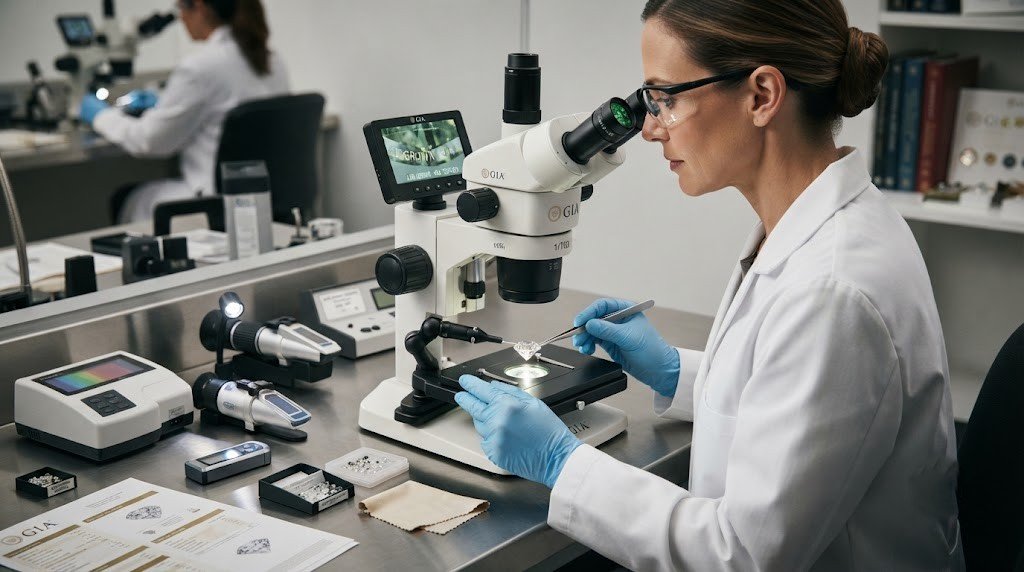
A growth cell needs a certain volume of graphite feedstock, and a lock of hair, even at half carbon, rarely supplies enough by itself. Providers therefore top up the purified personal carbon with supplemental laboratory carbon so the press can build a crystal of the size that was ordered.
The work runs in stages. Heating without oxygen drives off the non carbon parts of keratin and leaves carbon at about 99.9% purity or better. That carbon becomes graphite at roughly 2,500 to 2,700°C, then, blended with lab carbon, goes into an HPHT cell beside a tiny seed at around 6 to 8 GPa and 1,400 to 2,500°C; a minority of providers use CVD.
Carat weight is decided by time in the press, not by the weight of hair posted, so sending more does not produce a bigger or quicker stone.
In physical terms, then, a diamond really made from daughter hair is her carbon plus laboratory carbon locked into one continuous crystal lattice. How the stone is grown from her hair, stage by stage follows the material through each step in more depth.
What Share of a Stone Really Made From Daughter Hair Is Hers?
Nobody has published an answer for the share of a stone really made from daughter hair that is personal carbon. That is the honest position.
For cremated remains an industry figure does circulate: personal carbon is commonly put at around 10% to 15% of the finished stone, with some providers quoting less. That number belongs to ash. It was never established for hair, and lending it to a gem really made from daughter hair would be guesswork dressed up as fact. The final share hinges on stone size, recovery and each laboratory’s method. The same question asked about her ashes shows how differently the two routes are documented.
So the only figure worth relying on is one the provider commits to on paper. Ask what share they expect to be her carbon at your chosen carat, whether that is measured or estimated, and whether more hair changes it. Keep the reply.
A clear answer with its basis explained is a good sign. The ash figure repeated for something really made from daughter hair is not.
Can Any Test on the Finished Diamond Prove It Is Hers?
No. No test on the finished stone can show it was really made from daughter hair, or link it to any particular person. DNA does not survive purification, and carbon atoms carry no record of their source.
Gemological testing can identify a diamond as laboratory grown and can often tell the HPHT and CVD growth methods apart. That confirms a genuine grown diamond, nothing more.
This moves the whole question of trust from the stone to the process. Evidence that a gem is really made from daughter hair lives in records created while the work happens: the intake log, the custody trail through each stage, and the origin certificate at the end. If those records are thin, nothing done to the diamond afterward can make up for it.
An independent grading report answers a separate question: it describes quality. Only the chain of custody shows whether a diamond is really made from daughter hair.
Honest Claims Versus Overclaims: How Can You Tell Them Apart?
Most statements you will meet fall into one of two columns. The table below pairs common claims about a stone really made from daughter hair with the accurate version of each.
| Topic | The overclaim | The honest version |
|---|---|---|
| Purity | “100% her, nothing added” | Her carbon blended with supplemental lab carbon |
| Her share of the stone | The ash route 10% to 15% applied to hair | No published hair figure; the provider’s own estimate, in writing |
| Proof of origin | “We can test the diamond to show it is her” | No finished stone test identifies a person; trust rests on chain of custody |
| Hair’s carbon | “Half the diamond is her, since hair is 50% carbon” | 50% describes the starting hair, not the finished stone |
| Color | “Hair diamonds always come out lighter” | Color follows trace elements during growth; nothing is guaranteed |
| Certificate | “Fully certified,” with no detail | In house origin certificate named separately from optional independent grading |
| Size | “Send more hair for a bigger stone” | Carat is set by growth time, not by quantity sent |
Warm language is fine. The test is whether each claim about a gem really made from daughter hair survives a polite follow up question.
Which Documents Should You Ask For?
Ask before anything is posted, and ask to see sample copies. A company confident that its stones are really made from daughter hair will happily show you what its paperwork looks like.
- Written quote and terms: carat, color approach, price and expected timeline, stated as the company’s own estimate.
- Intake confirmation: a record that the hair arrived, logged against a unique reference on the day it was received.
- Chain of custody log: how the sample is labeled and tracked through purification, graphitization and growth, and whether it is processed on its own rather than beside other families’ material.
- Personal carbon statement: the provider’s written estimate of her share of the finished stone, with how it was reached.
- Origin or authenticity certificate: the in house document tying the finished diamond to your submission.
- Independent grading report: a third party assessment of the stone’s quality, ordered separately if you want one.
- Leftover material and failed run policy: what happens to unused hair, and what happens if a growth run does not succeed.
Before posting, photograph the hair and keep every email in one folder. A step by step outline of the hair route shows where each document appears.
What Red Flags Should Make You Pause?
None of these proves wrongdoing alone, but each weakens the case that a stone is really made from daughter hair.
- A promise that the diamond is pure hair, or “entirely her.”
- A percentage quoted for hair that turns out to be the ash route figure.
- A claim that a lab can test whether the finished diamond is really made from daughter hair.
- No written description of how your sample is labeled and kept separate.
- The word “certificate” used without saying who issues it or what it covers.
- Pressure to decide quickly, or discounts that vanish within days.
- Silence on what becomes of hair that is not used.
Raising any of these is fair. A good provider explains; a poor one only reassures.
What About Hair That Is Old, Dyed or Chemically Treated?
Discuss it with the provider before sending, every time. Keratin is durable, so hair kept dry for many years may well remain workable, but only the laboratory can say how condition affects recovery for a stone really made from daughter hair.
Dye, bleach, perms, relaxers, henna and styling products all introduce other substances. Much of that may be driven off during purification, yet some treatments could reduce usable carbon or mean more hair is requested. Describe its approximate age, storage, any coloring or treatment, and whether brush hair is mixed with dust or other people’s strands.
Do not wash or tidy it first; cleaning can lose fine strands. If you hold very little, say so at the outset.
An accurate description helps more than a perfect sample. Turning her hair into a diamond, from collection to shipping covers the practical handling in more detail.
Who Should Agree Before Her Hair Is Sent?
That depends on your family and your state, so check rather than assume. Rules on who controls a person’s remains are set state by state, and there is no single national rule describing how they apply to hair kept at home.
Hair in your possession is often simpler than cremated remains, yet not automatically outside every rule: belongings can form part of an estate. Where your daughter had a spouse or partner, or adult children of her own, they may hold a stronger say than her parents, and anything she left in writing, a directive, a will provision or a pre arrangement, may shape what is appropriate.
Parents may disagree, or one may be arranging everything alone; both are common. If someone else holds the hair or an estate is unsettled, a funeral director or local attorney can help, and it keeps a stone really made from daughter hair from becoming a source of friction.
Does Hair Change the Color, Price or Timeline?
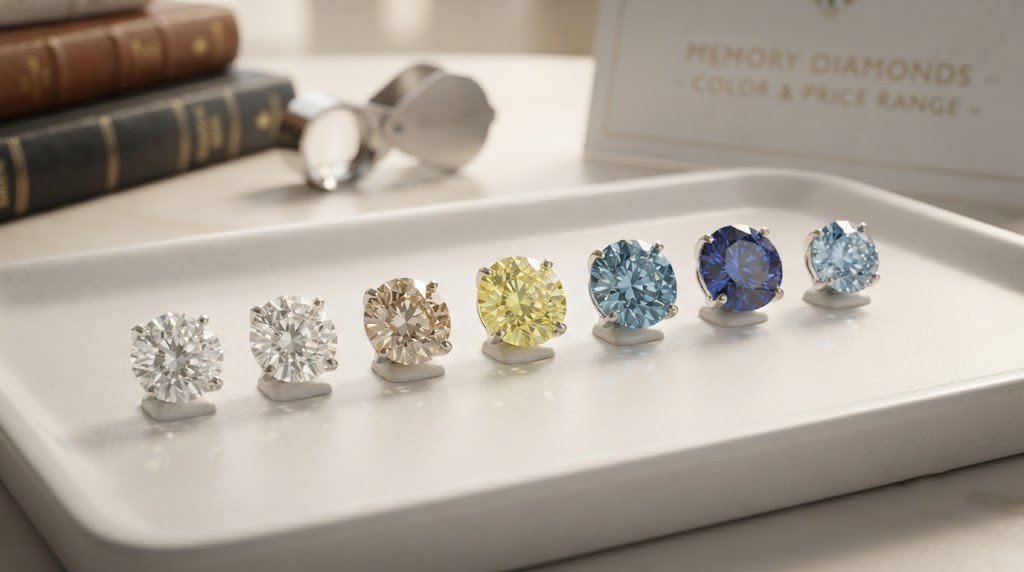
Not in any predictable way. Diamond color is governed by trace elements in the growth chamber: nitrogen pulls the stone yellow, boron gives it a blue cast, and colorless requires that neither is present. A cleaner, carbon rich starting material does not make color predictable, and hair grown stones are not automatically lighter than ash grown ones. Colorless usually costs more, and irradiation to produce red, pink, green or black is optional. What color a diamond from her hair may turn out to be explores this closely.
Price follows carat and color rather than source material. As general 2026 industry ranges, not any single company’s rates:
- About 0.10 to 0.25 ct: roughly $1,500 to $3,500
- Half a carat to one carat: roughly $5,000 to $15,000
- 2 ct to 5 ct and beyond: roughly $20,000 to $75,000 or more
- Priced separately: settings, engraving, fancy cuts and an optional independent grading report against GIA’s cut, color, clarity and carat standards
Clarity typically lands between SI2 and VVS, and the usual wait is six to ten months, up to twelve for larger or specialty color stones. These are industry figures, not Memorial Diamond’s own, offered to help you read any quote for a diamond really made from daughter hair.
What Happens to the Hair That Is Not Used?
That depends on the provider, so ask before sending. Some return unused hair, some keep it for a possible second diamond, and some dispose of it. When what you hold is limited, that answer matters.
Ask too whether one submission could support more than one diamond. Two stones usually mean two growth runs and two prices. It is one more detail about a stone really made from daughter hair that belongs in writing.
Frequently Asked Questions
Is there any DNA in a diamond made from her hair?
No. Purification and graphitization at extremely high temperatures destroy DNA, and a finished diamond is carbon in a crystal lattice with nothing that identifies an individual. Whether a stone is really made from daughter hair is shown by the records kept during processing, not by any later test.
Could a provider substitute other carbon without anyone knowing?
A test on the finished stone could not reveal a substitution, so the custody record is what shows a diamond is really made from daughter hair. Ask how your sample is labeled, whether it is processed on its own, and which records you receive at each stage. Specific, detailed answers are your strongest protection.
How much hair does a laboratory usually need?
Typically a small lock or a few grams, often described as palm sized. Requirements vary between providers and with the stone you want, so confirm the exact amount before cutting or posting anything, particularly if the hair you hold is limited or means a great deal as it is.
Can hair from a hairbrush be used?
Often, if the provider accepts it. Hair gathered from a brush, comb or pillow still carries her carbon. Tell the provider where it came from, since dust, product residue or strands from other people in the household can affect how much usable material is recovered and whether a little more is needed.
Is a stone really made from daughter hair a genuine diamond?
Yes. It is a chemically genuine lab grown diamond with the same hardness and optical properties as a mined stone, not a simulant or resin. Testing will identify it as laboratory grown, which is an accurate description of how it formed rather than a mark against it.
Does it matter how many years ago the hair was cut?
Age alone is rarely the main concern, since keratin is durable. Storage conditions tend to matter more, because damp, mold or contamination can affect a sample. Tell the provider roughly when the hair was cut and how it has been kept, and let the laboratory judge whether it is workable.
Should every answer about a diamond really made from daughter hair be in writing?
Yes. Ask for the personal carbon estimate, the custody process, the certificate details, the failed run policy and the leftover hair policy by email or in the contract. Written answers are easier to compare between companies and far easier to rely on months later, when the finished stone arrives.
Final Thoughts on Whether the Diamond Is Truly Her Hair
The doubt that brought you here is fair. Her carbon is genuinely in the stone, the stone is genuinely diamond, and the proportion is a blend nobody has published for hair.
Nor can any test settle it after the fact. Whether a gem is really made from daughter hair is decided by how carefully the sample is handled and recorded from the day it arrives, which is why the paperwork deserves as much of your attention as the stone.
None of that is a reason to step back, only to ask specific questions about a stone really made from daughter hair and keep the answers. Whatever you decide, there is no deadline.
Learn More About Daughter Memorial Diamonds
- The full guide to a diamond grown from her hair the whole hair route in one place
- How the stone is grown from her hair each laboratory stage explained
- How much hair a laboratory asks for quantities, collection and storage
- The hair route, step by step the practical sequence for families
- What color a diamond from her hair may be trace elements and realistic expectations
Talk With Memorial Diamond
If you want a straight answer about the hair you have, Memorial Diamond is glad to talk. Reach out through memorialdiamond.us with questions about samples, paperwork, or how a stone really made from daughter hair is documented. There is no obligation in asking.
Leave A Comment