

The first practical act is not opening the urn. It is making a phone call to whoever holds your father’s remains or arranges what happens to them and asking that person to set aside a small portion.
Turning your father’s ashes into a diamond involves four acts: retaining a portion, choosing a provider, specifying the carat, and posting the material. Only the first act has a deadline that you cannot move, and that deadline often arrives before you know which provider you want to use.
This guide explains that timing problem and shows what you can still fix when the four acts happen out of order.
The Four Acts and Which of Them You Can Undo
The sensible order does not always match the order a family can manage. The important question involves which acts you can reverse and which ones you cannot.
| Act | What you need first | Cost of doing it late | Can you reverse it? |
|---|---|---|---|
| Retain a portion | Access to the remains before interment or scattering | The ashes route closes | No |
| Choose a provider | Knowledge of what you hold and what you want to make | None while the portion remains safe | Yes |
| Specify carat and colour | The provider’s available options and intake rules | A growth run may follow a specification you later change | Until the growth run begins |
| Post the material | Provider, specification, intake instructions, and order reference | Material can arrive at a laboratory without a live order | No |
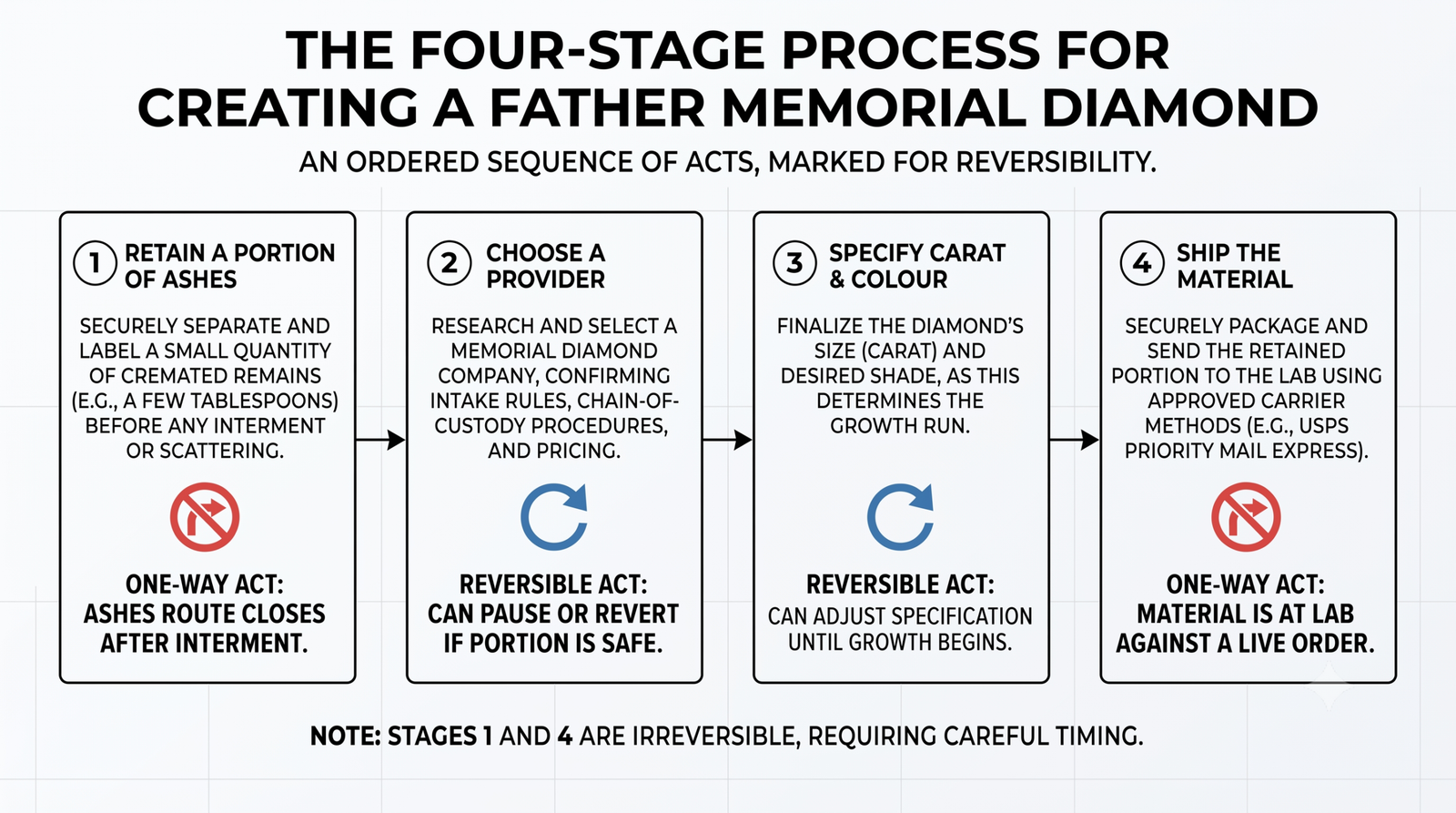
The two one way acts sit at opposite ends of the process. The two reversible decisions sit between them.
Carat also affects the rest of your planning. A memorial diamond grows to its chosen size inside a press rather than starting as a larger diamond and receiving a simple cut down to size. Growth time therefore affects both carat and cost.
Read choosing a carat size before you finalize your preferred stone size.
The Retention Deadline Arrives Before You Choose a Provider
Here is where the sequence creates trouble. A committal, interment into a shared plot, or agreed scattering can happen within weeks of a death. Once the family places or scatters the ashes, you cannot retain a portion for an ashes based diamond.
Provider research can take much longer. You may want to compare intake rules, pricing, growth options, documentation, family preferences, and production times before you choose a company.
That creates an unusual situation. The irreversible decision can arrive before the slower commercial decision.
The solution does not require a provider, price, carat, or colour. You can ask whoever holds the remains to retain a portion before the family completes the other decisions.
For the broader process, read The complete guide to a father ashes diamond.
If a funeral service or veterans interment affects the timing, ask the funeral professional about the point at which the remains leave their custody. Raise the retention question before that handover whenever possible.
Can You Retain a Portion Before Choosing a Provider?
Yes. Retaining a portion gives you time to research the provider and make the other decisions carefully.
Retention represents a physical step rather than a commercial one. You need a suitable sealed container, a clear label, and a written record. A provider does not need to supply those items for you to retain the portion.
Quantity represents the decision that deserves attention because you cannot return later for more ashes. Industry typical requirements range from a few tablespoons to roughly 4 oz, or about 100g. That amount represents a small share of a full cremation.
Read how much ash a father memorial diamond needs before deciding how much material your family should retain.
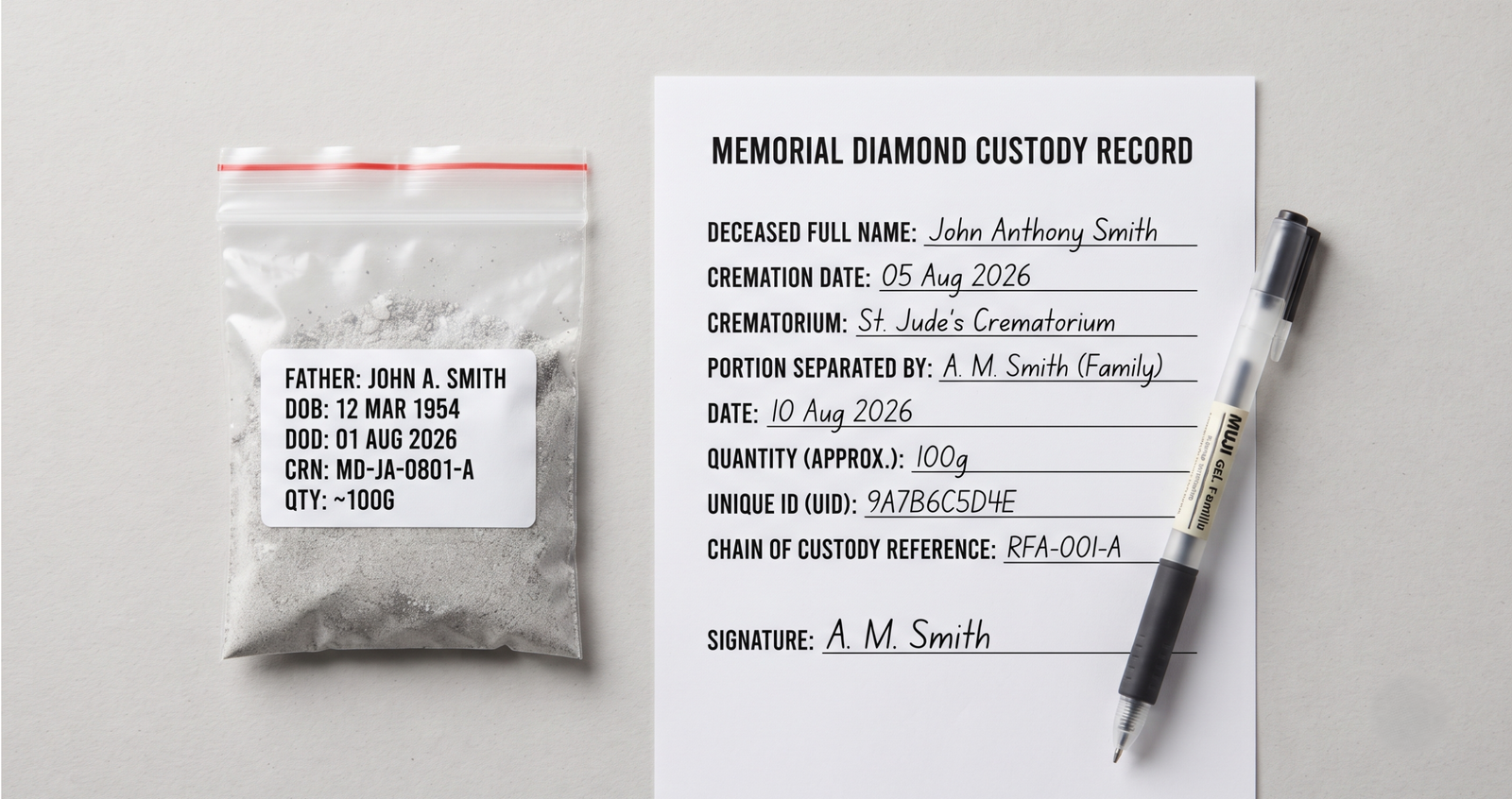
When someone separates the portion, record the following information:
- Who separated the portion
- The date of separation
- Your father’s full name exactly as it appears on the cremation paperwork
- The approximate quantity retained
- Where the portion remains stored
- Who knows about the retained portion
This record creates the family’s side of a custody history.
Read how providers track a loved one’s ashes to understand the other side of that record once the material reaches a provider.
If several family members contribute money toward the diamond, agree beforehand about who will own the finished stone and who will hold it. Ownership can vary according to jurisdiction and the way the family places the order.
What Has to Be Settled Before the Package Leaves?
Posting represents the second irreversible act. Families can rush this step because they already have the material and want to move forward.
Settle these points before you send anything:
- Choose the provider. Get the intake instructions in writing, including quantity, packaging, labelling, and delivery information.
- Agree on the specification. Confirm the carat and colour so the material arrives against a live order.
- Record the order reference. Put the reference on the package according to the provider’s instructions so the laboratory can connect the material with the correct file.
- Ask about unused material. Get a written answer about whether the provider returns material that remains after extraction or preparation.
Do not assume that a provider will receive and hold material while your family continues to decide the carat. That remains a provider policy question. Ask before you send anything.
You can also review what has to be settled before the package leaves for additional questions to ask your provider.
Shipping Is Decided by Carrier Policy, Not by Law
People often treat shipping cremated remains as a broad legal question. The practical issue also involves carrier policy.
There is no general legal obstacle to the concept of turning ashes into a diamond. Specific rules can apply to handling remains, documentation, and transportation. Carrier policies determine which shipping options an individual family can use.
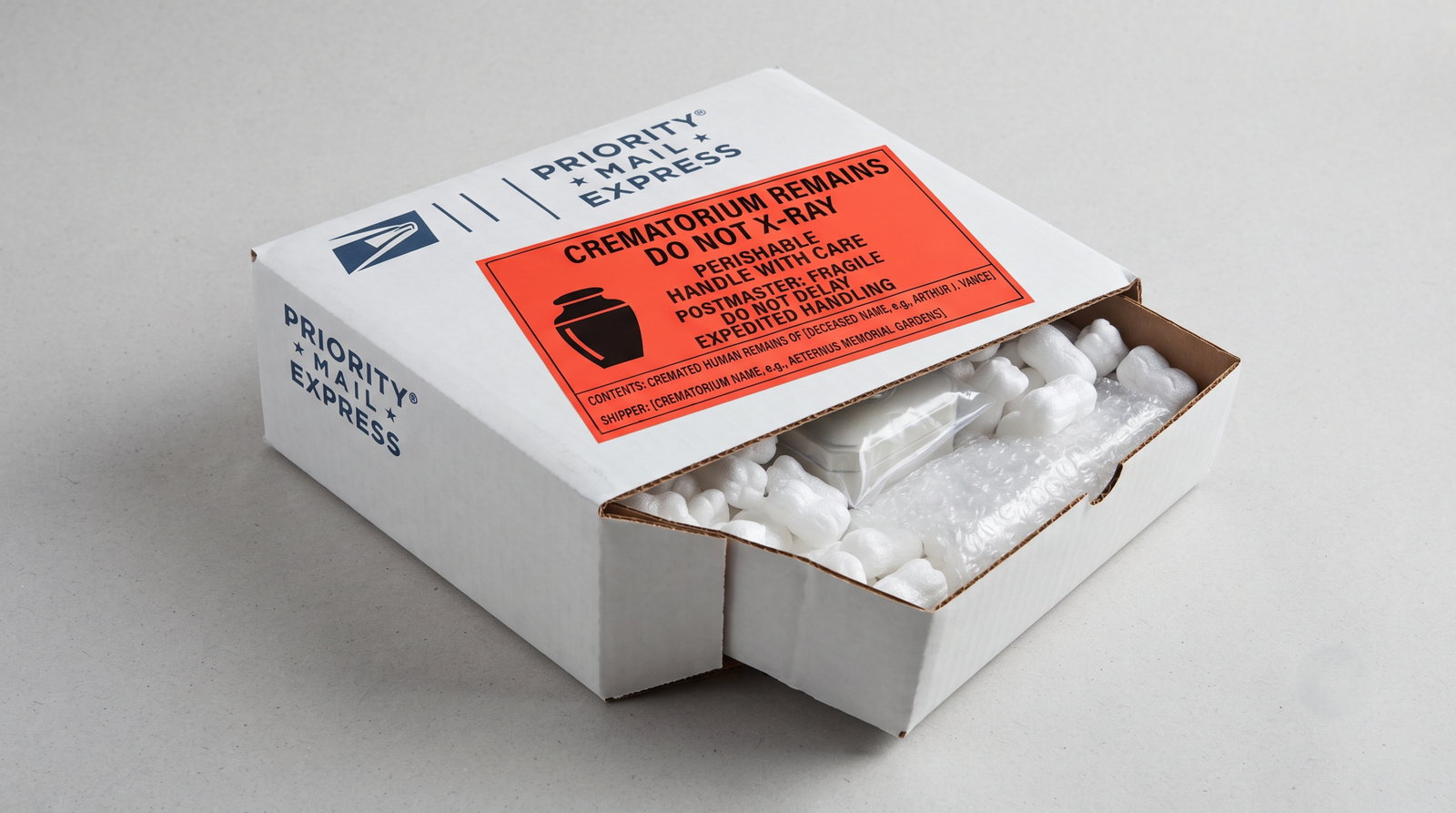
UPS, FedEx, and DHL restrict shipment of cremated remains by individual customers. For a family member shipping domestically, USPS provides the realistic direct shipping route described in this guide.
| Who sends the material | Possible route | What you should confirm |
|---|---|---|
| A family member within the United States | USPS Priority Mail Express with the appropriate cremated remains labelling | Current USPS packaging and service requirements |
| A funeral director | The funeral professional’s business shipping arrangements | Whether they can ship the material for the family |
| A family member delivering in person | Hand delivery | Whether the provider accepts public drop offs and records receipt |
USPS supplies a free Cremated Remains kit that customers can order online. Confirm current USPS requirements before you choose packaging because postal rules can change.
If you use your own packaging, ask USPS whether your sift proof and cushioned packaging meets the current requirements. Photograph the sealed package and its label before it leaves your possession. Then tell the provider that the material is on its way.
Read the legal position on turning ashes into a diamond for a more detailed discussion of the legal and handling questions.
If your father’s ashes have already gone to burial or scattering, the hair route can remain available. Turning your father’s hair into a diamond does not require the shipment of cremated remains.
What Can You Fix If the Acts Already Happened Out of Order?
Most sequence problems still have an answer. The important point involves identifying what has already become irreversible.
- The interment happened and nobody retained a portion. The ashes route has closed. A hair route can remain available because it does not require cremation.
- You chose and paid a provider before telling the family. If no material has moved, ask the provider whether it can pause the order before receiving the material.
- You retained more material than the provider needs. Keep the surplus with the family. Extra material gives you more flexibility than a shortfall.
- You retained less than the provider’s stated minimum. Ask whether the provider can work with the smaller quantity at a smaller carat. Treat this as a provider decision rather than a fixed chemical rule.
- You posted the parcel before agreeing on the specification. Ask the provider about its intake hold policy and whether it can connect the material with the order while you finalize the specification.
- You found a portion that someone set aside years ago without a record. Ask the provider what documentation it needs when the material has no clear cremation paperwork. The main issue becomes provenance rather than age.
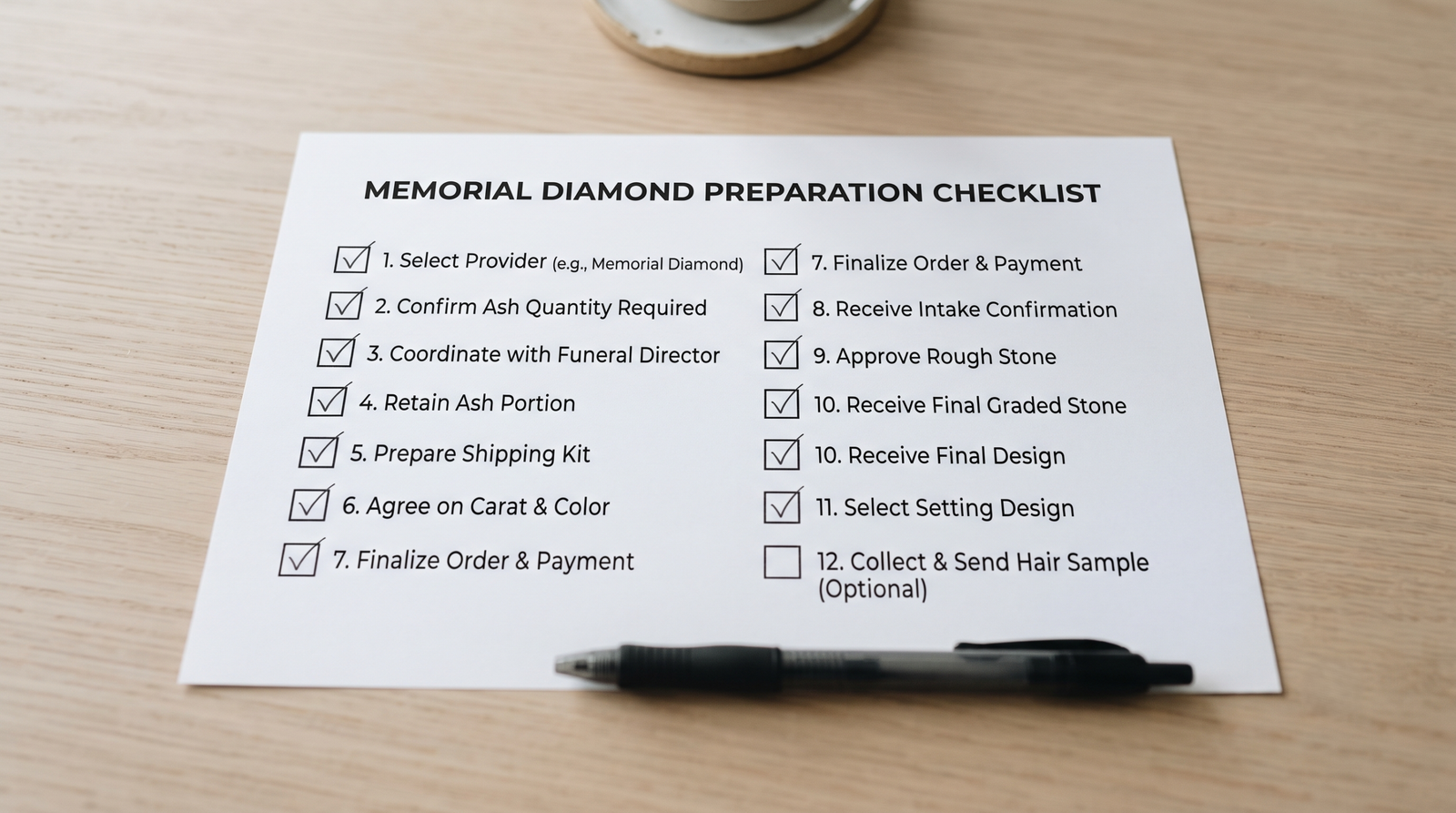
If the sequence has already broken, do not guess what the provider will do. Ask for the answer in writing.
Read the step by step process for turning your father’s ashes into a diamond for the practical sequence from start to finish.
What Happens Once the Parcel Is Out of Your Hands?
Your part of the sequence changes once the laboratory receives the material.
The production clock that providers quote generally starts when the laboratory logs the material into its intake process rather than when you place the parcel in the mail.
Ask the provider what intake confirmation looks like and how the provider sends that confirmation to you. Write down the receipt date because that date gives you a clear reference point for the production timeline.
Industry information places production around 6 to 10 months from laboratory receipt. Large stones and specialty colours can require around 12 months. The complete process can take around 8 to 14 months when you include planning, shipping, production, and final jewellery work.
Read how long a father memorial diamond takes for a closer look at the timeline.

One important point can help set expectations. Cremated remains contain only around 0.5% to 4% carbon by weight. Providers therefore blend recovered personal carbon with supplemental laboratory carbon to create enough material for diamond growth.
Industry information places the personal carbon contribution at roughly 10% to 15% of the finished stone’s mass. Sending more ashes does not automatically create a larger diamond or shorten the production time.
Before the parcel leaves, ask how often the provider expects to update you during production. Knowing the communication process in advance can make the waiting period easier to manage.
Frequently Asked Questions
Which comes first, choosing a provider or asking for a portion to be held back?
Ask for the portion first. Retention represents the only step with a deadline that cannot move. It does not require a provider, price, carat, or colour decision. You can choose the provider after the family safely retains the portion.
Can we send the portion before deciding the carat?
Usually, the specification should come first because a growth run follows the selected carat. Whether a provider will hold material while your family makes that decision remains a provider policy question. Confirm the policy before posting anything.
Do we have to order the free USPS Cremated Remains kit before we can post?
USPS supplies a free Cremated Remains kit that customers can order online. Confirm the current USPS requirements before posting because you may have another compliant packaging option. Waiting for a kit can also affect your timing.
Can a funeral director post my father’s ashes to the laboratory?
Often, a funeral professional can provide shipping arrangements that differ from those available to an individual customer. Ask the funeral director whether they can handle the shipment while they still hold the remains. Raise that question alongside your request to retain a portion.
A portion was set aside years ago and nobody recorded what it was. Can it still be used?
Ask the provider. The material itself can remain stable, but the missing documentation creates a provenance question. Tell the provider exactly what you know and ask what documentation it needs before accepting the material.
Does the growth clock start when we post the parcel or when the laboratory receives it?
The industry timeline starts at laboratory receipt. Transit time, any intake hold, and documentation discussions sit outside the quoted production period. Write down the date when the laboratory confirms receipt.
Get the Sequence Right Before You Choose the Stone
The order matters more than most families expect. Retain a portion before an irreversible interment or scattering closes the ashes route. Then take your time choosing a provider, carat, colour, and final jewellery design.
Memorial Diamond can help you understand what you need to hold, what you should settle before posting, and which questions deserve an answer before your father’s material leaves your hands.
If a committal, interment, or scattering already has a date, make the retention call first. Ask for a portion to be held back, record who separated it and when, and let the remaining decisions take the time they deserve.