How Much Does a Grandmother Memorial Diamond Cost

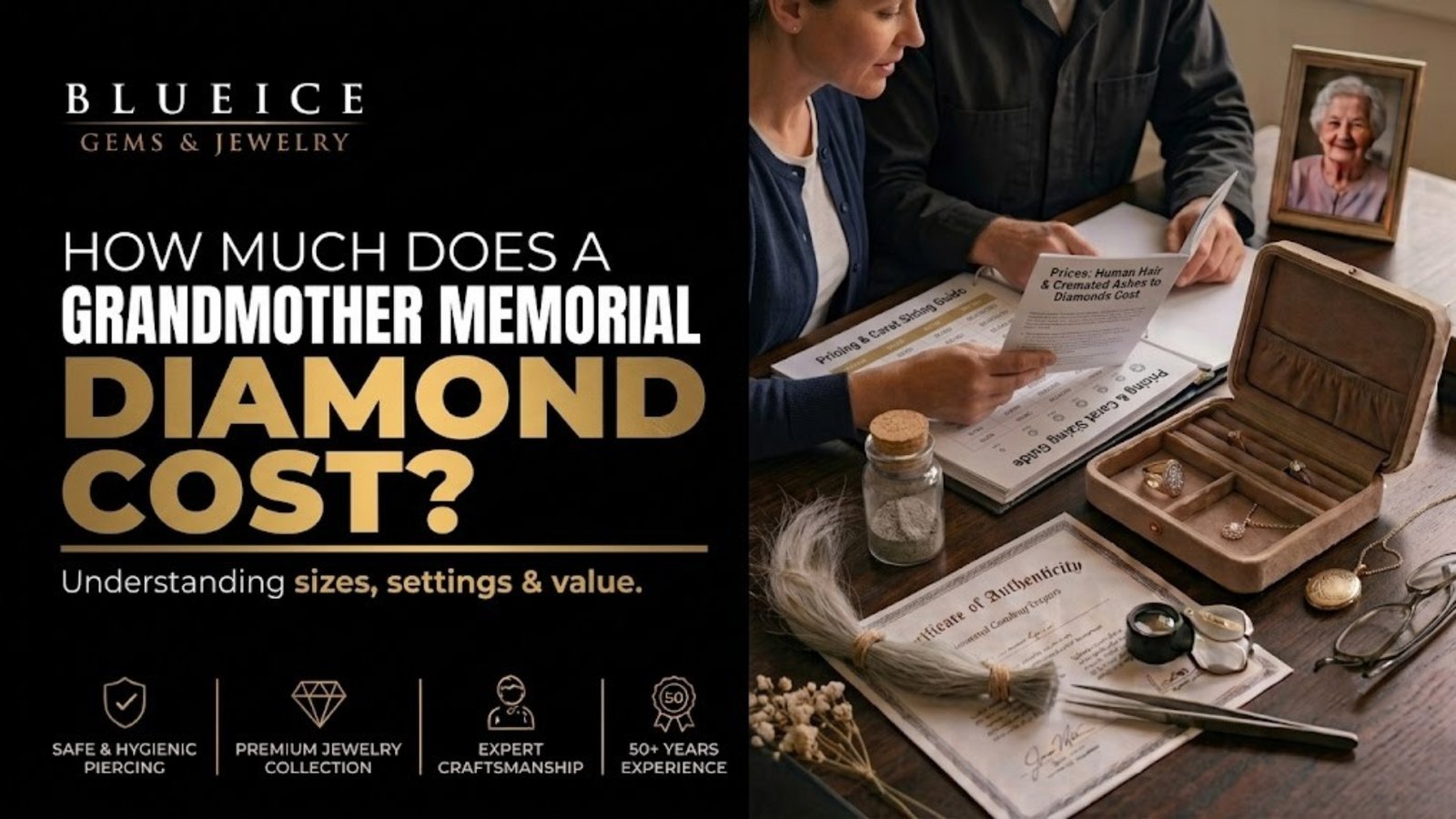
How Much Does a Grandmother Memorial Diamond Cost?

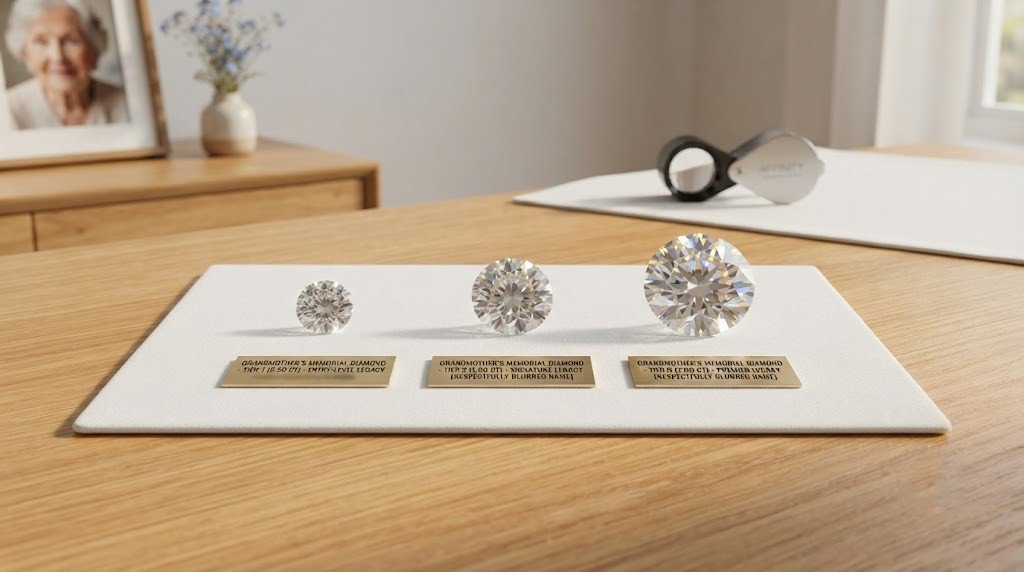
Money can feel like the hardest thing to raise when you are thinking about her. The typical grandmother memorial diamond cost falls into one of three 2026 industry price tiers: roughly $1,500 to $3,500 for a small stone, $5,000 to $15,000 between 0.5 and 1 carat, and from $20,000 up past $75,000 once a stone reaches 2 carats or more. Carat, color, cut, grading and the setting move the final figure.
grandmother memorial diamond cost

How Much Does a Grandmother Memorial Diamond Cost in Each Price Tier?

Across the industry, prices in 2026 sit in three broad bands set mainly by carat size. These are typical ranges, not any single provider’s price list, and the final grandmother memorial diamond cost depends on choices you make within each band.

TierTypical carat rangeTypical 2026 price rangeWhat usually shapes it
EntryAbout 0.10–0.25 ctRoughly 1,500–3,500Smaller stone, often a natural memorial tone such as yellow, blue or champagne
MidAbout 0.5–1 ctRoughly 5,000–15,000Colorless costs meaningfully more than tinted stones of the same size
LargeAbout 2–5+ ctRoughly 20,000–75,000+Longer growth, more careful process control, often a longer overall timeline

Settings, engraving, fancy cuts and independent grading are usually priced on top of these figures, so the full grandmother memorial diamond cost is often higher than the tier alone suggests. A stone in the entry tier can still become a finished pendant or ring; the setting simply adds to the total.

It helps to read the table as a starting map rather than a quote. Two stones in the same tier can differ by thousands of dollars once color and cut are chosen, which is why an itemized quote in writing matters more than any general range when you are working out a grandmother memorial diamond cost.

Does a Grandmother’s Stone Cost Differently From Anyone Else’s?

No. There is no reason a stone made in her memory would be priced differently because of the relationship. Pricing is driven by the diamond itself, its carat, color, cut and grading, and by the jewelry around it, not by whether the carbon came from a grandmother, a parent or anyone else.

The material can matter in one practical sense, because ashes and hair are prepared differently before growth. Whether that changes a quote is something each provider has to tell you, and it is covered in its own section below. But the word “grandmother” on the order does not move the grandmother memorial diamond cost up or down.

If you have seen a higher grandmother memorial diamond cost quoted somewhere, the difference is likely to lie in the stone’s specification or the setting, not the relationship. Ask for the line items and the reason usually becomes clear.

What Moves the Price Up or Down?

Six choices do most of the work in shaping a grandmother memorial diamond cost. Each one can be adjusted, so understanding them gives you room to plan.

  1. Carat. Size is the biggest driver. Larger stones need longer growth in the press, and growth time, not the amount of ashes or hair sent, determines carat. Memorial stones are commonly offered from about 0.10 carats to 5 carats or more.
  2. Color. Memorial diamonds commonly trend toward yellow, blue or champagne and brown tones, because nitrogen gives yellow and boron gives blue. A colorless stone needs neither element present, takes extra processing and usually costs more. Where a provider offers post-growth irradiation for colors such as red, pink, green or black, it may be priced separately.
  3. Cut. A round brilliant and fancy shapes such as cushion, oval or princess can be priced differently, and fancy cuts are often an extra.
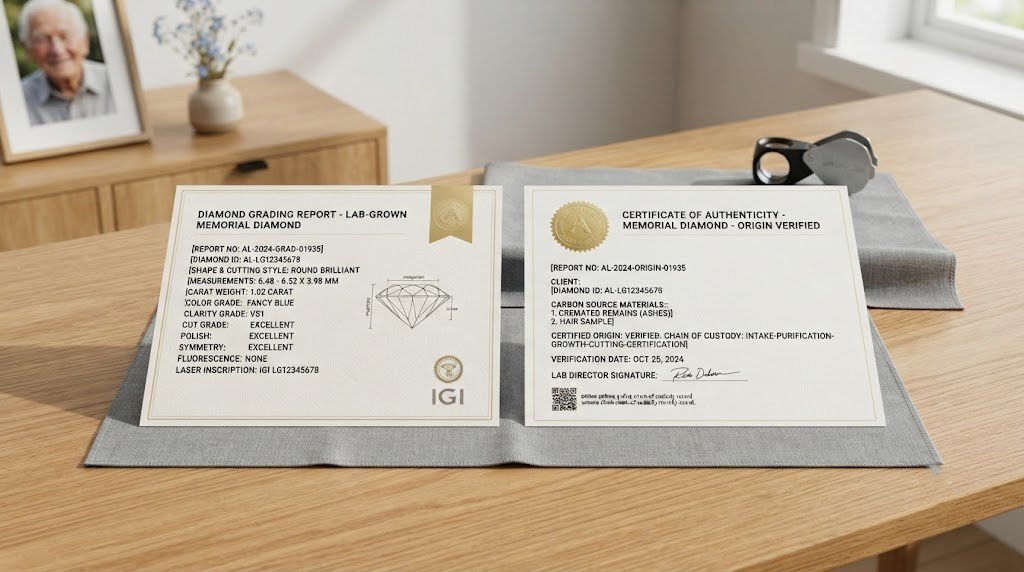
  4. Independent grading. An optional third-party report, commonly using the GIA standards for color, clarity, cut and carat, documents the stone’s quality. It is different from the in-house origin certificate and usually adds to the total.
  5. Setting. A ring, pendant, earrings or another piece, and the metal it is made from, can add a substantial amount on top of the loose stone.
  6. Engraving. A name, initials or a short message is often an add-on rather than included.

Clarity also affects the grandmother memorial diamond cost to a degree. Memorial stones typically land somewhere between SI2 and VVS, so ask each provider whether clarity is something you select or simply the result of growth.

No provider can promise an exact color in advance, and the guide to memorial diamond colors for a grandmother explains why color is hard to predict.

Which Extras Should You Ask About in a Full Quote?

Ask for every line item in writing before paying anything. A grandmother memorial diamond cost that looks simple on a website can grow once shipping, settings and documents are added, and a careful provider will be happy to list them.

These are useful questions to send:

  • Is the quoted price for a loose stone, or does it include a setting?
  • Is independent grading included, optional, or not offered?
  • Are cutting and polishing in the shape we want included, or is a fancy cut extra?
  • Is engraving included, and if not, what does it cost?
  • Is there a charge for collecting or shipping her ashes or hair, and for returning any unused material?
  • What payment schedule do you use, and what happens to payments if plans change?
  • Does the price change if the stone’s final color differs from the one requested?
  • Is there any charge for a second or third stone from the same material?

Write the answers next to each question so the whole grandmother memorial diamond cost is visible in one place. If you are still deciding on a provider, the questions to ask before turning her ashes and hair into a diamond go further into documents, permissions and unused material.

What Goes Into a Grandmother Memorial Diamond Cost?

Most of a grandmother memorial diamond cost reflects the work of turning a small amount of personal carbon into a real lab-grown diamond. Knowing those stages makes a quote easier to read, even though no provider breaks its price down in exactly the same way.

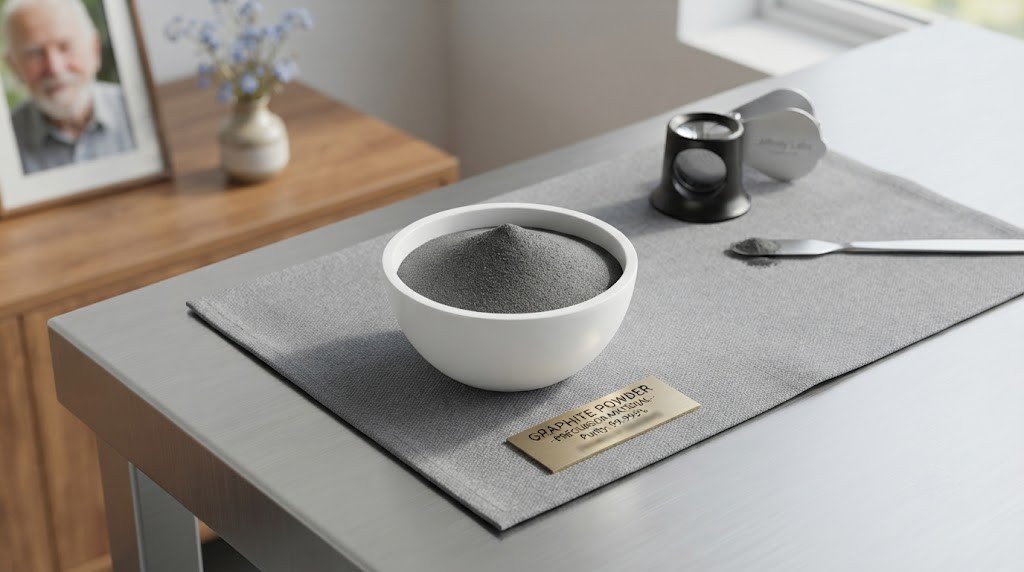
In broad terms, carbon is extracted from her ashes or hair and purified to roughly 99.9 percent or more. It is then converted to graphite at around 2,500 to 2,700°C, typically blended with supplemental lab carbon, and grown into a diamond.

High pressure, high temperature growth is the industry standard, at roughly 6 to 8 GPa and 1,400 to 2,500°C around a small seed, while a minority use chemical vapor deposition; the overview of how lab-grown diamonds are made explains both methods. After growth, the rough stone is cut and polished, and an in-house origin certificate records the chain of custody.

Growth is where size is decided. A larger stone needs more time in the press, which helps explain why the grandmother memorial diamond cost climbs so steeply from one tier to the next. The finished stone is a real diamond, 10 on the Mohs scale, though a hard knock can still chip any diamond, so a protective setting is worth discussing.

For ashes, her own carbon usually makes up around 10 to 15 percent of the finished stone’s mass, with some providers citing nearer 3 percent and others more. No equivalent figure is published for hair or a blend, so ask the provider in writing if that matters to you.

Is It Cheaper to Use Her Ashes, Her Hair, or Both?
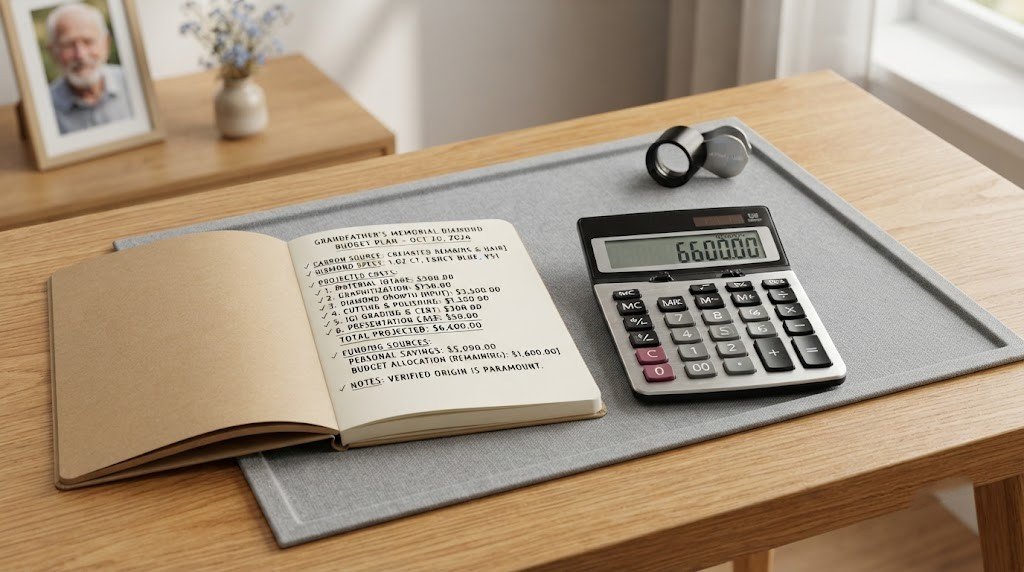
There is no published rule that one material lowers the grandmother memorial diamond cost, so treat this as a question for each provider. Some may price ashes, hair and a combination the same way; others may not.

What is known is how the materials differ. Cremated ashes are mostly calcium phosphate, with usable carbon of roughly 0.5 to 4 percent of ash by weight. Hair is roughly 50 percent carbon, because it is built from keratin, and needs no cremation, so it can be used even if she was buried. Typically a provider asks for a few tablespoons up to about 4 ounces (around 100 grams) of ashes, or a small lock or a few grams of hair.

None of that tells you the price. The finished grandmother memorial diamond cost depends on the diamond you choose, and how a provider charges for preparing each material is their policy to explain. If you are weighing amounts, see how much ash a grandmother memorial diamond needs and how much hair you need for a grandmother memorial diamond.

A practical note on permissions sits alongside the money. Who decides about cremated remains varies by state, and her spouse or partner or her adult children commonly come before grandchildren, with written wishes able to change that. A grandchild can respectfully ask whoever holds that role for a small portion. Hair already in your keeping is usually simpler in practice, though belongings can form part of an estate and rules differ by state; if a relative holds the hair, using it is something to talk through with them first.

How Can Grandchildren and Other Relatives Share the Cost?

Splitting a grandmother memorial diamond cost is possible in several ways, and the right one depends entirely on the people involved. Some families have many grandchildren and cousins; some have one person carrying everything; some include her children, step-relatives or chosen family. None of these shapes is more fitting than another.

A few approaches people consider:

  • One stone, shared cost. Several relatives contribute toward a single piece, then agree who will keep it or whether it moves between households.
  • Separate stones, separate budgets. Each person or branch of the family orders their own stone at the size and setting they can manage.
  • One person pays, others contribute in other ways. Someone might handle the order while another relative covers the setting or engraving later.

Whatever you choose, write down how the grandmother memorial diamond cost is being divided and who will keep the finished piece. A short shared note now can spare a difficult conversation later. If several stones are on the table, the guide to sharing a grandmother memorial diamond among family members looks at how one source of ashes or hair can often support more than one stone.

Several Smaller Stones or One Larger One: Which Fits Your Budget?

It depends on what your family wants the stones to do. Because only a portion of her ashes or hair is usually used, several stones can often come from one source, so the choice is about budget and meaning rather than material.

The grandmother memorial diamond cost rises steeply with carat. A single stone around one carat might sit in the mid tier, while several stones of about 0.10 to 0.25 carats each would each fall in the entry tier. Depending on the sizes chosen, a few small stones can come to a similar total as one larger stone, or more, so compare written quotes rather than assuming.

ApproachTypical cost pictureWho it can suit
One larger stoneA single mid- or large-tier price plus one settingOne keeper, or a piece that passes between relatives
Several smaller stonesSeveral entry-tier prices plus a setting for eachGrandchildren or relatives who each want something to wear
One stone now, others laterSpreads the total over timeFamilies still deciding, if the provider can keep or return material

Ask the provider whether ordering several stones together changes the grandmother memorial diamond cost per stone, and whether the remaining material can be returned so a later stone stays possible.

How Do You Compare Quotes From Different Providers?

Compare like with like. Two quotes only line up when they describe the same carat, color, cut, setting and documents, so before judging any grandmother memorial diamond cost, ask each provider to price the same specification.

A simple way to do this is to send every provider an identical short request: the carat you are considering, a tinted or colorless preference, the cut, whether you want independent grading, and the setting. Then lay the replies out side by side, item by item.

Look beyond the bottom line as well. A lower grandmother memorial diamond cost that leaves out grading, engraving or the return of unused material may end up close to a higher quote that includes them. Note which costs are fixed and which depend on choices made later, such as the final color. If two providers describe the process, documents or timing very differently, ask each to explain in writing before deciding.

How Do You Budget Without Pressure or Guilt?

Set a figure that fits your life now. Whether a grandmother memorial diamond cost your family $2,000 or $20,000, the amount would say nothing about how much she was loved, and a smaller stone is not a lesser tribute.

Grief can make every decision feel urgent. It is reasonable to wait, gather quotes, and decide over time. A memorial diamond typically takes about 6 to 10 months to make in any case, and growth itself takes weeks to months, so there is rarely a reason to rush the budget decision.

Some steps that can help:

  1. Decide on a ceiling for the grandmother memorial diamond cost before you look at options, and share it with anyone contributing.
  2. Pick the one or two cost factors that matter most to you, perhaps size, or a colorless stone, or a particular setting.
  3. Let the others flex. A tinted stone, a simpler setting or skipping engraving can bring the grandmother memorial diamond cost down without changing what the piece means.
  4. Ask for at least one written quote at your ceiling and one below it.

A memorial diamond is also one choice among several. An urn, scattering, burial or a simpler keepsake are all meaningful ways to remember her, and some people choose more than one. The comparison of a grandmother memorial diamond and a traditional urn sets those options side by side.
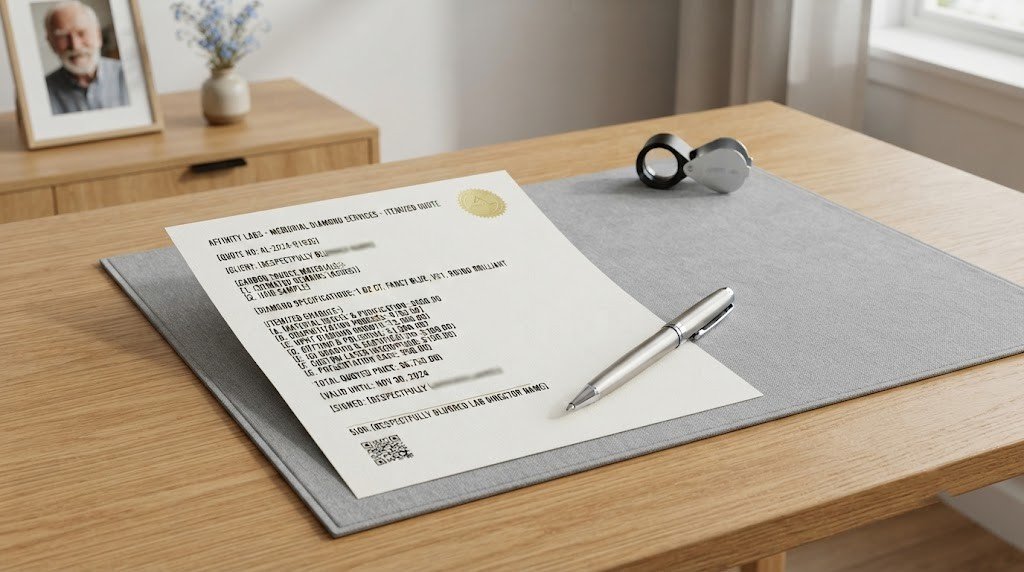
What About Financing and Insurance?

Treat both as questions for qualified professionals rather than something to assume. Whether financing is available, and on what terms, is a question for the provider and for a financial professional you trust. Whether a finished piece could be insured, and how, is a question for an insurance agent.

When you speak to them, it may help to have the written grandmother memorial diamond cost breakdown, the in-house origin certificate and any independent grading report to hand. Those documents describe the stone in the terms such professionals usually ask about.

Avoid thinking of the stone in money terms beyond its purchase. It is a personal memorial, not a financial asset, and nothing here should be read as advice about value. The grandmother memorial diamond cost is best weighed against what the piece means to you and your family, and against your budget.

Frequently Asked Questions

What is the lowest typical grandmother memorial diamond cost?

Across the industry in 2026, small stones of roughly 0.10 to 0.25 carats typically cost about $1,500 to $3,500. Settings, engraving, fancy cuts and grading usually add to that, so ask a provider for a written quote that lists every item.

Does a grandmother memorial diamond cost more if it is colorless?

Usually, yes. Colorless memorial diamonds need neither nitrogen nor boron present during growth, which takes extra processing. At the half-carat to one-carat size, colorless typically costs meaningfully more than a yellow, blue or champagne stone of the same carat.

Can cousins each order their own stone from her ashes?

Often, yes, since only a portion of the ashes is usually used. Authority over her ashes varies by state, so agree with whoever holds it first. Then ask the provider how much material each stone needs and how they price several.

Is the setting included in the price of the diamond?

Usually not. A quoted grandmother memorial diamond cost typically covers the loose stone, with rings, pendants, earrings and other settings priced separately. Ask the provider whether a setting is included, which metals are offered, and whether engraving costs extra.

Will the price change if the color is different from what we hoped?

Color cannot be predicted with certainty, so this is a fair question to ask in writing before ordering. Some providers may adjust the price, and some may not. Ask how they handle a stone that comes out a different tone.

Do we need to pay everything up front?

That depends on the provider. Before committing to any grandmother memorial diamond cost, ask what payment schedule they use, when each payment falls due, and what happens to money already paid if your plans change. Get the answers in writing before sending any of her ashes or hair.

Final Thoughts on Paying for a Stone in Her Memory

It is completely fine to care about the numbers behind a grandmother memorial diamond cost. Choosing a stone you can comfortably afford leaves room for everything else in your life, and the piece will be no less hers for being small, tinted or simply set.

Take the time you need, gather quotes in writing, and talk with anyone who wants to share the cost. The right figure is the one your family can live with.

Learn More About Grandmother Memorial Diamonds

Talk With Memorial Diamond

If you would like help understanding what a stone in her memory might cost, the team at Memorial Diamond can talk through sizes, colors and settings with you and put options in writing. There is no pressure to decide, only a conversation when you are ready.
Is a Memorial Diamond Really Made From Your Grandfather Ashes

Is a Memorial Diamond Really Made From Your Grandfather’s Ashes?

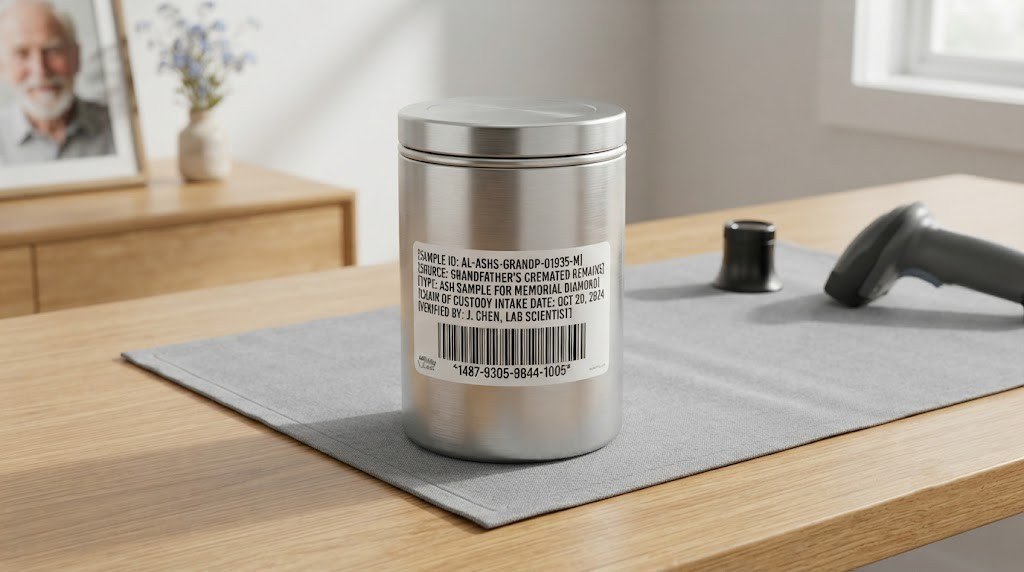
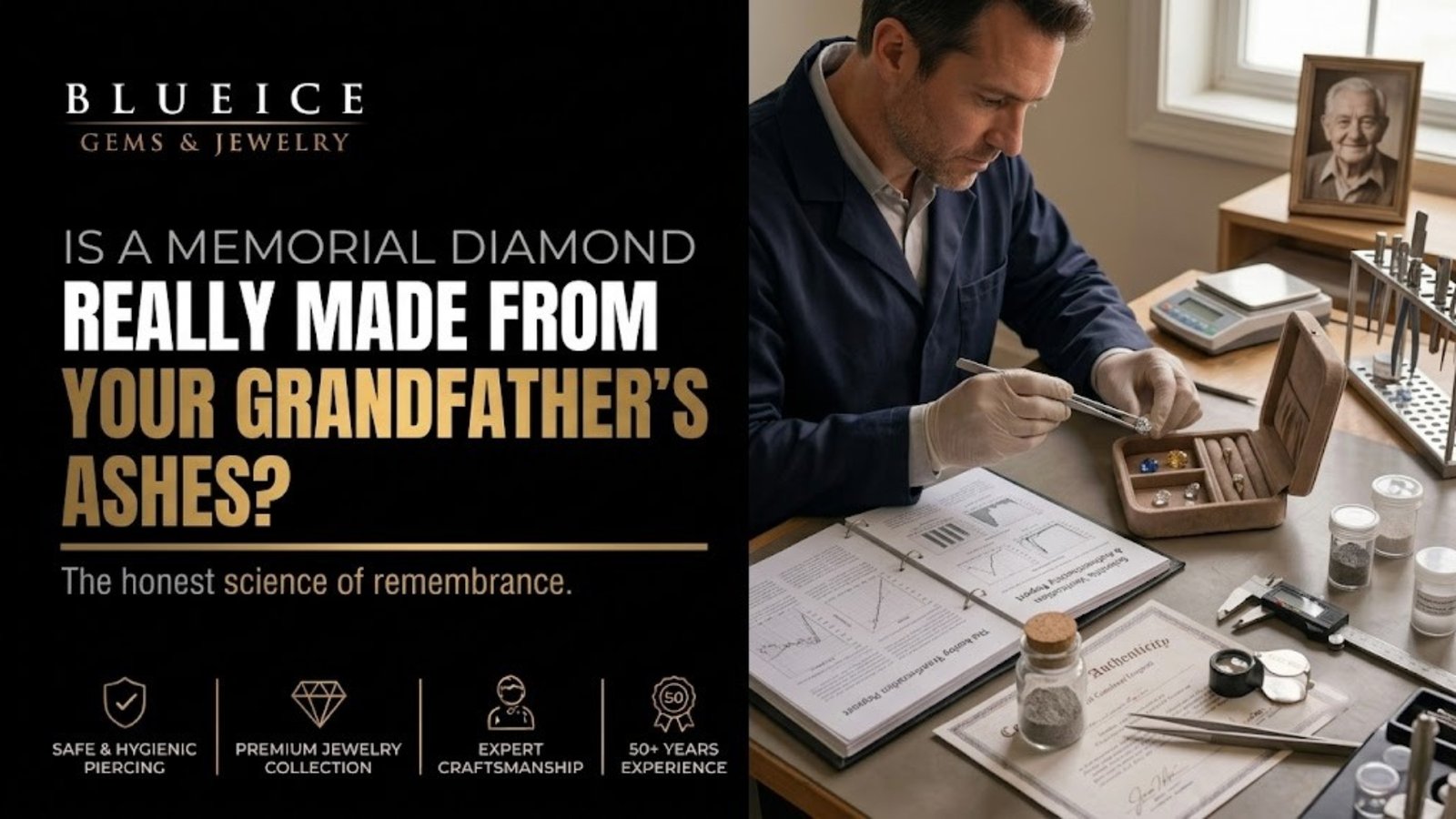
Before you send any part of his ashes to a lab, you are entitled to proof rather than poetry. If you are asking whether a memorial diamond is really made from grandfather ashes, the plain answer is yes, in part. A real, verifiable portion of his carbon is extracted, purified and grown into a genuine lab-grown diamond, typically blended with supplemental lab carbon, so his ash carbon usually makes up around 10–15% of the finished stone’s mass.

really made from grandfather ashes

Is the Diamond Really Made From Grandfather Ashes, or Only Partly?

Partly, and the part is genuine. A stone really made from grandfather ashes holds his carbon inside the crystal itself, bonded into the same lattice as every other carbon atom in it. It is not a pinch of ash sealed under glass, and it is not a symbol standing in for him.

It is not a stone made only of him. Across the industry, carbon recovered from ash usually accounts for around 10–15% of the finished diamond’s mass, with some providers citing an ash carbon share as low as about 3% and others more. The rest is high-purity lab carbon.

Hearing the real figure first lets you decide, with clear eyes, whether a diamond really made from grandfather ashes in this blended sense feels right.

Some people find the blended version still carries what they wanted: a physical piece of him they can hold or wear. Keeping his ashes in an urn, scattering them or interring them are equally valid ways to honor him, and none of them has to be set aside if a small portion goes toward a diamond.

What Are His Ashes Made Of, and Why Is So Little of It Carbon?

Cremated remains are mostly bone mineral, not carbon. Cremation consumes nearly all organic material, leaving chiefly calcium phosphate, the mineral that gives bone its structure, plus smaller amounts of other minerals and salts.

Carbon survives only in traces. Industry figures put the usable carbon in ashes at roughly 0.5% to 4% by weight, varying with the person and with how the cremation was carried out. So the question of whether a stone is really made from grandfather ashes is partly a question of recovery: a lab has to pull a small, precious fraction of carbon out of material that is mostly mineral.

Two practical facts follow. Providers typically request part of his ashes rather than the whole urn, usually somewhere between a few tablespoons and about 4 oz (roughly 100 g). And the carbon recovered from that part is rarely enough on its own to grow a stone of useful size, which is why lab carbon is typically blended into a stone really made from grandfather ashes.

Whatever you do not send stays with your family to keep, scatter or inter as planned, and several stones can often come from one source. What happens to submitted ash left over after processing differs by provider, so ask for that answer in writing.

Why Is His Carbon Blended With Lab Carbon, and Does That Make It Less His?

His carbon is blended because a diamond needs a certain volume of carbon feedstock to grow, and ashes yield very little. Supplemental lab carbon brings the volume up to what the press requires; it does not replace his carbon, and it does not stop the stone from being really made from grandfather ashes.

At the scale of atoms, every carbon atom in a diamond locks into the same rigid framework, so the atoms recovered from his ashes become part of the crystal itself rather than a coating on its surface. A diamond really made from grandfather ashes holds those atoms permanently, whether his ash carbon is 3% of the mass or 15%.

Blending leaves these untouched:

  • The stone is no less a diamond, because recovered carbon and lab carbon are the same element.
  • Hardness, optical behavior and grading are unchanged.
  • His contribution is not decorative; without his carbon, this particular stone would never have been grown.

Where blending matters is transparency: ask the provider in writing what share of the stone will come from his ash carbon at your chosen carat size. If you are told a stone is really made from grandfather ashes but cannot get that ratio on paper, keep asking.

How Does Carbon From His Ashes Become a Diamond?

His carbon moves through a controlled lab sequence in which each stage either removes what is not carbon or rebuilds that carbon as crystal. Understanding the order helps you judge any claim that a stone is really made from grandfather ashes.

  1. Recovery. In an oxygen-free, multi-stage heating process, the bone mineral is driven off and the carbon is refined until it reaches a purity of about 99.9% or better.
  2. Conversion to graphite. That refined carbon is taken to roughly 2,500–2,700°C, where it becomes graphite, the feedstock growth presses use.
  3. Blending and growth. The graphite, typically combined with lab carbon, is placed around a tiny diamond seed. HPHT, the industry-standard method, grows the crystal under roughly 6–8 GPa at 1,400–2,500°C, while CVD is the choice of a smaller group of providers. This overview of synthetic diamond growth by HPHT and CVD covers the general science.
  4. Finishing. The rough crystal is cut and polished, sometimes treated for color, and graded, ideally by an independent lab.

The sequence also shows where a skeptic should look: the handoff, the recovery stage and the blending stage are the points a credible tracking system must cover. A stone can only be described as really made from grandfather ashes if his material is accounted for at each of them. For each stage in more depth, read how a memorial diamond is made from grandfather ashes.

How Can You Verify a Stone Is Really Made From Grandfather Ashes?

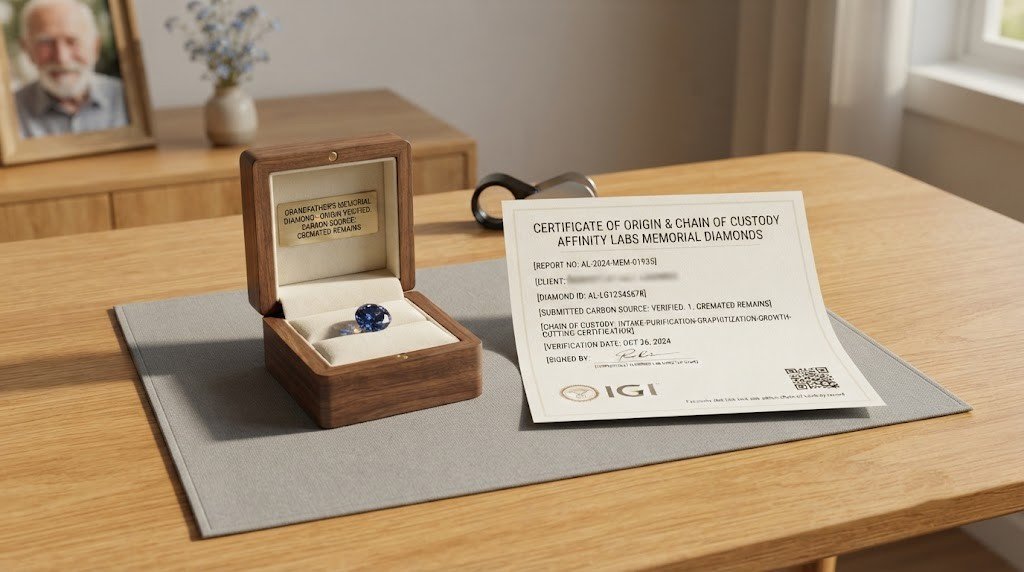
You verify it through chain of custody: a documented trail showing his ashes were identified on arrival, kept apart from other families’ material and tracked into one specific stone. A grading report speaks to quality rather than origin, so the records carry that weight.

A sound system typically assigns a unique identifier on arrival and ends with an origin or authenticity certificate linking it to the finished stone. That certificate, usually issued in-house, is the document that speaks to whether the stone is really made from grandfather ashes rather than from some other source.

Its worth depends on how openly the provider explains its system. Ask these seven questions in writing before you send anything:

  1. How is his material labeled and tracked from arrival, and can I see that record?
  2. Is his carbon processed separately from every other family’s material at each stage?
  3. At the carat size I want, roughly what share of the finished stone’s mass will come from his ash carbon?
  4. What exactly does your origin certificate state, and what records sit behind it?
  5. What documentation will I receive during the process, and in what form?
  6. Is independent grading included, optional or unavailable, and which lab issues it?
  7. What happens to any of his ashes that are not used?

Clear, specific written answers are a good sign that the stone will be really made from grandfather ashes in the way described; vague reassurance is worth noticing. If you are still choosing a provider, our guide for anyone who wants to turn grandfather ashes into a diamond explains what the handoff typically involves.

Can a Grading Report Prove a Stone Is Really Made From Grandfather Ashes?

No. A grading report documents the stone’s quality, not its origin. An independent gemological lab assesses cut, color, clarity and carat, the same 4Cs used for any diamond; GIA’s guide to the 4Cs of diamond quality explains each factor.

A grading report is simply not designed to answer whose carbon is inside, so it says nothing either way about whether a stone is really made from grandfather ashes. If you want to know whether any laboratory test could add evidence of origin, put that question to the provider in writing.

So the two documents do different jobs, and you may want both:

DocumentUsually issued byWhat it tells youWhat it does not cover
Origin or authenticity certificateThe provider, in-houseThat the stone was grown from your family’s submitted material, per their tracking recordsThe stone’s quality grades
Independent grading reportA third-party lab (GIA standards commonly, sometimes IGI)Cut, color, clarity and caratWhere the stone’s carbon came from

Independent grading is generally optional, usually priced separately, and a question for the provider. Read together, the two papers say more about a stone really made from grandfather ashes than either one alone.

Which Memorial Diamond Claims Deserve Your Skepticism?

Be most skeptical of any promise that the stone is entirely him. A “100% him” or “pure ashes” claim does not match how a stone really made from grandfather ashes is grown: ash yields too little carbon, supplemental lab carbon is typically added, and an honest provider will say so plainly.

What you might hearWhat is actually true
“The diamond is 100% your grandfather.”Ash carbon usually makes up around 10–15% of the finished stone’s mass, sometimes as little as about 3%; the rest is typically lab carbon.
“More ashes will give you a bigger diamond.”Growth time sets the carat size, not the amount of ash submitted.
“The grading report proves it is his carbon.”Grading reports the 4Cs; origin is documented separately, through chain-of-custody records.
“His ashes will decide the color.”Color comes from trace elements such as nitrogen (yellow) and boron (blue), and no source makes the final shade predictable.
“It is only a keepsake, not a real diamond.”It is a real lab-grown diamond, rated 10 on the Mohs scale and graded on the same 4Cs.
“We need the whole urn.”A portion is typically enough; requests usually fall between a few tablespoons and about 4 oz.
“Your stone will be ready almost immediately.”The overall timeline typically runs 6–10 months, up to about 12 for larger or specialty-color stones.

Hearing the real blend does not shrink what a stone really made from grandfather ashes means; it simply tells you what you are holding.

Quieter warning signs, such as vague tracking, no written carbon share or pressure to decide quickly, are each a reason to keep asking whether the stone will be really made from grandfather ashes as promised.

Is a Stone Really Made From Grandfather Ashes a Real Diamond?

Yes. It is a real lab-grown diamond, not glass, resin or a look-alike. It rates 10 on the Mohs scale of mineral hardness, the hardest natural mineral, though a sharp knock at the wrong angle can still chip any diamond, so a protective setting is worth discussing.

It is graded on the same 4Cs as any other diamond, with clarity for memorial stones typically between SI2 and VVS and sizes from about 0.10 carats to 5 or more.

Color is where these stones often differ from a jeweler’s case: memorial stones commonly trend yellow, blue or champagne to brown, colorless usually costs more, and some providers offer post-growth irradiation for red, pink, green or black. Nobody can predict the shade of a stone really made from grandfather ashes, so treat color as a conversation rather than a promise.

What Does It Cost, and How Long Does It Take?

A diamond really made from grandfather ashes is priced like other memorial stones: industry prices in 2026 typically run about 1,500–3,500 for a 0.10–0.25 ct stone, 5,000–15,000 for 0.5–1 ct, and 20,000–75,000 or more for 2–5+ ct, with colorless costing more than colored stones of the same size. Settings, engraving, fancy cuts and independent grading are usually extra. These are category-wide figures.

The overall process typically takes 6–10 months, up to about 12 for stones of around 2 ct and up or specialty colors. Growth time, not the amount of ash, decides the carat. Our complete guide to a grandfather ashes diamond goes deeper on budgets, carats and settings.

Who Has a Say Over How His Ashes Are Used?

That depends on your state and on anything he left in writing. No one national rule governs who decides about cremated remains. Where there is a surviving spouse or partner, that person and his adult children commonly rank ahead of grandchildren, although written wishes can reorder things.

If someone else holds that authority, ask them for a small portion and explain your plans, so a stone really made from grandfather ashes begins as a shared decision. If ashes are not available to you, hair can be another route.

Does Your Family’s Faith Change the Answer?

It might, and your own clergy are the right people to ask whether a stone really made from grandfather ashes sits well with your tradition. Published religious teaching addresses cremation and what happens to ashes afterward; memorial diamonds themselves have not been ruled on by any tradition.

Catholic guidance allows cremation yet asks that ashes stay together in a sacred, church-approved resting place, with a narrow allowance for a minimal portion elsewhere. Orthodox and Conservative Judaism generally prohibit cremation; Reform Judaism leaves more to rabbis and families. Islam’s major schools consider cremation itself impermissible. Because those Islamic and Orthodox or Conservative Jewish objections concern cremation, a stone grown from hair sits outside them. Hindu, Buddhist and Protestant views on dividing ashes vary by community.

Could His Hair Be Used Instead of, or Alongside, His Ashes?

Hair can be a source on its own; whether a provider will also use it alongside his ashes is a question for that provider. If his ashes are not available to you, or you feel unsure about a stone really made from grandfather ashes, hair is worth knowing about.

Hair is roughly 50% carbon by weight, because it is built from keratin, against about 0.5–4% for ashes. That is a starting-material fact only: no finished-stone personal-carbon share is published for hair or for blends, so ask for the provider’s figure in writing.

Hair needs no cremation, so it can work even if he was buried. His hair may be gray, white, short or sparse, or a trimmed beard may be what was saved; whether such hair is accepted, and how much is needed, are questions for the provider.

Laws on remains are aimed at the remains, so a lock you already hold is usually the simpler case in practice. Even so, his belongings may count as part of his estate and state rules differ, and if a relative holds the hair, using it starts with talking to them. See our complete guide to a grandfather hair diamond, how a memorial diamond is made from grandfather hair, and, if you have both materials, our guide to a grandfather ashes and hair diamond.

Frequently Asked Questions

Can a lab test a finished diamond to confirm it holds my grandfather’s carbon?

Not through standard grading, which reports cut, color, clarity and carat rather than origin. Evidence that a stone is really made from grandfather ashes comes from chain-of-custody records and the origin certificate, so ask the provider whether any test could add to that, and what it would show.

Why would a provider add carbon that did not come from him?

Ashes contain only about 0.5–4% carbon by weight, which is rarely enough to grow a stone of a useful size. Supplemental lab carbon brings the feedstock up to the volume the growth press needs, while his recovered carbon remains part of the crystal.

Does a small share of his carbon make the stone less meaningful?

That is a personal judgment only you can make. A stone really made from grandfather ashes holds his atoms in the crystal whether his ash carbon is about 3% or 15% of the mass. Some people find that enough; others prefer an urn or scattering.

Can more than one grandchild have a stone from the same ashes?

Often, yes. Each stone really made from grandfather ashes needs only a portion, so several diamonds can frequently be grown from one source. Agree on it with whoever holds authority over his ashes, and ask the provider how they handle multiple orders.

What should I do if a provider promises the stone is pure ashes?

Ask them to explain, in writing, how a full-size stone could be grown from ashes holding only a few percent carbon. An honest provider describing a stone really made from grandfather ashes will explain the blend and give a realistic range.

Does an origin certificate replace an independent grading report?

No. The origin certificate, usually issued in-house, documents which family’s material the stone was grown from. An independent grading report describes the stone’s cut, color, clarity and carat. They answer different questions, and you may want both before you decide.

Final Thoughts on Whether It Is Really Him

Skepticism here is not disloyalty to him. Asking whether a stone is really made from grandfather ashes is how you make sure whatever you carry rests on something true. A real portion of his carbon locked into a real diamond alongside lab carbon is less tidy than a promise of purity, but you can explain it to your family without hesitation. Take your time, keep the answers in writing, and let the decision be yours.

Learn More About Grandfather Memorial Diamonds

Talk With Memorial Diamond

If you would like to ask any of these questions directly, or talk through whether a stone really made from grandfather ashes feels right for your family, you are welcome to reach out through memorialdiamond.us. A conversation commits you to nothing.

How a Memorial Diamond Is Made From Your Grandfather Ashes

How a Memorial Diamond Is Made From Your Grandfather’s Hair

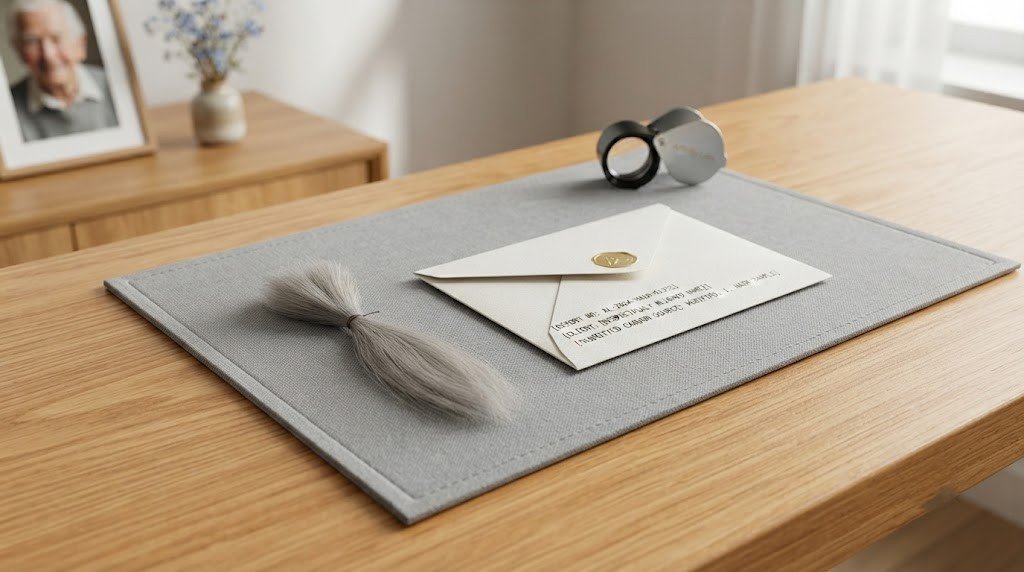
Perhaps a lock of his hair was set aside, and before you let it go you want to understand what a lab would actually do with it. A memorial diamond made from grandfather hair begins as keratin, which is roughly half carbon; that carbon is extracted, purified, turned into graphite, typically blended with supplemental lab carbon, and grown under intense heat and pressure into a real diamond that is then cut, polished and documented.

made from grandfather hair

Why Does Hair Hold So Much Carbon?

Hair is built almost entirely from keratin, a structural protein, and keratin is roughly 50% carbon by weight. That one fact explains why a memorial diamond made from grandfather hair needs only a small amount of starting material.

Keratin also carries hydrogen, oxygen, nitrogen and sulfur, bound together in long protein chains. None of those other elements belong in a diamond lattice, so before anything can be made from grandfather hair, the lab has to separate the carbon from everything around it.

Ashes sit at the other end of the scale. They consist largely of calcium phosphate from bone, with only around 0.5–4% of their weight left as usable carbon. Hair starts from a far richer carbon position, which is why a diamond made from grandfather hair and one grown from his ashes look so different on paper. If you hold both his ashes and his hair, the complete guide to grandfather ashes and hair diamonds sets out how the combined route compares.

Hair also needs no cremation. If your grandfather was buried, a lock saved before the funeral or kept from an earlier haircut can still be a workable source, so a stone made from grandfather hair is open to families who never held ashes at all. For the wider picture beyond the lab, the grandfather hair diamond complete guide covers cost, settings and choices in one place.

What Are the Lab Stages for a Diamond Made From Grandfather Hair?

Seven broad stages lie between the lock you send and a finished stone made from grandfather hair. Each lab names and groups them a little differently, so read the table as a map of the science rather than a description of one provider’s workflow.

StageWhat happensWhat the lab is aiming for
1. Receipt and loggingThe hair is checked in, weighed and given an identifier that follows it through the labAn unbroken record from the first moment
2. Carbon extractionControlled heating without oxygen breaks the keratin down and drives off non-carbon elementsCarbon separated from hydrogen, oxygen, nitrogen and sulfur
3. PurificationFurther refining removes what traces remainCarbon at roughly 99.9% purity or higher
4. GraphitizationThe purified carbon is heated to roughly 2,500–2,700°CGraphite, the feedstock a growth press uses
5. GrowthGraphite, typically blended with supplemental lab carbon, grows around a seed under HPHT, or is converted to gas for CVDA rough diamond crystal
6. Cutting and polishingA cutter shapes the rough into the chosen cutA finished gemstone
7. Grading and documentationOptional independent grading, plus an in-house authenticity certificateProof of quality and proof of origin

From receipt to finished stone, a memorial diamond made from grandfather hair typically takes 6–10 months, and up to about 12 for larger stones near 2 carats and above or for specialty colors. Labs do not publish a dependable breakdown by stage, and growth on its own spans weeks to months, so any stage-by-stage schedule is something to ask the provider about rather than assume.

Why Is So Little Hair Needed Compared With Ashes?

Because roughly half of hair’s weight is carbon, a small lock or a few grams is the typical starting amount, while ash routes usually ask for anything from a few tablespoons up to roughly 4 oz (about 100 g). Exact minimums vary by provider, and no figure you read online should be taken as a rule for your order.

The amount you send does not set the size of the finished stone. Carat depends on how long the crystal grows in the press, not on the weight of hair that arrives. A thicker lock will not on its own produce a larger diamond made from grandfather hair, and a modest one does not cap the stone at a tiny size.

Since only a portion is used, you may be able to keep part of the lock rather than sending all of it, and several stones made from grandfather hair can often come from one source. If a sibling or cousin also wants a piece, raise that before anything is posted. To see how the low-carbon ash route handles the same science, read how a memorial diamond is made from your grandfather’s ashes.

What Does Carbon Extraction Strip Away?

Extraction removes everything in the keratin that is not carbon. For a diamond made from grandfather hair, the strands are heated in a controlled, oxygen-free environment, so it does not burn the way it would in open air; the non-carbon elements are driven off and a carbon-rich residue remains.

Residues that arrived with the hair, such as natural oils or traces of product, are also among the things this stage and the purification after it are meant to leave behind. The aim is a material that is carbon and nothing else, because stray elements carried into growth can affect the stone’s color.

This is also where questions about treated hair belong. Whether dyed, permed or chemically treated strands need extra handling before anything is made from grandfather hair is something only a provider can answer for its own process, and this guide makes no claim either way. If the hair you saved was colored or treated, say so when you first ask, and request the reply in writing.

How Do Purification and Graphitization Work?

Purification refines the extracted carbon until it reaches roughly 99.9% purity or higher, and graphitization then converts it into graphite at around 2,500–2,700°C. Both exist because a growth press needs clean, consistent feedstock.

Purification is generally a multi-stage process, with repeated controlled heating that pushes out the last traces of other elements. In a stone made from grandfather hair, trace elements left behind at this point can influence color. Graphitization reorganizes the carbon atoms into flat, stacked sheets, the crystalline form that HPHT growth begins from.

By this point, carbon destined for a stone made from grandfather hair looks like any other graphite. Nothing visible marks where it came from, which is why the records kept from stage one onward carry so much weight. From here on, the lab’s tracking is what connects that graphite to him.

How Does Graphite Become a Diamond?

Graphite becomes diamond under extreme pressure and heat. In HPHT growth, the industry standard for memorial stones, a press holds the carbon at roughly 6–8 GPa and about 1,400–2,500°C around a tiny diamond seed, and carbon atoms build onto that seed in a diamond lattice.

A minority of providers use CVD instead, converting carbon to a gas and depositing it layer by layer onto a seed plate in a vacuum chamber. The synthetic diamond overview on Wikipedia gives a fuller technical account of both methods.

Growth takes weeks to months, and the length of that run decides carat weight. Sizes on offer across the industry generally run from roughly 0.10 ct up past 5 ct, and a larger diamond made from grandfather hair simply needs a longer, more tightly controlled growth period.

A diamond made from grandfather hair is a real diamond, chemically and physically the same as one mined from the ground. It rates 10 on the Mohs scale of mineral hardness, the highest rating any natural mineral reaches. Hardness is not toughness, however: a sharp blow can still chip a diamond, and a setting that guards the edges helps if the piece will be worn daily.

Is Supplemental Carbon Added, and How Much of the Stone Is His?

Supplemental lab carbon is typically blended in during growth, and no finished-stone percentage is published for how much of a hair-based diamond is personal carbon. Anyone telling you a gem made from grandfather hair contains nothing but his hair is overstating what the process does.

Why blend at all when hair is so carbon-rich? A growth run needs a set volume of consistent feedstock, and labs balance personal carbon against lab carbon to reach it. The ratio in a stone made from grandfather hair is a process decision that can differ between labs and between stone sizes.

You may see a personal-carbon share quoted for ash-based stones. That figure belongs to ash alone, because it reflects ash’s low carbon yield, and it should never be read across to hair. For a stone made from grandfather hair, the honest position is that the share is unpublished, so the only reliable number is the one a provider puts in writing for your specific order.

What stays true either way: a real, documented portion of his own carbon becomes part of the crystal lattice of any diamond made from grandfather hair. The stone is not a symbol standing in for him; it is physically grown in part from him. If you are weighing whether to add ashes to the hair, how a memorial diamond is made from your grandfather’s ashes and hair walks through the two-material science.

Where Does the Color of a Diamond Made From Grandfather Hair Come From?

Trace elements caught up in the growing crystal set its color. Nitrogen tints a stone yellow and boron tints it blue, while a colorless result depends on keeping both almost entirely out. Memorial diamonds, including those made from grandfather hair, commonly trend toward yellow, blue and champagne or brown tones, and colorless usually costs more because it demands tighter control.

Some providers also offer optional post-growth irradiation, which can move a stone toward red, pink, green or black. It is an elective step, separate from growth, and it is priced and described by each provider on its own terms.

No source makes the color of a diamond made from grandfather hair predictable from the hair itself. There is no published basis for expecting gray, white, dark or dyed hair to give a lighter or darker stone, so color is something you choose and discuss with the lab rather than something his hair decides.

What Happens at Cutting, Grading and Certification?

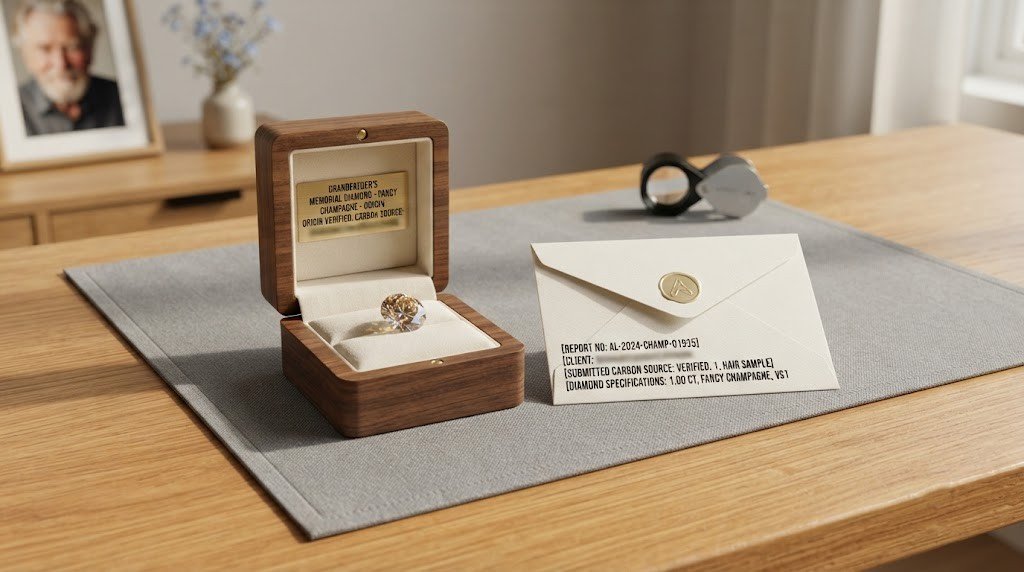
After growth, the rough crystal of a diamond made from grandfather hair is cut and polished into a finished shape, then documented in two separate ways: an optional independent grading report covers its quality, and an in-house authenticity certificate covers its origin.

Cut choices such as round, oval, cushion or princess affect how much of the rough is kept and how the finished stone handles light. Fancy cuts are often priced as an extra, as are engraving and settings.

A grading report, commonly referencing the GIA 4Cs of diamond quality and sometimes issued by IGI, describes cut, color, clarity and carat exactly as it would for any diamond. Memorial stones typically land in the SI2 to VVS clarity range. An authenticity certificate does a different job: it states that the stone was grown from the material you sent, and it is the last link in the chain of custody.

When the documents for a stone made from grandfather hair arrive, check that they include:

  • the identifier assigned to his hair at receipt
  • the measured carat, cut, color and clarity
  • whether grading was independent or in-house
  • a statement of origin naming hair as the source material
  • who issued each document, and how to verify it

How Can You Know a Stone Was Made From Grandfather Hair?

Confidence rests on chain of custody: a documented trail showing who handled the hair, when, and under which identifier, from arrival to finished stone. A grading report describes quality rather than origin, so that trail is the evidence you will rely on; if you want to know whether any testing could add to it, ask the provider.

Ask how a lab keeps a lock sent for a diamond made from grandfather hair apart from other customers’ material, whether each stage is logged against a unique code, and whether you may see that log. Ask, too, whether progress updates or photographs are offered and how often; that is set by each provider, so get the answer in writing.

The same doubt comes up for ash, and whether a memorial diamond is really made from your grandfather’s ashes answers it for that material. For hair, a lab that explains its tracking clearly and without hesitation gives you a better signal than any promise printed on a website about a diamond made from grandfather hair.

Does Gray, White, Short or Beard Hair Change Anything?

There is no published evidence either way on whether gray, white, short, sparse, facial or treated hair behaves differently when a diamond is made from grandfather hair, so each is a question for the provider rather than a reason to hesitate or to assume.

What was saved might be short clippings, a few strands from a brush, a lock from the crown, or beard hair kept after a trim. Ask the lab directly:

  1. Do you accept short or loose clippings, or do you need longer lengths?
  2. Is beard or other facial hair accepted in the same way as scalp hair?
  3. How much do you need if the hair is fine or sparse?
  4. Should dyed or chemically treated hair be flagged before sending?
  5. Should hair be taken out of a brush, locket or frame, or sent as it is?

Keep every reply in writing. If one lab cannot work with what you have, that says nothing about whether another can, and nothing at all about the worth of what you kept.

What Should You Settle Before the Hair Leaves Your Hands?

Before anything is made from grandfather hair, settle who in the family should be part of the decision and what you want done with any hair you hold back.

Regulations around human remains mostly target the remains, which means hair you already hold tends to be the simpler material in practice. Belongings can still form part of an estate, though, and rules vary by state. If his hair is held by another relative, using it is a conversation with them, not a decision to make alone.

Hair can also matter for faith. No tradition has an official position on memorial diamonds as such; the positions that exist concern cremation and the handling of ashes. For Muslim families, and for Orthodox and Conservative Jewish families, where the concern is cremation itself, a stone made from grandfather hair involves no cremation, though your own imam, rabbi or clergy member is the right person to ask. When you are ready for the ordering side, how to turn your grandfather’s hair into a diamond covers the practical steps.

Frequently Asked Questions

Can hair saved many years ago still be used?

Possibly, but that is for the provider to say. Whether older hair is accepted for a diamond made from grandfather hair, whether its age or storage matters, and whether hair kept in a locket or frame can be used are all questions to confirm in writing.

Is the hair used up during the process?

Any hair the lab processes is transformed: extraction drives off everything that is not carbon, and that carbon becomes graphite and then diamond. Send only the amount requested, keep the rest if you wish, and ask whether unprocessed hair is returned.

Can more than one stone come from the same lock?

Often, yes. Because hair is carbon-rich and only a portion is typically used, several stones can sometimes be grown from one source. Ask the provider how much each additional stone needs and whether the carbon is split before or after purification.

Will the finished stone look different from a mined diamond?

Not in its physical makeup. A diamond made from grandfather hair has the same crystal structure, hardness and optical behavior as a mined diamond. Differences you notice will come from its color, cut and clarity, which a grading report describes in the same terms used for any diamond.

Does a hair-based stone cost less than one grown from ashes?

Not necessarily: published industry prices are set out by carat, color, cut and grading, not by whether a stone is made from grandfather hair or from ashes. Ranges in 2026 start around 1,500–3,500 for about 0.10–0.25 ct. Ask each provider whether hair and ash orders are priced differently.

Can the stone be set into any kind of jewelry?

Yes, a finished memorial diamond can go into a ring, pendant, earring, bracelet or any setting a jeweler can make. There is no rule that a grandfather’s stone belongs in a particular style; choose whatever suits the person who will wear or keep it.

Final Thoughts on a Diamond Made From Grandfather Hair

The science is precise, but the decision is personal. Knowing what extraction removes, why lab carbon is typically added, and where the paperwork matters lets you ask sharper questions and judge the answers. Whatever you decide, there is no deadline, and the hair can stay safely where it is while you gather answers.

Learn More About Grandfather Memorial Diamonds

Talk With Memorial Diamond

If you would like to talk through what you have saved and what a lab would need, we are here to answer questions at whatever pace suits you. Visit memorialdiamond.us to start a conversation, with no obligation and no rush.