
A lock in an envelope. Strands still in the brush on her side of the dresser. Hair is the part of her most families find they still have, cremation or not. A memorial diamond made from your wife’s hair goes through the same seven stages as one made from ashes, collection, carbon extraction, graphitization, growth, cutting, optional irradiation, and grading, but because hair is roughly 50% carbon while ashes are 0.5% to 4%, the second stage behaves completely differently, no cremation is ever required, and a few grams of hair does the work that ounces of ash would.
Table of Contents
Why Hair Starts With an Advantage Ashes Never Have
Hair is built from keratin, a fibrous protein whose backbone is chains of carbon atoms; by weight, hair is roughly half carbon. Cremated remains are the opposite case: cremation has already burned away almost all the body’s carbon, leaving calcium phosphate, bone mineral, with only 0.5% to 4% usable carbon.
That difference is why a diamond made from your wife’s hair is a simpler chemical job than one made from her ashes. Gram for gram, hair yields ten to a hundred times more carbon. A laboratory that would need a few tablespoons to roughly 4 oz of ashes typically asks for a small lock, a few grams, often called palm sized, for a stone made from your wife’s hair.
It also changes what the second stage is for. With ashes, extraction is a hunt for a small carbon fraction inside a large mineral one. With hair, extraction is closer to a clean up: carbon is already the main component, and the job is to strip away the nitrogen, oxygen, sulfur, and hydrogen keratin also contains. Same furnace, same oxygen free atmosphere, very different proportions. Wife Hair Diamond: The Complete Guide covers the whole decision; this page stays with the process.
What Is Different at Each Stage When the Diamond Is Made From Your Wife’s Hair?
The table below runs the seven stages side by side. The right hand column tells you which stages genuinely change for a diamond made from your wife’s hair and which are identical regardless of source.
| Stage | With ashes | With hair | Differs or identical? |
|---|---|---|---|
| 1. Collection | Sealed container of cremated remains, weighed and logged under a reference | Lock in a labeled paper envelope, weighed and logged under a reference | Differs only in packaging; the custody record is the same |
| 2. Carbon extraction | Oxygen free heating separates a small carbon fraction from calcium phosphate; most of the ash leaves | Oxygen free heating drives off the non carbon parts of keratin; roughly half the hair’s mass is carbon | Differs most, far more carbon per gram, far less starting material |
| 3. Graphitization | Purified carbon heated to roughly 2,500 to 2,700°C and converted to graphite at 99.9%+ purity | Same | Identical |
| 4. Diamond growth | Graphite blended with lab carbon, grown around a seed by HPHT, roughly 6 to 8 GPa, 1,400 to 2,500°C, or CVD | Same; the personal share is often higher because more carbon was recovered | Identical process; proportions can differ |
| 5. Cutting and polishing | Rough cut to the chosen shape | Same | Identical |
| 6. Optional irradiation | For red, pink, green, or black | Same | Identical |
| 7. Grading and certification | Origin certificate plus, ideally, an independent grading report | Same, the certificate names hair as the source | Identical, apart from the wording |
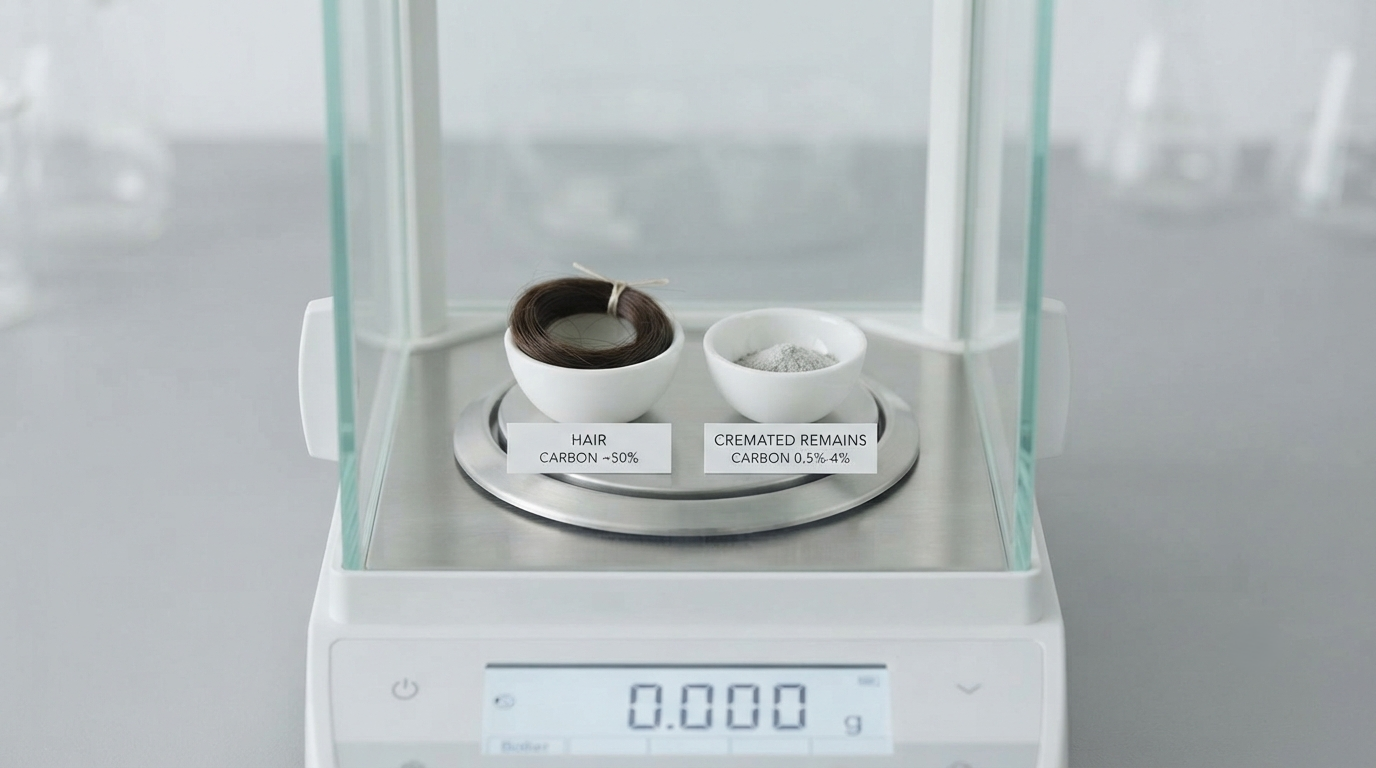
Five of seven stages are literally the same. The process difference for a diamond made from your wife’s hair is concentrated in stage 2, with a knock on effect at stage 4. Is it a real diamond, what color, how long, all answered identically for hair and ashes, because those questions belong to stages 3 through 7. How a memorial diamond is made from your wife’s ashes walks those shared stages as a chain of custody.
Why No Cremation Is Needed
A diamond made from your wife’s hair needs no cremation because the carbon is already in the hair. Cremation is not a step in making a diamond, it is simply how ashes came to exist. This matters for three groups of families:
- She was buried. If there was no cremation, ashes were never an option, but a lock kept from a hospital, hospice, or funeral home still is, and so is hair found later in a brush. A diamond made from your wife’s hair is often the only memorial diamond open to a family after a burial.
- The ashes are spoken for. If her ashes were scattered, interred, or are held by someone else in the family, a diamond made from your wife’s hair sidesteps the question of dividing them.
- Cremation was a religious concern. No tradition has an official position on memorial diamonds specifically; views vary by denomination and clergy. But where the objection is to cremation itself, a hair based stone sits outside it, worth raising with your own clergy in those terms.
None of this makes hair the better material. It makes it the available one for families who would otherwise have none. How to turn your wife’s hair into a diamond covers finding and checking the lock before anything else happens.
Does Old, Dyed, or Gray Hair Still Work Chemically?
Yes, for the same reason hair works at all. What the laboratory wants for a diamond made from your wife’s hair is the carbon in keratin’s backbone. Pigment, dye, age, and product sit on top of that backbone or alongside it, and every one of them leaves during extraction.
| Hair condition | What the laboratory sees | Does it work for a diamond made from your wife’s hair? |
|---|---|---|
| Gray or white | Keratin with little or no melanin | Yes, melanin was never the carbon source |
| Dyed, bleached, or permed | Keratin plus organic dye molecules or altered bonds | Yes, dyes and treatments burn off in the oxygen free furnace |
| Decades old, kept dry | Keratin, chemically stable | Yes, dry keratin does not degrade meaningfully over time |
| From a brush or comb | Shed hair, sometimes with root | Yes, root or no root, the shaft is keratin |
| Damp, moldy, or stored in plastic | Keratin with biological contamination | Usually still usable, but tell the provider; some will want to inspect it first |
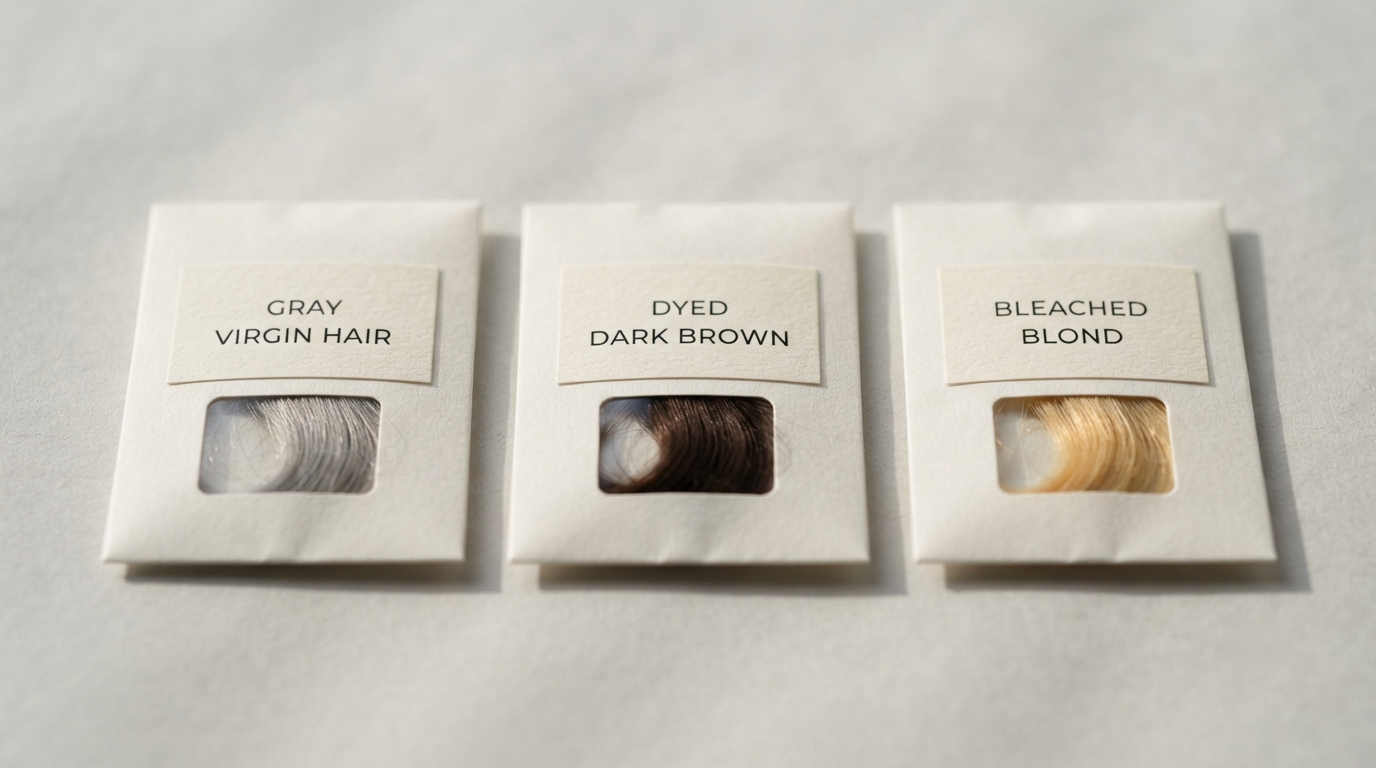
Keratin is stable. Locks kept from the nineteenth century still exist in museum drawers because dry hair does not rot the way tissue does. A lock from a childhood haircut, hair from the bathroom brush, hair cut on the day she died, chemically, the laboratory treats them the same. The one thing to tell a provider in advance is heavy contamination, such as mold.
Quantity matters more than condition, and a few grams is typically enough for a diamond made from your wife’s hair. How much hair you need for a wife memorial diamond gives the industry’s typical figures and what to do if you have less.
Why the Diamond’s Color Has Nothing to Do With Her Hair Color
Most families ask this at some point, and the answer is a relief for some and a small loss for others: a diamond made from your wife’s hair will not be the color of her hair.
Hair color comes from melanin, a pigment. Melanin is an organic molecule and it is destroyed at stage 2, it leaves with everything else that is not carbon. By graphitization her carbon is 99.9%+ pure, with no pigment in it, and pure carbon has no color of its own.
Diamond color is decided at stage 4, by trace elements present during growth:
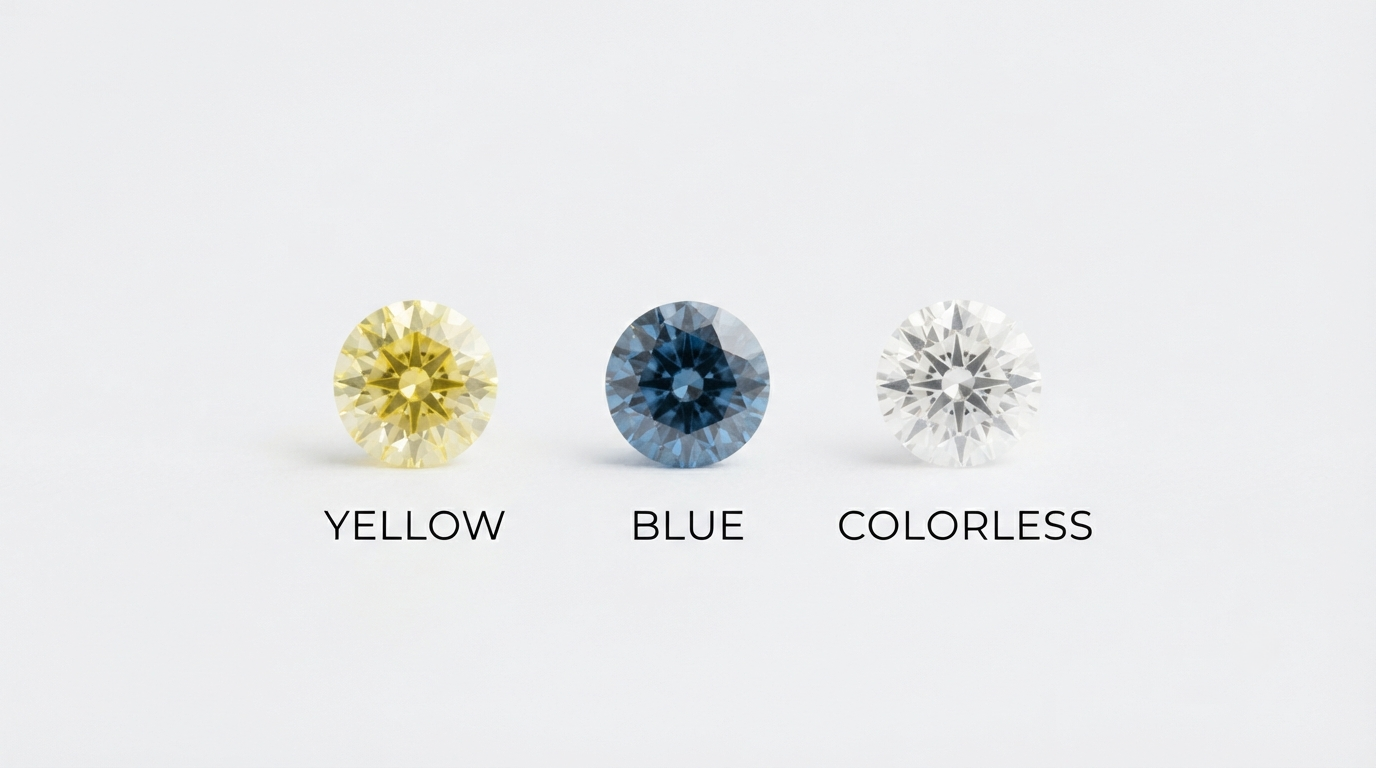
- Nitrogen in the growth cell produces yellow to champagne tones, the most common outcome for any memorial diamond.
- Boron produces blue.
- Neither produces a colorless stone, which requires extra processing and typically costs more.
- Post growth irradiation at stage 6 produces red, pink, green, or black on request.
So a diamond made from your wife’s hair grows the same range of colors whether that hair was dark brown, blond, or gray. What you choose, and what the growth cell’s trace chemistry does, decides the result, not the pigment that left in the furnace. What color a diamond made from your wife’s hair will be walks through the choice.
Where Lab Carbon Still Enters, and How Much of the Stone Is Hers
A diamond made from your wife’s hair is still not made only from her hair, better to hear that here than from a skeptic later.
Even at 50% carbon, a few grams of hair yields a gram or two of graphite. A growth cell needs more for a stone of meaningful size, so at stage 4 her graphite is blended with supplemental lab carbon, exactly as with ashes. Industry wide, the personal carbon in a finished memorial diamond is typically around 10% to 15% of the stone’s mass; some providers cite figures as low as 3%.
Because hair yields more carbon, the personal share in a stone made from your wife’s hair can sit toward the higher end of that range for a given carat, but it depends on how much hair was sent and what size you chose. Ask the provider for their figure.
Growth then proceeds by HPHT, the industry standard, in a press at roughly 6 to 8 GPa and 1,400 to 2,500°C, or by CVD, which a minority of providers use. Both are described on the synthetic diamond page. Growth time, not hair quantity, sets carat. Sending a whole ponytail instead of a lock does not produce a larger stone; it leaves the house with less of her hair for no reason.
Weeks to months in the press, then cutting, then grading to the cut, color, clarity, and carat standards GIA describes. A diamond made from your wife’s hair grades exactly as any other diamond; the report does not know where the carbon came from. Clarity typically lands between SI2 and VVS. The origin certificate, a separate document, records that the stone was made from your wife’s hair, and it should say so in those words. Is a memorial diamond really made from your wife’s hair takes the skeptic’s version of this question seriously.
What Happens to the Hair You Didn’t Send
Nothing, and that is the point. Hair you keep stays exactly as it is, in the envelope or the locket, as long as it stays dry.
The reason to keep some is one families sometimes learn too late: a lock cannot be topped up. Once a diamond made from your wife’s hair has grown, no carbon can be added to it. And unlike ashes, which usually exist in quantity, hair is finite in a way that is easy to underestimate. If the lock you hold is the only hair of hers you have and you send all of it, then if anything goes wrong in transit, or you later want a second stone for a daughter or son, there is no more.
Three habits cover it:
- Divide before you send. Keep at least a third of the lock, tied with thread, in a labeled paper envelope, paper, not plastic, so it stays dry.
- Photograph what leaves and what stays, with the date visible.
- Ask about unused hair. Most providers return material they did not need; confirm it in writing at the start.
Some families set the kept hair inside the back of the finished pendant or locket, so stone and source travel together, one small advantage of a diamond made from your wife’s hair over one made from ashes.
What to Ask the Laboratory, Stage by Stage
For a diamond made from your wife’s hair, the questions worth asking track the stages where hair behaves differently. The step by step for turning your wife’s hair into a diamond puts them alongside the practical steps.
- Collection, “What is the minimum for this carat, and do you return unused hair?”
- Extraction, “How much carbon did you recover from her hair?” A meaningful fraction of the hair’s weight is the sign of a laboratory that understands keratin.
- Graphitization, “Is there a log entry for the run?”
- Growth, “What proportion of the finished stone’s carbon came from her hair?” and “HPHT or CVD?”
- Cutting, “Rough weight versus finished weight?”
- Irradiation, “Was any treatment applied, and is it disclosed on the report?”
- Grading, “Does the origin certificate say hair, and is the grading report independent?”
None of these is a trick question. A provider who has made a diamond from hair before will have answered all seven many times.
Frequently Asked Questions
Does it matter that her hair was dyed or gray?
No. The laboratory extracts the carbon in keratin’s backbone; dye molecules, bleach damage, and melanin all leave during oxygen free extraction. Gray hair is simply keratin without pigment. A diamond made from your wife’s hair grows the same regardless of color or treatment history.
Can a diamond be made from her hair if she was buried?
Yes. A hair based memorial diamond needs no cremation, because the carbon is already in the hair. A lock kept from a hospital, hospice, funeral home, or found afterward in a brush is enough. This is the main reason many families with a burial choose hair.
How much hair does the process need?
Typically a small lock or a few grams, often described as palm sized. Hair is roughly 50% carbon, so far less is needed than the few tablespoons to roughly 4 oz of ashes a laboratory would otherwise ask for. Sending more does not make a larger stone; growth time sets carat.
Will the diamond be the color of her hair?
No. Hair color comes from melanin, which is destroyed during extraction. Diamond color is set during growth by trace nitrogen, yellow to champagne, or boron, blue, with colorless requiring extra processing. Dark, blond, and gray hair all produce the same range of possible colors.
How much of the finished diamond is actually her carbon?
Industry wide, roughly 10% to 15% of a memorial diamond’s mass is personal carbon, with some providers citing as low as 3%. Because hair yields more carbon than ashes, a hair based stone can sit toward the higher end for a given carat, but ask the provider for their specific figure.
Can I add more hair later, or make a second diamond from the same lock?
Nothing can be added once a diamond has grown. A second stone is possible only if enough hair remains, which is why keeping part of the lock matters. Ask the provider before sending whether one submission can yield two stones, and keep some regardless.
Does hair from her brush work as well as a cut lock?
Chemically, yes. Shed hair from a brush or comb is keratin like any other, with or without the root. Gather it into a paper envelope and keep it dry. The only condition worth flagging to a provider is mold from damp storage, which they will want to plan around.
Final Thoughts on a Diamond Made From Your Wife’s Hair
Five of the seven stages are the same for hair and ashes. The two that differ, extraction, and the share of her carbon that reaches the press, differ in hair’s favor, and neither requires that a cremation took place. What a diamond made from your wife’s hair asks of you is smaller in quantity and larger in care: a lock you divide before it leaves, a paper envelope for what stays, and a provider who can tell you how much carbon came out and what the certificate will say.
Learn More About Wife Memorial Diamonds
- Wife Hair Diamond: The Complete Guide
- How a Memorial Diamond Is Made From Your Wife’s Ashes
- How Much Hair Do You Need for a Wife Memorial Diamond?
- What Color Will a Diamond Made From Your Wife’s Hair Be?
- Is a Memorial Diamond Really Made From Your Wife’s Hair?
Talk With Memorial Diamond
If you are holding a lock and want to know the minimum for the carat you have in mind, how much carbon is typically recovered from hair, and what the origin certificate will say, reach out to Memorial Diamond, all three are answerable before the envelope is sealed.
Word count: 2,898 · Reading time: about 14 minutes
Leave A Comment