
You are sending two things, a portion of her ashes and a lock of her hair, and it is natural to wonder whether two sources pull the stone toward a different color than one would. A wife ashes hair diamond color is not predictably changed by combining the two materials: trace nitrogen or boron from either source produces the same yellow, champagne, or blue tendency as any memorial diamond, there is no rule that combined stones lean one way, and two stones from the same combined submission can still come out different.
That is the only wife ashes hair diamond color question that is specific to a combined stone, and it has a short answer. The rest of this page is about what a family choosing a combined stone should decide, specify, and ask about color, because the paperwork for two materials needs a little more care than the paperwork for one.
Table of Contents
Does Combining Her Ashes and Hair Change the Wife Ashes Hair Diamond Color?
No, not the wife ashes hair diamond color, and not in any way you can plan around.
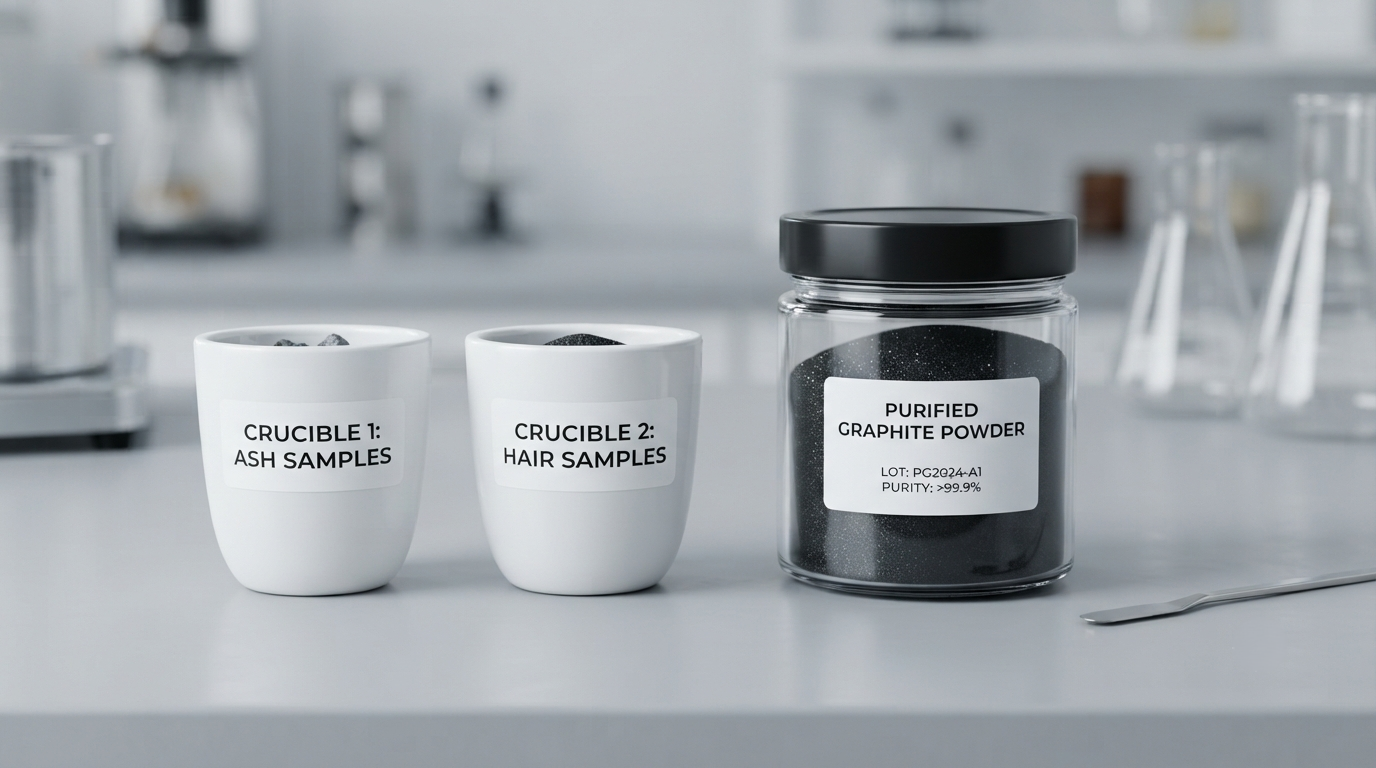
A wife ashes hair diamond color comes from trace elements built into the crystal lattice during growth, nitrogen for yellow and champagne, boron for blue, the absence of both for colorless. Those elements arrive with the carbon. In a combined submission, the carbon comes from two places: her cremated remains (almost entirely calcium phosphate, with roughly 0.5 to 4% usable carbon) and her hair (roughly 50% carbon by weight, from keratin).
Both are purified to 99.9%+ carbon, converted to graphite at roughly 2,500 to 2,700°C, blended with supplemental lab carbon, and grown around a seed in an HPHT press at roughly 6 to 8 GPa and 1,400 to 2,500°C, or, with a minority of providers, in a CVD chamber; both methods are on the synthetic diamond page.
Here is the part that matters for wife ashes hair diamond color. By the time the carbon reaches the press, it is carbon. Whatever trace nitrogen or boron survived purification came from organic, personal material, and organic material carries those passengers whether it started as bone mineral or as protein. Two sources do not add up to a different chemistry, and so they do not add up to a different wife ashes hair diamond color; they add up to the same chemistry from two directions. The full mechanism, why personal carbon tends toward yellow, champagne, and blue, and what colorless costs, is on the ashes color page, and it applies to a combined stone without modification.
One assumption worth setting down early: the hair will not lend the stone its color, and it has no bearing on the wife ashes hair diamond color at all. Pigment, dye, and gray are all destroyed at purification, and the hair color page explains why. Adding ashes to hair does not bring the hair color back, and adding hair to ashes does not introduce one.
Why Is There No Rule That Combined Stones Lean One Way?
Families sometimes hear, or reason their way to, a claim that the wife ashes hair diamond color runs whiter, or bluer, or warmer than a single material stone. None of these holds up, and it helps to see why each fails.
| Claim you might hear | What the chemistry says |
|---|---|
| “Hair carbon is purer, so the combined stone will be whiter” | Hair is a richer carbon source, but keratin is a protein and proteins contain nitrogen. Richer does not mean cleaner. Hair based stones show the same yellow, champagne, blue tendency as ash based ones. |
| “Two sources mean more trace elements, so the color will be deeper” | Trace element content depends on purification and on the growth run, not on how many envelopes arrived. The personal carbon is typically around 10 to 15% of the finished stone regardless of source count. |
| “The ashes will add blue” or “the hair will add yellow” | Neither material has a signature color. Nitrogen and boron can come from either, and the amounts that survive purification are not predictable per source. |
| “Combined stones hold a more consistent wife ashes hair diamond color” | Two stones from the same combined submission grow in separate cells, in separate runs, and can differ visibly, exactly as two stones from ashes alone can. |
The honest statement is this: a wife ashes hair diamond color is decided by the growth run, and the growth run does not know how many materials fed it. Hair does most of the personal carbon work in a combined stone because of its far higher carbon content, but that is a fact about quantity, not about color. Wife Ashes and Hair Diamond: The Complete Guide covers the quantity side and why families combine at all.
So the wife ashes hair diamond color question is not “what will two materials do” but the same question any family faces, with two materials’ worth of paperwork attached. That comes down to four decisions.
Decision 1: Natural or Specified?
The first wife ashes hair diamond color decision is whether to let the stone be what the carbon gives, or to ask for a particular family.
Natural, as grown means you accept the wife ashes hair diamond color the run produces, yellow, champagne, or blue, whichever the run produces, and the shade within it. It is the baseline price, the shortest list of things that can go wrong, and, for some families, the point: the color is the stone’s own record of the carbon that made it, and that carbon came from two parts of her.
Specified means you name a family and the provider grows or treats toward it:
- Blue (boron), a grown color, baseline to modestly above, depending on provider.
- Colorless or near colorless, extra processing to exclude both nitrogen and boron; the highest priced grown color at every carat.
- Red, pink, green, or black, post growth irradiation, an add on above the grown color; black can push the timeline toward 12 months.
Neither wife ashes hair diamond color choice is more respectful of a combined stone than the other. What a combined stone does add is a reason to think about the meaning of the color alongside the meaning of the materials. Some families who combined because they wanted “both of her” in one crystal prefer the natural color for the same reason, nothing chosen, nothing imposed. Others want a specified color precisely because the stone is already the most deliberate object they will own. Both are good reasons, and neither changes the wife ashes hair diamond color chemistry.
Decision 2: When Do You Decide?
Decide the wife ashes hair diamond color before either material leaves the house, and for a combined stone, this is stricter than it sounds.
A wife ashes hair diamond color cannot be changed once the crystal has grown. Irradiation can shift a finished stone into a different family, but nitrogen and boron in the lattice are permanent, and nothing can be added to a grown diamond, not color, not carbon, not a second material. If you decide on color after the submission has been logged, you are relying on the provider not having started, which for a 6 to 10 month process is a short window.
The combined stone reason to decide early is that you are sending two irreplaceable things at once. If the color decision later leads to a second stone, a regrow because the first fell outside the promised range, or a matched second stone for another family member, that second stone needs material. Most of a cremation’s ashes are usually still at home, since a stone typically uses only a few tablespoons to roughly 4 oz.
A lock of hair, though, cannot be topped up. Deciding the wife ashes hair diamond color before sending means you also decide, at the same moment, to keep part of the lock and part of the ashes. How much ash and hair you need for a wife memorial diamond covers the combined minimums, which are often less of each than the two standalone figures.
A practical order of operations for settling a wife ashes hair diamond color on a combined stone:
- Confirm the combined minimum for the carat you want.
- Divide both materials, the amount to send, and the amount to keep.
- Decide natural or specified, and if specified, which family.
- Get the color range, the recourse, and the certificate wording on the order.
- Then, and only then, package both materials under one submission reference and send.
Steps 1, 2, and 5 belong to how to turn your wife’s ashes and hair into a diamond; steps 3 and 4 are this page.
Decision 3: What Does Each Choice Cost?
A wife ashes hair diamond color is priced the same as for any other stone, the number of materials does not enter the color line of the quote. What a combined stone may add is a modest processing fee, because extraction runs twice; that fee, where it exists, is separate from color and should appear as its own line.
Industry wide in 2026, and not as anything Memorial Diamond has published, the tiers run roughly:
- $1,500 to $3,500 for 0.10 to 0.25 ct
- $5,000 to $15,000 for 0.5 to 1 ct, with colorless costing meaningfully more than blue, yellow, or champagne at the same size
- $20,000 to $75,000+ for 2 to 5+ ct
Within those tiers, the wife ashes hair diamond color choice moves the price as follows: natural is the baseline; blue is baseline to modestly above; colorless is the highest grown color, and the premium compounds with carat because larger stones show faint tint more visibly; irradiated colors add to whichever grown color the stone started as. Independent grading, engraving, and the setting are usually separate from the loose stone. Carat itself is set by growth time in the press, not by how much of either material you send, so a combined submission does not earn a larger or less expensive stone.
Ask for the quote with four separate lines: loose stone at the chosen carat and color, any combined processing fee, the grading report, and the setting. A quote that folds color into a single number makes it impossible to see what the wife ashes hair diamond color decision actually cost.
Decision 4: How Do You Write It Down?
This is where a combined stone genuinely differs, because the documents have to record two materials as well as one wife ashes hair diamond color. Six lines belong on the order, and one of them is unique to a combined submission.
| Line on the order | What to write | Why it matters more for a combined stone |
|---|---|---|
| Color family | Named the way the provider names it, “natural, as grown,” “blue,” “colorless,” “irradiated pink” | Same as any stone |
| Delivered range | A span of letters on the GIA D to Z scale for near colorless, or a band of fancy grades (“Fancy Light” to “Fancy”) for everything else | Same as any stone |
| Recourse | Regrow, irradiate to another family, discount, or refund, and who pays | A regrow needs both materials again; see the recourse section |
| Grading | Whether the stone is independently graded and whether the report is included | Same as any stone |
| Irradiation consent | Whether the provider may irradiate without instruction if the natural color disappoints | Same as any stone |
| Certificate wording | The origin certificate must name both materials, ashes and hair, under one submission reference | Unique to a combined stone. A certificate that says “ashes” does not record what you sent, whatever the color |
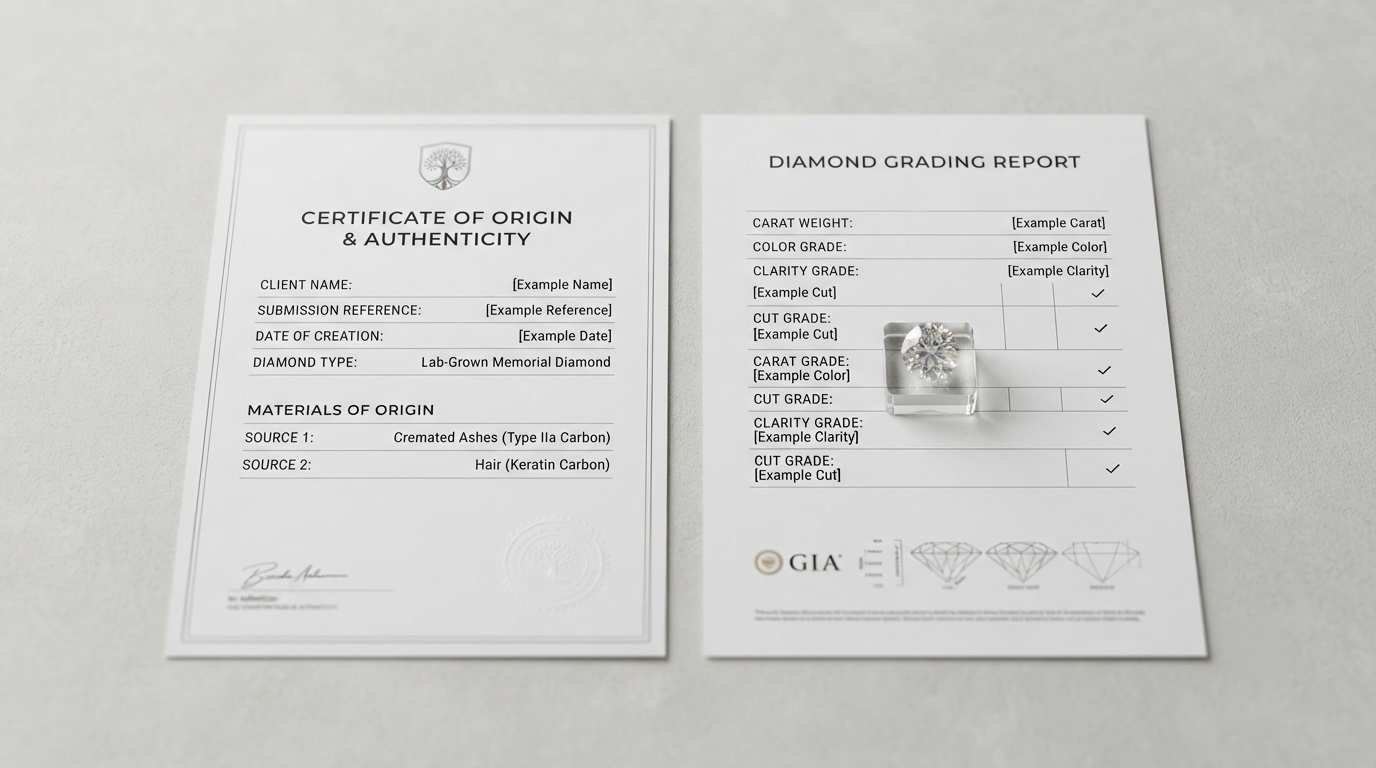
That last line is the one families miss. The grading report describes the wife ashes hair diamond color; the origin certificate describes where the carbon came from. Neither document does the other’s job. Ask for the certificate wording in advance, before either material is packaged, and confirm that the two materials are logged under one chain of custody record rather than two, otherwise there may be no document that ties the hair, the ashes, and this particular color together.
The questions to ask before turning your wife’s ashes and hair into a diamond include all six of these among the wider list.
How Do You Read the Grading Report for a Combined Stone?
Read a wife ashes hair diamond color grade exactly as you would read it for any diamond, because the report does not know, and does not record, that the carbon came from two sources.
An independent grading report describes cut, color, clarity, and carat. For color, near colorless stones get a letter from D, colorless, toward Z, light yellow or brown, assigned face down against master stones under controlled light. Stones with more color than Z, including most blues and every irradiated stone, are described by hue, tone, and saturation, “Fancy Light Blue,” “Fancy Yellow,” and so on. More color is not a lower grade in that second language; it is a description.
Two things to hold in mind when the report arrives for a wife ashes hair diamond color:
- The grade is a controlled measurement taken face down against master stones, which is not how anyone will ever see the diamond. Graded warmth reads as warmth on a finger, not as a fault. Wait until you have held it in daylight before deciding how you feel about the grade.
- The report is what makes recourse possible. “You promised Fancy Light to Fancy Blue and this graded Very Light Blue” is a fact with a report and an argument without one.
The report will say nothing about ashes or hair. That is normal. Source is the origin certificate’s job, which is why the certificate wording sits on the order as its own line.
What Recourse Exists, and Why Is It Tighter for a Combined Stone?
If the wife ashes hair diamond color arrives outside the written range, a provider may offer a regrow, irradiation of the first stone into a different family, a price adjustment, or a refund. Which of those you actually get, and who pays for it, is settled by the recourse line you put on the order months earlier.
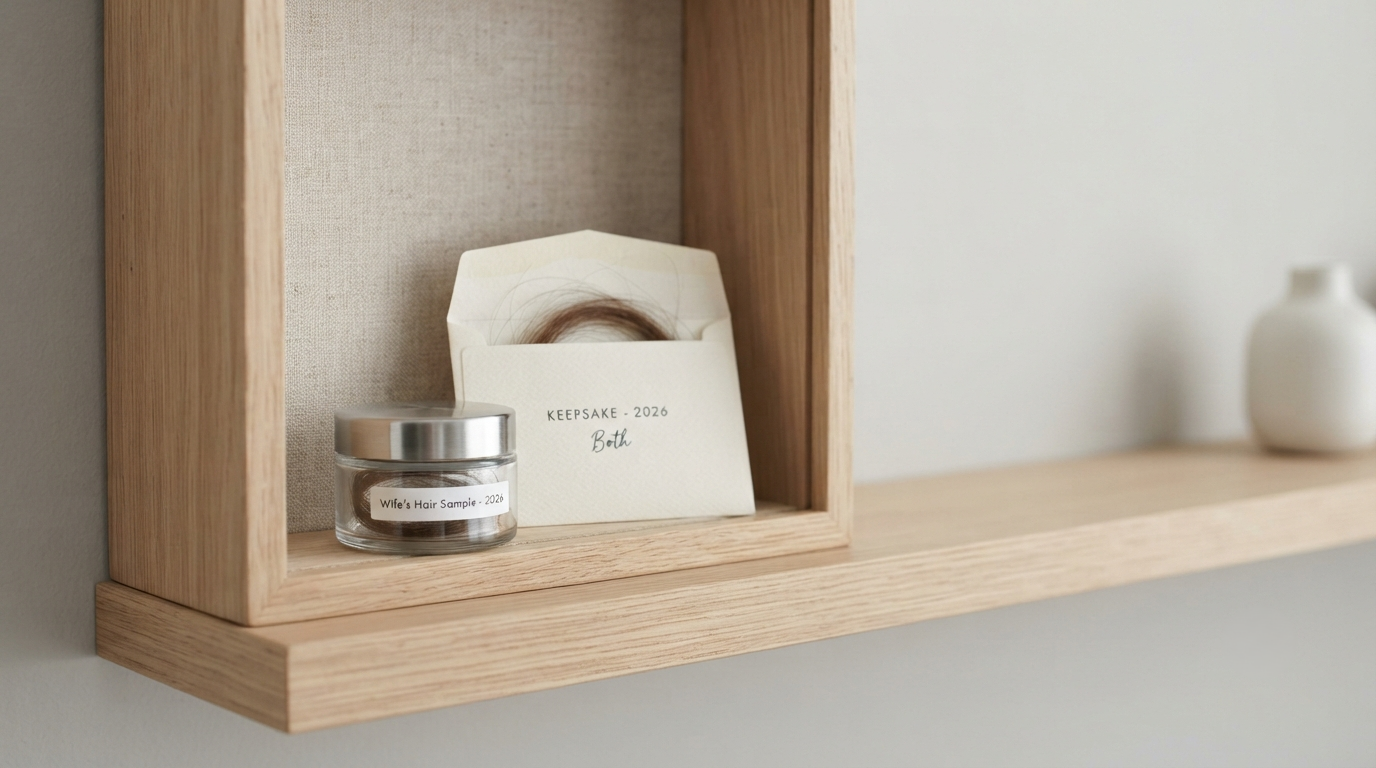
For a combined stone, the first option has a condition attached: a regrow of a wife ashes hair diamond color needs both materials again, or it is no longer a combined stone. If the family sent the whole lock, a regrow can only be made from ashes, and the certificate for the second stone would say so. This is the practical reason to keep part of each material, not because anything is likely to go wrong, but because the one remedy that preserves the meaning of a combined stone depends on it.
Three things make recourse workable:
- A written range, so “outside the range” means something.
- An independent grading report, so the stone can be measured against it.
- Material kept at home, some of the ashes and some of the hair, so a regrow can be what the first stone was meant to be.
A provider who has made combined stones before will raise the third point unprompted, usually while the wife ashes hair diamond color is still being discussed. One who has not may quote the full standalone minimum for each material and never mention keeping any.
Which Metal Should Hold It?
Choose the setting after the stone exists, for the wife ashes hair diamond color that actually arrived. Yellow gold hides faint yellow and makes champagne read as warmth; white gold and platinum keep blue clean and make any residual tint in a near colorless stone more visible; irradiated colors are saturated enough that metal is taste rather than correction. If the stone will sit against her wedding band, or yours, borrow that metal for the comparison before committing. Memorial diamond settings and jewelry ideas for a wife runs through the mountings, and for a combined stone, a locket that holds the diamond alongside the kept portion of the lock is one option families find fitting.
Frequently Asked Questions
Does combining ashes and hair change the diamond’s color?
Not predictably. Color comes from trace nitrogen or boron built into the lattice during growth, and both materials carry those elements the same way once purified to carbon. A combined stone shows the same yellow, champagne, or blue tendency as any memorial diamond, with colorless available at extra processing and cost.
Will the hair make the stone whiter or give it her hair color?
Neither. Pigment, dye, and gray are destroyed at purification, so hair color never reaches the press. Hair is a richer carbon source than ashes, but keratin contains nitrogen, and hair based stones trend yellow, champagne, and blue like ash based ones. Treat any “hair runs whiter” claim as unverified.
Can two stones from the same combined submission be different colors?
Yes. Each stone grows in its own cell, in its own run, with its own blend of personal and supplemental carbon, and trace elements distribute unevenly. Two stones from one combined submission can come out a pale yellow and a warm champagne. If matching matters, put “similar” in writing rather than expecting “identical.”
Does the wife ashes hair diamond color cost more because there are two materials?
No. Color is priced by family, natural, blue, colorless, or irradiated, and by carat, not by material count. Some providers add a modest processing fee because extraction runs twice; that is separate from color and should appear as its own line on the quote alongside the stone, grading, and setting.
Should I choose the natural color or specify one for a combined stone?
Either is sound. Natural is the baseline price and lets the stone be the carbon’s own record; a specified family, blue, colorless, or an irradiated color, costs more and is guaranteed only to the family, not the shade. Decide before either material leaves the house, and write the range down.
Will the grading report say the stone came from both ashes and hair?
No. A grading report describes cut, color, clarity, and carat; it records nothing about source. The origin certificate is the document that names the materials, and for a combined stone it should name both under one submission reference. Ask for its wording before you send anything.
Final Thoughts on Wife Ashes Hair Diamond Color
The one question that is specific to a combined stone has a short answer: no, two materials do not pull the color one way or another. What a combined stone changes is not the chemistry but the care, deciding the wife ashes hair diamond color before two irreplaceable things leave the house, writing the range and the recourse onto the order, insisting on a certificate that names both materials, and keeping some of each so that a regrow, if it is ever needed, can be what the first stone was meant to be.
Do those four things, and the wife ashes hair diamond color that arrives will be a yellow, a champagne, a blue, or the color you specified, and, either way, one you decided on with both of her in mind.
Learn More About Wife Memorial Diamonds
- Wife Ashes and Hair Diamond: The Complete Guide
- What Color Will a Diamond Made From Your Wife’s Ashes Be?
- What Color Will a Diamond Made From Your Wife’s Hair Be?
- How to Turn Your Wife’s Ashes and Hair Into a Diamond
- How Much Does a Wife Memorial Diamond Cost?
Talk With Memorial Diamond
If you hold both her ashes and her hair and want the color decision settled before either is sent, reach out to Memorial Diamond, which wife ashes hair diamond color families are offered, how the range and recourse are written into an order, and what the origin certificate will say about both materials are all answerable in advance.
Part 3: Meta Description
Wife ashes hair diamond color: combining does not shift it. The four decisions a family makes, natural or specified, when, what it costs, and how to write it down.Part 4: Body Copy
Above. 3,431 words, about 17 minutes.
Part 5: Image Brief
| # | Placement | Filename | Alt text | Notes |
|---|---|---|---|---|
| 1 | Hero | wife |
Leave A Comment