
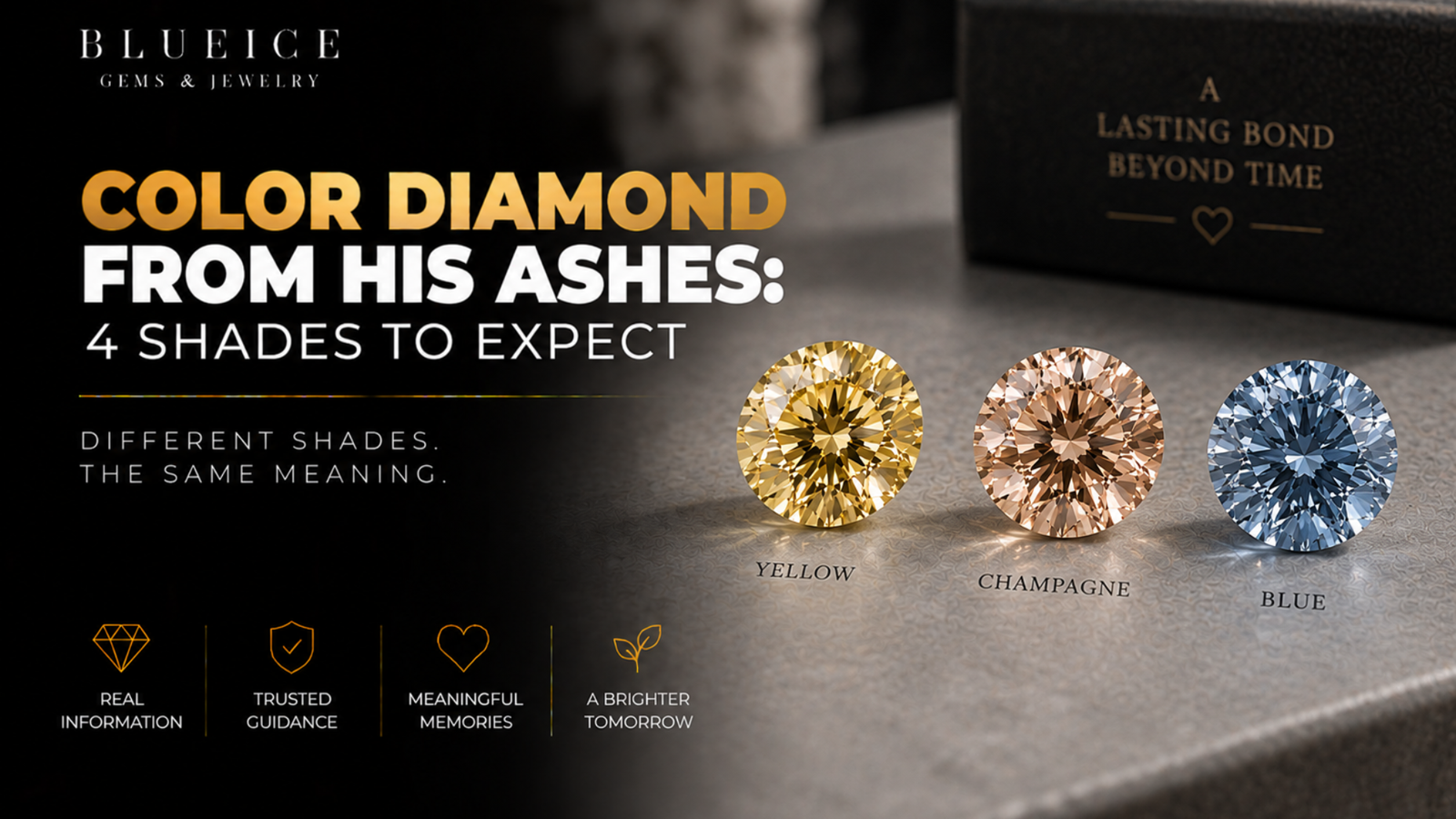
Most sons and daughters picture something clear and bright when they first imagine this stone, so it helps to know the answer early. The color diamond you can expect from your father’s cremated ashes is most often yellow, champagne or blue rather than colorless. That is because trace elements arrive with the carbon and tint the crystal as it grows. A colorless stone is achievable, but it needs extra processing and costs more at the same carat weight.
None of those four outcomes is a flaw. Which one you choose matters less than where the stone is going to live and who is going to look at it, and this page is built around that decision.
Table of Contents
Why Is a Color Diamond From Ashes Rarely Colorless?
A diamond is carbon arranged in a crystal lattice. Any atom that is not carbon and slips into that lattice changes how the crystal handles light. Two do most of the work: nitrogen, which produces yellow, and boron, which produces blue. A diamond with neither present reads as colorless.
Cremated remains are mostly calcium phosphate, the mineral structure of bone. Carbon is a small fraction, usually somewhere between 0.5% and 4% of the ash by weight. Extracting and purifying that carbon to 99.9%+ is a multi stage, oxygen free heating process, and it removes almost everything else. Almost. The trace elements that ride along are exactly what gives a memorial stone its tint.
Because the personal carbon is blended with lab sourced carbon to reach a growable volume, your father’s carbon typically makes up around 10% to 15% of the finished stone by mass. Even at that share, the impurities it carries influence the whole crystal. That is the honest reason a color diamond grown from ashes leans yellow, champagne or blue, and why a colorless result takes deliberate extra work to exclude those elements.
Which 4 Shades Can a color diamond Made From His Ashes Actually Be?
Providers grow memorial stones using the same HPHT and CVD methods used for any lab grown diamond, and four color diamond outcomes cover almost every ashes based order.
| Shade | What puts it there | Cost against the others | How it tends to read once set |
|---|---|---|---|
| Yellow | Nitrogen, the most common trace element in carbon from an organic source | Baseline; usually the least additional processing | Warm and bright; can look like a pale gold in yellow metal, and stands out sharply against white metal |
| Champagne | Several trace elements acting together, giving a brown to amber warmth | Similar to yellow | The subtlest of the four; easy to mistake for a colorless stone at a distance, richer up close |
| Blue | Boron in the growth environment | Typically priced above yellow and champagne | Stays visually distinct in any metal; the shade most people can name from across a room |
| Colorless | The near total absence of nitrogen and boron, which requires extra exclusion processing | Meaningfully more than the three above at the same carat | Reads as a conventional white diamond; only the paperwork says where it came from |
Red, pink, green and black are also offered by some providers, but those come from post growth irradiation rather than from anything in the ashes. Ask whether a color you are quoted is grown or treated, because the answer belongs on the grading report and in your own understanding of the stone. Prices for any of the four shades fall inside the general ranges that drive memorial diamond cost, and the fuller range of colors families choose for a father is covered separately.
Does the Color Say Anything About Your Father?
No, and it is worth saying plainly because families do wonder. A blue color diamond does not mean he was calm; a yellow color diamond does not mean he was warm. The trace elements that decide the color come from the chemistry of cremation and the carbon extraction, not from who he was.
Nothing molecular survives graphitization at roughly 2,500 to 2,700°C. What survives is carbon, some of it his, arranged into a crystal that exists because of him. The color is the signature of the process. The meaning is in the fact that a real, physical part of color diamond is in the lattice at all.
That is also why two stones grown from the same ashes in separate runs can come out in slightly different shades. Same source, same honesty, different batch.
Which Color Diamond Looks Right Once It Is Set?
This is the question the color chart cannot answer, and it is where most families should spend their thinking. The same stone looks different depending on the metal around it and the way it is held.
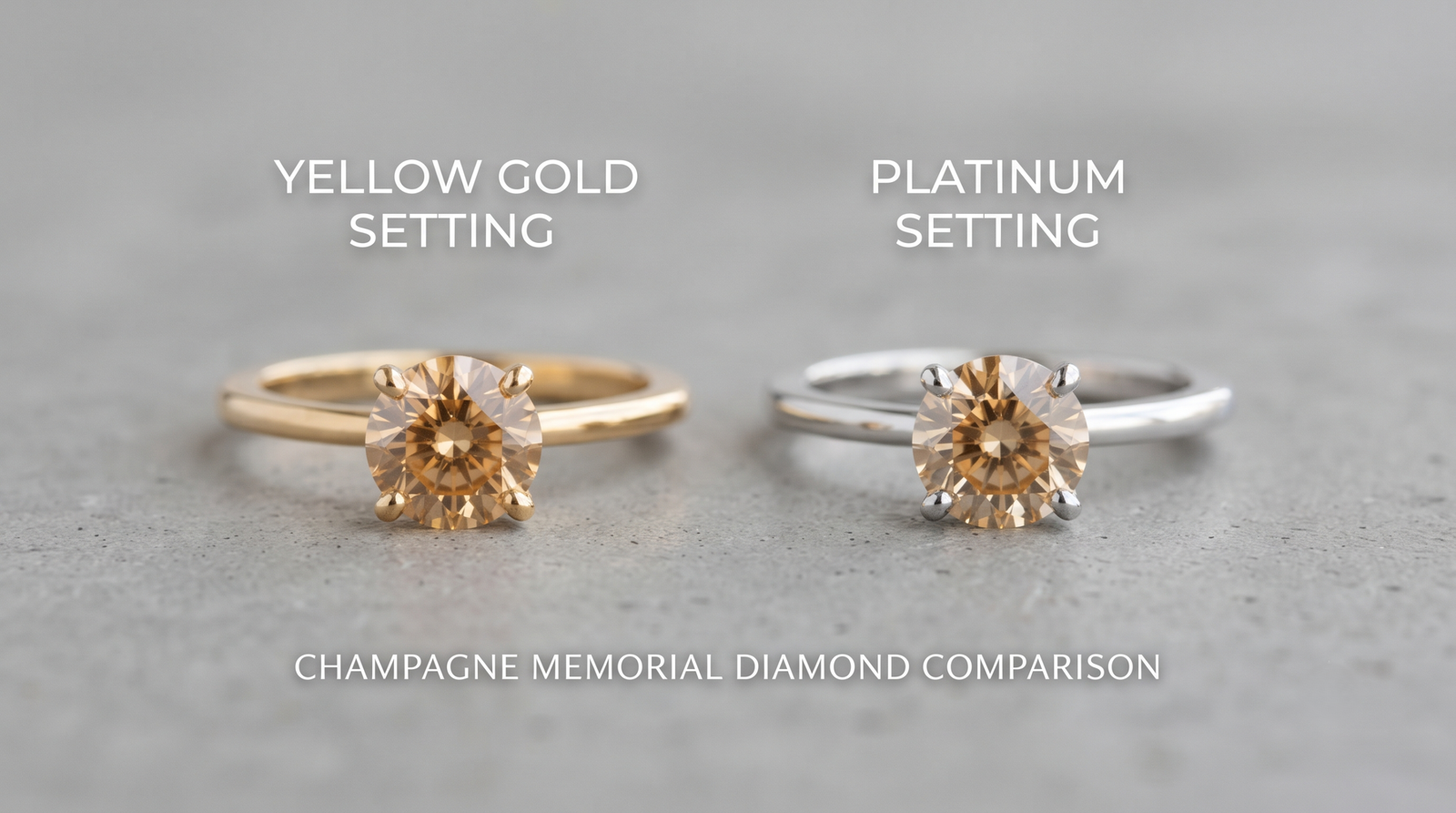
- A warm stone, yellow or champagne color diamond loses definition in yellow gold and gains it against platinum or white gold, where the contrast makes the color read as deliberate.
- A blue color diamond stays legible in any metal, which makes it the safest choice when the setting has not been decided yet.
- A bezel setting shows more of a stone’s body color than a prong setting, because the metal frames the color instead of letting light through the sides.
- A colorless stone disappears into a conventional setting, which is exactly what some families want and exactly what others do not.
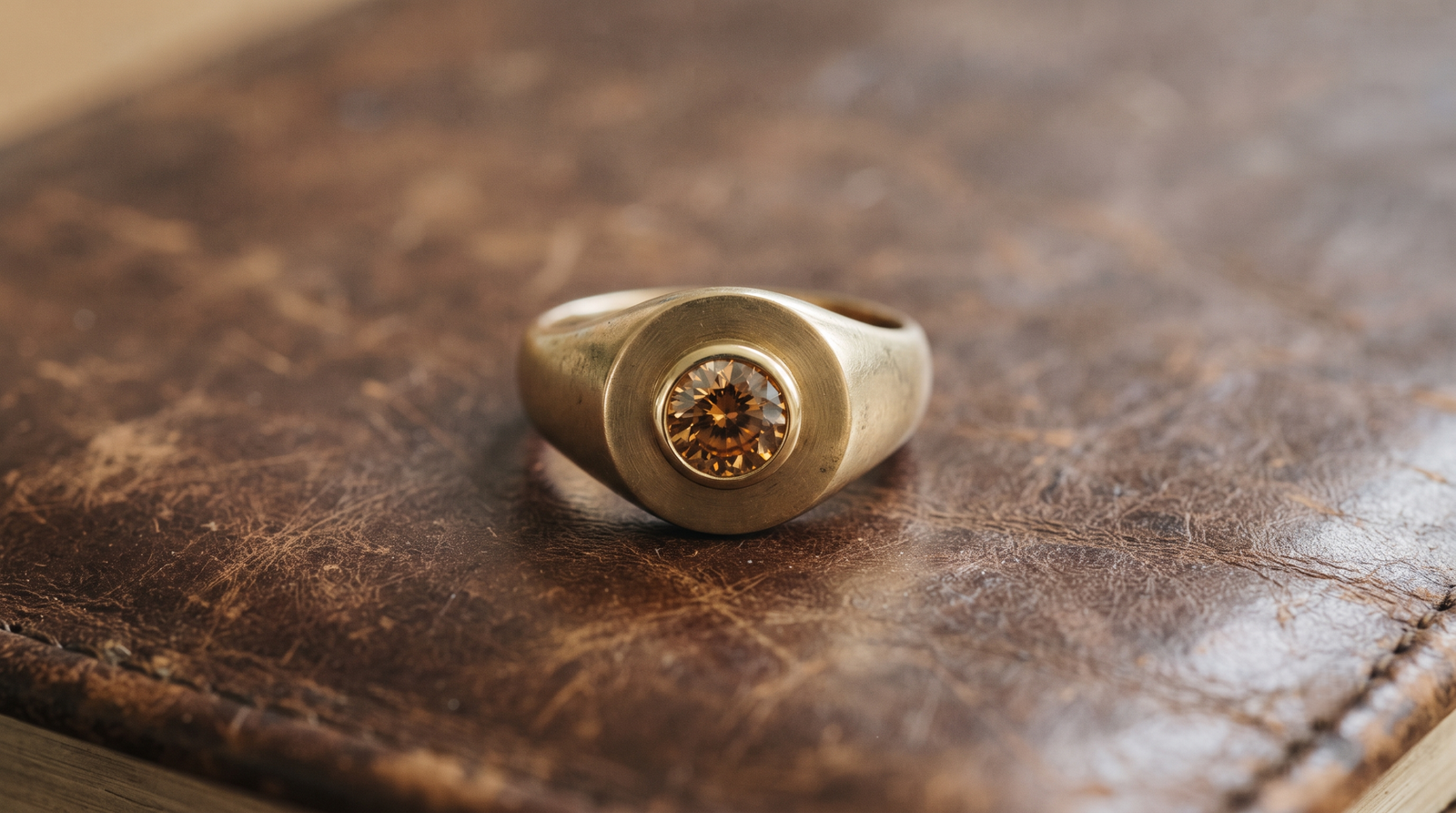
If your father never wore jewelry, the destination may not be a ring or pendant at all. Families set stones into a watch he wore for thirty years, a plain signet ring, a single cufflink, a pen or a flask. In those pieces a champagne or yellow color diamond usually looks more like him than a bright white one, because it does not read as jewelry first. The settings and jewelry ideas for a father and the father memorial diamond ideas pages cover the pieces themselves; the rule here is simpler. Decide the destination first, then the color.
What Should You Settle Before You Order?
Four things to get in writing before the ashes leave your hands, because the color diamond you receive is the one thing in this process that cannot be adjusted afterward without treatment.
- A color family, not a color word. “Blue” covers pale sky to deep sapphire. Ask the provider what range they will commit to and how they describe it.
- What happens if the stone comes out of range. Some providers re grow; some offer a credit; some offer nothing. Know which before you sign.
- Whether the color is grown or irradiated. Yellow, champagne, blue and colorless are grown. Red, pink, green and black are treated afterward, and a reputable provider will say so unprompted.
- Whether color appears on the grading report. Reputable providers have finished stones graded by an independent lab against the GIA color scale, and that report is your record of what you actually received. The grading and certification process explains what the report covers.
Frequently Asked Questions
Will the diamond be gray because his ashes are gray?
No. The gray of cremated remains is the calcium phosphate of bone, and it is removed during carbon purification. The finished stone is a real color diamond that takes its color from trace elements in the crystal, so it comes out yellow, champagne, blue or colorless, never ash gray.
Can I get a genuinely colorless diamond from my father’s ashes?
Yes. A colorless stone is achievable when the provider runs additional processing to exclude nitrogen and boron from the growth environment. It is the most expensive of the four common outcomes at any given carat weight, so ask for the price difference in writing before you decide.
Which color diamond is the safe choice if the setting is undecided?
Blue. It stays visually distinct in yellow gold, white gold and platinum alike, and it is the shade most people can identify at a glance. Yellow and champagne depend more on the metal around them, so they reward deciding the setting first.
Can the color be changed after the stone is grown?
Only by post growth irradiation, which some providers offer to shift a stone toward red, pink, green or black. The natural grown shade cannot be undone or lightened afterward, so settle the color family and the out of range remedy before the ashes are sent.
Does the color have to match anything he owned or wore?
No, and there is no convention that says it should. Some families match the metal of a watch or ring he already wore; others choose the shade they will enjoy looking at. The color says nothing about him, so the choice is entirely about the piece.
Will the color fade over the years?
No. Diamond is the hardest known natural mineral, and the trace elements responsible for a grown color are locked inside the crystal lattice. Yellow, champagne, blue and colorless stones hold their color indefinitely with ordinary care and cleaning.
Final Thoughts on the Color of a Diamond From Your Father’s Ashes
The first reaction to “it probably will not be clear” is often disappointment, and the second, a little later, is usually relief. A color diamond looks like what it is: something grown from a specific source, not bought off a tray. Whether that ends up yellow, champagne, blue or colorless is a decision you get to make with open eyes, once you know where it is going and who it is for. Look at real stones before you commit, and let the destination choose the color.
Learn More About Father Memorial Diamonds
- What Color Will a Diamond Made From Your Father’s Hair Be?
- What Color Will a Diamond Made From Your Father’s Ashes and Hair Be?
- Memorial Diamond Colors Explained: Why They’re Rarely Colorless
- Memorial Diamond Colors for a Father: What to Expect
Talk With Memorial Diamond
If you are weighing which color diamond fits the piece you have in mind, or you have not decided on the piece yet, reach out to Memorial Diamond to talk through what is possible for your father’s ashes. There is no rush and no right answer, only the one that suits him.
Visit memorialdiamond.us to start the conversation.