
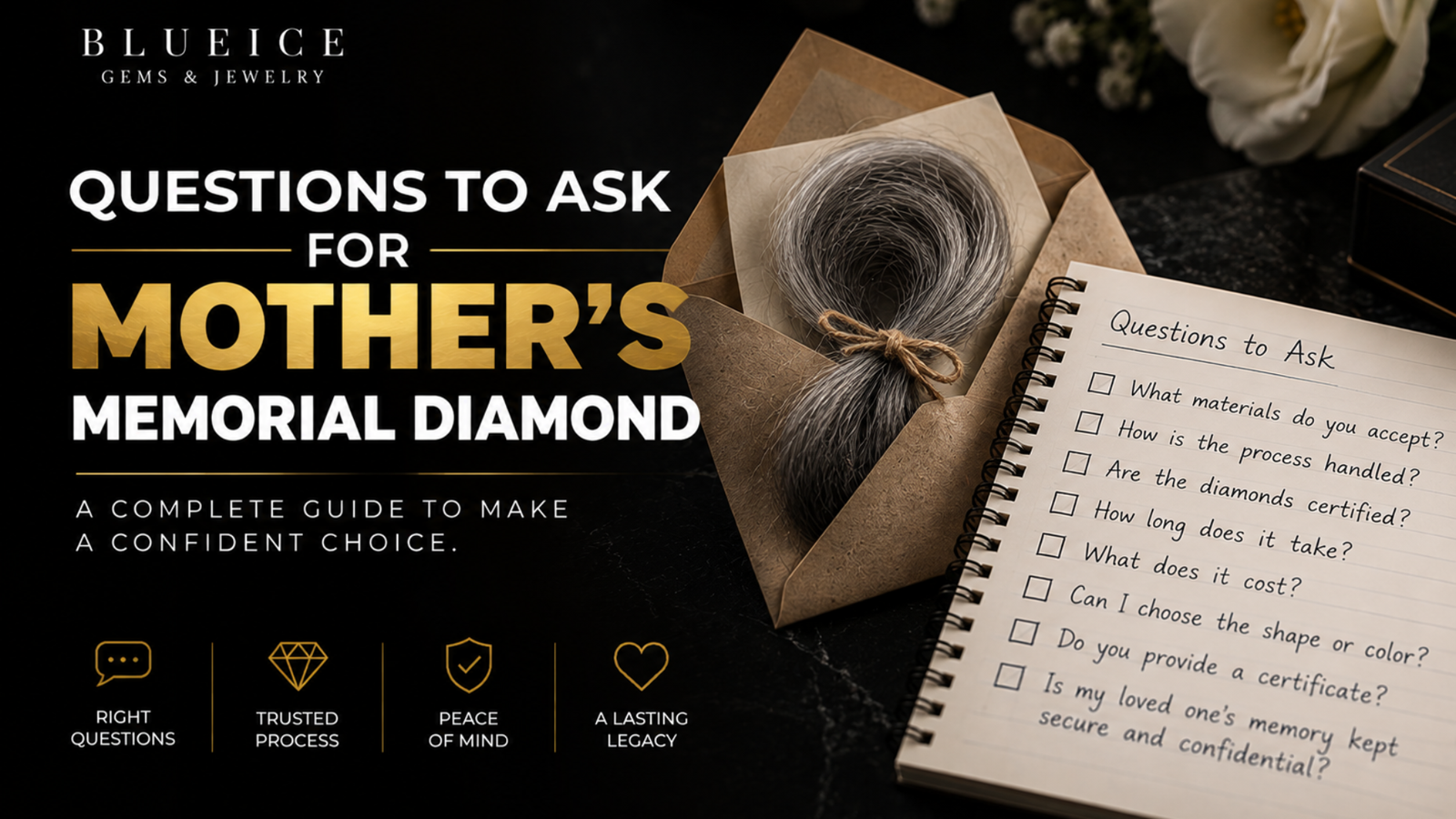
A lock of your mother’s hair arrives at a laboratory with nothing behind it. No cremation certificate, no funeral home record, no third party who ever saw it, weighed it or signed for it. That single structural fact reshapes the question list: alongside the ordinary ones about carat and cost sit four questions that only exist because a lock is finite and undocumented: will you weigh it and confirm that in writing, what is your position on chemically treated hair, what are my options if it falls short of your minimum, and what happens to whatever you do not use.
Why the Hair Questions Different From the Ashes Questions?
Both materials work. They fail differently, and the questions follow the failure modes.
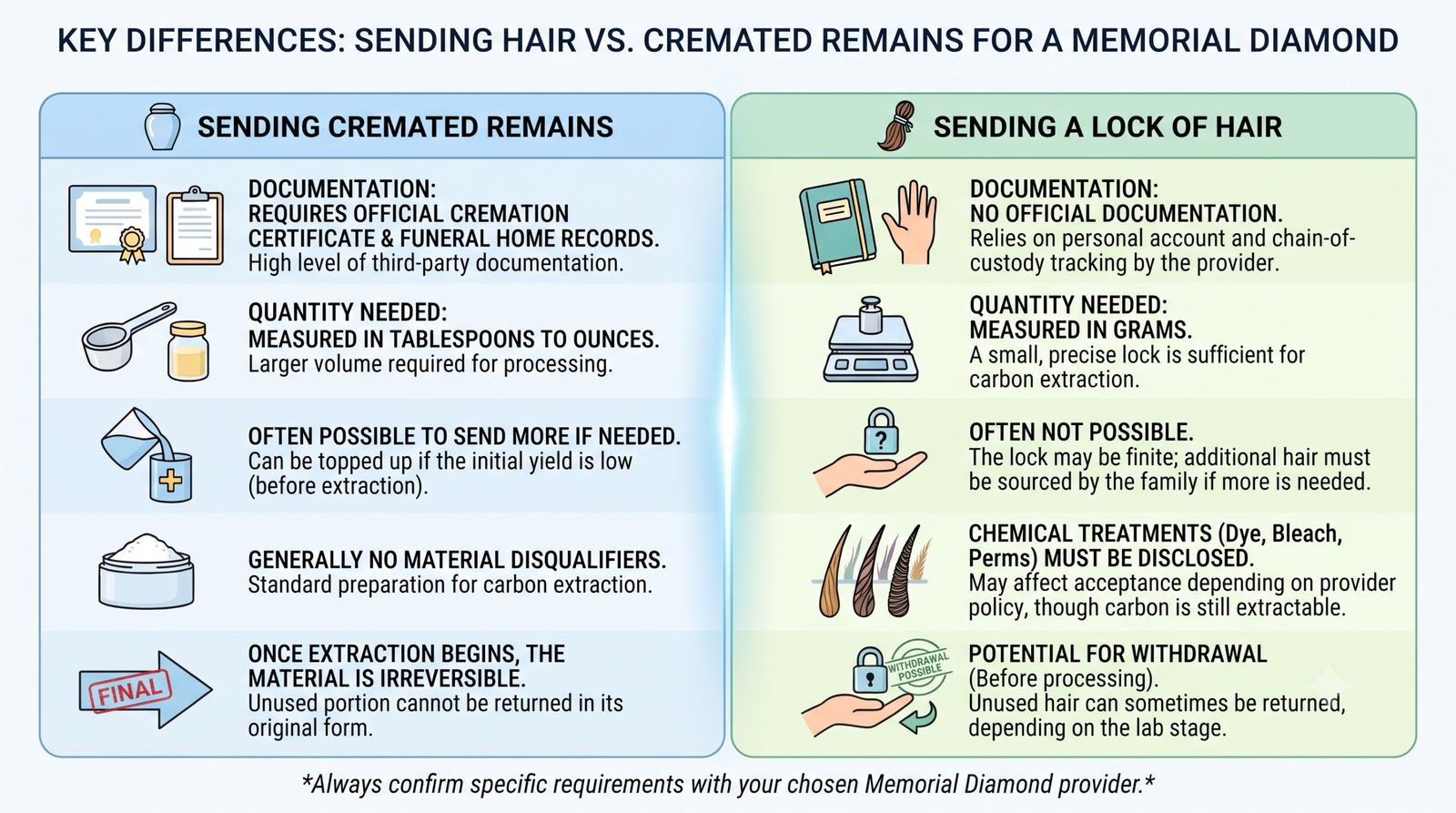
| Concern | With cremated remains | With a lock of hair |
| Can I send more later? | Usually, until extraction begins | Often not: the lock may be all that exists |
| What documents the material? | A cremation certificate and a funeral home record | Nothing but your own account |
| How much is needed? | Measured in tablespoons to ounces | A few grams, judged by weight rather than length |
| What can disqualify it? | Rarely anything | Chemical treatment, depending on provider policy |
| Is a top up possible? | Yes, as a routine remedy | Only if more hair still exists somewhere |
That table is why the ashes question list does not transfer unchanged.
Is What I Have Enough, and What If It Is Not?
Ask these before scissors, envelopes or payment enter the conversation:
- What is your minimum, stated as a weight? A few grams is the industry typical answer, and weight is what matters because a short dense lock can outweigh a long fine one, as outlined under how much hair you need.
- If I send you a photograph and a weight, will you tell me in advance whether it is sufficient? This is the single most useful question on the page, because it costs nothing and can be answered before anything is cut or posted.
- If the lock turns out to be below your minimum after it arrives, what are my options? The answer families need is whether the order pauses, whether a smaller carat becomes possible, or whether the hair comes back.
- Is hairbrush hair usable, and how do you treat it? Strands from a shared brush raise a provenance question a lab cannot resolve for you.
- Can one lock be divided into two stones for two of us? This relates directly to options for more than one family member from the same material.
What Should You Ask About Dyed, Permed or Fragile Hair?
Ask this as two questions, because it has two answers.
The chemistry question: dye and bleach act on the hair shaft, and the carbon in keratin survives them. Nothing in the physics of purification is defeated by hair having been coloured.
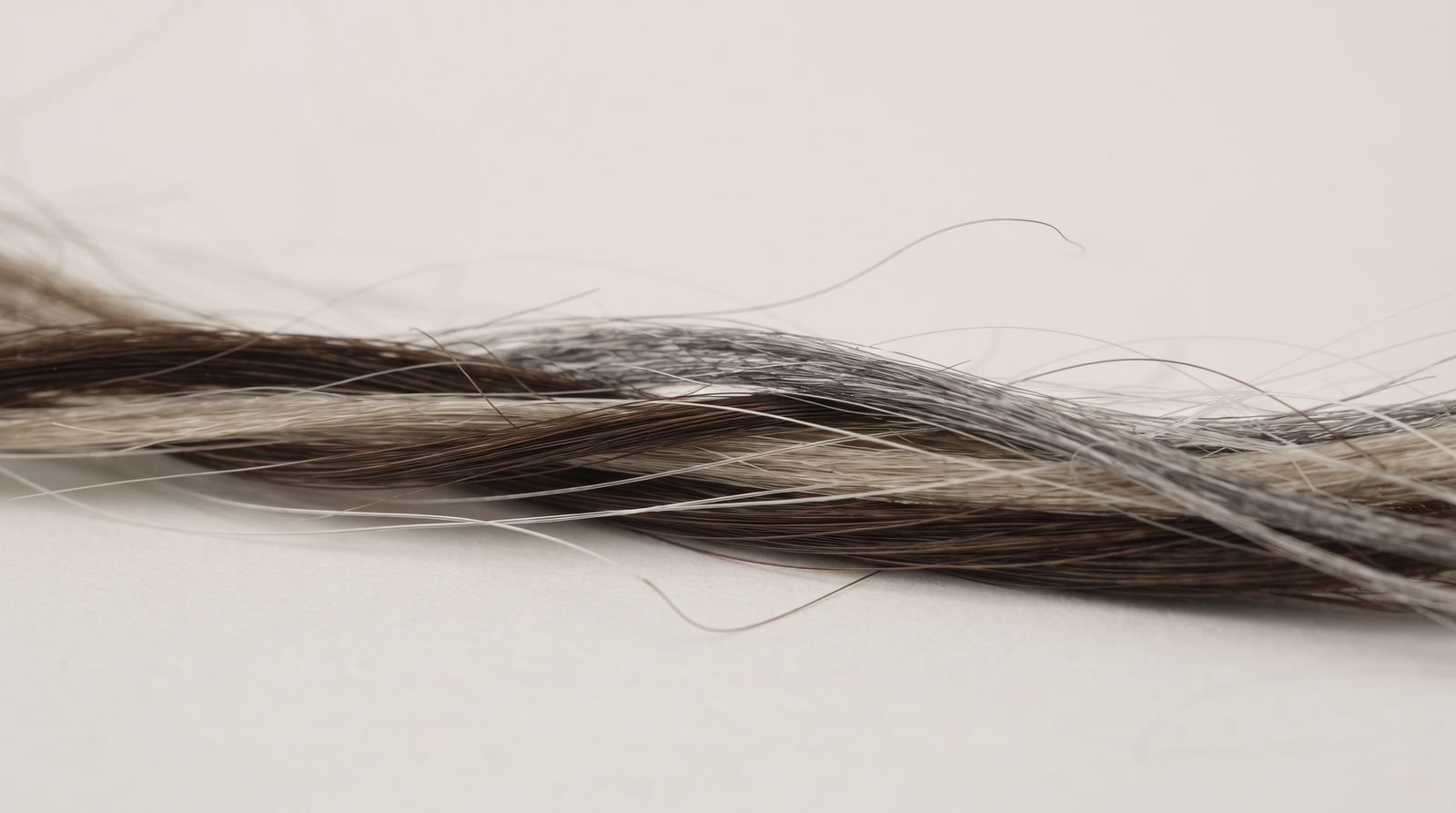
The policy question: whether a given provider accepts treated hair is a commercial and procedural decision, not a chemical one, and providers differ. Ask specifically about permanent colour, bleach, perms and chemically straightened hair, and ask whether it changes anything about the process or the price.
Related conditions worth naming directly rather than hoping they are covered: hair that regrew during or after chemotherapy, very fine or sparse hair, grey hair, and a lock that has been stored taped into a book or sealed in plastic for years and may be brittle.
Who Creates the Record, When Nothing Else Documents It?
With no paperwork behind a lock, the record has to be created, partly by you, partly by them.
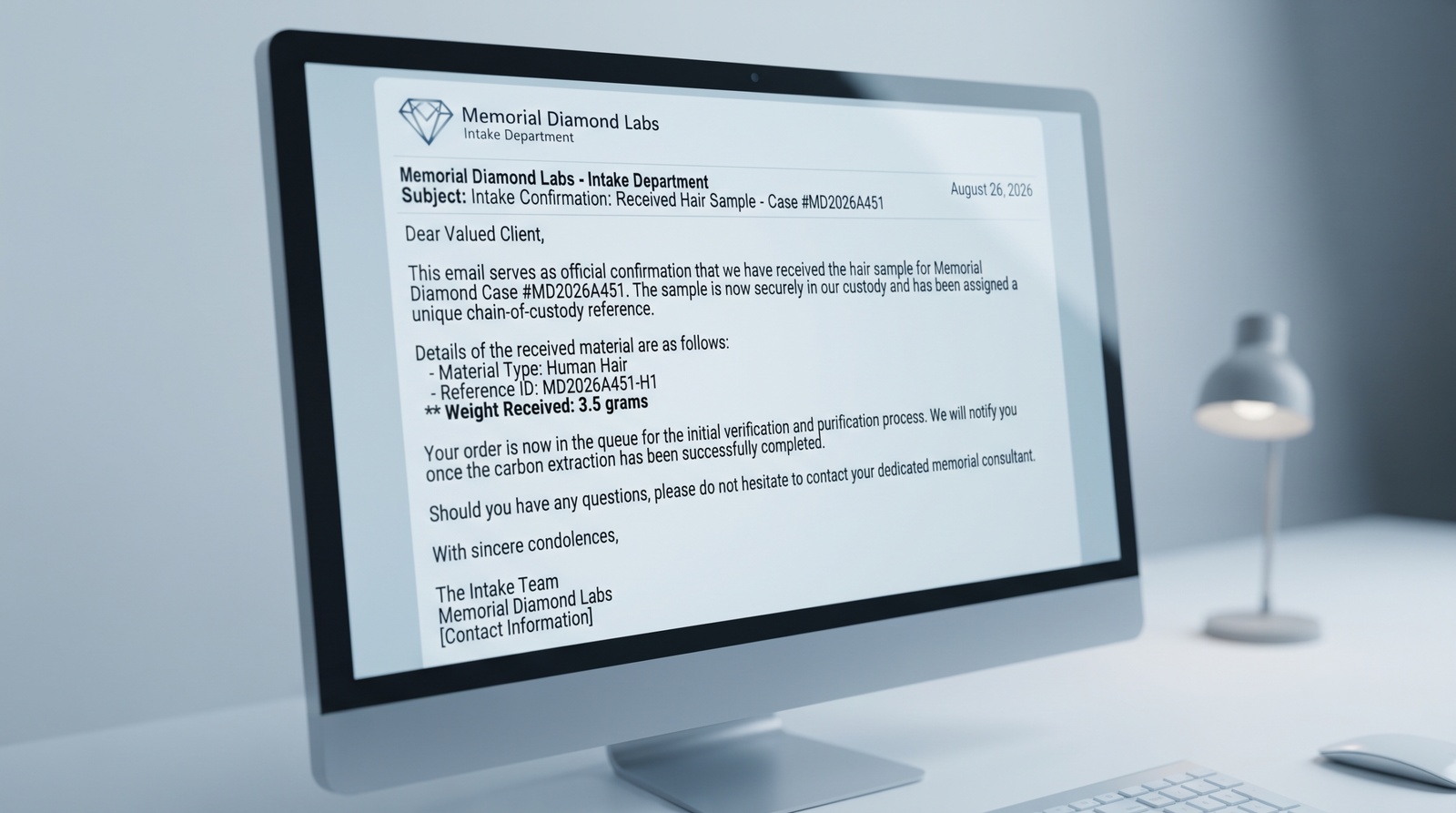
- Will you weigh the hair on arrival and state the weight received in your confirmation? A confirmation that names a quantity is the only external record that will ever exist of what you sent.
- What reference number is assigned, and can I quote it to ask where the order stands?
- Is her hair kept physically separate from other clients’ material through purification, or batched?
- What does your origin certificate actually state? Does it state that a stone was grown from material you supplied, or something stronger it cannot support? No consumer accessible test traces a finished diamond to a named person, which is why the honest answer to whether it is really her hair starts with your own records rather than theirs, explored further via the honest answer to is it really her hair.
What Will the Stone Be Like, and What Comes Back?
- What colour range is realistic? Her hair colour does not carry through. Pigment is a molecule, and no molecular structure survives graphitization at roughly 2500 to 2700 degrees Celsius, as detailed in what color will a diamond from her hair be.
- What carat sizes are available, and what does each do to the timeline? The size of the lock does not affect the size of the stone, so ask what each carat option does to the schedule.
- What proportion of the finished stone is her carbon? Hair is roughly half carbon by weight, far richer than cremated remains, but a growth cell still requires supplemental lab carbon. Nobody can honestly say 100 percent.
- Is unused hair returned, and in what form? Ask whether it comes back identifiably or not at all.
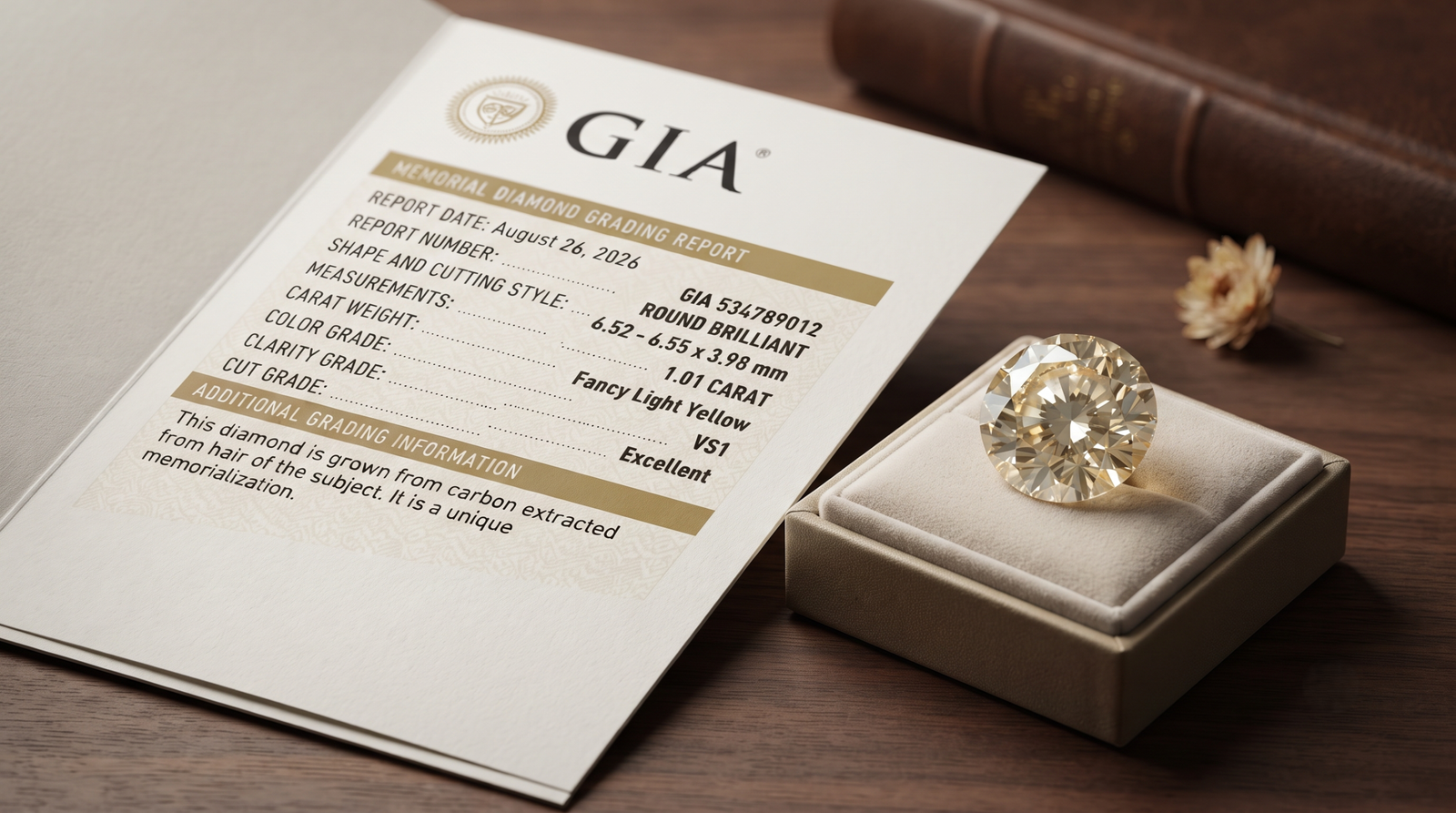
- What is included in the price? Loose stone, grading report, setting, and return shipping, which you can review under what a mother memorial diamond costs.
Which Answers Have to Arrive Before You Cut Anything?
Of everything above, three have to arrive before the scissors do:
- The minimum weight, because it decides whether what you have is enough.
- The treated hair policy, if her hair was coloured, because an acceptance rule you learn afterwards is an expensive one.
- Whether a photograph and a weight can be assessed first, which is not one of the four questions above, because it costs nothing and commits nothing.
Everything else can be settled while the lock stays exactly where it is. Hair does not degrade on a useful timescale. Victorian mourning jewellery survives with the hair intact, which is a longer wait than any decision here requires.
Frequently Asked Questions
Can I ask a provider to assess the lock before I commit to anything?
Yes, and it is the most useful thing you can ask. A photograph beside a coin or ruler and a weight from a kitchen scale is usually enough for a provider to say whether the quantity works, before anything is cut, posted or paid for.
Should I ask whether her hair will be tested to confirm it is human hair?
It is worth asking what verification happens on intake, but expect a modest answer. Providers confirm material type and quantity. Nothing available to a consumer links a strand to a named individual, and a provider claiming otherwise is overstating.
What should I ask if the only hair I have came from her hairbrush?
Ask two things: whether brush hair meets their minimum by weight, and whether they have any requirement that hair be cut rather than shed. The provenance question, whether every strand is hers, is one only your household can answer.
Is it worth asking about insurance while the hair is in transit?
Yes. A lock is irreplaceable in a way ashes usually are not, so ask who bears the loss if a package goes missing, and whether they offer or require a tracked service.
What should I ask about withdrawing after I have sent it?
Ask what happens to the hair if you change your mind before work begins, and at which stage withdrawal stops being possible. With a finite lock this matters more than it does with ashes, because there is no second lock to fall back on.
Should I ask the same questions if I am sending ashes as well as hair?
Ask both sets, plus the ones specific to a combined order, chiefly what happens if one material yields less carbon than expected, and whether the two are purified separately, as outlined in questions to ask before turning your mother’s ashes and hair into a diamond.
The Lock Can Wait for the Answers
Nothing on this page requires you to open the envelope. Send the three blocking questions: the minimum weight, the position on treated hair, and whether a photograph and a weight can be assessed before anything is cut, and wait for the reply before the scissors come out. Memorial Diamond answers them at memorialdiamond.us.