
Most parents want to know where the ash physically goes, not just what the brochure says. A memorial diamond made from son ashes is produced by extracting the carbon out of a small portion of his cremated remains, purifying that carbon past 99.9%, turning it into graphite, and growing it into a real diamond under enormous pressure and heat, a journey of roughly six to ten months. This page follows the material itself, container by container, from the day it leaves your house to the day a cut stone comes back.
Table of Contents
What Actually Leaves Your House?
Far less than most parents assume. The starting portion for a stone made from son ashes is typically somewhere between a few tablespoons and around 4 oz, roughly 100 grams, of cremated remains, which is a small fraction of what a full cremation produces.
Everything else stays exactly where you had planned to keep it. Burial, interment in a family plot, scattering somewhere he liked, or simply leaving the urn on the shelf all remain completely open to you afterwards. Nothing about commissioning a gem made from son ashes requires giving up any of those.
The portion that travels is sealed, labeled, and logged against an identifier at intake. From that moment it is tracked through every vessel and every process step. That documentation trail is the thing to ask about first, because it is the only part of the whole chain you can genuinely audit as a customer. A laboratory handling material made from son ashes should be able to show you that log on request.
One practical note: ask what happens to any surplus. Some providers return unused remains with the finished piece, while others hold them for a future stone. How much ash a lab needs goes further into the quantities.
Who Has to Authorize the Ash Before It Travels?
Before a single gram moves, it is worth establishing who is legally entitled to say yes. Parents very often assume that right is theirs by default, and depending on your son’s circumstances it may not be.
State statutes generally set a priority order for who may direct the disposition of a decedent’s remains. A surviving spouse commonly sits at or near the top of that order, and a son’s own adult children can sit above his parents as well. Anything he left in writing, a will, an advance funeral directive, a named agent, can reorder that list, and the specifics differ meaningfully from one state to the next.
None of this prevents a diamond made from son ashes being commissioned. It determines who is entitled to sign for it. That makes this a question for the funeral director who handled the cremation, or a local attorney, rather than something to resolve by reading. It is a short conversation, and it removes the commonest cause of a family dispute surfacing months later, halfway through a growth run. How to turn his ashes into a diamond covers the decision side of the same ground.
Parents also do not always agree with each other. One parent arranging a diamond made from son ashes alone, after a separation, or simply because one of you can manage the logistics and the other cannot, is ordinary, and no provider will find it unusual. The legal question is about authority, not about unanimity.
What Strips Away Everything That Is Not Carbon?
Cremated remains are overwhelmingly calcium phosphate, the mineral structure of bone. Carbon is a minority component, and the first real laboratory stage of anything made from son ashes is separating the two.
The sample is heated in a controlled, oxygen free, multi stage process. Without oxygen present, the carbon cannot simply burn away. Instead, the non carbon fractions are driven off or chemically removed across successive stages until what remains reaches roughly 99.9%+ carbon purity.
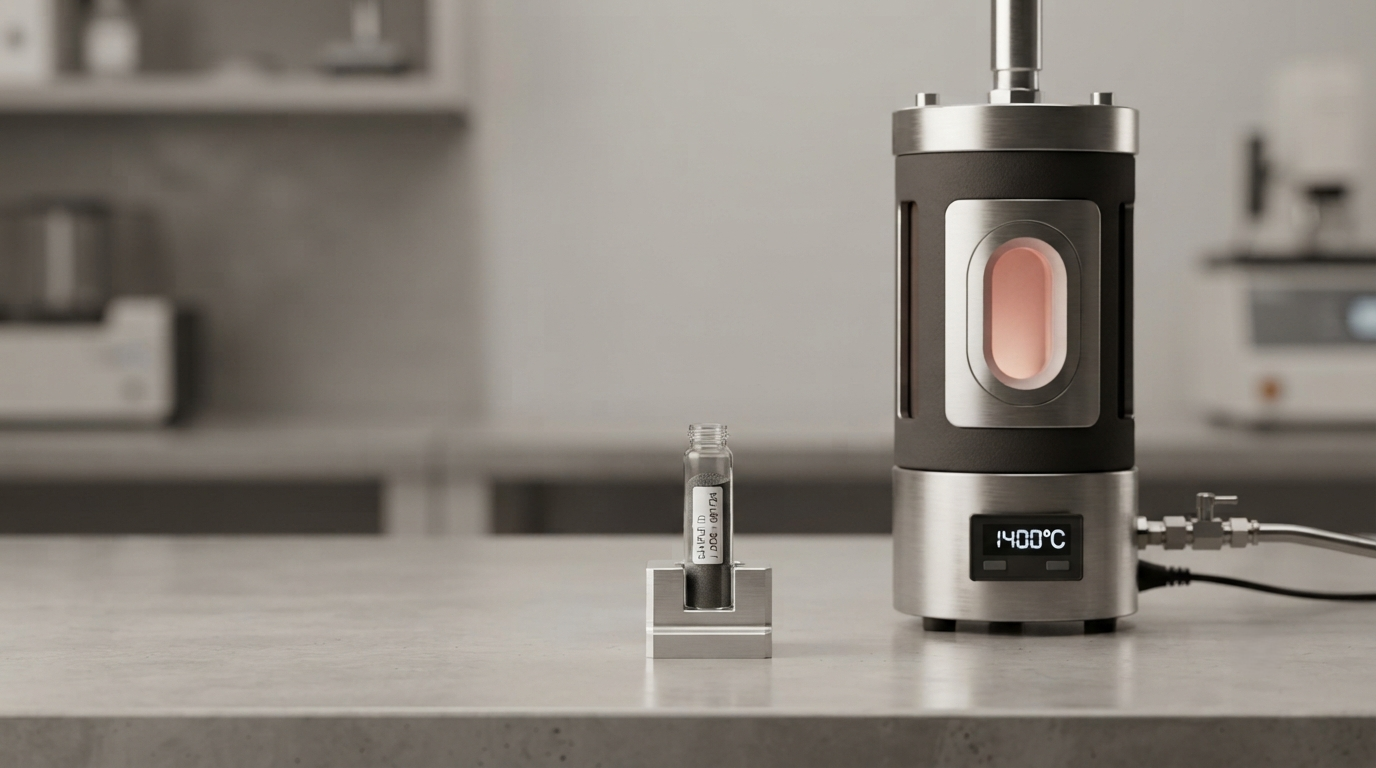
This is the step that determines whether the run is viable at all. Industry figures put usable carbon at somewhere around 0.5% to 4% of ash by weight, so a generous looking jar reduces to a startlingly small quantity of recovered material. That yield, rather than the volume of the jar, is what every later stage of a diamond made from son ashes has to work with.
It is also the step most worth questioning, because it is invisible to you. Ask how purity is verified, whether it is measured or assumed, and what happens if a sample yields less than expected. A laboratory producing stones made from son ashes routinely should be able to answer all three without hesitation.
Why Is the Carbon Turned Into Graphite First?
Because a growth press cannot use loose purified carbon. It needs a specific crystalline form as feedstock, and that form is graphite.
So the purified carbon is heated much further, to somewhere in the region of 2,500 to 2,700°C, and converted into graphite. Chemically nothing is added and nothing personal is lost at this stage: graphite and diamond are both pure carbon, arranged differently. Anything made from son ashes passes through this conversion before it can be grown, and the graphitization step itself is identical whether the feedstock came from a person or from an industrial source. Only the origin differs.
Picture the sequence as one substance changing address rather than identity: bone mineral and carbon go in, carbon comes out, carbon becomes graphite, graphite becomes diamond. The same atoms carry through, which is the point the complete guide to a son ashes diamond returns to repeatedly.
That is also the honest core of why a gem made from son ashes is not a symbol or a representation. It is not that the diamond stands for him. It is that a measurable quantity of carbon that was structurally part of him is inside the crystal.
What Happens Inside the Growth Cell?
The graphite, blended with supplemental lab sourced carbon to reach a workable volume, is loaded into a growth cell around a tiny diamond seed. Then the press closes.
In the HPHT method most of this industry uses, that cell is taken to something in the range of 6 to 8 gigapascals while being held at 1,400 to 2,500°C, conditions built to mimic the deep mantle. A minority of providers use CVD instead, converting the carbon to a gas and depositing it layer by layer onto a seed plate inside a vacuum chamber. Either route produces a chemically genuine diamond.
Here is the full journey in one view:
| Stage | What the ash is at this point | Typical duration |
|---|---|---|
| 1. Intake and logging | Sealed, identified cremated remains | Days |
| 2. Carbon extraction | Ash being separated from its carbon | Days to weeks |
| 3. Purification | Carbon at 99.9%+ purity | Days to weeks |
| 4. Graphitization | Graphite feedstock | Days |
| 5. Cell loading | Graphite plus supplemental carbon and a seed | Hours |
| 6. Growth | A rough diamond crystal | Weeks to months |
| 7. Cutting and polishing | A finished gem | Weeks |
| 8. Optional grading and return | A documented stone in your hand | Weeks |
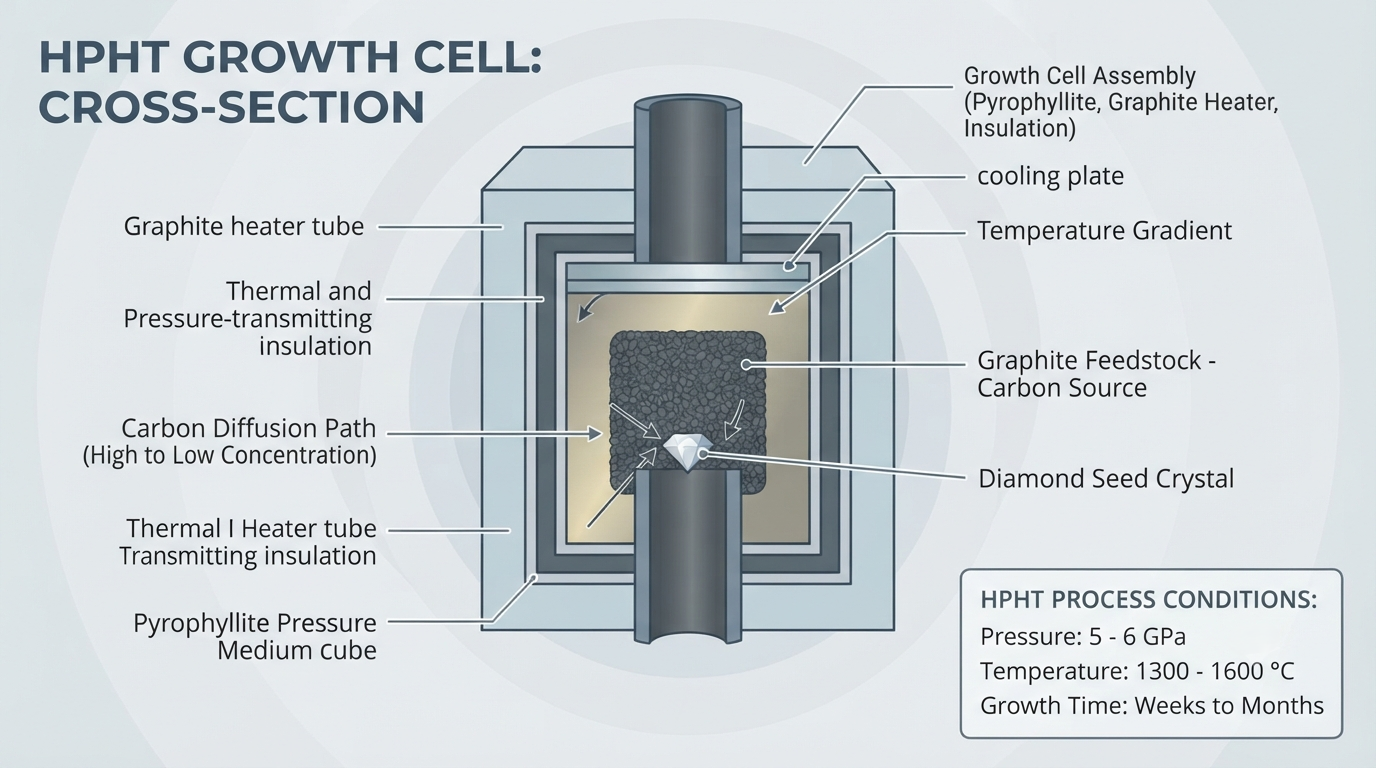
Every diamond made from son ashes travels those eight stages in the same order, though the durations vary widely between providers and between stone sizes.
Growth time, not the amount of ash supplied, is what sets carat size. Sending more remains does not produce a bigger diamond made from son ashes, and no honest provider will tell you otherwise.
Where Does the Process Most Often Go Wrong?
Nothing in this sequence is guaranteed, and a provider who presents it as guaranteed is worth a second look.
The commonest problem is yield. If the recoverable carbon from a submitted sample lands at the low end of that 0.5% to 4% range, the laboratory may come back asking for more remains before a diamond made from son ashes can be grown at the size you selected. That request is arithmetic rather than a sales tactic.
The second is growth failure. Crystals can come out heavily included, grow off axis, or fracture during the run. A batch made from son ashes is no more prone to this than any other laboratory grown diamond, but it is considerably more painful when it happens, because the starting material cannot be replaced.
The third is cutting loss: rough weight and polished weight are different figures, so ask which number your quote actually refers to.
The fourth is expectation. Families sometimes picture something colorless and receive a champagne stone. Nothing has gone wrong in that case. It is simply what the material produced.
Ask any provider what their contingency is for each of these four before you send anything. A laboratory that has grown many stones made from son ashes will answer all four without hesitating, because it has met all four.
How Much of a Diamond Made From Son Ashes Is Really His?
This is the question that decides whether a family trusts the category at all, so here is the published answer rather than a comfortable one.
The personal carbon recovered from cremated remains usually makes up somewhere around 10% to 15% of the finished stone’s mass. Some providers cite figures as low as 3%, others higher, depending on the size of stone requested and how much ash was submitted. The remainder is supplemental lab sourced carbon, which is what makes the volume sufficient to grow a gem of meaningful size at all. Treat any claim well above that published band for a stone made from son ashes as something to question rather than something to celebrate.
No diamond made from son ashes is 100% his carbon, from any provider, at any price. That is physics rather than corner cutting. The recoverable carbon in ash is simply not enough on its own. Anyone claiming total purity is describing something that does not happen.
What remains true, and is not a consolation prize, is that a real and verifiable proportion of his own carbon is locked into the crystal lattice. Ask your provider for their own percentage estimate in writing, and ask how they arrived at it. If you want this examined at greater length, whether the stone is genuinely his takes the question apart in detail.
Why Is a Diamond Made From Son Ashes Rarely Colorless?
Because his carbon came from a body rather than a purpose built industrial feedstock, and bodies carry trace elements.
Two elements do most of the work. Nitrogen present during growth produces yellow tones. Boron produces blue ones. Colorless requires both to be effectively absent, which an organic source rarely delivers without extra processing. That is precisely why stones made from son ashes trend toward yellow, blue, champagne and brown rather than white.
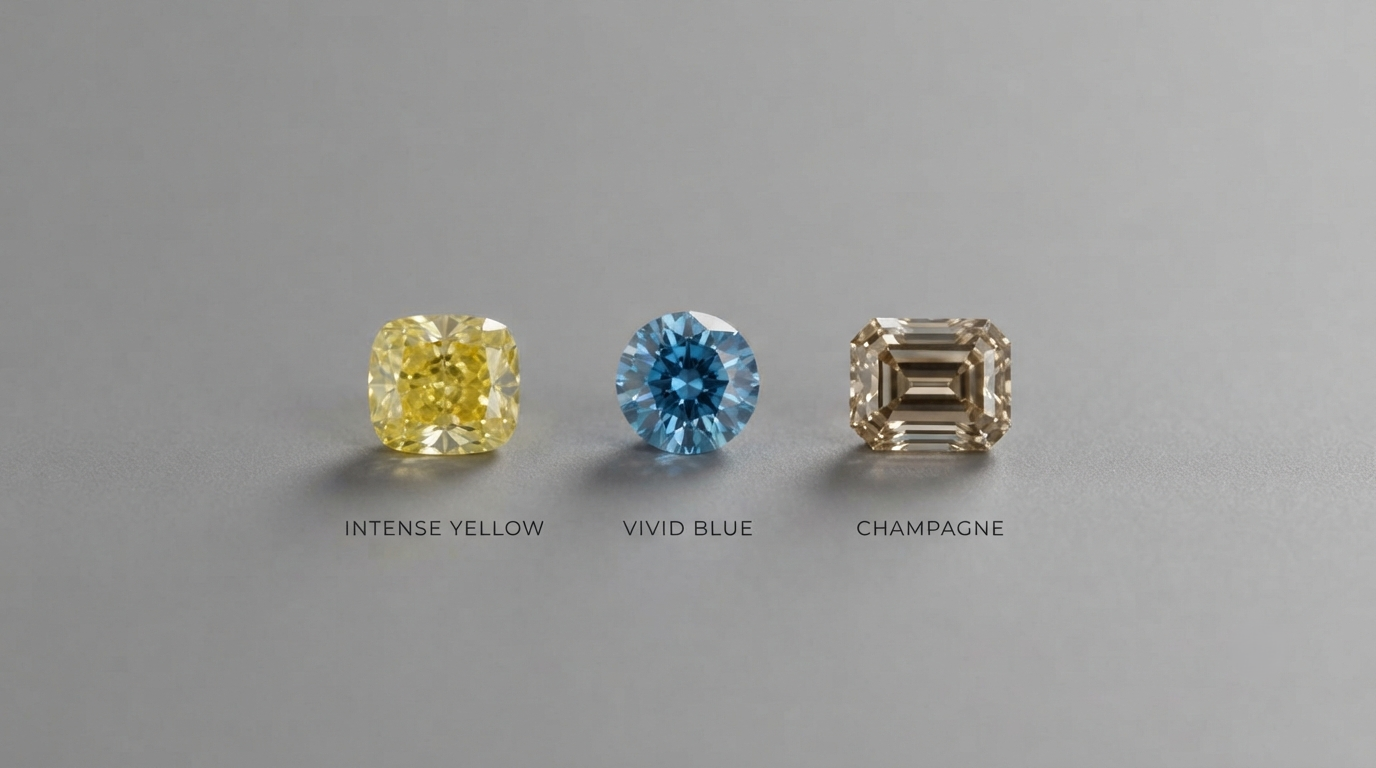
Colorless is achievable. It takes additional purification steps and typically costs more. Post growth irradiation is also offered by some providers to produce red, pink, green or black, and an independent grading report will normally disclose that a treatment was applied. None of this makes a diamond made from son ashes any less genuine. Color is a grading attribute, not a measure of authenticity.
Most parents, once the mechanism is explained, stop treating the color as a decision to control and start treating it as information. The shade of a diamond made from son ashes is a readout of the material, not a flaw in it. What color to expect covers the range in more depth.
What Happens to the Rough Crystal Afterwards?
What emerges from the press is a rough crystal, not a gem. A cutter then does exactly what a cutter does with any other diamond rough: plans the cut, saws or lasers it, shapes it, and polishes the facets.
Cutters do not handle a rough crystal made from son ashes any differently from other rough. The skill and the risks are identical. Round brilliant, princess, cushion, emerald, pear, the available cuts are the standard ones, and the choice is yours.
Two further steps are optional rather than automatic, and both are worth asking about before you commit. The first is post growth irradiation for color. The second is independent third party grading, which documents the stone’s own quality against the usual cut, color, clarity and carat standards.
That grading report is a different document from an authenticity or origin certificate. The origin certificate records that this stone was grown from your family’s submitted material; the grading report describes the gem’s quality. A diamond made from son ashes ideally arrives with both, but only the first is something a provider issues about itself, so ask which one you are actually being promised.
What Should You Ask Before the Ash Leaves Your House?
There is one window in which asking questions is easy, and it closes the moment a courier collects the package.
- What identifier is assigned to his remains, and can I see the custody log at any point?
- What share of the finished gem do you expect to be his own carbon, and how was that worked out?
- What comes back to me, unused remains, the original container, both, neither?
- If the first run fails, what happens next, and at whose cost?
- Is the grading report you are quoting independent, or issued in house?
- Will any part of this stone made from son ashes be irradiated, and will the paperwork say so?
- Can a second diamond made from son ashes be grown later from material you still hold?
Get the answers in writing rather than over the phone. Staff change across a project this long, and a written answer outlives a change of account manager.
If a provider will not put a percentage estimate for a diamond made from son ashes in writing at all, that is itself the answer to a rather more important question. Questions worth asking first expands this list considerably.
What Comes Home, and What Does It Cost?
What comes home is a finished diamond made from son ashes, its documentation, and whatever unused remains the provider returns. It is a genuine diamond in every measurable respect, including the hardness that puts it at the top of the mineral hardness scale, so it can be set and worn daily without special handling.
Across the industry the whole sequence typically runs six to ten months from receipt of material, stretching toward twelve for larger stones or specialty colors such as black. Pricing, using general 2026 industry ranges rather than any single company’s published rates:
- 0.10 to 0.25 ct: approximately $1,500 to $3,500
- 0.5 to 1.0 ct: approximately $5,000 to $15,000, with colorless costing appreciably more than yellow, blue or champagne at the same weight
- 2 to 5+ ct: approximately $20,000 to $75,000 and upward
- Commonly separate: settings, engraving, fancy cuts and independent grading reports
Because only a portion of the remains is consumed, more than one stone made from son ashes can often be produced from the same submission, relevant if siblings or a surviving spouse also want one. Sharing a stone between family members covers how that is usually arranged.
Frequently Asked Questions
Can a diamond be made from son ashes years after the cremation?
Yes. Cremated remains are chemically stable and do not degrade in storage, so the carbon recoverable from ashes kept for five or twenty five years is no different from ashes received last month. Many parents come to a diamond made from son ashes long after the funeral.
Does the crematorium need to be involved again?
Usually not, if the remains are already in your possession. The provider works from what you send. The crematorium or funeral home is worth contacting only for paperwork questions, such as confirming who holds authority over the remains in your state.
Will the finished stone test as a real diamond?
Yes. It is chemically and physically a genuine diamond, with the same hardness, refractive behavior and grading criteria as any other. Standard gemological testing identifies it as laboratory grown rather than mined, which is accurate, but it is not a simulant.
What if the first growth run fails?
Growth runs can fail, and a reputable provider will tell you that plainly. Ask before you commit what happens next: whether a second attempt is included, whether additional material would be required, and whether any part of the fee is refunded.
Can we keep the rest of his ashes at home?
Yes, and most families do. Only a small portion is used, so an urn, a burial plot, a scattering, or a division among relatives all remain possible afterwards. Choosing a diamond does not replace or invalidate any other way you have chosen to honor him.
Does an independent grading report cost extra?
Usually, yes. Independent third party grading is typically an optional add on rather than something included by default, and pricing varies by provider and by stone size. Ask explicitly whether the report quoted is independent or issued in house before you agree to it.
Final Thoughts on a Diamond Made From Your Son’s Ashes
There is no right interval before doing this, and nobody should tell you that you have waited too long or acted too soon. Some parents begin within weeks of the cremation. Others open the question a decade later, when the urn has stopped being a temporary arrangement and started being a permanent one nobody chose.
The offer of a diamond made from son ashes is narrow and concrete: a portion of the carbon that was his, brought into a form you can wear rather than store. It does not stand in for anything, and it is not a step in any process anyone should be prescribing for you.
If you do go ahead with a diamond made from son ashes, go slowly, get the percentage estimate and the chain of custody answers in writing, and settle the authority question with whoever else has standing before anything ships.
Learn More About Son Memorial Diamonds
- Son ashes diamond: the complete guide, everything in one place
- How to turn his ashes into a diamond, the practical, decision side view
- The step by step version, laid out as an ordered checklist
- How much ash a lab needs, quantities and what stays with you
- What a son memorial diamond costs, tiers, add ons and what drives price
Talk With Memorial Diamond
If you would like to walk through any stage of this in more detail, especially the chain of custody and percentage questions, reach out to Memorial Diamond at memorialdiamond.us to talk about the ashes you have. Asking costs nothing and commits you to nothing.
Word count: 3,052 words · Reading time: about 15 minutes
Leave A Comment