
You have probably rehearsed this conversation more times than you will ever have it. Telling his mother. Telling the children. Telling the sister who already has opinions about the funeral. The honest starting point about a husband memorial diamond is that you usually do not need anyone’s permission, but you will probably want some people’s understanding, and those are different conversations with different people. This guide separates the family members who have a legal say from the ones who have an emotional stake, gives you plain language for each, and covers what to do when someone says no.
Table of Contents
Who Actually Gets a Say About a Husband Memorial Diamond?
Two groups of people have a view about a husband memorial diamond, and it helps to know which is which before you open your mouth.
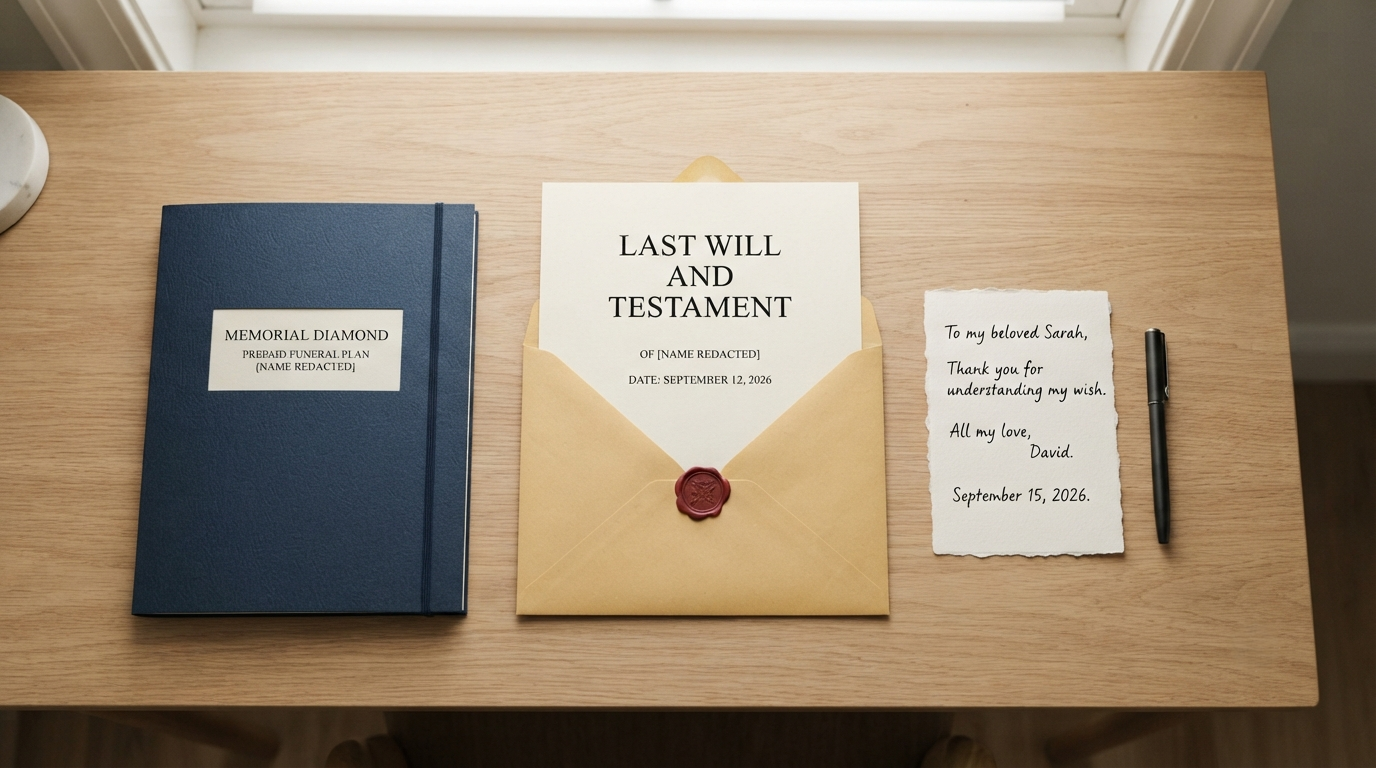
The people with legal authority. In most US states, the right to control a person’s remains passes to the surviving spouse first, unless he left written instructions, a prepaid funeral plan, or a will naming someone else. If you are his widow or widower and none of those exist, the decision about a husband memorial diamond is yours. His parents, siblings, and adult children generally do not have a legal veto. This varies by state and by what he set down in writing, so read what exists before assuming, but for most spouses the legal question is settled.
The people with an emotional stake. This is everyone else who loved him and who will have feelings about a husband memorial diamond, and this is where the actual conversations live. His mother has no legal say and every emotional one. Your children may not be consulted by law and will absolutely have feelings about where their father’s ashes went.
The table below sorts the family by which conversation about a husband memorial diamond you are actually having with them.
| Family member | Legal say? (typical US, no written instructions) | Emotional stake | What they most often need from you |
|---|---|---|---|
| You, the spouse | Yes, usually first in line | Highest | Clarity about your own reasons before talking to anyone |
| Adult children | Rarely, unless named in his will | Very high | To hear it from you directly, not secondhand |
| Minor children | No | Very high | Age appropriate honesty, not protection through silence |
| His parents | No | Very high | Reassurance that the rest of him is not going anywhere they object to |
| His siblings | No | High | To be told, not asked, unless you want their view |
| Your own family | No | Moderate | Usually support; occasionally practical questions |
| His friends | No | Varies | Nothing until they ask |
One honest caveat: if his ashes were divided at the crematorium and someone else already holds a portion, that portion is theirs. The material you send for a diamond has to be material you control.
What People Are Really Asking When They Object
Most objections about a husband memorial diamond are not about the diamond. Almost every hard question about a husband memorial diamond turns out to be a question about something else. They are about one of four things underneath it, and answering the surface question without hearing the real one is how these conversations go wrong.
- “Is that even real?” They are asking whether the stone genuinely contains about a husband memorial diamond. The answer is that a memorial diamond is a real lab grown diamond containing a purified portion of his own carbon, blended with lab carbon to reach a workable size, not all of him, not a symbol of him, but physically grown in part from him. Whether it is really made from his ashes walks through the evidence if someone wants it.
- “Doesn’t that use all of him?” They are asking whether the scattering, the interment, or the urn on the mantel is being cancelled. It is not. Only a small portion of ashes, typically a few tablespoons to around 4 oz, or a small lock of hair is needed. The rest goes where the family already planned.
- “Isn’t that a bit much?” They are asking about money, or about whether you are all right. Both deserve a direct answer rather than a defensive one.
- “Would he have wanted that?” They are asking whether you are honoring him or serving yourself. Sometimes the person asking knew him well enough to have a view worth hearing. Sometimes they are asking the question they wish they could ask about their own grief.
Hearing which of the four is underneath a given objection about a husband memorial diamond tells you which page of this guide to reach for.
Five Ways to Open the Conversation
There is no script about a husband memorial diamond that works for every family, but there are five openings that families describe going better than the alternatives. Pick the one that matches the person.
- Lead with the decision, not the request. “I’ve decided to have a small diamond made from some of his ashes. I wanted you to hear it from me.” This works with siblings, in laws, and anyone whose approval you are not seeking. It closes the door on a debate you did not open.
- Lead with the fact that reassures. “Only a few tablespoons are used. Everything we planned for the rest of him still happens.” This works with his parents and with anyone whose first fear is that the funeral plan is changing.
- Lead with the question they would ask. “You’re probably wondering if it’s actually him. It is, the lab extracts the carbon from the ashes and grows the diamond around it.” This works with the skeptic, and it works better than waiting for the skepticism.
- Lead with an invitation. “I’m having a diamond made from Dad’s ashes. There’s enough that you could have one too, if you ever wanted.” This is for adult children and for his siblings when you genuinely mean it. How more than one family member can receive a diamond from the same husband’s ashes covers the cost and the mechanics before you offer.
- Lead with time. “I’m thinking about this. I haven’t done anything yet. I wanted to tell you before it’s decided.” This is the opening for a family member you know will struggle, when there is genuinely still room for their view to matter.
Whichever opening you use, say the practical facts once, plainly, and stop. The conversation about a husband memorial diamond does not improve with more justification.
Talking to His Parents and Siblings
His parents are the hardest conversation about a husband memorial diamond for most spouses, because they lost a son and have no legal say in what happens to him. That combination produces grief that comes out as objection.
What tends to help:
Tell them before the material leaves the house. Being informed after the fact, even about something they could not have stopped, reads as being cut out. Being told before reads as being included, even when the decision is already made.
Separate what changes from what does not. “The interment is still on the 14th. The urn is still going to the plot. I’m keeping a small portion for this.” Parents who are afraid the plan is changing relax when they hear the plan stated.
Do not defend the decision about a husband memorial diamond. Describe it. A memorial diamond is grown over roughly 6 to 10 months in a laboratory press that recreates the pressure and heat of the Earth’s mantle. That sentence, delivered without apology, does more than any argument for why it is a reasonable thing to want.
Offer, if you mean it. Some parents want their own stone. Some are horrified by the idea. You will not know which until you ask, and the offer costs nothing.
Siblings are usually a shorter conversation about a husband memorial diamond. They are less likely to feel ownership over his remains and more likely to want to know whether their own family will be included. Tell them the same facts, and if you have decided that only your household is receiving stones, say so without over explaining.
If his family holds a religious view on cremation or on dividing ashes, note that no tradition has an official position on memorial diamonds specifically, only on cremation and ash handling more generally, and that views vary by denomination and by individual clergy. If the objection is religious, it is worth asking whether the concern is with cremation itself, already done, or with dividing what remains. Those are different concerns with different answers.
Talking to Your Children
Children generally handle honesty about a husband memorial diamond better than adults expect, and handle silence worse.
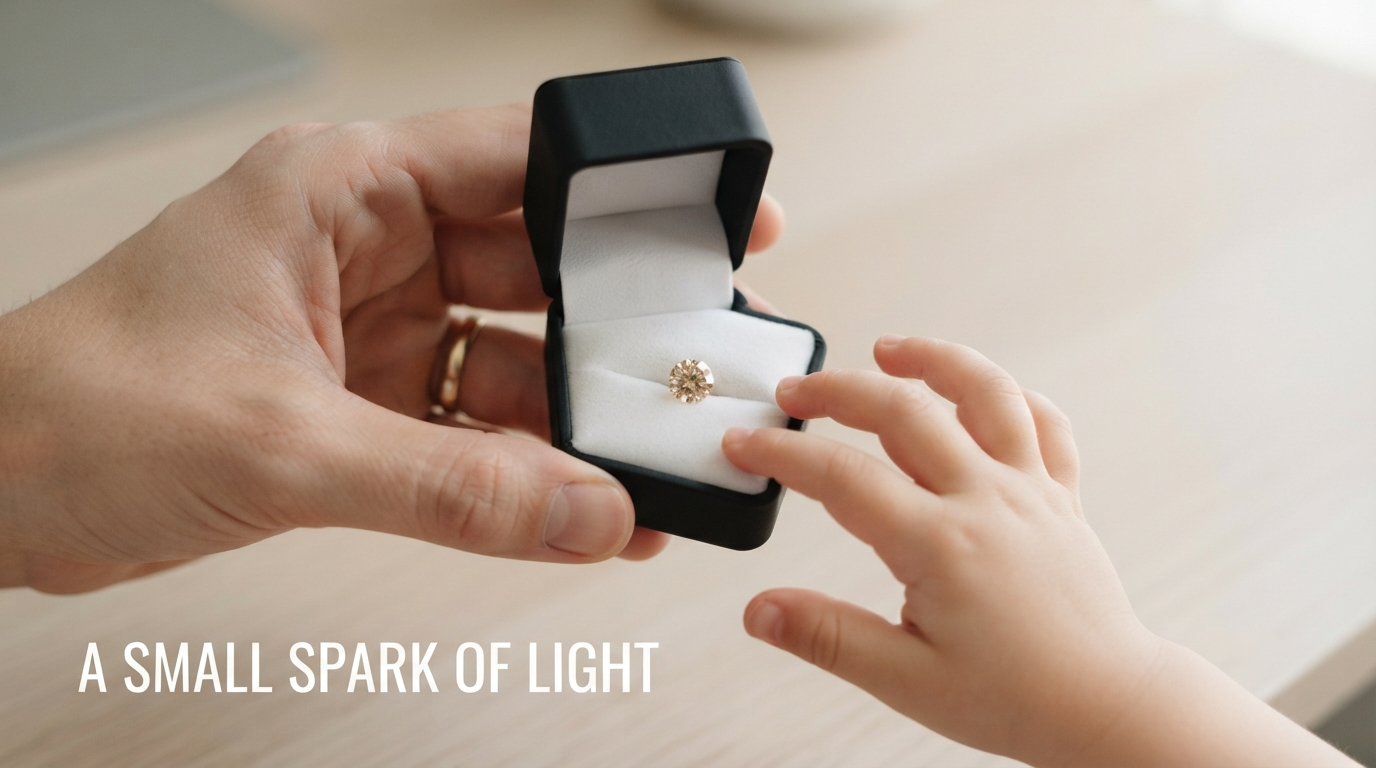
For young children, the true version is short: a tiny bit of what is left of Dad is being turned into a diamond by scientists, it takes most of a year, and when it comes back it will be kept somewhere they can see it. They will ask if it hurts him. It does not. They will ask if they can hold it. They can.
For teenagers, the conversation about a husband memorial diamond is closer to the one with an adult, with one difference: teenagers are more likely to ask whether they get a say, and more likely to be hurt if the answer is no. If there is genuinely room for their preference, on the color, on the setting, on whether they receive their own stone later, give it to them. If there is not, tell them what was decided and why, and do not pretend the question was open.
For adult children, particularly ones from a previous marriage, the talk about a husband memorial diamond needs care on ownership. They may feel their father’s ashes belong to the family he had before you. Legally, absent his written instructions, they usually do not, but the feeling is real, and leading with the law is a way to win the argument and lose the relationship. Lead with the invitation instead: there is enough material for more than one stone.
Whatever the child’s age, the timeline matters. The stone will not exist for most of a year. Tell them that, so the wait is not a surprise, and tell them when it arrives so the ending is shared.
When Someone Says No
Someone might say no about a husband memorial diamond. A parent might say it is grotesque. A sibling might say he would have hated it. A child might refuse to look at it.
Four things are true at once when this happens:
| What is true | What it means for you |
|---|---|
| Their no is usually not a veto | If you hold legal authority, the decision remains yours |
| Their no is usually about him, not you | Grief that has nowhere to go often lands on the nearest decision |
| A no today is not always a no forever | Families report that objectors sometimes ask to see the stone once it exists |
| You do not have to win | The goal was for them to know, not to agree |
What you can offer about a husband memorial diamond that is neither surrender nor a fight: “I hear that you don’t want this. I’m still going to do it, because it matters to me. I won’t bring it up with you again unless you ask.” Then keep that promise.
What you should not offer: a promise to consult them on every future decision about his remains, a promise not to wear the stone in front of them, or a promise to give the diamond back. Promises made to end a hard conversation tend to be regretted.
One caveat that bears repeating: if the objecting person holds a legal right to his remains that outranks yours, because of his will, a prepaid plan, or a state specific rule, then their no may in fact be a veto, and the honest next step is reading the document, not having the conversation again.
What to Say When People Ask Later
The conversation about a husband memorial diamond does not end when the decision is made. It resurfaces in the months while the stone grows, and it resurfaces for years afterward every time someone notices the ring.
While you wait: “It’s being made. It takes most of a year.” That is a complete answer about a husband memorial diamond. You do not owe anyone the carat, the color, or the cost.
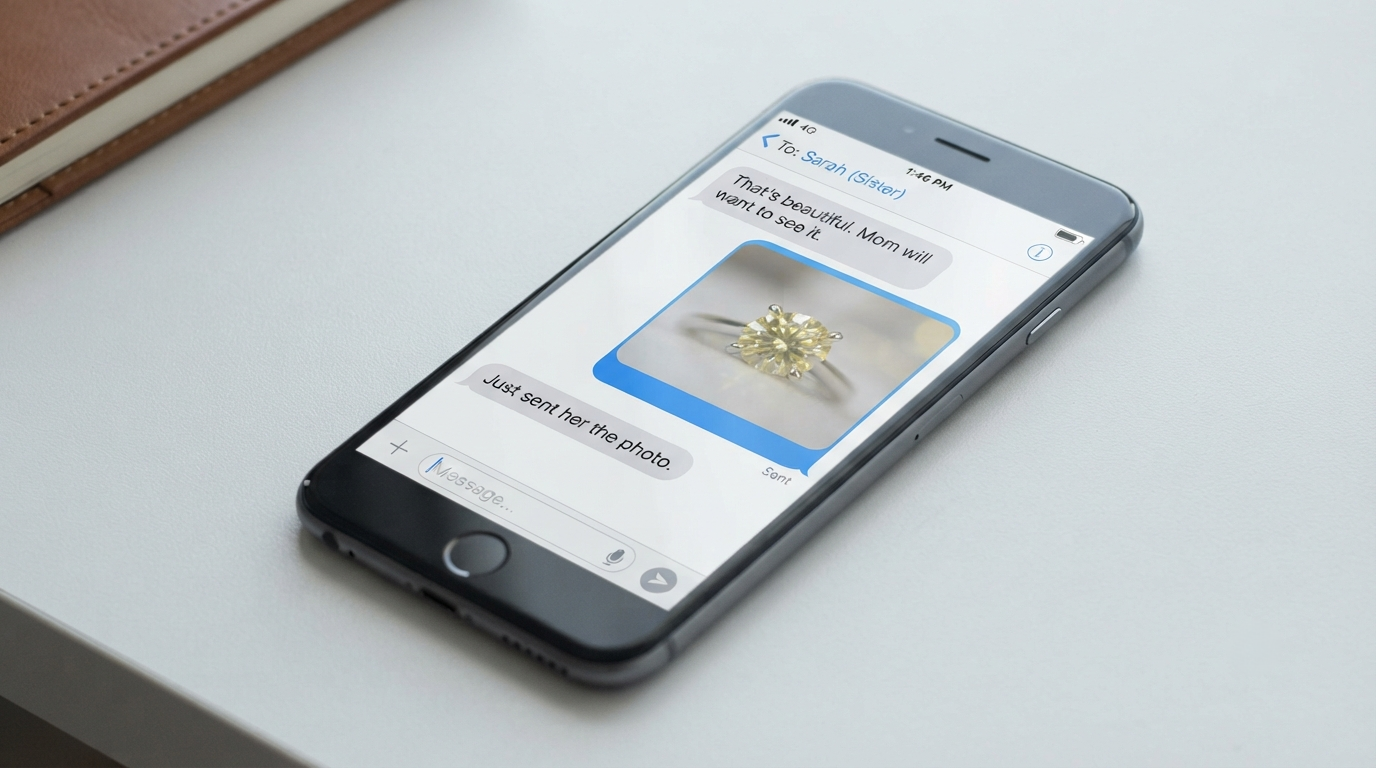
When it arrives: Decide in advance who gets told about a husband memorial diamond first. Families who had a hard conversation at the start often find that the arrival is a chance to close it, a photograph sent to his mother, without commentary, sometimes says more than the original conversation did.
When a stranger asks about the ring: You will be asked. The short true answer is “It’s a memorial diamond; it was made from my husband’s ashes.” Most people respond with quiet interest. Some go silent. You can say more or not. The diamond itself is a real, graded stone with the same cut, color, clarity, and carat documentation as any other diamond, which is sometimes the fact that makes a skeptic go quiet in a different way.
When one of the objectors asks to see it: Show them. Say nothing about the earlier conversation about a husband memorial diamond.
Frequently Asked Questions
Do I need my husband’s family’s permission for a memorial diamond?
Usually not. In most US states the surviving spouse holds first authority over a person’s remains unless he left written instructions, a prepaid plan, or a will naming someone else. His parents and siblings generally have no legal veto. Check any documents he left, and check your state’s rule, before assuming.
Should I tell his family before or after the ashes are sent?
Before. Being told after the fact, even about a decision they could not have changed, reads as exclusion. Telling them before the material leaves the house, with the plain facts and the reassurance that the rest of the funeral plan is unchanged, tends to go far better.
How do I explain a memorial diamond to a young child?
Keep it short and true: a tiny bit of what is left of Dad is being turned into a diamond by scientists, it takes most of a year, and it will be kept where they can see it. It does not hurt him. They can hold it when it arrives. Answer their questions as they come.
What if his mother says a memorial diamond is disrespectful?
Hear the fear underneath, usually that the funeral plan is changing, or that all of him is being used. Explain that only a small portion is needed and everything else planned for him still happens. Then state your decision without defending it. Her no is not a legal veto, and it is often not permanent.
Can I offer his family their own diamond from the same ashes?
Often, yes. Only a small portion of ashes is used per stone, so several diamonds can typically be grown from one submission. Each is priced and grown separately, and stones from the same material can differ in color. Make sure you understand the cost before offering.
What do I say when strangers ask about the ring?
The short, true answer works: “It’s a memorial diamond; it was made from my husband’s ashes.” You are not obliged to say more. Most people respond with quiet interest. If you would rather not discuss it, “It’s a family piece” is also true.
Final Thoughts About a Husband Memorial Diamond Conversation
You will not get every one of these conversations about a husband memorial diamond right, and you do not have to. The people who love him will mostly remember that you told them, not the words you used. The ones who objected will mostly remember whether you kept the promise you made when they did. Be clear about a husband memorial diamond once, be kind about it as many times as it takes, and let the stone, which will exist long after the conversation is forgotten, do the rest.
Learn More About Husband Memorial Diamonds
- Can More Than One Family Member Get a Diamond From the Same Husband’s Ashes?
- Is a Memorial Diamond Really Made From Your Husband’s Ashes?
- Choosing a Memorial Diamond for Your Husband: Where to Start
- Husband Memorial Diamond FAQ: Everything Families Ask
- Husband Ashes Diamond: The Complete Guide
Talk With Memorial Diamond
If a family member’s question about a husband memorial diamond is one you cannot answer yet, how much material is really needed, what the process involves, whether a second stone is possible, reach out to Memorial Diamond. Having the facts before the conversation is often the difference between a hard talk and a short one.
Leave A Comment